

U0077 on 2015-2019 GMC Yukon Denali: Causes and Fixes for Communication Loss
On a 2015-2019 GMC Yukon Denali, code U0077 almost always indicates a broken or chafed wire in a specific wiring harness, not a failed module. The most likely cause is damage to the 'Communication Enable Circuit' (Circuit 5986), a 12-volt wake-up signal wire. Common failure points are under the driver's side sill plate, near the spare tire crossmember on short-wheelbase models, or at a splice under the passenger sill plate. The fix involves locating and repairing the damaged wire, which is prima
- Code U0077 on a 2015-2019 Yukon Denali is a network communication code, not an engine code.
- The cause is almost certainly a damaged wire, not a bad computer module. Do not replace expensive modules before checking the wiring.
- Inspect the wiring harnesses behind the driver's side dash and under the door sill plates first, as these are known failure points documented by GM.
- This issue can disable power steering and stability control, making the vehicle unsafe to drive.
- Repairing the wire is an inexpensive parts fix, but locating the break can be labor-intensive.
What's Unique About the 2015-2019 Gmc YUKON DENALI
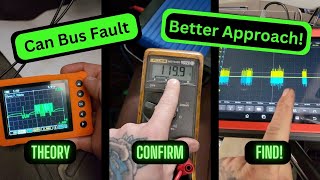
On this specific generation of GM trucks and SUVs (K2XX Platform), the U0077 code is strongly linked to known wiring harness problems. 🎬 Watch: A quick breakdown of the U0077 fault code. Two separate Technical Service Bulletins (TSBs) have been issued by GM that point to specific locations where the harness is prone to being pinched or rubbing through. This makes diagnosis more direct, as the issue is often a physical wire break in a predictable spot rather than a random electronic failure. The problematic wire is typically Circuit 5986, the 'Communication Enable Circuit', which supplies a 12V signal from the BCM to 'wake up' the other modules.
Diagnostic Flowchart
Tap your situation to follow the diagnostic path that matches what you're seeing on this vehicle.
Symptoms You May Notice
- "Service Power Steering System" message on the dash.
- "Service Suspension System" message (for vehicles with Magnetic Ride Control).
- "Service ABS" or "Service Traction Control" / "Service Stabilitrac" messages.
- A dead or drained battery.
- Loss of communication with multiple modules, such as the Electronic Brake Control Module (EBCM), Power Steering Control Module (PSCM), and Suspension Control Module (SCM).
- Backup camera may be inoperative.
- Multiple communication codes stored in various modules.
- Replacing the Electronic Brake Control Module (EBCM), Power Steering Control Module (PSCM), or Suspension Control Module (SCM) without first thoroughly inspecting the wiring harness. The TSBs indicate that loss of communication with these modules is a symptom of the wiring fault, not necessarily a failure of the modules themselves.
Most Likely Causes
- Pinched/Chafed Wiring Harness 🔴 High Probability GM has identified several specific locations where the 'Communication Enable Circuit' (Circuit 5986) is susceptible to damage due to harness routing and assembly. This is documented in multiple TSBs.
How to confirm: Perform a careful visual inspection of the wiring harnesses in the known problem areas. TSB #PIT5288H points to the harness being pinched in the left instrument panel. TSB #PIT5457D identifies the harness under the driver and passenger sill plates (inspecting for corrosion or breaks, especially near splice J365 on the passenger side) and, on short-wheelbase models, between the body and spare tire crossmember. A green, powdery corrosion on the copper wire is a clear sign of a break.
Typical fix: Expose the damaged section of the harness, repair any broken or shorted wires by splicing in a new section of wire and soldering, and protect the repair with heat-shrink tubing. Reroute the harness if possible to prevent future damage.
Est. part cost: $5-$20 for wire repair supplies. - Poor Ground Connection ⚪ Low Probability All vehicles rely on clean ground connections for proper module function. Corrosion or loose ground straps can introduce electrical noise and communication faults, though this is less specific to the U0077 code than the known wiring issue.
How to confirm: Inspect the main body and chassis ground points for tightness and corrosion. A voltage drop test on the ground side of the affected modules can confirm a bad ground.
Typical fix: Clean the grounding point to bare metal and tighten the connection.
Est. part cost: $0-$5 - Failed Control Module ⚪ Low Probability While less common for this specific code on this platform, any electronic module on the network can fail internally and disrupt communication. This should only be considered after wiring and grounds are ruled out.
How to confirm: This is a process of elimination. After confirming the wiring and grounds are good, a technician would use a scan tool to disconnect modules from the network one by one to see if communication is restored.
Typical fix: Replace the faulty module and program it to the vehicle.
Est. part cost: $400-$900 depending on the module.
Rare But Worth Checking
- Poor Pin Tension in Connector:
Diagnosis Steps
- Scan all vehicle modules and save a full report of all Diagnostic Trouble Codes (DTCs). Note all 'U' (network) codes present, especially U0077, U0121, U0131.
- Based on GM TSBs #PIT5288H and #PIT5457D, begin with a thorough visual inspection of the wiring harnesses in the most likely failure locations.
- Inspect the wire harness behind the left side of the instrument panel for pinching or damage.
- Remove the driver and passenger side sill plates and inspect the wiring harness running underneath for chafing, corrosion, or breaks. Pay special attention to Splice J365 under the passenger sill plate.
- On short-wheelbase Yukons, remove the spare tire and inspect the chassis harness where it passes the spare tire crossmember for damage. This is a very common failure point.
- If no visible damage is found, perform a load test on the Communication Enable Circuit (5986). Per TSB PIT5457D, connect a 194 bulb between Circuit 5986 at a non-communicating module (like the EBCM) and a good ground. Wake up the BCM (e.g., turn ignition on). The bulb should light brightly. If it's dim or doesn't light, there is high resistance or an open in the circuit.
- As a general bus health check, use a multimeter to check the resistance between pins 12 and 13 of the OBD-II port (with the battery disconnected). A healthy chassis expansion bus should read approximately 60 ohms.
- If the wiring appears intact and passes the load test, the issue may be a faulty module or a pin-tension problem. This requires advanced diagnostics with a professional scan tool to isolate the failing component.
Parts You'll Likely Need
- Wiring Harness Repair Supplies — The most common cause is a broken or chafed wire that needs to be spliced and repaired, not a part that needs replacement. This includes automotive-grade wire (e.g., 18-20 AWG), solder, and heat-shrink butt connectors or tubing.
Trusted brands: 3M
OEM price range: $10-$30
Aftermarket price range: $5-$20
Related Codes That Often Appear With This One
- U0121 — Lost Communication With Electronic Brake Control Module (EBCM)
- U0126 — Lost Communication With Steering Wheel Angle Sensor Module
- U0131 — Lost Communication With Power Steering Control Module (PSCM)
- U0415 — Invalid Data Received From Electronic Brake Control Module (EBCM)
- U0428 — Invalid Data Received From Steering Angle Sensor Module
Technical Service Bulletins (TSBs) & Recalls
- PIT5288H: Addresses a pinched wire harness in the left instrument panel causing various communication DTCs, including U0077.
- PIT5457D: Points to the Communication Enable Circuit (5986) being open or shorted under the sill plates or near the spare tire, causing U0077 and loss of communication with chassis modules.
Platform-Specific Known Issues
- TSB #PIT5288H specifically calls out that on some 2019 models, the instrument panel wire harness can be pinched, leading to code U0077 among many others. The fix is to locate and repair the damaged wire.
- TSB #PIT5457D, which covers 2015-2019 models, details how issues like 'Service Power Steering' and 'Service Suspension System' messages are linked to an open or shorted 'Communication Enable Circuit' (Circuit 5986). It identifies problem areas under the driver/passenger sill plates and near the spare tire crossmember.
Mechanic-Grade Diagnostic Values
- Communication Enable Circuit (5986) Voltage — expected: Approx. 12 Volts when BCM is awake (Ignition in ACC, ON, or START). Failure: Low or no voltage indicates an open, short, or high resistance in the circuit.
- Communication Enable Circuit (5986) Load Test Voltage — expected: At least 11 Volts measured across a 194 bulb connected between the circuit and ground.. Failure: A dim or unlit bulb, or voltage below 11V, indicates high resistance or an open circuit.
- Communication Enable Circuit (5986) Current Limit — expected: Normal draw is approx. 250 mA (0.25A) with a 194 bulb.. Failure: The BCM will shut down the circuit output if the current draw exceeds 0.88 Amps, indicating a short to ground.
- Chassis Expansion Bus Resistance — expected: Approx. 60 ohms. Failure: A reading of 120 ohms indicates one of the two terminating resistors is not seen by the bus (often due to a wire break). A reading near 0 ohms indicates a short between the CAN high and low wires.
Hidden / Shadow Codes Worth Checking
- U0077-00: The '-00' is a 2-digit symptom byte that provides more specific information. While often generic ('No Sub Type Information'), it confirms the code is being read by a more advanced scanner. In some contexts, it may be accompanied by other malfunction codes. (see via A professional scan tool like the GM GDS2/MDI or a high-end aftermarket scanner.)
Scan Tool Commands That Help
- GM GDS2 (Global Diagnostic System 2): Vehicle DTC Information — This is the initial step to query all modules on all networks and see which ones are reporting codes and which are not communicating.
- GM GDS2 (Global Diagnostic System 2): Data Bus Diagnostic Tool — This tool, which installs with GDS2, is specifically designed to analyze serial data communication. It helps visualize the bus, see which modules are active or inactive, and identify a starting point for diagnosis when a 'Bus Off' code like U0077 is present.
- GM GDS2 (Global Diagnostic System 2): Control Functions / Bidirectional Controls — After identifying a non-communicating module (e.g., EBCM), a technician can use bidirectional controls to directly command it. If the module responds to the scan tool but not to other modules, it confirms the module itself is likely functional but has a problem with its specific bus wiring (the Chassis Expansion Bus in this case).
Wiring & Ground Locations
- Splice J365 — Under the passenger front sill plate, within the main cabin harness.. TSB PIT5457D identifies this splice as a known point of failure (corrosion, high resistance) for Circuit 5986.
- G103 — At the left rear of the engine compartment on the cowl, above the brake booster.. This is a primary ground point for the Body Control Module (BCM), Instrument Panel Cluster (IPC), and the Data Link Connector (DLC). A poor connection here can cause a wide range of communication and electrical issues.
- G305 — Under the vehicle, to the rear of the left B-pillar at the third body mount on the frame.. This is a major chassis ground. While not directly linked in the TSBs, verifying major grounds is a key step in diagnosing any communication fault after checking the specific known problem areas.
- Chassis Harness @ Spare Tire Crossmember — On short-wheelbase models (Yukon/Tahoe), the harness runs over a crossmember near the spare tire.. This is a very common chafing point where vibration and contact with the crossmember can wear through the harness and damage Circuit 5986, causing an open or short.
Real Owner Repair Stories
- tahoeyukonforum.com user report (2016 GMC Yukon Denali (short wheelbase)) — "Service Power Steering" and "Service Suspension System" messages on the dash, intermittent operation. Code U0077 was stored.
❌ Tried (didn't work) Replacing the battery., Cleaning and tightening ground G103 at the cowl.
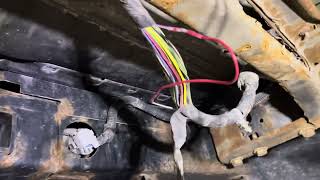
✅ What actually fixed it The owner dropped the spare tire and inspected the wiring harness that passes over the rear crossmember. They found a single dark green wire (Circuit 5986) that had chafed through the loom and insulation, showing green powdery corrosion. Repairing this single wire by splicing in a new section with solder and heat shrink, then wrapping the harness in a protective loom, permanently resolved all symptoms and codes.
Model Year Variations Within This Range
- 2015-2019: The wiring harness chafe point near the spare tire is primarily an issue on short-wheelbase models (Yukon, Tahoe). The longer wheelbase Yukon XL and Suburban models have a different harness routing in this area and are less susceptible to this specific failure, making a fault under the sill plates more likely.
Helpful Videos


We Have This Part in Stock

The information in this article is provided for general reference and educational purposes only. Vehicle specifications, procedures, and part compatibility can vary by production date, trim level, and region. Always consult your vehicle's factory service manual and verify part numbers before purchasing or performing repairs. Safety-critical components such as airbags, seat belts, and braking systems should be installed by a qualified professional.
- Gmc YUKON DENALI:
- 🎬 Helpful Videos
- 🛍️ Shop This Part
- What's Unique About the 2015-2019 Gmc YUKON DENALI
- Diagnostic Flowchart
- Symptoms You May Notice
- Most Likely Causes
- Rare But Worth Checking
- Diagnosis Steps
- Parts You'll Likely Need
- Related Codes That Often Appear With This One
- Technical Service Bulletins (TSBs) & Recalls
- Platform-Specific Known Issues
- Mechanic-Grade Diagnostic Values
- Hidden / Shadow Codes Worth Checking
- Scan Tool Commands That Help
- Wiring & Ground Locations
- Real Owner Repair Stories
- Model Year Variations Within This Range
- 🎟️ Get 5% Off