

U0077 on 2010-2017 GMC Terrain: Network Failure Causes and Fixes
Code U0077 on a 2010-2017 GMC Terrain indicates a communication failure on the vehicle's High-Speed CAN (GMLAN) data network. This is most often caused by water intrusion and corrosion in the X411 electrical connector located under the rear of the vehicle on the driver's side. Inspecting, cleaning, or replacing this connector and its terminals is the most common and well-documented fix.
- U0077 on a 2010-2017 Terrain is a network communication failure, not a single part failure.
- The most probable cause is corrosion in the X411 connector, located under the rear of the vehicle. Start your diagnosis here.
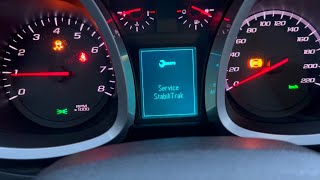
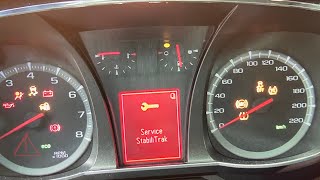
- Symptoms will include multiple, seemingly unrelated warning lights like 'Service StabiliTrak' and 'Service Power Steering'.
- Do not replace expensive modules like the EBCM or BCM until you have ruled out wiring and connector issues.
- Due to the complexity of network diagnostics, professional service is highly recommended if the issue isn't the obvious X411 connector.
What's Unique About the 2010-2017 Gmc TERRAIN 🎬 Watch: Overview of common 2010-2017 GMC Terrain problems and fixes.

For the first-generation GMC Terrain and its sibling, the Chevy Equinox (built on the same GM Theta platform), the U0077 code is strongly linked to a specific, documented weak point. Technical Service Bulletin (TSB) PIT5427B points directly to the X411 electrical connector. This connector is located in an exposed position under the rear of the vehicle, specifically behind and to the left of the fuel tank, making it highly susceptible to water intrusion and road salt. This exposure leads to corrosion that disrupts the entire communication network, triggering code U0077 along with a host of other 🎬 See how to diagnose GMC no-start and PCM communication issues. communication and system failure codes.
Diagnostic Flowchart

Tap your situation to follow the diagnostic path that matches what you're seeing on this vehicle.
Symptoms You May Notice
- Service StabiliTrak message
- Service ABS message
- Service Power Steering message
- Hard or difficult steering (loss of power steering assist)
- Check Engine Light (MIL) on
- Service AWD message (if equipped)
- Multiple warning lights on the dashboard simultaneously
- Loss of communication with various modules when using a scan tool
- Replacing the Electronic Brake Control Module (EBCM) without checking the wiring first. The EBCM is often the first module to report a fault, but the problem is frequently the wiring leading to it, not the module itself.
- Replacing wheel speed sensors. While faulty wheel speed sensors can trigger StabiliTrak warnings, they do not typically cause a U0077 network-down code. They may, however, set codes alongside U0077 if the network fault originates near their wiring.
Most Likely Causes

- Corroded or Damaged X411 Connector 🔴 High Probability As documented in TSB PIT5427B, the X411 connector is located under the rear of the vehicle, behind and to the left of the fuel tank, where it is exposed to moisture, road salt, and debris, leading to severe corrosion. The CAN bus wires passing through this connector are critical for network integrity.
How to confirm: Visually inspect the X411 connector for green or white corrosion, broken pins, or water damage. You may need to unwrap electrical tape or remove conduit to get a clear view. Wiggling the harness near the connector while monitoring scan tool data may cause communication to drop in and out.
Typical fix: If corrosion is minor, clean the connector and terminals with a specialized contact cleaner and apply dielectric grease. If damage is severe, the connector body and affected wire terminals must be cut out and replaced with a new pigtail connector and weatherproof splices.
Est. part cost: $20-$100 - Damaged Wiring Harness 🟡 Medium Probability Wiring can chafe against the chassis or other components over time, or be damaged by road debris or even rodents, causing a short or open in the CAN bus circuit. TSBs note that wires can break internally within the insulation near the X411 connector.
How to confirm: Visually inspect the wiring harnesses leading to major control modules (EBCM, BCM, TCM) for signs of rubbing, melting, or breaks. A multimeter can be used to check for continuity between pins 6 and 14 at the OBD-II port (should be around 60 ohms with the battery disconnected). A reading of 120 ohms indicates an open circuit, while a reading near 0 ohms indicates a short.
Typical fix: Repair the damaged section of wire with a new piece of wire and weatherproof butt connectors or solder and heat shrink. Reroute the harness if it was chafing to prevent a repeat failure.
Est. part cost: $5-$50 - Faulty Control Module ⚪ Low Probability An internal failure in any module on the high-speed CAN bus (e.g., EBCM, TCM, BCM) can cause it to stop communicating or 'shout' on the network with bad data, bringing the entire bus down.
How to confirm: This requires a high-end scan tool. A technician will attempt to communicate with each module individually. The definitive method is to unplug modules one by one until communication on the network is restored. The last module unplugged is the likely culprit.
Typical fix: Replace the faulty control module. The new module will require programming by a dealer or qualified shop with access to GM's software.
Est. part cost: $300-$900
Rare But Worth Checking
- Poor Ground Connection: A loose or corroded main ground for a control module can cause intermittent communication issues that mimic a bus failure. Always check major ground points on the chassis and near the BCM and EBCM.
- Low Battery Voltage: Weak or unstable battery voltage can cause unpredictable behavior in electronic modules, sometimes leading to communication error codes. Ensure the battery is fully charged (12.6V+) and the charging system is working correctly (13.7-14.7V when running) before diving into complex network diagnostics.
- High Resistance in Communication Enable Circuit: TSB PIT5457 describes an issue on other GM vehicles where high resistance in the 'Communication Enable' circuit (Circuit 5986) can cause a U0077 code. This circuit 'wakes up' modules for communication. A break or corrosion in this wire, often found under the driver's or passenger's sill plate, could be a possible, though less common, cause.
Diagnosis Steps
- Check for other stored DTCs. A U0077 code is almost always accompanied by a list of 'Lost Communication' codes (U-codes) for other modules, which is a key symptom of a network-wide failure.
- Check battery voltage and charging system health. Ensure voltage is stable and above 12.4V with the engine off and 13.7-14.7V when running.
- Locate and inspect the X411 connector. It is under the rear of the vehicle, on the driver's side, behind and to the left of the fuel tank. Carefully remove any tape or conduit and check for green/white corrosion, moisture, or damaged pins.
- If the X411 connector is clean, inspect other major harness connections, particularly at the Electronic Brake Control Module (EBCM) located under the hood on the driver's side.
- With the battery disconnected, measure the resistance between Pin 6 (CAN High) and Pin 14 (CAN Low) of the OBD-II diagnostic port. A healthy high-speed CAN bus should read approximately 60 ohms. A reading of 120 ohms indicates an open circuit or a missing terminating resistor. A reading near 0 ohms indicates a short circuit between the two CAN wires.
- If resistance is incorrect, begin unplugging modules on the high-speed CAN bus one at a time (EBCM, TCM, etc.) and re-check resistance after each one. When the resistance returns to a normal value (60 or 120 ohms, depending on the fault), the last module unplugged is likely the source of the fault.
- If wiring and modules seem okay, check the 'Communication Enable' circuit (Circuit 5986 on some GM models) for proper voltage as described in GM service information.
Parts You'll Likely Need
- Connector Body and Terminals
(OEM #19300471 (Example Pigtail Kit, verify application))— This is the most common failure point identified in TSB PIT5427B for the U0077 code on this vehicle. The original connector corrodes and requires replacement with a new pigtail.
Trusted brands: ACDelco, Dorman
OEM price range: $40-$80
Aftermarket price range: $20-$50 - Body Control Module (BCM) — If a module has failed internally and is disrupting the network, the BCM is one of the possible culprits. It acts as a gateway for many communication networks.
Trusted brands: ACDelco
OEM price range: $300-$500
Aftermarket price range: $200-$400 - Electronic Brake Control Module (EBCM) — The EBCM is a critical node on the high-speed CAN bus. Its failure can bring down the network, and it's often one of the first modules to log a communication fault.
Trusted brands: ACDelco, Bosch
OEM price range: $400-$700
Aftermarket price range: $250-$500
Related Codes That Often Appear With This One
- U0100 — Lost Communication With ECM/PCM
- U0101 — Lost Communication with TCM
- U0121 — Lost Communication With Anti-Lock Brake System (ABS) Control Module
- U0140 — Lost Communication With Body Control Module
- C0561 — System Disabled Information Stored (related to StabiliTrak)
Technical Service Bulletins (TSBs) & Recalls
- PIT5427B: Addresses multiple communication DTCs (U0077, U0100, U0101, U0121, etc.) caused by corrosion in the X411 connector, leading to StabiliTrak, ABS, and steering warnings.
- PIT5171B: An earlier TSB also pointing to the X411 harness area for chassis expansion bus communication faults and wheel speed sensor codes.
- 17-NA-268: While for the 2018+ generation, it shows that U0077 can also be caused by bent terminals at the power steering gear connector, highlighting the sensitivity of the system to connection issues.
Platform-Specific Known Issues
- TSB PIT5427B: The Smoking Gun: Technical Service Bulletin PIT5427B specifically calls out corrosion in the X411 connector as a primary cause for a host of communication DTCs, including U0077, on the 2010-2017 Terrain and Equinox. Symptoms include messages for servicing StabiliTrak, ABS, AWD, and power steering. The official fix is to inspect and replace the appropriate terminals or the entire connector as needed.
Mechanic-Grade Diagnostic Values
- High-Speed GMLAN Bus Resistance — expected: 60 Ohms (± 5 Ohms). Failure: A reading of 120 Ohms indicates an open in the bus or a missing terminating resistor. A reading near 0 Ohms indicates the CAN High and CAN Low wires are shorted together.
- GMLAN-High Wire Voltage (Dominant State) — expected: ~3.5 V. Failure: Significant deviation from 3.5V when a '0' is being transmitted indicates a bus problem.
- GMLAN-Low Wire Voltage (Dominant State) — expected: ~1.5 V. Failure: Significant deviation from 1.5V when a '0' is being transmitted indicates a bus problem.
- GMLAN Bus Voltage (Recessive/Idle State) — expected: ~2.5 V. Failure: Deviation from 2.5V on either the CAN High or CAN Low wire when the bus is idle points to a fault.
- Communication Enable Circuit Voltage — expected: ~12 V (Battery Voltage). Failure: Low or no voltage on this circuit when the ignition is ON can prevent modules from communicating, causing a U0077 code.
Scan Tool Commands That Help
- GDS2 / Tech 2: Module Isolation — If the CAN bus resistance test (60 ohms) fails, a technician can use the scan tool to methodically disconnect modules from the bus (either by pulling fuses or disconnecting them physically) to see when communication is restored to the remaining modules. This helps pinpoint a single module that is bringing the network down.
- GDS2 / Tech 2: Data Bus Diagnostic Tool — Starting in 2015, GM introduced a specific tool within GDS2 to help diagnose high-speed LAN issues. It can provide more detailed information about the bus status and which modules are not communicating.
Wiring & Ground Locations

- X411 — Under the rear of the vehicle, located behind and to the left of the fuel tank.. This is the most common failure point for U0077 on this platform. It's a large, multi-wire connector exposed to the elements, and corrosion on the CAN bus pins (terminals for the twisted pair of wires) will take down the entire network.
- Body Control Module (BCM) — Located under the driver's side of the dashboard.. The BCM acts as a central hub or gateway for multiple data networks. A failure of the BCM itself, or a bad connection at one of its main connectors (e.g., C3/X3), can cause a total network failure.
- G301 / G302 / G311 — G301 is under the driver seat, G302 and G311 are under the passenger seat.. These are major chassis ground points for various interior modules. A loose or corroded ground here can cause intermittent communication issues for modules connected to them, potentially leading to network error codes.
- Terminating Resistors — There are two 120-ohm resistors. One is internal to the Engine Control Module (ECM), and the other is at the opposite end of the high-speed bus, often within the last module on the line.. These resistors are required for signal integrity. If a wire breaks leading to the final module, its resistor is lost from the circuit, changing the total bus resistance from 60 ohms to 120 ohms and causing communication errors.
Real Owner Repair Stories
- equinoxforum.net user (2011 Chevrolet Equinox) — Service Stabilitrak, Service Power Steering, hard steering, multiple communication codes including U0077.
❌ Tried (didn't work) Initial diagnosis pointed towards a faulty module.
✅ What actually fixed it The problem was traced to corrosion inside the X411 connector under the rear of the vehicle. The user reported finding green, corroded terminals. Cleaning the connector and applying dielectric grease resolved all symptoms and codes.
Model Year Variations Within This Range
- 2010-2017: While TSB PIT5427B covers the entire first generation, the bulletin was updated over time (from PIT5427 to PIT5427A and finally PIT5427B) to include newer model years as the same corrosion issue continued to appear.
Helpful Videos


We Have This Part in Stock



The information in this article is provided for general reference and educational purposes only. Vehicle specifications, procedures, and part compatibility can vary by production date, trim level, and region. Always consult your vehicle's factory service manual and verify part numbers before purchasing or performing repairs. Safety-critical components such as airbags, seat belts, and braking systems should be installed by a qualified professional.
- Gmc TERRAIN:
- 🎬 Helpful Videos
- 🛍️ Shop This Part
- What's Unique About the 2010-2017 Gmc TERRAIN
- Diagnostic Flowchart
- Symptoms You May Notice
- Most Likely Causes
- Rare But Worth Checking
- Diagnosis Steps
- Parts You'll Likely Need
- Related Codes That Often Appear With This One
- Technical Service Bulletins (TSBs) & Recalls
- Platform-Specific Known Issues
- Mechanic-Grade Diagnostic Values
- Scan Tool Commands That Help
- Wiring & Ground Locations
- Real Owner Repair Stories
- Model Year Variations Within This Range
- 🎟️ Get 5% Off