

OBD-II Code U0074: Control Module Communication Bus 'B' Off
What U0074 means, why it triggers, and how to fix it
- Code U0074 indicates a total communication failure on CAN Bus 'B', immediately disabling critical safety systems like ABS and power steering, making the vehicle unsafe to drive.
- Over 80% of U0074 codes stem from physical wiring faults—such as a chafed harness or a corroded connector—rather than a failed control module.
- Begin diagnosis by verifying battery voltage is above 12.4V, as low voltage triggers false communication codes before any wiring actually fails.
- Never replace a control module without first measuring the network resistance at OBD-II pins 6 and 14; a healthy bus must read exactly 60 ohms.
What Does U0074 Mean?

U0074 means the control modules in your car stopped communicating on a specific network called 'Bus B'. Think of it as the internal internet going down for a group of essential systems. When they cannot share information, these systems shut down, act erratically, or default to a dangerous state, like a fuel pump running at maximum pressure constantly.
Technical definition: The official SAE/OBD-II definition is "Control Module Communication Bus 'B' Off". This indicates a module on the Bus 'B' network detected a total loss of communication for a predetermined period. This network is typically a medium-speed CAN bus responsible for chassis, body, and powertrain accessory functions, unlike the high-speed 'Bus A' (U0073) which handles critical engine and transmission data.
Can I Drive With U0074?
No — Do Not Drive. Do not drive the vehicle. This code signifies a critical failure in the communication network managing essential safety systems. You will likely experience a sudden, complete loss of power steering, anti-lock brakes (ABS), and stability control. The vehicle often enters a low-power 'limp mode' or shuts off entirely without warning, creating a severe safety hazard.
Common Causes

- Damaged or Chafed Wiring Harnesses (Very Common) — Wires rubbing through their insulation against a chassis bracket or engine component create a short circuit, immediately taking the communication bus offline.
- Corroded Connectors from Water Intrusion (Very Common) — Moisture from rain or road salt seeps into unprotected connectors, causing green corrosion that blocks electrical signals between modules.
- Poor or Corroded Ground Connection (Common) — Control modules rely on solid ground connections to the chassis. A loose or rusty ground introduces electrical noise, causing communication to fail.
- Faulty Control Module (Common) — Any single computer (BCM, EBCM, etc.) on the network can fail internally and disrupt the entire bus, preventing other healthy modules from talking.
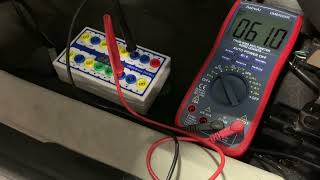
- Failed Terminating Resistor (Less Common) — CAN Bus networks require a 120-ohm resistor at each end. If one resistor fails or its wiring breaks, the network resistance jumps to 120 ohms 🎬 Watch: How to test resistance on the CAN bus network, halting communication.
- Improperly Installed Aftermarket Accessories (Less Common) — Aftermarket alarms, remote starters, or audio systems incorrectly spliced into the vehicle's data network interfere with signals and crash the bus.
- Failing Alternator or Voltage Spikes (Rare) — A failing alternator regulator causes voltage surges. These spikes disrupt sensitive CAN bus signals, forcing network controllers to shut down as a protective measure.
- Software Glitches (Rare) — A software bug within a control module stops it from communicating properly. This is resolved by reprogramming the module with the manufacturer's latest software.
Symptoms

- Multiple Warning Lights on Dashboard — Sudden illumination of many warning lights at once, including Check Engine, ABS, Airbag, StabiliTrak, and Traction Control.
- Vehicle Enters 'Limp Mode' or Won't Start — The vehicle reduces engine power or refuses to start because the engine computer cannot communicate with the transmission or fuel pump.
- Loss of Power Steering or Erratic Shifting — Sudden loss of power steering assist or harsh, erratic transmission shifting 🎬 See how these communication codes cause limp mode and shifting issues due to offline control modules.
- Loss of Electronic Features — Power windows, door locks, interior lights, radio, or the instrument cluster display stop working entirely.
- Fuel Gauge Reads Empty — The fuel gauge drops to empty and the fuel light illuminates, even with a full tank, because communication with the fuel pump control module is lost.
Diagnostic Flowchart

Tap your situation to follow the diagnostic path that matches what you're seeing on this code.
Common Fixes & Costs
- Repairing Damaged Wiring Harness — Parts: $10-$50, Labor: $200-$800, ~2.5 hr book time (Professional)
- Cleaning or Replacing Corroded Connector — Parts: $20-$100, Labor: $150-$300, ~1.5 hr book time (Intermediate)
- Cleaning or Repairing a Ground Connection — Parts: $5-$20, Labor: $100-$200, ~1 hr book time (DIY)
- Replacing a Faulty Control Module (e.g., BCM, EBCM) — Parts: $400-$900+, Labor: $150-$300 (includes programming), ~1.5 hr book time (Professional)
- Professional Diagnostics — Parts: $0, Labor: $150-$450, ~2 hr book time (Professional)
Used vs. New Parts: Buying Guide
When a used part is worth it: For control modules (BCM, EBCM), a used part from a reputable recycler is a cost-effective option for older vehicles where new parts are scarce. It makes sense when the donor vehicle's history (low mileage, no flood damage) is known.
Donor-vehicle mileage cap: roughly under 100000 miles for the part to have meaningful remaining life.
Donor quality checklist:
- Verify the part number matches exactly; modules often look identical but have different internal programming.
- Ask for the donor vehicle's VIN to check for accident history or flood damage.
- Inspect connectors for any signs of corrosion, bent pins, or physical damage.
- Prefer sellers who offer at least a 90-day warranty.
Decision logic:
- If The part is a wiring harness and the damage to yours is localized → Repair your existing harness or buy a connector pigtail; a used harness carries its own hidden faults.
- If The part is a control module for a vehicle less than 10 years old → Favor a new or remanufactured module with a lifetime warranty; the cost difference is justified by reliability.
- If The part is a control module that requires VIN programming → Factor in the cost of programming for both new and used options; a used module is not plug-and-play.
Warranty tradeoff: Used parts typically come with a 30-90 day warranty covering part replacement only. Remanufactured modules offer a 1-year to limited lifetime warranty. New OEM parts carry a 1-2 year warranty if installed by a dealer.
Worst-case if a used part fails: $300-$600 if a used module is dead on arrival, covering repeat diagnostic and programming labor.
What Happens If You Wait — Timeline
- 0-4 weeks: Intermittent fault. Warning lights flicker during a drive, often after hitting a bump or in heavy rain, then disappear on the next startup. Caused by initial corrosion or a wire starting to chafe. (MPG impact: 0%% · Added cost: $0)
- 1-3 months: Frequent fault. Multiple warning lights stay on for entire drives. The vehicle unexpectedly enters 'limp mode' or loses power steering. The wire chafe deepens or corrosion spreads. (MPG impact: 0-5%% · Added cost: $150-$250 (Cost of a tow if stranded))
- 3-6 months: Hard fault. The vehicle is in a permanent no-start condition or stalls immediately. The communication bus is completely offline, requiring a tow and professional electrical diagnostics. (MPG impact: N/A (Vehicle is undrivable)% · Added cost: $300-$600 (Cost of tow plus diagnostic labor))
- 6+ months: Cascading failure. Repeatedly attempting to start a vehicle with a severely unstable network causes voltage spikes, permanently damaging sensitive transceivers in previously healthy control modules. (MPG impact: N/A% · Added cost: $800-$2500+ (Cost of wiring repair PLUS new control modules and programming))
Cost of Not Fixing It
- Immediate: Severe safety risk. The vehicle stalls while driving or loses critical functions like power steering, ABS, and stability control without warning. (Added cost: $0 (but risk of accident is high))
- Days to Weeks: Potential for cascading electrical failures. Continued attempts to start or drive with an unstable network causes voltage spikes that damage healthy control modules. (Added cost: $500 - $2000+)
- Weeks to Months: Stranding and progressive damage. The initial intermittent fault worsens, leading to a permanent no-start condition. Modules repeatedly power-cycled under fault conditions suffer internal logic failure. (Added cost: $1500 - $4000+)
Diagnosis Steps
- Check Battery and Connections
Ensure the battery is fully charged (above 12.4 volts) and terminals are clean and tight. Low voltage causes unpredictable communication errors between modules.
Tools: Multimeter, Battery Terminal Cleaner (Beginner) - Perform a Full Vehicle Scan
Use an OBD-II scanner to read codes from all modules. Create a list of which modules are not communicating. This list is your primary clue to locating the fault.
Tools: Advanced OBD-II Scanner (Beginner) - Measure Network Resistance
With the battery disconnected, measure resistance between CAN High and CAN Low at the DLC (pins 6 and 14). A healthy network reads 60 ohms. 120 ohms indicates an open circuit; 0 ohms indicates a short.
Tools: Multimeter (Advanced) - Thorough Visual Inspection & TSB Check
Inspect all accessible wiring harnesses and connectors associated with the offline modules. Look for chafed wires or green corrosion. Search for Technical Service Bulletins (TSBs) related to U0074 for your specific vehicle.
Tools: Flashlight, Inspection Mirror (Intermediate) - Perform a 'Wiggle Test'
While monitoring network resistance with a multimeter, systematically wiggle wiring harnesses and connectors. If resistance jumps between 60 and 120 ohms, you found the location of an intermittent open circuit.
Tools: Multimeter (Intermediate) - Check for Blown Fuses
A short circuit blows fuses powering control modules. Check under-hood and in-cabin fuse boxes for blown fuses related to the BCM, EBCM, or TCM.
Tools: Fuse Puller, Test Light or Multimeter (Beginner) - Isolate the Faulty Module or Wire
If resistance is 120 ohms, disconnect modules one by one until resistance returns to 60 ohms. If disconnecting a module fixes the resistance, that module or its connector is the problem.
Tools: Multimeter, Vehicle-Specific Wiring Diagrams (Advanced) - Measure Network Voltage (Static)
With Key On, Engine Off, measure DC voltage. CAN High (Pin 6) to ground should read 2.6V-3.0V. CAN Low (Pin 14) to ground should read 2.0V-2.4V. Readings outside this range indicate a short or module failure.
Tools: Multimeter, Back-Probe Pins (Advanced) - Analyze Live Fuel System Data (GM Specific)
If U0074 is accompanied by P2635 on a GM vehicle, monitor live data from the Fuel Pump Control Module. If the scanner shows no data, it confirms communication loss is the root cause, not the pump.
Tools: Advanced OBD-II Scanner, Fuel Pressure Gauge (Advanced) - Check Network Voltage with an Oscilloscope
Connect a two-channel oscilloscope to CAN High and CAN Low. A healthy bus shows a 'mirror image' square waveform. A flat or distorted line confirms a network fault and pinpoints the exact electrical failure.
Tools: Automotive Oscilloscope, Back-Probe Pins (Professional)
When This Code Triggers (Freeze-Frame Conditions)
- Engine Coolant Temp: 180-210°F (Fully warmed up)
- RPM: 1200-2500 (During cruise or steady throttle application)
- Vehicle Speed: 30-60 mph (Highway or city cruising speeds)
- System Voltage: 13.5-14.5V (Normal charging system operation)
Related Codes
- U0073 — Indicates 'Control Module Communication Bus A Off'. Bus 'A' is a high-speed CAN for critical powertrain components, while Bus 'B' (U0074) is a medium-speed CAN for body and chassis controls.
- U0100 — Indicates 'Lost Communication With ECM/PCM'. Appears with U0074 if the Engine Control Module is on the affected bus. If you cannot talk to any module, the entire bus is down (U0074).
- U0101 — Indicates 'Lost Communication with TCM'. If U0101 appears by itself, the problem is isolated to the Transmission Control Module wiring, not the entire network.
- P2635 — Indicates 'Fuel Pump Flow Performance'. On GM vehicles, this is a direct symptom of U0074. The ECM sets P2635 because it lost communication with the Fuel Pump Control Module. Fix U0074 first.
Climate & Environmental Factors
- Humidity and Moisture: High humidity, heavy rain, and car washes introduce moisture into unprotected electrical connectors. This leads to pin corrosion, increasing resistance and causing short circuits.
- Winter Conditions and Road Salt: In regions using road salt, exposed under-vehicle connectors and chassis grounds are highly susceptible to accelerated corrosion, a primary cause of communication failures.
- Extreme Cold: Cold temperatures make wire insulation brittle and likely to crack from engine vibration, creating an open circuit. Metal contraction also loosens critical electrical connections.
- High Electrical Load in Cold Weather: Running heaters, defrosters, and seat warmers puts heavy strain on the electrical system. This increased load exposes underlying weaknesses in wiring or grounds.
How to Talk to a Mechanic About This Code
Say this: "I have a U0074 'Control Module Communication Bus B Off' code with multiple warning lights. I'd like to authorize one hour of diagnostic time to specifically test the CAN bus resistance and visually inspect for common wiring issues like corrosion or chafing before we discuss replacing any expensive modules."
This signals that you understand the code's meaning and that the most common cause is a wiring fault, not a failed computer. It directs the technician to perform the correct, cost-effective initial diagnostic steps.
Avoid saying:
- 'My check engine light is on, can you look at it?'
- 'Just fix whatever is wrong.'
- 'My car is acting crazy, I think the computer is fried.'
Questions to ask before authorizing the repair:
- What was the CAN bus resistance reading between pins 6 and 14?
- If you're recommending a module replacement, how did you verify the wiring and power/ground to that module are good?
- Did you check for any Technical Service Bulletins (TSBs) related to this code on my vehicle?
- Does the repair estimate for the new module include the cost of VIN programming?
Where to Take It: Dealer vs Independent vs Chain
- Dealer:
Best for: Vehicles still under warranty, Complex, brand-specific electrical issues where TSBs are critical, When you want the repair done with OEM parts and procedures, and cost is a lower concern.
Downsides: Highest labor rates, May default to module replacement instead of intricate wiring repair. (Typical cost: +50% vs. baseline) - Independent Shop:
Best fit, IF you can find a highly-rated independent shop that specializes in electrical and diagnostic work. They are more likely to perform a cost-effective wiring repair.
Best for: Out-of-warranty vehicles where cost is a major factor., Shops that specialize in automotive electrical diagnostics.
Downsides: Quality and expertise vary widely; you must find a shop with proven electrical skills and tools (like an oscilloscope), not just a general mechanic. (Typical cost: +0% vs. baseline) - Chain Shop:
AVOID. This type of complex electrical fault is far outside the scope of most chain repair shops and is highly likely to result in an incorrect and expensive repair attempt.
Best for: Simple, routine maintenance like oil changes, tires, and brakes.
Downsides: Technicians are often not equipped or trained for complex network diagnostics., High risk of misdiagnosis, leading to unnecessary and expensive parts replacement. (Typical cost: -10% vs. baseline)
When to Walk Away From the Repair
If the estimated repair cost for the U0074 fault exceeds 40-50% of your car's private-party value, you should seriously consider selling the vehicle as-is or trading it in.
- Car worth $5000, fix is $2500: Walk away. The repair cost is 50% of the car's value, and there's a risk of other age-related issues.
- Car worth $15000, fix is $600: Fix it. This is a relatively inexpensive wiring repair that is well below the threshold.
- Car worth $3000, fix is $2000: Walk away. The repair cost is 67% of the car's value, making it a poor investment.
What Scan Tool You Need for This Code
Minimum: A scanner that can perform an 'All Module Scan' or 'Network Test' to see which specific modules are online or offline.
A basic $20 code reader only checks the engine computer. It sees the U0074 code but cannot tell you which other modules (ABS, BCM, TCM) dropped off the network. Without a list of non-communicating modules, diagnosis is pure guesswork.
Budget: BlueDriver Pro Scan Tool (~$100) — Reads and clears codes from all systems (ABS, Airbag, Transmission, etc.), providing the critical list of non-communicating modules. Also provides live data graphing.
Mid-range: Foxwell NT510 Elite (~$180) — Offers all features of the budget pick plus bidirectional controls (active tests) to command components directly, confirming if a module receives power and commands.
Professional: Autel MaxiCOM MK808 / Launch X431 CRP919XBT (~$450-800) — Provides full bidirectional control, all-module network scanning, and advanced ECU coding/programming functions. Essential for confirming a failed module and programming a new one.
Rent vs buy: For a one-time fix, borrow a scanner from AutoZone's Fix Finder service, but be aware it may be a basic model. Given the complexity of U0074, buying a capable scanner like the BlueDriver is a worthwhile investment.
How to Clear the Code After You Fix It
- Reconnect the battery if it was disconnected for the repair.
- Use a quality OBD-II scan tool to clear all Diagnostic Trouble Codes (DTCs) from all modules.
- Perform a complete drive cycle to allow the vehicle's readiness monitors to reset.
Drive cycle (~20 minutes): Start the vehicle from a cold start (has sat for at least 8 hours). Let it idle for 2-3 minutes. Drive in mixed city/highway conditions, including several minutes of steady-state cruising between 45-60 mph. Perform several smooth accelerations and decelerations. Allow the vehicle to idle for another 1-2 minutes before shutting it off. The goal is to let the engine warm up completely and run at various speeds.
Readiness monitors affected: Comprehensive Component Monitor, Misfire Monitor
Before emissions retest: drive at least 50 miles to fully set monitors.
Watch out for:
- Simply disconnecting the battery clears the code, but resets all readiness monitors, causing an immediate emissions test failure.
- The U0074 code returns instantly upon the next key cycle if the underlying electrical fault is not properly repaired.
- Some vehicles require a specific drive cycle procedure from the manufacturer to reset all monitors quickly.
Will This Fail Emissions / State Inspection?
Yes — this code typically fails an OBD-II emissions inspection.
- California: A U0074 code illuminating the Malfunction Indicator Lamp (MIL) is an automatic failure. All readiness monitors must also be 'Ready', requiring a full drive cycle after repair.
- New York: An illuminated Check Engine Light results in an automatic failure of the NYS emissions inspection. The vehicle must be driven through a complete drive cycle post-repair.
- Texas: In the 17 counties requiring emissions testing, an active U0074 code causes an automatic failure. The vehicle fails if the MIL is commanded on, even if the bulb is burned out.
Most Commonly Affected Vehicles
- GMC Terrain, Acadia (2010-2017) — Prone to corrosion in the X411 electrical connector under the rear of the vehicle, a well-documented issue covered by GM TSB PIT5427B.
- Chevrolet Tahoe / Silverado / Suburban (2014-2018) — Often caused by a chafed wiring harness near the battery tray support bracket (TSB 23-NA-074) or a bad G218 ground under the driver's dash.
- Ford F-150 (2017-2020) — Frequently caused by the transmission wiring harness rubbing against the transmission bellhousing or transfer case, noted in Ford TSBs SSM 47097 and SSM 48563.
- Dodge / Chrysler / Jeep Various (JL Wrangler, Ram) (2018+) — On JL Wranglers, caused by corrosion in D440 and D441 circuit wires. On Ram trucks, issues trace to a faulty Totally Integrated Power Module (TIPM).
- Ford Power Stroke Diesel Trucks (F-250/F-350) (2013-2019) — Commonly triggered by moisture in unplugged exhaust sensor connectors after a DPF delete. Filling unused connectors with dielectric grease is critical.
- Subaru / Toyota BRZ / 86 (2015+) — Using a Bluetooth OBD-II scanner with an app like Torque triggers a U0074 code if the app runs during startup. This is a harmless software glitch.
- Toyota Hilux / Revo (2019+) — Resolved by locating, disconnecting, cleaning, and firmly reseating the two main harness pass-through connectors behind the glove box and on the driver's side.
- Chevrolet / GMC Silverado / Sierra / Tahoe / Yukon (2022+) — The gateway module architecture changed, featuring a different connector layout. Faults frequently trace to a loose connector located under the passenger seat.
Manufacturer-Specific Notes
- General Motors (Chevrolet/GMC): On 2014-2018 trucks, the primary cause is a wiring harness chafing against the battery tray bracket (TSB 23-NA-074) or a corroded X411 connector (TSB PIT5427B). These are repair guides, not recalls.
- Ford: On 2017-2020 F-150s, the code is frequently caused by an unsecured transmission wiring harness rubbing through and shorting out (SSM 47097, SSM 48563). Repair coverage depends on warranty status.
- Dodge: On some Dodge vehicles, U0074 has a manufacturer-specific definition related to a stuck fuel level sensor gauge, differing from the standard network communication definition.
- Toyota (Hilux/Revo): A common fix for 2019+ models is accessing the main harness connectors behind the glove box. Disconnecting, cleaning, and reseating these connectors restores communication without parts replacement.
Real Owner Stories
2015 GMC Terrain at 115K miles with multiple warning lights
Owner reported Service StabiliTrak, ABS, and AWD lights illuminated simultaneously. The vehicle lost power steering assist intermittently during wet weather. A local shop quoted over $1,500 to replace the Electronic Brake Control Module (EBCM).
What they tried:
- Declined the initial repair and searched online forums.
- Found GM TSB PIT5427B pointing to the X411 connector.
- Located the X411 connector under the rear of the vehicle, near the fuel tank.
Outcome: The connector was packed with green corrosion. The owner disconnected the battery, cleaned the pins with electrical contact cleaner, applied dielectric grease, and reconnected it. All warning lights cleared and systems returned to normal. Total cost was under $20.
Lesson: Always check for Technical Service Bulletins (TSBs) related to your specific vehicle. A well-documented issue is often an inexpensive wiring fix, not a catastrophic module failure.
2018 Ford F-150 at 65K miles with erratic shifting and no-start
Truck shifted harshly, then refused to crank or start the next morning. The dashboard displayed multiple warnings. The owner towed it to the dealership.
What they tried:
- Dealer technician performed a network test and found the main communication bus offline.
- Technician consulted Ford TSBs SSM 47097 and SSM 48563 regarding a known wiring harness issue.
Outcome: The transmission wiring harness rubbed against a bellhousing stud, chafing through the insulation and shorting the CAN bus wires. The tech repaired the wires and secured the harness with a zip tie. The repair was covered under powertrain warranty, avoiding a $500 out-of-pocket cost.
Lesson: A sudden, total network failure is frequently caused by physical wiring damage. A 'wiggle test' of harnesses while monitoring network resistance pinpoints the break.
2014 Ford F-250 Power Stroke (DPF-deleted) at 130K miles
After driving through a snowstorm, the check engine light illuminated with code U0074. The code returned immediately after clearing. The glow plug light also stopped illuminating during startup.
What they tried:
- Suspected moisture intrusion in an electrical connector.
- Recalled several exhaust sensor connectors were left unplugged under the truck after the DPF delete.
- Checked the glow plug module fuse (#36) and found it blown.
Outcome: An unplugged NOx sensor connector filled with salty slush, causing a short that blew the fuse and disabled the bus. The owner cleaned the connector, packed it with dielectric grease, capped it, replaced the 15A fuse, and cleared the code.
Lesson: On modified vehicles, unplugged harness connectors are primary failure points. They must be sealed with dielectric grease and caps to prevent moisture from shorting the data network.
2015 Chevy Silverado with U0074 and P2635 codes
Truck set a check engine light with codes U0074 and P2635 (Fuel Pump Flow Performance). The fuel gauge dropped to empty. Seeing P2635, the owner assumed the fuel pump failed.
What they tried:
- Replaced the in-tank fuel pump for $600.
- Codes and symptoms returned immediately upon startup.
Outcome: A professional technician referenced GM TSB PIP5427B, stating U0074 is the root cause and P2635 is merely a symptom of the ECM losing communication with the Fuel Pump Control Module (FPCM). The actual problem was a corroded wire near the FPCM above the spare tire. A $150 wire repair fixed both codes.
Lesson: When a 'U' (communication) code appears alongside 'P' (powertrain) codes, the 'U' code takes absolute diagnostic priority. Fixing the communication restores the other systems.
How to Prevent This Code From Triggering
- Apply Dielectric Grease to At-Risk Connectors (Once, or whenever a connector is serviced) — Dielectric grease seals out moisture. Applying it to rubber seals and the outside of exposed connectors prevents road salt and dirt from corroding metal pins.
- Inspect and Secure Wiring Harnesses (During every oil change) — Many U0074 faults stem from harnesses rubbing against sharp metal brackets. Visually inspect harnesses and add zip ties to pull them away from chafe points.
- Perform Regular Undercarriage Washes (Monthly, especially in winter (Salt Belt regions)) — Road salt destroys electrical components. Washing the undercarriage removes corrosive grime from exposed grounds and connectors.
- Seal Unused Connectors on Modified Vehicles (Immediately after modification) — Unplugged factory connectors remain tied to the network. They must be packed with dielectric grease and sealed with caps to prevent water from shorting the entire bus.
- Maintain Battery Health (Every 6 months) — Control modules require stable voltage. A weak battery causes voltage drops during startup, leading to communication glitches and false 'U' codes.
Frequently Asked Questions
Can a bad battery cause a U0074 code?
Yes. A battery with low voltage (below 12.4V) or bad terminals causes modules to malfunction and triggers communication codes. Always check the battery and charging system first as it is the simplest starting point.
Will clearing the code fix the problem?
No. U0074 indicates a hard fault in the communication system. Clearing the code only makes it disappear temporarily; it returns immediately once the modules attempt to communicate again.
What is the most common mistake when diagnosing U0074?
The most costly mistake is immediately replacing a control module without performing a thorough diagnosis of the wiring harness and grounds. Over 80% of the time, the problem is a simple wiring issue, not a failed computer.
What is a terminating resistor and how do I test it?
It is a 120-ohm resistor placed at each end of the CAN bus network. Test this by disconnecting the battery and measuring resistance between Pin 6 and Pin 14 of the OBD-II port. A reading of 120 ohms means one resistor or its wire is open.
Why did so many warning lights come on at once?
The single data network connecting all those systems failed. The ABS, Airbag, and Engine modules stopped talking to each other, so each reported a fault and turned on its respective light.
How do you test a CAN bus system?
The basic test is measuring resistance between the two CAN lines (pins 6 and 14) with the battery disconnected; it must be 60 ohms. The advanced method uses an oscilloscope to view voltage signals while the vehicle is on, identifying shorts or interference.
What happens when a CAN bus fails?
Modules on that network can no longer exchange information. This leads to multiple warning lights, loss of power steering or ABS, the vehicle entering limp mode, or a no-start condition.
My car was modified (e.g., DPF delete, aftermarket stereo). Could that cause this?
Absolutely. Improperly installed aftermarket accessories tapping into data lines are a common cause. On diesel trucks, unplugged exhaust sensor connectors corrode from moisture and short out the network.
Key Takeaways
- Code U0074 indicates a total communication failure on CAN Bus 'B', immediately disabling critical safety systems like ABS and power steering, making the vehicle unsafe to drive.
- Over 80% of U0074 codes stem from physical wiring faults—such as a chafed harness or a corroded connector—rather than a failed control module.
- Begin diagnosis by verifying battery voltage is above 12.4V, as low voltage triggers false communication codes before any wiring actually fails.
- Never replace a control module without first measuring the network resistance at OBD-II pins 6 and 14; a healthy bus must read exactly 60 ohms.
Helpful Videos

The information in this article is provided for general reference and educational purposes only. Vehicle specifications, procedures, and part compatibility can vary by production date, trim level, and region. Always consult your vehicle's factory service manual and verify part numbers before purchasing or performing repairs. Safety-critical components such as airbags, seat belts, and braking systems should be installed by a qualified professional.
- 🎬 Helpful Videos
- What Does U0074 Mean?
- Can I Drive With U0074?
- Common Causes
- Symptoms
- Diagnostic Flowchart
- Common Fixes & Costs
- Used vs. New Parts: Buying Guide
- What Happens If You Wait — Timeline
- Cost of Not Fixing It
- Diagnosis Steps
- When This Code Triggers (Freeze-Frame Conditions)
- Related Codes
- Climate & Environmental Factors
- How to Talk to a Mechanic About This Code
- Where to Take It: Dealer vs Independent vs Chain
- When to Walk Away From the Repair
- What Scan Tool You Need for This Code
- How to Clear the Code After You Fix It
- Will This Fail Emissions / State Inspection?
- Most Commonly Affected Vehicles
- Manufacturer-Specific Notes
- Real Owner Stories
- 2015 GMC Terrain at 115K miles with multiple warning lights
- 2018 Ford F-150 at 65K miles with erratic shifting and no-start
- 2014 Ford F-250 Power Stroke (DPF-deleted) at 130K miles
- 2015 Chevy Silverado with U0074 and P2635 codes
- How to Prevent This Code From Triggering
- Frequently Asked Questions
- Can a bad battery cause a U0074 code?
- Will clearing the code fix the problem?
- What is the most common mistake when diagnosing U0074?
- What is a terminating resistor and how do I test it?
- Why did so many warning lights come on at once?
- How do you test a CAN bus system?
- What happens when a CAN bus fails?
- My car was modified (e.g., DPF delete, aftermarket stereo). Could that cause this?
- Key Takeaways
- 🎟️ Get 5% Off