

U0073 on 2014-2019 Toyota Corolla: Control Module Communication Bus 'A' Off Explained
This code means there's a major communication failure on the vehicle's main data network (CAN bus). The most common causes are a weak battery, wiring problems, or a faulty control module (especially the ABS module). Diagnosis is complex and usually requires professional help, but checking the battery first is a crucial DIY step.
- U0073 is a critical network failure code; do not continue to drive the vehicle.
- Before suspecting expensive modules, ALWAYS test the 12V battery and check its connections. A weak battery is a common and simple-to-fix cause.
- Thoroughly inspect all visible wiring for damage, especially if any aftermarket accessories have been installed.
- This code is very difficult to diagnose without professional tools and experience. A simple code reader is not enough.
- Do not replace expensive modules like the ECU or ABS controller without performing a full network diagnostic to confirm they are the source of the failure.
What's Unique About the 2014-2019 Toyota Corolla
For the 11th generation Corolla (2014-2019), the U0073 code is a serious network fault that often points to an electrical issue rather than a specific mechanical part failure. Owners have reported that issues as simple as a failing battery with low voltage (dropping to 9V during diagnosis) can trigger this code, leading to misdiagnosis of more expensive components like the ABS module. Additionally, improperly installed aftermarket electronics, such as head units or remote starters, can interfere with the CAN bus and cause this fault.
Symptoms You May Notice
- Multiple warning lights on the dashboard, especially Check Engine, ABS, and Traction Control.
- Engine may not start, or may stall unexpectedly.
- Transmission may be stuck in one gear (limp mode) or shift erratically.
- Loss of power steering assist (if equipped with electric power steering).
- Instrument cluster gauges may drop to zero or behave erratically.
- Sluggish performance and poor stability, with a noticeable lack of assistance when cornering.
- Speedometer works intermittently or not at all.
- Replacing individual sensors (like wheel speed sensors) when the issue is a network-wide failure.
- Replacing the ABS module or ECU without first verifying battery health and wiring integrity. A dealership misdiagnosed a bad battery as a faulty ABS module for one owner.
Most Likely Causes
- Weak or Failing Battery 🔴 High Probability Modern control modules are highly sensitive to voltage. A battery providing low or unstable voltage can cause modules to fail to initialize correctly, leading to network communication errors.
How to confirm: Test the battery voltage with a multimeter. It should be above 12.4 volts with the engine off and 13.8-14.5V while running. One owner confirmed a reading of 9 volts via a scanner was the root cause. Check the voltage while cranking; a significant drop below 9-10 volts indicates a weak battery.
Typical fix: Replace the vehicle's 12V battery.
Est. part cost: $150-$250 - Damaged Wiring or Connectors 🟡 Medium Probability The CAN bus wiring harness runs throughout the vehicle. Wires can become damaged from vibrations, improper repairs, rodent activity, or corrosion in exposed areas, causing a short or open circuit in the network. Areas near the wheels (wheel speed sensor harnesses) and under the dash are common points of failure.
How to confirm: Visually inspect major wiring harnesses in the engine bay, under the dashboard, and near the wheels. Check for chafed wires, corrosion in connectors, or signs of rodent damage. A professional would use a multimeter to check for 60 ohms of resistance across the CAN High (Pin 6) and CAN Low (Pin 14) pins at the OBD-II port.
Typical fix: Repair the damaged section of the wiring harness and protect it from future damage. Clean or replace corroded connectors.
Est. part cost: $10-$100 for repair supplies - Faulty Control Module ⚪ Low Probability Any single module on the network (e.g., ABS, ECM, instrument cluster) can fail internally and broadcast erroneous data or stop communicating, effectively jamming the entire network. On some Toyota models, an internal failure of a capacitor on the ABS module circuit board has been identified as a specific cause.
How to confirm: This requires an advanced scan tool to see which modules are not responding. The diagnostic process involves unplugging modules one by one to see if communication is restored. If unplugging the ABS module, for example, allows other modules to talk again, the ABS module is the likely culprit. A burnt smell near a module can also indicate failure.
Typical fix: Replace the faulty control module. The new module may require programming by a dealer or qualified shop. In some cases, a specialist can repair the circuit board of the existing module.
Est. part cost: $400-$1500+ depending on the module - Interference from Aftermarket Electronics ⚪ Low Probability Improperly installed aftermarket parts like remote starters, alarms, or stereo head units that tap into the CAN bus can disrupt communication.
How to confirm: If the problem started after installing an aftermarket device, disconnect it completely and see if the U0073 code disappears. A user on Reddit noted their U0073 code appeared as their aftermarket head unit began to fail and lose steering wheel control input.
Typical fix: Remove the faulty device or have it professionally re-installed correctly.
Est. part cost: $0 if removing
Rare But Worth Checking
- Blown Fuse: A fuse that powers a critical control module (ECU, ABS, etc.) can blow, taking the module offline and potentially causing network communication codes. Always check fuses early in the diagnostic process.
- Poor Main Ground Connection: A loose or corroded main engine or chassis ground can create electrical noise and voltage stability issues, leading to a variety of electronic problems including network faults.
Diagnosis Steps
- Check Battery Health: Ensure the battery is fully charged (12.4V+ engine off, 13.8V+ running) and holds a charge under load. A weak battery is a very common and simple cause.
- Scan for All Codes: Use a high-quality scan tool to pull codes from ALL modules (Engine, ABS, Body, etc.). Note which modules are not responding.
- Inspect Fuses: Check all fuses related to the ECU, BCM, and ABS systems.
- Visual Inspection: Thoroughly inspect visible wiring harnesses for damage, corrosion, or loose connections, especially around the engine bay, battery, under the driver's dash, and wheel wells.
- Check for Aftermarket Devices: If any aftermarket electronics are installed, temporarily disconnect them to rule out interference.
- CAN Bus Resistance Test (Professional): Measure the resistance between Pin 6 (CAN-H) and Pin 14 (CAN-L) on the OBD-II port with the battery disconnected. A healthy network should read approximately 60 Ohms. A reading of 120 Ohms indicates a problem with a terminating resistor or module, while an open or shorted reading points to a wiring fault.
- Isolate the Faulty Module (Professional): If wiring and resistance are good, begin disconnecting non-essential modules one by one, cycling the key each time to see if communication is restored. The last module disconnected before the network comes back online is likely the faulty one.
Parts You'll Likely Need
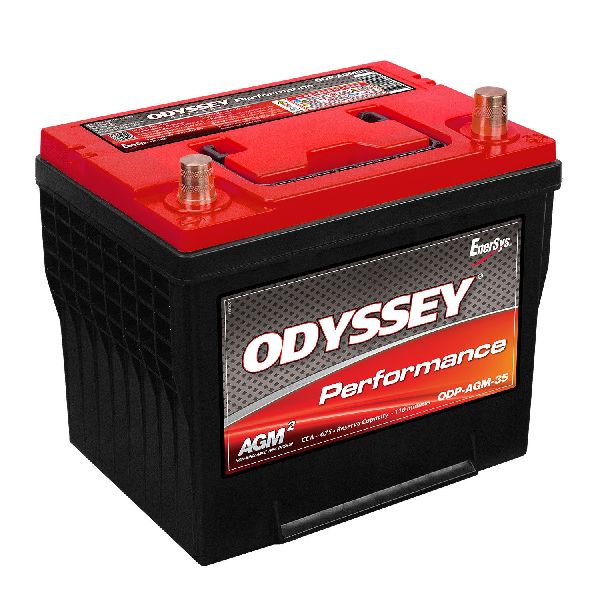
- 12V Battery — A weak or failing battery is a frequent and simple cause for network communication errors on modern vehicles.
Trusted brands: Toyota TrueStart, Interstate, DieHard
OEM price range: $200-$280
Aftermarket price range: $150-$250 - ABS Control Module / Actuator Assembly
(OEM #44540-02290 (Check specific VIN))— If a module is determined to be the cause, the ABS module is a potential culprit that can bring down the network. It is often implicated when ABS and VSC lights are present with U0073.
Trusted brands: Toyota (OEM), Advics, Bosch
OEM price range: $1000-$2000+
Aftermarket price range: $500-$1200 - Engine Control Module (ECM)
(OEM #e.g., 89661-0ZP81, 89661-0ZQ81 (Varies by year/model, must match))— Though less common than wiring or battery issues, a failed ECM can be the source of the U0073 code, taking the entire network down.
Trusted brands: Toyota (OEM)
OEM price range: $900-$1200
Aftermarket price range: $400-$800 (Remanufactured)
Related Codes That Often Appear With This One
- U0100 — Lost Communication With ECM/PCM. This code is often logged by other modules when the main engine computer goes offline.
- U0129 — Lost Communication With Brake System Control Module. This is often logged when the ABS/VSC module is the source of the problem or is not communicating.
- U0140 — Lost Communication With Body Control Module. This indicates the BCM is not communicating on the network.
Platform-Specific Known Issues
- Owner Fix: Bad Battery Misdiagnosed as ABS Module: A 2019 Toyota owner on Reddit reported sluggish performance and ABS/VSC errors with codes U0073, U0100, U0129, and U0140. The dealership initially wanted to replace wheel speed sensors, then the entire expensive ABS module. The owner used a Carista scanner, noticed the battery voltage was only 9V, replaced the battery, and all issues were resolved. This highlights the critical importance of verifying battery voltage before authorizing expensive module replacements.
Mechanic-Grade Diagnostic Values
- CAN Bus Network Resistance — expected: ~60 Ohms. Failure: A reading of ~120 Ohms indicates an open circuit or a missing terminating resistor. A reading near 0 Ohms indicates a short between the CAN High and CAN Low wires.
- CAN High Voltage (to ground) — expected: ~2.5V to 3.5V (Key On, Engine Off). Failure: Voltage stuck at 0V, battery voltage, or significantly outside the expected range indicates a short or open on the CAN High line.
- CAN Low Voltage (to ground) — expected: ~1.5V to 2.5V (Key On, Engine Off). Failure: Voltage stuck at 0V, battery voltage, or significantly outside the expected range indicates a short or open on the CAN Low line.
- Toyota Specific Bus-Off Logic — expected: No bus-off events.. Failure: Toyota's Skid Control ECU may set U0073 if it detects a bus-off condition (network silence) at least once per 0.1 seconds, repeated 10 times.
Scan Tool Commands That Help
- Toyota Techstream: Health Check — To perform a comprehensive scan of all modules on the vehicle. The results will show which ECUs are communicating and which are not, helping to pinpoint the area of the network failure.
- Toyota Techstream: CAN Bus Check — To view the real-time communication status of individual modules on the CAN bus. The display is color-coded, making it easy to see which modules are online (communicating) and which are offline, which is critical for diagnosing a U0073.
- Toyota Techstream: Active Test — After identifying a potentially faulty module, bidirectional 'Active Tests' can be used to command specific functions (e.g., cycle an ABS solenoid). If the module fails to respond to commands, it further implicates the module itself as the source of the fault.
Wiring & Ground Locations
- OBD-II DLC3 Connector — Under the driver's side dashboard, typically above the pedals.. This is the primary access point for testing the entire CAN bus network. Pin 6 is CAN High and Pin 14 is CAN Low. Resistance and voltage tests performed here give a quick overview of the network's health.
- Terminating Resistors — There are two 120-Ohm resistors in the system. One is typically located within the Engine Control Module (ECM). The other is often in the ABS module or Instrument Cluster. Their exact location must be confirmed with a vehicle-specific wiring diagram.. The two resistors in parallel create the required 60-Ohm network resistance. If a module containing a resistor fails or is disconnected, the total resistance will jump to 120 Ohms, causing communication to fail and setting code U0073.
Real Owner Repair Stories
- Reddit user (2019 Toyota Corolla) — Sluggish performance, ABS/VSC lights on, multiple 'U' codes including U0073, U0100, U0129, U0140.
❌ Tried (didn't work) Dealership wanted to replace wheel speed sensors, then the ABS module.
✅ What actually fixed it Owner checked battery voltage with a scanner, found it was only 9V. Replacing the 12V battery resolved all codes and symptoms. - Reddit user (Not specified, but symptoms match Corolla issue.) — U0073 code appeared, steering wheel controls for the radio stopped working.
❌ Tried (didn't work) Initial diagnosis was unclear.
✅ What actually fixed it The aftermarket radio head unit was failing internally. Replacing the aftermarket radio with a new one fixed the communication error and restored steering wheel control functionality. - NHTSA ODI #10851309 (Toyota Camry) — An owner reported that the ABS and brake lights came on, and the speedometer, odometer, and A/C stopped working. The dealer found code U0073 and required the replacement of the ABS actuator assembly, including the pump and ECU.
- NHTSA ODI #11697829 (Toyota Prius) — A driver reported the dashboard displayed ABS, brake, engine, and master warning lights with codes including U0073. The dealer provided a diagnosis that the owner felt was incorrect after a $250 fee.
Diagnostic Flowchart
Other Known Issues on This Vehicle
Issues unrelated to this code that are worth knowing about as an owner of this generation:
- CVT Hesitation and Failure 🟠 Medium — Common in 2014-2017 models. Can manifest as jerking, hesitation, or sudden loss of power. (Ref: Special Service Campaign (SSC) JSD was issued to update CVT control software and inspect/replace components to prevent abnormal wear.)
- Infotainment System Glitches 🟡 Low — Frequently reported issue involving the touchscreen freezing, rebooting randomly, or becoming unresponsive. (Ref: No specific recall for the 2014-2019 model years, but a common complaint. Fixes range from software updates to full head unit replacement.)
- Premature Front Suspension Wear 🟡 Low — Some owners report clunking noises over bumps or vibrations when braking at relatively low mileage (under 60,000 miles), often traced to worn bushings or tie rod ends.
- Failing Ignition Coils 🟡 Low — Can cause engine misfires (codes P0301-P0304), rough idle, and power loss. Failures reported after 60,000 miles.
- Air Bag Control Unit Malfunction 🔴 High — Affects a wide range of Toyota vehicles including 2011-2019 Corollas. The ECU may malfunction in a crash, disabling airbag and seat belt pretensioner deployment. (Ref: NHTSA Recall 20V024000)
- Low-Pressure Fuel Pump Failure 🔴 High — Affects 2019 models. The fuel pump can fail, causing the engine to stall while driving. (Ref: NHTSA Recall 20V012000)
Used vs. New Parts: Buying Guide for This Vehicle
When a used part is the smart pick: For expensive electronic modules like the ABS module or ECM, a used part from a reputable salvage yard can be a cost-effective option, potentially saving hundreds or thousands of dollars compared to a new OEM part.
Donor-vehicle mileage cap: roughly under 100000 miles for the part to have meaningful remaining life.
What to inspect on the donor part:
- Source the part from a vehicle with a known, verifiable VIN.
- Ensure the part number on the used module EXACTLY matches the original part.
- Inspect the connector pins for any signs of corrosion, damage, or moisture.
- Buy from a seller that offers a warranty or return policy in case the used module is also faulty.
Aftermarket brands forum-validated for this vehicle:
- Advics (Often the OEM supplier for Toyota)
- Bosch
Brands owners have reported issues with on this vehicle:
- Unbranded, no-name modules from online marketplaces should be avoided due to high failure rates and lack of support.
Real Owner Stories
Aggregated from forums and TSBs cited above. Mileages and costs reflect what owners reported in those sources.
2019 Toyota Corolla
Symptoms: Sluggish performance and ABS/VSC errors with multiple warning lights. A scanner showed battery voltage at only 9V.
What fixed it: Replaced the vehicle's 12V battery after the dealer incorrectly suggested replacing wheel speed sensors and the ABS module.
Source hint: reddit.com/r/MechanicAdvice/comments/18k3j6y/toyota_persistent_absvsc_error_u0073_and_fix/
2014 Toyota Corolla
Symptoms: Intermittent ABS and Traction Control lights. The owner noted the issue coincided with an aftermarket head unit starting to fail and losing steering wheel control functionality.
What fixed it: Identified potential CAN bus interference from a failing aftermarket head unit.
Source hint: reddit.com/r/AskMechanics/comments/15e71y0/corolla_abs_issue_code_u0073/
NHTSA Documented Reports
NHTSA ODI #10704941 (Toyota Camry): An owner reported that the ABS actuator assembly failed, resulting in various warning lights and the RPMs bouncing. The dealership identified communication code U0073 as the cause.
NHTSA ODI #10639478 (Toyota Camry): A driver noted that warning lights came on and their mechanic suggested a dealership visit. Code U0073 was present, but technicians could not pinpoint the exact problem during initial tests.
NHTSA ODI #11681883 (Toyota Camry): A report describes a "top where it's safe" message appearing due to a failed water pump, which triggered multiple diagnostic codes including U0073.
Related OBD-II Codes
Frequently Asked Questions
My 2014-2017 Corolla is jerking and hesitating; could this be related to the U0073 code?
Can a weak battery really cause U0073 and ABS/Traction Control lights on my 2019 Corolla?
I just installed an aftermarket stereo in my Corolla and now I have a U0073 code. Is there a connection?
How can I check if my Corolla's CAN bus network is physically damaged?
Is the Scion iM or Corolla iM prone to the same U0073 communication issues?
Helpful Videos
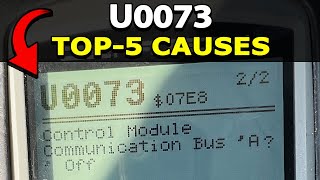


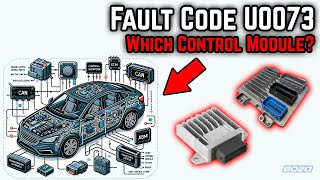
Used OEM Parts in Stock


New Aftermarket Parts Available


The information in this article is provided for general reference and educational purposes only. Vehicle specifications, procedures, and part compatibility can vary by production date, trim level, and region. Always consult your vehicle's factory service manual and verify part numbers before purchasing or performing repairs. Safety-critical components such as airbags, seat belts, and braking systems should be installed by a qualified professional.
- Toyota Corolla:
- 🎬 Helpful Videos
- 🛍️ Shop This Part
- What's Unique About the 2014-2019 Toyota Corolla
- Symptoms You May Notice
- Most Likely Causes
- Rare But Worth Checking
- Diagnosis Steps
- Parts You'll Likely Need
- Related Codes That Often Appear With This One
- Platform-Specific Known Issues
- Mechanic-Grade Diagnostic Values
- Scan Tool Commands That Help
- Wiring & Ground Locations
- Real Owner Repair Stories
- Diagnostic Flowchart
- Other Known Issues on This Vehicle
- Used vs. New Parts: Buying Guide for This Vehicle
- Real Owner Stories
- 2019 Toyota Corolla
- 2014 Toyota Corolla
- NHTSA Documented Reports
- Related OBD-II Codes
- Frequently Asked Questions
- 🎟️ Get 5% Off