

U0073 on 2019-2024 Ram 1500: Network Fault Causes & Fixes
On a 2019-2024 Ram 1500, code U0073 is often related to a software glitch in the ABS module. Check if your truck is covered by recall 24V-653 (FCA 75B) and have the dealer update the software. If not, the next most likely causes are a weak battery or a loose/corroded main ground connection, particularly the star connectors under the dash.
- First, check if your truck is affected by recall 24V-653 for the ABS module; this is the most likely fix and is free.
- If the recall doesn't apply or is already done, your next step is to fully test the battery and charging system. Low voltage is a very common trigger.
- Inspect and clean the main battery and chassis ground connections. A bad ground is a simple but frequent cause of complex electronic issues.
- Due to the complexity of network diagnostics, if a bad battery or ground isn't the clear culprit, professional diagnosis is strongly recommended to avoid costly misdiagnoses.
What's Unique About the 2019-2024 Ram 1500
For the 5th Generation (DT) Ram 1500, a U0073 code should immediately draw attention to the ABS control module. Stellantis issued a massive recall (NHTSA 24V-653 / FCA 75B) for over 1.2 million 2019 and 2021-2024 trucks due to a software flaw in the ABS module that can disable the stability control system. A malfunctioning ABS module, a key component on the CAN bus, is a prime suspect for causing a network-wide communication fault like U0073. The symptoms of the recall, including illuminated ABS and ESC lights, directly overlap with the symptoms of a U0073 code.
Symptoms You May Notice
- Check Engine Light is on
- Multiple warning lights on the dashboard (ABS, Traction Control, Stability Control).
- Service Shifter warning message may appear
- Vehicle may not start or may crank but not turn over.
- Loss of power or vehicle entering 'limp mode'.
- Erratic or non-functional electronic accessories (e.g., power windows, radio, instrument cluster).
- Transmission may shift harshly or get stuck in one gear.
- Loss of power steering assist
- Replacing the PCM or BCM without proper diagnosis. A communication code rarely means the primary computer is bad; it's more often a wiring, power, ground, or other module issue.
- Replacing individual components like sensors or switches when the root cause is a network-wide failure.
- Replacing the ABS module when only a software update under recall was needed.
Most Likely Causes
- ABS Control Module Software Glitch 🔴 High Probability A widespread recall (NHTSA 24V-653) was issued for a software defect in the ABS module on 1.2 million 2019 and 2021-2024 models. This module is a critical node on the CAN network, and a fault can easily disrupt all communications, triggering U0073.
How to confirm: Contact a Ram dealer or use the NHTSA website with your VIN to see if your truck is part of this recall. The symptoms described in the recall (ABS, ESC, ACC, and FCW warning lights illuminated at startup) are a direct match for a U0073 fault.
Typical fix: The dealer will update the ABS control module software free of charge under the recall campaign 75B.
Est. part cost: $0 - Weak or Failing Battery 🟡 Medium Probability Modern trucks with numerous electronic modules, especially those with the eTorque system, are highly sensitive to system voltage. A drop below 12.4 volts can cause modules to fail to initialize properly during startup, leading to communication codes like U0073.
How to confirm: Test the battery with a multimeter or electronic battery tester. It should read at least 12.4V with the engine off and 13.7V-14.7V while running. Test for a significant voltage drop during cranking. Many auto parts stores will test your battery for free.
Typical fix: Recharge or replace the battery. Ensure terminals are clean and tight.
Est. part cost: $150-$400 - Poor Ground Connection 🟡 Medium Probability Corrosion or loose connections at main grounding points can create electrical noise and unstable voltage, disrupting network communication. The CAN bus star connectors (also called CAN bus hubs or junction blocks) located under the dash are a known point of failure.
How to confirm: Visually inspect and physically check the main ground points for tightness and corrosion. Key locations on the DT Ram 1500 include the battery-to-fender-wall strap, engine/transmission-to-chassis straps, and the CAN bus star connectors located behind the driver's side kick panel. Forum users report these star connectors can have poor pin fitment or corrosion due to water intrusion.
Typical fix: Disconnect the battery. Disassemble, clean the contact surfaces with a wire brush or contact cleaner, and securely tighten the ground bolts/nuts. Apply dielectric grease to prevent future corrosion. For star connectors, ensure all pins are seated correctly and the connector is free of moisture.
Est. part cost: $0-$20 - Damaged CAN Bus Wiring ⚪ Low Probability
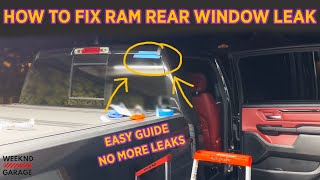
How to confirm: Perform a visual inspection of the main wiring harnesses for any signs of rodent damage, chafing, or pinching, especially near the firewall, under the dash, and around the fuse box. Water intrusion from a leaking rear window or third brake light 🎬 See this DIY guide to fixing common rear window leaks. is a known issue that can corrode wiring behind the rear seats. Advanced diagnosis involves using a multimeter to check for 60 ohms of resistance across the CAN High (Pin 6) and CAN Low (Pin 14) pins at the OBD-II port (with the battery disconnected). A reading of 120 ohms suggests one of the two terminating resistors is offline.
Typical fix: Repair the damaged section of the wiring harness. This can be complex and may require professional service.
Est. part cost: $5-$100 for wiring repair supplies
Rare But Worth Checking
- Faulty Aftermarket Electronics: Improperly installed remote starters, alarms, piggyback tuners (like a Tazer), or trailer brake controllers can interfere with the CAN bus network and cause communication errors. If the problem started after an accessory was installed, try disconnecting it to see if the code clears.
- Failed Control Module: While the ABS module software is the most likely culprit, any module on the network (BCM, PCM, RF Hub, etc.) can fail internally and bring down the entire bus. This requires advanced diagnostics with a scan tool that can poll all modules to see which one is not responding. A common failure on Rams is water intrusion from a leaking rear window shorting out the RF Hub module on the back wall of the cab.
- Faulty CAN Bus Star Connector: The CAN bus network on these trucks uses star connectors (junction blocks) to branch out to different modules. A faulty connector itself, due to a manufacturing defect like a solder bridge or internal corrosion, can cause a U0073 code. These are typically located behind the driver-side kick panel.
Diagnosis Steps
- Check for Recalls: Use your VIN on the NHTSA website to check for open recalls, specifically recall 24V-653 / FCA 75B related to the ABS module software. If active, this is your most likely solution and should be performed by a dealer.
- Scan for All Codes: Use a high-quality OBD-II scanner that can read codes from all modules (ABS, BCM, TCM, etc.). Note which modules are reporting 🎬 Watch: Using AlfaOBD to diagnose fault codes on your Ram. 'Lost Communication' codes. A U0121 code strongly points towards the ABS module as the source of the fault.
- Test Battery and Charging System: Ensure the battery has a static charge of at least 12.4 volts. Start the engine and verify the alternator is charging between 13.7 and 14.7 volts. A weak battery is a very common cause of network issues on these trucks.
- Inspect Main Grounds: Disconnect the negative battery terminal. Inspect the primary ground locations for corrosion or looseness. Check the main negative cable connection to the body, the engine ground straps, and especially the CAN bus star connectors/ground points behind the driver's side dash and kick panel. Clean and tighten as needed.
- Check Fuses: Inspect fuses related to the various control modules (PCM, BCM, ABS, RF Hub) in the underhood fuse box (PDC). A blown fuse can take a module offline.
- Check CAN Bus Resistance: Disconnect the battery. Measure the resistance between Pin 6 (CAN-H) and Pin 14 (CAN-L) on the OBD-II port using a multimeter. A healthy network should read approximately 60 Ohms. A reading of 120 Ohms indicates a problem with one of the two terminating resistors (often located in the BCM or PCM) or a break in the circuit. A reading near 0 Ohms indicates a short between the CAN High and Low wires.
- Inspect for Water Intrusion: Check for signs of water leaks around the rear sliding window and third brake light. Pull back the carpet and insulation behind the rear seats to inspect the Radio Frequency (RF) Hub and its connectors for corrosion, a known failure point.
- Isolate the Fault: If the previous steps don't reveal the issue, the problem likely lies with a specific module or wiring branch. This requires a professional scan tool to see which modules are offline and may involve disconnecting modules one by one to see if communication is restored. This step is best left to a professional.
Parts You'll Likely Need
- ABS Control Module Software Update — The most common documented issue for this code on this truck is a software flaw covered by recall 24V-653 (FCA campaign 75B).
OEM price range: $0 (if under recall)
Aftermarket price range: N/A - Automotive Battery
(OEM #Mopar BBAH7L48)— Low system voltage is a frequent cause of module communication failures on modern, electronically-dense vehicles.
Trusted brands: Mopar, Interstate, DieHard, Odyssey
OEM price range: $250-$400
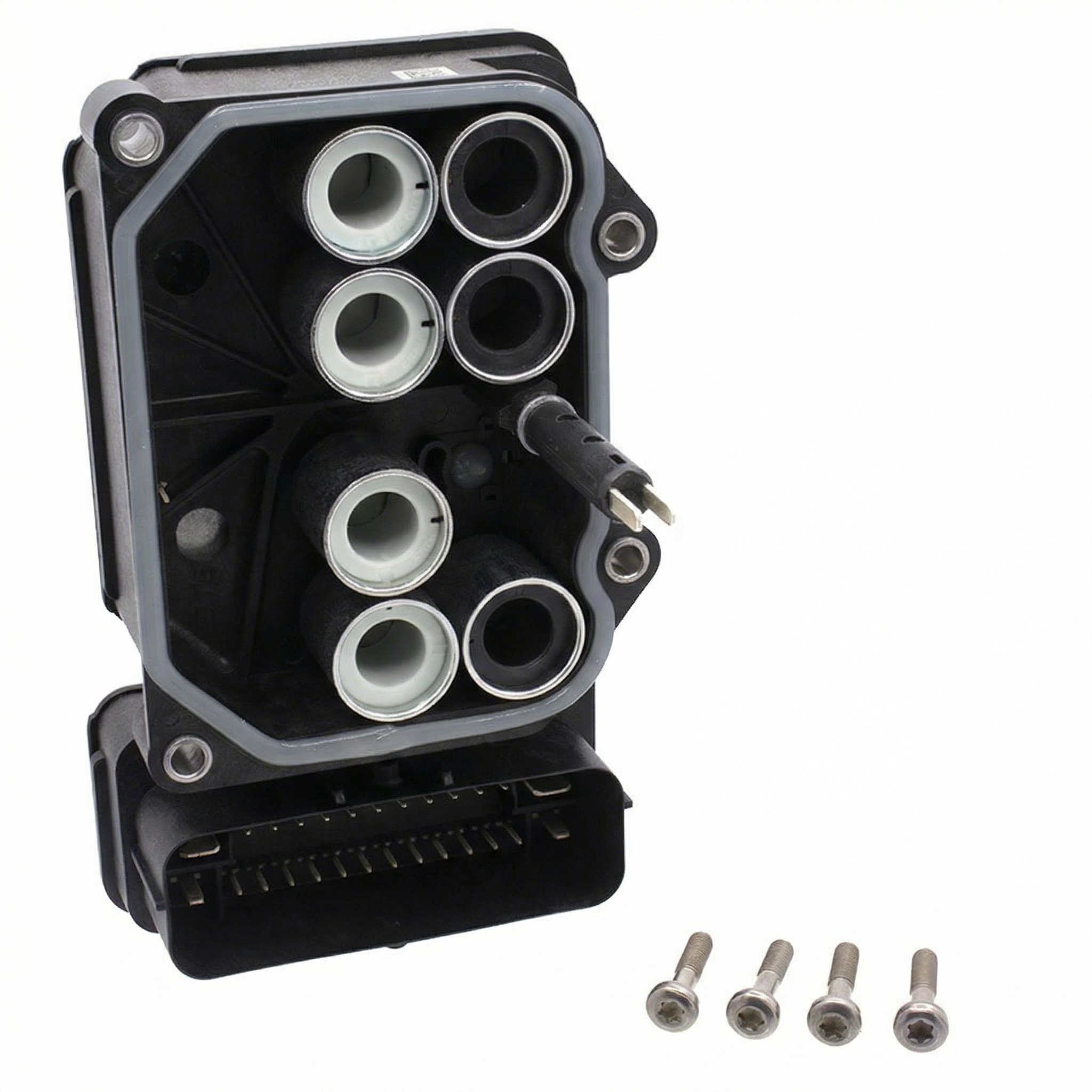
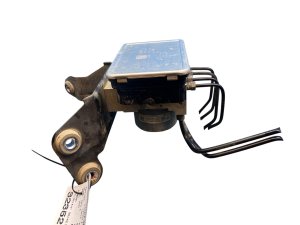
Aftermarket price range: $150-$300 - ABS Control Module — If the software update does not resolve the issue or if the module has failed internally (e.g., from water damage or voltage spike), it will need to be replaced. This part requires programming to the vehicle.
Trusted brands: Mopar
OEM price range: $500-$900
Aftermarket price range: $300-$600 (remanufactured) - CAN Bus Star Connector
(OEM #68230877AA)— This junction block under the dash can fail, causing a network crash. It's a relatively inexpensive part to replace as a diagnostic step if grounds and power are good.
Trusted brands: Mopar
OEM price range: $60-$90
Aftermarket price range: N/A
Related Codes That Often Appear With This One
- U0100 — Lost Communication With ECM/PCM
- U0121 — Lost Communication With Anti-Lock Brake System (ABS) Control Module. This code is a strong indicator that the ABS module is the source of the problem.
- U0140 — Lost Communication With Body Control Module (BCM)
- C0031, C0034, C0037, C0040 — Wheel speed sensor codes that may appear alongside the U0073 if the ABS module is the source of the fault.
Technical Service Bulletins (TSBs) & Recalls
- ABS Module Configuration Mismatch: A safety recall to update the ABS control module software on 2019 and 2021-2024 Ram 1500s. A software malfunction can disable the Electronic Stability Control (ESC) system, causing multiple warning lights and potentially the U0073 code.
- Back Glass Water Leak Warranty Extension XL1: This TSB addresses a manufacturing issue with the rear sliding window frame on 2019-2021 models, which can crack and cause water leaks. This is relevant as water can damage modules and wiring on the CAN bus.
- Engine Ticking Noise on Cold Start: While not directly related to U0073, this TSB for 2019-2022 models with the 5.7L Hemi addresses cracked exhaust manifolds, a common platform issue.
Platform-Specific Known Issues
- Recall 24V-653 (FCA #75B): A software issue in the ABS control module can disable the Electronic Stability Control (ESC) system and cause multiple warning lights. This is a highly probable cause for a U0073 code. The fix is a free software update performed by a Ram dealer.
Mechanic-Grade Diagnostic Values
- CAN Bus Network Resistance — expected: Approximately 60 Ω. Failure: A reading of 120 Ω indicates an open circuit or a single terminating resistor is offline. A reading near 0 Ω indicates a short between the CAN High and Low wires.
- CAN High Voltage (Key On, Engine Off) — expected: ~2.5V - 3.5V. Failure: Voltage stuck at 0V, 12V, or matching CAN Low voltage indicates a short or open circuit.
- CAN Low Voltage (Key On, Engine Off) — expected: ~1.5V - 2.5V. Failure: Voltage stuck at 0V, 12V, or matching CAN High voltage indicates a short or open circuit.
Scan Tool Commands That Help
- wiTECH 2.0 (Dealer Tool): Network Topology View — To get an immediate visual overview of the entire vehicle network. The color-coded display shows which modules are online, which have DTCs, and which are unresponsive, dramatically speeding up diagnosis by showing exactly which module is not communicating.
- wiTECH 2.0 (Dealer Tool): Loss of Communication Test — This function acts as a real-time 'ping test' for all modules on the network. It's used while performing a 'wiggle test' on wiring harnesses and connectors to see if a physical manipulation causes a module to drop off the network, pinpointing the location of an intermittent connection.
- AlfaOBD (Advanced Aftermarket): Read All DTCs / Module Status — Similar to the dealer tool, AlfaOBD can poll all modules on the truck to identify which ones are not responding. This is critical for U-code diagnosis to determine if the fault lies with a specific module (like ABS or RF Hub) or a more general network wiring issue.
Wiring & Ground Locations
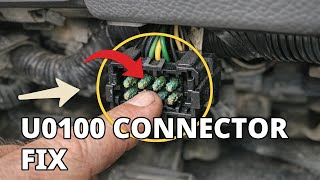
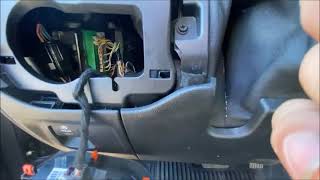
- Star Connector / CAN Bus Hub — Located behind the driver's side kick panel, near the parking brake. It is a block with multiple wiring harnesses plugging into it. Some models also have an easily accessible star connector behind the headlight switch.. This is the central nervous system for the CAN bus. It is a known single point of failure. Corrosion from water intrusion (leaky windshield or clogged drains) or poor pin connections at this hub can take down the entire network, causing a U0073 code and a no-start condition.
- Radio Frequency (RF) Hub — Located on the back wall of the cab, behind the rear seats.. This module is a critical node on the CAN bus responsible for keyless entry and ignition functions. It is highly susceptible to water damage from common leaks in the rear sliding window or third brake light, which can short out the module and cause network-wide communication failures.
- Mopar Part # 68324484AA — N/A. This is the OEM part number for the Star Connector assembly. If the original connector is heavily corroded (showing 'green crust'), cleaning may not be sufficient, and replacement with this part is the definitive fix.
Real Owner Repair Stories
- YouTube video from a technician (2019-2022 Ram 1500 (DT)) — Intermittent no-crank, no-start condition with U0100 (Lost Communication with PCM), a code often seen with U0073.
❌ Tried (didn't work) Assuming the PCM was faulty and needed replacement.
✅ What actually fixed it The root cause was corrosion in the CAN bus star connector located behind the driver's side kick panel. Water intrusion had caused green corrosion on the pins. Gently wiggling the connectors restored communication temporarily, confirming the diagnosis. The permanent fix was to disconnect the battery, disassemble the connector, and clean the pins with electrical contact cleaner. In severe cases, the connector (Mopar part # 68324484AA) needs to be replaced.
Model Year Variations Within This Range
- 2019, 2021-2024: These model years are included in the NHTSA recall 24V-653 for a faulty ABS module software configuration. The 2020 model year is notably excluded from this specific recall.
- 2022-2024: Starting in the 2022 model year, Ram began phasing in the Uconnect 5 infotainment system, which is faster and supports wireless CarPlay/Android Auto. While not directly related to the U0073 code's cause, it represents a significant change in the modules present on the CAN bus compared to 2019-2021 models which used Uconnect 4.
Diagnostic Flowchart
Other Known Issues on This Vehicle
Issues unrelated to this code that are worth knowing about as an owner of this generation:
- Cracked Exhaust Manifolds (5.7L Hemi) 🟠 Medium — Very common, often noticed by a 'ticking' sound on cold starts. Can occur at various mileages, sometimes as early as 30,000-50,000 miles. (Ref: TSB 09-019-23)
- Rear Window Frame Crack / Water Leak 🔴 High — A widespread problem on 2019-2021 models where the plastic frame of the rear window cracks, allowing water into the cab. This can damage electronics on the rear cab wall, like the RF Hub. (Ref: TSB 23-098-23 REV. A (Warranty Extension))
- eTorque System Faults 🟠 Medium — Owners report a range of issues from sudden power loss and rough start-stop events to battery charging failures and stalling. (Ref: Recall for PCM software on some 2021 models.)
- Third Brake Light (CHMSL) Gasket Leak 🟡 Low — Commonly reported issue where the foam gasket for the Center High-Mount Stop Lamp fails, allowing water to leak into the headliner and down the C-pillars. (Ref: Warranty extension for some 2019-2021 models.)
Used vs. New Parts: Buying Guide for This Vehicle
When a used part is the smart pick: For this repair, used parts are generally not recommended for the primary suspect components. The most common fix is a software update which requires a dealer, not a part. If a module is truly faulty (e.g., a water-damaged RF Hub), a used part can be a cost-effective option, but carries risks.
Donor-vehicle mileage cap: roughly under 80000 miles for the part to have meaningful remaining life.
What to inspect on the donor part:
- Verify the part number on the used module EXACTLY matches the original. Mismatched part numbers will not communicate.
- Inspect the donor vehicle for signs of water damage, especially for modules located inside the cab like the RF Hub or BCM.
- Obtain the VIN of the donor vehicle if possible. This can help a dealer determine if the module is compatible or requires reprogramming.
- For wiring connectors like the Star Connector, ensure the plastic is not brittle and the locking tabs are intact. Check for any signs of corrosion ('green crust') on the pins.
OEM-only on this vehicle (don't cheap out):
- ABS Control Module: Due to the widespread software recall and its critical safety function, this should only be serviced by a dealer with an OEM part and the correct software flash.
- PCM/BCM/RF Hub: While used parts can work, these are often VIN-locked or require security programming (component protection) by a dealer with a wiTECH scan tool. The cost of dealer programming can negate the savings of a used part. It's often safer and ultimately cheaper to use a new or professionally remanufactured, pre-programmed module.
Aftermarket brands forum-validated for this vehicle:
- Battery: Interstate, Optima, Odyssey, and major name brands are generally considered reliable replacements.
- Scan Tools: For DIY diagnostics, AlfaOBD is a well-regarded, powerful aftermarket tool for Chrysler/Ram vehicles.
Brands owners have reported issues with on this vehicle:
- Cheap, no-name electronic accessories (especially LED lighting and remote starters) that are not specified as 'CAN-bus compatible' or 'error-free'. These are a common source of network interference.
Real Owner Stories
Aggregated from forums and TSBs cited above. Mileages and costs reflect what owners reported in those sources.
2019 Ram 1500
Symptoms: Water leaking from the rear sliding window, potentially affecting the Radio Frequency (RF) Hub and wiring behind the rear seats.
What fixed it: Addressing the manufacturing issue with the rear sliding window frame as described in TSB 23-098-23 to prevent water damage to CAN bus components.
Source hint: TSB 23-098-23 REV. A / RamForum.com thread '2019 1500 leaking rear window'
2019-2024 Ram 1500
Symptoms: Multiple warning lights on the dashboard including ABS, ESC, ACC, and FCW illuminated at startup.
What fixed it: Dealer update of the ABS control module software under recall campaign 75B.
Cost: $0-$0
Source hint: NHTSA 24V-653 / FCA 75B
2019-2024 Ram 1500
Symptoms: Communication issues caused by a hardware defect in a replacement network component.
What fixed it: Identifying and fixing a solder bridge on a replacement CAN bus star connector.
Source hint: RamForum.com thread 'CAN bus connectors'
Related OBD-II Codes
Frequently Asked Questions
Is there a recall for my 2019-2024 Ram 1500 that could cause the U0073 code?
How much does it cost to fix the ABS module software issue related to U0073?
Can a leaking rear window on my 2019 Ram 1500 cause communication codes like U0073?
Why does my Ram 1500 with eTorque show a U0073 code after sitting overnight?
Where are the CAN bus star connectors located on the DT Ram 1500?
Will a software update really fix my ABS and Traction Control warning lights?
Helpful Videos

We Have This Part in Stock




The information in this article is provided for general reference and educational purposes only. Vehicle specifications, procedures, and part compatibility can vary by production date, trim level, and region. Always consult your vehicle's factory service manual and verify part numbers before purchasing or performing repairs. Safety-critical components such as airbags, seat belts, and braking systems should be installed by a qualified professional.
- Ram 1500:
- 🎬 Helpful Videos
- 🛍️ Shop This Part
- What's Unique About the 2019-2024 Ram 1500
- Symptoms You May Notice
- Most Likely Causes
- Rare But Worth Checking
- Diagnosis Steps
- Parts You'll Likely Need
- Related Codes That Often Appear With This One
- Technical Service Bulletins (TSBs) & Recalls
- Platform-Specific Known Issues
- Mechanic-Grade Diagnostic Values
- Scan Tool Commands That Help
- Wiring & Ground Locations
- Real Owner Repair Stories
- Model Year Variations Within This Range
- Diagnostic Flowchart
- Other Known Issues on This Vehicle
- Used vs. New Parts: Buying Guide for This Vehicle
- Real Owner Stories
- 2019 Ram 1500
- 2019-2024 Ram 1500
- 2019-2024 Ram 1500
- Related OBD-II Codes
- Frequently Asked Questions
- 🎟️ Get 5% Off