

U0073 on 2007-2014 Chevrolet Silverado 1500: Causes for Communication Bus 'A' Off
U0073 on a Silverado indicates a network communication failure. The most common causes are poor electrical grounds (specifically G218 under the dash), corroded wiring at the underhood fuse block (UBEC), or a failing control module (like the BCM or ABS module) disrupting the network. The fix is often a wiring or ground repair, not an expensive part replacement.
- U0073 is a serious network communication code, not a specific part failure. Do not start by replacing expensive modules.
- Begin all diagnostics by ensuring the battery is fully charged and all ground connections are clean and tight.
- A common point of failure on these trucks is corrosion in the connectors under the main fuse block (UBEC).
- Diagnosing this code correctly requires a methodical electrical approach and tools that can test network integrity.
- The problem is often a break in the chain (wiring/grounds) rather than a single broken link (module).
What's Unique About the 2007-2014 Chevrolet Silverado 1500

The GMT900 platform (2007-2013) and the early K2XX (2014) are known for being sensitive to voltage and ground issues. Several Technical Service Bulletins (TSBs) from GM address network communication failures, often pointing to specific ground locations or connector problems rather than a single faulty part. A key culprit identified in TSB PIT5405C is the BCM ground G218, located under the driver's side dash, where an insulator mat can get trapped between the ground and the body, causing a poor connection. Unlike a simple sensor code, U0073 on these trucks is a system-wide electrical problem that requires a logical diagnostic approach, starting with the electrical foundation of the vehicle.
Diagnostic Flowchart

Tap your situation to follow the diagnostic path that matches what you're seeing on this vehicle.
Generation note: This range covers the end of the GMT900 generation (2007-2013) and the first year of the K2XX generation (2014). While the U0073 code has the same meaning for both, the physical locations of grounds, connectors, and modules may differ slightly. The provided TSBs, like 08-07-30-021H and PIT5405C, apply across these years, indicating similar underlying electrical architecture and known failure points related to grounds and wiring.
Symptoms You May Notice

- Multiple warning lights on the instrument panel (Check Engine, ABS, StabiliTrak, Airbag).
- Instrument panel gauges fluctuating or going dead.
- Transmission may not shift correctly or may be stuck in one gear (limp mode).
- Engine may not start, or may start and then stall.
- Erratic operation of electrical components like door locks cycling, chimes, radio, or HVAC controls going blank.
- Loss of power steering assist or steering wheel jerks.
- Wipers continue to run or park in the incorrect location. [Bulletin #PIT5405C]
- "Service Stabilitrak" or "Service Traction System" message displayed.
- Replacing the ECM or BCM without proper diagnosis. People often blame the 'main computer', but any module on the network can cause the failure. Isolating the faulty component is key.
- Replacing a single module that is offline without checking the wiring first. The module may be offline simply because its wiring is damaged or it has lost power/ground.
- Overlooking a simple ground issue like G218, which is a known problem addressed by GM in a TSB.
Most Likely Causes
- Poor or Corroded Ground Connections 🔴 High Probability GM trucks of this era are known for ground issues. TSB PIT5405C specifically calls out the BCM ground G218 (under the driver-side dash) as a primary suspect, where sound-deadening material can interfere with the connection. TSB #08-07-30-021H also points to communication DTCs resulting from electrical fluctuations caused by bad grounds.
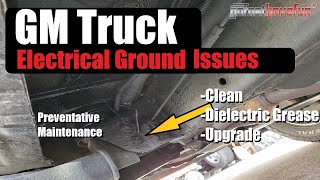
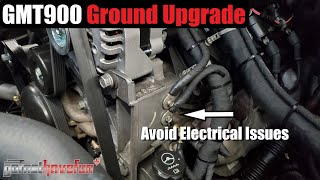
How to confirm: Visually inspect and physically test major ground points. For G218, remove the driver's kick panel to access it. Other key grounds are on the frame under the driver's door, near the battery, and at the engine block. 🎬 Watch: How to clean and upgrade your truck's main grounds. A voltage drop test across the ground connection under load confirms a poor connection.
Typical fix: Disassemble the ground connection (especially G218), cut away any interfering insulation mat, clean all contact surfaces to bare metal, apply dielectric grease, and re-secure the ground nut. Ensure torque is correct (e.g., 11 ft-lb for G218 nut).
Est. part cost: $0-$20 - Damaged or Corroded Wiring/Connectors 🔴 High Probability Connectors exposed to the elements, like the main underhood fuse block (UBEC) or connectors along the frame rail, are susceptible to moisture and corrosion, which disrupts the sensitive CAN bus signals. TSB 08-07-30-021H specifically mentions inspecting the 16-way electrical connector at the transmission for backed-out terminals.
How to confirm: Unplug and inspect major connectors (UBEC, transmission harness, EBCM) for green or white corrosion, bent pins, or water intrusion. Gently tug on wires at the connector to check for loose pins. In one owner's experience, simply unplugging and replugging modules restored communication, indicating a poor connection was the culprit.
Typical fix: Clean corroded terminals with a specialized contact cleaner. If damage is severe, the connector, terminal, or wire pigtail may need to be replaced.
Est. part cost: $10-$150 - Failing Control Module 🟡 Medium Probability An internal failure in any module on the high-speed CAN bus (e.g., BCM, EBCM/ABS, TCM, FPCM) can cause it to broadcast junk data or short the network, bringing communication to a halt. The BCM and ABS modules are common culprits.
How to confirm: This is difficult without a professional scan tool. The process involves seeing which modules are offline and then systematically unplugging modules one by one to see if communication is restored to the rest of the network. A 'logic lock' after a voltage drop can also cause a module to act faulty; a hard reset (disconnecting battery cables and touching them together) can sometimes resolve this.
Typical fix: Replace the faulty module. The new module will likely require programming by a dealer or a properly equipped independent shop.
Est. part cost: $200-$800 - CAN Bus Termination Resistor Failure ⚪ Low Probability The GMLAN bus has two 120-ohm resistors. On these trucks, one is typically internal to the ECM. The second is often a separate, plug-in resistor located near the Fuel Pump Control Module (FPCM) above the spare tire, or sometimes within the Trailer Brake Control Module (TBCM). If one fails or its wiring is compromised, the network becomes unstable.
How to confirm: With the battery disconnected, measure the resistance between pins 6 (CAN High) and 14 (CAN Low) at the OBD-II port. A healthy network should read approximately 60 ohms. A reading of 120 ohms indicates one resistor is offline. A reading of ~176 ohms was found in one case, pointing to a faulty resistor.
Typical fix: If a resistor is confirmed bad, the module containing it must be replaced, or if it's a separate component, the resistor itself can be replaced.
Est. part cost: $50-$500
Rare But Worth Checking
- Aftermarket Electronics Interference: Poorly installed remote starters, alarms, stereos, or trailer brake controllers can tap into CAN bus wires incorrectly, introducing electrical noise or shorts that disrupt the network.
- Low Battery Voltage or Blown Mega Fuse: A weak or failing battery can cause modules to initialize improperly, leading to temporary communication codes. Additionally, a voltage spike from an improper jump-start can blow the 175-Amp 'Mega Fuse' on the battery distribution block, cutting power to multiple modules and causing a U0073 code.
Diagnosis Steps
- Check Battery and Charging System: Ensure the battery is fully charged (12.4V+ with engine off) and terminals are clean and tight. Test the alternator output (13.8-14.5V running). A weak battery or charging system can cause modules to drop offline.
- Perform a Full Vehicle DTC Scan: Use a scan tool capable of reading codes from all modules (ECM, BCM, ABS, etc.). Note which modules are not communicating. This is your first clue to which leg of the network may be down.
- Inspect Critical Grounds: Prioritize inspecting ground G218 under the driver's side kick panel/dash. Per TSB PIT5405C, check for trapped insulation matting. Also inspect the main battery-to-frame ground under the driver's door and engine-to-chassis grounds.
- Inspect Underhood Bussed Electrical Center (UBEC): Unplug the large connectors (e.g., X1) on the bottom of the fuse block and inspect for any signs of water intrusion or green/white corrosion. This is a very common failure point.
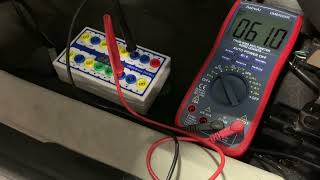
- Check CAN Bus Resistance: Disconnect the battery. At the OBD-II port, measure the resistance between Pin 6 (CAN High) and Pin 14 (CAN Low). The reading should be approximately 60 Ohms. If it reads 120 Ohms, one of the termination resistors is not being seen. If it reads close to 0 Ohms, the CAN wires are shorted together.
- Isolate the Fault: If the resistance is incorrect or modules are offline, begin unplugging modules on the high-speed CAN bus one at a time (start with common culprits like the EBCM/ABS module, TCM, or TBCM) and re-check resistance. When the resistance returns to 60 Ohms (or 120 Ohms if you've unplugged a terminating module), the last module unplugged is likely the source of the fault.
Parts You'll Likely Need
- Body Control Module (BCM) — The BCM is a central hub for communication and is a common point of failure that can bring down the network.
Trusted brands: ACDelco
OEM price range: $250-$400
Aftermarket price range: $150-$300 - Electronic Brake Control Module (EBCM) — The ABS module is another critical node on the high-speed CAN bus. An internal failure can disrupt all communication. A user complaint (ODI #10981435) noted a StabiliTrak warning, which is controlled by the EBCM.
Trusted brands: ACDelco, Dorman
OEM price range: $300-$600
Aftermarket price range: $200-$450 - Underhood Bussed Electrical Center (UBEC) / Fuse Block — Not the fuse block itself, but the connectors underneath are highly prone to corrosion, causing a loss of communication. Sometimes the entire block must be replaced if the corrosion is too severe.
Trusted brands: ACDelco
OEM price range: $200-$500
Aftermarket price range: $150-$350
Related Codes That Often Appear With This One
- U0100 — Lost Communication with ECM/PCM. This often appears with U0073 because if the entire network is down, no modules can talk to the ECM.
- U0101 — Lost Communication with TCM. Similar to U0100, this indicates the transmission module is offline.
- U0121 — Lost Communication with ABS Control Module. This is very common as the ABS module (EBCM) is a key node on the high-speed CAN bus.
- P069E — Fuel Pump Control Module Requested MIL Illumination. As seen in NHTSA ODI #10981435, issues with the FPCM or its wiring (which is on the CAN bus) can trigger network codes. This is common on 2007-2014 Silverados.
Technical Service Bulletins (TSBs) & Recalls

- PIT5405C — Multiple Electrical Issues, DTCs U0073, U0100, U0121, etc. — Addresses a wide range of electrical problems including loss of power steering, blank instrument cluster/radio, and various communication codes. The primary recommendation is to inspect BCM ground G218 under the driver's dash for an interfering insulator mat, and also to check battery cables and connector X183/X133.
- 08-07-30-021H — Loss of High Speed GMLAN Communications, Intermittent No Crank, IP Gage Fluctuation — A comprehensive bulletin for GMLAN communication loss (U0073, U0100, etc.). It advises against immediately replacing modules and instead directs technicians to inspect for chafed wiring, corrosion in connectors (especially the transmission harness), and faulty termination resistors before replacing parts.
Platform-Specific Known Issues
- Ground G218 Interference: A well-documented issue where the dash insulator mat is improperly installed at the factory, getting caught under the BCM ground lug (G218). This creates high resistance and causes intermittent network failure. The fix is to remove the ground, cut away the matting, and re-secure the ground to the bare metal stud. This is detailed in TSB PIT5405C.
- Termination Resistor Location: On many of these trucks, one of the two 120-ohm termination resistors is not integrated into a major module but is a small, separate, plug-in component. It is often taped to the wiring harness near the Fuel Pump Control Module (FPCM), which is located on a frame crossmember above the spare tire. This makes it vulnerable to weather and vibration.
- Fuel Pump Control Module (FPCM) Failure: The FPCM, located above the spare tire, is a common failure point. It is a node on the CAN bus, and its failure (or failure of its wiring) can bring down the network, setting U0073 along with FPCM-specific codes like P069E.
Mechanic-Grade Diagnostic Values
- CAN Bus Network Resistance — expected: ~60 Ω (Ohms) +/- 5 Ω. Failure: A reading of ~120 Ω indicates an open circuit or a missing termination resistor. A reading near 0 Ω indicates the CAN High and CAN Low wires are shorted together.
- CAN Bus Voltage (Key On, Engine Off) — expected: CAN High (Pin 6) should be ~2.5V to ~3.5V. CAN Low (Pin 14) should be ~1.5V to ~2.5V. Both lines should show a common-mode voltage of approximately 2.5V at rest (recessive state).. Failure: A line stuck near 0V or 5V, or no differential activity when scoped, indicates a hard fault.
- Termination Resistor Resistance — expected: 120 Ω (Ohms). Failure: A reading significantly different from 120 Ω indicates a faulty resistor. The network has two of these resistors in parallel.
Scan Tool Commands That Help
- Tech2 / GDS2: Module Status / Network Topology — Use this function to get a list of all control modules on the network and see which ones are reporting as 'offline' or 'not communicating'. This is the first step in narrowing down the location of the fault.
Wiring & Ground Locations

- C3 (X3) Connector — On the back of the left instrument panel junction block (the interior fuse box).. Per GM diagnostic bulletin PIT4667D, disconnecting this connector splits the high-speed GMLAN bus into two halves. This is a critical diagnostic step to isolate the fault. If communication is restored to the BCM/ECM/TCM side with it disconnected, the fault lies in the other half of the bus.
- X109 Connector — An inline harness connector located on the left side of the engine compartment, below the underhood fuse block.. This is a major pass-through connector between the engine/chassis harness and the instrument panel harness. It carries the CAN bus wires and is a known location for corrosion or poor pin connections that can disrupt the network.
- SP205 / SP206 Splice Packs — Located under the dash, above the emergency brake pedal area. They are often not visible and must be found by feel, following wire bundles.. These splice packs are junction points where multiple CAN bus wires come together. A failure or corrosion inside one of these packs can take down the entire network. They are used to diagnose which branch of the network has a fault.
- Termination Resistor (External) — On many GMT900 trucks, a 120-ohm resistor is located in the harness near the spare tire, often taped to the harness near the Fuel Pump Control Module (FPCM) or integrated into the Trailer Brake Control Module (TBCM). On 2014+ K2XX models, it is often a small, plug-in module near the rear bumper.. The network requires two 120-ohm resistors to function. One is in the ECM. If this second, external resistor fails or its wiring is damaged, the total bus resistance will change from 60 ohms to 120 ohms, causing instability and the U0073 code.
Real Owner Repair Stories
- gm-trucks.com forum user (2008 Chevrolet Silverado) — ABS and Stabilitrak lights on, multiple U-codes including U0073, U0121, U0100. Truck would randomly go into limp mode.
❌ Tried (didn't work) Replacing the ABS module (EBCM), Checking grounds near the battery and under the driver's door
✅ What actually fixed it Found a corroded connector under the driver's seat on the frame rail. The user cleaned the connector terminals and the problem was resolved. - silveradosierra.com forum user (2007.5 Chevrolet Silverado 2500HD) — Service Stabilitrak, Service Trailer Brake, Check Engine lights on. Codes U0073, U0100, U0101, U0121, U0140.
❌ Tried (didn't work) Checking all fuses, Checking grounds G218, G103, G104
✅ What actually fixed it The problem was a faulty Trailer Brake Control Module (TBCM). Unplugging the TBCM allowed all other modules to communicate again. The TBCM contains one of the network's 120-ohm terminating resistors, and its failure brought down the entire bus.
Model Year Variations Within This Range
- 2007-2013 (GMT900): The high-speed GMLAN bus is often terminated by a resistor within the Trailer Brake Control Module (TBCM) or as a separate resistor taped into the rear harness near the FPCM. The diagnostic approach of splitting the bus at the C3/X3 connector on the interior fuse block is well-documented for these years.
- 2014 (K2XX): The architecture changed. While still using two 120-ohm resistors, the second termination resistor is more consistently a dedicated, plug-in module. On some 2014+ trucks, it is located on the frame near the rear bumper. A failure of this specific, separate part can cause a U0073.
Helpful Videos

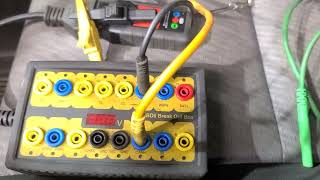

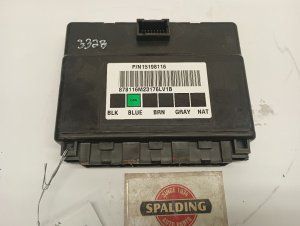
Used OEM Parts in Stock



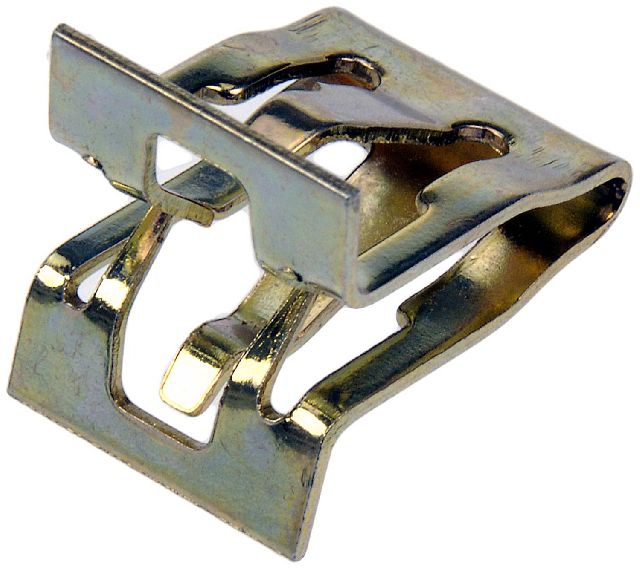
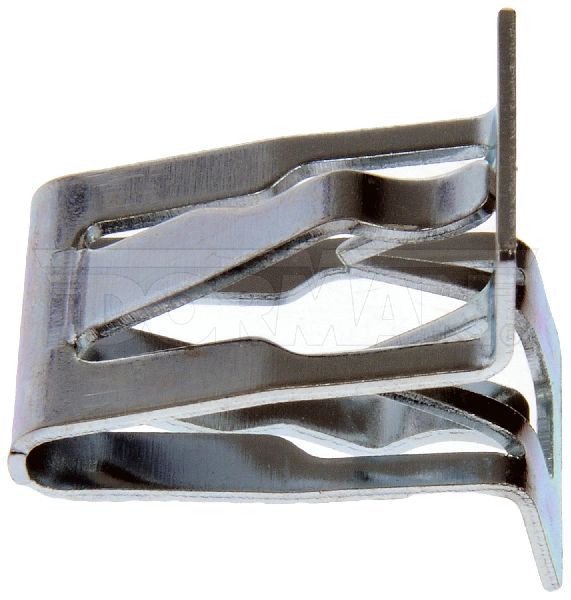
New Aftermarket Parts Available

The information in this article is provided for general reference and educational purposes only. Vehicle specifications, procedures, and part compatibility can vary by production date, trim level, and region. Always consult your vehicle's factory service manual and verify part numbers before purchasing or performing repairs. Safety-critical components such as airbags, seat belts, and braking systems should be installed by a qualified professional.
- Chevrolet SILVERADO 1500:
- 🎬 Helpful Videos
- 🛍️ Shop This Part
- What's Unique About the 2007-2014 Chevrolet Silverado 1500
- Diagnostic Flowchart
- Symptoms You May Notice
- Most Likely Causes
- Rare But Worth Checking
- Diagnosis Steps
- Parts You'll Likely Need
- Related Codes That Often Appear With This One
- Technical Service Bulletins (TSBs) & Recalls
- Platform-Specific Known Issues
- Mechanic-Grade Diagnostic Values
- Scan Tool Commands That Help
- Wiring & Ground Locations
- Real Owner Repair Stories
- Model Year Variations Within This Range
- 🎟️ Get 5% Off