

U0073 on 2007-2014 Cadillac Escalade: Communication Bus Failure Causes and Fixes
On a 2007-2014 Escalade, code U0073 almost always indicates a loss of communication between essential control modules due to a wiring problem or a faulty module. The most common culprit is a chafed or corroded wiring harness, particularly near the transmission or under the driver's side carpet, as outlined in GM Technical Service Bulletin #08-07-30-021H. A faulty Transmission Control Module (TEHCM) or a blown 175A Mega Fuse after a jump start are also frequently reported causes.
- U0073 is a critical network failure code. Do not continue to drive the vehicle.
- Diagnosis is complex and best left to a professional, but a visual inspection of the wiring harness near the transmission and under the driver's side dash is a good first step.
- The most likely causes on this Escalade are physical: a damaged wire or a failed module (EBCM, TCM, or Suspension Module).
- Do not replace expensive modules like the ECM or BCM without first performing a full network diagnosis to isolate the true source of the fault.
What's Unique About the 2007-2014 Cadillac ESCALADE
The third-generation Cadillac Escalade, built on the GMT900 platform, is known for specific wiring and module vulnerabilities that can trigger a U0073 code. A detailed GM Technical Service Bulletin (TSB #08-07-30-021H) points to common issues like chafed wiring harnesses near the transmission connector and corrosion in various module connectors. In some cases, a single faulty module, like the Electronic Brake Control Module (EBCM), the Transmission Control Module (TEHCM), or the suspension control module, can fail and disrupt the entire network, a scenario frequently reported by owners.
Diagnostic Flowchart
Tap your situation to follow the diagnostic path that matches what you're seeing on this vehicle.
Symptoms You May Notice
- Multiple warning lights on the instrument panel (Check Engine, ABS, Stabilitrak).
- Transmission may not shift or may be stuck in one gear (limp mode).
- Engine may not crank or start.
- Instrument panel gauges fluctuating erratically.
- Intermittent chiming or door lock cycling.
- Loss of communication with the scan tool.
- "Service Stabilitrak" or "Service Suspension System" messages.
- "Service Rear Vision System Unavailable" message may appear on the infotainment screen.
- Replacing the ECM or BCM without confirming it is the source of the network failure. The U0073 code indicates a network-wide problem, and often a peripheral module (like ABS or suspension) is the actual cause.
- Assuming a transmission mechanical failure when shifting problems and a U0073 code are present. A faulty TEHCM or its wiring can mimic mechanical faults, as documented by owners who replaced/rebuilt transmissions only to find the electrical issue remained.
Most Likely Causes
- Chafed, Corroded, or Damaged Wiring Harness 🔴 High Probability GM TSB #08-07-30-021H specifically calls out wiring issues. Common chafe points are where the harness routes near the transmission (requiring crossmember removal to access), rubs against the frame, or passes under the driver's side carpet and kick panel. Water intrusion into connectors is also common.
How to confirm: Visually inspect the wiring harness in known problem areas. Disconnect the battery and use a multimeter to check for 60 ohms of resistance between Pin 6 (CAN High) and Pin 14 (CAN Low) at the OBD-II port. A reading of 120 ohms indicates an open circuit or a faulty termination resistor/module, while an open circuit (infinite resistance) points to a break in the wiring.
Typical fix: Repair the damaged section of wire using solder and heat-shrink tubing. Clean any corroded connectors with electrical contact cleaner and ensure they are fully seated. Ensure the Terminal Position Assurance (TPA) lock on the transmission connector is fully seated.
Est. part cost: $5-$25 - Faulty Control Module 🟡 Medium Probability A single module can short out internally and bring down the entire communication network. On this platform, the Electronic Brake Control Module (EBCM/ABS module), Suspension Control Module, and especially the Transmission Control Module (TCM or TEHCM) are known to cause this. A real-world owner report showed a faulty TEHCM was the root cause even after a complete transmission rebuild.
How to confirm: With the network resistance reading incorrectly (e.g., 0 ohms or 120 ohms), begin unplugging modules one by one from the CAN bus. When the resistance at the OBD-II port returns to 60 ohms, the last module unplugged is the faulty one. This requires an advanced scan tool or wiring diagrams to locate all modules.
Typical fix: Replace the failed module. The new module will likely require programming by a dealer or a qualified shop with the correct software.
Est. part cost: $250-$1200 - Poor Ground Connection or Low Battery Voltage ⚪ Low Probability Control modules are sensitive to voltage. A weak battery or a corroded main ground can cause intermittent communication faults. Service documents specifically mention checking grounds G102 and G300 for poor connections, sometimes caused by factory undercoating.
How to confirm: Test the battery voltage; it should be at least 12.4V with the engine off. Check and clean the main battery terminals, engine block grounds, and frame grounds, paying close attention to G102 and G300.
Typical fix: Charge or replace the battery. Clean all ground connection points to bare metal and tighten securely.
Est. part cost: $10-$250
Rare But Worth Checking
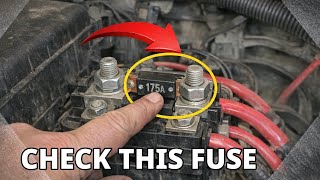
- Blown 175A Mega Fuse After Jump Start: A voltage spike or reversed polarity during a jump start can blow the main 175-amp mega fuse located on the battery distribution block. This is a protective failure to save modules. The truck will be dead or in limp mode with a U0073 code. The fix is to replace the fuse and perform a 'global reset' by touching the disconnected battery cable ends together for 60 seconds to drain all module capacitors.
- Faulty Termination Resistor: The CAN bus has two 120-ohm resistors. If one fails, the total resistance will be 120 ohms instead of the correct 60 ohms. These are often integrated into a module (like the ECM or BCM), so a module replacement may be necessary.
- Interference from Aftermarket Electronics: Improperly installed remote starters, alarms, or stereos can interfere with the CAN bus network and cause communication errors.
Diagnosis Steps
- Check the battery voltage and ensure it is fully charged (above 12.4V). Clean battery terminals.
- If the failure occurred after a jump start, inspect the 175A Mega Fuse on the battery distribution block for continuity. If blown, replace it and perform a global power reset.
- Visually inspect for obvious wiring damage, especially around the transmission, under the driver's kick panel, and near the underhood fuse block, per TSB #08-07-30-021H.
- Inspect major ground points, specifically G102 and G300, for corrosion and tightness.
- With the battery disconnected, measure the resistance between Pin 6 and Pin 14 of the OBD-II port. A healthy network should read approximately 60 ohms.
- If the resistance is 120 ohms, there is an open in the bus wiring or a faulty termination resistor/module.
- If the resistance is near 0 ohms, there is a short circuit between the two CAN wires.
- If the resistance is incorrect, use a wiring diagram to locate and disconnect modules on the High-Speed CAN bus one at a time (e.g., EBCM, TCM, Suspension Control Module, ECM, BCM). After disconnecting each module, re-check the resistance. When the reading returns to 60 ohms, the last module disconnected is the source of the fault.
- If wiring is suspected, check for continuity on the CAN bus wires (typically a twisted pair of Tan and Tan/Black wires on this platform) between modules.
- If a specific module is suspected, inspect its connector for corrosion or backed-out pins.
Parts You'll Likely Need
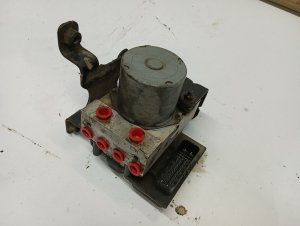
- Electronic Brake Control Module (EBCM) — This module is a common failure point that can short the communication bus, causing a no-start and no-communication issue.
Trusted brands: ACDelco, Dorman
OEM price range: $400-$700
Aftermarket price range: $250-$500 - Transmission Control Module (TCM/TEHCM) — Located inside the transmission, the TEHCM can fail internally and cause communication and shifting problems. An owner forum confirmed this part was the ultimate failure even after a transmission rebuild was performed, making it a critical component to diagnose correctly.
Trusted brands: ACDelco
OEM price range: $500-$900
Aftermarket price range: $300-$600 - Suspension Control Module
(OEM #25971218 (w/ Magnetic Ride Control), 25971217 (w/o Magnetic Ride Control))— On models with electronic suspension (Autoride), this module (located near the spare tire) is exposed to the elements and can fail from water intrusion, bringing down the network. Requires programming after installation.
Trusted brands: ACDelco
OEM price range: $300-$500
Aftermarket price range: $150-$300
Related Codes That Often Appear With This One
- U0100 — Lost Communication With ECM/PCM
- U0101 — Lost Communication With TCM
- U0121 — Lost Communication With Anti-Lock Brake System (ABS) Control Module
- U0140 — Lost Communication With Body Control Module
Technical Service Bulletins (TSBs) & Recalls
- Bulletin #08-07-30-021H: Addresses loss of high-speed GMLAN communications, listing symptoms like no-crank, gauge fluctuation, and setting codes including U0073. It points to repairs for terminals, wiring, and resistors.
Platform-Specific Known Issues
- Per TSB #08-07-30-021H, technicians are advised to inspect for chafed wiring where the harness is clipped to the transmission, backed-out terminals in the 16-
Mechanic-Grade Diagnostic Values
- CAN Bus Resistance (Key Off) — expected: ~60 Ω (±5 Ω). Failure: A reading of ~120 Ω indicates an open circuit or a missing/failed terminating resistor. A reading near 0 Ω indicates a short between the CAN High and CAN Low wires.
- CAN High Voltage (Key On, Engine Off) — expected: ~2.6V to 3.5V. Failure: A line stuck near 0V or 5V, or not showing a differential to CAN Low, indicates a hard fault.
- CAN Low Voltage (Key On, Engine Off) — expected: ~1.5V to 2.4V. Failure: A line stuck near 0V or battery voltage, or not showing a differential to CAN High, indicates a hard fault.
Scan Tool Commands That Help
- Tech2 / GDS2: Module Status / Network Topology — Use this function to get a list of all control modules on the network and see which ones are reporting as 'offline' or 'not communicating'. This is the first step in narrowing down the physical location of the fault.
- Tech2 / GDS2: High Speed Comms Enable/Disable — In some diagnostic scenarios, a technician can attempt to re-initialize the bus communication. If a module is in a 'bus off' state due to software glitches, this command can sometimes restore communication temporarily, aiding diagnosis.
Wiring & Ground Locations
- G102 — Lower left front of the engine block, above the oil pan.. This is a primary engine ground. A poor connection here can cause voltage issues for critical modules like the ECM and TCM, leading to communication codes.
- G300 — Behind the left (driver's) seat, on the floor near the B-pillar.. This ground serves multiple interior modules and controls. A fault here can cause intermittent issues with modules located inside the cabin.
- SP205 / SP206 — Splice packs for the CAN bus are typically located under the driver's side dash, above the emergency brake pedal area. They may not be visible and often need to be located by feel, following wire bundles.. These splice packs are junction points for the CAN bus wiring. A corroded or loose connection within these packs can take down the entire network or specific segments, making them a key inspection point for a U0073 code.
- Termination Resistor 1 — Integrated into the Electronic Brake Control Module (EBCM/ABS module).. One of the two 120-ohm resistors required for the network to function. If the EBCM fails or is disconnected, the network resistance will change from 60 ohms to 120 ohms, causing a U0073.
- Termination Resistor 2 — Often located near the rear of the vehicle. On some GMT900 trucks, it is a separate, plug-in resistor taped to the harness above the spare tire, near the suspension control module or fuel pump control module.. The second 120-ohm resistor. Its exposed location at the rear of the vehicle makes it and its wiring susceptible to damage from road debris and corrosion, which can cause an open in the CAN circuit.
Real Owner Repair Stories
- Tahoe Yukon Forum user 'West 1' (2007 Cadillac Escalade with 6L80 transmission, 175,000 miles) — U0073 code, Stabilitrak light, transmission would fail on the 2-3 or 3-4 shift and go into neutral under load (like pulling a trailer). Drove perfectly under normal conditions.
❌ Tried (didn't work) Chasing and testing wire connections., A complete transmission rebuild with new drum and clutch plates, based on the theory of a cracked drum losing pressure., Installing new seals in the original TEHCM.
✅ What actually fixed it Replacing the Transmission Electronic Hydraulic Control Module (TEHCM) with a rebuilt unit finally resolved all shifting issues and the U0073 code. - Tahoe Yukon Forum user (GMT900 Platform Vehicle) — Intermittent network failure, multiple warning lights and systems failing (A/C, radio, seats, lights).
❌ Tried (didn't work) Initial scans pointed to widespread communication loss.
✅ What actually fixed it The fault was isolated to the seat heater control module. By disconnecting modules one by one from the CAN bus splice pack (located above the pedals), the technician found that the network came back online when the seat heater module was unplugged. Replacing it fixed the issue.
OEM Part Supersession History
23355954, 84074957, 84074960→84256781— Standard part evolution for the Electronic Brake Control Module (EBCM).
Heads up: Always verify the correct part number for your specific vehicle using the VIN, as different brake options (JD9, etc.) use different modules.
Helpful Videos
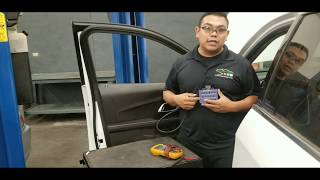
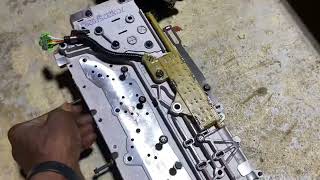
Used OEM Parts in Stock


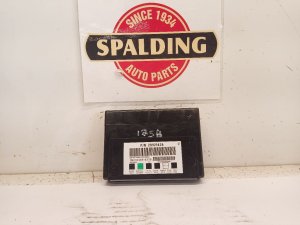

New Aftermarket Parts Available



The information in this article is provided for general reference and educational purposes only. Vehicle specifications, procedures, and part compatibility can vary by production date, trim level, and region. Always consult your vehicle's factory service manual and verify part numbers before purchasing or performing repairs. Safety-critical components such as airbags, seat belts, and braking systems should be installed by a qualified professional.
- Cadillac ESCALADE:
- 🎬 Helpful Videos
- 🛍️ Shop This Part
- What's Unique About the 2007-2014 Cadillac ESCALADE
- Diagnostic Flowchart
- Symptoms You May Notice
- Most Likely Causes
- Rare But Worth Checking
- Diagnosis Steps
- Parts You'll Likely Need
- Related Codes That Often Appear With This One
- Technical Service Bulletins (TSBs) & Recalls
- Platform-Specific Known Issues
- Mechanic-Grade Diagnostic Values
- Scan Tool Commands That Help
- Wiring & Ground Locations
- Real Owner Repair Stories
- OEM Part Supersession History
- 🎟️ Get 5% Off