

U0028 on 2013-2017 Chevrolet Express: Infotainment Network Failure Causes and Fixes
Code U0028 on a 2013-2017 Chevy Express indicates a communication failure on the Media Oriented Systems Transport (MOST) bus, which controls the infotainment system. This usually results in a blank screen and no audio. The cause is typically a failed module on the network (like the radio or CD player) or a wiring issue. Diagnosis is complex and requires professional tools like a MOST bypass loop.
- U0028 on a Chevy Express means the infotainment communication network (MOST bus) has failed.
- Common symptoms are a completely blank screen and no sound from the radio.
- The cause is almost always a single failed module (like the radio, HMI, or CD player) or a break in the wiring that connects them.
- Diagnosis is not a simple DIY task and requires a special MOST bus bypass loop tool to find the source of the problem.
- Do not replace expensive components like the radio or screen without first performing a proper diagnostic test to isolate the true cause.
What's Unique About the 2013-2017 Chevrolet EXPRESS
Unlike the main CAN bus that controls the engine and chassis, the Express uses a separate MOST bus network specifically for the infotainment system. This 'ring' topology means that if one module fails or a single wire breaks, the entire network can go down, causing a total loss of infotainment functions. While other GM vehicles like the Silverado and Tahoe have a well-documented issue with a pinched dash harness causing this code (TSB PIT5288H), this specific problem is not as commonly cited for the Express van platform. Diagnosis relies on the same principles of isolating the break in the ring, which also applies to its direct platform mate, the GMC Savana.
Diagnostic Flowchart
Tap your situation to follow the diagnostic path that matches what you're seeing on this vehicle.
Symptoms You May Notice
- Blank radio or infotainment display (most common symptom).
- No audio from the stereo system.
- Radio controls are inoperative.
- Steering wheel audio controls do not work.
- A dead battery due to a parasitic drain.
- Loss of turn signal 'click' sound (as this is often generated by the radio/audio module).
- DIC (Driver Information Center) audio page is blank.
- Replacing the radio or HMI module without performing a proper MOST bus diagnostic test. The fault could be a much cheaper wiring issue or a different module on the network, like the CD player.
- Replacing the battery. A dead battery is often a symptom of the U0028 code (parasitic drain), not the cause of it.
Most Likely Causes
- Failed Module on MOST Bus (Radio, HMI, CD Player, etc.) 🔴 High Probability The MOST bus operates in a ring, and an internal failure of any single module (like the radio, HMI, or CD player) will break the communication loop for all modules. The CD player is a frequently cited point of failure.
How to confirm: A technician will use a MOST bypass loop (part of GM tool kit EL-51578) to bypass each module one at a time. When the faulty module is bypassed, the rest of the system will begin working again, and the U0028 code will change from 'current' to 'history', confirming the failed part.
Typical fix: Replace the faulty module. In the case of a failed CD player, many owners choose to permanently install a bypass loop to restore radio function without replacing the CD player, as it is a non-essential component. Replacement HMI or radio modules must be programmed to the vehicle's VIN using GM's Service Programming System (SPS).
Est. part cost: $200-$1000+ - Damaged MOST Bus Wiring or Connectors 🟡 Medium Probability Wiring for the infotainment system runs through the dashboard and other areas where it can be pinched, chafed, or damaged during previous repairs, causing a short or an open circuit in the MOST bus ring.
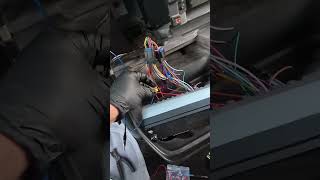
How to confirm: Visually inspect the MOST bus wiring (often a twisted pair of wires, sometimes green and gray) for any signs of damage, especially behind the radio and at each module connector. 🎬 See this guide for navigating Chevy Express stereo wiring and harnesses. A technician may also check for proper voltage on the MOST control circuit (ECL). If bypassing all modules with a loop tool does not fix the issue, the fault is confirmed to be in the wiring harness itself.
Typical fix: Repair the damaged section of the wiring harness. This may involve soldering the broken wires and protecting them with heat shrink tubing or replacing a damaged connector. It is critical to maintain the twisted-pair configuration to prevent data interference.
Est. part cost: $10-$50
Rare But Worth Checking
- Low Battery Voltage or Poor Ground Connection: While not a direct cause of a bus failure, low system voltage can cause modules to behave erratically and set communication codes. It's a simple and important first check. A failing alternator or bad battery can trigger a host of communication issues. Service Bulletin PI0690B highlights that improper battery grounding, especially in vans where batteries have been relocated, can cause various electrical faults.
- Failed Instrument Panel Cluster (IPC): The IPC is also a node on the MOST bus ring. While less common than a radio or HMI failure, an internal fault in the cluster can bring down the entire infotainment network, setting a U0028. Diagnosis would involve using a bypass loop on the IPC connector.
Diagnosis Steps
- Perform a full vehicle scan to check for all DTCs in all modules. Note which modules are not communicating.
- Check for other communication codes, especially U0029, which can help pinpoint the issue.
- If available, use a GM-compatible scan tool to view the MOST bus data in the Radio module. Look for 'Number of MOST Communication Breaks' and 'Surrogate MOST Master Node Upstream Position' to help identify the location of the fault.
- Visually inspect the MOST bus wiring and connectors at the radio, HMI module, and any other accessible components for obvious damage.
- Using a MOST bus bypass loop (like GM tool EL-51578), start by bypassing the first module in the ring after the radio (often the CD player).
- If the system does not come back online, move the bypass loop to the next module in the ring (e.g., the HMI module) and re-test.
- When the faulty module is bypassed, the U0028 code will change from 'current' to 'history', and infotainment functions will be restored (minus the function of the bypassed module).
- If bypassing all modules does not resolve the issue, the fault lies in the wiring harness between modules, which will require continuity testing to find the break.
Parts You'll Likely Need
- Human Machine Interface (HMI) Module
(OEM #23228498, 23493424, 84156701 (Part numbers vary by year and options, VIN verification is critical))— This is the 'brain' of the infotainment system. An internal failure is a common cause of a MOST bus breakdown. Requires programming upon replacement.
Trusted brands: ACDelco
OEM price range: $400-$800
Aftermarket price range: $250-$500 (Often sold as pre-programmed used units) - Radio/Tuner Module
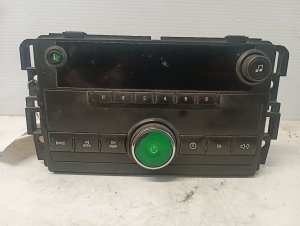
(OEM #13592804 (Varies by options like IO4/IO5/IO6, VIN verification needed))— The radio often acts as the master module for the MOST bus. If it fails, the entire network goes down.
Trusted brands: ACDelco
OEM price range: $300-$700
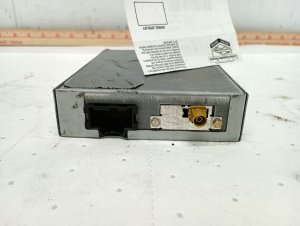
Aftermarket price range: $200-$450 - CD/Media Disc Player — The CD player is another node on the MOST bus ring. Internal failure is a frequent cause of U0028, and it's often cheaper to bypass it with a loop than to replace it.
Trusted brands: ACDelco
OEM price range: $150-$400
Aftermarket price range: $100-$250 - MOST Bus Diagnostic Bypass Loop
(OEM #Part of kit EL-51578, or available as a generic aftermarket loop.)— This is an essential diagnostic tool for isolating the failed component. It can also be used as a permanent fix to bypass a non-essential module like a CD player.
Trusted brands: ACDelco (as part of kit), Generic aftermarket
OEM price range: $20-$50 (for a single loop)
Aftermarket price range: $10-$30
Related Codes That Often Appear With This One
- U0029 — This code also indicates a MOST bus fault. U0028 often points to a complete break in the ring, while U0029 can indicate the ring is intact but a module is not communicating correctly. They frequently appear together.
- U0184 — This code means 'Lost Communication With Radio'. Since the radio is often the master module on the MOST bus, other modules will log this code when the primary U0028 fault occurs.
Technical Service Bulletins (TSBs) & Recalls
- PIC6073E: A general bulletin that directs technicians to review the Media Oriented Systems Transport (MOST) bus description and operation, and the specific diagnostic procedures for DTC U0028. It also mentions the diagnostic tool kit EL-51578 and explains that when a faulty module is bypassed, the U0028 code will change to 'history'.
- PI1149A: A diagnostic aid for intermittent blank displays with or without audio. It clarifies that a blank display with no audio when U0028 is present indicates the MOST bus is down. It also notes the difference in symptoms if the fault occurs at startup versus while driving.
Mechanic-Grade Diagnostic Values
- Module Power Supply Voltage — expected: 12.0–14.5 V with ignition ON. Failure: Voltage below 12.0V can cause modules to drop off the network.
- Module Ground Resistance — expected: Below 0.1 Ω. Failure: Resistance higher than 0.1 Ω indicates a poor ground connection which can cause communication faults.
- MOST Enable Circuit (Wake-up Signal) Voltage — expected: Approximately 12V (low current signal). Failure: No voltage on this circuit means the master (radio) is not telling other modules to wake up, preventing communication.
Hidden / Shadow Codes Worth Checking
- U0028 sym00: A symptom byte of '00' indicates a general MOST bus fault. Its presence in the radio module confirms the bus master is setting the code. (see via GM GDS2 (Global Diagnostic System 2) or equivalent high-end professional scan tool.)
Scan Tool Commands That Help
- GDS2: Radio Data > MOST Data — After finding U0028, use this screen to view specific PIDs like 'Number of MOST Communication Breaks' and 'Surrogate MOST Master Node Upstream Position' to help pinpoint the location of the fault in the ring.
- GDS2: Service Programming System (SPS) — This function is required after replacing the HMI or Radio module. It downloads the correct software and vehicle VIN to the new module, allowing it to communicate with other systems.
- GDS2: Data Bus Diagnostic Tool — This function, available within GDS2, actively queries all modules on the bus to see which ones are responding. It helps quickly identify which modules are offline and can be a starting point for diagnostics.
Wiring & Ground Locations
- G218 — On the left side of the instrument panel support structure, typically accessible after removing the driver's side knee bolster or side dash panel.. This is a primary chassis ground point for multiple interior modules, including the Instrument Panel Cluster and Radio. A loose or corroded G218 can cause intermittent or total loss of communication for these modules, leading to a U0028 code.
- HMI Module Connector X1 — On the Human Machine Interface module, located behind the glove box.. This is the main connector for the HMI module. On some GM platforms, Pin 10 is the battery positive voltage feed, and Pin 20 is the ground. Verifying power and ground at these specific pins is a critical step before condemning the module.
- Radio Connector X1, Pin 13 — At the main radio connector behind the dashboard.. This pin carries the Low Speed GMLAN Serial Data signal (Circuit 5060, often a Dark Green wire). While U0028 is a MOST bus code, faults on the GMLAN can sometimes accompany it, and verifying this circuit is part of a comprehensive diagnosis.
Real Owner Repair Stories
- gm-trucks.com forum user (2015 Chevrolet Silverado (K2XX Platform, similar infotainment architecture)) — Black screen, no radio, U0028 code present.
❌ Tried (didn't work) Using a MOST bypass loop on the CD/DVD player.
✅ What actually fixed it The Human Machine Interface (HMI) module was faulty. Replacing the HMI module and having it programmed by the dealer resolved all issues.
OEM Part Supersession History
23431257, 23493425→23228498— Part revision and consolidation by the manufacturer.
Heads up: Part 23228498 is a common HMI module for vehicles with RPO codes IO5. It is critical to verify the correct part number for the specific vehicle's VIN and options, as using the wrong module will result in a 'locked' state even after programming.
Model Year Variations Within This Range
- 2013-2017: During this period, GM used several infotainment RPO codes, such as IO4 (4-inch screen), IO5 (8-inch screen with MyLink), and IO6 (8-inch screen with MyLink and Navigation). The HMI and Radio modules are different between these systems. A U0028 fault on an IO5/IO6 system involves the HMI module behind the glovebox, while simpler systems may have different component locations or fewer modules on the MOST ring. Upgrading from an IO4 to an IO5/IO6 system requires replacing the screen, HMI module, and radio module, all programmed to the VIN.
Helpful Videos
We Have This Part in Stock




The information in this article is provided for general reference and educational purposes only. Vehicle specifications, procedures, and part compatibility can vary by production date, trim level, and region. Always consult your vehicle's factory service manual and verify part numbers before purchasing or performing repairs. Safety-critical components such as airbags, seat belts, and braking systems should be installed by a qualified professional.
- Chevrolet EXPRESS:
- 🎬 Helpful Videos
- 🛍️ Shop This Part
- What's Unique About the 2013-2017 Chevrolet EXPRESS
- Diagnostic Flowchart
- Symptoms You May Notice
- Most Likely Causes
- Rare But Worth Checking
- Diagnosis Steps
- Parts You'll Likely Need
- Related Codes That Often Appear With This One
- Technical Service Bulletins (TSBs) & Recalls
- Mechanic-Grade Diagnostic Values
- Hidden / Shadow Codes Worth Checking
- Scan Tool Commands That Help
- Wiring & Ground Locations
- Real Owner Repair Stories
- OEM Part Supersession History
- Model Year Variations Within This Range
- 🎟️ Get 5% Off