

U0028 on 2013-2018 Buick LaCrosse: MOST Bus Communication Failure Guide
This code indicates a communication failure on the fiber-optic MOST bus, which connects your infotainment system components. This typically results in no audio and a blank screen. The most common cause is a failed module on the network, like the amplifier or HMI module, and diagnosis involves using a fiber optic bypass loop to find the faulty part.
- U0028 on a Buick LaCrosse points directly to a problem with the fiber-optic infotainment (MOST) network.
- The most common symptoms are a black screen and no sound from the stereo.
- Diagnosis requires a special fiber optic bypass loop to find out which module (amplifier, radio, etc.) has failed.
- The most likely culprit is often the audio amplifier located in the trunk, but all modules on the ring must be checked.
- This is not a safety-critical issue, but it is complex to diagnose without the right tool, making professional service recommended.
What's Unique About the 2013-2018 Buick LACROSSE
GM utilized the MOST fiber-optic ring architecture in its premium vehicles from this era, including the LaCrosse, Cadillac XTS, and Chevrolet Impala. Unlike a traditional copper wire CAN bus, the MOST bus's ring topology means a single point of failure—like a faulty amplifier or a pinched fiber-optic cable—can take down the entire infotainment system. This often leads to a cascade of symptoms like a blank screen and no audio from what is actually just one failed component.
Diagnostic Flowchart
Tap your situation to follow the diagnostic path that matches what you're seeing on this vehicle.
Generation note: This range covers the end of the second generation (2013-2016) and the start of the third generation (2017-2019) LaCrosse. Both generations use a MOST bus for their infotainment systems, so the causes and diagnostic principles are very similar. However, the specific modules on the bus and their locations may differ slightly. For example, the HMI module is a common failure point on 2017+ models.
Symptoms You May Notice
- Blank infotainment display screen, especially on startup.
- No audio from the radio, CD player, or any other source.
- Radio controls and steering wheel controls for audio are unresponsive.
- Loss of audible warning chimes (turn signals, door ajar, etc.) that play through the speakers.
- Infotainment system works intermittently.
- Radio power button may blink when a MOST bus fault is active.
- Replacing the infotainment screen when the issue is actually a failed amplifier or HMI module breaking the MOST bus loop.
- Assuming the radio (head unit) is bad without testing the other modules on the fiber optic ring first.
- Replacing a module without checking for power and ground at its connector first. A blown fuse or bad ground can mimic a failed module.
Most Likely Causes
- Failed Module on the MOST Bus Ring (Amplifier, HMI, Radio) 🔴 High Probability The amplifier is a common failure point, sometimes due to its location in the trunk where it can be exposed to moisture or physical damage. The Human Machine Interface (HMI) module is also a very common failure, leading to a blank screen. The radio (tuner) acts as the bus master and can also fail, bringing the network down.
How to confirm: Use a fiber optic bypass loop (GM tool EL-51578 or equivalent 🎬 Watch: A simple guide to testing the GM MOST bus) to bypass each module on the ring one at a time. When the faulty module is bypassed, the rest of the system will begin working again. For example, if you bypass a failed amplifier, the screen will light up but you still won't have sound. A scan tool can also help by showing which module is not communicating.
Typical fix: Replace the identified faulty module (e.g., amplifier, radio, HMI module). Replacement HMI and radio modules must be programmed to the vehicle's VIN.
Est. part cost: $200-$800 - Damaged or Disconnected Fiber Optic Cable 🟡 Medium Probability Fiber optic cables are less flexible than copper wires and can be damaged (pinched, kinked, or broken) during unrelated repairs, especially behind the dashboard, in the center console, or in the trunk.
How to confirm: Visually inspect the fiber optic cables connected to each module for damage. A visible red light should be present at the input of a module if the upstream module is working. If bypassing all modules does not solve the issue, the fault lies within the wiring harness itself.
Typical fix: Repair or replace the damaged section of the fiber optic harness. This can involve splicing the cable, which requires care.
Est. part cost: $50-$300 - Poor Connection or Terminal Fretting ⚪ Low Probability Vibrations over time can cause microscopic movement in electrical connectors, leading to poor contact ('fretting'). This can affect both the fiber optic connectors and the power/ground connectors for the individual modules.
How to confirm: Disconnect, inspect, and reconnect the fiber optic and electrical connectors at each module. Sometimes simply re-seating the connector can temporarily restore function. Check for power and ground at the suspected failed module before replacing it.
Typical fix: Clean and apply dielectric grease to the connectors or replace the connector if damaged.
Est. part cost: $10-$50
Diagnosis Steps
- Perform a full vehicle scan to see which modules are reporting the U0028 code and if any other communication codes (like U0184, U0186) are present. Diagnose module-specific communication codes first.
- Verify the primary symptoms. A blank screen with no audio at startup is a strong indicator of a MOST bus failure.
- Gain access to the modules on the MOST bus. The amplifier is often located in the trunk on the right rear quarter panel. 🎬 See this walkthrough on fixing a broken Buick amplifier The HMI module is typically behind the glove box. The radio/tuner is often behind the main center stack controls.
- Obtain a fiber optic bypass loop (GM tool EL-51578). This is the most critical tool for this diagnosis.
- With the ignition off, disconnect the fiber optic connector from the first module (e.g., the amplifier). Attach the bypass loop to the connector, completing the circuit without the module.
- Turn the ignition on and check if the infotainment system (e.g., radio display) powers on. If it does, the module you just bypassed is faulty.
- If the system does not power on, turn the ignition off, reconnect the module, and move to the next module in the ring (e.g., HMI module, CD player if equipped) and repeat the bypass process 🎬 Watch: Deep dive into MOST bus circuitry and testing until the faulty component is isolated.
- If bypassing every module one-by-one does not restore function, inspect the fiber optic cables between modules for sharp bends, kinks, or physical damage.
- Before replacing any module, verify it is receiving proper power and ground at its electrical connector with a multimeter.
Parts You'll Likely Need
- Audio Amplifier
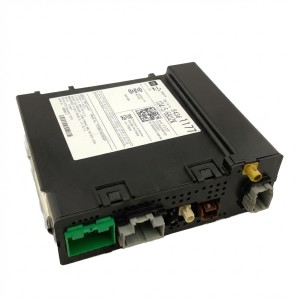
(OEM #20919988)— This is one of the most common modules to fail on the MOST bus, breaking the communication ring.
Trusted brands: ACDelco, Harman Kardon (OEM supplier)
OEM price range: $400-$700
Aftermarket price range: $250-$500 (remanufactured) - Human Machine Interface (HMI) Module
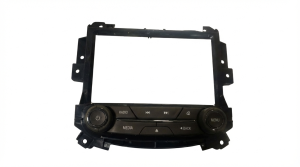
(OEM #84156701, 84513027, 23212442)— A very common failure point, especially on 2016+ models, causing a black screen and breaking the MOST ring. Must be programmed to the vehicle's VIN.
Trusted brands: ACDelco
OEM price range: $350-$600
Aftermarket price range: $200-$400 (used/programmed) - Fiber Optic Bypass Loop
(OEM #EL-51578)— This is an essential diagnostic tool required to isolate the failed component on the MOST bus ring.
Trusted brands: Various aftermarket
OEM price range: $20-$40
Aftermarket price range: $10-$25 - Radio — The radio often acts as the master module for the MOST bus. An internal failure can bring down the entire network. Requires VIN programming upon replacement.
Trusted brands: ACDelco
OEM price range: $300-$800
Aftermarket price range: $200-$500 (remanufactured)
Related Codes That Often Appear With This One
- U0029 — This code often accompanies U0028 and provides more specific information about the nature of the MOST bus communication error, helping to pinpoint the fault.
- U0184 — Loss of Communication with Radio. This code may set in other modules when the radio, the MOST bus master, goes offline due to the U0028 fault.
- U0186 — Loss of Communication with Audio Amplifier. This code may set if the amplifier is the specific module that has failed or is not communicating on the bus.
- U0155 — Loss of Communication with Instrument Panel Cluster (IPC). The IPC is also a node on the MOST bus, and a ring failure can cause this code to set.
Technical Service Bulletins (TSBs) & Recalls
- PIC6073E: Mentions reviewing the Media Oriented Systems Transport (MOST) bus description and operation for diagnostic procedures related to U0028.
- PI1149A: Provides detailed diagnostic steps for intermittent blank radio displays and no audio, specifically referencing DTCs U0028/U0029 and the use of bypass loop EL-51578.
Platform-Specific Known Issues
- General Motors issued Technical Service Bulletin PI1149A which provides diagnostic aids for a blank radio display and no audio, specifically mentioning DTC U0028 and the use of a bypass loop (EL-51578) for diagnosis across many 2014-2018 GM vehicles.
- The factory amplifier is located in the trunk on the passenger side, behind the carpeted trim panel, where it can be susceptible to damage from items shifting or potential water intrusion if trunk seals fail.
- On some models, a failing CD player (if equipped) can be the source of the MOST bus failure. Bypassing it with a loop is a common diagnostic step.
Hidden / Shadow Codes Worth Checking
- Surrogate MOST Master Node Upstream Position: This is not a DTC, but a data parameter viewable in the Radio module data list on a GM GDS2 scan tool. It indicates the position on the ring, counting backward from the Radio, where the communication break is detected. For example, a value of '2' points to a fault at or before the second module upstream from the radio. (see via GM GDS2 (or equivalent high-end scan tool) -> Radio Module -> Data Display.)
- Number of MOST Communication Breaks: A data parameter in the GDS2 scan tool that logs how many times the MOST ring has been broken. A U0029 code (ring integrity fault) may be present even if this number is zero, pointing to a module communicating improperly rather than a complete break. (see via GM GDS2 (or equivalent high-end scan tool) -> Radio Module -> Data Display.)
Scan Tool Commands That Help
- GDS2: Data Bus Diagnostic Tool — This function, installed with GDS2, actively queries modules on the data bus and lists which ones are responding. By comparing the list of responding modules to a vehicle schematic, a technician can determine the first module in the chain that is not communicating, pinpointing the location of the fault.
- GDS2: Radio Data Display -> MOST bus data — Used to view critical parameters like 'Surrogate MOST Master Node Upstream Position' and 'Number of MOST Communication Breaks'. This is a primary step for diagnosing a U0028/U0029 without physically accessing modules first.
- GDS2: HMI Module Reprogramming (SPS) — After replacing the HMI module, it must be programmed with the vehicle's VIN and correct software using the Service Programming System (SPS) through GDS2. An unprogrammed module will be theft-locked and will not function.
Wiring & Ground Locations
- HMI Module — Typically located behind the glove compartment.. This is a key module on the MOST bus. Knowing its location is critical for visual inspection, checking power/ground connections, and for using a bypass loop during diagnosis.
- Amplifier — Located in the trunk on the right rear quarter panel, behind the trim.. As a common failure point, accessing the amplifier is necessary for testing with a bypass loop or for replacement. Its location in the trunk makes it susceptible to water or physical damage.
- Amplifier Ground — A bolt securing the amplifier bracket or a nearby chassis stud in the trunk area serves as the ground point.. A poor ground connection to the amplifier can mimic a complete module failure, causing it to drop off the MOST network and trigger a U0028. Always verify this ground is clean and tight before replacing the amplifier.
Real Owner Repair Stories
- iATN Technical Discussion Forum (2015 Chevrolet Silverado (shares MOST architecture)) — MyLink display was dark, radio would not play, and all control buttons were non-functional.
❌ Tried (didn't work) Initial thought was to check powers and grounds, but the multiple failures pointed to a network issue.
✅ What actually fixed it Scan tool showed U0028 in the radio and U0029 in the HMI. The 'Surrogate MOST Master Node Upstream Position' data parameter pointed to the CD player as the fault location. The technician could not communicate with the CD player. Replacing the CD player resolved the issue. - YouTube - Automotive Diagnostics & Programming (Buick Verano (shares MOST architecture)) — Radio not working, screen turns on but is blank, 'Audio Off' message on the instrument cluster.
✅ What actually fixed it The technician found U0028 and U0029 codes. Using the scan tool's MOST data, he determined the ring order was Radio -> CD Player -> HMI -> Cluster. He physically bypassed the CD player using jumper leads, which immediately restored radio function (with static, as the amp was likely still offline). The CD player was identified as the faulty module. - Reddit r/MechanicAdvice (2012 Buick LaCrosse) — After the battery died and was replaced, the radio screen was black and not working.
❌ Tried (didn't work) Cycling the key immediately after battery replacement did not fix it.
✅ What actually fixed it The owner parked the car for about an hour. Upon returning, the system was working correctly. This suggests that a full power-down and system reset (allowing all module capacitors to discharge) resolved a temporary glitch on the bus caused by the battery replacement.
OEM Part Supersession History
84156701→84296482— Part revision or manufacturer change.
Heads up: While the new part number replaces the old one, any replacement HMI module (new, used, or superseded) must be programmed to the vehicle's VIN to function. They are not plug-and-play.
Model Year Variations Within This Range
- 2013-2016 (2nd Gen): These models use the earlier generation of the Buick IntelliLink system. While still a MOST bus architecture, the HMI and radio modules are different parts than the 2017+ models. The system does not support Apple CarPlay or Android Auto.
- 2017-2018 (3rd Gen): These models introduced the next-generation IntelliLink system with a redesigned 8-inch screen and support for Apple CarPlay and Android Auto as standard features. The HMI module is the newer 'NG 2.5' unit (e.g., P/N 84156701), which is a very common failure point for this generation.
Helpful Videos
We Have This Part in Stock





The information in this article is provided for general reference and educational purposes only. Vehicle specifications, procedures, and part compatibility can vary by production date, trim level, and region. Always consult your vehicle's factory service manual and verify part numbers before purchasing or performing repairs. Safety-critical components such as airbags, seat belts, and braking systems should be installed by a qualified professional.
- Buick LACROSSE:
- 🎬 Helpful Videos
- 🛍️ Shop This Part
- What's Unique About the 2013-2018 Buick LACROSSE
- Diagnostic Flowchart
- Symptoms You May Notice
- Most Likely Causes
- Diagnosis Steps
- Parts You'll Likely Need
- Related Codes That Often Appear With This One
- Technical Service Bulletins (TSBs) & Recalls
- Platform-Specific Known Issues
- Hidden / Shadow Codes Worth Checking
- Scan Tool Commands That Help
- Wiring & Ground Locations
- Real Owner Repair Stories
- OEM Part Supersession History
- Model Year Variations Within This Range
- 🎟️ Get 5% Off