

OBD-II Code U0019: Low-Speed Communication Bus Failure
The Ultimate 2026 Guide: What U0019 means, why it triggers, and how to fix it for good
- Code U0019 indicates a critical communication failure on the Low-Speed CAN Bus, disabling body electronics like power windows, door locks, and the instrument cluster.
- Physical wiring issues—specifically corrosion under the main fuse box or a faulty negative battery cable—cause over 60% of U0019 codes, rather than failed computer modules.
- Always check for Technical Service Bulletins (TSBs) first; a known BCM software glitch triggers this code on 2015-2017 Ram ProMaster vans and requires a dealer re-flash.
- Diagnose the network by testing resistance at the OBD-II port with the battery disconnected; a healthy CAN bus reads exactly 60 ohms between pins 6 and 14.
- Do not drive long distances with an active U0019 code, as you risk sudden loss of headlights, speedometer, or triggering the anti-theft immobilizer, leaving you stranded.
What Does U0019 Mean?

Code U0019 means your car's secondary computers cannot communicate. Your car uses a network called the Low-Speed CAN Bus to manage non-engine features like power windows, door locks, the radio, and the instrument cluster. This code triggers when a control module detects messages on this network are lost, corrupted, or stopped completely.
Technical definition: The SAE/OBD-II definition for U0019 is "Low Speed CAN Communication Bus". This indicates a control module detected a fault in the communication circuit for body and convenience features. The fault is often a 'Bus Off' state, where a module stops transmitting due to excessive errors, taking the network down. Advanced scan tools display failure type bytes like U0019-88 (Bus Off) or U0019-87 (Missing Message).
Can I Drive With U0019?
Yes, But With Caution. You can drive, but it is highly risky and not recommended. Body electronics failures are unpredictable. You will suddenly lose your speedometer, headlights, or taillights, creating a severe safety hazard. In some vehicles, communication failure engages the anti-theft system, leaving you stranded with a no-start condition. Get the vehicle diagnosed immediately.
Common Causes

- Water Intrusion and Corroded Wiring (Very Common) — Water leaking from clogged sunroof drains or bad seals pools under carpets and directly corrodes essential connectors. The CAN bus wires are highly susceptible to this corrosion, especially under the main fuse box (TIPM) or in door jambs, causing shorts and open circuits.
- BCM Software Glitch (Very Common) — A software glitch in the Body Control Module (BCM) causes it to set a false U0019 code. This is a heavily documented issue on specific vehicles, particularly the Ram ProMaster, requiring a dealer software update to resolve.
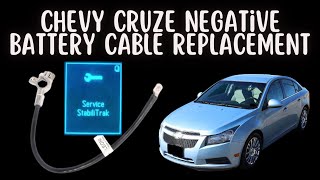
- Faulty Negative Battery Cable or Poor Grounds (Common) — A high-resistance ground connection destabilizes network voltage. A loose or internally corroded negative battery cable—a notorious failure point on GM vehicles—creates voltage drops that control modules cannot tolerate, triggering communication codes.
- Faulty Control Module (BCM, Cluster, or Radio) (Common) — Any computer module connected to the low-speed network can fail internally. A faulty module shorts out the network or broadcasts nonsensical data, disrupting all other modules. The BCM and Instrument Cluster are the most frequent culprits.
- Improperly Installed Aftermarket Accessories (Common) — Aftermarket remote starters, alarms, or stereos improperly tapped into the vehicle's wiring introduce electrical noise or create a direct short on the CAN bus, instantly disrupting communication.
- Failed Termination Resistor (Rare) — The CAN bus network relies on two 120-ohm resistors (usually built into the BCM and instrument cluster) to prevent signal reflections. If one of these modules fails or loses connection, network resistance changes and communication stops.
Symptoms

- Erratic or Dead Body Electronics — Power windows, door locks, interior lights, the radio, or the key fob stop working entirely or function intermittently.
- Instrument Cluster Malfunction — Gauges freeze or drop to zero, the entire cluster goes dark, or the odometer flashes continuously (indicating a proxy alignment failure).
- Engine Will Not Start or Stalls — If the instrument cluster or BCM acts as the immobilizer gateway, communication failure prevents key verification, causing a no-start condition or stalling while driving.
- Multiple Dashboard Warning Lights — The Check Engine Light illuminates alongside flashing "BCM", airbag, or ABS warning lights due to widespread network failure.
Diagnostic Flowchart

Tap your situation to follow the diagnostic path that matches what you're seeing on this code.
Common Fixes & Costs
- Update Body Control Module (BCM) Software — Parts: $0, Labor: $125-$250, ~1 hr book time (Professional)
- Replace Faulty Negative Battery Cable — Parts: $50-$90, Labor: $75-$150, ~0.8 hr book time (Beginner)
- Repair Damaged Wiring or Connectors — Parts: $10-$50, Labor: $200-$600+, ~3 hr book time (Intermediate)
- Repair or Replace Instrument Cluster — Parts: $150-$400 (repair service), Labor: $100-$200, ~1.2 hr book time (Intermediate)
- Replace the Body Control Module (BCM) — Parts: $300-$800, Labor: $150-$300 (plus $100-$200 programming), ~1.5 hr book time (Professional)
Used vs. New Parts: Buying Guide
When a used part is worth it: Buying a used BCM is highly risky. It only makes sense if the vehicle is very old, new parts are unavailable, and you have a specialist capable of 'virginizing' and reprogramming it.
Donor-vehicle mileage cap: roughly under 50000 miles for the part to have meaningful remaining life.
Donor quality checklist:
- Verify the part number matches EXACTLY.
- Ensure the donor vehicle had no electrical or water damage.
- Confirm the seller offers a 90-day warranty.
- Confirm the used BCM can be reprogrammed for your VIN, as many cannot.
Decision logic:
- If A new or remanufactured BCM is available → Buy the new/reman part. The cost of failed programming on a used module exceeds the initial savings.
- If Vehicle is over 15 years old and budget is the primary concern → Consider a used BCM only with pre-confirmation from an automotive locksmith or dealer that they will program it.
- If The fault is with an instrument cluster or radio → A used part is viable but requires programming to display correct mileage and function.
Warranty tradeoff: Used parts have a 30-90 day part-only warranty. New aftermarket parts offer 1-year warranties. A failed used part means paying for labor twice.
Worst-case if a used part fails: $500-$1000 if a used BCM is incompatible, requiring repeat labor and a new module purchase.
What Happens If You Wait — Timeline
- 0-4 weeks: Code U0019 is set. Minor glitches occur, such as the radio cutting out or a single power window failing. The check engine light illuminates. (MPG impact: 0%% · Added cost: $0)
- 1-3 months: Glitches become frequent. The instrument cluster goes dark intermittently. A faulty module develops a parasitic draw, weakening the battery. (MPG impact: 0%% · Added cost: $150-$300 (Risk of a dead battery requiring replacement and tow costs))
- 3-6 months: Critical systems like headlights fail unpredictably. The vehicle randomly fails to start due to the anti-theft system losing communication with the BCM. (MPG impact: 0%% · Added cost: $400-$1200 (Cost of diagnosing and replacing the primary failed component))
- 6+ months: Ignoring a water leak or wiring short leads to cascading failures. Electrical stress damages previously healthy modules on the network. (MPG impact: 0%% · Added cost: $1500-$3000+ (Cost of replacing multiple modules and extensive diagnostic time))
Cost of Not Fixing It
- Immediate: Intermittent or total failure of body electronics. Unpredictable behavior of headlights, taillights, or turn signals creates a significant safety hazard. (Added cost: $0 (but high risk of traffic tickets or accidents))
- 1-3 months: Risk of being stranded due to a no-start condition. A faulty module causes a parasitic drain, repeatedly killing the battery. (Added cost: $150-$300 (for a new battery and tow services))
- 6+ months: Continued electrical stress damages healthy modules. Chronic water intrusion leads to widespread corrosion and complex wiring harness replacements. (Added cost: $1000-$3000+ (replacing multiple modules or full wiring harnesses))
Diagnosis Steps
- Check for TSBs and Scan All Modules
Check for Technical Service Bulletins (TSBs) for your specific VIN. Many U0019 issues are known software glitches fixed by a dealer update. Use a full-system OBD-II scanner to read codes from ALL modules (BCM, ABS, IPC). Other 'U' codes (e.g., U0141) pinpoint the exact failing module.
Tools: Full-System OBD-II Scanner (Beginner) - Check Battery and Grounds
Ensure the battery is fully charged (above 12.4V) and passes a load test. Inspect the negative battery cable for internal corrosion or looseness (critical on GM vehicles). Remove, wire-brush, and tighten the main body and engine ground straps.
Tools: Digital Multimeter, Wrench/Socket Set, Wire Brush (Beginner) - Perform a Visual Inspection and "Wiggle Test"
Inspect wiring harnesses under the dashboard, in door jambs, and around the main fuse box (TIPM). Look for chafed wires, rodent damage, or green/white corrosion. With the ignition on and a scan tool monitoring communication, gently wiggle wiring harnesses. If symptoms appear, you have located the wiring fault.
Tools: Flashlight, Trim Removal Tools, OBD-II Scanner (Beginner) - Test CAN Bus Resistance
With the battery disconnected, measure resistance between Pin 6 (CAN High) and Pin 14 (CAN Low) on the OBD-II port. A healthy network reads exactly 60 ohms. A reading of 120 ohms means a terminating resistor is offline. A reading near 0 ohms indicates a short circuit between the CAN wires.
Tools: Digital Multimeter (Intermediate) - Test CAN Bus Voltage
With the battery connected and ignition ON, measure DC voltage. In the idle state, both CAN High (Pin 6) and CAN Low (Pin 14) sit at 2.5V. When active, CAN High averages 2.6V-3.0V and CAN Low averages 2.4V-2.0V. Voltages stuck at 0V, 5V, or 12V indicate a hard short to ground or power.
Tools: Digital Multimeter (Intermediate) - Isolate the Faulty Module
If resistance or voltage tests fail, unplug modules on the low-speed CAN bus one by one using a wiring diagram. After unplugging each module, re-test resistance at the OBD-II port. When resistance returns to 60 ohms, the last module unplugged is the culprit.
Tools: Digital Multimeter, Vehicle-Specific Wiring Diagram (Advanced) - Check for Parasitic Draw
A faulty module fails to 'go to sleep', draining the battery and disrupting the network. Perform a parasitic draw test with a multimeter in series with the negative battery cable. If the draw exceeds 50mA after 60 minutes, pull fuses for low-speed CAN modules until the amperage drops.
Tools: Digital Multimeter with 10A setting (Advanced) - Analyze Waveform with an Oscilloscope
Connect a two-channel oscilloscope to CAN High and CAN Low. A healthy bus shows clean, square waves mirroring each other. Distorted patterns, 'ringing' (reflections from bad termination), or excessive noise pinpoint the exact electrical fault.
Tools: Automotive Oscilloscope (Professional)
When This Code Triggers (Freeze-Frame Conditions)
- Vehicle Speed: 0 mph (at key-on) or 25-55 mph (The fault logs the moment the ignition turns on if a module is offline, or triggers during driving when a wiring issue shorts out.)
- Control Module Voltage: 11.5-14.5V (Triggers if system voltage drops too low during operation, causing modules to shut down, or if voltage is stable but a wiring short occurs.)
- Engine Coolant Temp: 40-220°F (A fault on a cold start indicates a module failed to 'wake up'. A fault when hot points to thermal expansion affecting a poor connection.)
- Engine RPM: 0 or 800-2500 RPM (Engine vibration exacerbates intermittent wiring faults, but RPM itself is not a direct trigger.)
Related Codes
- U0141 — Lost Communication With Body Control Module. If present with U0019, the BCM itself, its power, or its ground are the primary suspects.
- U0019-88 — Bus Off. A specific failure type byte indicating a module shut down its transmitter due to excessive network errors. This confirms a serious physical layer problem like a shorted wire.
- U1900 — Ford CAN Communication Bus Fault. The Ford-specific equivalent indicating the instrument cluster failed and disrupted the network.
- U0155 — Lost Communication With Instrument Panel Cluster. If seen alongside U0019, the instrument cluster has failed internally and is taking down the network.
Climate & Environmental Factors
- High Humidity / Heavy Rain: Moisture enters the cabin through failing seals (sunroof drains, windshields) and pools under carpets. This water directly corrodes CAN bus wiring and module pins, causing high resistance or short circuits.
- Cold Weather: Cold temperatures make old wiring insulation brittle and susceptible to cracking. Metal contraction worsens poor connections at connector pins, leading to intermittent open circuits that disappear as the cabin warms up.
- Salty/Corrosive Environments: Road salt accelerates corrosion. Salt spray works into under-hood connectors like the main fuse box (TIPM) and rapidly degrades wiring and chassis ground points.
How to Talk to a Mechanic About This Code
Say this: "I have a U0019 communication code and intermittent electrical issues like the gauges dropping out. I need to schedule a diagnostic for a CAN bus fault."
Frames the problem as a complex network issue, encouraging the shop to assign a technician skilled in electrical diagnostics.
Avoid saying:
- 'My BCM is probably bad.' (Do not diagnose the problem for them).
- 'Just fix whatever's wrong.' (Invites unnecessary part replacements).
- 'My check engine light is on.' (Not specific enough for a network fault).
Questions to ask before authorizing the repair:
- What was the result of the CAN bus resistance and voltage tests?
- Did you check for Technical Service Bulletins or software updates for my VIN?
- How did you isolate this specific wire or module as the cause?
- What is the warranty on the recommended repair?
Where to Take It: Dealer vs Independent vs Chain
- Dealer:
Highly Recommended for Chrysler/Ram/Ford products with known TSBs or if an independent shop fails to fix it.
Best for: Vehicles with known software glitches (Ram ProMaster)., Vehicles under warranty., Complex electrical issues requiring factory diagnostic tools.
Downsides: Highest labor rates and part costs., More inclined to replace an entire module rather than repair a wire. (Typical cost: +50% vs. baseline) - Independent Shop:
Good Fit, provided the shop is well-equipped for CAN bus diagnostics and has full-system scanners.
Best for: Out-of-warranty vehicles., Diagnosing wiring damage, corrosion, or bad grounds., Shops specializing in electrical diagnostics with ASE-certified technicians.
Downsides: May lack the latest manufacturer software updates., Diagnostic capability varies greatly; vetting is crucial. (Typical cost: +0% vs. baseline) - Chain Shop:
AVOID. This code requires specialized diagnostic procedures beyond the scope of chain repair shops.
Best for: Routine maintenance like oil changes or tires.
Downsides: Technicians are not equipped for complex network diagnostics., High risk of misdiagnosis and unnecessary part replacement. (Typical cost: -10% vs. baseline)
When to Walk Away From the Repair
If the estimated repair cost for the U0019 fault exceeds 40-50% of the car's private-party value, consider selling the car as-is.
- Car worth $4000, fix is $2000: Walk Away. A $2,000 repair is 50% of the car's value and doesn't guarantee another issue won't appear.
- Car worth $12000, fix is $1800: Fix it. The repair cost is 15% of the vehicle's value.
- Car worth $2500, fix is $1500: Walk Away. The repair cost is 60% of the car's value.
What Scan Tool You Need for This Code
Minimum: A scanner that reads codes from ALL vehicle modules (BCM, IPC, ABS), not just the engine computer.
A $20 reader only shows the U0019 code in the engine module. It cannot see which other modules are offline, making diagnosis impossible.
Budget: BlueDriver Bluetooth Pro (~$100) — Reads codes from all modules, providing a full system health report to show which modules are not communicating.
Mid-range: Autel MaxiCOM MK808Z / XTOOL D7 (~$350) — Provides bidirectional control to test modules. Offers the 'Proxy Alignment' function needed for Chrysler/Dodge/Jeep/Fiat vehicles.
Professional: XTOOL D8S / Autel MaxiSys MS906Pro (~$700-1200) — Offers CAN bus topology mapping, visually showing the network layout and offline modules. Includes advanced ECU programming.
Rent vs buy: Auto parts stores rent basic scanners insufficient for U-codes. Buying a budget full-system scanner is mandatory for DIY diagnosis.
How to Clear the Code After You Fix It
- Reconnect the battery if disconnected.
- Use a full-system OBD-II scan tool to clear the U0019 code from all modules.
- Perform a complete drive cycle to run readiness monitors and confirm the fix.
Drive cycle (~30 minutes): 1) Cold start (engine off 8+ hours). 2) Idle 3 minutes. 3) Drive 15 minutes mixed city/highway. 4) Maintain 50-60 mph for 10 minutes. 5) Cool down completely.
Readiness monitors affected: Catalyst (CAT) monitor, Evaporative Emission (EVAP) System monitor, Oxygen (O2) Sensor monitor
Before emissions retest: drive at least 100 miles to fully set monitors.
Watch out for:
- Disconnecting the battery clears the code but resets all readiness monitors to 'Not Ready', guaranteeing an emissions failure.
- The code returns immediately if the root cause (wiring short or faulty module) is not repaired.
Will This Fail Emissions / State Inspection?
Yes — this code typically fails an OBD-II emissions inspection.
- California: An illuminated Check Engine Light from a U-code is an automatic failure. All required readiness monitors must be 'Ready'.
- New York: Any active diagnostic trouble code that turns on the check engine light, including U0019, results in a failed inspection.
- Texas: An active U0019 code with the Check Engine Light on is an automatic failure. You are allowed one 'Not Ready' monitor.
Most Commonly Affected Vehicles
- Ram ProMaster (2015-2017) — Extremely common due to a BCM software glitch. The definitive fix is a dealer software update per TSB 08-230-22. Hardware diagnosis must only begin after confirming the software is updated.
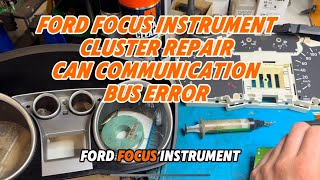
- Ford Focus (2004-2011) — Caused by a failing instrument cluster. Cracked solder joints on the cluster's main connector disrupt communication, causing stalling and no-start conditions. Rebuilding the cluster is the standard fix.
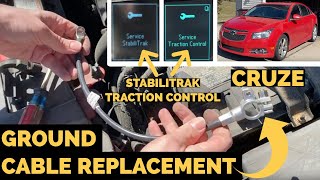
- Chevrolet / General Motors Cruze, Malibu, Equinox, Sonic (2010-2017) — Traced back to a faulty negative battery cable with high internal resistance. This causes unstable voltage and widespread communication issues. Replacing the cable is highly effective.
- Chrysler / Dodge / Jeep 300, Grand Caravan, Charger, Grand Cherokee (2008-2016) — Highly susceptible to water intrusion and corrosion in the wiring directly under the main fuse box (TIPM).
- Fiat Ducato / 500 / Grande Punto (2007-2017) — Often seen on Ducato-based motorhome conversions where factory wiring was altered. On the Grande Punto, it points to an internal BCM failure requiring replacement.
- Mazda 3, 6 (2004-2013) — Caused by wiring harnesses chafing and shorting out behind the glove box or in the driver's side door jamb.
- Nissan Titan, Armada, QX56 (2004-2010) — Points to a failure of the instrument cluster assembly, which contains a network termination resistor. Its failure takes down the entire low-speed bus.
- Kia Sorento (2002-2009) — Triggered by poorly installed aftermarket alarm systems interfering with the CAN bus, or general wiring corrosion.
Manufacturer-Specific Notes
- Chrysler/Dodge/Jeep/Ram: This code is frequently caused by a software bug in the BCM. A dealer must perform a software update (re-flash) per TSB 08-230-22 before any hardware is replaced.
- General Motors (Chevrolet): A faulty negative battery cable with high internal resistance is a primary cause. The cable looks fine externally but fails to provide a stable ground. GM has issued several revised part numbers.
- Ford: The instrument cluster acts as a network gateway and is a common failure point. A failing cluster causes a U1900 code and prevents the engine from starting. Third-party circuit board repair is the standard solution.
- Mitsubishi: On some models, U0019 has a completely different definition related to an audio amplifier speaker output failure. Verify the code definition with a professional scan tool.
Real Owner Stories
2016 Ram ProMaster 2500 with ~75K miles
The van stalled at a red light. The dashboard lit up, the odometer flashed, and the engine would not restart.
Outcome: The dealership identified a known software glitch in the BCM. They performed a software re-flash (TSB 08-230-22), resolving the problem. The owner paid for two tows and extensive diagnostic time before the simple software fix was applied.
Lesson: On a Ram ProMaster, insist the shop checks for BCM software updates FIRST to save thousands in unnecessary labor.
2012 Chevy Cruze with 110K miles
The owner experienced bizarre electrical problems: radio turning off, dead instrument cluster, and door locks cycling randomly. U0019 was present.
Outcome: After researching, the owner replaced the negative battery cable with a new ACDelco part (P/N 22754271) for $90. Despite looking fine, the old cable had high internal resistance. The 30-minute replacement completely solved all issues.
Lesson: On GM vehicles with widespread electrical faults, the negative battery cable is the primary suspect and a cheap, easy first fix.
2010 Dodge Grand Caravan with 140K miles
Wipers, horn, and door locks acted erratically, worsening on rainy days. U0019 was stored.
Outcome: A second mechanic inspected the main fuse box (TIPM) and found green corrosion on the underside connectors caused by water wicking. Cleaning the pins and sealing the area with dielectric grease fixed the issue for $250.
Lesson: On Chrysler/Dodge/Jeep vehicles, visually inspect the wiring directly underneath the TIPM for corrosion before condemning any module.
How to Prevent This Code From Triggering
- Clean Sunroof Drains Annually (Once per year) — Clogged drains cause water intrusion, corroding A-pillar connectors, fuse boxes, and the BCM. Use compressed air to clear blockages.
- Inspect and Clean Main Ground Connections (Every 30,000 miles or during battery replacement) — Corroded ground straps create unstable voltage, causing modules to malfunction. Wire brush and securely tighten these connections.
- Apply Dielectric Grease to Exposed Connectors (When servicing components in wet climates) — Dielectric grease protects electrical connections from moisture. Apply it to the rubber seals of connectors under the fuse box or in door jambs.
- Ensure Professional Installation of Aftermarket Electronics (During any aftermarket installation) — Improperly installed stereos or alarms are a major source of CAN bus faults. Ensure installers do not splice into CAN wiring.
Frequently Asked Questions
What is the most common misdiagnosis for U0019?
The most common mistake is replacing the Body Control Module (BCM) without proper diagnostics. Technicians must first rule out software updates, check for corroded wiring under the fuse box, and test the negative battery cable. Blaming the BCM before testing network resistance and voltage leads to expensive, ineffective repairs.
Can a bad battery cause a U0019 code?
Yes. A weak battery providing low voltage (below 11.5V) causes control modules to malfunction and drop off the network, setting a U0019 code. Always ensure your battery and charging system are healthy before chasing complex network issues.
What does 'Bus Off' mean in relation to U0019?
A 'Bus Off' status (code U0019-88) is a protective state. When a module detects too many data errors, it shuts down its transmitter to avoid flooding the network with bad data. This indicates a significant hardware problem, like a shorted wire or internally failed module.
Can I fix a U0019 code myself?
Basic checks like inspecting for wire damage, checking fuses, and testing the battery are DIY-friendly. Properly diagnosing a broken wire or faulty module requires a multimeter, wiring diagrams, and a methodical approach. Replacing a module almost always requires professional programming.
Will the code U0019 clear itself?
If the fault is temporary (like a low battery that is now charged), the code moves to history and warning lights turn off after several drive cycles. If caused by persistent hardware failure or wiring damage, the code remains active until physically repaired.
How much does it cost to diagnose a U0019 code?
Most shops charge a diagnostic fee equivalent to one to three hours of labor. Expect to pay between $150 and $450 for a proper diagnosis. Tracing wiring, isolating modules, and verifying network integrity is highly time-consuming.
What is a Body Control Module (BCM)?
The Body Control Module (BCM) is a computer controlling non-engine electronics like lights, windows, door locks, and the instrument cluster. It acts as the central hub or gateway for the low-speed communication network.
What is a terminating resistor and where is it?
A CAN bus uses a 120-ohm resistor at each end to prevent data signals from echoing. These are built directly into two control modules, typically the BCM and instrument cluster. If one module fails or unplugs, network resistance doubles to 120 ohms, and communication fails.
Can aftermarket LED bulbs cause a U0019 code?
Yes, though uncommon. On vehicles like Chrysler/Ram products, the BCM monitors bulb circuits. Using cheap LED bulbs without proper resistors causes the BCM to log faults, and related software glitches contribute to a U0019 code.
My odometer is flashing, is this related to U0019?
A flashing odometer is a classic CAN bus problem symptom, particularly on Fiat-Chrysler (FCA) vehicles. It indicates a 'Proxy Alignment' issue, meaning a module is not communicating correctly with the BCM. This flashing confirms the network configuration is incorrect due to the U0019 fault.
Key Takeaways
- Code U0019 indicates a critical communication failure on the Low-Speed CAN Bus, disabling body electronics like power windows, door locks, and the instrument cluster.
- Physical wiring issues—specifically corrosion under the main fuse box or a faulty negative battery cable—cause over 60% of U0019 codes, rather than failed computer modules.
- Always check for Technical Service Bulletins (TSBs) first; a known BCM software glitch triggers this code on 2015-2017 Ram ProMaster vans and requires a dealer re-flash.
- Diagnose the network by testing resistance at the OBD-II port with the battery disconnected; a healthy CAN bus reads exactly 60 ohms between pins 6 and 14.
- Do not drive long distances with an active U0019 code, as you risk sudden loss of headlights, speedometer, or triggering the anti-theft immobilizer, leaving you stranded.
Helpful Videos


The information in this article is provided for general reference and educational purposes only. Vehicle specifications, procedures, and part compatibility can vary by production date, trim level, and region. Always consult your vehicle's factory service manual and verify part numbers before purchasing or performing repairs. Safety-critical components such as airbags, seat belts, and braking systems should be installed by a qualified professional.
- 🎬 Helpful Videos
- What Does U0019 Mean?
- Can I Drive With U0019?
- Common Causes
- Symptoms
- Diagnostic Flowchart
- Common Fixes & Costs
- Used vs. New Parts: Buying Guide
- What Happens If You Wait — Timeline
- Cost of Not Fixing It
- Diagnosis Steps
- When This Code Triggers (Freeze-Frame Conditions)
- Related Codes
- Climate & Environmental Factors
- How to Talk to a Mechanic About This Code
- Where to Take It: Dealer vs Independent vs Chain
- When to Walk Away From the Repair
- What Scan Tool You Need for This Code
- How to Clear the Code After You Fix It
- Will This Fail Emissions / State Inspection?
- Most Commonly Affected Vehicles
- Manufacturer-Specific Notes
- Real Owner Stories
- 2016 Ram ProMaster 2500 with ~75K miles
- 2012 Chevy Cruze with 110K miles
- 2010 Dodge Grand Caravan with 140K miles
- How to Prevent This Code From Triggering
- Frequently Asked Questions
- What is the most common misdiagnosis for U0019?
- Can a bad battery cause a U0019 code?
- What does 'Bus Off' mean in relation to U0019?
- Can I fix a U0019 code myself?
- Will the code U0019 clear itself?
- How much does it cost to diagnose a U0019 code?
- What is a Body Control Module (BCM)?
- What is a terminating resistor and where is it?
- Can aftermarket LED bulbs cause a U0019 code?
- My odometer is flashing, is this related to U0019?
- Key Takeaways
- 🎟️ Get 5% Off