

OBD-II Code U0011: Medium Speed Communication Bus Performance
What U0011 means, why it triggers, and how to fix it
- U0011 indicates a breakdown on the 125-250 kbps Medium-Speed CAN bus, which controls body and convenience features like power windows and dashboard lights.
- Always test the battery and alternator first; system voltage dropping below 12.4V is the leading trigger for false communication codes.
- Do not replace expensive modules like the BCM ($500+) until you verify the 60-ohm terminating resistance at the OBD-II port to rule out broken wiring.
- Water intrusion under the driver's carpet or A-pillar is the most common physical cause of the corrosion that shorts this network.
- You need an advanced scanner capable of reading all modules (like a $100 BlueDriver) to diagnose U0011; a basic $20 engine code reader will not see it.
What Does U0011 Mean?

The U0011 code indicates a performance failure on your car's Medium-Speed (MS) Communication Network, also known as the CAN Bus. This network acts as a nervous system, allowing electronic modules like the Body Control Module (BCM), Instrument Panel Cluster (IPC), and infotainment system to share data. When this code appears, communication between these modules has become unreliable, suffers from high error rates, or has momentarily stopped.
Technical definition: The SAE/OBD-II definition for U0011 is "Medium Speed CAN Communication Bus Performance". It triggers when a control module detects excessive error frames, signal latency, or electromagnetic noise on the 125 kbps to 250 kbps data network handling body control and convenience features.
Can I Drive With U0011?
Yes, But With Caution. You can drive, but expect erratic behavior from interior electronics like dash lights, power locks, and windows. The loss of dashboard indicators (like turn signals or warning lights) or exterior lighting functions creates an immediate safety hazard. Driving for an extended period risks a complete network failure, leading to a no-start condition or secondary module damage.
Common Causes

- Damaged Wiring or Water Intrusion (Very Common) — The twisted-pair CAN bus wires frequently fray, break, or short where they pass through door hinges, under carpets, or near the steering column. Water leaking from clogged sunroof drains or bad window seals pools around connectors (especially at the A-pillar or sill plates), causing immediate shorts and long-term corrosion.
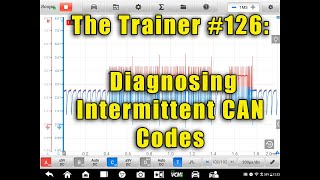
- Low System Voltage or Poor Grounds (Common) — Modules require stable power and ground to communicate. A weak battery, failing alternator, or a corroded ground wire causes system-wide voltage drops. This prevents modules from powering up correctly and corrupts their data signals, triggering communication codes. 🎬 Watch: A professional guide to diagnosing intermittent CAN bus codes.
- Faulty Control Module (BCM, IPC, etc.) (Common) — An electronic module on the network can fail internally and disrupt the entire bus by stopping communication or flooding it with corrupt data ('chattering'). This results from firmware corruption, internal hardware failure (like broken solder joints), or voltage spikes.
- Interference from Aftermarket Accessories (Less Common) — Improperly installed aftermarket electronics, such as remote starters, alarms, or audio equipment, splice into the CAN bus wiring incorrectly. This creates electromagnetic interference (EMI) that disrupts network signals.
- Failed or Missing Terminating Resistor (Rare) — The CAN bus requires a 120-ohm resistor at each end to prevent signal reflections. If a resistor fails or its connection corrodes, data signals corrupt. Total resistance across the two CAN lines must measure 60 ohms; a 120-ohm reading confirms a broken circuit or missing resistor.
Symptoms

- Flickering or dead instrument cluster — Dashboard lights, gauges, and information displays flash erratically, go completely blank, or reboot while driving.
- Power locks, windows, or mirrors fail — Power door locks, windows, or adjustable mirrors operate intermittently or stop working entirely.
- Erratic interior and exterior lighting — Dome lights, headlights, or turn signals turn on and off independently or fail to operate.
- Vehicle fails to start — If the immobilizer module sits on the affected network and loses communication, the engine will not crank or start.
- Multiple warning lights illuminate (also visible on scanner) — The Check Engine light turns on alongside specific warnings for the ABS, airbags, or a general 'Communication' error.
Diagnostic Flowchart
Tap your situation to follow the diagnostic path that matches what you're seeing on this code.
Common Fixes & Costs
- Repairing Damaged Wiring or Connectors — Parts: $10-$50, Labor: $150-$450, ~2 hr book time (Intermediate)
- Cleaning Grounds or Replacing Battery — Parts: $20-$250, Labor: $50-$150, ~1 hr book time (DIY)
- Replacing a Faulty Control Module (BCM, IPC) — Parts: $300-$800, Labor: $150-$300, ~1.5 hr book time (Professional)
- Reprogramming or Updating a Control Module — Parts: $0, Labor: $100-$200, ~1 hr book time (Professional)
DIY vs Professional
- Repairing Damaged Wiring or Connectors — Beginner:
Tools: Multimeter, wire strippers, soldering iron, heat shrink tubing. - Replacing a Faulty Control Module — Beginner:
Tools: Advanced scan tool with programming capabilities (e.g., FORScan, Tech2Win). - Cleaning or Repairing a Ground Connection — Beginner:
Tools: Socket set, wire brush, sandpaper, dielectric grease.
Used vs. New Parts: Buying Guide
When a used part is worth it: For common modules like a BCM or IPC on an older vehicle where budget is the primary concern, provided you have a shop willing to program a used part.
Donor-vehicle mileage cap: roughly under 100000 miles for the part to have meaningful remaining life.
Donor quality checklist:
- Match the part number exactly; make/model/year is not enough.
- Source from a vehicle with identical trim options.
- Ensure the seller offers at least a 30-day warranty.
Decision logic:
- If The part has known internal design flaws (e.g., Ford IPC solder joints) → Buy a new or professionally remanufactured unit with an updated design.
- If The vehicle is less than 10 years old → Buy new OEM. The warranty and guaranteed compatibility are worth the premium.
- If Replacing a BCM or IPC → Factor in $150-$200 for programming regardless of whether the part is new or used.
Warranty tradeoff: Used parts carry a 30-day parts-only warranty. New OEM parts carry a 1-year to lifetime warranty.
Worst-case if a used part fails: $400 if a used module arrives dead and you have to pay for programming labor twice.
What Happens If You Wait — Timeline
- 0-1 month: Intermittent glitches appear. The radio reboots once, or a power window hesitates. The U0011 code stores in history, but the check engine light remains off. Symptoms vanish after restarting the car. (MPG impact: 0%% · Added cost: $0)
- 1-4 months: Symptoms become frequent. The instrument cluster flickers, warning lights flash during drives, and power accessories fail reliably. The check engine light illuminates. The car is driveable but unsafe if exterior lights fail. (MPG impact: 0%% · Added cost: $150 - $450 (Labor for initial electrical diagnosis).)
- 4-12 months: An intermittent short degrades overall network health, putting electrical stress on healthy modules. A simple wiring fault causes a secondary failure in an expensive computer like the BCM. Occasional no-start conditions occur. (MPG impact: 0%% · Added cost: $500 - $1500 (Cost of replacing a secondarily damaged module).)
- 12+ months: Total network failure. The MS-CAN bus goes down completely, resulting in a permanent no-start condition. Multiple modules report errors, masking the original root cause and making diagnosis extremely difficult. (MPG impact: N/A (Vehicle will not start)% · Added cost: $1500 - $3000+)
Cost of Not Fixing It
- Short-Term (0-3 months): Persistent electronic glitches escalate into safety hazards, such as the instrument cluster going blank at highway speeds or exterior lights failing without warning. (Added cost: $0 - $150)
- Medium-Term (3-12 months): An intermittent wiring short puts electrical stress on healthy modules, causing them to fail prematurely. A $150 wiring repair cascades into a $1,000 module replacement. (Added cost: $500 - $1500)
- Long-Term (1+ year): Total network failure leads to a permanent no-start condition. Multiple secondary codes obscure the original fault, making diagnosis exponentially more expensive. (Added cost: $1500 - $3000+)
Diagnosis Steps

- Check Battery and Charging System
Ensure the battery is fully charged. With the engine off, battery voltage must be 12.4V or higher. With the engine running, the alternator must maintain 13.5V to 14.7V. Low voltage is the leading cause of false network communication errors.
Tools: Digital Multimeter (Beginner) - Perform a Full System Scan
Use an advanced OBD-II scanner to read codes from ALL modules (BCM, IPC, ABS). Note all 'U' codes and identify which modules are not responding. Look for 'CAN Bus Error Count' live data to see which modules detect problems.
Tools: Advanced OBD-II Scanner (Beginner) - Disconnect Aftermarket Accessories
Completely disconnect any aftermarket remote starters, alarms, stereos, or OBD-II dongles. These devices frequently cause electromagnetic interference (EMI) that disrupts the CAN bus. Clear codes and retest.
Tools: Basic hand tools (Beginner) - Perform a Thorough Visual Inspection
Inspect wiring harnesses in door jambs, under seats, and behind the dashboard for chafing. Check connectors in the A-pillar kick panels and under the driver's door sill plate for green or white water corrosion.
Tools: Flashlight, Trim Removal Tools (Beginner) - Check Terminating Resistance
Disconnect the battery and wait 10 minutes. Measure resistance between the CAN High and CAN Low pins at the OBD-II port (consult a wiring diagram for specific MS-CAN pin locations). A healthy network reads 60 Ω. A reading of 120 Ω means a resistor is offline; 0 Ω means the wires are shorted together.
Tools: Digital Multimeter, Vehicle Wiring Diagram (Intermediate) - Check CAN Bus Voltages (Static)
Reconnect the battery and turn the ignition on. Measure voltages on the CAN lines relative to a chassis ground. In the idle state, both lines should read ~2.5V. During active communication, CAN High rises to ~3.5V and CAN Low drops to ~1.5V. A line stuck at 0V or 12V indicates a short to ground or power.
Tools: Digital Multimeter (Intermediate) - Perform a "Wiggle Test"
While monitoring CAN bus voltages or live scanner data, aggressively wiggle wiring harnesses and connectors in suspected areas. If voltage fluctuates or communication drops during movement, you have located the intermittent wiring fault.
Tools: Digital Multimeter or Advanced Scan Tool (Intermediate) - Isolate the Faulty Module
Using a wiring diagram, locate modules on the MS-CAN network. Disconnect them one by one, re-checking bus resistance or re-scanning for codes after each. When the resistance returns to 60 Ω or communication restores, the last disconnected module (or its wiring branch) is the culprit.
Tools: Digital Multimeter, Wiring Diagrams, Advanced Scan Tool (Advanced) - [PRO TIP] Analyze the CAN Waveform
Connect an oscilloscope to CAN High and CAN Low. A healthy signal shows two clean, mirrored square waves switching between 2.5V and 3.5V/1.5V. Look for distorted signals, excessive noise, or reflections indicating a bad terminating resistor. Flat-lining signals confirm a hard short.
Tools: 2-Channel Automotive Oscilloscope, Wiring Diagrams (Professional)
When This Code Triggers (Freeze-Frame Conditions)
- System Voltage: 9V - 16V (Codes set during key-on or startup point to voltage drops during cranking. A value below 12V indicates a weak battery or failing alternator triggered the fault.)
- Vehicle Speed: 0 mph or highway speeds (Faults logged at 0 mph indicate startup initialization issues. Faults logged at highway speeds point to wiring chafing aggravated by road vibration.)
- Time Since Engine Start: < 60 seconds (A short time value confirms a hard fault where modules failed to establish stable communication immediately upon ignition.)
Related Codes
- U0010 — U0010 indicates the Medium Speed CAN Bus is completely down ('Bus Off'), while U0011 means the network is active but experiencing high error rates. U0011 often precedes U0010.
- U0140 — Means 'Lost Communication With Body Control Module'. If U0011 is logged alongside U0140 across multiple modules, the BCM or its direct wiring is the epicenter of the failure.
- U0155 — Means 'Lost Communication With Instrument Panel Cluster'. On Fords, a failing IPC commonly triggers both U0155 and U0011 simultaneously.
- B1318 — A Ford-specific code for 'Battery Voltage Low'. Its presence confirms you must fix the battery or alternator before diagnosing the network.
Climate & Environmental Factors
- Humidity and Water Intrusion: Clogged sunroof drains and bad seals allow water to pool under carpets and in kick panels. This submerges connectors, causing green corrosion and short circuits on the CAN bus wires.
- Road Salt: Salty slush sprays into the undercarriage, accelerating the degradation of wiring harnesses and causing high resistance in exposed connectors.
- Extreme Cold: Cold temperatures make wire insulation brittle and lower the effective voltage of a weak battery, triggering communication codes during startup.
How to Talk to a Mechanic About This Code
Say this: "I have a U0011 communication code and my dashboard electronics are acting erratically. Please authorize 1-2 hours of diagnostic time to trace the network wiring for shorts, corrosion, or water damage before quoting any control modules."
This signals you know the most common cause is a wiring fault, not a bad computer. It directs the technician to perform a proper electrical diagnosis first, preventing unnecessary part swapping.
Avoid saying:
- 'My dash is going crazy, just fix it.'
- 'My check engine light is on, can you look at it?'
- 'I think it needs a new computer.'
Questions to ask before authorizing the repair:
- What were the resistance and voltage readings on the CAN bus?
- If you recommend a module replacement, how did you confirm the wiring and power/ground to that module are good?
- Can you show me the damaged wiring or corroded connector you found?
- Does the new module require programming, and is that included in the quote?
Where to Take It: Dealer vs Independent vs Chain
- Dealer:
A safe choice for newer cars with known software issues, but the most expensive option for out-of-warranty wiring diagnostics.
Best for: Vehicles under warranty., Repairs requiring proprietary software updates (TSBs).
Downsides: Highest labor rates., Technicians are often quicker to replace a module than trace an intermittent wiring fault. (Typical cost: +50% vs. baseline) - Independent Shop:
Best overall fit. An independent electrical specialist provides the most value by finding the root wiring fault rather than defaulting to expensive module replacement.
Best for: Out-of-warranty vehicles., Shops with an ASE L1 certified specialist in automotive electronics.
Downsides: Diagnostic skill varies greatly; vetting the shop's electrical expertise is crucial. (Typical cost: +0% vs. baseline) - Chain Shop:
AVOID. Complex electrical faults are outside the scope of chain repair shops.
Best for: Routine maintenance like oil changes and brakes.
Downsides: Technicians lack the training and oscilloscopes required for complex network diagnostics., High risk of misdiagnosis. (Typical cost: -10% vs. baseline)
When to Walk Away From the Repair
If the estimated repair cost exceeds 50% of the car's current private-party value, consider selling or trading it in.
- Car worth $8000, fix is $400: Fix it. A wiring repair is well below the threshold.
- Car worth $5000, fix is $2200: Borderline. The repair is almost 50% of the value. Get a second opinion to confirm a module is truly the cause before proceeding.
- Car worth $3000, fix is $2500: Walk away. The repair cost is not a sound investment.
What Scan Tool You Need for This Code
Minimum: A scanner capable of a 'Full System Scan' to read codes from the Body Control Module (BCM) and Instrument Panel Cluster (IPC).
A basic $20 code reader only communicates with the engine computer. U0011 occurs on the separate Medium-Speed network, so a basic reader will not see the codes or the modules involved.
Budget: BlueDriver Pro (~$100) — Connects to your smartphone to perform a full system scan, identifying exactly which body modules are logging communication faults.
Mid-range: Foxwell NT510 Elite (~$180) — A handheld tool providing full system diagnostics and bi-directional controls to actively command door locks or lights, helping isolate faults.
Professional: Autel MaxiCOM MK808BT Pro (~$500) — Offers professional-level diagnostics, full bi-directional control, live data from all modules, and the advanced functions required to program new modules.
How to Clear the Code After You Fix It
- Use an advanced OBD-II scan tool to clear the U0011 code from all individual modules (BCM, IPC, etc.).
- Do not rely on disconnecting the battery; this will not clear hard network codes from body modules.
- Perform a complete drive cycle to confirm the fix.
Drive cycle (~20 minutes): Start the engine and idle for 3 minutes. Drive for 15-20 minutes mixing city and highway speeds with several stops. This forces all modules to communicate over a sustained period, verifying the network is stable.
Readiness monitors affected: Network codes do not directly reset emissions readiness monitors. However, clearing the codes will reset all monitors, requiring a full drive cycle before an emissions test.
Before emissions retest: drive at least 50 miles to fully set monitors.
Watch out for:
- Using a basic $20 code reader that only clears the Engine Control Module (ECM), leaving the fault active in the BCM.
- Failing to fix the root wiring issue, causing the code to return immediately upon key-on.
Will This Fail Emissions / State Inspection?
Yes — this code typically fails an OBD-II emissions inspection.
- California: An active U0011 code illuminating the Check Engine Light causes an automatic failure of the OBD-II test.
- New York: An illuminated Check Engine Light from a U0011 code results in an immediate emissions inspection failure.
- Texas: Vehicles with an active U0011 code and illuminated MIL will fail the OBD-II portion of the inspection in required counties.
Most Commonly Affected Vehicles
- Ford Fusion, Focus, Edge (2010-2016) — Failing solder joints inside the Instrument Panel Cluster (IPC) disrupt the entire MS-CAN network. IPC replacement or repair is frequently required.
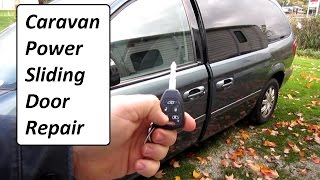
- Dodge / Chrysler Grand Caravan, Town & Country, Ram 1500 (2008-2016) — Wiring failures inside the flexible tracks of power sliding doors are the primary cause. Faults in the TIPM or BCM also trigger this code on the CAN IHS Bus.
- Chevrolet / GMC Silverado, Sierra, Tahoe (2007-2014) — Water intrusion under the driver's side door sill plate corrodes connectors, taking down the network. BCM failures are also common.
- BMW 3-Series (E90), 5-Series (E60) (2005-2013) — A faulty Intelligent Battery Sensor (IBS) on the negative terminal disrupts communication. Water leaks in the trunk frequently damage the PDC or Bluetooth modules.
- Volkswagen / Audi Jetta, Golf, A4 (2006-2012) — Water damage to the Comfort Control Module (CCM) located under the carpet is a leading cause. The CAN Gateway module (J533) is also a frequent failure point.
Manufacturer-Specific Notes
- Ford: The Instrument Panel Cluster (IPC) acts as a network gateway and houses a terminating resistor. Solder joint failures inside the IPC are a notorious cause of U0011 on 2010-2016 models.
- Dodge / Chrysler: Chrysler refers to this network as the 'CAN IHS Bus' (Interior High Speed). Diagnostics rely heavily on checking resistance at specific 'Star Connectors' acting as network hubs.
- General Motors (GM): GM frequently issues Technical Service Bulletins (TSBs) for software anomalies causing communication faults. Always check for BCM software updates before replacing hardware.
Real Owner Stories
2014 Ford Escape with non-working turn signals
The front turn signals stopped working. A shop diagnosed a bad Body Control Module (BCM) and recommended a $1,200 replacement.
What they tried:
- Consulted a second shop specializing in electrical diagnostics.
- Technician traced the circuit using a wiring diagram and test light.
- Verified power left the BCM but never reached the turn signal bulb socket.
Outcome: The technician found a corroded, broken wire inside the engine bay harness caused by rodent damage. Repairing the wire cost $180, saving the owner over $1,000. The turn signals worked perfectly afterward.
Lesson: Never replace an expensive module without verifying the wiring first. A broken wire between the computer and the component is the most common misdiagnosis for BCM failures.
2011 Ford Fusion SEL with intermittent electrical chaos
The instrument panel randomly rebooted while driving, Bluetooth disconnected, and the screen went black. The cluster eventually locked into constant 'door ajar' warnings.
What they tried:
- Assumed the Instrument Panel Cluster (IPC) failed and bought a used junkyard replacement.
- Attempted DIY programming using FORScan to reset the immobilizer.
Outcome: The problem persisted. The U0011 code remained active with a ':88' (Bus Off) subtype, proving the IPC was never the root cause. The owner had to trace a wiring short deeper in the dashboard.
Lesson: The module logging the most codes is rarely the one that failed. A U0011 code points to a break in the communication line *to* a module. A 'Bus Off' status means a module stopped transmitting to protect the network from a wiring short.
2008 Dodge Grand Caravan with dead power sliding door
The power sliding door refused to close using any buttons. The motor only drove the door fully open.
What they tried:
- Replaced the entire passenger side sliding door lower track and motor assembly.
- Disconnected the battery to force a module reset.
Outcome: The new motor did not fix the issue. The actual fault was broken wires inside the flexible harness track that bends every time the door opens. Splicing the broken wires restored full function.
Lesson: On minivans, the flexible wiring harness leading to the sliding doors is a primary weak point and the top suspect for door-related communication codes.
How to Prevent This Code From Triggering
- Clean Sunroof Drains and Cowl Vents (Twice a year (spring and fall)) — Clogged drain tubes force water to overflow into the cabin, dripping directly onto fuse boxes and control modules in the kick panels, causing catastrophic corrosion.
- Inspect and Treat Door/Body Seals (Once a year) — Applying rubber conditioner keeps seals flexible, preventing water from seeping into the cabin and reaching sensitive electronics under the carpets.
- Apply Dielectric Grease to Key Connectors (During related maintenance) — Dielectric grease waterproofs connectors in door jambs and sill plates, blocking moisture and oxygen from corroding the metal pins.
- Test Battery Health and Clean Terminals (Every oil change) — Low voltage during startup prevents modules from initializing correctly. Clean, tight terminals guarantee the stable power supply required for a healthy communication network.
Frequently Asked Questions
Can a bad battery cause a U0011 code?
Yes. A weak battery causes low system voltage, disrupting module communication and triggering U0011. Always test the battery and alternator before diagnosing complex network issues.
What are the most common misdiagnoses for a U0011 code?
The most common mistake is replacing a $500+ control module when the actual fault is a broken wire or corroded ground. Technicians also frequently overlook low battery voltage as the root cause.
How much does it cost to diagnose a U0011 code?
Shop diagnostic time typically runs 1.5 to 3 hours, costing between $150 and $450. This initial investment is crucial to pinpoint the exact wiring or module fault before replacing parts.
What is the difference between a 'Bus Performance' and 'Bus Off' error?
'Bus Performance' (U0011) means the network functions but experiences high error rates due to noise or poor connections. 'Bus Off' means a module detected so many errors it completely shut down its transmitter to protect the network.
Will the U0011 code clear itself?
If the fault was a temporary voltage drop, the code becomes a history code and clears after several successful drive cycles. If a hard fault like a broken wire exists, the code remains active until repaired.
What are the CAN High and CAN Low wires?
They are a twisted pair of wires transmitting data via differential signaling. CAN High voltage increases to 3.5V while CAN Low decreases to 1.5V during transmission. This differential design makes the network highly resistant to electrical noise.
Where are the terminating resistors located?
The two 120-ohm resistors sit at the physical ends of the CAN bus to prevent signal reflection. They are usually integrated inside control modules like the Instrument Panel Cluster (IPC) or Body Control Module (BCM).
Key Takeaways
- U0011 indicates a breakdown on the 125-250 kbps Medium-Speed CAN bus, which controls body and convenience features like power windows and dashboard lights.
- Always test the battery and alternator first; system voltage dropping below 12.4V is the leading trigger for false communication codes.
- Do not replace expensive modules like the BCM ($500+) until you verify the 60-ohm terminating resistance at the OBD-II port to rule out broken wiring.
- Water intrusion under the driver's carpet or A-pillar is the most common physical cause of the corrosion that shorts this network.
- You need an advanced scanner capable of reading all modules (like a $100 BlueDriver) to diagnose U0011; a basic $20 engine code reader will not see it.
Helpful Videos


The information in this article is provided for general reference and educational purposes only. Vehicle specifications, procedures, and part compatibility can vary by production date, trim level, and region. Always consult your vehicle's factory service manual and verify part numbers before purchasing or performing repairs. Safety-critical components such as airbags, seat belts, and braking systems should be installed by a qualified professional.
- 🎬 Helpful Videos
- What Does U0011 Mean?
- Can I Drive With U0011?
- Common Causes
- Symptoms
- Diagnostic Flowchart
- Common Fixes & Costs
- DIY vs Professional
- Used vs. New Parts: Buying Guide
- What Happens If You Wait — Timeline
- Cost of Not Fixing It
- Diagnosis Steps
- When This Code Triggers (Freeze-Frame Conditions)
- Related Codes
- Climate & Environmental Factors
- How to Talk to a Mechanic About This Code
- Where to Take It: Dealer vs Independent vs Chain
- When to Walk Away From the Repair
- What Scan Tool You Need for This Code
- How to Clear the Code After You Fix It
- Will This Fail Emissions / State Inspection?
- Most Commonly Affected Vehicles
- Manufacturer-Specific Notes
- Real Owner Stories
- 2014 Ford Escape with non-working turn signals
- 2011 Ford Fusion SEL with intermittent electrical chaos
- 2008 Dodge Grand Caravan with dead power sliding door
- How to Prevent This Code From Triggering
- Frequently Asked Questions
- Can a bad battery cause a U0011 code?
- What are the most common misdiagnoses for a U0011 code?
- How much does it cost to diagnose a U0011 code?
- What is the difference between a 'Bus Performance' and 'Bus Off' error?
- Will the U0011 code clear itself?
- What are the CAN High and CAN Low wires?
- Where are the terminating resistors located?
- Key Takeaways
- 🎟️ Get 5% Off