

OBD-II Code U0010: Medium Speed CAN Communication Bus
What U0010 means, why it triggers, and how to fix it
- U0010 indicates a communication breakdown on the Medium Speed CAN bus, which controls interior electronics like the radio, climate control, and instrument cluster.
- Over 60% of U0010 codes stem from physical wiring damage, corroded connectors, or improperly installed aftermarket electronics rather than failed computer modules.
- Expect immediate symptoms like a dead instrument cluster, unresponsive power windows, or a 'No Bus' message on the dashboard.
- Driving with a U0010 code is dangerous because you lose critical safety gauges like the speedometer, and a failing Body Control Module (BCM) can unexpectedly stall the engine.
- Start diagnosis by testing the battery and measuring the CAN bus resistance at the OBD-II port; a healthy network reads exactly 60 ohms.
What Does U0010 Mean?

Your vehicle's computer detected a problem with the Medium Speed (MS) CAN (Controller Area Network) Communication Bus. This network acts as the nervous system for body and convenience electronics, allowing modules like the Body Control Module (BCM), radio, instrument cluster, and climate controls to communicate. When this code appears, it signifies a disruption in that critical data-sharing conversation.
Technical definition: The SAE/OBD-II definition for U0010 is "Medium Speed CAN Communication Bus". This indicates a fault in the communication network connecting electronic control modules at speeds around 125 kbps. The code stores when a module stops sending or receiving data correctly, creating network-wide silence or corruption detected by the main gateway module.
Can I Drive With U0010?
Yes, But With Caution. You can likely drive the vehicle, but you do so at risk. The primary danger is the sudden loss of the instrument cluster, including your speedometer and warning lights, which is a severe safety hazard. Furthermore, if a critical module like the Body Control Module (BCM) or immobilizer is affected, the vehicle unexpectedly fails to start, potentially stranding you. Get the vehicle diagnosed immediately to prevent a simple wiring fault from escalating into a costly module failure.
Common Causes

- Faulty Wiring or Connectors (Very Common) — This is the primary cause. Chafed, corroded, broken, or shorted wires bring down the network. Water intrusion, vibrations, and improper repairs are frequent culprits in door jambs, under carpets, and behind the dashboard.
- Failed Control Module (Common) — A single control module failing internally disrupts the entire network. This stems from a failed transceiver, broken solder joints, or water damage. Common culprits include the radio, HVAC module, and Body Control Module (BCM).
- Improperly Installed Aftermarket Electronics (Common) — Aftermarket alarms, remote starters, or stereos incorrectly wired into the CAN bus frequently cause interference. These devices introduce electrical noise or draw improper voltage, corrupting network traffic.
- Bad Ground or Power Supply to a Module (Common) — A poor ground connection or unstable power supply to one module causes it to broadcast junk data, triggering U0010. A weak battery or failing alternator also causes system-wide low voltage dropouts.
- Faulty CAN Bus Termination Resistors (Less Common) — The CAN bus network has a 120-ohm resistor at each end, requiring a total system resistance of 60 ohms. If one resistor fails, signals reflect and corrupt communication.
- Software or Firmware Issues (Less Common) — Corrupted software in a control module or gateway causes communication errors. This requires a software reflash from the manufacturer.
- Electromagnetic Interference (EMI) (Rare) — Strong electromagnetic fields interfere with unshielded CAN bus wiring, degrading signals. Failing electrical components like alternators sometimes cause this.
- Indirect System Faults (Rare) — A fault in an unrelated system sometimes causes a module to report a communication error. For example, a clogged fuel filter causing an engine stall triggers a communication fault as a secondary effect.
Symptoms

- Malfunctioning Instrument Cluster — The speedometer, tachometer, or fuel gauge drops to zero, freezes, or behaves erratically. Warning messages flash intermittently.
- Loss of Interior Electronic Functions — You lose control of the climate control (HVAC), radio/infotainment screen, power windows, power door locks, or interior lighting.
- Check Engine Light or Warning Lights — The check engine light illuminates. You also see ABS, traction control, or airbag lights activate simultaneously.
- Vehicle Fails to Start or Stalls — Because the immobilizer or ignition switch communicates over the MS-CAN bus, a fault prevents the vehicle from starting or causes it to stall while driving.
- Vehicle Enters 'Limp Mode' — A loss of communication with key body control modules forces the powertrain computer into a reduced-power 'limp mode' as a precaution.
- Multiple 'U' Codes Stored (scan-tool only — no driver-felt sign) — A scan tool reveals U0010 alongside other communication loss codes (U0155, U0184), indicating exactly which modules dropped off the network.
Diagnostic Flowchart
Tap your situation to follow the diagnostic path that matches what you're seeing on this code.
Common Fixes & Costs
- Repairing or Cleaning Wiring/Connectors — Parts: $10-$50, Labor: $150-$450, ~2.5 hr book time (Intermediate)
- Replacing a Totally Integrated Power Module (TIPM) — Parts: $400-$1200, Labor: $150-$300, ~1.5 hr book time (Professional)
- Replacing a Failed Control Module (BCM, Radio, etc.) — Parts: $300-$1000, Labor: $150-$400, ~2.0 hr book time (Professional)
- Reflashing/Reprogramming a Control Module — Parts: $0, Labor: $150-$250, ~1.0 hr book time (Professional)
Used vs. New Parts: Buying Guide
When a used part is worth it: For electronic modules like a BCM or TIPM, a used part only makes sense if it is from a reputable rebuilder who offers it pre-programmed to your vehicle's VIN with a warranty. A simple junkyard part is extremely risky.
Donor-vehicle mileage cap: roughly under 60000 miles for the part to have meaningful remaining life.
Donor quality checklist:
- Match the part number exactly; different trim levels make a used module incompatible.
- Avoid modules from flood-damaged or high-corrosion (rust belt) vehicles.
- Verify the seller's return policy and warranty period. 90 days is a minimum for a rebuilt unit.
Decision logic:
- If The part is a critical security module (BCM, TIPM with immobilizer function) → Buy a new OEM part or a professionally rebuilt, VIN-programmed unit. Avoid unprogrammed junkyard parts.
- If The part is a non-critical module like a factory radio → A used part with a matching part number is acceptable, but requires dealer configuration.
- If The vehicle is old (>10 years) and budget is the primary concern → A used part is a gamble, but is the only cost-effective option. Be prepared for potential programming challenges.
Warranty tradeoff: Used (junkyard) parts have a 30-day warranty covering the part only. Remanufactured units from specialists offer a 1-year or lifetime warranty. New OEM parts carry a 1-2 year manufacturer's warranty.
Worst-case if a used part fails: $500-$1200 if a used module fails or cannot be programmed. This includes the useless part, repeat diagnostic fees, and labor.
What Happens If You Wait — Timeline
- 0-4 weeks: Code appears intermittently. A single, non-critical function fails sporadically (e.g., radio cuts out, a window switch is slow). The issue resolves itself after an ignition cycle. (MPG impact: 0%% · Added cost: $0)
- 1-3 months: Fault becomes frequent. Multiple convenience features (radio, HVAC, locks) fail simultaneously. The instrument cluster flickers or gauges drop out and recover. The risk of a no-start condition increases. (MPG impact: 0%% · Added cost: $150-$300 (Potential cost for towing and initial diagnosis if stranded))
- 3-6 months: The fault is persistent. The instrument cluster is frequently dark or displaying a 'No Bus' error. The vehicle fails to start 1 out of every 10 attempts. A simple wiring fault causes permanent corrosion on connector pins. (MPG impact: 0%% · Added cost: $300-$500 (Diagnostic costs increase as intermittent faults become permanent faults))
- 6+ months: Catastrophic failure. A simple wiring short allows voltage to back-feed and destroy a critical control module (BCM, TIPM). The vehicle is a permanent no-start. A $200 wiring repair becomes a $1,500 module replacement. (MPG impact: N/A% · Added cost: $800-$1500+)
Cost of Not Fixing It
- Immediate: Intermittent loss of convenience features like radio, climate control, or power windows. Annoying but not critical. (Added cost: Negligible)
- Weeks to Months: Increased risk of being stranded due to a no-start condition if the immobilizer or BCM is affected. Potential safety hazard from sudden loss of instrument cluster and speedometer while driving. (Added cost: $150-$300 (Towing and diagnostic fees))
- 6+ Months: A simple wiring issue caused by water intrusion allows moisture to travel along the harness and destroy an expensive control module (BCM, TIPM), turning a $200 wiring repair into a $1,500+ module replacement. (Added cost: $800-$1500+)
Diagnosis Steps

- Read All Trouble Codes from All Modules
Use a high-quality OBD-II scanner that accesses all modules (BCM, ABS, Radio, etc.). Confirm the U0010 code and look for other 'U' codes. A string of codes like U0184 (Radio) alongside U0010 points to a network-wide failure rather than a single module.
Tools: Advanced OBD-II Scanner (Beginner) - Visually Inspect Wiring and Connectors (Wiggle Test)
Thoroughly inspect the MS-CAN harness for frayed wires, loose connections, or corrosion. Pay close attention to wiring going into doors, under the driver's side dash, and aftermarket device connectors. Gently wiggle sections of the harness while monitoring a scan tool; if the fault appears, you found the physical break.
Tools: Flashlight, inspection mirror, OBD-II Scanner (Beginner) - Check for Technical Service Bulletins (TSBs)
Check for manufacturer TSBs related to the U0010 code for your specific vehicle. Manufacturers release bulletins for known wiring problems or software updates that save hours of diagnostic time.
Tools: Online access or dealer inquiry (Beginner) - Test Bus Resistance
With the battery disconnected, use a multimeter to measure the resistance between the MS-CAN high and low pins at the DLC. A healthy bus reads approximately 60 Ω. A reading of 120 Ω suggests an open circuit. A reading near 0 Ω indicates a short between the two lines.
Tools: Multimeter, Vehicle Wiring Diagram (Intermediate) - Test Bus Voltage
With the ignition on (engine off), use a multimeter to measure voltage. CAN High (CAN-H) should be around 2.5V-3.5V and CAN Low (CAN-L) around 1.5V-2.5V, referenced to a good chassis ground. If one line is at 0V, it is shorted to ground. If it is at 5V or 12V, it is shorted to power.
Tools: Multimeter (Intermediate) - Isolate the Faulty Module or Wiring
If resistance or voltage is incorrect, disconnect modules on the MS-CAN bus one by one (with the battery disconnected). After disconnecting each module, re-check the bus resistance. When the resistance returns to normal (60 Ω), you found the faulty module or harness section.
Tools: Basic hand tools, Multimeter (Advanced) - Check Live Data PIDs
Using an advanced scan tool, monitor live data PIDs related to module communication status. Look for parameters like 'Gateway Status' or 'Bus Communication Status'. A 'Bus Off' status indicates the network shut down due to excessive errors.
Tools: Advanced OBD-II Scanner (Advanced) - Analyze the CAN Bus Waveform
Using a dual-channel oscilloscope is the definitive way to see bus health. Connect to CAN High and CAN Low. A healthy bus shows two clean, square-wave patterns that are mirror images. Distorted or missing waveforms instantly confirm data corruption and differentiate between shorts and open circuits.
Tools: Automotive Oscilloscope (Professional)
When This Code Triggers (Freeze-Frame Conditions)
- Ignition Status: On (The fault is detected with the ignition on, as modules need power to communicate.)
- System Voltage: 9V-16V (The code sets if system voltage is stable but communication is lost. Low voltage (<9V) also triggers communication faults.)
- Engine RPM: 0 - 3000 RPM (The fault occurs at any engine speed, from key-on engine-off to highway cruise, as body modules are always active.)
- Vehicle Speed: Any (The code is not dependent on vehicle speed; it sets while parked or while driving.)
Related Codes
- U0001 — Indicates a fault on the High-Speed CAN bus, which handles critical powertrain communication (ECM, TCM, ABS). U0010 is for the Medium-Speed bus. Seeing either code isolates which network has the problem.
- U0100 — Means 'Lost Communication with ECM/PCM'. If U0010 and U0100 appear together, it is a general bus failure preventing all modules from communicating, not an ECM failure.
- U0121 — Means 'Lost Communication with ABS Control Module'. If you have U0010 and U0121, the ABS module or its wiring is a primary suspect for the network failure.
- U0184 — Signifies 'Lost Communication with Radio'. A faulty radio or improper aftermarket stereo installation brings down the entire network. Disconnect the radio to see if communication is restored.
Climate & Environmental Factors
- Humidity and Water Intrusion: High humidity promotes corrosion on connector pins and ground points. Water leaks from windshields, sunroofs, or grommets saturate wiring harnesses under the carpet or behind the dash, leading to shorts and open circuits in the CAN bus wiring.
- Road Salt (Rust Belt Regions): In areas where road salt is used, the undercarriage and lower body wiring are highly susceptible to accelerated corrosion. Salt spray infiltrates connectors for modules located in wheel wells or on the frame, compromising network integrity.
- Extreme Cold/Heat Cycles: Extreme temperature fluctuations cause plastic connectors and wire insulation to become brittle and crack. Solder joints on module circuit boards develop micro-fractures from repeated thermal stress, causing intermittent internal faults.
How to Talk to a Mechanic About This Code
Say this: "I have a U0010 Medium Speed CAN Bus code, and I'd like to schedule a diagnostic. Please start by checking the CAN bus resistance and voltages at the diagnostic port to confirm the network's physical integrity before testing individual modules."
This signals to the shop that you understand U0010 is a network problem, not a specific part failure. It directs them to perform a logical, cost-effective diagnostic routine rather than immediately suggesting expensive module replacements.
Avoid saying:
- 'My car's electronics are acting weird.'
- 'My check engine light is on, can you just fix it?'
- 'I think I need a new computer.'
Questions to ask before authorizing the repair:
- What was the CAN bus resistance reading between pins 6 and 14? Was it 60 ohms?
- How did you isolate the fault to this specific wire or module?
- If a module needs to be replaced, does the replacement require programming, and is that cost included in the quote?
- What is the warranty on the wiring repair or the replacement part and labor?
Where to Take It: Dealer vs Independent vs Chain
- Dealer:
A strong, but expensive, choice. Best if you suspect a known TSB or software issue, or if the vehicle is under warranty.
Best for: Vehicles under warranty., Known manufacturer-specific issues like a TIPM failure or required software reflash., Complex diagnostics on German brands (Mercedes, BMW) that require proprietary tools.
Downsides: Highest labor rates., More likely to replace an entire module or harness rather than perform a targeted wiring repair. (Typical cost: +50% vs. baseline) - Independent Shop:
Best fit for most cases, provided you vet the shop. Look for a shop that specializes in electrical diagnostics. Their flexibility saves you money on a wiring fix versus a full module replacement.
Best for: Out-of-warranty vehicles where cost is a factor., Diagnosing and repairing common wiring faults (chafing, corrosion)., Getting a second opinion on a dealership's expensive quote.
Downsides: Diagnostic skill for complex electrical issues varies greatly; you must find a shop with a strong electrical diagnostician., Lacks access to the very latest manufacturer software or tools for programming. (Typical cost: +0% vs. baseline) - Chain Shop:
AVOID. These shops lack the specialized tools and in-depth diagnostic training required to accurately trace a CAN bus fault. They are highly likely to misdiagnose the issue.
Best for: Simple, unrelated maintenance like oil changes or tires.
Downsides: Technicians are not equipped or trained for complex network diagnostics., Business model is focused on rapid parts replacement, leading to misdiagnosis. (Typical cost: -10% vs. baseline)
When to Walk Away From the Repair
If the estimated repair cost exceeds 50% of the car's private-party value, strongly consider selling or trading in the vehicle instead of repairing it.
- Car worth $3500, fix is $1800: Walk away. The repair cost is over 50% of the car's value. The risk of other age-related failures is high.
- Car worth $12000, fix is $1500: Fix it. The repair cost is well below the 50% threshold and restores significant functionality.
- Car worth $5000, fix is $400: Fix it. This is a low-cost repair relative to the car's value and is a smart investment.
What Scan Tool You Need for This Code
Minimum: A scanner that reads codes from ALL vehicle modules, including the Body Control Module (BCM), ABS, and radio, not just the engine (PCM).
A basic $20 code reader only shows a generic engine code. For a U0010, you need to see which specific modules are reporting 'lost communication' to pinpoint the fault. A basic reader leaves you completely blind.
Budget: BlueDriver Pro or similar Bluetooth scanner (~$100) — Connects to a smartphone app and performs a full system scan, showing fault codes from the BCM, ABS, instrument cluster, and other modules. This is the minimum requirement.
Mid-range: Foxwell NT510 Elite (~$180) — Offers full system diagnostics and adds bidirectional controls (active tests). This allows you to command components like door locks to work, confirming if a module receives commands.
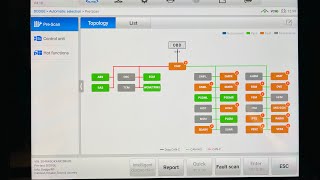
Professional: Autel MaxiCOM MK808 / Launch X431 CRP919 (~$450-800) — Provides dealer-level diagnostics, full bidirectional controls, and advanced functions like ECU coding and programming for module replacements. Features topology mapping to graphically show offline modules.
Rent vs buy: Most auto parts store rental tools are basic code readers and are NOT sufficient for this code. Pay a professional for the initial diagnostic unless you plan to perform your own diagnostics regularly.
How to Clear the Code After You Fix It
- Reconnect the battery if it was disconnected for the repair.
- Use an OBD-II scan tool to perform a 'Clear DTCs' or 'Reset Codes' function.
- Cycle the ignition off and on three times, waiting a few seconds in each position.
- Perform a complete drive cycle to allow all system readiness monitors to run.
Drive cycle (~30 minutes): Start with a cold-soak (vehicle off for 8+ hours). Start the engine and idle for 2-3 minutes. Drive for 15-20 minutes in mixed stop-and-go traffic. Drive for 5-10 minutes at a steady highway speed (55-60 mph). Allow the vehicle to cool down.
Readiness monitors affected: This code does not directly affect emissions readiness monitors like Catalyst or O2 Sensor., However, clearing any 'U' code resets all readiness monitors to 'Not Ready' status, requiring a full drive cycle before an emissions test.
Before emissions retest: drive at least 100 miles to fully set monitors.
Watch out for:
- The code returns immediately if the underlying wiring short, open circuit, or faulty module has not been fixed.
- Simply disconnecting the battery clears the active code but does not reset the emissions readiness monitors, causing a failed smog test.
- Not performing a full drive cycle after clearing codes leaves readiness monitors incomplete.
Will This Fail Emissions / State Inspection?
Yes — this code typically fails an OBD-II emissions inspection.
- California: A U0010 code that illuminates the Malfunction Indicator Lamp (MIL) is an automatic failure of the smog check's OBD-II test. After repairs, all readiness monitors must be set to 'Ready'.
- New York: The NYS DMV inspection includes an OBD-II scan. An active U0010 code causes the vehicle to fail the emissions portion of the inspection.
- Texas: In the 17 counties requiring emissions testing, an active U-code that triggers the check engine light results in an OBD-II test failure.
Most Commonly Affected Vehicles
- Jeep Wrangler (2007-2023) — Highly prone to TIPM failures which act as a central hub. Later models (2018+) experience wiring issues, sometimes disturbed after unrelated service like a clutch recall.
- Dodge Grand Caravan, Ram Trucks (2008-2020) — Often experiences TIPM issues or wiring harness failures. The wiring harness to a door module frequently chafes and shorts out, bringing down the MS-CAN bus.
- Chrysler Town & Country (2008-2016) — Shares the same platform and electrical architecture as the Dodge Grand Caravan, making it equally susceptible to TIPM failures that trigger the U0010 code.
- Jeep Grand Cherokee (2011-2013) — TIPM problems are a common root cause for a wide range of electrical issues, including U0010. A recall (14V-530) was issued for the internal fuel pump relay, but other internal TIPM faults persist.
- Ford F-Series, Escape, Focus (2010-2018) — Wiring issues are a known cause, particularly harness chafing behind the dashboard, near the HVAC module, or in the driver's side kick panel.
- Kia Sorento (2004-2010) — This code appears on early Sorento models as a secondary code after an engine stall caused by an unrelated issue like a clogged fuel filter or faulty EGR valve.
Manufacturer-Specific Notes
- Chrysler/Dodge/Jeep: These brands are notorious for failures of the Totally Integrated Power Module (TIPM), a very common cause of U0010. Multiple petitions and recalls have targeted the TIPM for various failures, including engine stalls and electrical issues.
- Ford: On many Ford vehicles, the U0010 code traces to wiring harness chafing in the driver-side kick panel or a fault within the HVAC control module. TSBs point to transmission harness chafing as a common cause of communication codes.
- GM: For some GM vehicles, a U0010 code relates to a software glitch in the Body Control Module (BCM) or a conflict with the telematics (OnStar) module. A dealer-level reflash fixes these known bugs.
- Allison Transmission: In heavy-duty vehicles equipped with Allison transmissions, a U0010 code indicates the TCM detected no communication on the J1939 CAN backbone for over 3 seconds, pointing to a short on the main data link harness.
Real Owner Stories
2010 Dodge Grand Caravan with intermittent 'No Bus' error
Owner experienced random instrument cluster failure (gauges drop to zero), flashing warning lights, and loss of radio/HVAC controls. The odometer displayed 'No Bus'.
What they tried:
- Initial checks pointed to a general CAN bus failure. A mechanic used an oscilloscope to monitor the CAN High and CAN Low signals.
- The mechanic noticed the fault appeared when the driver's side power window switch was operated.
- Further investigation found a broken CAN bus wire inside the rubber boot of the wiring harness running between the driver's door and the vehicle body.
Outcome: The broken wire in the door harness was spliced and repaired. This restored stable communication on the MS-CAN bus, and all symptoms disappeared. The fix was a simple wiring repair, costing significantly less than replacing modules.
Lesson: Intermittent faults triggered by a physical action (like opening a door or using a window switch) point directly to a wiring issue in a high-flex area. Always suspect wiring before condemning expensive modules.
2011 Jeep Grand Cherokee with multiple electrical faults and U0010
Vehicle presented with a U0010 code, no radio function, and other communication codes for various modules. The radio module was completely unresponsive.
What they tried:
- A scan tool showed the radio was offline, along with a general U0010 bus communication failure.
- The owner first suspected the radio itself was faulty.
- A technician diagnosed the Totally Integrated Power Module (TIPM), a known failure point on these vehicles acting as a central gateway and fuse box.
Outcome: The TIPM was replaced with a new unit. Upon replacement, the radio immediately began working and the U0010 code cleared permanently. The faulty TIPM was internally shorted, taking down the entire communication bus.
Lesson: On Chrysler, Dodge, and Jeep products, the TIPM is a primary cause for U0010 and widespread electrical chaos. If you have multiple unrelated electrical issues alongside this code, test the TIPM first.
2019 Jeep Wrangler with U0010 immediately after a clutch recall service
The owner took their manual transmission Wrangler to the dealer for a clutch-related recall. Immediately after picking up the vehicle, it went into limp mode and displayed a U0010 code.
What they tried:
- The owner returned to the dealership that performed the service.
- The dealership inspected their work and found a wiring harness near the transmission was disturbed during the clutch replacement procedure.
- The connector was not fully seated, causing an intermittent connection on the CAN bus.
Outcome: The dealership re-secured the wiring harness and properly seated the connector. The U0010 code cleared, and the vehicle returned to normal operation. The repair was covered by the dealership.
Lesson: If a U0010 code appears immediately after a major repair, suspect a wiring harness was accidentally damaged, disconnected, or pinched during the service.
How to Prevent This Code From Triggering
- Clean and inspect battery terminals for corrosion. (Every 6 months) — Corroded terminals create high resistance and unstable voltage, causing electronic modules to malfunction and drop off the communication network.
- Apply dielectric grease to critical electrical connectors. (When servicing or exposing connectors) — Dielectric grease seals out moisture and oxygen, preventing pin corrosion that causes CAN bus failures. It is essential for connectors exposed to the elements.
- Inspect and secure wiring harnesses. (During any under-hood or under-dash service) — Ensuring wiring harnesses are properly clipped in and routed away from sharp edges prevents chafing and abrasion that leads to shorts or open circuits.
- Address water leaks promptly. (As needed) — Water from a leaking windshield, sunroof, or door seal saturates carpets and soaks junction blocks or control modules, causing catastrophic corrosion and network failure.
- Use a battery tender for vehicles stored long-term. (During storage periods longer than 2-3 weeks) — Maintains a stable charge. A low battery provides insufficient voltage to modules upon startup, a common trigger for communication fault codes.
Frequently Asked Questions
Can I fix a U0010 code myself?
A DIYer can perform basic checks like inspecting fuses, visually checking for damaged wiring, and cleaning battery terminals. However, accurately diagnosing the fault requires a multimeter, wiring diagrams, and often an oscilloscope. Attempting complex wiring repairs without experience carries a high risk of causing expensive module damage.
Will a U0010 code go away on its own?
If the fault is intermittent, like a loose wire, the code temporarily clears and functions return. However, the underlying problem still exists and will return. The code requires proper diagnosis to prevent a sudden failure that leaves you stranded.
How much does it cost to fix a U0010 code?
Costs vary widely based on the root cause. A simple wiring or connector repair costs $160-$500. Replacing a major control module like a BCM or TIPM costs $500 to over $1,500 including parts, labor, and programming.
What is the difference between the medium-speed and high-speed CAN bus?
The high-speed (HS-CAN) bus handles critical powertrain systems like the Engine Control Module (ECM) where data exchanges instantly at 500kbps. The medium-speed (MS-CAN) bus handles body and convenience electronics like the radio and climate control at around 125kbps.
Could a new stereo or alarm system cause a U0010 code?
Yes, improper installation of aftermarket electronics is a very common cause. If an installer splices into the wrong wires, they disrupt the delicate data signals on the CAN bus, leading to widespread communication failures.
What are common misdiagnosis pitfalls for a U0010 code?
The most frequent mistake is immediately replacing an expensive control module without performing proper wiring tests first. The actual cause is often much simpler, such as a corroded ground wire, a broken harness wire, or a blown fuse.
My scanner shows a U0010 code, but there are no symptoms. What should I do?
This happens with stored codes from a past, temporary glitch that resolved itself. Clear the code and drive the vehicle normally. If it returns without symptoms, a latent fault exists that requires investigation to prevent future breakdowns.
Can a bad battery cause a U0010 code?
Yes, a weak or failing battery provides unstable voltage to the vehicle's electronic modules. This voltage fluctuation causes modules to drop off the network intermittently and trigger a U0010 code. Always ensure your battery and charging system are healthy before starting complex network diagnostics.
What does a good CAN bus waveform look like on an oscilloscope?
A healthy MS-CAN bus waveform shows two distinct, clean square waves that are mirror images of each other. The CAN High line switches between 2.5V and 3.5V, while the CAN Low line switches between 2.5V and 1.5V. The signals must be sharp and free of noise or voltage spikes.
Key Takeaways
- U0010 indicates a communication breakdown on the Medium Speed CAN bus, which controls interior electronics like the radio, climate control, and instrument cluster.
- Over 60% of U0010 codes stem from physical wiring damage, corroded connectors, or improperly installed aftermarket electronics rather than failed computer modules.
- Expect immediate symptoms like a dead instrument cluster, unresponsive power windows, or a 'No Bus' message on the dashboard.
- Driving with a U0010 code is dangerous because you lose critical safety gauges like the speedometer, and a failing Body Control Module (BCM) can unexpectedly stall the engine.
- Start diagnosis by testing the battery and measuring the CAN bus resistance at the OBD-II port; a healthy network reads exactly 60 ohms.
Helpful Videos

The information in this article is provided for general reference and educational purposes only. Vehicle specifications, procedures, and part compatibility can vary by production date, trim level, and region. Always consult your vehicle's factory service manual and verify part numbers before purchasing or performing repairs. Safety-critical components such as airbags, seat belts, and braking systems should be installed by a qualified professional.
- 🎬 Helpful Videos
- What Does U0010 Mean?
- Can I Drive With U0010?
- Common Causes
- Symptoms
- Diagnostic Flowchart
- Common Fixes & Costs
- Used vs. New Parts: Buying Guide
- What Happens If You Wait — Timeline
- Cost of Not Fixing It
- Diagnosis Steps
- When This Code Triggers (Freeze-Frame Conditions)
- Related Codes
- Climate & Environmental Factors
- How to Talk to a Mechanic About This Code
- Where to Take It: Dealer vs Independent vs Chain
- When to Walk Away From the Repair
- What Scan Tool You Need for This Code
- How to Clear the Code After You Fix It
- Will This Fail Emissions / State Inspection?
- Most Commonly Affected Vehicles
- Manufacturer-Specific Notes
- Real Owner Stories
- 2010 Dodge Grand Caravan with intermittent 'No Bus' error
- 2011 Jeep Grand Cherokee with multiple electrical faults and U0010
- 2019 Jeep Wrangler with U0010 immediately after a clutch recall service
- How to Prevent This Code From Triggering
- Frequently Asked Questions
- Can I fix a U0010 code myself?
- Will a U0010 code go away on its own?
- How much does it cost to fix a U0010 code?
- What is the difference between the medium-speed and high-speed CAN bus?
- Could a new stereo or alarm system cause a U0010 code?
- What are common misdiagnosis pitfalls for a U0010 code?
- My scanner shows a U0010 code, but there are no symptoms. What should I do?
- Can a bad battery cause a U0010 code?
- What does a good CAN bus waveform look like on an oscilloscope?
- Key Takeaways
- 🎟️ Get 5% Off