

U0002 on 2018-2024 Jeep Wrangler: CAN Bus Performance Error Causes and Fixes
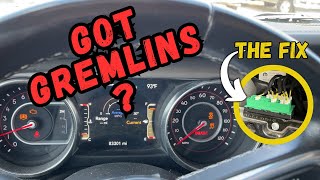
On a 2018-2024 Wrangler (JL), code U0002 with a dashboard full of warning lights is very often caused by a faulty CAN-C 'Star Connector' located behind the glove box. Replacing this part, which costs around $50 (Mopar P/N 68321746AA), is a common and effective DIY fix for these widespread electrical issues. Many owners report successfully fixing chaotic electronic failures, stalling, and loss of power steering with this single part replacement.
- U0002 on a 2018-2024 Wrangler indicates a critical failure on the main communication network.
- The most likely cause is a faulty CAN-C star connector located behind the glove box, a known issue for this model.
- Symptoms are severe and widespread, including a dashboard full of warning lights, stalling, and loss of power steering.
- Before attempting complex diagnostics, check the star connector by wiggling its wires; if symptoms change, replace the connector (P/N 68321746AA).
- Do not drive the vehicle with this code, as it is unsafe and unreliable.
What's Unique About the 2018-2024 Jeep Wrangler
The Jeep Wrangler JL platform and its truck counterpart, the Gladiator JT, have a known weak point in the CAN C network: the star connectors (also called splice blocks or CAN bus junctions) located behind the glove box. These connectors are junction points for the network wiring and are prone to internal connection failures, specifically cracked solder joints on the internal circuit board, causing intermittent and chaotic electrical problems that trigger the U0002 code. While the root cause could be a complex wiring issue, many owners have successfully resolved the problem by simply replacing one of these connectors, a unique and well-documented fix for this specific platform.
Symptoms You May Notice
- Multiple, seemingly unrelated warning lights on the dashboard (ABS, Check Engine, Traction Control, Airbag, etc.).
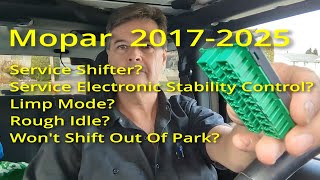
- "Service Shifter" or "Service Electronic Stability Control" mes 🎬 See how a star connector failure causes these exact symptomssage.
- Vehicle may not start, or may stall while driving.
- Instrument cluster gauges behaving erratically or going dead.
- Complete loss of power steering assist, making the vehicle difficult to steer.
- Wipers, radio, or A/C blower operating on their own or not at all.
- Inability to shift out of Park.
- Engine fan running at full speed for no reason.
- Replacing a single module (like the shifter or radio) that is showing symptoms, when the actual fault is the network connecting them all.
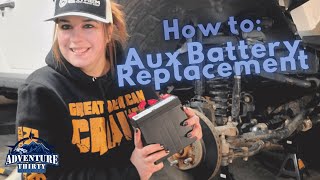
- Replacing the main battery without testing the auxiliary battery, which is a frequent cause of electrical gremlins on the JL/JT platform. 🎬 Watch this step-by-step guide to replacing the auxiliary battery
- Assuming the vehicle needs a new, expensive main wiring harness before thoroughly checking the star connectors and ground points.
Most Likely Causes
- Faulty CAN-C Star Connector (Splice Block) 🔴 High Probability This is a widely documented weak point on the Wrangler JL and Gladiator JT platforms. The plastic connector block, most commonly the green 20-way connector behind the glove box, develops internal connection failures due to cracked solder joints on the circuit board from thermal cycling.
How to confirm: With the vehicle acting up, access the area behind the glove box by lowering it completely. Gently wiggle or press on the wiring harnesses going into the star connectors (there may be more than one). If the symptoms change, warning lights flicker off, or the issue resolves, the connector is almost certainly the fault.
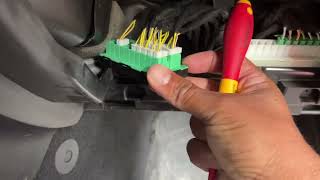
Typical fix: Replace the faulty star connector. The most common culprit is the green 20-way connector (Mopar P/N 68321746AA). 🎬 Watch this video to see how to replace the star connector This is a DIY-friendly repair that involves carefully transferring wires one by one to the new connector block. Some owners have successfully repaired the old connector by opening it and re-soldering the cracked pin joints on the internal board.
Est. part cost: $40-$60 - Poor Battery Health or Bad Ground (Main or Auxiliary) 🟡 Medium Probability The JL/JT's dual-battery system (a main battery and a smaller auxiliary battery for the Engine Stop-Start/ESS system) adds complexity. A failing auxiliary battery is a very common source of widespread, seemingly random electrical issues and communication codes. Low system voltage from either battery or a loose/corroded ground can disrupt module communication.
How to confirm: Test both batteries. A failing auxiliary battery is often indicated by the "Service Start/Stop System" message. Test the main battery voltage at rest (>12.4V) and while running (13.5-14.5V). Inspect and tighten main battery terminals and chassis ground connections, especially the ground points in the driver and passenger footwell kick panels and near the brake booster.
Typical fix: Replace the faulty battery. It is often recommended to replace both the main and auxiliary batteries at the same time. Clean and tighten all ground connections.
Est. part cost: $100-$400 (Aux battery is cheaper, main is more expensive) - Wiring Harness Issue 🟡 Medium Probability Wiring can become chafed, corroded, or damaged. On the JL/JT, a known chafe point is a harness that can rub against an exhaust pipe flange behind the passenger fender liner, particularly on diesel models. Connectors behind the fender liner can also corrode.
How to confirm: Visually inspect harnesses for damage, especially in known problem areas like behind the fender liners and around the firewall. A professional would use a multimeter to check for continuity and resistance between pins at different points in the harness.
Typical fix: Repair the damaged section of the wire. This requires isolating the break or short and splicing in a new section of wire with sealed, heat-shrink connectors.
Est. part cost: $10-$50 - Failing Module ⚪ Low Probability Any module on the CAN bus (e.g., ABS, Power Steering, BCM) can fail internally and flood the network with erroneous data, bringing down communication. The NHTSA complaints point to the ABS module as a possible culprit. [ODI #11721623] One documented case showed a faulty electric power steering pump motor causing abnormal voltages on the CAN bus.
How to confirm: This is a professional diagnostic step. It involves using an advanced scan tool (like J-Scan or wiTECH) to see which modules are offline and then systematically disconnecting modules one-by-one from the star connector to see if communication is restored.
Typical fix: Replace the faulty module and program it to the vehicle.
Est. part cost: $300-$1500
Rare But Worth Checking
- Improperly Installed Aftermarket Accessories: Remote starters, aftermarket stereos, lighting, or trailer brake controllers that are improperly tapped into the vehicle's wiring can introduce electrical noise or interference that disrupts the CAN bus.
Diagnosis Steps
- Scan for Codes: Use an advanced OBD-II scanner (like J-Scan or OBDLink) that can read manufacturer-specific codes from all modules, not just the engine computer. Expect to see a large number of communication (U-prefix) codes, possibly with a '-88' suffix indicating 'Bus Off'.
- Verify Battery System Health: Test the main battery and alternator. Crucially, test the auxiliary battery as well, as its failure is a known cause of widespread electrical faults. A "Service Start/Stop System" warning is a strong indicator of a bad aux battery.
- Check Grounds: Inspect and tighten all major ground connections. Key locations include the driver/passenger footwell kick panels and under the dash. Refer to a ground location diagram for specific G-point identifiers (e.g., G905A, G906A).
- Perform the 'Wiggle Test': Access the star connectors behind the glove box. With the vehicle on and symptoms present, gently wiggle the connectors and their associated wires. If the dashboard lights flicker or symptoms disappear, you have found the problem area.
- Replace the Star Connector: If the wiggle test points to the connector, replace it. The most common failure is the green 20-way connector (Mopar P/N 68321746AA).
- Inspect Wiring Harness: Visually inspect wiring harnesses for obvious signs of damage, chafing, or corrosion, paying close attention to the area behind the passenger fender liner where the harness can rub on the exhaust.
- Isolate Modules: If the above steps do not work, the issue may be a faulty module. This professional step involves disconnecting one module at a time from the CAN bus to see if network stability returns. A tool like wiTECH's 'Loss of Comm Test' automates this process.
- Check Bus Resistance & Voltage: For advanced users, measure the CAN bus resistance at the OBD-II port (between pins 6 and 14). It should be approximately 60Ω. With the key on, CAN High and CAN Low voltages should fluctuate but their sum should equal ~5V. Abnormal voltages (e.g., CAN High at 7V) point to a short or faulty module.
Parts You'll Likely Need
- CAN-C Star Connector (20-Way, Green)
(OEM #68321746AA)— This is the most common point of failure for this specific issue on the 2018-2024 Wrangler and Gladiator platforms.
Trusted brands: Mopar
OEM price range: $40-$60
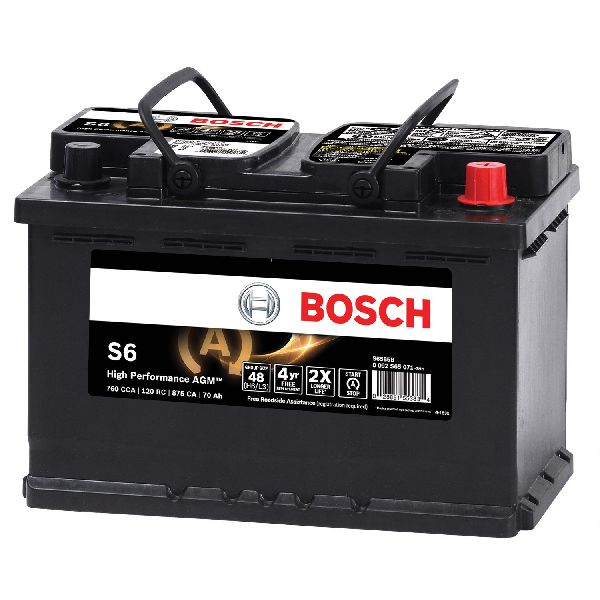
Aftermarket price range: N/A - Auxiliary Battery (ESS Battery) — The small auxiliary battery for the Engine Stop-Start system is a frequent failure point that causes numerous, unrelated electrical faults and communication codes.
Related Codes That Often Appear With This One
- U0001 — U0001 indicates a total loss of communication on the bus, which can occur intermittently along with the performance issues of U0002.
- U0100 — Lost Communication With ECM/PCM. This is a common secondary code when the network is down.
- U0126 — Lost Communication With Steering Angle Sensor Module. This often appears with stability control warnings.
- C2200 — Anti-Lock Brake Module Internal. This code in NHTSA records suggests the ABS module itself can be a source of network problems. [ODI #11721623]
- Multiple U-codes — A failing CAN bus will typically cause dozens of communication loss codes to be stored across various modules.
Technical Service Bulletins (TSBs) & Recalls
- STAR Case S2108000146: An internal FCA/Stellantis document that guides technicians on diagnosing intermittent CAN C loss of communication codes (like U0001 and U0002). It specifically mentions performing a 'wiggle test' on the star connector behind the glove box.
- TSB 08-074-20: While not directly related to U0002, this TSB addresses loose/wandering steering by replacing the original aluminum steering gear box with an updated steel version on 2018-2020 models. It's a relevant, common issue for this platform.
Platform-Specific Known Issues
- The CAN-C star connectors located behind the glove box are a known weak point on the Jeep Wrangler JL and Gladiator JT platforms. They are susceptible to internal failures that cause intermittent network-wide communication loss, triggering code U0002 and a cascade of other warnings.
- Failure of the secondary/auxiliary battery is extremely common and a primary cause of seemingly unrelated electronic issues, including CAN bus errors.
- NHTSA owner complaints for Jeeps of this era show U0002 appearing alongside multiple other communication and module-specific codes, often resulting in dealer confusion and prolonged repair times. [ODI #11467230]
Mechanic-Grade Diagnostic Values
- CAN C Bus Resistance — expected: Approximately 60 Ω (measured between Pin 6 and Pin 14 of the OBD-II port with battery disconnected).. Failure: A reading of 120 Ω indicates an open circuit or a missing terminating resistor. A reading near 0 Ω indicates a short between the CAN High and CAN Low wires.
- CAN C Bus Voltage (Key On, Engine Off) — expected: CAN High (Pin 6) and CAN Low (Pin 14) should both be approximately 2.5V.. Failure: Significant deviation from 2.5V on either line indicates a problem.
- CAN C Bus Voltage (Engine Running) — expected: Voltages will fluctuate, but the sum of CAN High and CAN Low should always be approximately 5V (e.g., CAN High at 2.7V and CAN Low at 2.3V).. Failure: Voltages that do not add up to 5V, or are abnormally high (e.g., 7V on one line) indicate a short to power or a faulty module.
Hidden / Shadow Codes Worth Checking
- U0002-88: Indicates 'CAN C Bus Off Performance - Bus Off'. This is a Failure Type Byte (FTB) that signifies a catastrophic failure where a module (often the ABS module) has detected the entire bus is unavailable or has shut down. (see via This sub-code is visible on more advanced scan tools that can read manufacturer-specific codes and failure types, such as the dealer's wiTECH tool or some high-end aftermarket scanners.)
Scan Tool Commands That Help
- wiTECH 2.0 (Dealer Tool): Loss of Comm Test — This function is used when U0002 is active to pinpoint a faulty module. The tool rapidly pings every module expected on the network and highlights any that fail to respond, helping to isolate the source of the network disruption.
- J-Scan (Aftermarket App): Advanced Scan — Use this to get a complete picture of all stored fault codes across all vehicle modules, not just the powertrain controller. This helps confirm a network-wide failure by revealing dozens of U-codes.
Wiring & Ground Locations
- CS CIP / CS CB — Behind the glove box. CS CIP is 'Connector - Star CAN C Instrument Panel' and CS CB is 'Connector - Star CAN C Body'. These are the green and white star connectors.. These are the central junction points for the CAN C bus. Internal failures (cracked solder joints) in these connectors are the most common cause of code U0002 on this platform.
- G905A / G906A — Located under the dashboard / in the driver and passenger side kick panel areas.. These are primary dash harness grounds. A loose or corroded ground at these points can cause low voltage or electrical noise, disrupting module communication and triggering network codes.
- Ground near Brake Booster — In the engine compartment on the driver's side, near the brake booster.. This is a major chassis ground. Poor connection here can affect multiple systems, including those on the CAN bus.
Real Owner Repair Stories
- Reddit user in r/Jeep (2019 JLU) — Dashboard lit up 'like a Christmas tree', loss of power steering and speedometer on the highway. Could replicate the issue by wiggling wires at the green star connector.
❌ Tried (didn't work) Considering buying a new connector.
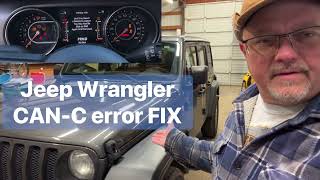
✅ What actually fixed it The owner opened the green star connector and found cracked solder joints on almost every pin. They re-soldered all the pins on the internal circuit board, which permanently fixed the problem. They noted the failure was likely due to brittle lead-free solder failing under thermal cycling. - YouTube channel 'Jeep wrangler CAN-C canbus error FIX' (2019 Jeep Wrangler JLU) — Every possible error on the dash, engine would die, wipers turning on by themselves. Vehicle was at the dealer for two months without a fix.
❌ Tried (didn't work) Two separate month-long dealer visits.
✅ What actually fixed it The owner replaced the green star connector (Mopar P/N 68321746AA) themselves after finding forum posts about the issue. This resolved all the communication errors and symptoms. - jlwranglerforums.com user (2020 JLUR with 44,200 miles) — Dashboard lights going haywire, similar to other reports.
❌ Tried (didn't work) Visits to two different dealers who provided no help.
✅ What actually fixed it The user first sprayed electrical contact cleaner into the green star connector, which provided a temporary fix. The problem returned after hitting potholes. Wiggling the wires on the connector made the lights extinguish. The final fix was replacing the connector.
"I Checked Everything" — The Actual Cause
- The equivalent for a network code is when all modules pass self-tests, but communication fails. The root cause is often not a 'bad part' but a failure in the connection between them. The most common example for this code is the star connector itself. It's a passive component that won't report an error code, but its internal failure (cracked solder joints) brings down the entire network. A technician might chase individual module codes before realizing the network's physical junction point is the problem.
When the Usual Fixes Don't Work
- While replacing the star connector is the most common fix, it is not a guaranteed solution. In some cases, the issue has been traced to a single faulty module, like the electric power steering pump, which shorts out the bus. In other cases, the root cause was a failing auxiliary battery, which can create voltage issues that mimic a CAN bus fault. Therefore, if replacing the star connector does not solve the problem, the battery system and individual modules should be the next diagnostic targets.
OEM Part Supersession History
68321746AA (20-Way Green Connector)→68230877AA (13-Way Connector)— Mopar has begun using the 13-way connector in newer models.
Heads up: The 13-way connector can be used as a substitute for the 20-way if availability is an issue. The individual module plugs are interchangeable, as their position in the block does not matter, except for the one larger main power feed connector.
Model Year Variations Within This Range
- 2021-2024: The introduction of the 4xe Plug-in Hybrid model adds several new modules to the CAN C bus, including the Battery Pack Control Module (BPCM) and Motor Generator Unit (MGU). This creates more potential points of failure for the network on these specific trims.
- Newer models (approx. 2021+): Newer JL/JT models may come from the factory with the smaller 13-way star connector (68230877AA) instead of the 20-way (68321746AA) that was common in earlier years.
Diagnostic Flowchart
Other Known Issues on This Vehicle
Issues unrelated to this code that are worth knowing about as an owner of this generation:
- Steering Wander / Loose Steering Feel 🔴 High — Very common on 2018-2020 models with the original aluminum steering box. Less common on newer models with the updated steel box. (Ref: TSB 08-074-20 was issued to replace the aluminum steering box with a steel one to improve steering feel and reduce wander.)
- Frame Weld Quality Issues 🔴 High — Primarily affected early 2018-2019 models. A recall was issued for inspection and repair. (Ref: Recall for front track bar bracket welds being off-seam, which could lead to separation and loss of steering control.)
- Auxiliary (ESS) Battery Failure 🟠 Medium — Extremely common across all years. Batteries often fail within 2-4 years, causing start-stop system errors and other electrical gremlins.
- Aluminum Body Panel Corrosion 🟠 Medium — Commonly reported on door hinges, hood, and tailgate where steel fasteners contact aluminum panels, causing galvanic corrosion and paint bubbling. (Ref: Covered under factory corrosion warranty, but repairs may not be permanent.)
- Clutch Pressure Plate Failure (Manual Transmission) 🔴 High — A recall was issued for manual transmission models from 2018-2023 due to pressure plates that could overheat and fracture. (Ref: Recall W12 / NHTSA 20V-124)
- Death Wobble 🔴 High — While not unique to the JL, it remains a potential issue for any solid front axle vehicle. It is a violent shaking of the front end after hitting a bump, usually caused by worn or loose steering/suspension components.
Used vs. New Parts: Buying Guide for This Vehicle
When a used part is the smart pick: For this specific U0002 fault, using used parts is generally not recommended for the most common fixes. However, if diagnosis points to a damaged wiring harness section, a used harness from a donor vehicle can be a cost-effective alternative to a brand new, expensive main harness. A used control module (e.g., ABS, BCM) can also be a viable option, but be aware it may require professional programming to work with your vehicle.
Donor-vehicle mileage cap: roughly under 80000 miles for the part to have meaningful remaining life.
What to inspect on the donor part:
- For a wiring harness, inspect for any cuts, abrasions, or signs of previous repair (e.g., tape, butt connectors).
- Ensure all connector housings are intact, not cracked or brittle.
- Check for any signs of corrosion (green or white powder) on the connector pins.
- If possible, choose a donor vehicle from a dry climate to minimize the risk of corrosion.
OEM-only on this vehicle (don't cheap out):
- CAN-C Star Connector: This part fails due to a manufacturing defect (cracked solder joints). Buying a new OEM Mopar part (68321746AA or 68230877AA) is the only reliable fix. A used part will likely have the same defect.
Aftermarket brands forum-validated for this vehicle:
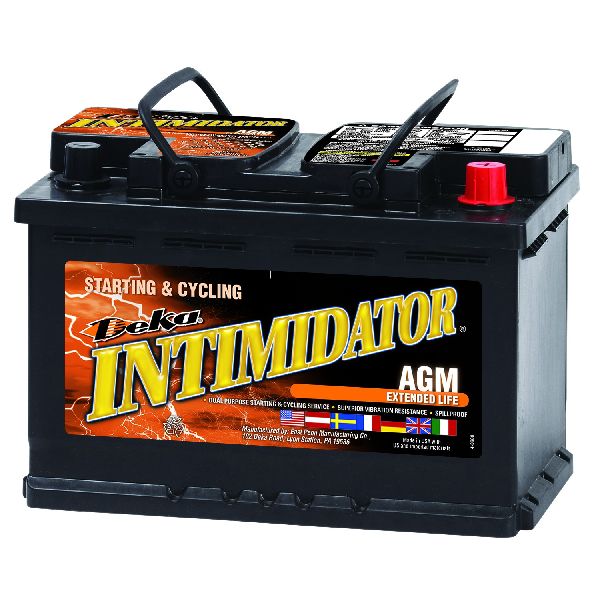
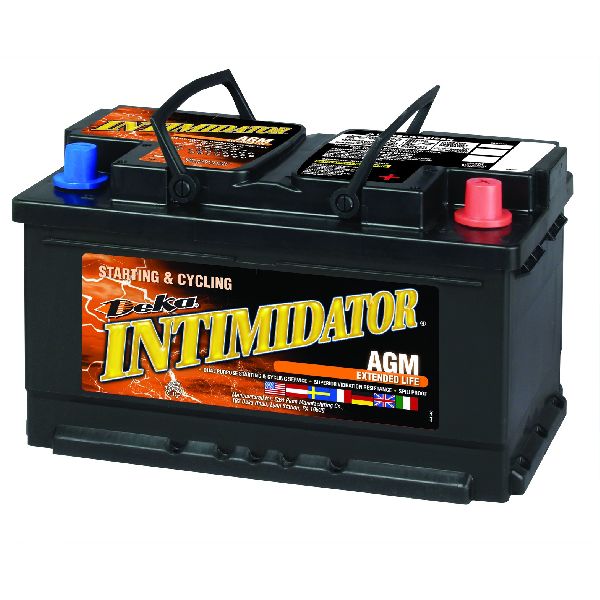
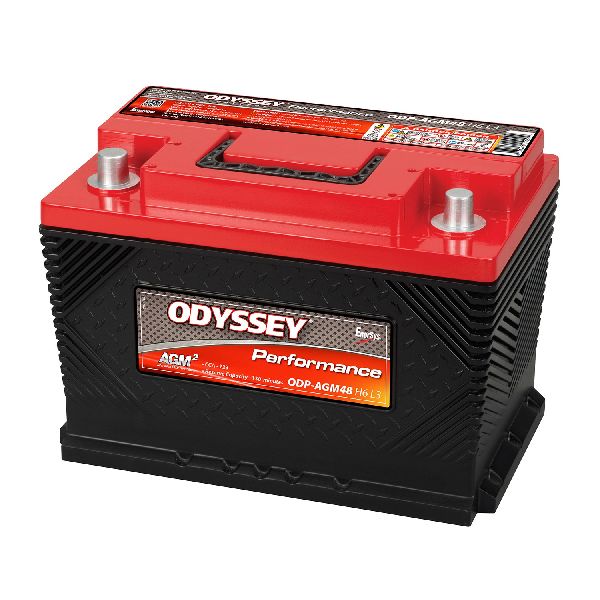
- For batteries (main or auxiliary), brands like Odyssey, Northstar, and some AGM batteries from major parts stores are frequently recommended by owners on forums as reliable upgrades over the stock batteries.
Brands owners have reported issues with on this vehicle:
- For the star connector itself, avoid any non-OEM aftermarket versions, as their quality and longevity are unknown for this critical network component.
Real Owner Stories
Aggregated from forums and TSBs cited above. Mileages and costs reflect what owners reported in those sources.
2018-2024 Jeep Wrangler JL
Symptoms: All dash lights came on and the dealership was at a loss for a solution.
What fixed it: The dealer successfully fixed the issue by referencing STAR Case S2108000146 and addressing the star connector.
Source hint: jlwranglerforums.com thread titled 'All dash lights on - dealership at a loss - jeepcares cant help'
Jeep Wrangler JL / Gladiator JT
Symptoms: U0002 code present with multiple dashboard warnings; video demonstrates the replacement of the green connector block.
What fixed it: Replacing the green star connector (Mopar P/N 68321746AA) located behind the glove box.
Cost: $40-$60
Source hint: YouTube video showing symptoms of U0002 and step-by-step replacement of the green star connector
Jeep Wrangler JL
Symptoms: Widespread CAN bus communication issues and multiple U-prefix codes.
What fixed it: Isolating the problem to the green star connector behind the glove box.
Source hint: jlwranglerforums.com thread 'JLU Wrangler CAN bus communication issues'
Related OBD-II Codes
Frequently Asked Questions
My 2019 Wrangler is showing a 'Service Shifter' message and U0002. Is there a specific technical guide for this?
Which specific part is usually responsible for the U0002 communication failure on the JL Wrangler?
Can a bad auxiliary battery cause U0002 and multiple dashboard warning lights?
I'm seeing U0002 and my steering feels loose. Is there a TSB for the steering issue?
How can I confirm if my star connector is the problem without expensive tools?
Where are the common ground points I should check for U0002 issues on my Jeep?
Helpful Videos
Used OEM Parts in Stock


New Aftermarket Parts Available


The information in this article is provided for general reference and educational purposes only. Vehicle specifications, procedures, and part compatibility can vary by production date, trim level, and region. Always consult your vehicle's factory service manual and verify part numbers before purchasing or performing repairs. Safety-critical components such as airbags, seat belts, and braking systems should be installed by a qualified professional.
- Jeep Wrangler:
- 🎬 Helpful Videos
- 🛍️ Shop This Part
- What's Unique About the 2018-2024 Jeep Wrangler
- Symptoms You May Notice
- Most Likely Causes
- Rare But Worth Checking
- Diagnosis Steps
- Parts You'll Likely Need
- Related Codes That Often Appear With This One
- Technical Service Bulletins (TSBs) & Recalls
- Platform-Specific Known Issues
- Mechanic-Grade Diagnostic Values
- Hidden / Shadow Codes Worth Checking
- Scan Tool Commands That Help
- Wiring & Ground Locations
- Real Owner Repair Stories
- "I Checked Everything" — The Actual Cause
- When the Usual Fixes Don't Work
- OEM Part Supersession History
- Model Year Variations Within This Range
- Diagnostic Flowchart
- Other Known Issues on This Vehicle
- Used vs. New Parts: Buying Guide for This Vehicle
- Real Owner Stories
- 2018-2024 Jeep Wrangler JL
- Jeep Wrangler JL / Gladiator JT
- Jeep Wrangler JL
- Related OBD-II Codes
- Frequently Asked Questions
- 🎟️ Get 5% Off