

U0001 on 2008-2017 Volvo XC60: High-Speed CAN Bus Failure Causes and Fixes
Code U0001 on a 2008-2017 Volvo XC60 indicates a critical communication failure on the vehicle's main network. The most common causes are a failing battery, a water-damaged Central Electronic Module (CEM), or a wiring issue. Start by testing the battery, as this is the simplest fix. If the battery is healthy, the next step is a detailed inspection of the CEM for water damage, a known weak point on this platform.
- U0001 is a critical network failure code; do not continue to drive the vehicle.
- Always start diagnosis by checking the battery. A weak battery is a common and simple-to-fix cause for this code on a Volvo XC60.
- The most likely complex cause is a water-damaged Central Electronic Module (CEM). Inspect it for corrosion before replacing any other parts.
- Wiring issues (chafing, shorts) are also a common cause but require professional, methodical diagnosis to locate.
- Do not replace expensive modules without confirming the root cause, which is often the wiring, CEM, or battery.
What's Unique About the 2008-2017 Volvo XC60
On this generation of Volvo XC60 (P3 platform), the U0001 code is frequently linked to two platform-specific weaknesses. First, these vehicles are highly sensitive to battery voltage; a slightly weak or old battery can cause communication dropouts that trigger a U0001 code, even if the car still starts. Second, the Central Electronic Module (CEM), which acts as the network gateway, is notoriously susceptible to water damage. Its location under the windshield cowl panel makes it vulnerable to corrosion when the plenum drains get clogged with leaves and debris, causing water to overflow directly onto the module and its connectors.
Symptoms You May Notice
- Multiple warning lights on the dashboard, such as ABS, Anti-Skid, SRS, and Check Engine, often appearing at once.
- Loss of instrument cluster functions, including the speedometer, tachometer, or temperature gauge dropping to zero while driving.
- Transmission problems, like harsh shifting, getting stuck in Park, or the gear selector position (P-R-N-D) disappearing from the display.
- Engine crank-no-start condition, where the engine turns over but will not fire up.
- Intermittent failure of electrical components like power windows, wipers, or radio.
- Warning messages such as 'Anti-skid service required' or 'Engine system service required'.
- Inability for a standard OBD-II scanner to communicate with the vehicle.
- Replacing individual control modules (like the TCM or ABS module) without confirming they are the source of the network disruption. The U0001 code often points to a network-wide problem, not a single module's failure.
- Condemning the CEM without first ruling out a weak battery or a wiring fault. The battery is a much simpler and cheaper fix to attempt first.
Most Likely Causes
- Weak or Failing Battery / Poor Connection 🔴 High Probability Volvos of this era are extremely sensitive to system voltage. A battery that is too weak to properly boot all control modules during startup can cause communication dropouts on the CAN bus. A failing battery or alternator can introduce electrical noise that disrupts network signals.
How to confirm: With the engine off, test the battery voltage using a multimeter; a healthy battery should read at least 12.6 volts. Check the voltage while cranking the engine; if it drops below 10.5 volts, the battery is weak and lacks the capacity to run the electronics reliably. Inspect terminals for any white or blue-green corrosion.
Typical fix: Clean the battery terminals and cable ends thoroughly with a wire brush. If the battery is over 4-5 years old or fails a load test, replace it with a new, high-quality AGM (Absorbent Glass Mat) battery as specified by Volvo.
Est. part cost: $200-$400 - Central Electronic Module (CEM) Failure due to Water Ingress 🔴 High Probability The CEM is located in a vulnerable spot under the windshield cowl/plenum. Drains in this area are notorious for clogging with leaves and debris, causing rainwater to overflow and drip directly onto the CEM and its connectors, leading to corrosion and failure. This is a widely documented failure mode for P3 platform Volvos.
How to confirm: Visually inspect the CEM by removing the plastic cowl panel at the base of the windshield. Look for signs of water staining, green/white corrosion on the module's connectors, or a damp environment. A professional diagnosis with a Volvo-specific scanner (like VIDA) can show a loss of communication with the CEM, which is a strong indicator.
Typical fix: If corrosion is minor, the connectors can sometimes be cleaned with electronic contact cleaner. More often, the CEM must be replaced or sent to a specialist for repair and cloning. A new or used CEM requires programming (cloning) to the vehicle's VIN and security information. It is critical to clear the cowl drains to prevent a recurrence.
Est. part cost: $400-$800 for a rebuilt/cloned unit, $1000+ for a new OEM unit from a dealer. - CAN Bus Wiring Harness Damage 🟡 Medium Probability Wiring can be damaged by chafing against chassis components, rodent activity, or previous incorrect repairs. A known chafe point has been identified behind the radio/dashboard area on some XC60s and related models. Another potential failure point is the wiring harness that passes into the doors.
How to confirm: This requires a methodical diagnostic process. A technician will use a wiring diagram and a multimeter to check for the correct resistance (approximately 60 ohms) across the CAN High (Pin 6) and CAN Low (Pin 14) wires at the OBD-II port. A reading of 120 ohms suggests an open circuit or a missing terminating resistor, while a reading near 0 ohms indicates a short. The fault can be isolated by disconnecting modules one by one.
Typical fix: Locate the damaged section of the wiring harness and repair the broken or shorted wire. This can be labor-intensive depending on the location of the fault.
Est. part cost: $10-$50 for wiring repair supplies.
Rare But Worth Checking
- Failure of another module on the CAN bus: Any single module (e.g., ABS, SRS, SCM - Seat Control Module) can fail internally and short out the entire network, causing a U0001 code. In one documented case on an XC60, a faulty solder joint on the driver's seat control module's circuit board shorted the bus. Diagnosis involves disconnecting modules one by one to see if network communication is restored.
- Faulty Alternator: An alternator that is failing can produce excessive AC ripple voltage or insufficient DC voltage, disrupting the stable power supply required by the sensitive CAN network modules.
- Shorted Alarm Siren Module (Siren): The alarm siren module has its own internal battery that can fail and leak, causing a short circuit. In some cases, this short can affect power to other modules on the network or blow a shared fuse, leading to communication faults.
Diagnosis Steps
- Check Battery Health: Start with the simplest cause. Test the battery voltage at rest (should be >12.6V), during cranking (should not drop below 10.5V), and with the engine running (alternator output, ~13.8-14.4V). Ensure terminals are clean and tight. A healthy, fully charged AGM battery is crucial.
- Scan for All Codes: Use a high-level scanner capable of reading Volvo-specific codes from all modules (e.g., VIDA/DICE, Autel, VDASH). Note all 'U' codes to see if the communication loss is widespread or points to a specific module. A generic OBD-II reader may fail to connect at all.
- Inspect the Central Electronic Module (CEM): Remove the windshield cowl and visually inspect the CEM and its connectors for any signs of water damage, such as white/green powder or corrosion. Check if the plenum drains are clogged with debris. This is a very common failure point.
- Check CAN Bus Resistance: Disconnect the battery. At the OBD-II port, measure the resistance between Pin 6 (CAN High) and Pin 14 (CAN Low). A healthy high-speed network should read approximately 60 ohms. A reading of 120 ohms indicates a missing terminating resistor (often inside the ECM or CEM) or an open circuit. A reading near 0 ohms indicates a short between the two CAN lines.
- Isolate the Fault: If the resistance is incorrect, a technician will disconnect modules on the high-speed CAN bus one by one (e.g., ABS module, TCM, ECM), re-measuring resistance each time. When the resistance returns to normal (e.g., from 0 to 120 ohms after disconnecting a module), the disconnected module or its wiring is the source of the short.
- Inspect Wiring Harness: Based on the diagnostic path, visually inspect relevant sections of the wiring harness for chafing, breaks, or corrosion, paying special attention to areas behind the dashboard/radio, in the door jambs, and around the engine bay.
Parts You'll Likely Need
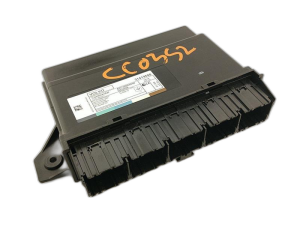
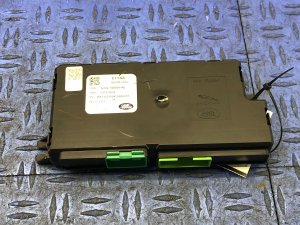
- Central Electronic Module (CEM)
(OEM #Varies by year/options (e.g., 31394157, 31282455, 30786890). Must match original.)— Highly prone to failure from water damage due to its location. A faulty CEM can bring down the entire CAN network. Part number must be matched to the vehicle's VIN and configuration.
Trusted brands: Volvo (OEM), Xemodex (Remanufacturer), Pelican Diagnostics (Cloning Service), Speedometer Solutions (Cloning Service)
OEM price range: $1000-$1500 (requires dealer programming)
Related Codes That Often Appear With This One
- U01xx, U02xx — These codes indicate 'Lost Communication With...' a specific module (e.g., U0100 for ECM, U0101 for TCM). A flurry of these codes alongside U0001 confirms a widespread network shutdown and can help point towards which modules are offline.
- U0001-88 — This is a Volvo-specific sub-code for U0001, often indicating 'Bus Off'. This means a module has detected a severe error on the bus and has stopped transmitting to prevent further disruption. While the provided TSBs are for Volvo Trucks, the code's appearance signifies a serious network fault.
Technical Service Bulletins (TSBs) & Recalls
- No specific TSBs for the XC60 and code U0001 were found in public databases. The TSBs listed in pass 1 (KC-552, KC-433, etc.) apply to Volvo TRUCKS and are not relevant to the XC60 passenger vehicle.
Platform-Specific Known Issues
- Water Ingress into CEM: The design of the windshield cowl and its drainage system is a known weakness. When the drains clog, water overflows and damages the Central Electronic Module, a primary cause for CAN bus failure and code U0001.
- Voltage Sensitivity: The P3 platform's complex electronic systems are not tolerant of low voltage. A battery that is beginning to fail can cause a cascade of communication errors long before it fails to start the car.
Mechanic-Grade Diagnostic Values
- High-Speed CAN Bus Resistance — expected: ~60 Ohms. Failure: A reading of ~120 Ohms indicates an open circuit or a single missing terminating resistor. A reading near 0 Ohms indicates a short between the CAN High and CAN Low wires.
- CAN Bus Terminating Resistor Resistance — expected: ~120 Ohms. Failure: Each of the two terminating resistors on the bus (typically in the ECM and CEM) should have a resistance of 120 Ohms. This is measured by isolating the module.
- CAN Bus Baud Rate (High-Speed) — expected: 500k. Failure: N/A - This is a configuration setting, not a diagnostic measurement.
Hidden / Shadow Codes Worth Checking
- U0001-88: Indicates 'Bus Off'. This means a specific control module has detected so many errors on the CAN bus that it has voluntarily stopped transmitting messages to avoid disrupting the network further. It's a strong indicator of a serious physical layer problem like a short circuit or a faulty module. (see via Volvo's VIDA/DICE diagnostic tool or an advanced professional scanner. This sub-code is mentioned in Volvo Technical Service Bulletins.)
- U0010-88: Medium Speed CAN Communication Bus - Bus Off. This is a similar fault but on the secondary, medium-speed network which controls body and convenience features. A fault on this bus can sometimes cascade or be related to a power supply issue affecting both networks. (see via Volvo's VIDA/DICE diagnostic tool or an advanced professional scanner.)
Scan Tool Commands That Help
- Volvo VIDA: Network Graph/Topology View — After an initial vehicle readout, VIDA displays a network topology map showing all expected control modules. Modules that are not communicating are typically colored red or gray, immediately showing the technician which parts of the network are down.
- Volvo VIDA: Advanced Test - Control Unit Connection — This function allows a technician to 'ping' a specific control module to see if it responds. By selecting a non-responsive module from the network graph and running this test, you can confirm if it's truly offline before beginning physical checks.
- Volvo VIDA: Fault Tracing - Ranked List — When network DTCs are present, VIDA's fault tracing tab provides a ranked list of the most likely faulty components or networks. This helps prioritize the diagnostic workflow, starting with the network group most likely to be the source of the problem.
- Volvo VIDA: Activations — Under the 'Vehicle Communication' tab, a technician can select a module (like the CEM) and use the 'Activations' tab to command specific functions (e.g., lock/unlock doors). If the module is online but a function doesn't work, it points to an output/component issue rather than a network failure.
Wiring & Ground Locations
- OBD-II Port Pins — Under the driver's side dashboard.. The High-Speed CAN bus is accessible at Pin 6 (CAN High) and Pin 14 (CAN Low) for initial resistance checks. This is the primary starting point for all CAN bus electrical diagnosis.
- CEM (Central Electronic Module) — Located under the plastic cowl panel at the base of the windshield, on the driver's side.. The CEM is a central gateway and often contains one of the two 120-Ohm terminating resistors for the high-speed CAN bus. Its location makes it highly susceptible to water damage, which can short the bus or destroy the module.
- Ground Point 31/83 — A-pillar, left side.. This is a primary ground point for several modules in the dashboard area. A corroded or loose ground here can cause intermittent communication issues and strange electrical behavior. A wiring diagram for a 2010 XC60 shows this as a key ground location.
- Wiring Harness behind Radio/CCM — In the dashboard, behind the climate control module (CCM) and radio.. A documented case on a 2017 XC60 found that a medium-speed CAN wire had chafed against a metal bracket in this location, causing a short to ground and bringing down the network. This area should be inspected if a short is detected.
Real Owner Repair Stories
- Swedespeed Forum (2009 Volvo XC60) — Instrument cluster, infotainment, seats, windows, and locks were all non-functional. The car ran and drove, but the cluster was blank. Scan tool could not communicate with the CEM.
❌ Tried (didn't work) Visual inspection of wiring harness after gutting most of the interior.
✅ What actually fixed it The fault was a short circuit on the printed circuit board (PCB) of the driver's seat control module due to a 'daggy solder job' from the factory. The technician isolated the fault by disconnecting modules one by one until the CAN bus resistance returned to normal. The seat module was the last component checked.
OEM Part Supersession History
30786890, 30786579→31394157, 31282455— Standard component revision and updates by the manufacturer over the vehicle's lifecycle.
Heads up: It is critical to match the part number exactly or use a confirmed supersession when sourcing a replacement CEM. Using an incompatible CEM, even from another XC60, will result in a no-start condition and communication errors, as the module is coded to the specific vehicle's VIN and options.
Model Year Variations Within This Range
- 2014-2017: A significant facelift for the 2014 model year introduced cosmetic changes, a new 7-inch display, and updated interior materials. More importantly, from 2015 onwards, new Drive-E engines, an 8-speed automatic transmission, and an updated electronics package were phased in. While the core cause of U0001 (CEM, wiring, battery) remains the same, technicians should be aware that part numbers for modules and specific wiring routes may differ on these later models compared to the 2008-2013 cars.
- 2009-2010: Early P3 platform XC60s used specific 'flat' style CEMs with a distinct set of part numbers (e.g., 30786132, 30786819). While the failure mode (water ingress) is the same, the physical part is different from later models.
Diagnostic Flowchart
Other Known Issues on This Vehicle
Issues unrelated to this code that are worth knowing about as an owner of this generation:
- Excessive Oil Consumption (T6 & Drive-E Engines) 🔴 High — Common on 2012-2016 T6 engines and 2015-2016 2.0L Drive-E engines, often appearing after 60,000 miles. Can be caused by piston ring design flaws. (Ref: No official recall, but Volvo has acknowledged the issue in some cases and contributed to repair costs for some owners.)
- Automatic Transmission Harsh Shifting / Hesitation 🟠 Medium — More common on earlier models (2008-2014), particularly AWD diesel and some petrol models. Often related to outdated software or degraded transmission fluid. (Ref: Various software update TSBs have been issued over the years to improve shift quality.)
- Clogged Sunroof Drains 🟠 Medium — Common across all years. The four sunroof drains can clog, causing water to leak into the cabin, typically staining the A-pillars or headliner, and potentially damaging electronics under the carpet.
- EGR System Clogging (Diesel Engines) 🟠 Medium — Affects Euro 6 diesel engines (D4, etc.). The EGR cooler and valve can clog with soot, leading to a check engine light and hesitation.
- Failing Door Lock Actuators 🟡 Low — Reported by owners where doors become difficult to open from the inside or outside, especially in cold weather. Requires lubrication or replacement of the lock mechanism.
Used vs. New Parts: Buying Guide for This Vehicle
When a used part is the smart pick: A used Central Electronic Module (CEM) is a very common and cost-effective repair strategy, but ONLY if you use a cloning service. A used CEM cannot be simply swapped into the vehicle; it must have the original vehicle's data (VIN, key info, configuration) transferred to it.
Donor-vehicle mileage cap: roughly under 150000 miles for the part to have meaningful remaining life.
What to inspect on the donor part:
- Insist on clear photos of the module's connectors. Reject any unit that shows even minor signs of white or green corrosion or water staining.
- Source from a reputable salvage yard that guarantees the part is functional and provides the VIN of the donor car.
- Match the OEM part number EXACTLY with your original module. Do not rely on year/model alone.
OEM-only on this vehicle (don't cheap out):
- If buying a brand new CEM, it must be an OEM Volvo part purchased from and programmed by a Volvo dealer or a certified independent specialist with a VIDA subscription. There are no reliable 'new' aftermarket CEMs.
Aftermarket brands forum-validated for this vehicle:
- Xemodex (Repairs and sells remanufactured CEMs with data transfer)
- Pelican Diagnostics (Cloning/Data Transfer Service)
- Speedometer Solutions (Cloning/Data Transfer Service)
- Automotive Circuit Solutions (Cloning/Data Transfer Service)
Brands owners have reported issues with on this vehicle:
- Unknown eBay/Amazon sellers offering pre-programmed or 'plug and play' modules without requiring your original unit for cloning. These are frequently scams or do not work.
Real Owner Stories
Aggregated from forums and TSBs cited above. Mileages and costs reflect what owners reported in those sources.
2011 Volvo XC60
Symptoms: Various electrical issues following water exposure, including communication failures across multiple modules.
What fixed it: Inspection of the CEM for water damage and seeking specialist repair/cloning services for the module.
Source hint: VolvoForums.com thread '2011 volvo xc60 water damage related issues'
Volvo XC60 (P3 Platform)
Symptoms: Intermediate CAN bus short causing communication errors.
What fixed it: Repairing a faulty solder job on the driver's seat control module PCB.
Source hint: Volvo Owners Club UK thread 'U0001-type fault (intermediate CAN bus short)'
2010-2018 Volvo S60/V60 (Platform Mate)
Symptoms: CAN bus problems and electrical failure due to moisture.
What fixed it: Clearing clogged cowl or sunroof drains to prevent water from reaching the CEM.
Source hint: Volvo Owners Club UK thread discussing water ingress into the CEM
Related OBD-II Codes
Frequently Asked Questions
I found TSB KC-552 regarding U0001; does this apply to my 2012 Volvo XC60?
Why is my XC60's gear selector position (P-R-N-D) disappearing from the dashboard?
Can a weak battery really cause 'Anti-skid service required' and U0001 codes on an XC60?
Where is the most common place for water to damage the electronics on a 2008-2017 XC60?
My OBD-II scanner won't connect to my XC60 at all. Is the car's computer dead?
What should the resistance be when testing the CAN bus on my Volvo?
We Have This Part in Stock


The information in this article is provided for general reference and educational purposes only. Vehicle specifications, procedures, and part compatibility can vary by production date, trim level, and region. Always consult your vehicle's factory service manual and verify part numbers before purchasing or performing repairs. Safety-critical components such as airbags, seat belts, and braking systems should be installed by a qualified professional.
- Volvo XC60:
- 🛍️ Shop This Part
- What's Unique About the 2008-2017 Volvo XC60
- Symptoms You May Notice
- Most Likely Causes
- Rare But Worth Checking
- Diagnosis Steps
- Parts You'll Likely Need
- Related Codes That Often Appear With This One
- Technical Service Bulletins (TSBs) & Recalls
- Platform-Specific Known Issues
- Mechanic-Grade Diagnostic Values
- Hidden / Shadow Codes Worth Checking
- Scan Tool Commands That Help
- Wiring & Ground Locations
- Real Owner Repair Stories
- OEM Part Supersession History
- Model Year Variations Within This Range
- Diagnostic Flowchart
- Other Known Issues on This Vehicle
- Used vs. New Parts: Buying Guide for This Vehicle
- Real Owner Stories
- 2011 Volvo XC60
- Volvo XC60 (P3 Platform)
- 2010-2018 Volvo S60/V60 (Platform Mate)
- Related OBD-II Codes
- Frequently Asked Questions
- 🎟️ Get 5% Off