

U0001 on 2008-2013 Subaru Forester: High-Speed CAN Bus Failure Causes and Fixes
U0001 on a 2008-2013 Forester indicates a total loss of communication between critical computers. This is a severe fault, often caused by wiring damage, a faulty Body Integrated Unit (BIU), or a simple weak battery. Do not drive the vehicle; professional diagnosis is strongly recommended.
- U0001 is a critical failure of the main communication network in your Forester. Do not drive the vehicle.
- Before suspecting expensive modules, always perform the basic checks first: test the battery under load and inspect all main power and ground connections for tightness and corrosion.
- The most likely causes specific to this Forester are wiring harness damage or a failed Body Integrated Unit (BIU).
- Diagnosis is complex and best left to a professional with the correct diagnostic tools to avoid unnecessary and expensive part replacements.
- A key diagnostic step is to measure the resistance between pins 6 and 14 of the OBD-II port (with the battery disconnected); it should be ~60 ohms.
What's Unique About the 2008-2013 Subaru Forester
The 2008-2013 Subaru Forester (SH generation) relies on a high-speed CAN bus network for all critical vehicle functions. While the U0001 code is generic, owner experiences with this platform frequently point to two main culprits: failure of the Body Integrated Unit (BIU), which is Subaru's term for the Body Control Module, or wiring harness issues, particularly chafing or corrosion in connectors. A known issue on later Subarus, which may also apply here, is corrosion in the main harness connectors in the driver and passenger footwells due to moisture from footwear. Unlike some other makes with well-documented TSBs for this code, specific bulletins for the SH Forester are not common, meaning diagnosis often relies on standard network troubleshooting procedures.
Symptoms You May Notice
- Multiple warning lights illuminated on the dashboard (Check Engine, ABS, VDC/Traction Control, Airbag)
- Engine may crank but not start
- Sudden engine stalling while driving
- Transmission may be stuck in one gear (limp mode) or shift erratically
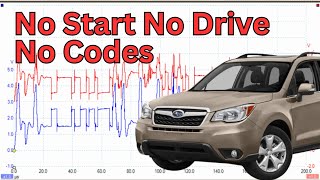
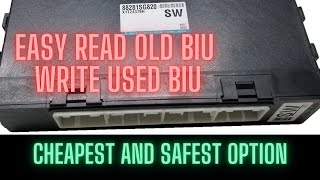
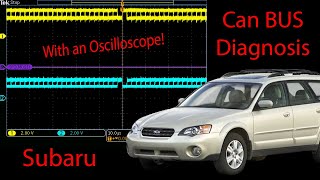
- Gauges on the instrument cluster behaving erratically or not working at all 🎬 Watch: Real-world diagnosis of a Forester with a crashed CAN bus.
- Loss of power steering assist
- Failure of convenience features like power windows or radio
- Scan tool cannot communicate with any modules, or only communicates with a few.
- Replacing the Engine Control Module (ECM) first without performing proper network diagnostics. The ECM is expensive and often not the root cause.
- Replacing random sensors. A U0001 code is a network failure, not a sensor failure, although the network failure will cause many sensor-related codes to appear.
Most Likely Causes
- Damaged or Corroded Wiring/Connectors 🔴 High Probability Wiring harnesses can become brittle over time or get damaged from vibrations, previous repairs, or rodent activity. Connectors, especially those exposed to the elements or in the footwell areas, are prone to corrosion from moisture. A specific area to check is the 'CAN joint connector' which is often located on the left side of the dash.
How to confirm: Perform a detailed visual inspection of the main wiring harnesses, particularly around the engine bay, under the dashboard near the steering column, and at each major control module. Check for chafed wires, loose pins, and green or white corrosion in connectors. A multimeter can be used to check for continuity and shorts to power or ground on the CAN High and CAN Low wires (pins 6 and 14 at the OBD-II port).
Typical fix: Repair the damaged section of the wiring harness or clean/replace the corroded connector. This requires careful soldering and heat-shrinking to ensure a durable, weather-proof repair. In cases of severe corrosion, the entire harness may need replacement.
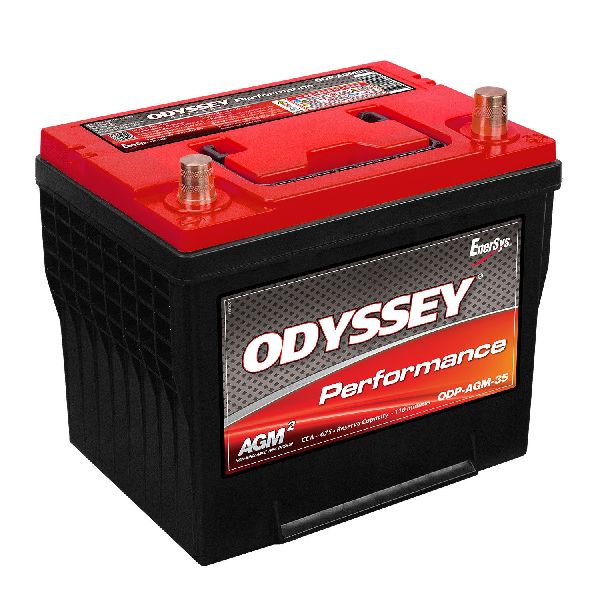
Est. part cost: $5-$50 for wiring repair supplies, $500+ for harness replacement - Weak Battery or Poor Ground Connections 🟡 Medium Probability All control modules require stable voltage to communicate. An old battery or corroded terminals can cause voltage to drop significantly during cranking, causing modules to drop off the network. Subaru ground points can corrode over time, leading to intermittent communication failures. The ECU grounds are particularly sensitive and are located on the top of the intake manifold.
How to confirm: Test the battery with a load tester; it should show above 12.4V at rest and not drop below 10V during cranking. Inspect the battery terminals for corrosion. Locate and inspect the main engine-to-chassis and battery-to-chassis ground straps for tightness and corrosion.
Typical fix: Clean the battery terminals and ground connection points thoroughly. If the battery fails a load test, replace it.
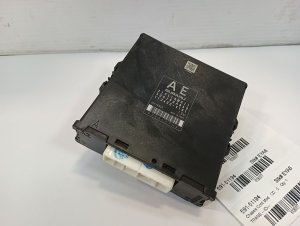
Est. part cost: $0-$250 - Faulty Body Integrated Unit (BIU) 🟡 Medium Probability The BIU (Body Control Module) is a central node on the CAN network and part of the immobilizer system. Forum discussions and mechanic reports suggest internal failure of the BIU is a known issue on Subarus of this era, which can cause it to stop communicating or to broadcast corrupt data, bringing down the entire network. Failure can cause a host of erratic electrical issues and a no-start condition.
How to confirm: This is difficult to confirm without a process of elimination. If the wiring, power, and grounds are all confirmed to be good, and the BIU is the only module not communicating (or a scan tool cannot communicate with any module), the BIU becomes a prime suspect. A professional may try to disconnect the BIU to see if communication between other modules is restored.
Typical fix: Replace the Body Integrated Unit. This part MUST be programmed by a Subaru dealer or a specialized shop with appropriate tools (like the Subaru Select Monitor) to match it to the vehicle's immobilizer system and other features. It is not a plug-and-play part. Used units can be 'cloned' by a specialist service, which copies the data from the old unit to the donor.
Est. part cost: $400-$800
Rare But Worth Checking
- Faulty Control Module (ECM, TCM, ABS): While less common than a BIU failure, any single module on the CAN bus can fail internally and short out the network. Diagnosis involves unplugging one module at a time to see if the network comes back online. A user on Reddit reported a faulty airbag module caused a no-communication issue on a 2010 Forester.
- Failed Terminating Resistor: The CAN bus has two 120-ohm resistors at either end of the network (often inside the ECM and another module like the instrument cluster). If one fails, the total network resistance will change from the expected ~60 ohms to ~120 ohms, causing communication to fail. This is diagnosed with a multimeter at the OBD-II port with the battery disconnected.
- Aftermarket Electronics Interference: A poorly installed remote starter, alarm system, or even a cheap OBD-II plug-in device can interfere with or short out the CAN bus, causing a U0001 code.
Diagnosis Steps
- Connect a professional scan tool. Note all stored codes and which modules are failing to communicate.
- Check Battery Health: Perform a load test on the battery. Ensure voltage is above 12.4V at rest and does not drop below 10V when cranking. Clean any corrosion from the battery terminals.
- Inspect Grounds: Check the main battery-to-chassis and engine-to-chassis ground straps. Ensure they are clean, tight, and free of corrosion. Pay special attention to the ECU grounds on the intake manifold.
- Disconnect Battery: Disconnect the negative battery terminal.
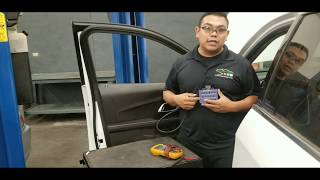
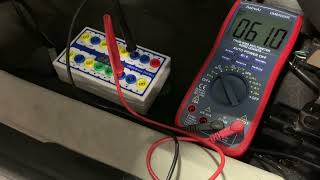
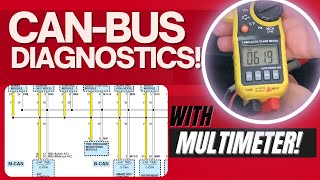
- Measure CAN Bus Resistance: Using a quality multimeter, measure the resistance between Pin 6 (CAN High) and Pin 14 (CAN Low) on the OBD-II port. A healthy network should read approximately 60 Ohms. A reading of 120 Ohms indicates a problem with one of the terminating resistors or the wiring to it. A reading significantly less than 60 Ohms indicates a short circuit. 🎬 Watch: A quick guide to testing CAN bus resistance and voltage.
- Visual Wiring Inspection: Thoroughly inspect all visible wiring harnesses for signs of damage, chafing, or corrosion, paying close attention to the engine bay, the area under the dashboard, and connectors in the footwells.
- Isolate Modules (Advanced): If the resistance reading is incorrect or wiring inspection reveals no faults, the next step is to disconnect modules one by one from the CAN bus and re-measure resistance to identify which module or wiring branch is causing the fault.
- Oscilloscope Testing (Professional): A technician may use an oscilloscope to view the signal on the CAN High and Low lines to check for signal integrity, shorts, or interference.
Parts You'll Likely Need
- Body Integrated Unit (BIU)
(OEM #88281SC500, 88281SC530, 88281SC531, 88281SC560, 88281SC561 (Verify with VIN)) - Wiring Harness Repair Supplies
- Battery
Related Codes That Often Appear With This One
- U0100 — Lost Communication with ECM/PCM. This is a more specific code that will appear alongside U0001 because the ECM is a primary module on the high-speed CAN bus.
- U0101 — Lost Communication with TCM. This code will appear if the Transmission Control Module is inaccessible due to the U0001 network failure.
- U0121 — Lost Communication with ABS Control Module. The ABS/VDC module is also on the high-speed CAN bus and will log this fault when the network is down.
- U0155 — Lost Communication with Instrument Panel Cluster (IPC) Control Module. The cluster is a key network gateway and this code is common with U0001.
Technical Service Bulletins (TSBs) & Recalls
- 07-221-23: Addresses corrosion in instrument panel and rear wiring harness connectors in the footwell area on later model Subarus (2017+), but the cause (moisture from footwear) is highly relevant to diagnosing older models as well.
Platform-Specific Known Issues
- BIU Failure as Root Cause: The Body Integrated Unit (BIU) is a frequently cited cause for widespread electrical issues and CAN communication failures on this generation of Forester. It is not a simple plug-and-play replacement and requires programming by a dealer or specialist to sync with the vehicle's immobilizer.
- Footwell Connector Corrosion: While a TSB for this issue (07-221-23) officially covers newer models, the principle applies. Moisture, snow, and salt brought in on footwear can seep into harness connectors located in the driver and passenger footwells, causing corrosion that disrupts the CAN network.
Mechanic-Grade Diagnostic Values
- CAN Bus Resistance (entire network) — expected: ~60 Ohms. Failure: 120 Ohms (indicates open circuit or one missing terminating resistor), < 57 Ohms (indicates a short or extra resistor).
- CAN Bus Terminating Resistor — expected: ~120 Ohms. Failure: A reading outside 117-123 Ohms suggests a faulty resistor.
- CAN Bus Voltage (Key On, Engine Off) — expected: CAN High (Pin 6): ~2.5V to 3.5V. CAN Low (Pin 14): ~1.4V to 2.5V. Neither wire should be shorted to ground or power.. Failure: Voltages stuck at 0V, 5V, or 12V, or both lines showing the exact same voltage, indicates a short or open circuit.
- CAN Bus Baud Rate — expected: 500 kbps. Failure: N/A - this is a configuration setting for diagnostic tools.
Scan Tool Commands That Help
- Subaru Select Monitor (SSMIII or SSM4): Each System Check / All Systems Diagnosis — This function polls all control modules on the network and reports which ones are communicating and which are not. This is the first step to see the scope of the U0001 failure and identify which modules are offline.
- Subaru Select Monitor (SSMIII or SSM4): Immobilizer System Registration — This function is mandatory after replacing the Body Integrated Unit (BIU). It is used to program the new module to the vehicle's keys, ECM, and combination meter. Failure to perform this will result in a no-start condition.
- Professional Scan Tool / Oscilloscope: Module Isolation Test — This is a manual procedure, not a specific command. If the CAN resistance is incorrect, a technician will physically disconnect one module at a time and re-measure the resistance. When the resistance returns to normal (e.g., from 120 ohms to 60 ohms, or from a short to 60 ohms), the last module disconnected is the source of the fault.
Wiring & Ground Locations
- CAN Joint Connector — Located on the left side of the dash, often taped to a larger harness above the accelerator pedal area.. This is a central hub where multiple CAN bus wire pairs meet. A failure or corrosion in this single connector can bring down the entire network, causing a U0001 code. It's a critical point for diagnostic testing.
- ECU Grounds — The primary grounds for the Engine Control Unit (ECU) are located on the top of the intake manifold.. A poor ground connection at the intake manifold can cause the ECU to malfunction and disrupt CAN communication, even if the ECU itself is not faulty. This is a common issue on Subarus, especially if TGV deletes or spacers have been installed.
- Main Chassis Ground — The main negative battery cable connects directly to the chassis, typically on the fender near the battery.. All modules rely on a solid chassis ground. Corrosion or looseness at this primary point can introduce electrical noise and voltage drops that cause intermittent communication failures across the entire CAN network.
- BIU Location — Under the driver's side dash, to the right of the steering column, often integrated with or near the interior fuse box.. Knowing the location is necessary for inspection, testing, and replacement. The BIU is a common failure point for this code.
Real Owner Repair Stories
- Reddit user in r/MechanicAdvice (2010 Subaru Forester) — Every light on the dash was illuminated. No communication with a scan tool initially.
❌ Tried (didn't work) The dealer had previously stated the airbag module was the cause, but the problem persisted.
✅ What actually fixed it The user unplugged the airbag module, which restored K-line communication to several other modules (ECU, TCU, etc.). This confirmed the airbag module was internally shorting the CAN bus and bringing the network down. Replacing the airbag module was the final fix.
OEM Part Supersession History
88281SC530→88281SC531— Updated/revised part for 2010 models.
Heads up: The parts are reportedly interchangeable, but matching the original number is the safest approach.88281SC560→88281SC561— Updated/revised part for 2012-2013 models.
Model Year Variations Within This Range
- 2011-2013: The SH Forester received a facelift for the 2011 model year, which included a new FB25 engine for non-turbo models and some interior/exterior cosmetic changes. While the fundamental CAN bus architecture remained the same, wiring harness connectors and part numbers for some modules may differ slightly from the 2008-2010 models. Always verify part numbers with the vehicle's VIN.
Diagnostic Flowchart
Other Known Issues on This Vehicle
Issues unrelated to this code that are worth knowing about as an owner of this generation:
- Excessive Oil Consumption (FB25 Engine) 🔴 High — Common in 2011-2013 models with the FB25 engine. Can start at any mileage. Subaru considers 1 quart per 1200 miles 'normal' under certain conditions. (Ref: TSB 02-157-14R revised the repair from piston ring replacement to a full short block replacement for verified cases.)
- Failing A/C Compressor Relay 🟡 Low — A very common failure causing intermittent or total loss of air conditioning. Often misdiagnosed as a bad compressor.
- Head Gasket Failure (EJ25 Engine) 🔴 High — A notorious issue on the EJ25 non-turbo engine used in 2008-2010 models. Typically occurs at higher mileage (80k-150k miles). Less common than on previous generations but still a concern.
- Rear Suspension Height Sensor Failure 🟠 Medium — On models equipped with self-leveling HID headlights, the rear suspension height sensor is prone to failure from corrosion or damage, causing the headlight leveling warning light to illuminate.
- Catalytic Converter Failure 🟠 Medium — Premature failure of the catalytic converter is reported, leading to a Check Engine Light (P0420 code) and failed emissions tests.
- Wheel Bearing Failure 🟠 Medium — Owners report a higher-than-average rate of wheel bearing failure, identifiable by a humming or roaring noise that changes with speed and turning.
Used vs. New Parts: Buying Guide for This Vehicle
When a used part is the smart pick: A used Body Integrated Unit (BIU) is a very smart choice, as it can save hundreds of dollars over a new OEM part. However, it is absolutely critical to understand that it is NOT a plug-and-play part. A used wiring harness section from a junkyard can also be a cost-effective way to source factory-correct connectors and wire colors for repairs.
Donor-vehicle mileage cap: roughly under 150000 miles for the part to have meaningful remaining life.
What to inspect on the donor part:
- For a BIU, match the OEM part number EXACTLY. Several different numbers were used in this generation.
- Inspect the BIU's connectors for any signs of corrosion (green/white powder) or bent pins. Water damage is a common cause of failure.
- For a wiring harness, look for one from a vehicle that was not in a front-end or underbody collision.
- Ensure the harness has not been previously 'repaired' with tape or butt connectors and that the plastic connector housings are not cracked or brittle.
OEM-only on this vehicle (don't cheap out):
- Body Integrated Unit (BIU): While a used OEM unit is fine, avoid aftermarket 'rebuilt' or new non-OEM units, as they have a high failure rate and can have compatibility issues with the Subaru immobilizer system.
Brands owners have reported issues with on this vehicle:
- Generic or unbranded OBD-II plug-in devices (telematics, insurance trackers, cheap Bluetooth scanners) have been known to interfere with CAN bus communication and should be disconnected as a first diagnostic step.
Real Owner Stories
Aggregated from forums and TSBs cited above. Mileages and costs reflect what owners reported in those sources.
2010 Subaru Forester
Symptoms: No communication with scan tool, multiple dash lights were on, and a low CAN resistance reading was measured.
What fixed it: Unplugging the faulty airbag module restored some communication, pointing to the single faulty module as the cause of the network failure.
Source hint: Reddit r/MechanicAdvice
2017 Subaru Forester XT
Symptoms: Intermittent error codes (U0101, U0122, U0155, U0100) that dealers struggled to diagnose.
What fixed it: The issue was not resolved by replacing the battery; a wiring harness issue was suspected but the final fix is not stated in the report.
Source hint: Reddit r/subaru
Related OBD-II Codes
Frequently Asked Questions
My mechanic says the Body Integrated Unit (BIU) is bad. Can I just buy a used one and swap it in myself on my 2010 Forester?
I saw TSB 07-221-23 mentioned for footwell corrosion. Does this TSB apply to my 2011 Forester?
I'm checking for bad grounds on my 2009 Forester. Are there any specific spots I should look at first for a U0001 code?
What should the CAN bus resistance be on my Forester when I test it at the OBD-II port?
I'm looking for a common wiring failure point for the CAN bus on my 2012 Forester. Is there a specific connector I should inspect?
My battery seems a little weak but the car still starts. Could this really cause all the warning lights and a U0001 code on my Forester?
Helpful Videos
Used OEM Parts in Stock



New Aftermarket Parts Available


The information in this article is provided for general reference and educational purposes only. Vehicle specifications, procedures, and part compatibility can vary by production date, trim level, and region. Always consult your vehicle's factory service manual and verify part numbers before purchasing or performing repairs. Safety-critical components such as airbags, seat belts, and braking systems should be installed by a qualified professional.
- Subaru Forester:
- 🎬 Helpful Videos
- 🛍️ Shop This Part
- What's Unique About the 2008-2013 Subaru Forester
- Symptoms You May Notice
- Most Likely Causes
- Rare But Worth Checking
- Diagnosis Steps
- Parts You'll Likely Need
- Related Codes That Often Appear With This One
- Technical Service Bulletins (TSBs) & Recalls
- Platform-Specific Known Issues
- Mechanic-Grade Diagnostic Values
- Scan Tool Commands That Help
- Wiring & Ground Locations
- Real Owner Repair Stories
- OEM Part Supersession History
- Model Year Variations Within This Range
- Diagnostic Flowchart
- Other Known Issues on This Vehicle
- Used vs. New Parts: Buying Guide for This Vehicle
- Real Owner Stories
- 2010 Subaru Forester
- 2017 Subaru Forester XT
- Related OBD-II Codes
- Frequently Asked Questions
- 🎟️ Get 5% Off