

U0001 on 2019-2024 Ram 1500: High-Speed CAN Bus Failure Causes and Fixes
On a 2019-2024 Ram 1500, code U0001 indicates a severe communication failure on the CAN C bus, often linked to the Electric Power Steering (EPS) system. Before replacing any parts, inspect the wiring harness and connectors near the steering rack for damage, as this is a common cause. A manufacturer TSB specifically warns against replacing the expensive EPS gear without thorough diagnosis, as the fault is frequently found in the wiring or connectors.
- U0001 on a 2019-2024 Ram 1500 is a critical network failure code that makes the vehicle unsafe to drive.
- The fault is strongly linked to the Electric Power Steering (EPS) system; loss of steering assist is a primary symptom.
- Before considering any expensive part replacements, thoroughly inspect the wiring and connectors near the steering rack for damage.
- A specific Technical Service Bulletin (TSB) warns against replacing the EPS steering gear without performing deeper diagnostics and consulting the manufacturer.
- This is not a DIY-friendly repair; diagnosis and repair should be left to a professional with experience in automotive network issues.
What's Unique About the 2019-2024 Ram 1500

For the 5th generation Ram 1500 (DT platform, 2019-2024), the U0001 code is frequently and specifically associated with issues in the Electric Power Steering (EPS) system. Manufacturer Technical Service Bulletins (TSBs) S2308000042 and 9100194 directly link U0001 to the EPS module going offline. Forum discussions and owner experiences confirm that the wiring harness leading to the EPS rack is a known vulnerability, prone to chafing and corrosion, which disrupts the entire CAN C network.
Diagnostic Flowchart

Tap your situation to follow the diagnostic path that matches what you're seeing on this vehicle.
Symptoms You May Notice

- Complete loss of power steering assist, sometimes intermittently at startup.
- Multiple warning lights on the dashboard (Check Engine, ABS, Stability Control, Service Power Steering).
- Instrument cluster gauges behaving erratically or going dead.
- Vehicle may not start or may stall while driving.
- Error messages like 'NO BUS' on the instrument cluster.
- Power running boards may not deploy or may act erratically.
- Replacing the Electric Power Steering (EPS) gear without proper diagnosis. TSB #9100194 specifically warns technicians to contact FCA/Stellantis for additional diagnostics *before* replacing the EPS gear for U0001/U0002 codes, as the fault is often in the wiring.
- Replacing the battery without diagnosing the root cause. While a bad battery can cause this code, it's often a symptom of a deeper electrical issue or the code is simply logged during a low voltage event and isn't the primary fault.
Most Likely Causes

- Damaged or Corroded Wiring Harness to EPS Rack 🔴 High Probability TSBs for this platform point to issues where the EPS module and other CAN C modules go offline. Owner forums repeatedly cite the wiring harness leading to the Electric Power Steering (EPS) rack as the culprit. Its location makes it susceptible to chafing against the frame or other components, and the connectors are prone to water intrusion and corrosion.
How to confirm: Visually inspect the entire wiring harness and its connectors that plug into the Electric Power Steering rack. Pay extremely close attention to where the loom is secured by clips or runs near the subframe. Look for any signs of rubbing, chafing, broken wires, or green/white corrosion on the connector pins. A multimeter can be used to check for opens or shorts in the CAN C bus wires (typically twisted pairs, checkable at pins 6 and 14 of the OBD-II port).
Typical fix: Repair the damaged section of the wiring harness by soldering and heat-shrinking the affected wires. If corrosion is severe, the connector pigtail may need to be replaced. Apply dielectric grease to the connector after repair to prevent future moisture intrusion. In some cases, the EPS wiring harness itself may need replacement (e.g., Mopar Part No. 68294484AD).
Est. part cost: $20-$200 - Faulty Electric Power Steering (EPS) Module/Rack 🟡 Medium Probability The EPS module is explicitly mentioned in multiple TSBs (S2308000042, 9100194) as a key component related to U0001 faults. An internal failure in the module, which is integrated into the steering gear 🎬 Watch: A technician diagnoses an internal EPS module failure, can cause it to stop communicating or flood the network with bad data, bringing down the entire CAN C bus.
How to confirm: This requires an advanced scan tool to attempt direct communication with the EPS module. If the module is unresponsive and the wiring to it is confirmed to be good, the module itself is likely faulty. Technicians may disconnect the EPS module to see if communication on the rest of the network is restored. TSB 9100194 explicitly states to contact the manufacturer before condemning the part.
Typical fix: Replace the entire EPS steering gear assembly. This is a very expensive part and should be the last resort after all wiring and connection issues have been ruled out. Post-installation programming with a scan tool is required.
Est. part cost: $1800-$3200 - Poor Ground Connection ⚪ Low Probability All electronic modules rely on a solid ground connection. On a large truck, multiple ground points are exposed to the elements and can corrode or loosen over time. A poor ground for a critical module like the BCM, PCM, or EPS can introduce electrical noise that disrupts network communication.
How to confirm: Locate the main ground points for the body, engine, and relevant control modules (consult a factory service manual for locations). Remove, clean all contact surfaces to bare metal, and securely re-tighten them. Perform a voltage drop test from the module's ground wire to the battery negative terminal; it should be less than 0.1 volts.
Typical fix: Clean the contact surfaces of the ground connection and re-secure it. Apply a corrosion inhibitor. In some cases, a corroded ground strap may need to be replaced.
Est. part cost: $5-$50
Rare But Worth Checking
- Faulty Body Control Module (BCM): The BCM often acts as the central gateway for the CAN bus network. A failure here, sometimes due to water intrusion from a leaking third brake light or rear window, can bring down the entire network, mimicking other faults. 🎬 See how to troubleshoot complex interior CAN bus faults
- Low or Unstable Battery Voltage: While less common as the root cause, a failing battery or alternator can cause modules to drop off the network intermittently, triggering a U0001 code. Always ensure the battery is fully charged (above 12.4V engine off) and the charging system is working correctly (13.5-14.5V engine on) before starting complex network diagnostics.
- Faulty ABS Module: On some Ram platforms, a failing ABS module is a known cause for bringing down the CAN C bus. Its location in the wheel well exposes it and its wiring to harsh conditions.
Diagnosis Steps
- Perform a full vehicle scan with an advanced OBD-II scanner to see which modules are reporting 'no communication'. Note all present codes.
- Check battery voltage and charging system operation to rule out power supply issues. A healthy battery should read around 12.6 volts with the engine off and 13.5-14.5 volts with the engine running.
- PRIORITY STEP: Following the guidance of TSBs and extensive owner reports, perform a thorough visual inspection of the wiring harness and connectors going to the Electric Power Steering (EPS) rack. Disconnect the connectors and check for any bent, broken, or corroded pins. Pay close attention to areas where the harness may rub against the frame or subframe.
- Inspect major ground connections for the chassis, engine, and Body Control Module (BCM) for tightness and corrosion.
- If wiring appears intact, advanced diagnostics are needed. This involves using a multimeter to check for 53.5 to 67 ohms of resistance across pins 6 (CAN-H) and 14 (CAN-L) of the OBD-II port with the battery disconnected. This verifies the integrity of the network's two 120-ohm terminating resistors.
- If resistance is incorrect (e.g., 120 ohms suggests one resistor or wire is offline; open/OL suggests a break; near zero suggests a short), begin unplugging modules on the CAN C bus one by one (starting with the EPS module) to see if the resistance returns to the correct range. The module that, when disconnected, restores the correct resistance is the likely culprit or is on the faulty branch.
- If all else fails, follow the directive in TSB #9100194: Contact FCA/Stellantis technical support for further guidance before condemning and replacing the expensive EPS steering gear.
Parts You'll Likely Need
- Wiring Harness Repair Supplies — The most probable cause is a damaged wire or corroded connector, especially near the EPS rack. The fix is often a repair rather than a part replacement.
Trusted brands: OEM wiring pigtails, Standard Motor Products, Dorman
OEM price range: $50-$150
Aftermarket price range: $20-$75 - Electric Power Steering Gear Assembly
(OEM #68585101AA)— If the internal electronics of the EPS module fail, it can bring down the entire CAN bus. This is an expensive last resort after all wiring issues are ruled out, as advised by TSB 9100194.
Trusted brands: Mopar
OEM price range: $2100-$3200
Aftermarket price range: $1800-$2500
Related Codes That Often Appear With This One
- U0002 — This code, for 'CAN C Bus Off Performance', often accompanies U0001. It indicates the network is not just experiencing errors (U0001) but has completely shut down a module's communication to protect the network. Both are cited together in TSBs #9100194 and #S2308000042.
- U0131 — This code means 'Lost Communication With Power Steering Control Module'. It is a more specific code that points directly to the EPS module as the one that is offline, and is cited alongside U0001 in TSB #S2308000042.
Technical Service Bulletins (TSBs) & Recalls
- 9100194: EPS Steering Gear Prior to replacing EPS gear for Can C Bus Diagnostic Trouble Codes (DTCs), U0001 & U0002, please contact FCA Redacted Content.
- S2308000042: EPS And Other CAN C Modules Offline, U0001-00, U0002-00, and U0131-00 Can C Bus Diagnostic Trouble Codes (DTCs).
Platform-Specific Known Issues
- TSB #9100194 (July 2023): Warns technicians not to replace the EPS steering gear for U0001 & U0002 codes without first contacting FCA technical support for further diagnostics.
- TSB #S2308000042 (July/August 2023): Explicitly links U0001-00, U0002-00, and U0131-00 to the EPS and other CAN C modules going offline, indicating a known pattern failure.
Mechanic-Grade Diagnostic Values
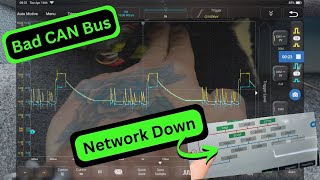
- CAN C Bus Total Resistance — expected: 53.5 - 67 Ohms. Failure: A reading of ~120 Ohms indicates a missing terminating resistor or a break in one of the main bus lines. A reading near 0 Ohms indicates a short between the CAN-H and CAN-L wires.
- CAN C High (CAN-H) Voltage — expected: 2.5 - 3.5 Volts (Key On, Engine Off). Failure: Voltage significantly outside this range, or that doesn't mirror the CAN-L line, indicates a short to power, short to ground, or a faulty module transceiver.
- CAN C Low (CAN-L) Voltage — expected: 1.5 - 2.5 Volts (Key On, Engine Off). Failure: Voltage significantly outside this range, or that doesn't mirror the CAN-H line, indicates a short to power, short to ground, or a faulty module transceiver.
- CAN C Bus Speed — expected: 500 Kbps. Failure: N/A - This is a fixed parameter of the network, not a measured value for fault finding.
Hidden / Shadow Codes Worth Checking
- U0001-00: The '-00' is a standard SAE Failure Type Byte. It typically means 'No Sub Type Information' or 'Component Failure,' indicating a general fault on the bus without pointing to a specific failure mode like 'short to ground' or 'open circuit'. This is the most common variant seen. (see via This suffix is often visible on professional scan tools like Mopar's wiTECH or high-end aftermarket scanners.)
Scan Tool Commands That Help
- wiTECH 2.0: Vehicle Topology View — This is the primary diagnostic screen for a U0001 code. It displays all vehicle modules as a network map. Modules that are not communicating are colored red, instantly showing a technician which parts of the network are offline and helping to narrow down the search for the fault.
- wiTECH 2.0: ECU Flash / Reprogramming — If a Technical Service Bulletin (TSB) indicates that a U0001 code can be resolved with a software update for a specific module (like the PCM or BCM), this function is used to load the new software onto the module.
- wiTECH 2.0 / Advanced Aftermarket Scan Tool: Actuator Tests / Bidirectional Controls — After communication is restored, these commands can be used to test individual components controlled by modules on the network (e.g., commanding the power steering motor, cycling ABS solenoids) to ensure the module and the component it controls are fully functional.
Wiring & Ground Locations

- CAN Bus Star Connector (Hub) — Located under the driver's side dash, often near the steering column shaft. There may be separate hubs for CAN-C and CAN-IHS (Interior High Speed) bus.. This is the central point where many CAN bus circuits connect. A technician can disconnect branches of the network here to isolate a faulty module or wiring section that is bringing the entire network down.
- Cabin Ground Points — Key locations include ring terminals on the driver's side of the instrument panel structure and a ground point between or under the front seats.. A poor ground for a module like the BCM (which is the central gateway) can cause it to malfunction and disrupt all CAN bus communication, triggering a U0001 code.
- Rear Frame Ground — Located on the frame on the driver's side, just rearward of the stabilizer link mount.. This ground is critical for rear-mounted modules, such as those for trailer lighting or park assist, which are on the CAN bus. Corrosion here can cause network issues.
Real Owner Repair Stories
- 5thGenRams Forum User (2021 Ram 1500 Laramie, 58k miles) — While driving, heard a loud thump, check engine light came on, and communication was lost to the eTorque hybrid system.
❌ Tried (didn't work) Initial diagnosis pointed to a communication loss.
✅ What actually fixed it The root cause was a water leak from the third brake light, which dripped down and destroyed the Body Control Module (BCM). The fix was replacing the BCM, which was covered under a Mopar Maxcare warranty.
OEM Part Supersession History
68507994AB, 68507994AC, 68525395AB→68585101AA— Standard part revision and improvement by the manufacturer.
Heads up: These part numbers are for the Electric Power Steering (EPS) rack and pinion assembly. When replacing, it is critical to use the latest superseded part number (68585101AA) for the best compatibility and reliability.
Model Year Variations Within This Range
- 2022-2024: Starting with the 2022 model year on Big Horn trims and above, Ram introduced the Uconnect 5 infotainment system. This system is significantly faster and has more memory than the previous Uconnect 4. As the radio/infotainment system is a major module on the CAN bus, this represents a significant change in the network architecture compared to 2019-2021 models.
- 2021+: Some wiring harness connectors may have design changes. For example, a video documenting a bed step installation on a 2021 Ram 1500 noted a different wiring harness disconnect mechanism compared to prior years, requiring a new procedure to separate the connector.
Helpful Videos

The information in this article is provided for general reference and educational purposes only. Vehicle specifications, procedures, and part compatibility can vary by production date, trim level, and region. Always consult your vehicle's factory service manual and verify part numbers before purchasing or performing repairs. Safety-critical components such as airbags, seat belts, and braking systems should be installed by a qualified professional.
- Ram 1500:
- 🎬 Helpful Videos
- What's Unique About the 2019-2024 Ram 1500
- Diagnostic Flowchart
- Symptoms You May Notice
- Most Likely Causes
- Rare But Worth Checking
- Diagnosis Steps
- Parts You'll Likely Need
- Related Codes That Often Appear With This One
- Technical Service Bulletins (TSBs) & Recalls
- Platform-Specific Known Issues
- Mechanic-Grade Diagnostic Values
- Hidden / Shadow Codes Worth Checking
- Scan Tool Commands That Help
- Wiring & Ground Locations
- Real Owner Repair Stories
- OEM Part Supersession History
- Model Year Variations Within This Range
- 🎟️ Get 5% Off