

U0001 on 2013-2018 Ram 1500: High Speed CAN Bus Failure Causes and Fixes
On a 2013-2018 Ram 1500, code U0001 almost always points to a wiring problem, a weak battery, or an aftermarket accessory interfering with the truck's network. It is rarely a simple part swap; diagnosis is key. Start by checking the battery, disconnecting anything plugged into the OBD-II port, and checking for relevant software updates like NHTSA recall 18V-332.
- Do not immediately buy expensive parts. U0001 is a diagnostic code, not a part failure code.
- Your first and easiest checks are the battery and any aftermarket accessories. A weak battery or a cheap phone charger can cause this code.
- This is not a DIY-friendly repair. Proper diagnosis requires tools and knowledge that most home mechanics do not possess.
- The most likely physical fault is damaged wiring or a corroded connector, not a failed multi-thousand-dollar computer.
- If you must drive, be aware that critical safety and powertrain systems may fail at any time.
What's Unique About the 2013-2018 Ram 1500

On this generation of Ram truck, the U0001 code is notorious for being a 'ghost' that can be triggered by surprisingly simple things. While the definition is standard, the causes are often related to the truck's complex electrical architecture and its central gateway, the TIPM. Owners frequently chase this code due to aftermarket accessories interfering with the network or from basic issues like a failing battery or a corroded ground wire, before ever finding a truly 'broken' part. The diagnostic process often involves using the 'star connectors' (CAN bus hubs/junction blocks) under the dash near the steering column to isolate different parts of the network, a specific procedure for these trucks.
🎬 Watch: Diagnosing a Ram 1500 interior CAN bus faultSymptoms You May Notice
- Check Engine Light is on
- Multiple warning lights on the dashboard (ABS, Airbag, Traction Control, Brake).
- Engine may stall or fail to start.
- Transmission may be stuck in 'limp mode' (one gear).
- Loss of power steering.
- Instrument cluster gauges behaving erratically or going dead
- Radio, windows, or other interior electronics stop working.
- A 'NO BUS' message may appear on the instrument cluster
- Remote start may fail, or the truck may start and immediately shut down.
- Replacing the Powertrain Control Module (PCM) or another expensive module without first performing a full network diagnostic. The problem is very often in the wiring, a simple power supply issue, or requires a software update. 🎬 See how to avoid misdiagnosing a no-crank condition
Most Likely Causes

- Wiring Harness Damage or Connector Issues 🔴 High Probability Trucks are often exposed to harsh conditions. Owners report specific chafe points in the harness near the parking brake pedal, behind the driver-side front wheel well liner, and where harnesses pass through the firewall. Corrosion in major connectors, including the main TIPM connectors, is also common.
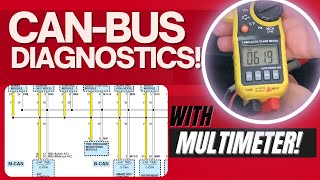
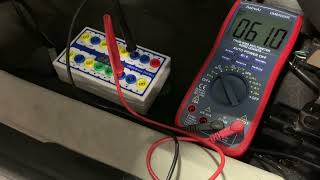
How to confirm: Visually inspect all major wiring harnesses, especially at known chafe points. Disconnect the battery and measure the resistance between Pin 6 (CAN-H) and Pin 14 (CAN-L) at the OBD-II port. A healthy bus should read approximately 60 ohms. 🎬 Watch: How to test CAN bus resistance with a multimeter If the reading is incorrect, the fault must be traced using wiring diagrams.
Typical fix: Repair the damaged section of wire. Clean or replace corroded connectors. Ensure all connections are secure.
Est. part cost: $5-$50 - Weak Battery or Poor Ground Connection 🔴 High Probability Modern trucks are packed with electronics that are highly sensitive to voltage fluctuations. A weak battery or a corroded ground strap can cause modules to drop off the network, especially during engine cranking.
How to confirm: Test the battery with a multimeter; it should read at least 12.4V with the engine off and 13.5V-14.5V with the engine running. Clean the battery terminals and follow the main ground straps from the battery to the chassis and engine block, ensuring they are clean, tight, and free of corrosion.
Typical fix: Replace a weak battery. Clean or replace corroded battery terminals and ground straps.
Est. part cost: $10-$250 - Aftermarket Accessory Interference 🟡 Medium Probability Many owners install aftermarket LED lights, remote starters, audio systems, or plug-in OBD-II devices (tuners, insurance trackers) that can disrupt the sensitive CAN bus network by either drawing too much power or sending improper signals.
How to confirm: Unplug any and all devices from the OBD-II port. Disconnect the power source for any hard-wired aftermarket accessories. Clear the codes and see if the problem returns. A user on Reddit with a 2015 Ram 1500 traced their intermittent U0001 code to a plug-in OBDLink MX+ scanner.
Typical fix: Remove the offending device or install a higher-quality, CAN-bus-compatible version.
Est. part cost: $0 - Faulty Control Module ⚪ Low Probability Any module on the CAN C bus can fail and bring down the whole network. The ABS module and the Totally Integrated Power Module (TIPM) are frequently cited as culprits in forum discussions. Manufacturer service bulletins, such as TSB Bulletin #S2308000042, specifically note that the Electronic Power Steering (EPS) and other CAN C modules can go offline, triggering U0001 and U0002.
How to confirm: This is a process of elimination. After confirming the wiring, power, and grounds are good, a technician will disconnect modules from the CAN bus one by one (often at the star connector/junction block) to see if communication on the network is restored. TSB Bulletin #9100194 advises technicians to perform full diagnostics before replacing the EPS gear for these codes.
Typical fix: Replace the failed module (e.g., ABS module, TIPM, or Powertrain Control Module). The new module will require programming by a dealer or qualified shop.
Est. part cost: $200-$1500
Rare But Worth Checking
- PCM/ECM Software Glitch: Outdated module software can lead to communication errors. NHTSA recall 18V-332 (FCA campaign U61) was issued for 2014-2019 Ram trucks because a CAN-C bus short could cause the vehicle to maintain speed or accelerate with cruise control on. The fix is a PCM software update. Always check with a dealer for any available software updates, as this is a low-cost first step.
Diagnosis Steps

- Check for Software Updates & Recalls: Contact a Ram dealer with your VIN to see if NHTSA Recall 18V-332 or any other software updates are pending for your truck. This recall directly addresses a dangerous condition related to a U0001 fault.
- Check the Battery: Ensure the battery is fully charged (at least 12.4V engine off) and the terminals are clean and tight. A weak or failing battery is a very common cause of network codes.
- Remove Aftermarket Devices: Unplug anything connected to the OBD-II port (tuners, trackers, etc.) and disconnect any aftermarket electronics. Clear the codes and test drive.
- Visual Inspection: Thoroughly inspect the main engine and body wiring harnesses for any signs of damage, chafing, or corrosion. Pay close attention to the area near the parking brake pedal, behind the driver's front wheel well, and around the TIPM.
- Check Bus Resistance: Disconnect the negative battery terminal. Use a quality multimeter to measure the resistance between Pin 6 (CAN-H) and Pin 14 (CAN-L) on the OBD-II diagnostic port. The reading should be approximately 60 ohms.
- Interpret Resistance Reading: If the resistance is ~120 ohms, it indicates an open in the circuit or a missing/failed terminating resistor (which is internal to a module, often the PCM or TIPM). If it's near 0 ohms, it indicates a short between the CAN-H and CAN-L wires.
- Isolate the Fault (Professional Step): If the resistance is incorrect, the next step is to locate the CAN bus junction blocks (star connectors). On these Rams, they are located under the dashboard, near the steering column. By disconnecting branches of the network one by one, a technician can isolate the faulty wiring section or module that is causing the incorrect reading.
- Module Check (Professional Step): If wiring is confirmed to be good, suspect a faulty module. Disconnect modules like the ABS, TCM, and others one at a time to see if the bus communication returns to normal. The module whose disconnection restores the 60-ohm reading is the likely culprit.
Parts You'll Likely Need
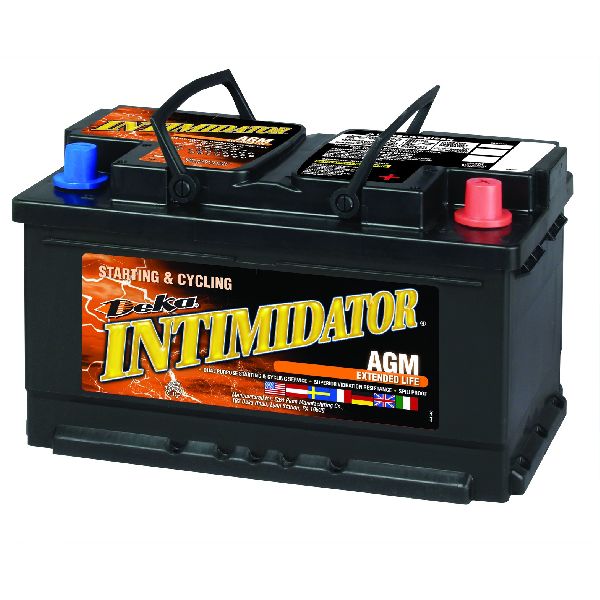
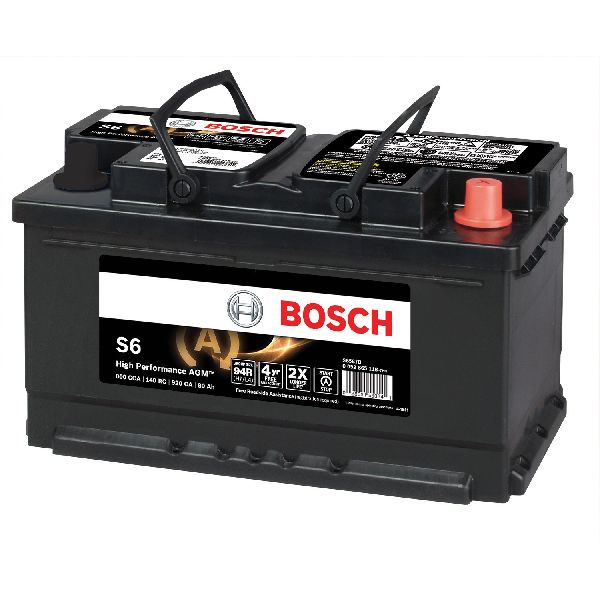
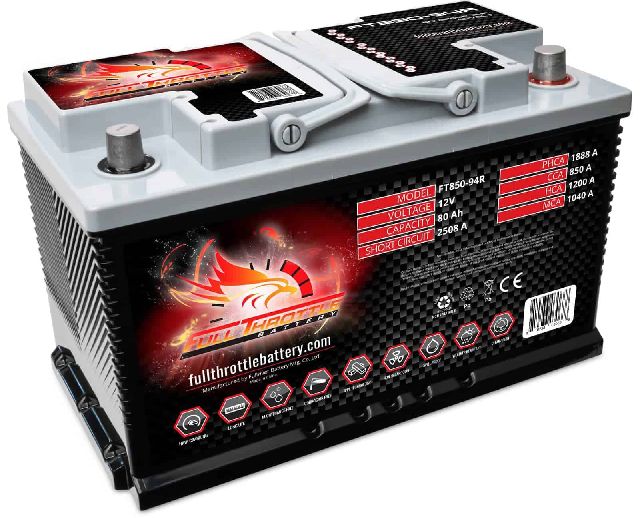
- Battery — A weak or failing battery is a primary cause of network communication faults on modern, electronically-dense vehicles.
Trusted brands: Interstate, DieHard, Duralast, ACDelco
OEM price range: $250-$400
Aftermarket price range: $150-$250 - Wiring Harness Repair Supplies — If the fault is a broken or chafed wire, repairing the specific section is much more cost-effective than replacing an entire harness.
Trusted brands: Solder, Heat shrink tubing, Tesa tape
OEM price range: $5-$50
Aftermarket price range: $5-$50 - Totally Integrated Power Module (TIPM)
(OEM #68243259, 68322373AB)— The TIPM acts as the central gateway for the CAN bus. Internal failures or corrosion on its many connectors can bring down the entire network. It is a known failure point on these trucks.
Trusted brands: Mopar, Dorman, MAKS TIPM Rebuilders
OEM price range: $800-$1200
Aftermarket price range: $400-$700
Related Codes That Often Appear With This One
- U0100 — Lost Communication With ECM/PCM. This code often appears with U0001 as the PCM is a primary node on the network.
- U0101 — Lost Communication with TCM. This indicates the transmission module is offline, often leading to shifting problems.
- U0121 — Lost Communication With Anti-Lock Brake System (ABS) Control Module. This is a strong clue that the ABS module or its wiring may be the source of the network failure.
- U0402 — Invalid Data Received From Transmission Control Module. As seen in NHTSA ODI #11724761, this code can accompany U0001 when communication is disrupted.
Technical Service Bulletins (TSBs) & Recalls
- NHTSA Recall 18V-332 / FCA Campaign U61: Reprogram Powertrain Control Module. This recall addresses a safety defect where a short on the CAN-C bus could cause unintended acceleration while cruise control is active. The remedy is a software update.
- TSB Bulletin #S2308000042: Notes that Electronic Power Steering (EPS) and other CAN C modules may go offline, resulting in U0001, U0002, and U0131-00 codes.
- TSB Bulletin #9100194: Instructs technicians to contact FCA for specific diagnostics prior to replacing the EPS steering gear for CAN C Bus codes U0001 and U0002.
Mechanic-Grade Diagnostic Values
- CAN C Bus Resistance — expected: 53.5 - 67 Ohms between Pin 6 and Pin 14 of the OBD-II port (with battery disconnected). The ideal target is 60 Ohms.. Failure: A reading of ~120 Ohms indicates an open circuit or one of the two terminating resistors is offline. A reading near 0 Ohms indicates a short between the CAN H and CAN L wires.
- CAN C Bus Voltage (Key On, Engine Off) — expected: CAN High (Pin 6): ~2.5-3.0V. CAN Low (Pin 14): ~2.0-2.5V. The two voltages should mirror each other and sum to approximately 5V.. Failure: CAN High shorted to ground will read 0V. CAN Low shorted to voltage will read high (5V or 12V). A flat line with no activity indicates a dead bus.
- System Voltage for Network Stability — expected: Must be between 10.0 and 16.0 volts for CAN bus diagnostics to run reliably.. Failure: Voltage dropping below 10.5V, especially during cranking, can cause modules to drop off the network and set a U0001 code.
Scan Tool Commands That Help
- wiTECH 2.0 (Dealer Tool): View Network Topology — This is the first and most critical step. It displays a color-coded map of all vehicle modules. Red modules are non-responsive, yellow have DTCs, and blue are active and OK. This instantly shows a technician which modules are offline and helps narrow down the search.
- wiTECH 2.0 (Dealer Tool): Loss of Communication Test — For intermittent U0001 codes. This function continuously 'pings' all modules on the network. A technician can then perform a 'wiggle test' on harnesses and connectors. If a module's status changes from 'Active' to 'Not Responding' during the wiggle test, the fault is in that area.
- wiTECH 2.0 (Dealer Tool): Restore Vehicle Configuration — After replacing a major module like the BCM or TIPM, this function programs the new module with the vehicle's factory-installed options and VIN. Failure to do this will result in a persistent U-code or feature malfunction.
Wiring & Ground Locations

- CAN C Bus Star Connectors — Under the driver's side dashboard, often clipped to a bracket near the steering column. They are typically a block of green and/or white multi-pin connectors. Access is gained by removing the side dash panel or the trim panel below the steering wheel.. These are the central hubs for the CAN C and CAN IHS networks. Disconnecting branches here is the primary method for isolating a faulty module or wiring harness section that is bringing down the network.
- CAN C Terminating Resistors — The two 120-ohm terminating resistors are not separate parts. One is located internally within the Powertrain Control Module (PCM), and the other is internal to the Totally Integrated Power Module (TIPM).. This is why a healthy bus reads ~60 ohms (two 120-ohm resistors in parallel). If the reading is 120 ohms, it strongly suggests the PCM or TIPM (or the wiring to one of them) has an open circuit.
- Main Chassis/Body Grounds — Key ground points are located on the frame rail in the driver's side front wheel well, near the battery to the body, and from the engine block to the chassis. Corrosion is common at the crimped ring terminals on these grounds.. A poor ground connection for any module on the CAN bus can create a floating voltage reference, causing it to send corrupt data or stop communicating entirely, triggering a U0001.
Real Owner Repair Stories
- Reddit user on r/ram_trucks (2016 Ram 1500 EcoDiesel) — Intermittent Check Engine Light, ABS light, and multiple 'Service' messages for air suspension and ABS. Power steering was also lost. Codes U0001 and U0121 appeared.
❌ Tried (didn't work) Clearing codes temporarily worked, but the issue would return violently after a restart.
✅ What actually fixed it The problem was caused by a plug-in OBDLink MX+ Bluetooth scanner. Unplugging the device from the OBD-II port permanently resolved all symptoms and codes. - DodgeForum.com user 'SHO Rod' (2018 Dodge Charger Daytona (similar CAN architecture)) — Intermittent communication faults with multiple modules across the vehicle.
❌ Tried (didn't work) Initial checks of individual modules were inconclusive.
✅ What actually fixed it Using a wiring diagram and scan tool topology map, the owner determined all failing modules were powered by the same relay in the fuse box. The modules were only receiving 7-9 volts. The cause was a faulty 70-amp relay with a high-resistance internal connection. Replacing the relay restored proper voltage and fixed all communication codes. - YouTube video by 'Automotive Diagnostics and Programming' (2016 Ram 1500) — Interior electronics not working (windows, radio). Scan tool showed no communication with any interior CAN bus (IHS) modules.
❌ Tried (didn't work) Scanning for codes showed a dead bus, requiring manual diagnosis.
✅ What actually fixed it A visual inspection of the under-hood fuse box (TIPM) revealed a missing 10-amp fuse (Fuse 87) for the trailer tow module. The trailer tow module was on the CAN bus and, without power, was causing a network disruption. Installing the missing fuse restored all interior functions. - NHTSA ODI #11724761 — An owner reported using a portable diagnostic tester to diagnose their vehicle and retrieved DTCs U0001 and U0402. The vehicle was subsequently taken to an independent mechanic for further evaluation.
OEM Part Supersession History
68228991AC, 68228991AB, 68228991AA→68228991AD— Revision and update to the ABS Control Module.
Heads up: Always match the part number from your original module. While superseded parts should be compatible, using a module from a truck with different options (e.g., air suspension) can cause communication failures.68295368AA, 68295368AB→68295368AC— Revision and update to the ABS Control Module.
Model Year Variations Within This Range
- 2013+: The complex, multi-board Totally Integrated Power Module (TIPM) from pre-2013 trucks was simplified. For 2013 and newer models, it is more of a Power Distribution Center (PDC) with a single board, and more of the 'smart' logic was moved to the Body Control Module (BCM) and PCM. While still a central point of failure, the diagnostic approach changes slightly as more logic is distributed.
- 2018+: Some 2018 and newer models began incorporating a Secure Gateway Module (SGW), which requires a specific bypass cable or an authorized scan tool with internet access to perform bidirectional commands or programming. While U0001 diagnosis is similar, modifying the system or replacing modules becomes more complex.
Diagnostic Flowchart
Other Known Issues on This Vehicle
Issues unrelated to this code that are worth knowing about as an owner of this generation:
- 5.7L HEMI Lifter/Camshaft Failure ('Hemi Tick') 🔴 High — Common, especially on trucks with extended idle times or inconsistent oil change intervals. Can occur at various mileages, sometimes before 100,000 miles.
- Broken Exhaust Manifold Bolts 🟠 Medium — Extremely common on 5.7L HEMI engines. The steel bolts and cast iron manifold expand/contract at different rates, causing the rearmost bolts to shear off, creating an exhaust leak ticking noise, especially on cold starts.
- Active Air Suspension Failures 🔴 High — Frequent, particularly in colder climates. Issues include air leaks from bags or lines, compressor failure due to moisture/overwork, and ride height sensor faults, often leading to a sagging suspension. (Ref: A Ram service bulletin addresses issues in cold weather.)
- Totally Integrated Power Module (TIPM) Failure 🔴 High — A known issue across many FCA products of this era. Can cause a wide range of bizarre electrical problems, including U0001, as it acts as a central gateway and power distribution hub.
- ZF 8-Speed Transmission Shifting Issues 🟡 Low — While generally reliable, some owners report rough shifting or hesitation. These issues are often resolved with a software update or fluid service, rather than a hard part failure.
Used vs. New Parts: Buying Guide for This Vehicle
When a used part is the smart pick: Used parts can be a smart choice for modules like the ABS, BCM, or even the instrument cluster, provided the part number matches EXACTLY and you have a plan for programming. For wiring harnesses or connectors, a used pigtail from a junkyard is an excellent, cost-effective repair for a localized wiring issue.
Donor-vehicle mileage cap: roughly under 150000 miles for the part to have meaningful remaining life.
What to inspect on the donor part:
- For modules, ensure all connector pins are straight, clean, and free of any green or white corrosion.
- Check that the plastic housing of the module is not cracked or showing signs of heat damage.
- For wiring, look for flexible, clean wires. Avoid any sections that are stiff, brittle, or have obviously been repaired before.
- Verify the part number on the used module is an exact match to your original part. Superseded numbers are usually okay, but modules for different trim levels are not.
OEM-only on this vehicle (don't cheap out):
- Totally Integrated Power Module (TIPM) / Power Distribution Center: Due to the high failure rate and complexity of this part, a new OEM Mopar unit or a unit from a highly reputable rebuilder (like MAKS TIPM Rebuilders) with a lifetime warranty is strongly recommended over a random junkyard part.
Aftermarket brands forum-validated for this vehicle:
- MAKS TIPM Rebuilders (For TIPM)
- GoECM (For TIPM/PCM)
Brands owners have reported issues with on this vehicle:
- Cheap, unbranded OBD-II plug-in devices (scanners, trackers, tuners): These are a documented cause of CAN bus interference and can trigger a U0001 code.
Real Owner Stories
Aggregated from forums and TSBs cited above. Mileages and costs reflect what owners reported in those sources.
2015 Ram 1500
Symptoms: The truck went 'insane' with multiple warning lights including ABS and Air Suspension, and set codes U0001 and U0121.
What fixed it: The problem was traced back to an OBDLink MX+ Bluetooth scanner being plugged into the diagnostic port. Removing it solved the issue.
Source hint: Reddit r/ram_trucks: 'OBDLink MX+ and U0001 code'
2014 Ram 1500
Symptoms: Experienced a U0001 code along with multiple other communication failures.
What fixed it: The issue was ultimately traced to a faulty Intelligent Power Control (IPC) board located inside the Totally Integrated Power Module (TIPM). The TIPM was replaced under warranty.
Source hint: Ram Forum: 'Engine code U0001 High Speed CAN comm Bus question'
2017 Ram 1500
Symptoms: The owner reported that the vehicle was driven to their residence and subsequently diagnosed with DTCs U0001 and U0402 using a portable diagnostic tester.
What fixed it: While the vehicle was taken to an independent mechanic, the specific repair was not documented in the initial report.
Source hint: NHTSA ODI #11724761
Related OBD-II Codes
Frequently Asked Questions
Is there a recall for the U0001 code on my 2013-2018 Ram 1500?
My instrument cluster says 'NO BUS'. Is that related to code U0001?
Could my aftermarket OBD-II scanner or tuner be causing the U0001 code?
Where are the most common places for the wiring harness to get damaged on these trucks?
What resistance reading should I get when testing the CAN bus at the OBD-II port?
Besides the check engine light, what other warning lights are common with a U0001 code?
Helpful Videos
Used OEM Parts in Stock


New Aftermarket Parts Available


The information in this article is provided for general reference and educational purposes only. Vehicle specifications, procedures, and part compatibility can vary by production date, trim level, and region. Always consult your vehicle's factory service manual and verify part numbers before purchasing or performing repairs. Safety-critical components such as airbags, seat belts, and braking systems should be installed by a qualified professional.
- Ram 1500:
- 🎬 Helpful Videos
- 🛍️ Shop This Part
- What's Unique About the 2013-2018 Ram 1500
- Symptoms You May Notice
- Most Likely Causes
- Rare But Worth Checking
- Diagnosis Steps
- Parts You'll Likely Need
- Related Codes That Often Appear With This One
- Technical Service Bulletins (TSBs) & Recalls
- Mechanic-Grade Diagnostic Values
- Scan Tool Commands That Help
- Wiring & Ground Locations
- Real Owner Repair Stories
- OEM Part Supersession History
- Model Year Variations Within This Range
- Diagnostic Flowchart
- Other Known Issues on This Vehicle
- Used vs. New Parts: Buying Guide for This Vehicle
- Real Owner Stories
- 2015 Ram 1500
- 2014 Ram 1500
- 2017 Ram 1500
- Related OBD-II Codes
- Frequently Asked Questions
- 🎟️ Get 5% Off