

U0001 on 2012-2016 Land Rover Range Rover Evoque: High-Speed CAN Bus Fault Guide
Code U0001 on a 2012-2016 Evoque means a critical communication failure between essential computer modules. This is often caused by a failing battery, poor ground connections, or damaged wiring. In some cases, resetting the Battery Management System (BMS) after a battery change has resolved the issue. Diagnosis is complex and usually requires professional tools.
- U0001 is a serious network communication code, not a simple sensor failure.
- Before attempting any complex diagnostics, fully test the battery under load and inspect all major ground connections.
- A known issue on the Evoque is a chafing transmission wiring harness due to a missing clip, which can cause this code.
- Due to the complexity of CAN bus diagnostics, professional service with Land Rover-specific tools is highly recommended.
- Do not be surprised if the code is accompanied by a long list of other faults; this is a symptom of the network failure, not a sign that all those components have failed.
What's Unique About the 2012-2016 Land Rover RANGE ROVER EVOQUE

The Range Rover Evoque's sophisticated electronics, particularly its all-wheel drive and chassis control systems, are highly dependent on network communication. As documented in Land Rover Technical Service Bulletins, these specific systems can be a common source for the U0001 code. For example, issues with the All-Wheel Drive Control Module (AWDCM) or Power Steering Control Module (PSCM) are known to trigger this fault, often accompanied by specific warning messages on the dash. [LTB00911NAS1, SSM71278] TSB SSM71278 specifically points to low battery voltage or high resistance at EPAS ground terminals as a cause for heavy steering accompanied by U0001-87/88. [SSM71278]
Diagnostic Flowchart

Tap your situation to follow the diagnostic path that matches what you're seeing on this vehicle.
Symptoms You May Notice

- Multiple warning lights on the instrument cluster, often described as a 'Christmas tree' effect.
- Warning messages such as 'TRACTION REDUCED', 'ACTIVE DRIVELINE ONLY FAULT', 'TRANSMISSION FAULT', or 'STABILITY CONTROL NOT AVAILABLE'. [LTB00911NAS1, 22]
- Loss of power steering or intermittent power steering failure, which may feel heavy. [SSM71278, 7]
- Transmission may not shift correctly or may seem stuck in one gear, sometimes requiring a restart to function.
- Vehicle may not accelerate properly until it is restarted.
- Failure of various electrical components like lights or the trunk release.
- Inability to start the engine, though it may start by shorting the starter relay.
- Replacing individual components like ABS sensors or transmission parts without first diagnosing the underlying network communication failure. The problem is rarely the component itself, but its inability to talk to other modules.
- Condemning a control module before thoroughly checking and verifying the integrity of the battery, ground connections, and wiring harness.
- Replacing the main battery for electrical faults without also resetting the Battery Management System (BMS) 🎬 Watch: Why you must reset the BMS after battery replacement., which can be the actual root cause of the communication codes.
Most Likely Causes

- Low Battery Voltage or Poor Ground Connection 🔴 High Probability Complex electronic systems in Land Rovers are highly sensitive to voltage fluctuations. A weak battery or corroded/loose ground straps are common culprits for network communication errors. TSB SSM71278 specifically identifies low battery voltage and high resistance at EPAS earth terminals (G1D122A, G1D122B, G1D122AZ, G1D108 for the Evoque L538) as a cause for U0001. [SSM71278]
How to confirm: Perform a load test on the battery using a professional tester like an EXP-1080 as recommended by JLR; a simple voltage check is not sufficient. [SSM71278] Inspect and clean all major ground connections between the body, engine, and battery, paying special attention to the EPAS ground points identified in TSB SSM71278 and the main chassis ground point near the washer fluid filler. [SSM71278, 40]
Typical fix: Replace the battery and/or clean or replace faulty ground straps. After battery replacement, the Battery Management System (BMS) must be reset using a diagnostic tool; some owners have reported this step alone resolved the U0001 code.
Est. part cost: $200-$450 - Damaged or Corroded Wiring Harness 🟡 Medium Probability A known issue, detailed in TSB JTB00579NAS2, involves a missing cable tie on the transmission wiring harness, allowing it to chafe against the rear driveshaft and get damaged, leading to a U0001-87 code. General corrosion or physical damage to the CAN bus wiring, particularly at splice points or from water ingress under the carpets, is also a possibility.
How to confirm: Visually inspect the transmission wiring harness for chafing or damage, specifically where it may contact the driveshaft. [JTB00579NAS2] A technician would use a multimeter or oscilloscope to test for continuity, shorts to ground, and proper resistance (expecting ~60 Ohms across the high-speed CAN lines with the vehicle off).
Typical fix: Repair the damaged section of the wiring harness and secure it properly with a new cable tie as per TSB JTB00579NAS2. In severe cases, a portion of the harness may need to be replaced.
Est. part cost: $50-$800 - Failing Control Module ⚪ Low Probability A single faulty module can disrupt the entire network by sending corrupt data or not responding. TSBs point to the All-Wheel Drive Control Module (AWDCM) and Power Steering Control Module (PSCM) as potential sources. [LTB00911NAS1, SSM71278] A faulty ABS module or Body Control Module (BCM/CJB), often due to water damage, can also be a culprit.
How to confirm: This requires an advanced diagnostic scan tool to identify which module(s) are not communicating. A technician may disconnect modules one by one to see if communication on the network is restored. For example, a technician traced a fault to a junction connector in the right-hand D-pillar by observing resistance changes as sections were disconnected.
Typical fix: Replace the faulty control module. This often requires programming the new module to the vehicle using a JLR-approved tool.
Est. part cost: $400-$1200
Rare But Worth Checking
- Software Incompatibility / Glitch: Sometimes, a communication issue can be a software problem within a module that can be resolved by a software update from a Land Rover dealer, as seen in some owner experiences. Another TSB, SSM73424, notes that a U0001-82 code can be stored in the ABS module erroneously on some models because it's expecting a message from a system that isn't installed. If the ABS light is not on, this specific code can be ignored.
- Faulty Auxiliary Battery: The smaller auxiliary battery, used for the start/stop system, can fail and cause widespread electronic faults, including a 'Gearbox Fault' message, which is a common symptom of CAN bus issues. Replacing this small, inexpensive battery located under the glove compartment 🎬 See this step-by-step guide to replacing the auxiliary battery. has been reported to solve these problems.
Diagnosis Steps
- Check Battery Health: Start by testing the battery with a professional load tester (e.g., JLR-approved EXP-1080). Ensure it is fully charged and healthy. A simple voltage reading is insufficient. [SSM71278, 21]
- Inspect Grounds: Visually inspect and clean the main battery, engine, and chassis ground connections. Per TSB SSM71278, pay close attention to the EPAS ground points G1D122A, G1D122B, G1D122AZ, and G1D108 on the Evoque. Also check the main chassis ground point on the engine mount behind the washer fluid filler. [SSM71278, 40]
- Scan All Modules: Use a high-level diagnostic tool (like a GAP IIDTool or JLR SDD) to scan all control modules. Make a list of all stored codes and which modules are not responding.
- Check for TSBs: Review Technical Service Bulletins. TSB LTB00911NAS1 (AWDCM), SSM71278 (PSCM/Grounds), and JTB00579NAS2 (Transmission Harness Chafing) are directly relevant.
- Inspect Wiring: Visually inspect the CAN bus wiring harnesses for any signs of physical damage, chafing, or corrosion, paying special attention to the transmission harness area near the driveshaft as detailed in JTB00579NAS2. Also check for signs of water ingress in the passenger footwell near the Central Junction Box (BCM) and under carpets. [JTB00579NAS2, 27, 31]
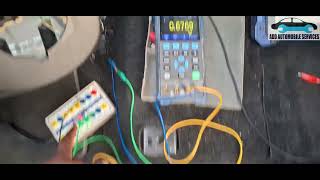
- Measure CAN Bus Resistance: With the battery disconnected, use a multimeter to measure the resistance between Pin 6 (CAN High) and Pin 14 (CAN Low) at the OBD-II port. 🎬 Watch a technician diagnose these complex CAN bus communication issues. A healthy network should read approximately 60 ohms. A reading of 120 ohms suggests a missing terminating resistor or a break in the circuit, while a reading near 0 ohms indicates a short circuit.
- Isolate Faulty Modules: If resistance is incorrect or modules are offline, a technician will begin disconnecting modules from the CAN network one at a time (e.g., at the junction connector in the right-hand D-pillar) to see if the correct resistance returns or if communication is restored, thereby isolating the faulty module or wiring section.
Parts You'll Likely Need
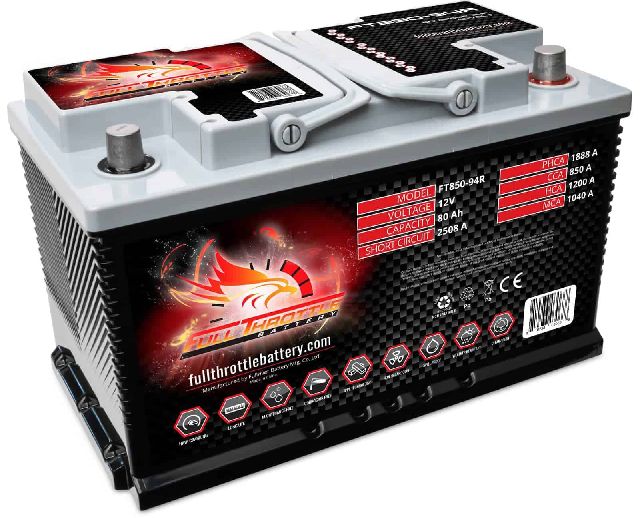
- Vehicle Battery — A weak or failing battery is a primary cause of network communication faults on electronically complex vehicles like the Evoque.
Trusted brands: Interstate, Bosch, DieHard
OEM price range: $300-$500
Aftermarket price range: $200-$350 - Wiring Harness Repair Kit — Often the fix is not a component, but a damaged wire or connector in the CAN bus harness, especially near the transmission as noted in TSB JTB00579NAS2 or at splice points damaged by water. [JTB00579NAS2, 2]
OEM price range: $50-$150
Aftermarket price range: $20-$75 - All-Wheel Drive Control Module (AWDCM)
(OEM #LR055990 (For 2014-2015 models, VIN EA000001 to FA999999))— Identified in TSB LTB00911NAS1 as a potential source of the U0001 fault code. Failure of this module can disrupt the network. Part number is specific to model year and VIN range. [LTB00911NAS1, 16]
Trusted brands: Genuine Land Rover
OEM price range: $600-$1000
Related Codes That Often Appear With This One
- U0131-00 — Lost communication with the Power Steering Control Module (PSCM), often seen with U0001 per TSB SSM71278.
- P0745-92 — A transmission-related code that can be logged alongside U0001 when the All-Wheel Drive Control Module (AWDCM) has a fault, per TSB LTB00911NAS1.
- U3001-00 — Improper shutdown of a control module, which can be related to the network communication failure indicated by U0001. [SSM71278]
- U0001-87 — A common suffix indicating 'missing message'. TSB JTB00579NAS2 specifically addresses this code resulting from a chafed transmission harness. It is also frequently mentioned in forum discussions and can be caused by water damage to the BCM. [JTB00579NAS2, 5, 31]
Technical Service Bulletins (TSBs) & Recalls
- LTB00911NAS1: 'ACTIVE DRIVELINE ONLY FAULT - TRACTION REDUCED' message may be displayed with U0001 stored in the AWDCM.
- SSM71278: U0001-87/88 may be present with other codes due to low voltage or communication loss with the PSCM.
- SSM73424: Notes that U0001-82 may be stored in the ABS module without any fault and should be ignored if the DSC lamp is not on.
- JTB00385NAS3: A missing cable tie on the transmission wiring harness can cause chafing and trigger a U0001-87 code.
Platform-Specific Known Issues
- TSB JTB00579NAS2: Details a specific failure mode where the transmission wiring harness chafes on the rear driveshaft due to a missing cable tie, causing a U0001-87 fault. The fix involves repairing the harness and securing it.
- TSB SSM71278: Connects heavy steering and U0001 codes to poor EPAS ground connections (G1D122A, G1D122B, etc.) or low battery voltage. The fix involves inspecting, cleaning, and tightening these specific grounds.
- Owner Experience on landroverforums.com: A 2014 Evoque owner with U0001-82 and U0001-87 codes, along with other faults, reported that all issues were resolved after replacing the main battery and resetting the Battery Management System (BMS).
Mechanic-Grade Diagnostic Values
- High-Speed CAN Bus Resistance — expected: ~60 Ohms (± 2 Ohms). Failure: 120 Ohms indicates a break or missing terminating resistor. ~0 Ohms indicates a short between CAN High and Low wires.
- High-Speed CAN Bus Voltage (Key On, Engine Off) — expected: CAN-H: ~2.65 Volts, CAN-L: ~2.35 Volts. Failure: Significant deviation from these voltages suggests a short to power, short to ground, or a faulty module pulling the bus voltage down.
- CAN Line Resistance to Ground — expected: Mega-ohms or Open Circuit (O.L.). Failure: Low resistance indicates a short to ground in the wiring or within a connected module.
Hidden / Shadow Codes Worth Checking
- U0001-81: Invalid Serial Data Received. This code often indicates a temporary communication loss that occurred in the past, frequently due to a low battery condition. It may be stored in multiple modules without causing any current symptoms. (see via JLR-compatible diagnostic scanner (e.g., GAP IIDTool, Autel, JLR SDD). In many cases, this code can be ignored if no other symptoms are present.)
Scan Tool Commands That Help
- JLR SDD / Pathfinder / compatible aftermarket (Autel, GAP IIDTool): Battery Management System (BMS) Reset — This is critical after replacing the main vehicle battery. The system needs to be told a new battery is installed to adjust its charging strategy. Failing to do so can leave the system thinking the old, weak battery is still present, leading to persistent U0001 codes even with a new battery.
- JLR SDD / Pathfinder: Configure New Module / Module Programming — When a control module (e.g., AWDCM, BCM, PSCM) is replaced, it is not plug-and-play. This function is required to code the new module to the vehicle's VIN and specific configuration to restore communication on the network.
Wiring & Ground Locations
- Central Junction Box (CJB) / Passenger Fuse Box — Located in the passenger footwell, accessible by removing a panel inside or below the glovebox.. This is a major hub for vehicle electronics and a common point of failure due to water ingress from leaking sunroof drains or windshield seals, which can cause widespread CAN bus faults.
- Main Chassis Ground — An earth bolt on the engine mounting, located on the right-hand side of the engine bay just behind the windscreen washer filler cap.. This is a primary grounding point for the engine and chassis electronics. High resistance or a loose connection here can cause a variety of intermittent electrical and communication faults.
- CAN Splice Network Connector — A junction connector for the CAN harness has been found in the right-hand D-pillar area (rear pillar on the passenger side).. This is a known point where the CAN bus wiring can be damaged, especially from the improper removal of aftermarket accessories like tracking devices, leading to a total network failure.
- Rear Junction Box — Located behind a panel on the left side of the luggage compartment.. This box controls rear body electronics and is another node on the vehicle's network. A fault here can contribute to communication issues.
Real Owner Repair Stories
- Land Rover and Range Rover Forums user 'JDiehl' (2014 Range Rover Evoque) — Vehicle would not accelerate until it was restarted. Codes U0001-82 (ABS Module) and U0001-87 (Instrument Pack) were present.
❌ Tried (didn't work) Replacing the main vehicle battery.
✅ What actually fixed it Resetting the Battery Management System (BMS) using a diagnostic tool. After the reset, the issues did not return. - Diagnostic case study (Range Rover Evoque (year not specified)) — Complete no-start condition with no communication to any control module.
❌ Tried (didn't work) Initial checks without a structured approach. The article warns against randomly unplugging modules or replacing them without confirming the physical network layer is intact.
✅ What actually fixed it The technician found incorrect CAN bus resistance. By isolating sections of the harness, the fault was traced to a junction connector in the right-hand D-pillar where wiring was poorly repaired after a previous aftermarket device removal. Restoring the wiring to OEM standards with a proper twisted-pair repair fixed the fault. - YouTube user repair video (Range Rover Evoque (year not specified)) — Intermittent 'Gearbox Fault' warning on the dash that would clear after a restart. Intermittent blue screens on the camera system.
❌ Tried (didn't work) The owner had already replaced the main battery, which did not solve the issue alone.
✅ What actually fixed it Replacing the small auxiliary battery (for the start/stop system) located under the glove compartment. This resolved both the gearbox fault and the camera issues.
"I Checked Everything" — The Actual Cause
- A common scenario is for the CAN bus resistance to test correctly at 60 ohms with the ignition off, fooling a technician into thinking the wiring is fine. However, a fault can still exist that only manifests when the modules are powered on. One owner reported seeing 60 ohms with the key off, but an Open Loop (O.L.) reading as soon as the ignition was turned on, indicating a module was pulling the network down only when active.
- Another pattern is replacing the battery to fix voltage-related codes, only for the U0001 fault to remain. The actual cause was not the battery itself, but the need to perform a 'Battery Management System (BMS) Reset' via a scan tool to make the vehicle's computers recognize the new battery.
When the Usual Fixes Don't Work
- While a weak main battery is a very common cause, multiple owner accounts confirm that simply swapping the battery is not enough. In a 2014 Evoque, U0001 codes persisted after a battery change and were only resolved by performing a Battery Management System (BMS) reset with a diagnostic tool. In another case, persistent 'Gearbox Fault' messages (a symptom of U0001) were not fixed by a new main battery, but were finally cured by replacing the small, secondary auxiliary battery.
OEM Part Supersession History
LR055990 (AWDCM/Haldex Control Unit)→LR139486 (one of several alternatives)— Part revision and updates by the manufacturer.
Heads up: Using a module from a different model year or VIN range, even if it physically fits, may not work due to different software or hardware configurations. For example, a module from a vehicle with VIN ending 6Axxxxxx may not work in a vehicle with VIN ending 8Axxxxxx.
Model Year Variations Within This Range
- 2014-2016: Models from 2014 onward were equipped with the ZF 9-speed automatic transmission. TSB Q425NAS1 addresses calibration issues with this transmission on 2014-2015 models, which can cause warning messages and performance issues that may be related to CAN bus traffic.
- 2014-2015: The All-Wheel Drive Control Module (AWDCM) part number LR055990 is specifically listed for models within the VIN range from EA000001 to FA999999, indicating that models before or after this range may use a different part number.
Helpful Videos
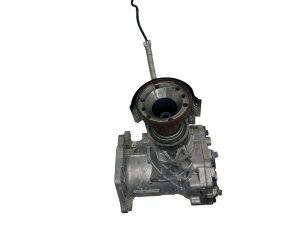
Used OEM Parts in Stock


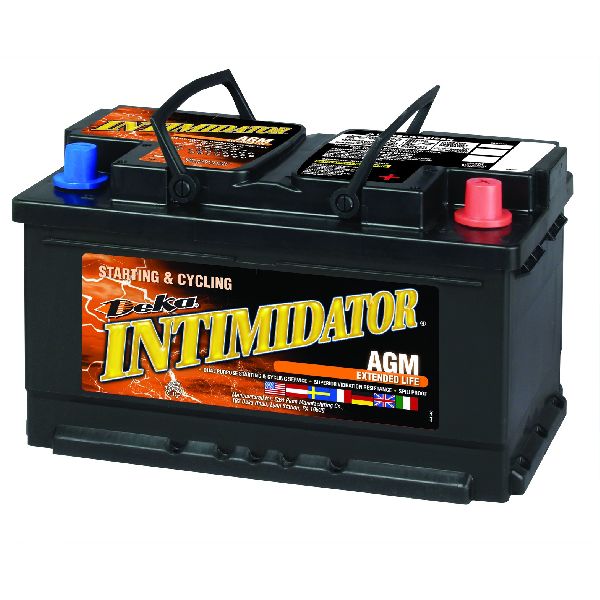
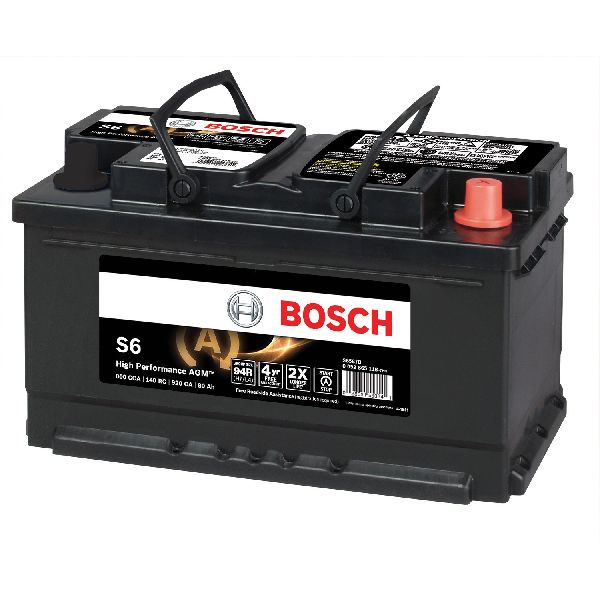
New Aftermarket Parts Available


The information in this article is provided for general reference and educational purposes only. Vehicle specifications, procedures, and part compatibility can vary by production date, trim level, and region. Always consult your vehicle's factory service manual and verify part numbers before purchasing or performing repairs. Safety-critical components such as airbags, seat belts, and braking systems should be installed by a qualified professional.
- Land Rover RANGE ROVER EVOQUE:
- 🎬 Helpful Videos
- 🛍️ Shop This Part
- What's Unique About the 2012-2016 Land Rover RANGE ROVER EVOQUE
- Diagnostic Flowchart
- Symptoms You May Notice
- Most Likely Causes
- Rare But Worth Checking
- Diagnosis Steps
- Parts You'll Likely Need
- Related Codes That Often Appear With This One
- Technical Service Bulletins (TSBs) & Recalls
- Platform-Specific Known Issues
- Mechanic-Grade Diagnostic Values
- Hidden / Shadow Codes Worth Checking
- Scan Tool Commands That Help
- Wiring & Ground Locations
- Real Owner Repair Stories
- "I Checked Everything" — The Actual Cause
- When the Usual Fixes Don't Work
- OEM Part Supersession History
- Model Year Variations Within This Range
- 🎟️ Get 5% Off