

U0001 on 2019-2022 Honda Insight: High-Speed CAN Communication Failure Causes and Fixes
On a 2019-2022 Honda Insight, code U0001 is most often caused by a weak 12-volt accessory battery, which can disrupt communication between modules. Before attempting complex diagnostics, fully charge and load-test the 12V battery. Replacement costs around $200-$350 and is a common first step. A Reddit thread with a 2020 Insight owner highlights this exact scenario, where multiple warnings appeared due to low voltage under load, even when the battery passed a dealer test.
- U0001 indicates a serious communication failure on the network that connects your Insight's computers.
- The most common cause on this specific vehicle is a weak 12V accessory battery. Always test and, if necessary, replace this battery before attempting more expensive repairs.
- Do not drive the vehicle. Key safety systems like ABS and stability control may be offline, and the car could stall at any time.
- This is not a DIY-friendly repair beyond checking the battery. Diagnosing the fault requires specialized tools and knowledge to avoid costly mistakes.
What's Unique About the 2019-2022 Honda Insight
The third-generation Honda Insight is a complex hybrid with numerous electronic control modules highly sensitive to voltage stability. Owner forums and technician reports for modern Hondas frequently point to a weak 12V accessory battery as the root cause for network communication faults like U0001, even if the battery seems to pass a simple voltage test. Since the hybrid system doesn't use a traditional high-draw starter motor, a failing 12V battery can go unnoticed longer until it causes a cascade of electronic failures. Additionally, 2019-2020 models were subject to a recall for a Body Control Module (BCM) software error that could cause similar communication disruptions.
Symptoms You May Notice
- Multiple warning lights on the dashboard simultaneously (Check Engine, ABS, VSA, Brake, Airbag)
- "Christmas tree" effect on the instrument panel
- Loss of power steering assist
- Failure of systems like wipers, turn signals, or cruise control
- Engine stalling, refusing to start, or entering limp-home mode
- "Communication error" or "Network error" messages on the dash display
- Replacing multiple control modules at once. The U0001 code indicates a network-wide problem, which is almost always caused by a single point of failure (like a wire, a weak battery, or one bad module), not multiple simultaneous failures.
Most Likely Causes
- Weak or Failing 12V Accessory Battery 🔴 High Probability The Insight's complex electronics are extremely sensitive to voltage drops. A weak 12V battery can cause modules to malfunction and drop off the network during startup, triggering a U0001 code. This is a well-documented issue in owner forums for this specific vehicle.
How to confirm: Use a digital multimeter to check the battery voltage at rest (should be >12.4V). More importantly, have the battery professionally load-tested. A simple voltage check is often insufficient, as a battery can show good voltage at rest but fail under load, causing these issues.
Typical fix: Replace the 12V accessory battery. Ensure the new battery is a compatible AGM type.
Est. part cost: $200-$350 - Wiring or Connector Issues 🟡 Medium Probability Modern Honda vehicles are known to sometimes have issues with rodent damage to soy-based wire insulation. Corrosion on ground points or main connectors can also disrupt the network. A real-world example on a similar Honda hybrid showed corroded pins in a harness connector caused a network failure.
How to confirm: Visually inspect all visible wiring harnesses in the engine bay for signs of chewing, chafing, or damage. Check main ground connections for tightness and corrosion. Inspect connectors at the main control modules (PCM, BCM) for corrosion or pushed-out pins.
Typical fix: Repair the damaged section of the wiring harness. Honda offers a special capsaicin-infused tape (Part No. 4019-2317) to wrap repairs and deter future rodent damage. Clean and secure corroded ground points.
Est. part cost: $10-$500 - Faulty Control Module ⚪ Low Probability A faulty module, like a wheel speed sensor, can sometimes bring down the entire CAN network, causing a cascade of unrelated error codes. For 2019-2020 models, the Body Control Module (BCM) was a known issue addressed by a software recall.
How to confirm: This requires a professional. A technician would use a scan tool to see which modules are not communicating, then systematically disconnect modules from the CAN bus to see if communication is restored. An oscilloscope may be used to check for a module sending corrupt data.
Typical fix: Replace the faulty control module (e.g., BCM, PCM, ABS module) and program the new module to the vehicle.
Est. part cost: $500-$2000+
Rare But Worth Checking
- Aftermarket Device Interference: Poorly installed remote starters, alarms, or telematics devices spliced into the CAN bus can disrupt communication and cause this code.
- Software Glitch: While rare, a module's software could become corrupted. A Honda dealer can check for and apply any available software updates that might address communication stability. A recall for 2018-2020 models addressed a BCM software error causing communication disruptions.
Diagnosis Steps
- Check the 12V battery. Ensure it is fully charged and have it professionally load-tested. This is the most common and simplest fix.
- Inspect all fuses related to the main control modules (PCM, BCM, etc.) in both the interior and under-hood fuse boxes.
- Perform a thorough visual inspection of the engine bay wiring harness for any signs of rodent damage, chafing, or physical breaks. Pay close attention to the twisted pairs of CAN wires.
- Check the main battery and chassis ground connections to ensure they are clean, tight, and free of corrosion.
- Using a professional scan tool, attempt to communicate with all modules on the network. Note which modules are not responding.
- With the battery disconnected, measure the resistance between Pin 6 (CAN-H) and Pin 14 (CAN-L) at the OBD-II port. A healthy network should read approximately 60 ohms. A reading of 120 ohms indicates an open circuit or a missing terminating resistor, while a reading near 0 ohms indicates a short between the CAN lines.
- If the resistance reading is incorrect, a professional will need to begin disconnecting modules one by one to isolate the source of the open or short circuit, following a procedure similar to Honda's F-CAN troubleshooting guide.
Parts You'll Likely Need
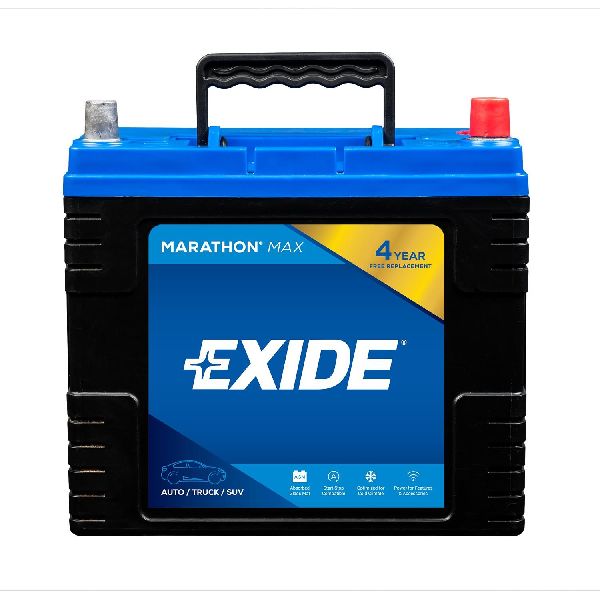
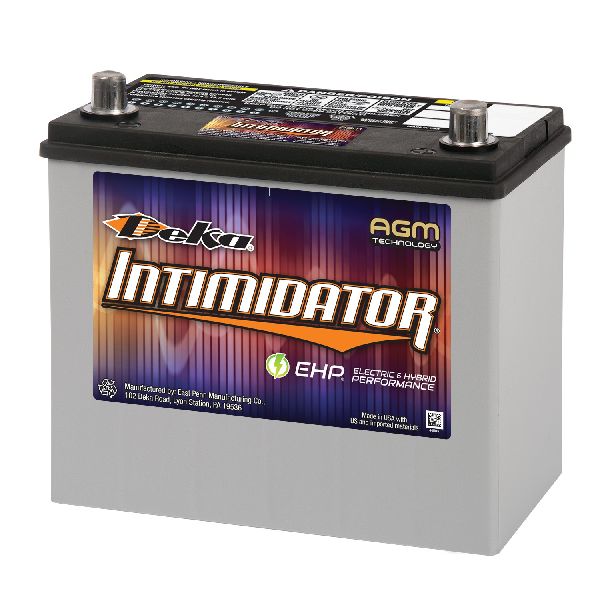
- 12V AGM Battery — This is the most frequent cause of communication faults on modern, electronically-dense Honda vehicles like the Insight.
Trusted brands: Deka, Exide, Interstate
OEM price range: $250-$350
Aftermarket price range: $200-$300 - Anti-Rodent Electrical Tape
(OEM #4019-2317)— If rodent damage is found, this Honda-specific tape is treated with capsaicin to discourage pests from chewing the wiring again.
Trusted brands: Honda OEM
OEM price range: $25-$40
Related Codes That Often Appear With This One
- U0100 — Lost Communication With ECM/PCM. This code often appears with U0001 as the Engine Control Module is a critical node on the high-speed CAN bus.
- U0121 — Lost Communication With Anti-Lock Brake System (ABS) Control Module. This indicates the ABS/VSA module has dropped off the network.
- U0155 — Lost Communication With Instrument Panel Cluster (IPC) Control Module. This explains why the dashboard lights up with multiple warnings and error messages.
Technical Service Bulletins (TSBs) & Recalls
- NHTSA Campaign ID 20V771000 (Honda Recall X95): Addresses a BCM software error on 2019-2020 models that can cause communication disruptions.
- NHTSA Campaign ID 20V798000 (Honda Recall K9E): Addresses a faulty DC-DC converter on 2020-2021 models that can prevent the 12V battery from charging.
Platform-Specific Known Issues
- A recall for 2018-2020 models (including the 2019-2020 Insight) addressed a software error in the Body Control Module (BCM) that could disrupt communication and cause multiple system malfunctions, mimicking a U0001 fault. The fix is a dealer-installed software update.
- A recall for 2020-2021 Insight models addressed a faulty DC-DC converter that could fail to recharge the 12V battery, leading to low voltage conditions that trigger communication codes.
Mechanic-Grade Diagnostic Values
- CAN Bus Resistance (Battery Disconnected) — expected: ~60 Ohms (± 5 Ohms) between Pin 6 (CAN-H) and Pin 14 (CAN-L) at the OBD-II port.. Failure: A reading of ~120 Ohms indicates an open circuit or one missing terminating resistor. A reading near 0 Ohms indicates a short between the CAN-H and CAN-L wires.
- CAN Bus Voltage (Key On, Engine Off) — expected: CAN-H (Pin 6) should be ~2.6V. CAN-L (Pin 14) should be ~2.4V.. Failure: Voltages stuck high (at battery voltage), low (at 0V), or at the same potential indicate a short to power, ground, or to each other.
- 12V Battery Voltage Drop Test — expected: A healthy battery should maintain >12.2V with accessories (lights, radio, blower fan) on for one minute with the car off.. Failure: A drop to 11.8V-11.9V under accessory load, even from a resting voltage of 12.7V, indicates a weak battery unable to provide stable voltage to the modules.
- Module Ground Resistance — expected: ≤ 0.1 Ω between the module's ground pin and a clean chassis ground point.. Failure: Higher resistance indicates a poor ground connection, which can cause a module to drop off the network.
Scan Tool Commands That Help
- Honda Diagnostic System (HDS) or equivalent J2534 device: All Module Status Check / Network Test — This is the first step when diagnosing a U0001. It provides a system-wide map of which modules are online and which are not communicating, helping to isolate the fault's location on the network.
- Honda Diagnostic System (HDS) or equivalent J2534 device: BCM/PCM Replacement & Programming / Immobilizer Setup — This function is mandatory after replacing the Body Control Module (BCM), Powertrain Control Module (PCM), or gauge cluster. It synchronizes the new module's security credentials with the vehicle's immobilizer system; failure to do so will result in a no-start condition.
Wiring & Ground Locations
- 12V Accessory Battery — Inside the center console, on the right (passenger) side.. This is a non-traditional battery location. Technicians accustomed to looking under the hood will not find it there. Access is required for testing and replacement, which is the most common fix for this code.
- Main Chassis Ground (G501) — On many Honda platforms, this is a primary ground point located behind the driver's side kick panel, near the A-pillar, bolted to bare chassis metal.. A loose or corroded main ground for the dashboard harness can cause multiple modules to lose their ground reference simultaneously, leading to network-wide communication failure.
- CAN Bus Terminating Resistors — The high-speed CAN bus has two 120-Ohm terminating resistors. They are typically integrated inside two different control modules at the physical ends of the bus, often the PCM and the Gauge Control Module (Instrument Cluster) or ABS module.. A failure of one of these internal resistors will cause the total bus resistance to read 120 Ohms instead of 60 Ohms, leading to signal reflections and communication errors. Diagnosis requires identifying and testing the modules at the ends of the bus.
- Interior Fuse Box — Located under the driver's side of the dashboard.. Contains fuses for many of the control modules on the CAN bus. A blown fuse can cause a single module to go offline, potentially triggering a U0001 if it's a critical node.
Real Owner Repair Stories
- r/hondainsight on Reddit (2020 Honda Insight Touring, 117k miles) — Multiple simultaneous warning lights: Brake System, ACC/LKAS, Collision Mitigation, Power Steering. A classic 'Christmas tree' dash.
❌ Tried (didn't work) Dealer tested the 12V battery and claimed it 'passed'., Dealer suggested a costly diagnostic for wiring issues behind the bumper due to prior water intrusion in a headlight.
✅ What actually fixed it The owner's self-diagnosis pointed to a weak 12V battery. Despite passing the dealer test, the battery voltage dropped from a resting 12.7V to 11.8V with only the accessories on. This significant voltage drop under a light load is a classic sign of a failing battery that causes these exact network communication faults. The strong implication from community feedback was to replace the battery. - CarComplaints.com (2020 Honda Insight) — While driving at highway speed, the car threw 52 failure codes at once, including U0029, U0100, U0111, U012D and many others. The car lost power and crawled to the side of the road.
❌ Tried (didn't work) Honda dealer service stated there was nothing wrong with the vehicle.
✅ What actually fixed it The complaint is a real-world example of the severity of the fault, but no final repair was listed by the owner. It serves as a strong data point for the sudden and dangerous symptoms that a CAN bus failure can cause on this vehicle.
"I Checked Everything" — The Actual Cause
- The most common scenario fitting this pattern for a U0001 on the Insight is when the 12V battery passes a standard dealer conductance or 'pass/fail' test but is actually the root cause. The definitive test is a load test or observing voltage under accessory load. A drop below 12.0V with just lights and radio on is a strong indicator the battery is too weak to maintain stable module communication, even if it tests 'good' at rest.
OEM Part Supersession History
38809-TXM-A11→38809-TXM-AB2— Part revision by the manufacturer, likely to address hardware or firmware issues.
Heads up: These parts are for EX/Touring trims. When replacing, always use the latest superseded part number for best results.38809-TXM-AA1→38809-TXM-AA2— Part revision by the manufacturer.
Heads up: When replacing, always use the latest superseded part number for best results.
Model Year Variations Within This Range
- 2021-2022: For 2021, Honda replaced the passenger-side 'LaneWatch' camera system with a conventional radar-based Blind Spot Information (BSI) system with indicators on both side mirrors. This represents a change in modules and wiring on the vehicle's network compared to the 2019-2020 models.
Diagnostic Flowchart
Other Known Issues on This Vehicle
Issues unrelated to this code that are worth knowing about as an owner of this generation:
- Defective Low-Pressure Fuel Pump 🔴 High — Affects 2019-2020 models. A large-scale recall was issued due to the risk of the pump failing and causing an engine stall while driving. (Ref: NHTSA Campaign ID: 23V-858 (Honda Recalls KGC, KGD))
- Failing A/C Condenser 🟠 Medium — Widespread issue across many Honda models of this era, including the 2019-2021 Insight. Tiny holes can form, causing refrigerant to leak out. (Ref: Honda Service Bulletin 21-016; Warranty Extension (10 years/unlimited miles))
- Sticky or Notchy Steering 🟠 Medium — While a major recall primarily targets newer (2022+) Hondas, the underlying issue with the steering gearbox worm gear has been noted by owners of this generation. It can cause a momentary increase in steering effort. (Ref: Related to Honda TSB 23-037 for newer models, but describes the same symptoms.)
- Soy-Based Wiring Attracting Rodents 🟡 Low — Common to many modern Hondas. The biodegradable wire coating can attract rodents, leading to chewed wires and various electrical faults. (Ref: No recall, but Honda sells specific rodent-deterrent tape (P/N 4019-2317).)
- Body Control Module (BCM) Software Error 🟠 Medium — Affects 2018-2020 models. A software error can disrupt communication, causing malfunctions of wipers, lights, and other systems. (Ref: NHTSA Campaign ID: 20V771000 (Honda Recall X95))
Used vs. New Parts: Buying Guide for This Vehicle
When a used part is the smart pick: For a U0001 code, a used OEM control module (like a BCM or PCM) from a reputable salvage yard can be a cost-effective option, often saving hundreds of dollars over a new part. However, this is only recommended if you have confirmed the module is the fault and have access to professional programming tools.
Donor-vehicle mileage cap: roughly under 80000 miles for the part to have meaningful remaining life.
What to inspect on the donor part:
- Verify the donor vehicle's VIN to ensure it matches the exact year, model, and trim level.
- Inspect the part for any signs of water damage, fire damage, or physical cracks in the casing or connectors.
- Ask for a warranty (typically 30-90 days) from the salvage yard.
- Ensure all connector pins are straight and free of corrosion.
OEM-only on this vehicle (don't cheap out):
- 12V AGM Battery: Never buy a used battery. A new, correct-spec AGM battery is critical for the Insight's electrical stability.
- Body Control Module (BCM): While a used OEM module is acceptable, avoid new aftermarket BCMs. They often have software incompatibilities and can be impossible to program correctly to the vehicle's immobilizer and custom features.
Aftermarket brands forum-validated for this vehicle:
- For the 12V AGM Battery: Deka, Exide, Interstate (as noted in Pass 2).
Brands owners have reported issues with on this vehicle:
- Off-brand, no-name electronic modules found on marketplaces like eBay or Amazon. They are a significant risk for being dead-on-arrival or causing further network issues.
Real Owner Stories
Aggregated from forums and TSBs cited above. Mileages and costs reflect what owners reported in those sources.
2020 Honda Insight
Symptoms: Multiple system warnings appeared on the dashboard (Christmas tree effect). The 12V battery read 12.7V at rest but dropped to 11.8V under accessory load.
What fixed it: The dealer initially claimed the battery passed, but the symptoms and low voltage under load strongly point to a weak 12V accessory battery as the root cause.
Source hint: r/hondainsight on Reddit: '2020 Insight – Multiple System Warnings + Low Voltage Under Load'
2020 Honda Insight
Symptoms: Multiple U-codes including U0100, indicating a network communication failure.
What fixed it: The report identifies a real-world instance of network communication failure on this platform, often related to the BCM software or 12V battery health.
Source hint: NHTSA ODI #11496856
2019-2020 Honda Insight
Symptoms: Communication disruptions and multiple system malfunctions mimicking a U0001 fault.
What fixed it: A dealer-installed software update for the Body Control Module (BCM).
Source hint: NHTSA Campaign ID 20V771000 (Honda Recall X95)
Related OBD-II Codes
Frequently Asked Questions
My 2019 Honda Insight has a 'Christmas tree' dash and U0001. Is there a recall for this?
My 2020 Insight's battery keeps dying, leading to communication errors. Could it be the charging system?
The dealer says my 12V battery passed a voltage test, but I still have U0001 symptoms. Should I trust the test?
How can I prevent rodents from chewing the wiring on my 2021 Insight?
What should the resistance be at the OBD-II port if the CAN network is healthy?
Can a faulty wheel speed sensor cause a U0001 code on this vehicle?
Helpful Videos
Used OEM Parts in Stock

New Aftermarket Parts Available

The information in this article is provided for general reference and educational purposes only. Vehicle specifications, procedures, and part compatibility can vary by production date, trim level, and region. Always consult your vehicle's factory service manual and verify part numbers before purchasing or performing repairs. Safety-critical components such as airbags, seat belts, and braking systems should be installed by a qualified professional.
- Honda Insight:
- 🎬 Helpful Videos
- 🛍️ Shop This Part
- What's Unique About the 2019-2022 Honda Insight
- Symptoms You May Notice
- Most Likely Causes
- Rare But Worth Checking
- Diagnosis Steps
- Parts You'll Likely Need
- Related Codes That Often Appear With This One
- Technical Service Bulletins (TSBs) & Recalls
- Platform-Specific Known Issues
- Mechanic-Grade Diagnostic Values
- Scan Tool Commands That Help
- Wiring & Ground Locations
- Real Owner Repair Stories
- "I Checked Everything" — The Actual Cause
- OEM Part Supersession History
- Model Year Variations Within This Range
- Diagnostic Flowchart
- Other Known Issues on This Vehicle
- Used vs. New Parts: Buying Guide for This Vehicle
- Real Owner Stories
- 2020 Honda Insight
- 2020 Honda Insight
- 2019-2020 Honda Insight
- Related OBD-II Codes
- Frequently Asked Questions
- 🎟️ Get 5% Off