

U0001 on 2015-2017 Chrysler 200: High-Speed CAN Bus Communication Failure Causes and Fixes
Code U0001 on a 2015-2017 Chrysler 200 means there's a critical failure on the high-speed communication network (CAN C Bus). This often points to wiring issues, a faulty module like the TIPM/BCM, bad grounds, or a failing Star Connector. Diagnosis is complex, but checking for software updates and inspecting known wiring chafe points are key steps before replacing expensive modules.
- U0001 is a critical network failure code on the 2015-2017 Chrysler 200, not a simple sensor issue.
- Do not drive the vehicle, as essential systems like the engine, transmission, and ABS may fail without warning.
- The most common causes are wiring problems, a bad ground, or a faulty TIPM/BCM.
- Diagnosis is complex and not recommended for DIYers without advanced tools and knowledge of CAN bus systems.
- Before replacing any expensive modules, ensure the battery is healthy, grounds are clean, and the wiring harness has been thoroughly inspected.
What's Unique About the 2015-2017 Chrysler 200
For this generation of Chrysler 200, the U0001 code is often linked to issues with the Totally Integrated Power Module (TIPM), which acts as a central hub for electrical power and network communications. An owner complaint filed with the NHTSA specifically cited a 'TIPM MODULE U0001' on a 2015 model, highlighting this as a known weak point. Furthermore, the CAN bus network relies on central splice packs or 'Star Connectors' to route communication. A failure of one of these connectors, sometimes located behind the glove box, can bring the entire network down, a repair documented by owners on related platforms.
Symptoms You May Notice
- Multiple warning lights on the dashboard (Check Engine, ABS, Airbag, Traction Control).
- Engine may stall, crank but not start, or not crank at all.
- Transmission may get stuck in one gear (limp mode) or shift to neutral on its own.
- Loss of power features like windows, radio, or climate control.
- Scan tool shows 'No Communication' with one or more modules.
- Seat belt indicator stays on, as mentioned in an NHTSA complaint for a 2016 model.
- 'Service Transmission' message on the instrument cluster.
- Replacing a single module (like the TCM or ABS module) without first confirming the integrity of the wiring harness and power/ground supplies. The problem is often in the network itself, not the individual components.
- Replacing the battery to fix the issue, only for the code to return. A weak battery can trigger the code, but the root cause might be a persistent wiring or module fault that was simply exposed by the low voltage.
Most Likely Causes
- Wiring Harness Damage or Corrosion 🔴 High Probability Wiring harnesses can chafe against chassis components or suffer from corrosion, especially at connectors or splice points, disrupting the sensitive CAN bus signals. The twisted pair of CAN wires can also be damaged by rodent chewing or heat.
How to confirm: Visually inspect the CAN bus wiring (often a twisted pair of wires, e.g., white with a blue stripe and solid white) for damage, especially around the engine, transmission, and under the fuse box (TIPM). Check connectors for corrosion at the BCM, PCM, and the main CAN bus splice connectors (Star Connectors). Use a multimeter to check for ~60 ohms of resistance between CAN High and CAN Low pins (often 6 and 14) at the OBD-II port with the battery disconnected. A reading of 120 ohms indicates an open circuit or a missing termination resistor, while ~0 ohms means a short.
Typical fix: Repairing the damaged section of wire or cleaning/replacing the corroded connector.
Est. part cost: $10-$100 - Faulty Totally Integrated Power Module (TIPM) / Body Control Module (BCM) 🟡 Medium Probability The TIPM is a known failure point on many Chrysler products, acting as a central gateway and power distribution center. An internal failure can disrupt the entire CAN network. An NHTSA complaint for a 2015 model specifically links U0001 to the TIPM. A recall (15V461000) for early 2015 models addressed faulty electrical connectors on the Power Distribution Center (PDC), which is part of the TIPM.
How to confirm: This is difficult without professional tools. A technician would use a scan tool to see if the BCM/TIPM is offline and may try to isolate it from the network to see if communication is restored. Intermittent electrical issues like wipers, horn, or door locks acting erratically can also point to a failing TIPM.
Typical fix: Replacement of the TIPM/BCM, which requires programming to the vehicle's VIN.
Est. part cost: $300-$800 - Poor Battery Voltage or Bad Grounds 🟡 Medium Probability Control modules require a stable voltage to communicate properly. A weak battery, corroded terminals, or a failing alternator can cause voltage drops that lead to network errors. These cars are sensitive to low voltage, which can cause a cascade of communication codes.
How to confirm: Test the battery voltage with a multimeter; it should be above 12.4V with the engine off. Check that the charging system provides 13.5V or more at idle. Inspect and clean all major ground connections from the battery to the chassis and engine block. A known weak point is the main chassis ground, and adding a supplementary ground wire is a common fix.
Typical fix: Charging or replacing the battery, cleaning terminals, or repairing/adding ground straps.
Est. part cost: $5-$250 - Faulty Control Module (PCM, TCM, ABS, etc.) ⚪ Low Probability Any single module on the CAN bus can fail internally, creating electrical 'noise' that disrupts communication for all other modules. The TCM is a notable suspect as it can be exposed to high heat on the transmission housing.
How to confirm: A technician can disconnect modules one by one from the CAN bus network (often at a central 'Star Connector') to see if the network communication is restored. The module whose disconnection restores the network is the likely culprit.
Typical fix: Replace the faulty module and program it to the vehicle.
Est. part cost: $200-$1000+
Rare But Worth Checking
- Software/Firmware Glitch: Sometimes, communication protocols can be disrupted by software issues. Chrysler TSB 21-019-17 REV. A for a platform mate lists U0001 as a code that may be resolved by a PCM software update. It's worth checking with a dealer for any available updates before replacing expensive hardware.
- Failed CAN Bus Termination Resistor: The CAN bus has two 120-ohm resistors at either end of the network. If one fails, the total network resistance will read 120 ohms instead of the correct 60 ohms, causing communication to fail. These resistors are typically integrated into modules like the PCM or BCM/TIPM, so a module replacement is required.
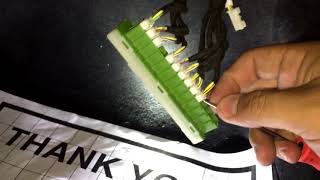
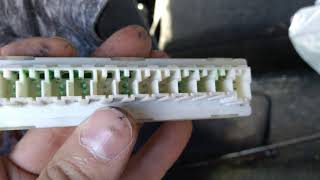
- Faulty Star Connector / Splice Pack: The CAN bus wiring from various modules meets at a central point called a Star Connector or splice pack. A poor connection, internal corrosion, or failure in this inexpensive part can take down the whole network. On some Chrysler vehicles, one is located behind the glove box.
Diagnosis Steps
- Check Battery and Grounds: Ensure the battery has a full charge (12.4V+) and that all battery terminals and main ground straps are clean and tight. A weak battery is a common trigger for network codes.
- Perform a Full Vehicle Scan: Use a professional-grade scan tool to see which modules are reporting 'no communication'. This helps narrow down the problem area and check for relevant TSBs.
- Check for Software Updates: Contact a Chrysler dealer or use a high-end scan tool to check if the PCM, BCM, or other modules have pending software updates, as noted in TSBs for similar platforms.
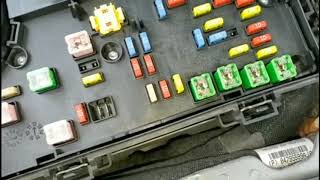
- Check Fuses: Inspect all fuses related to the various control modules, particularly in the TIPM (fuse box). A blown fuse can take a module offline.
- Inspect the CAN Bus Wiring: Visually inspect harnesses in the engine bay and under the dash for any signs of chafing, melting, or corrosion. Pay close attention to wiring near the transmission and under the TIPM.
- Measure Bus Resistance: Disconnect the battery. At the OBD-II port, measure the resistance between Pin 6 (CAN High) and Pin 14 (CAN Low). A healthy network should read approximately 60 ohms. A reading of 120 ohms indicates a missing termination resistor or an open circuit. A reading near 0 ohms indicates a short between the two wires. Note: On some Chrysler architectures, the main CAN-C bus is not directly wired to the DLC, requiring this test to be performed at a module connector like the ABS module.
- Locate and Inspect Star Connectors: Identify the location of the CAN bus Star Connectors (splice packs). One common location is behind the glove box. Disconnect, inspect for corrosion, and reseat the connectors.
- Isolate Modules: If the resistance is incorrect or the issue is intermittent, the next step is to disconnect modules one by one from the network's Star Connectors to find the one that is causing the fault. This is an advanced step best left to professionals.
Parts You'll Likely Need
- Totally Integrated Power Module (TIPM) / Body Control Module (BCM)
(OEM #68263035 (or superseding numbers like 68263035AC), 68263031)— This module is a central communication hub and a common failure point on Chrysler vehicles, as noted in an NHTSA owner complaint and numerous repair forums. Its failure can bring down the entire network.
Trusted brands: Mopar
OEM price range: $500-800
Related Codes That Often Appear With This One
- U0140 — Lost Communication With Body Control Module (BCM). This often appears with U0001 as the BCM/TIPM is a central hub on the CAN bus.
- U0100 — Lost Communication With ECM/PCM. If the engine controller can't talk to other modules, this code will set alongside the general network failure code.
- U0101 — Lost Communication with TCM. Indicates the transmission controller is offline, a common issue with this platform.
- U0121 — Lost Communication With Anti-Lock Brake System (ABS) Control Module. This points to the ABS module being offline.
Technical Service Bulletins (TSBs) & Recalls
- 21-019-17 REV. A: This TSB, issued for the 2015 Jeep Cherokee (a platform mate), lists U0001 'Can C Bus' among a series of codes that may be resolved by a PCM software update. This suggests that some U0001 events on the Chrysler 200 could be software-related rather than a hardware failure.
Platform-Specific Known Issues
- A Technical Service Bulletin for a related 2015 platform (Jeep Cherokee KL), TSB 21-019-17 REV. A, lists U0001 'Can C Bus' as a code that may be stored in memory and potentially resolved with a PCM software update, suggesting it's a known issue within the FCA family that isn't always hardware-related.
- Owners on forums for related Chrysler vehicles have successfully fixed U0001 by replacing a faulty CAN bus Star Connector, a central wiring hub, which can fail and disrupt all communications.
Mechanic-Grade Diagnostic Values
- CAN Bus Network Resistance — expected: ~60 Ω (with battery disconnected, measured between CAN-H and CAN-L pins). Failure: A reading of ~120 Ω indicates an open circuit or one missing terminating resistor. A reading of ~0 Ω indicates a short between the CAN-H and CAN-L wires.
- CAN Bus Bias Voltage — expected: ~2.5 V (Key On, Engine Off, measured from either CAN line to ground). Failure: A waveform resting near 0V indicates the circuit is being pulled low by a short or faulty module.
- Individual Module Internal CAN Resistance — expected: 28kΩ – 50kΩ (measured between the module's CAN-H and CAN-L pins). Failure: A reading outside this range suggests the module's internal CAN transceiver is faulty.
- Module CAN lines to Ground Resistance — expected: Mega-ohms or Open Line (OL) (measured from the module's CAN-H or CAN-L pin to chassis ground). Failure: Low resistance indicates a short to ground within the module, often caused by electrical damage (lightning, welding).
Hidden / Shadow Codes Worth Checking
- B222C: Vehicle Configuration Not Programmed. This code can set in the BCM after a used module is installed, indicating it has not been properly configured to the vehicle's options and VIN. (see via This code is visible with an advanced, dealer-level scan tool like wiTECH or specialized aftermarket tools (e.g., Autel with CDA software). It may not appear on basic OBD-II readers.)
Scan Tool Commands That Help
- wiTECH or equivalent advanced scanner: Network Topology / Bus Scan — Use this function first to get a visual map of all control modules on the network and see which ones are not responding (often colored red). This is the fastest way to identify the scope of the communication failure.
- Chrysler Diagnostic Application (CDA) or equivalent: BCM Configuration Reset / Write VIN — This is required when installing a used Body Control Module (BCM). You must first reset the configuration, then write the correct VIN to the module to prevent anti-theft issues and clear codes like B222C.
Wiring & Ground Locations
- CAN Bus Star Connector — Often located behind the glove box or passenger kick panel area. It's a small plastic housing where multiple wiring harness connectors plug in, joining different branches of the CAN bus together.. This is the central diagnostic point for the network. A fault can be isolated by unplugging branches one by one until communication is restored on the rest of the network. The connector itself can also fail due to internal corrosion or intermittent faults.
- G905A — On 2015 FWD 2.4L models, this ground point is located below the driver-side headlight.. A poor ground at this location can affect any modules or sensors grounded here, potentially causing communication errors.
- G904A — Associated with the automatic transmission circuit.. A bad ground for the transmission controls can cause the TCM to drop off the network, a common source of U-codes on this platform.
- Supplemental Transmission Ground — This is a user-added ground strap, typically running from the negative battery terminal to a spare bolt on the transmission housing (e.g., a 16mm transmission mount bolt).. The factory ground path can become insufficient over time. Adding a redundant, heavy-gauge ground wire has been shown to resolve intermittent no-start and electrical issues related to poor grounding.
Real Owner Repair Stories
- YouTube user 'The Detail Guard' (2013 Chrysler 200 (similar platform and issue)) — Intermittent no-start, no-crank condition.
❌ Tried (didn't work) Replacing the battery did not fix the issue.
✅ What actually fixed it The owner added a 4-gauge supplementary ground wire from the negative battery post to a 16mm bolt on the transmission housing. This permanently resolved the no-start problem. - YouTube user 'Pine Hollow Auto Diagnostics' (2015 Chrysler 200) — No communication on the CAN-IHS bus (lower speed, but same diagnostic principle). Power windows, radio, and other features were inoperative.
❌ Tried (didn't work) Initial scan showed widespread communication loss.
✅ What actually fixed it The fault was traced to the Star Connector. Green corrosion was found inside the connector for the BCM leg of the harness, which was pulling the entire network down. Cleaning the corrosion and reseating the connector restored communication. - YouTube user 'Rob the Mechanic' (RAM Truck (similar Chrysler CAN architecture)) — Entire CAN-C network would crash intermittently after driving exactly 33 miles, setting dozens of communication codes.
❌ Tried (didn't work) Disconnecting individual modules one-by-one did not consistently isolate the fault., Testing the terminating resistors in the Star Connector showed correct 60/120 ohm readings.
✅ What actually fixed it The Star Connector itself was faulty. Despite its resistors testing good, the connector had an internal, intermittent failure that only occurred after a specific drive cycle. Replacing the Star Connector resolved the issue.
OEM Part Supersession History
68263035→68263035AA, 68263035AB, 68263035AC— Revisions and updates to the TIPM hardware/firmware.
Heads up: Ensure the replacement part number is compatible with your specific vehicle options (e.g., engine size, with/without Stop-Start feature).P68263035AA (example)→RL263035AA (example)— Part is a remanufactured unit supplied by Chrysler.
Heads up: An 'RL' prefix indicates a Chrysler-rebuilt part and is functionally equivalent to the original part number it replaces.
Model Year Variations Within This Range
- 2015: The 2015 model year has a significantly higher number of owner complaints related to electrical, engine, and transmission problems compared to 2016 and 2017 models. A specific recall (NHTSA 15V461000) for early 2015 models addresses a faulty electrical connector in the Power Distribution Center (TIPM) that can cause intermittent power failures, a direct potential cause for U0001.
Diagnostic Flowchart
Other Known Issues on This Vehicle
Issues unrelated to this code that are worth knowing about as an owner of this generation:
- ZF 9-Speed Automatic Transmission Problems 🔴 High — Very common on 2015 models, less so on later years but still present. Issues include harsh shifting, lunging, unexpectedly shifting to neutral, and premature failure. (Ref: Recall S55 / NHTSA 16V-529 was issued to address some transmission concerns. Multiple software updates have also been released.)
- Excessive Oil Consumption (2.4L Tigershark Engine) 🔴 High — Widespread issue affecting many vehicles with this engine, often consuming a quart of oil in under 2000 miles. Can lead to engine stalling if oil level becomes critically low. (Ref: Subject of class-action lawsuit (Wood, et al. v. FCA US, LLC) and Customer Service Notification (CSN) W80, which extended warranties and provided for engine long block replacement in some cases.)
- Leaking Oil Filter Housing/Cooler (3.6L Pentastar V6) 🟠 Medium — A common failure point. The plastic housing, located in the valley of the engine, can crack or warp from heat, causing significant oil leaks.
- General Electrical Problems 🟠 Medium — Owners report a variety of electrical gremlins, including malfunctioning instrument panels, Uconnect system glitches, and issues related to the TIPM. (Ref: Multiple recalls for specific electrical issues, such as 14V-634 (door wiring harness).)
Used vs. New Parts: Buying Guide for This Vehicle
When a used part is the smart pick: A used TIPM/BCM from a junkyard can be a cost-effective option IF you have access to advanced programming tools or are buying a complete set (PCM, BCM, Key) from the same donor car. For most DIYers, a remanufactured unit that is pre-programmed to your VIN is a much safer and simpler choice.
Donor-vehicle mileage cap: roughly under 80000 miles for the part to have meaningful remaining life.
What to inspect on the donor part:
- Check for any signs of water intrusion or corrosion on the casing and connectors.
- Ensure the donor vehicle was not in a flood or had major fire damage.
- If possible, get the VIN of the donor car to verify its original configuration.
- Verify the part number exactly, including the trailing letters (AA, AB, etc.), though some are interchangeable.
OEM-only on this vehicle (don't cheap out):
- Totally Integrated Power Module (TIPM) / Body Control Module (BCM)
Aftermarket brands forum-validated for this vehicle:
- Mopar (OEM Remanufactured)
- MAKS TIPM Rebuilders (Remanufactured Service)
- GoECM (Remanufactured Service)
- Circuit Board Medics (Repair Service)
Brands owners have reported issues with on this vehicle:
- Unbranded, non-reputable sellers on platforms like eBay or Amazon without a clear warranty or programming service. Installing a used BCM without proper programming can trigger the vehicle's anti-theft system and prevent it from starting.
Real Owner Stories
Aggregated from forums and TSBs cited above. Mileages and costs reflect what owners reported in those sources.
2015 Chrysler 200
Symptoms: Instrument cluster going 'bonkers', shifter lights flashing, and multiple communication codes including U0101.
What fixed it: The issue was identified as a transmission programming problem or a faulty module causing network interference.
Source hint: youtube.com video titled '2015 Chrysler 200 | Transmission program problems'
2014 Jeep Cherokee (Platform Mate)
Symptoms: No-start condition followed by a check engine light with U0001 stored in memory.
What fixed it: The owner replaced the battery, though the code returned, suggesting low voltage triggered the initial fault.
Source hint: jeepcherokeeforum.com thread titled '2014 KL CAN BUS codes'
Chrysler Pacifica (Related Platform)
Symptoms: Various dashboard lights come on like a Christmas tree, car goes into limp mode with no power, and becomes unsafe to drive.
What fixed it: Replacing a faulty Star Connector (central CAN bus hub) located above the passenger glove compartment.
Cost: $30-$30
Source hint: pacificaforums.com thread titled 'Code: U0001-00 CAN C Bus, can't drive car, $30 fix.'
Related OBD-II Codes
Frequently Asked Questions
Is there a recall for the 2015 Chrysler 200 that causes the U0001 code?
Could a software update fix the U0001 'Can C Bus' code on my 2015 Chrysler 200?
Why is my 2016 Chrysler 200 showing a seat belt indicator and a U0001 code?
Where is the 'Star Connector' located on the Chrysler 200, and can it cause U0001?
Can a bad battery cause my Chrysler 200 to show 'Service Transmission' and U0001?
Helpful Videos
We Have This Part in Stock



The information in this article is provided for general reference and educational purposes only. Vehicle specifications, procedures, and part compatibility can vary by production date, trim level, and region. Always consult your vehicle's factory service manual and verify part numbers before purchasing or performing repairs. Safety-critical components such as airbags, seat belts, and braking systems should be installed by a qualified professional.
- Chrysler 200:
- 🎬 Helpful Videos
- 🛍️ Shop This Part
- What's Unique About the 2015-2017 Chrysler 200
- Symptoms You May Notice
- Most Likely Causes
- Rare But Worth Checking
- Diagnosis Steps
- Parts You'll Likely Need
- Related Codes That Often Appear With This One
- Technical Service Bulletins (TSBs) & Recalls
- Platform-Specific Known Issues
- Mechanic-Grade Diagnostic Values
- Hidden / Shadow Codes Worth Checking
- Scan Tool Commands That Help
- Wiring & Ground Locations
- Real Owner Repair Stories
- OEM Part Supersession History
- Model Year Variations Within This Range
- Diagnostic Flowchart
- Other Known Issues on This Vehicle
- Used vs. New Parts: Buying Guide for This Vehicle
- Real Owner Stories
- 2015 Chrysler 200
- 2014 Jeep Cherokee (Platform Mate)
- Chrysler Pacifica (Related Platform)
- Related OBD-II Codes
- Frequently Asked Questions
- 🎟️ Get 5% Off