

U0001 on 2010-2017 Chevrolet Equinox: High-Speed Communication Bus Failure Causes and Fixes
Code U0001 on a 2010-2017 Equinox means there's a critical communication failure between essential electronic modules on the High-Speed CAN Bus. This is frequently caused by wiring harness damage (chafing), a faulty ground connection, or a single failed module like the BCM or EBCM. Diagnosis is complex and usually requires professional service to isolate the fault.
- U0001 is a serious network failure, not a simple part replacement. Do not drive the vehicle, as critical safety systems may be offline.
- The most common causes are physical problems: damaged wires, corroded connectors, or bad ground connections.
- Diagnosis is a process of elimination. A professional will need to test the network's integrity and isolate the source of the failure.
- Do not replace expensive modules like the ECM or BCM without confirming they are the root cause; wiring is a more likely culprit.
- Always start with the simplest checks: battery health and visual inspection of the wiring harness for obvious damage.
What's Unique About the 2010-2017 Chevrolet Equinox
For the second-generation (2010-2017) Equinox and its platform-mate, the GMC Terrain, the U0001 code does not point to a single, common part failure. Instead, it reflects a general GM network architecture issue. The problem is typically a breakdown in the vehicle's complex wiring harness, often due to chafing under the underhood fuse block or near engine/transmission mounts, or the failure of one of several interconnected control modules. Unlike a simple sensor failure, resolving a U0001 code requires a systematic electrical diagnosis to locate the source of the communication breakdown, as many healthy modules will report errors when one component brings the network down.
Symptoms You May Notice
- Multiple warning lights illuminated on the dashboard simultaneously (Check Engine, ABS, StabiliTrak, etc.)
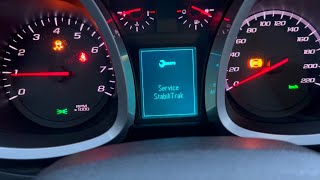
- "Service StabiliTrak", "Service 🎬 Watch: How to diagnose a Service Stabilitrak warning on the EquinoxPower Steering", or "AWD Off" messages on the driver information center.
- Vehicle may not start or may stall while driving.
- Loss of power steering assist, making steering very heavy.
- Transmission may shift erratically, get stuck in one gear, or go into a default mode.
- Instrument cluster gauges (speedometer, tachometer) may drop to zero or behave erratically.
- Inability to communicate with the vehicle's computers using a standard OBD-II scanner, or only being able to see a few modules.
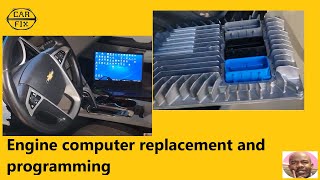
- Replacing the ECM without proper diagnosis. 🎬 Watch: Step-by-step ECM replacement and programming guide for the Equinox While the ECM can be the cause, the problem is just as likely to be in the wiring, a ground, or another module on the network.
- Replacing a single module that is showing errors without confirming it is the root cause. Often, one failed module (like the BCM or EBCM) will cause other healthy modules (like the TCM or PSCM) to report communication errors.
- Replacing the battery without testing grounds. While a weak battery can cause these codes, bad grounds can produce identical symptoms even with a new battery.
Most Likely Causes
- Damaged or Corroded Wiring Harness 🔴 High Probability Wiring harnesses, particularly under the underhood fuse block and near the transmission or engine mounts, are known to chafe against brackets or other components due to engine vibration. Coolant leaks from the reservoir can also drip onto harnesses below, causing corrosion over time.
How to confirm: A thorough visual inspection of the main wiring harnesses between the ECM, BCM, EBCM, and underhood fuse block. Look for chafing, corrosion, or pinched wires. A multimeter is needed to check for continuity and shorts on the CAN Hi (Pin 6) and CAN Lo (Pin 14) wires at the OBD-II port.
Typical fix: Repairing the specific section of damaged wire or cleaning/replacing a corroded connector. This requires soldering, heat-shrinking, and re-looming the harness to prevent future damage.
Est. part cost: $10-$50 for wiring repair supplies - Faulty Control Module 🟡 Medium Probability Any module on the high-speed network (ECM, BCM, EBCM/ABS, TCM) can fail internally. The Body Control Module (BCM) and Electronic Brake Control Module (EBCM) are frequently cited as culprits that can flood the network with bad data or stop communicating, bringing down the entire system. The EBCM is particularly susceptible to failure from heat due to its proximity to the catalytic converter.
How to confirm: Using a professional scan tool to see which modules are not responding. The diagnostic process involves systematically disconnecting modules one by one while monitoring CAN bus resistance (should be 60 ohms) to see if the network is restored. The last module disconnected before the network returns is the likely cause.
Typical fix: Replacing the failed module. The new module will almost always require programming by a dealer or qualified shop to match the vehicle's VIN and options (a process called SPS programming).
Est. part cost: $200-$800+ depending on the specific module (e.g., BCM, EBCM). - Poor Power or Ground Connection 🟡 Medium Probability Main ground straps for the engine and chassis can corrode or loosen, leading to unstable voltage for the vehicle's electronic modules. Specific ground packs (like G112 for the PCM) can be a point of failure.
How to confirm: Check that the battery terminals are clean and tight and that the battery voltage is above 12.4V with the engine off. Use a multimeter to perform a voltage drop test on the main engine and chassis ground connections to ensure they are under 0.2V. Inspect and test specific ground points referenced in service manuals, such as G112.
Typical fix: Cleaning battery terminals and cable ends, or cleaning/tightening/replacing corroded or broken ground straps.
Est. part cost: $5-$40 - Aftermarket Electronics Interference ⚪ Low Probability Improperly installed remote starters, alarms, or even insurance/fleet telematics devices plugged into the OBD-II port can disrupt CAN bus communication.
How to confirm: Disconnect any and all aftermarket electronic devices, especially those connected to the OBD-II port or spliced into the vehicle's wiring. See if the U0001 code clears and normal operation returns.
Typical fix: Permanently removing the aftermarket device or having it professionally re-installed correctly.
Est. part cost: $0 if removing
Rare But Worth Checking
- Faulty CAN Bus Termination Resistor: The high-speed CAN bus has a 120-ohm resistor at each end to ensure signal integrity. On the Equinox/Terrain, one is typically integrated into the ECM, and the other is often in the Electronic Brake Control Module (EBCM/ABS) or a separate, standalone resistor in the rear of the vehicle near the fuel pump control module. If one of these fails or its circuit is open, the total network resistance will read 120 ohms instead of the correct 60 ohms, causing communication failure.
Diagnosis Steps
- Check Battery Health & Grounds: Ensure the battery is fully charged (12.4V+ engine off) and terminals are clean and tight. Perform a voltage drop test on the main engine-to-chassis and battery-to-chassis ground cables.
- Perform a Full System Scan: Use a professional scan tool to request communication from all vehicle modules. Note which modules are not responding. A common pattern is losing communication with the EBCM, PSCM, and others, while still being able to talk to the ECM and BCM.
- Check for Other Codes: Look for other 'U' codes (e.g., U0121, U0140) which can help pinpoint the area of the failure. Also look for shadow codes like U1814 (Powertrain Wake Up Circuit fault) which may be present.
- Inspect Wiring (Known Chafe Points): Visually inspect the main wiring harnesses. Pay extremely close attention to the area under the under-hood fuse block (X50A connector area) and where the harness routes near the transmission and engine mounts. Also check the harness near the parking brake pedal assembly.
- Check CAN Bus Resistance: Disconnect the battery. Use a multimeter to measure the resistance between Pin 6 (CAN-H) and Pin 14 (CAN-L) on the OBD-II port. A healthy network should read approximately 60 ohms. A reading of 120 ohms suggests an open circuit or a failed termination resistor/module. A reading near 0 ohms indicates a short circuit between the two CAN wires.
- Isolate the Faulty Module: If resistance is incorrect (e.g., 120 ohms or 0 ohms), begin disconnecting high-speed CAN modules one at a time and re-testing resistance. Refer to a service manual or wiring diagram for module locations (start with EBCM, then BCM, etc.). When the resistance returns to 60 ohms, the last module disconnected is the likely source of the fault.
- Check Power and Grounds at Modules: If wiring and resistance seem okay, but a module won't communicate, use a wiring diagram to check for proper power and ground at the connectors of the non-communicating modules. A bad ground at the module itself can prevent it from powering on.
Parts You'll Likely Need
- Body Control Module (BCM)
(OEM #23281923 (Example for 2015 Equinox, verify with VIN))— The BCM is a central hub for communication and is a common failure point that can bring down the network, causing a U0001 code and widespread electrical issues like non-working locks, lights, and gauges.
Trusted brands: ACDelco (OEM), Dorman - Electronic Brake Control Module (EBCM)
(OEM #22901453 (Example, verify with VIN))— The EBCM is a critical node on the high-speed CAN bus and a frequent point of failure. Its failure will set a U0001 and often a U0121, disabling ABS and StabiliTrak. Heat from the nearby catalytic converter can cause internal solder joints to fail.
Trusted brands: ACDelco (OEM), Cardone (Remanufactured), Dorman - Wiring Harness Repair Supplies — Given the high probability of chafed or corroded wires, especially under the fuse block or near the transmission, having solder, heat shrink, and TESA tape is often necessary for a permanent repair.
Trusted brands: 3M, TESA
Related Codes That Often Appear With This One
- U0100 — Lost Communication With ECM/PCM
- U0101 — Lost Communication with TCM
- U0121 — Lost Communication With Anti-Lock Brake System (ABS) Control Module. This is very common with U0001.
- U0140 — Lost Communication With Body Control Module (BCM)
- C0561 — System Disabled Information Stored. Often logged by the EBCM when communication issues are present.
Technical Service Bulletins (TSBs) & Recalls
- GM Corporate Bulletin #13-08-116-001H: This bulletin addresses a wide range of intermittent electrical issues, including communication U-codes, that can be caused by aftermarket devices plugged into the ALDL (OBD-II) port. It warns that these devices can cause bus errors and advises technicians to remove them as a first step in diagnosis.
- GM Preliminary Information Bulletin #PIP5589A (and subsequent versions): While not public-facing, this bulletin is well-known among technicians for guiding diagnosis of various no-start/no-communication issues on GM LAN networks, often pointing towards wiring, connectors, or specific modules like the BCM.
Platform-Specific Known Issues
- A known chafe point for the main wiring harness is underneath the under-hood fuse block. Over time, vibrations can cause the harness to rub against the body or brackets, shorting out the CAN bus wires.
- In a documented case on a 2017 Equinox that had been in an accident, a U0121 code was caused by an internal short in the Body Control Module (BCM) on the wake-up circuit, which prevented other modules like the EBCM and PSCM from communicating.
- Owners on forums have reported chasing communication issues for years, with dealers replacing multiple parts. In one instance, a user on ChevroletForum.com traced the issue to poor solder joints inside the ECM itself after multiple dealer visits failed to find the cause.
Mechanic-Grade Diagnostic Values
- CAN Bus Resistance (Battery Disconnected) — expected: ~60 Ohms (between Pin 6 and Pin 14 of OBD-II port). Failure: 120 Ohms indicates an open circuit or missing termination resistor. ~0 Ohms indicates a short between the CAN High and Low wires.
- CAN High Voltage (Key On, Engine Off) — expected: ~2.5V at rest, pulsing to 3.75V during communication. Failure: Voltage significantly different from 2.5V at rest, or no voltage change, indicates a bus problem.
- CAN Low Voltage (Key On, Engine Off) — expected: ~2.5V at rest, pulsing to 1.25V during communication. Failure: Voltage significantly different from 2.5V at rest, or no voltage change, indicates a bus problem.
- PCM Ground Circuit Resistance — expected: < 1.0 Ohm. Failure: Higher resistance indicates a poor ground connection at G112 or in the wiring.
Hidden / Shadow Codes Worth Checking
- U1814 with subtype 02: Powertrain Wake Up Circuit Short to Ground. This code is set by the BCM when it detects a fault on the circuit used to 'wake up' other modules. The BCM will not send the wake-up signal if this code is active, causing other modules (like EBCM, PSCM) to appear offline. (see via A professional scan tool like the GM GDS2 or a high-end Snap-on/Autel scanner is required to see this BCM-specific code.)
Scan Tool Commands That Help
- GM GDS2 / High-End Scan Tool: Module Status / Network Test — This is the first step in diagnosis. The command polls all modules on the network and provides a list of which ones are communicating and which are not. This helps create a targeted diagnostic plan instead of guessing.
- GM GDS2 / High-End Scan Tool: Clear All DTCs — After a repair attempt (like fixing a wire or replacing a module), clearing all codes from all modules is necessary. A simple engine code clear may not suffice. If the U0001 code returns immediately, the fault is still present.
Wiring & Ground Locations
- G112 — This is a key ground for the Powertrain Control Module (PCM). Its exact location can vary slightly but is on the engine block/cylinder head area.. A poor connection at G112 can cause the PCM to have unstable power, leading to network communication errors including U0001. A voltage drop test or resistance check of this ground is critical.
- X50A — This is a large connector at the underhood fuse block.. The wiring harness under the fuse block, specifically around the X50A connector, is a known chafe point. Vibration can cause wires, including the CAN bus lines, to rub through their insulation, causing shorts and communication failures.
- EBCM Connector — On the Electronic Brake Control Module, which is part of the ABS pump assembly, typically located low in the engine bay.. The CAN bus wires run through this connector. Corrosion from water intrusion or physical damage can cause a loss of communication with the EBCM, which is a terminating module. This will often result in a 120-ohm reading on the bus.
- BCM Connectors (specifically Connector 4, Pin 22 & 23) — The Body Control Module is located inside the vehicle, often in the center console or behind the dash.. On a 2017 Equinox, Pin 22 of BCM connector 4 is the monitor for the wake-up circuit, and Pin 23 is the wake-up signal output. A fault detected on Pin 22 can cause the BCM to stop sending the wake-up signal from Pin 23, taking multiple modules offline.
Real Owner Repair Stories
- ScannerDanner Forum (2017 Chevrolet Equinox, wrecked and repaired salvage vehicle) — Multiple warning lights (AWD Problem, Service Steering System), no power steering, multiple modules offline (PSCM, ABS, AWD, TPMS).
❌ Tried (didn't work) Visual inspection of wiring harness., Disconnecting modules on the wake-up circuit (FPCM, ABS, PCM, TCM) one-by-one did not change the resistance reading, suggesting the wiring itself wasn't shorted to ground.
✅ What actually fixed it The Body Control Module (BCM) was internally faulty. It was setting a false U1814 code for a short on the wake-up circuit that didn't exist, and therefore refused to send the 12V wake-up signal to other modules. Manually applying voltage to the wake-up circuit brought all modules online, proving the BCM was the culprit. Replacing the BCM was the final fix. - Reddit user post (2018 Chevrolet Equinox (Next generation, but relevant BCM failure pattern)) — Complete electrical failure: no start, no door locks, no power liftgate.
❌ Tried (didn't work) Initial dealership troubleshooting flowchart found nothing., Consulting with GM engineering initially did not pinpoint the cause.
✅ What actually fixed it A previous, unrelated electrical repair at the rear differential had come loose and was shorting out. This short circuit fried the Body Control Module (BCM). The fix required repairing the shorted wire and replacing the damaged BCM.
Model Year Variations Within This Range
- 2010-2012: Models from 2010-2012 used a 3.0L V6 engine option, while 2013-2017 models used a 3.6L V6. While the core high-speed CAN architecture is similar, some module locations and wiring specifics may differ slightly between these engine platforms. The problematic 2.4L 4-cylinder was available throughout the entire generation.
- 2016-2017: Later models in the generation received infotainment and feature updates. While not directly related to the U0001 code's root causes, be aware that BCMs and other modules are often not interchangeable across the entire 2010-2017 range due to these software and hardware differences. Always verify part numbers with the vehicle's VIN.
Diagnostic Flowchart
Other Known Issues on This Vehicle
Issues unrelated to this code that are worth knowing about as an owner of this generation:
- Excessive Oil Consumption (2.4L Ecotec) 🔴 High — Extremely common. Caused by premature piston ring wear. Can lead to low oil levels, engine rattle, and eventual engine failure if not monitored closely. (Ref: Multiple Special Coverage Adjustments (e.g., 15285C, 16118) were issued, extending the warranty for piston assembly replacement for certain model years.)
- Stretched/Failed Timing Chains (2.4L Ecotec) 🔴 High — Very common, often occurring between 70,000 and 120,000 miles. Caused by chain stretch and faulty tensioners, sometimes exacerbated by low oil levels from the consumption issue. Leads to rattling noises, camshaft position codes (P0011, P0014, P0016), and can cause catastrophic engine damage if the chain breaks.
- Faulty HVAC Blend Door / Mode Door Actuators 🟡 Low — Common failure. Owners experience clicking or ticking noises from the dashboard, and the HVAC system may fail to switch between vents (e.g., stuck on defrost) or control temperature correctly.
- Rear Main Seal Leak 🟠 Medium — A frequently reported issue where the rear main crankshaft seal fails, causing a significant oil leak between the engine and transmission. Repair is labor-intensive as the transmission must be removed.
- Clogged Camshaft Position Actuator Solenoids 🟠 Medium — Common, especially on vehicles with extended oil change intervals. Debris in the oil clogs the fine mesh screens on the intake and exhaust solenoids, leading to rough idling, poor performance, and codes like P0010, P0011, P0013, P0014.
Used vs. New Parts: Buying Guide for This Vehicle
When a used part is the smart pick: For control modules like the BCM or EBCM, a used part from a reputable salvage yard can be a cost-effective option, BUT ONLY if you have access to the proper tools and knowledge for programming. A used module will not be plug-and-play.
Donor-vehicle mileage cap: roughly under 100000 miles for the part to have meaningful remaining life.
What to inspect on the donor part:
- Verify the donor vehicle is the same model year and has the same key options (e.g., AWD, V6/I4).
- Inspect the part for any signs of physical damage, corrosion, or water intrusion before purchase.
- If possible, get the VIN of the donor vehicle to help with programming and verification.
- Choose a seller with a good return policy in case the module is also faulty.
OEM-only on this vehicle (don't cheap out):
- While used modules can work, new OEM (ACDelco) modules offer the highest chance of success and longevity, especially for critical components like the EBCM or BCM. They come with a warranty and are guaranteed to be compatible when programmed.
Aftermarket brands forum-validated for this vehicle:
- ACDelco (OEM/Remanufactured)
- Cardone (Remanufactured EBCMs are a common option)
- Dorman (Offers some replacement modules and repair kits)
Brands owners have reported issues with on this vehicle:
- Avoid no-name, unbranded electronic modules from online marketplaces. These often have high failure rates, are not programmable, or cause new, different issues. For this repair, sticking to OEM or well-known remanufacturers is critical.
Real Owner Stories
Aggregated from forums and TSBs cited above. Mileages and costs reflect what owners reported in those sources.
2017 Chevrolet Equinox
Symptoms: The vehicle had been in an accident and was experiencing a lack of communication with the EBCM and PSCM modules.
What fixed it: The technician identified an internal short in the Body Control Module (BCM) on the wake-up circuit, which was preventing other modules from communicating.
Source hint: ScannerDanner forum thread titled '2017 Equinox CAN communication fault. (FIXED) a good one'
2010 Chevrolet Equinox 2.4L AWD
Symptoms: The owner struggled with communication codes for multiple years, with dealers unable to find the root cause after replacing several parts.
What fixed it: The owner inspected the ECM and discovered poor solder joints inside the module's connector.
Source hint: ChevroletForum.com thread titled '2010 Equinox 2.4 AWD U0100'
Related OBD-II Codes
Frequently Asked Questions
Could an aftermarket remote starter or insurance tracking device cause a U0001 code on my Equinox?
Why does my 2010-2017 Equinox lose power steering and show 'Service StabiliTrak' when this code triggers?
Is there a specific spot where the wiring harness usually fails on this vehicle?
Can a coolant leak cause electrical communication codes like U0001?
How can I tell if a specific module like the EBCM is causing the network to go down?
Why is the EBCM prone to failure on these models?
Helpful Videos
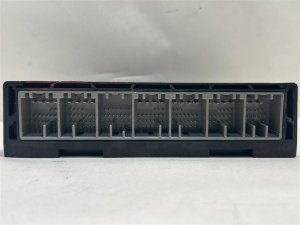
We Have This Part in Stock
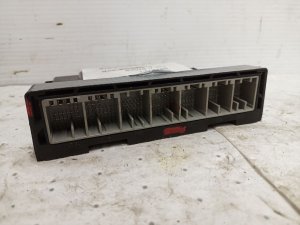



The information in this article is provided for general reference and educational purposes only. Vehicle specifications, procedures, and part compatibility can vary by production date, trim level, and region. Always consult your vehicle's factory service manual and verify part numbers before purchasing or performing repairs. Safety-critical components such as airbags, seat belts, and braking systems should be installed by a qualified professional.
- Chevrolet Equinox:
- 🎬 Helpful Videos
- 🛍️ Shop This Part
- What's Unique About the 2010-2017 Chevrolet Equinox
- Symptoms You May Notice
- Most Likely Causes
- Rare But Worth Checking
- Diagnosis Steps
- Parts You'll Likely Need
- Related Codes That Often Appear With This One
- Technical Service Bulletins (TSBs) & Recalls
- Platform-Specific Known Issues
- Mechanic-Grade Diagnostic Values
- Hidden / Shadow Codes Worth Checking
- Scan Tool Commands That Help
- Wiring & Ground Locations
- Real Owner Repair Stories
- Model Year Variations Within This Range
- Diagnostic Flowchart
- Other Known Issues on This Vehicle
- Used vs. New Parts: Buying Guide for This Vehicle
- Real Owner Stories
- 2017 Chevrolet Equinox
- 2010 Chevrolet Equinox 2.4L AWD
- Related OBD-II Codes
- Frequently Asked Questions
- 🎟️ Get 5% Off