

OBD-II Code P3936: Aftertreatment Control Module Temperature Fault
What P3936 means, why it triggers, and how to fix it on heavy-duty trucks
- On Paccar engines (Kenworth/Peterbilt), P3936 indicates a critical internal temperature failure within the Aftertreatment Control Module (ACM).
- Ignoring this code triggers a progressive engine derate, ultimately limiting vehicle speed to 5 mph and forcing a tow.
- The most common fix for Paccar trucks is replacing the ACM, which costs between $1,500 and $2,700 and requires dealer-level programming.
- On Cummins, Volvo, and Navistar engines, the related J1939 code SPN 3936 points to a clogged or failing DPF differential pressure sensor, not the ACM.
- Before replacing any parts for SPN 3936, use compressed air to blow out the DPF pressure sensor's metal tubes, as soot blockages cause many false sensor failures.
What Does P3936 Mean?

P3936 is a manufacturer-specific code used primarily by Paccar (Kenworth, Peterbilt). It indicates the aftertreatment control module (ACM or EAS-3/EAS-4 ECU) detects an internal temperature outside its safe operating range. This critical computer manages the diesel particulate filter (DPF), selective catalytic reduction (SCR), and diesel exhaust fluid (DEF) injection.
Technical definition: The module's self-diagnostics detect its internal thermometer reading outside the acceptable operational range. Known definitions include 'DEF Tank Sensor ECU – Temperature Too High' or 'EAS-3 actuator ECU - Internal temperature, out of range, low'. This points directly to a hardware failure within the module or severe environmental overheating.
Can I Drive With P3936?
Yes, But With Caution. Yes, but you must get it serviced immediately. This fault triggers a gradual engine power reduction (derate) and limits vehicle speed to 5 mph to comply with emissions regulations. Continued operation risks progressive damage to the Diesel Particulate Filter (DPF) from improper regeneration, adding a $2,500-$8,000 DPF replacement cost to your repair bill.
Common Causes

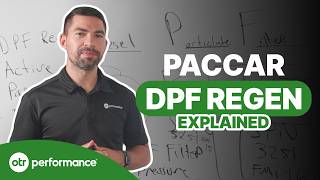
- Internal Failure of the Aftertreatment ECU (Very Common) — The electronic components or internal temperature sensor inside the ACM fail, causing inaccurate readings or actual overheating. This is the primary cause on Paccar vehicles. 🎬 Watch: How to diagnose and fix Paccar MX aftertreatment codes.
- Blocked Airflow to the ECU (Common) — Mud, road debris, snow, or ice accumulates on the chassis-mounted ACM, blocking its heat sink fins and causing it to overheat.
- Damaged or Corroded Wiring/Connectors (Less Common) — Corrosion in the main ACM connector or chafed wiring causes high resistance, triggering false temperature faults or module malfunction.
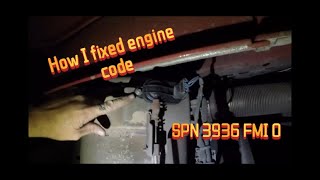
- Incorrectly Installed DPF Pressure Sensor (SPN 3936) (Less Common) — On Navistar engines logging the related SPN 3936, a DPF differential pressure sensor installed at the wrong angle traps moisture and causes incorrect readings (per TSB IK0700082). 🎬 See this walkthrough for fixing SPN 3936 pressure sensor faults.
- Liquid Contamination of ECU (Rare) — Direct exposure to water or DEF fluid corrodes the ECU's external casing, allowing moisture ingress and internal short circuits.
- ECM Software Glitches (Rare) — Software logic errors within the main Engine Control Module (ECM) or ACM trigger phantom codes requiring a dealer reflash.
Symptoms

- Check Engine Light or Malfunction Indicator Lamp (MIL) — A solid or flashing amber warning light appears on the dashboard.
- Engine Derate and Speed Limitation — The engine computer limits power and torque, progressively restricting top vehicle speed down to 5 mph ('limp mode') to force repairs.
- DEF / Aftertreatment Warning Messages — The dashboard driver information center displays 'Aftertreatment System Fault' or 'DEF System Error' alongside audible alarms.
- Flashing DPF Light / Abnormal Regens — The malfunctioning ACM fails to control the DPF regeneration process, causing a flashing DPF lamp and failed or constant regen requests.
Diagnostic Flowchart
Tap your situation to follow the diagnostic path that matches what you're seeing on this code.
Common Fixes & Costs
- Replace Aftertreatment Control Module (ACM) — Parts: $1200 - $2200, Labor: $300 - $500, ~2.5 hr book time (Professional)
- Replace Faulty DPF Pressure Sensor (for SPN 3936) — Parts: $100 - $250, Labor: $150 - $200, ~1.0 hr book time (Intermediate)
- Clean Debris from ECU Housing — Parts: $0, Labor: $0 - $100, ~0.5 hr book time (DIY)
- Clean or Replace DPF Pressure Sensor Tubes — Parts: $10 - $80, Labor: $100 - $200, ~1.0 hr book time (Intermediate)
- Repair Damaged Wiring or Connectors — Parts: $20 - $100, Labor: $150 - $450, ~2.0 hr book time (Intermediate)
Used vs. New Parts: Buying Guide
When a used part is worth it: A used Aftertreatment Control Module (ACM) is a cost-effective option for an older, high-mileage truck when a new OEM unit is cost-prohibitive.
Donor-vehicle mileage cap: roughly under 400000 miles for the part to have meaningful remaining life.
Donor quality checklist:
- Verify the part number matches exactly; superseded numbers require software updates.
- Obtain the VIN of the donor truck to check its history for recurring aftertreatment issues.
- Inspect the module for physical damage, corrosion, or signs of overheating.
- Purchase from a reputable truck salvage yard offering a 30-90 day warranty.
Decision logic:
- If The truck is under warranty or less than 5 years old → Buy a new OEM part to ensure compatibility and maintain warranty.
- If Budget is extremely tight and the truck is out of warranty → A used or remanufactured ACM is viable, but factor in the mandatory programming cost.
- If The goal is maximum reliability and long-term peace of mind → A new OEM or high-quality remanufactured module with a 1-2 year warranty is the best choice.
Warranty tradeoff: Used parts offer a 30-90 day functional warranty. Remanufactured units offer a 1-2 year warranty. New OEM parts carry a standard 1-year warranty.
Worst-case if a used part fails: $500 - $800 if a used part fails, covering repeat labor for removal, installation, and programming.
What Happens If You Wait — Timeline
- 0-1 Day: Check Engine Light illuminates. A 'Stage 1' derate limits torque by 25% and vehicle speed to 55 mph. (MPG impact: 0-5%% · Added cost: $0)
- 1-3 Days: Derate escalates. Torque is cut by 40-60%, and speed is limited to 25 mph. The ACM fails to trigger DPF regeneration. (MPG impact: 5-10%% · Added cost: $250 - $1000 for a mobile service call or tow.)
- 3-7 Days: Final stage derate limits vehicle speed to 5 mph ('limp mode'). The DPF becomes heavily loaded with soot. (MPG impact: 10-25%% · Added cost: $400 - $1,500 for a tow plus forced regeneration and professional DPF cleaning.)
- 1+ Week: Continued operation cracks or melts the DPF filter media from excessive heat and pressure. Extreme backpressure damages turbocharger seals. (MPG impact: 25-50%% · Added cost: $2,500 - $8,000 for DPF replacement and potential turbocharger repairs.)
Cost of Not Fixing It
- Immediate (First few hours/days): Progressive engine derate limits speed to 55 mph, then 25 mph, and finally 5 mph. (Added cost: $250 - $1000 for a mobile service call or tow.)
- Short-Term (1-4 weeks): The ACM fails to initiate DPF regeneration, overloading the DPF with soot and causing excessive backpressure. (Added cost: $300 - $800 for a forced regeneration and professional DPF cleaning.)
- Long-Term (1+ months): Continued operation with a clogged DPF cracks or melts the filter substrate, requiring complete replacement. Extreme backpressure damages turbocharger seals. (Added cost: $2,500 - $8,000 for DPF replacement, plus potential turbocharger repair costs.)
Diagnosis Steps

- Verify Code and Identify Engine Type
Use a heavy-duty scan tool to confirm P3936 or SPN 3936. Paccar engines require ACM diagnostics; Cummins/Volvo/Navistar engines require DPF pressure sensor diagnostics.
Tools: Heavy-Duty Scan Tool (Beginner) - Perform Visual Inspection of ACM
Locate the ACM on the frame rail near the DEF tank. Inspect the module, heat sink fins, and connectors for physical damage, melting, or debris buildup.
Tools: Flashlight (Beginner) - Clean the ECU Housing
Remove mud, dirt, or ice from the ACM using a stiff brush and low-pressure water to restore airflow. Clear codes and test drive.
Tools: Stiff Brush, Low-pressure water (Beginner) - Inspect DPF Pressure Sensor Tubes (for SPN 3936)
For SPN 3936 (Cummins/Volvo), disconnect the rubber hoses from the DPF pressure sensor. Inspect for cracks and use compressed air to blow out soot or ice from the metal tubes.
Tools: Pliers, Compressed Air (Intermediate) - Monitor ACM Live Data
Access the aftertreatment live data stream. Monitor 'ACM Internal Temperature'. Readings of -40°F or >220°F (105°C) on a clean module indicate internal failure.
Tools: Heavy-Duty Scan Tool (Intermediate) - Inspect Wiring and Connectors
Disconnect the battery. Unplug the main ACM connector and inspect pins for green/white corrosion, moisture, or pushed-out terminals.
Tools: Basic hand tools, Flashlight (Intermediate) - Test DPF Differential Pressure Sensor (for SPN 3936)
For SPN 3936, back-probe the sensor with the key on, engine off. The reference wire requires 5V. At warm idle, signal voltage must remain between 0.5V and 0.7V.
Tools: Digital Multimeter, Back-probe kit (Advanced) - Check for Software Updates
Contact a dealer to check for available software updates (reflashes) for the ACM or ECM to resolve known logic errors.
Tools: OEM Diagnostic Software (Professional)
When This Code Triggers (Freeze-Frame Conditions)
- Engine Coolant Temp: 180-200°F (82-93°C) (The engine is at full operating temperature.)
- Engine Load: 40-70% (Sustained load, such as pulling a grade or steady highway cruising.)
- Ambient Air Temperature: >85°F (29°C) (For Paccar ACM temp faults, high ambient temperatures increase the module's baseline temperature.)
- Aftertreatment Status: Normal or Regeneration (SPN 3936 faults often occur during a regeneration cycle. Paccar ACM faults occur during normal operation if airflow is blocked.)
Related Codes
- P3937 — Paccar code for 'EAS-3 actuator ECU - Internal temperature 1, out of range, high'. P3936 is 'out of range, low'. Both strongly point to replacing the ECU.
- SPN 3936 / FMI 2 — J1939 code for 'DPF Differential Pressure - Data Erratic'. Points to a failing sensor, bad wiring, or moisture in the sensor/tubes.
- SPN 3936 / FMI 15 or 16 — J1939 code for 'DPF System - Data Above Normal'. Indicates the DPF is clogged or the sensor tubes are blocked.
- SPN 3936 / FMI 18 — J1939 code for 'DPF Differential Pressure - Data Below Normal'. Caused by a failed sensor, leaking tubes, or extended idling on Detroit Diesel engines.
- U-Codes (e.g., U17E5, U1827) — Network communication codes present alongside P3936 confirm the ACM is failing and disrupting the CAN bus network.
Climate & Environmental Factors
- Cold Weather / Freezing Temperatures: Moisture accumulates in the DPF pressure sensor or its tubes and freezes, creating a blockage. This causes false high-pressure readings and triggers SPN 3936.
- Debris Buildup (Mud, Ice, Snow): A thick coating of mud or packed ice acts as an insulator on the frame-mounted ACM, preventing the heat sink from dissipating heat and causing internal overheating (P3936).
- High Ambient Heat: Operating in climates above 95°F (35°C) places a higher thermal load on the ACM. If the heat sink is compromised by debris, ambient heat pushes the internal temperature out of range.
How to Talk to a Mechanic About This Code
Say this: "I have a [Year/Make/Model] with a [Engine Make] logging code [P3936 or SPN 3936]. For my Paccar, please check the ACM for debris and monitor its internal temp. For my Cummins/Volvo, please inspect the DPF pressure sensor tubes for blockages before testing the sensor."
This tells the shop you understand the code has two different meanings depending on the engine. It directs them to the most likely cause first, preventing them from replacing the wrong, expensive parts.
Avoid saying:
- 'Just fix the check engine light.'
- 'My truck is losing power, can you look at it?'
- 'A guy online said to replace the...'
Questions to ask before authorizing the repair:
- For Paccar: What was the ACM internal temperature reading on the scan tool? Did you find debris blocking the module?
- For Cummins/Volvo: Did you find blockages or cracks in the DPF pressure sensor tubes? What were the pressure readings at idle?
- Does the estimate for ACM replacement include the cost of programming the new module?
- What is the warranty on the recommended parts and labor?
Where to Take It: Dealer vs Independent vs Chain
- Dealer:
Recommended for Paccar ACM replacement. It is the most direct path to a guaranteed-correct repair due to programming requirements.
Best for: Vehicles under manufacturer or extended emissions warranty., Paccar engine trucks requiring an ACM replacement, as dealers have guaranteed access to Paccar DAVIE4 programming software., Complex or recurring issues requiring factory technical support.
Downsides: Highest labor rates and parts costs., May default to replacing entire assemblies rather than component repair. (Typical cost: +40% vs. baseline) - Independent Shop:
Excellent for the SPN 3936 (DPF sensor) variant. For Paccar P3936, verify they have OEM software for ACM programming.
Best for: Out-of-warranty trucks where cost is a major factor., Diagnosing and replacing the DPF differential pressure sensor on Cummins, Volvo, or Navistar engines.
Downsides: Must select a shop specializing in heavy-duty trucks., May lack expensive OEM software required to program a new Paccar ACM, forcing them to sublet the final step. (Typical cost: +0% vs. baseline) - Chain Shop:
AVOID. These shops cannot perform heavy-duty truck diagnostics.
Downsides: National chains are not equipped to work on Class 8 truck aftertreatment systems., Tools and technician training are for passenger cars only. (Typical cost: +0% vs. baseline)
When to Walk Away From the Repair
If annual repair costs exceed 50% of the truck's market value, or if downtime makes it cheaper to get a newer truck, consider selling.
- Car worth $45000, fix is $2500: Fix it. A $2,500 ACM replacement is standard maintenance and cheaper than lost revenue from downtime.
- Car worth $25000, fix is $8000: Borderline. An $8,000 DPF and turbo repair is a major expense. Evaluate the truck's overall condition before approving.
- Car worth $80000, fix is $500: Fix it. A $500 DPF sensor replacement is routine maintenance.
What Scan Tool You Need for This Code
Minimum: A J1939-compatible code reader that reads and clears heavy-duty fault codes (SPN and FMI). Basic OBD-II car scanners will not work.
A simple code reader won't display the FMI (Failure Mode Identifier) or live data like 'ACM Internal Temperature' or 'DPF Differential Pressure' needed for diagnosis.
Budget: Autel AutoLINK AL529HD (~$150) — Reads and clears heavy-duty engine codes, supports J1939, and displays live data. Capable entry-level tool for pulling codes before calling a shop.
Mid-range: ANCEL HD8000 (~$350) — Provides full system diagnostics for major truck brands. Performs DPF regeneration and offers in-depth live data views.
Professional: Diesel Laptops JPRO or Autel MaxiSys MS909CV (~$2,500-5,000+) — Professional platforms offering bi-directional controls and OEM-level repair information. Paccar DAVIE4 software is required for programming a new ACM.
Rent vs buy: Heavy-duty scanners are not available for rent at auto parts stores. Buying a budget or midrange scanner is a wise investment for owner-operators to diagnose issues.
How to Clear the Code After You Fix It
- Reconnect battery if disconnected for repair.
- Use a heavy-duty compatible scan tool to clear the active and inactive fault codes.
- Perform the specific manufacturer's drive cycle to run the aftertreatment system's readiness monitors.
Drive cycle (~45 minutes): A heavy-duty drive cycle involves a cold start followed by highway driving for 20-45 minutes to allow the aftertreatment system to get hot and perform a passive or active regeneration.
Readiness monitors affected: Aftertreatment System Monitor, Exhaust Gas Sensor Monitor, Catalyst Monitor
Before emissions retest: drive at least 100 miles to fully set monitors.
Watch out for:
- Clearing the code without a proper drive cycle fails to set readiness monitors, causing an automatic emissions test failure.
- If the root cause is not fixed, the code returns as soon as the monitor runs again.
- Disconnecting the battery right before an emissions test clears all readiness monitors.
Will This Fail Emissions / State Inspection?
Yes — this code typically fails an OBD-II emissions inspection.
- California: An active Check Engine Light from P3936 is an automatic failure of the Clean Truck Check (HD I/M) inspection. All readiness monitors must be set to 'Ready'.
- New York: Heavy-duty diesel vehicles in the NY Metropolitan Area (NYMA) require an annual emissions inspection. An active fault code fails the OBD portion.
- Texas: Vehicles in 17 designated counties must pass an OBD emissions test. An illuminated MIL and active DTC like P3936 results in automatic failure.
Most Commonly Affected Vehicles
- Kenworth T680 (2013-2023) — Equipped with the Paccar MX-13 engine and EAS-3/EAS-4 aftertreatment system, which uses P3936 for ACM internal temperature faults.
- Peterbilt 579 (2013-2023) — Shares the Paccar MX-13 powertrain and diagnostic system with Kenworth, making it equally susceptible to P3936 ACM failures.
- Volvo VNL Series (2012-2024) — Logs the related J1939 code SPN 3936, pointing to a DPF differential pressure sensor issue or clogged DPF.
- International ProStar / LT Series (2013-2023) — Logs SPN 3936. TSB IK0700082 warns that an incorrectly installed DPF pressure sensor trapping moisture is a primary suspect on N9/N10/N13 engines.
- Freightliner Cascadia (DD13/DD15) (2014-2024) — Logs SPN 3936 FMI 18 after extended idling. A parked regeneration often clears the code without parts replacement.
Manufacturer-Specific Notes

- Paccar (Kenworth, Peterbilt): Paccar uses P3936 to indicate a temperature problem inside the aftertreatment control module itself, making an ECU replacement the primary fix.
- Cummins / Volvo: On these engines, the equivalent code (SPN 3936) points to a problem with the DPF differential pressure sensor or its tubing, not the main ECU.
- Navistar / International: TSB IK0700082 warns that SPN 3936 is often caused by a DPF differential pressure sensor installed at the wrong angle, trapping moisture.
- Detroit Diesel (Freightliner, Western Star): SPN 3936 FMI 18 occurs after extended idling. The official troubleshooting guide suggests performing a parked regeneration before replacing parts.
Real Owner Stories
2018 Volvo VNL with SPN 3936 FMI 0, constant parked regen requests.
After a shop replaced the DOC doser for a no-regen issue, the truck demanded a parked regen every hour and threw code SPN 3936 FMI 0.
Outcome: The initial doser failure caused the DPF to overload with soot. The DPF was too clogged to recover, leading to high backpressure and the new code.
Lesson: When a DEF doser fails, the DPF overloads as a secondary effect. Always check DPF differential pressure after replacing the doser to see if the DPF requires professional cleaning.
2017 International with Cummins L9 engine logging SPN 3936 FMI 2.
Truck had a persistent check engine light for SPN 3936 FMI 2.
Outcome: The issue was high resistance in the wiring harness between the sensors and the ECM. Running new overlay wires fixed the erratic data fault.
Lesson: When multiple new sensors don't fix an erratic data fault (FMI 2), the problem is in the wiring harness. Test circuit integrity before replacing expensive parts.
Volvo truck with SPN 3936 FMI 0 and active check engine light.
The check engine light came on, and dashboard diagnostics revealed an active SPN 3936 fault.
Outcome: The owner replaced the DPF pressure sensor. The check engine light went out after driving, and a subsequent scan showed no active faults.
Lesson: On non-Paccar trucks, SPN 3936 directly points to the DPF differential pressure sensor. This is a straightforward DIY replacement.
How to Prevent This Code From Triggering
- Periodically clean the Aftertreatment Control Module (ACM) housing. (Every 3-6 months, or after operating in heavy mud/snow.) — On Paccar trucks, mud or ice insulates the frame-mounted ACM, causing it to overheat and fail internally. Cleaning prevents a $2,000 repair.
- Perform scheduled DPF cleaning. (Every 200,000-300,000 miles or 4,500 hours.) — Regeneration leaves behind incombustible ash that clogs the DPF, leading to high backpressure and sensor faults like SPN 3936. Proactive cleaning is cheaper than replacement.
- Minimize engine idle time. (Daily habit.) — Extended idling causes soot loading because exhaust temperatures are too low for passive regeneration. This leads to frequent active regens and DPF clogging.
- Inspect DPF pressure sensor tubes during regular service. (Every oil change (15,000-25,000 miles).) — The small tubes for the DPF pressure sensor clog with soot or crack from heat. Cleaning them with compressed air prevents false SPN 3936 codes.
Frequently Asked Questions
Can I just ignore code P3936?
No. Ignoring this code triggers a progressive engine derate. It eventually limits your truck's speed to 5 mph, forcing a tow and risking permanent DPF damage.
Why did my truck lose power because of an emissions code?
EPA regulations require manufacturers to ensure emissions systems function correctly. If a critical fault occurs, the software forces an 'engine derate' to prevent excessive pollution. This compels the operator to repair the vehicle immediately.
What does FMI 2 mean for SPN 3936?
FMI 2 stands for 'Data Erratic, Intermittent, or Incorrect'. The control module is receiving an unstable signal from the DPF pressure sensor. This points to a failing sensor, chafed wiring, or moisture inside the connector.
What is the most common misdiagnosis for P3936?
The biggest pitfall is confusing Paccar's P3936 (ACM internal temp) with the generic SPN 3936 (DPF pressure sensor). Technicians might waste money replacing the ACM on a Cummins when the fault is a $150 sensor. Conversely, they might inspect DPF sensors on a Paccar when the ACM is dead.
I replaced the DPF pressure sensor for SPN 3936, but the code came back. What now?
The issue lies in the supporting circuits. Meticulously inspect the DPF pressure tubes for cracks, kinks, or soot blockages. If the tubes are clear, test the wiring harness between the sensor and the ECM for high resistance.
Is P3936 the same as SPN 3936?
They are related but have different manufacturer definitions. For Paccar, P3936 means the Aftertreatment ECU temperature is out of range. For Cummins and Volvo, SPN 3936 refers to a fault in the DPF differential pressure sensor circuit.
Does a new aftertreatment ECU need to be programmed?
Yes. A new aftertreatment control module is not a plug-and-play part. It requires programming by a dealer or qualified shop using OEM software to match your truck's VIN and engine parameters.
Key Takeaways
- On Paccar engines (Kenworth/Peterbilt), P3936 indicates a critical internal temperature failure within the Aftertreatment Control Module (ACM).
- Ignoring this code triggers a progressive engine derate, ultimately limiting vehicle speed to 5 mph and forcing a tow.
- The most common fix for Paccar trucks is replacing the ACM, which costs between $1,500 and $2,700 and requires dealer-level programming.
- On Cummins, Volvo, and Navistar engines, the related J1939 code SPN 3936 points to a clogged or failing DPF differential pressure sensor, not the ACM.
- Before replacing any parts for SPN 3936, use compressed air to blow out the DPF pressure sensor's metal tubes, as soot blockages cause many false sensor failures.
Helpful Videos


The information in this article is provided for general reference and educational purposes only. Vehicle specifications, procedures, and part compatibility can vary by production date, trim level, and region. Always consult your vehicle's factory service manual and verify part numbers before purchasing or performing repairs. Safety-critical components such as airbags, seat belts, and braking systems should be installed by a qualified professional.
- 🎬 Helpful Videos
- What Does P3936 Mean?
- Can I Drive With P3936?
- Common Causes
- Symptoms
- Diagnostic Flowchart
- Common Fixes & Costs
- Used vs. New Parts: Buying Guide
- What Happens If You Wait — Timeline
- Cost of Not Fixing It
- Diagnosis Steps
- When This Code Triggers (Freeze-Frame Conditions)
- Related Codes
- Climate & Environmental Factors
- How to Talk to a Mechanic About This Code
- Where to Take It: Dealer vs Independent vs Chain
- When to Walk Away From the Repair
- What Scan Tool You Need for This Code
- How to Clear the Code After You Fix It
- Will This Fail Emissions / State Inspection?
- Most Commonly Affected Vehicles
- Manufacturer-Specific Notes
- Real Owner Stories
- 2018 Volvo VNL with SPN 3936 FMI 0, constant parked regen requests.
- 2017 International with Cummins L9 engine logging SPN 3936 FMI 2.
- Volvo truck with SPN 3936 FMI 0 and active check engine light.
- How to Prevent This Code From Triggering
- Frequently Asked Questions
- Can I just ignore code P3936?
- Why did my truck lose power because of an emissions code?
- What does FMI 2 mean for SPN 3936?
- What is the most common misdiagnosis for P3936?
- I replaced the DPF pressure sensor for SPN 3936, but the code came back. What now?
- Is P3936 the same as SPN 3936?
- Does a new aftertreatment ECU need to be programmed?
- Key Takeaways
- 🎟️ Get 5% Off