

Ultimate Guide to OBD-II Code P3818: SCR Catalyst Efficiency Below Threshold
The Most Comprehensive Resource for Diagnosing and Fixing P3818 on PACCAR MX-13 Engines in Kenworth and Peterbilt Trucks
- Code P3818 is a PACCAR-specific fault indicating low SCR efficiency, primarily affecting Kenworth and Peterbilt trucks equipped with MX-13 engines.
- Ignoring P3818 triggers an EPA-mandated engine derate, progressively cutting power until the truck is forced into a maximum 5 mph limp mode.
- Owners of 2013-2014 models must verify TSB E112 compliance first, as a simple 0.6-hour ECU software update often resolves the code entirely.
- Never replace a $600+ NOx sensor without first using a borescope to inspect the DEF decomposition pipe for cracks, a highly common mechanical failure.
- Verify DEF quality with a refractometer (must be exactly 32.5% urea) before performing any invasive diagnostics or replacing parts.
What Does P3818 Mean?

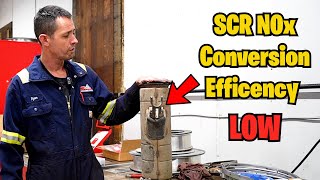
Code P3818 means the Engine Control Unit (ECU) detects the Selective Catalytic Reduction (SCR) system is failing to reduce Nitrogen Oxides (NOx) efficiently. The system uses NOx sensors before and after the SCR catalyst to measure performance. When the NOx reduction drops below the legally mandated threshold, the ECU logs P3818, illuminates the check engine light, and initiates engine power reduction.
Technical definition: The official PACCAR definition is "SCR catalyst conversion efficiency – Too low." Diagnostic tools sometimes display "NOx after catalyst sensor (F843) - Sensor heating error," indicating the ECU suspects a downstream NOx sensor heater circuit failure as the root cause.
Can I Drive With P3818?
Yes, But With Caution. You can drive temporarily, but immediate repair is mandatory. The ECU progressively penalizes engine performance, starting with a 25% power loss. If the fault persists, the engine derates to a 5 mph 'limp mode' to prevent excessive pollution. Driving with an inefficient SCR system causes premature DPF clogging and destroys the SCR catalyst, escalating repair costs to $15,000.
Common Causes

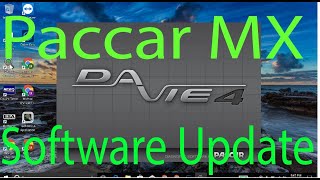
- Engine Control Unit (ECU) Software Issue (Common On Specific Years) — For 2013-2014 model year PACCAR MX-13 engines, the original ECU software was overly sensitive and triggered P3818 incorrectly. PACCAR released Service Bulletin E112 to address this; a simple software update is often the only required fix. 🎬 Watch: How to perform a Paccar software update using Davie 4.
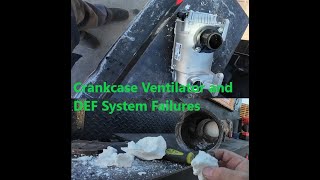
- Cracked or Damaged DEF Decomposition Pipe (Very Common) — A highly documented issue on EPA13 PACCAR engines is the cracking or complete failure of the internal mixing grid within the DEF decomposition pipe. This prevents DEF from atomizing and converting to ammonia, directly causing insufficient NOx reduction. 🎬 See this walkthrough of a failed DEF injector and broken decomposition tube.
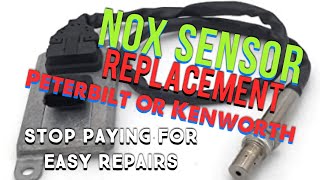
- Faulty or Failing NOx Sensor(s) (Very Common) — NOx sensors are high-wear items that fail due to extreme heat, vibration, and soot contamination. They provide inaccurate readings (drift) that trick the ECU into calculating low catalyst efficiency. The outlet (downstream) sensor is the most frequent culprit. 🎬 Watch: A step-by-step guide to replacing your NOx sensors.
- Contaminated or Poor-Quality Diesel Exhaust Fluid (DEF) (Common) — Using old, contaminated, or out-of-spec DEF is a primary cause of SCR failure. Fluid with a urea concentration outside the strict 32.5% requirement fails to reduce NOx effectively, immediately triggering an efficiency code.
- Clogged or Malfunctioning DEF Doser Valve (Injector) (Common) — The DEF doser valve injects fluid into the exhaust stream and frequently clogs from crystallized DEF, especially during high idle times. A partially blocked injector starves the catalyst of DEF, causing low efficiency.
- Exhaust System Leaks (Common) — Leaks between the exhaust manifold and the SCR catalyst allow ambient oxygen to enter the exhaust stream. This excess oxygen skews the NOx sensor readings, forcing the ECU to incorrectly calculate underperformance.
- Plugged DEF Pump Filter (Less Common) — The DEF pump module contains a small filter that clogs with debris or crystallized DEF over time. A plugged filter restricts DEF flow, causing insufficient dosing and low SCR efficiency.
- Failed DEF Tank Heater Valve (Less Common) — A DEF tank heater valve stuck open causes engine coolant to continuously heat the DEF tank. This overheats and degrades the DEF, reducing its effectiveness and damaging the DEF quality sensor.
- Failed or Contaminated SCR Catalyst (Rare) — While the code points to the catalyst, it is usually the last component to fail. Contamination from oil (failing turbo) or unburnt fuel coats the catalyst, rendering it permanently ineffective.
Symptoms

- Check Engine Light or Malfunction Indicator Lamp (MIL) is On — A solid or flashing amber aftertreatment warning light illuminates on the dashboard.
- Progressive Engine Derate (Loss of Power) — The truck loses power as an inducement to seek repair, worsening over time until the vehicle is limited to a 5 mph crawl speed.
- Stop Engine Light Activation — In severe cases or when combined with critical emissions faults, a red Stop Engine light illuminates, requiring you to pull over immediately.
- Increased DEF Consumption — The aftertreatment ECU attempts to overcome low efficiency by commanding the doser to inject more DEF, noticeably increasing fluid usage.
- Frequent or Unsuccessful Parked Regenerations (also visible on scanner) — The system requests frequent regenerations that fail to complete, indicating a broader aftertreatment system blockage or failure.
Diagnostic Flowchart
Tap your situation to follow the diagnostic path that matches what you're seeing on this code.
Common Fixes & Costs
- Update the Engine Control Unit (ECU) software (TSB E112) — Parts: $0, Labor: $150 - $250, ~1.0 hr book time (Professional)
- Replace the DEF decomposition pipe — Parts: $400 - $800, Labor: $300 - $600, ~2.5 hr book time (Intermediate)
- Replace the outlet (downstream) NOx sensor — Parts: $450 - $850, Labor: $150 - $300, ~1.5 hr book time (Intermediate)
- Clean or replace the DEF doser valve/injector — Parts: $125 - $900, Labor: $150 - $300, ~1.2 hr book time (Intermediate)
- Drain tank, flush lines, and replace DEF fluid and filter — Parts: $50 - $150, Labor: $200 - $400, ~1.5 hr book time (Easy)
- Replace the entire SCR catalyst assembly — Parts: $2,000 - $15,000, Labor: $400 - $1,000, ~3.5 hr book time (Professional)
DIY vs Professional
- Update the Engine Control Unit (ECU) software — Beginner:
Tools: ['PACCAR DAVIE4 diagnostic software', 'Laptop with appropriate interface hardware'] - Replace the DEF decomposition pipe — Beginner:
Tools: ['Basic socket set (metric)', 'Wrenches', 'Gasket scraper', 'Torque wrench'] - Replace the outlet (downstream) NOx sensor — Beginner:
Tools: ['7/8" (22mm) Oxygen Sensor Socket/Wrench', '8mm socket and wrench', 'Ratchet and extensions', 'Penetrating oil', 'Zip ties'] - Clean or replace the DEF doser valve/injector — Beginner:
Tools: ['Basic socket set (metric)', 'Torx bit set', 'Gasket scraper', 'Soft brush'] - Drain tank, flush lines, and replace DEF fluid and filter — Beginner:
Tools: ['Drain pan', 'Fluid pump/siphon', 'Filter wrench', 'Basic hand tools']
Used vs. New Parts: Buying Guide
When a used part is worth it: A used OEM NOx sensor from a reputable salvage yard is viable for older trucks where a new OEM part is a large percentage of the vehicle's value, provided downtime is acceptable if it fails.
Donor-vehicle mileage cap: roughly under 100000 miles for the part to have meaningful remaining life.
Donor quality checklist:
- Verify the donor truck was not scrapped for emissions-related failures.
- Match the part number exactly; superseded numbers require a software update.
- Inspect the sensor probe for heavy soot and the wiring for cuts or melting.
Decision logic:
- If The cost of a new OEM sensor is over $700 and the truck is out of warranty. → A high-quality aftermarket sensor with a good warranty is a strong alternative.
- If Budget is the primary concern and downtime is acceptable if the part fails. → A used OEM sensor is an option, but many are sold 'as-is' with no warranty.
- If Reliability is paramount and you want to minimize diagnostic headaches. → Buy a new OEM sensor. Cheap aftermarket sensors have a high rate of premature failure.
Warranty tradeoff: Used parts offer a 30-day warranty at best. Aftermarket new parts typically offer a 1-year warranty. New OEM parts carry a 1-year or longer warranty and guarantee compatibility.
Worst-case if a used part fails: $300-$600 if a used or cheap aftermarket part fails, including repeat labor and potential towing.
What Happens If You Wait — Timeline
- 0-5 hours of driving: Check engine light illuminates with active P3818 code. A 25% engine torque reduction begins as the first level of inducement. (MPG impact: 0-5%% · Added cost: $0)
- 5-10 hours of driving: The engine derate becomes more aggressive. The system over-injects DEF to compensate, increasing consumption. The risk of DPF face-plugging begins. (MPG impact: 5-10%% · Added cost: $50-$150 in wasted DEF and fuel.)
- 10+ hours of driving: The final inducement stage is triggered, limiting the vehicle's speed to 5 mph ('limp mode'). The truck is effectively out of service. (MPG impact: N/A% · Added cost: $1,000+ in towing, downtime, and lost revenue.)
- Weeks to months of continued operation without a fix: Continued inefficient operation leads to DPF clogging, high backpressure, and turbo seal damage. Un-atomized DEF permanently destroys the SCR catalyst. (MPG impact: 10-20%% · Added cost: $3,000 - $15,000+ for replacement of the DPF, SCR catalyst, and turbocharger.)
Cost of Not Fixing It
- Immediate (0-10 hours of driving): Progressive engine derate, starting with a 25% power loss and ending with a 5 mph speed limit, causing severe operational downtime. (Added cost: Variable (loss of revenue))
- 1-3 months: An uncorrected SCR fault prevents the DPF from regenerating properly, leading to a clogged DPF, excessive backpressure, and turbocharger damage. (Added cost: $2,500 - $7,000)
- 3+ months: Sustained poor performance poisons the SCR catalyst with unburnt fuel or soot, requiring a full replacement of the aftertreatment assembly. (Added cost: $8,000 - $15,000+)
Diagnosis Steps

- Check for PACCAR Service Bulletins (TSBs)
For 2013-2014 models, verify if TSB E112 applies. This bulletin involves a software update to fix overly sensitive diagnostics. For recurring codes, follow TSB E124, which provides a comprehensive diagnostic procedure to avoid replacing unnecessary parts.
Tools: ['Internet access', 'Vehicle Identification Number (VIN)'] (Easy) - Perform a Full Diagnostic Scan
Scan for ALL active and inactive fault codes. Codes for NOx sensors (e.g., P3914), DEF quality (P1517), or DPF issues (P3997) directly cause P3818. Address these primary codes first.
Tools: ['Professional Diagnostic Scan Tool (e.g., PACCAR DAVIE4, Autel MaxiSYS)'] (Intermediate) - Inspect DEF Quality
Extract a DEF sample and use a refractometer to verify the urea concentration is exactly 32.5%. Anything outside the 31-34% range causes efficiency issues and requires a complete tank drain and flush.
Tools: ['DEF Refractometer', 'Clean sample container'] (Easy) - Inspect the Decomposition Pipe and Doser Nozzle
Remove the DEF doser injector and inspect the nozzle for white, crusty crystallization. Use a borescope to inspect the internal grid of the decomposition pipe for cracks or missing sections—a highly common failure point.
Tools: ['Borescope', 'Basic hand tools'] (Intermediate) - Monitor NOx Sensor Live Data
Using a diagnostic tool, monitor live PPM readings from the inlet and outlet NOx sensors during a forced regeneration. The outlet sensor must read significantly lower than the inlet. If the outlet reading is stuck, mirrors the inlet, or is erratic, the sensor is faulty.
Tools: ['Professional Diagnostic Scan Tool'] (Advanced) - Conduct an Exhaust System Leak Test
Pressurize the exhaust system from the turbo outlet to the SCR outlet with low-pressure smoke (5-10 PSI). Spray connections with soapy water and look for bubbles. Even minor leaks compromise sensor readings.
Tools: ['Low-pressure smoke machine', 'Soapy water solution'] (Advanced) - Perform a DEF Doser Quantity Test
Using DAVIE4 or an equivalent tool, run the automated DEF doser quantity test. Place the removed injector in a graduated cylinder. Compare the collected fluid amount to the manufacturer's specification (typically 40-50ml) to verify pump and injector function.
Tools: ['Diagnostic Scan Tool', 'Graduated cylinder'] (Advanced) - Test the DEF Doser Electrical Circuit
Disconnect the DEF doser valve. With the key on, use a multimeter to check for 4.75-5.25 volts between the supply and ground pins. Check the resistance across the doser's pins; a healthy doser reads between 11 and 18 ohms.
Tools: ['Digital Multimeter'] (Advanced) - Test NOx Sensor Resistance
With the sensor disconnected and the key off, check the resistance between the appropriate pins on the sensor side. A healthy NOx sensor typically has 100-500 ohms of resistance. Infinite resistance indicates an internal open circuit.
Tools: ['Digital Multimeter', 'Pin-out diagram'] (Advanced)
When This Code Triggers (Freeze-Frame Conditions)
- Engine Coolant Temp: 180-200°F (82-93°C) (The engine must be fully warmed up for the SCR monitor to run.)
- Exhaust Gas Temperature: 400-800°F (204-427°C) (The SCR catalyst requires a minimum temperature to become active and efficiently convert NOx.)
- Engine RPM: 1200-1800 RPM (Typically triggers under steady-state cruise or high-load conditions, not during city driving or idling.)
- Vehicle Speed: Above 35 mph (The monitor usually runs during highway driving to ensure stable exhaust flow and temperature.)
Related Codes
- P3914 — Indicates 'NOx sensor after catalyst - data not rational, drifted high.' This is a frequent companion to P3818, pinpointing the downstream NOx sensor as the specific reason for the low efficiency calculation.
- P1517 — Indicates 'Aftertreatment System – DEF Quality Malfunction Detected.' The system interprets poor NOx conversion as bad DEF, even if the root cause is a faulty sensor or injector.
- P3830 — Indicates 'SCR catalyst - Not detected.' This is a more severe fault suggesting complete failure, major blockage, or a disconnected temperature sensor, whereas P3818 indicates the catalyst is present but underperforming.
- P3997 — Relates to high ash level in the DPF. A clogged DPF increases exhaust backpressure and temperatures, negatively affecting the SCR system and causing P3818 as a secondary fault.
Climate & Environmental Factors
- Cold Weather: DEF freezes at 12°F (-11°C). A failure in the DEF tank's heating system prevents the fluid from thawing. If the ECU commands DEF injection while the fluid is frozen, it triggers pressure faults and eventually P3818.
- High Altitude: Operating at high altitudes (e.g., above 8,000 ft) reduces SCR catalyst efficiency. Lower atmospheric pressure reduces the partial pressure of oxygen and exhaust gas dwell time within the catalyst, hindering NOx conversion.
- High Humidity: High ambient humidity affects the water content reading of the ambient air sensor. This subtly alters combustion and exhaust gas composition, potentially influencing SCR operational parameters.
How to Talk to a Mechanic About This Code
Say this: "I have a P3818 code on my PACCAR MX-13. Before replacing any NOx sensors, please check for TSBs E112 and E124. Also, test the DEF quality with a refractometer, inspect the decomposition pipe for cracks, and check for exhaust leaks."
This signals you are aware of the most common misdiagnosed causes. It directs the technician to follow a logical diagnostic path instead of jumping to the most expensive conclusion.
Avoid saying:
- 'My check engine light is on, can you fix it?'
- 'I think I need a new NOx sensor.'
- 'Just do whatever it takes to get it back on the road.'
Questions to ask before authorizing the repair:
- Is my ECU software up to date for TSB E112?
- What was the exact DEF concentration from the refractometer test?
- Did you find any cracks in the decomposition pipe grid?
- What were the live NOx sensor PPM readings for both sensors?
- Can you provide the freeze-frame data for the P3818 code?
Where to Take It: Dealer vs Independent vs Chain
- Dealer:
Highly recommended, especially for 2013-2014 models needing a software update or for complex cases requiring PACCAR's TSB E124 diagnostic procedure.
Best for: Vehicles under warranty or extended coverage., Performing required ECU software updates (like TSB E112)., Complex, recurring issues requiring proprietary tools (PACCAR DAVIE4).
Downsides: Highest labor rates, typically $150-$200+ per hour., May default to replacing entire assemblies rather than component-level diagnosis. (Typical cost: +40% vs. baseline) - Chain Shop:
AVOID. This code requires specialized knowledge and tools beyond the scope of a generic truck stop repair chain. The risk of misdiagnosis is very high.
Best for: Not applicable for this type of repair.
Downsides: National passenger car chains do not service Class 8 trucks., Large truck stop chains lack the deep diagnostic equipment for complex PACCAR codes. (Typical cost: -20% vs. baseline)
When to Walk Away From the Repair
Consider selling the truck 'as-is' if the total estimated repair cost for an aftertreatment system failure exceeds 15-20% of the truck's current market value, especially on a high-mileage unit.
- Car worth $85000, fix is $2500: Fix it. This is a relatively minor repair cost compared to the asset's value and revenue potential.
- Car worth $40000, fix is $15000: Walk away. The repair cost is nearly 40% of the truck's value. This money is better invested in a down payment on a more reliable unit.
- Car worth $15000, fix is $8000: Walk away. The repair cost is over 50% of the truck's value. The truck is at the end of its economic life.
What Scan Tool You Need for This Code

Minimum: A diagnostic tool that supports the heavy-duty J1939 protocol and reads manufacturer-specific fault codes for PACCAR. A standard OBD-II scanner for cars will not work.
A simple J1939 code reader cannot perform bi-directional commands like a forced DPF regeneration, run a DEF doser quantity test, or reset the aftertreatment system after a repair.
Rent vs buy: For a one-time, complex issue like P3818, it is more cost-effective to pay for a professional diagnosis at a dealer. Buy a 'Budget Pick' scanner if you are an owner-operator who wants to handle initial diagnostics.
How to Clear the Code After You Fix It
- Use an OBD-II scan tool (like PACCAR DAVIE4) to clear the fault code.
- Perform the 'Evaluate the SCR System' test in DAVIE4, which replaces older drive cycle requirements.
- If a manual drive cycle is required, reset the NOx sensor data and perform the SCR derate reset procedure.
Drive cycle (~45 minutes): A specific verification cycle is needed. This involves a stationary test using DAVIE4 software. If a road test is required, drive at highway speeds (over 35 mph) for at least 30 minutes to allow the SCR monitor to run.
Readiness monitors affected: Catalyst (SCR) Monitor, NOx/SCR Aftertreatment Monitor
Before emissions retest: drive at least 50 miles to fully set monitors.
Watch out for:
- Clearing the code with a generic scanner does not extinguish derate warnings; a specific SCR system reset procedure is mandatory.
- Failing to reset NOx sensor data in the ECU after replacing a sensor causes the system to continue using old, incorrect values.
- The code returns quickly if the underlying mechanical issue (e.g., exhaust leak, cracked pipe) is ignored.
Will This Fail Emissions / State Inspection?
Yes — this code typically fails an OBD-II emissions inspection.
- California: A vehicle with an active P3818 code automatically fails the heavy-duty OBD-II emissions test. All readiness monitors must be set to 'Ready'.
- New York: Heavy-duty diesel vehicles in the NYC metropolitan area require an annual emissions inspection. An active P3818 code causes an immediate failure.
- Texas: In emissions counties like Harris and Dallas, an OBD-II scan is performed on commercial vehicles, and this code results in a failure.
Most Commonly Affected Vehicles
- Peterbilt 579 (2013-Present) — Very common on models with the PACCAR MX-13. The 2013-2014 model years are subject to TSB E112 for a software update fix. Later models suffer from cracked decomposition pipes or NOx sensor failures.
- Peterbilt 567 (2013-Present) — Shares the same PACCAR MX-13 powertrain and aftertreatment system as the 579, making it equally susceptible to P3818.
- Peterbilt 389 (2013-2023) — Models equipped with the PACCAR MX-13 engine frequently experience this code.
- Kenworth T680 (2013-Present) — As a flagship model with the MX-13 engine, the T680 frequently experiences this code. Diagnostic and failure patterns are identical to the Peterbilt 579.
- Kenworth T880 (2014-Present) — This vocational truck uses the MX-13 and is prone to P3818, especially in high-idle applications which accelerate DEF system issues.
- Kenworth W990 (2019-Present) — Utilizes the updated PACCAR MX-13 and is subject to the same aftertreatment system vulnerabilities.
- DAF XF / CF (2013-Present) — PACCAR's European brand trucks with MX-11 and MX-13 engines log this fault code, sharing the same fundamental aftertreatment design.
- Note on other manufacturers N/A (All Years) — P3818 is a manufacturer-specific DTC for PACCAR. It does not apply to Cummins, Detroit Diesel, or Volvo engines.
Manufacturer-Specific Notes
- PACCAR: TSB E112 (May 2015): For 2013-2014 MX-13 engines, overly sensitive software falsely triggered P3818. A software update is the primary fix, and replacing the decomposition pipe is unnecessary if the latest software is installed.
- PACCAR: TSB E124 (Dec 2016): For repetitive P3818 codes on EPA 2013 MX-13 engines, PACCAR created an extensive diagnostic guide. It forces a logical flow—including multiple regens and borescope inspections—to prevent unnecessary parts replacement.
- PACCAR: Decomposition Pipe Grid Failure: The metal grid inside the decomposition pipe frequently cracks and breaks apart, preventing DEF from converting to ammonia. A borescope inspection of this component is a mandatory diagnostic step.
- PACCAR: Aftertreatment ECU Corrosion: The EAS-3 control module is susceptible to water intrusion and corrosion. This leads to communication errors and phantom fault codes, including P3818. Inspect the module connector for green corrosive buildup.
Real Owner Stories
Misdiagnosis leads to repeat repairs on a 2020 Kenworth T680.
Owner of a 2020 KW T680 experienced a P3818 code and loss of power. A shop replaced one NOx sensor, and the fix only lasted a week before the code and power loss returned.
What they tried:
- First shop replaced one NOx sensor.
- A second shop diagnosed the issue again when the fault returned.
- The second shop replaced a different component which resolved the problem.
Outcome: The issue was resolved only after a second diagnostic attempt, highlighting that the first sensor was replaced unnecessarily.
Lesson: Don't immediately assume a NOx sensor is bad. A recurring code after a sensor replacement strongly suggests a misdiagnosis. The root cause is often an exhaust leak or a cracked decomposition pipe.
2014 Peterbilt 579 fixed with a simple software update.
An owner of a 2014 Peterbilt with an MX-13 engine repeatedly gets the P3818 fault code, causing derates.
What they tried:
- Initial diagnosis pointed towards replacing the decomposition pipe.
- Before replacing parts, the owner checked for service bulletins.
Outcome: The shop discovered PACCAR TSB E112. Flashing the ECU with the updated software (0.6 hours labor) resolved the issue without any parts being replaced.
Lesson: For 2013-2014 PACCAR MX-13 engines, always check for the TSB E112 software update first. This saves thousands of dollars by avoiding unnecessary hardware replacement.
2016 Peterbilt with P3818 caused by a cracked decomposition pipe grid.
A 2016 Peterbilt with an EPA13 MX-13 engine threw code P3818. The owner initially suspected NOx sensors or DEF quality.
What they tried:
- Checked for exhaust leaks.
- Verified DEF quality.
- Followed technician advice to inspect the decomposition pipe before replacing sensors.
Outcome: A borescope inspection revealed the internal grid of the decomposition pipe had cracked. Replacing the decomposition pipe fixed the code.
Lesson: Always visually inspect the decomposition pipe's internal grid for cracks. This is a high-failure item on EPA13 engines and is a much cheaper fix than replacing NOx sensors.
How to Prevent This Code From Triggering
- Use only high-quality, API-certified DEF from sealed containers. (Every fill-up) — Prevents contamination from dirt or incorrect urea concentration, which is a primary cause of SCR system failure and sensor damage.
- Replace the DEF pump filter at recommended intervals. (Every 2 years or 200,000 miles) — A clogged filter restricts DEF flow, leading to insufficient dosing and low efficiency codes. This prevents costly pump failures.
- Minimize engine idle time and use high idle when necessary. (Daily habit) — Prolonged low-RPM idling causes soot buildup in the DPF and DEF crystallization in the doser nozzle. High idle (1000+ RPM) keeps exhaust temperatures up.
- Perform regular DPF cleaning. (Every 200,000-250,000 miles) — A clean DPF ensures proper exhaust flow. An ash-clogged DPF negatively impacts SCR performance and triggers secondary efficiency faults.
- Address upstream engine issues immediately. (As needed) — Leaking injectors or a failing turbo send unburnt fuel and oil into the exhaust, permanently poisoning and destroying the SCR catalyst.
Frequently Asked Questions
What is the most common misdiagnosis for code P3818?
The most frequent mistake is immediately replacing one or both expensive NOx sensors without a complete diagnosis. Technicians often find that underlying issues like small exhaust leaks, a cracked decomposition pipe grid, or poor quality DEF are the true culprits causing the sensors to report low efficiency. Always follow a structured diagnostic procedure, as outlined in TSB E124, before condemning costly components.
Can a bad DPF cause a P3818 code?
Yes, indirectly. A clogged or failing Diesel Particulate Filter (DPF) located upstream of the SCR system causes excessive exhaust backpressure and alters exhaust temperatures. This hinders the SCR's ability to function correctly and triggers a P3818 code as a secondary effect.
What is the '5 mph derate' everyone talks about?
This is the final stage of the EPA-mandated driver inducement. To ensure emissions system faults are not ignored, the truck's computer progressively reduces engine power and torque over several hours of operation. The final step is a severe derate that limits the truck's speed to 5 mph, forcing immediate repairs.
Is it illegal to delete the SCR system to fix this code?
Yes, for any on-road vehicle in North America, tampering with, modifying, or removing any emissions control component is illegal. It subjects the vehicle owner and the mechanic to substantial federal fines. It also results in an automatic failure of any state emissions inspection.
Will using a different brand of DEF cause this code?
Not necessarily, as long as the DEF meets the ISO 22241 specification and is uncontaminated. Always purchase DEF from a reputable source in a sealed container. Avoid using poorly maintained truck stop pumps, as the risk of contamination is significantly higher.
My truck is a 2014 Peterbilt 579. What should I check first for P3818?
For a 2014 model year truck, your first step is contacting a dealer to check if your engine's software requires the PACCAR TSB E112 update. This bulletin addresses original software that was too sensitive and falsely triggered the P3818 code. A simple software flash is often the only required fix.
How can I prevent code P3818 from happening?
Use only high-quality DEF from sealed containers and address upstream engine issues (like faulty injectors) immediately to prevent soot contamination. Allow parked regenerations to complete fully when prompted by the dashboard. Periodically inspect the exhaust system for soot trails indicating leaks and repair them promptly.
Key Takeaways
- Code P3818 is a PACCAR-specific fault indicating low SCR efficiency, primarily affecting Kenworth and Peterbilt trucks equipped with MX-13 engines.
- Ignoring P3818 triggers an EPA-mandated engine derate, progressively cutting power until the truck is forced into a maximum 5 mph limp mode.
- Owners of 2013-2014 models must verify TSB E112 compliance first, as a simple 0.6-hour ECU software update often resolves the code entirely.
- Never replace a $600+ NOx sensor without first using a borescope to inspect the DEF decomposition pipe for cracks, a highly common mechanical failure.
- Verify DEF quality with a refractometer (must be exactly 32.5% urea) before performing any invasive diagnostics or replacing parts.
Helpful Videos

The information in this article is provided for general reference and educational purposes only. Vehicle specifications, procedures, and part compatibility can vary by production date, trim level, and region. Always consult your vehicle's factory service manual and verify part numbers before purchasing or performing repairs. Safety-critical components such as airbags, seat belts, and braking systems should be installed by a qualified professional.
- 🎬 Helpful Videos
- What Does P3818 Mean?
- Can I Drive With P3818?
- Common Causes
- Symptoms
- Diagnostic Flowchart
- Common Fixes & Costs
- DIY vs Professional
- Used vs. New Parts: Buying Guide
- What Happens If You Wait — Timeline
- Cost of Not Fixing It
- Diagnosis Steps
- When This Code Triggers (Freeze-Frame Conditions)
- Related Codes
- Climate & Environmental Factors
- How to Talk to a Mechanic About This Code
- Where to Take It: Dealer vs Independent vs Chain
- When to Walk Away From the Repair
- What Scan Tool You Need for This Code
- How to Clear the Code After You Fix It
- Will This Fail Emissions / State Inspection?
- Most Commonly Affected Vehicles
- Manufacturer-Specific Notes
- Real Owner Stories
- Misdiagnosis leads to repeat repairs on a 2020 Kenworth T680.
- 2014 Peterbilt 579 fixed with a simple software update.
- 2016 Peterbilt with P3818 caused by a cracked decomposition pipe grid.
- How to Prevent This Code From Triggering
- Frequently Asked Questions
- What is the most common misdiagnosis for code P3818?
- Can a bad DPF cause a P3818 code?
- What is the '5 mph derate' everyone talks about?
- Is it illegal to delete the SCR system to fix this code?
- Will using a different brand of DEF cause this code?
- My truck is a 2014 Peterbilt 579. What should I check first for P3818?
- How can I prevent code P3818 from happening?
- Key Takeaways
- 🎟️ Get 5% Off