

OBD-II Code P3807: DPF Stationary Regeneration Aborted
What P3807 means on PACCAR engines, why it triggers, and how to fix it
- P3807 is a PACCAR-specific code indicating a parked DPF regeneration aborted because exhaust temperatures failed to reach the 1100°F (600°C) threshold required to burn soot.
- Never replace the DPF without diagnosing upstream failures first; a leaking fuel injector or faulty turbo will destroy a new $3,000 DPF within days.
- Check the DPF differential pressure sensor live data first; readings above 1.0 PSI at idle indicate a plugged filter or a faulty sensor covered by PACCAR TSB E213A.
- Ignoring this code causes progressive engine derates, starting with a 65 mph speed limit and escalating to a 5 mph limp mode within 500 miles.
- Professional DPF and DOC cleaning costs between $800 and $1,800 and is the most common fix for trucks with over 400,000 miles.
What Does P3807 Mean?

Code P3807 is a PACCAR-specific fault code for MX engines. It signifies the Engine Control Unit (ECU) aborted a stationary (parked) Diesel Particulate Filter (DPF) regeneration. The system detected poor regeneration efficiency, meaning exhaust temperatures failed to reach or maintain the 1100°F (600°C) threshold required to burn off accumulated soot. The ECU also aborts the process if the initial 482°F (250°C) temperature required to begin fuel dosing is not reached.
Technical definition: Diesel Particulate Filter (DPF) – Stationary regeneration aborted due to poor regeneration efficiency.
Can I Drive With P3807?

Yes, But With Caution. You can drive, but continuing to operate the vehicle causes progressive power loss (derate) until the truck is limited to 5 mph. If the root cause is an upstream failure like a leaking injector or a failing high-pressure fuel pump, you risk catastrophic damage. A failing pump sends metal debris throughout the entire fuel system, turning a manageable repair into a $10,000+ replacement of the pump, rails, lines, and all six injectors. Address the issue immediately to avoid extreme repair costs and a roadside tow.
Common Causes

- Clogged or 'Faced' Diesel Particulate Filter (DPF) (Very Common) — Over time, the DPF accumulates non-combustible ash from engine oil and fuel additives. When this ash level becomes too high, it insulates the trapped soot and prevents the filter from reaching the temperatures needed for regeneration. This is the primary cause on trucks over 250,000 miles that have not had the DPF professionally cleaned.
- Leaking or Malfunctioning Fuel Injectors (Common) — A widely recognized issue on PACCAR MX-13 engines is fuel injector failure. An injector that is leaking, over-fueling, or has internal deposit buildup (carboxylate soap) produces excessive soot, overwhelming the DPF. This high soot load cannot be cleared by a normal regen cycle, triggering code P3807.
- Faulty Aftertreatment System Sensors (Common) — The aftertreatment system relies on the DPF differential pressure sensor and exhaust temperature sensors. If the DPF pressure sensor provides inaccurate data about soot load, or a temperature sensor is faulty, the ECU receives conflicting information and aborts the regeneration. PACCAR has a known issue with faulty DPF pressure sensors on MX engines.
- Failed Hydrocarbon (HC) Doser / 7th Injector (Common) — To generate heat for regeneration, a dedicated '7th injector' or HC doser sprays diesel fuel into the exhaust stream before the DOC. If this injector is clogged, has a bad spray pattern, or is electrically faulty, 🎬 See this walkthrough on cleaning the 7th injector doser. the system cannot create the necessary heat, causing the regen to fail.
- Cracked or Inefficient Diesel Oxidation Catalyst (DOC) (Less Common) — The DOC acts as the furnace for the DPF. If its internal substrate is cracked, melted from a previous failure, or has a broken internal baffle (a known issue on EPA 2017 MX engines covered by TSB E254), it cannot effectively convert the dosed fuel into heat, leading to an aborted regen.
- Malfunctioning Variable Geometry Turbocharger (VGT) (Less Common) — A VGT with sticking vanes due to carbon buildup or a faulty actuator cannot regulate exhaust flow and pressure correctly. This leads to inefficient combustion, excessive soot, and an inability to generate sufficient heat during the regen cycle.
- Faulty EGR System Components (Less Common) — A sticking EGR valve or clogged EGR passages disrupts the air/fuel ratio, leading to increased particulate matter production. This overloads the DPF and makes a successful regeneration impossible.
- Exhaust Leaks (Rare) — Leaks in the exhaust system between the exhaust manifold and the DPF (at gaskets, clamps, or flex pipes) allow heat to escape. This loss of thermal energy prevents the aftertreatment system from reaching the required regeneration temperature.
Symptoms
- DPF Warning Light On or Flashing — This is the primary indicator. A solid light means the DPF is full and needs regeneration; a flashing light indicates an urgent need for a parked regen.
- Frequent Requests for Parked Regeneration — The dashboard display repeatedly prompts the driver to perform a parked regen because passive and automatic regens are failing to clean the filter.
- Loss of Engine Power / Engine Derate — To protect the engine and aftertreatment system from damage, the ECU progressively limits engine torque and speed. This starts with a 65 mph limit and escalates to a 5 mph 'limp mode'.
- Stop Engine Light Illuminated — In the most severe stage, the red 'Stop Engine' light comes on. At this point, the DPF is critically clogged, all regeneration is disabled, and the truck requires immediate service.
- Audible Engine Knocking — A metallic knocking sound, particularly when the engine is cold or at idle, is a symptom of a failing fuel injector, which is a common root cause of the excessive soot leading to P3807.
- Reduced Fuel Economy (also visible on scanner) — The engine works harder to force exhaust gases through the restricted DPF, leading to a noticeable decrease in fuel efficiency.
Diagnostic Flowchart
Tap your situation to follow the diagnostic path that matches what you're seeing on this code.
Common Fixes & Costs

- Professional DPF & DOC Cleaning — Parts: $0, Labor: $800-$1,800, ~4.5 hr book time (Professional)
- Replace DPF Differential Pressure Sensor — Parts: $60-$300, Labor: $150-$250, ~0.8 hr book time (DIY)
- Replace Fuel Injector(s) — Parts: $600-$1,100 per remanufactured injector, Labor: $600-$1,200+, ~3.5 hr book time (Professional)
- Replace Diesel Oxidation Catalyst (DOC) — Parts: $1,700-$2,800, Labor: $250-$450, ~2.5 hr book time (Professional)
- Replace Diesel Particulate Filter (DPF) — Parts: $1,800-$3,500+, Labor: $300-$500, ~2.5 hr book time (Professional)
- Replace VGT Turbocharger Actuator — Parts: $700-$1,500, Labor: $300-$600, ~2.0 hr book time (Professional)
DIY vs Professional
- Professional DPF & DOC Cleaning — Beginner:
Tools: Heavy-duty jacks, pallet jack, specialized V-band clamp wrenches, DPF baking kiln, flow bench. - Replace DPF Differential Pressure Sensor — Beginner:
Tools: 8mm socket or wrench, flathead screwdriver (for connector clip), safety glasses. - Replace Fuel Injector(s) — Beginner:
Tools: PACCAR Davie diagnostic software, injector block-off tools, torque wrench (ft-lbs and angle), specialized pullers, pristine cleanliness. - Replace DPF / DOC — Beginner:
Tools: Heavy-duty jacks, pallet jack, specialized V-band clamp wrenches, torque wrench. - Replace VGT Turbocharger Actuator — Beginner:
Tools: PACCAR Davie or equivalent advanced scan tool, basic hand tools.
Used vs. New Parts: Buying Guide
When a used part is worth it: For a DPF/DOC assembly, a used part from a low-mileage (under 150k miles) truck wrecked for non-engine reasons is a cost-effective option. You must verify the donor vehicle did not have emissions problems.
Donor-vehicle mileage cap: roughly under 150000 miles for the part to have meaningful remaining life.
Donor quality checklist:
- Obtain the VIN of the donor truck to check its history.
- Visually inspect the filter's inlet face for any signs of melting, cracking, or oil contamination.
- Ensure the part number is an exact match for your vehicle's year and engine model.
- Avoid parts from regions with heavy road salt usage, as the housings suffer from severe corrosion.
Decision logic:
- If The root cause of failure (e.g., bad injector) has not been definitively fixed → Do not install any replacement DPF, new or used. Fix the upstream problem first.
- If Budget is the primary concern and the truck is high-mileage → A professionally cleaned original DPF or a quality remanufactured unit is a better value than a used one with unknown history.
- If The vehicle is under warranty or the part is for a critical long-haul truck → Buy a new OEM or top-tier aftermarket part to ensure maximum reliability and warranty support.
Warranty tradeoff: Used parts typically have a 30-90 day warranty covering only the part itself, not labor. Remanufactured and new aftermarket DPFs carry a 1-3 year warranty. New OEM parts installed by a dealer offer the best warranty but at the highest cost. A blocked DPF is never covered by warranty as it is considered a symptom of an upstream failure.
Worst-case if a used part fails: $1,500-$2,500 if a used or faulty remanufactured DPF fails. This includes the cost of repeat labor, diagnostic time, and sourcing another replacement part.
What Happens If You Wait — Timeline
- 0-100 miles: DPF light illuminates, dashboard requests a parked regen. The parked regen attempt fails and logs code P3807. A limited power derate begins (e.g., 65 mph max speed). (MPG impact: 3-5%% · Added cost: $0)
- 100-500 miles: The truck repeatedly demands parked regens, all of which fail. The engine derate becomes more aggressive, limiting torque and lowering the speed limit further. The DPF becomes heavily saturated with soot. (MPG impact: 5-10%% · Added cost: $200-$500 in wasted fuel and potential for a required tow.)
- 1-2 weeks of continued operation: The red 'Stop Engine' light illuminates. All regeneration is disabled by the ECU. The DPF is critically plugged with hardened soot and ash. Engine power is severely limited to 'limp mode' (as low as 5 mph). The truck is non-drivable. (MPG impact: 10-20%% · Added cost: $2,500-$6,000 as the DPF is permanently damaged and requires replacement, not just cleaning.)
- 2+ weeks or continued driving attempts: Catastrophic failure becomes imminent. Extreme exhaust backpressure damages the turbocharger. If the root cause was a leaking injector, it cracks a piston or washes out a cylinder liner, requiring an in-frame engine rebuild. A failing high-pressure fuel pump sends metal through the entire fuel system. (MPG impact: >20%% · Added cost: $10,000-$25,000+ for turbo replacement, fuel system replacement, or a complete engine rebuild.)
Cost of Not Fixing It
- Immediate (0-100 miles): Progressive engine derate, starting with a 65 mph speed limit and escalating to a 5 mph 'limp mode'. The truck repeatedly demands a parked regen. (Added cost: $200-$500 for a mobile technician call-out or tow.)
- Short-Term (1-2 weeks): The DPF becomes completely plugged with hardened soot and ash, making it unrecoverable. A forced regen is no longer possible. The DOC also suffers damage from excessive soot load. (Added cost: $2,500-$6,000 for DPF and DOC replacement, plus labor.)
- Long-Term (1+ month or continued driving): If the root cause is a failing injector or high-pressure fuel pump, continued operation causes catastrophic failure. A bad injector cracks a piston or washes out a cylinder liner. A failing fuel pump sends metal debris through the entire fuel system, requiring replacement of the pump, lines, rails, and all injectors. (Added cost: $10,000-$25,000+ for a complete fuel system replacement or engine in-frame rebuild.)
Diagnosis Steps

- Perform a Full Diagnostic Scan
Using a heavy-duty scan tool like PACCAR Davie, read all active and inactive fault codes. Pay close attention to codes for DPF sensors (P3799), turbo actuator (P0046), EGR flow (P1718), or injector faults, as P3807 is almost always a symptom of another issue.
Tools: Heavy-Duty Diagnostic Scan Tool (Beginner) - Analyze Live Sensor Data (Pressure & Temps)
With the Key On, Engine Off (KOEO), check the DPF differential pressure; it must read between 0.0 and 1.0 PSI. At idle, it should remain under 1.0 PSI. High pressure indicates a plugged filter or faulty sensor. During a forced regen attempt, watch the temperature sensors; if they fail to climb steadily towards 1100°F (600°C), it points to a heating problem (DOC, doser injector).
Tools: Heavy-Duty Diagnostic Scan Tool (Intermediate) - Test DPF Differential Pressure Sensor and Lines
Remove the DPF differential pressure sensor lines and inspect them for blockages from soot or moisture, which cause false readings. If the lines are clear, test the sensor's voltage output against manufacturer specifications. PACCAR TSB E213A addresses this common failure.
Tools: Basic hand tools, Air blower, Scan tool (Intermediate) - Perform an Injector Leak-Off Test
A leaking fuel injector is a primary cause of excessive soot. Use a diagnostic tool to perform a cylinder cutout test to identify a weak cylinder. For a definitive diagnosis, perform a static injector leak test by hydraulically isolating each injector to see if it returns excess fuel to the tank, indicating internal failure.
Tools: Heavy-Duty Diagnostic Scan Tool, Injector Block-off Tools (Advanced) - Inspect the DOC Inlet Face
Remove the exhaust pipe before the aftertreatment system to visually inspect the inlet face of the Diesel Oxidation Catalyst (DOC). Look for heavy soot plugging (face-plugging), melting, or cracks. A broken internal baffle, a known issue on 2017+ engines (TSB E254), is also identified here.
Tools: Wrenches/sockets for V-band clamp, Flashlight (Advanced) - Test HC Doser Fuel Pressure
If the regen fails to heat up, test the HC doser's fuel supply. Using a scan tool, monitor the pressure to the dosing valve with the Key On, Engine Off (KOEO). The pressure must be 0 PSI. If pressure is present, the fuel shutoff valve on the fuel module is leaking and must be replaced.
Tools: Heavy-Duty Diagnostic Scan Tool, Basic hand tools (Advanced) - Differentiate VGT Electrical vs. Mechanical Failure
If turbo-related codes are present, use a scan tool to command the VGT actuator to move while observing its position. If the command is sent but the position doesn't change and the return voltage is incorrect, the issue is electrical (actuator, wiring). If the actuator attempts to move but physically cannot reach the target position, the problem is mechanical (carbon-stuck vanes in the turbo).
Tools: Advanced Diagnostic Scan Tool (e.g., PACCAR Davie) (Professional) - Test High-Pressure Fuel System Integrity
Before condemning expensive unit pumps or injectors, test the fuel rail pressure relief valve. Disconnect the return pipe from the valve and crank the engine. No fuel should come out. If fuel is present, the valve is leaking and must be replaced. This prevents misdiagnosis of faulty injectors.
Tools: Basic hand tools, Catch container (Professional)
When This Code Triggers (Freeze-Frame Conditions)
- Engine Coolant Temp: 180-205°F (82-96°C) (The engine must be at full operating temperature to initiate regeneration.)
- Engine RPM: 1100-1500 RPM (During a parked regeneration, the ECU raises the engine RPM to generate heat.)
- DPF Soot Load: >100% (Most Severe) (The code triggers when a parked regen is attempted because the soot level has reached a critical stage where passive/active regens are no longer sufficient.)
- Vehicle Speed: 0 mph (P3807 specifically relates to a stationary (parked) regeneration attempt that was aborted.)
Related Codes
- P3799 — 'DPF Differential Pressure – Insufficient for DPF Regeneration.' This code points directly to a faulty DPF pressure sensor or clogged lines, as the ECU isn't seeing the expected pressure reading to justify a regen. P3807 is the result of that regen failing once it starts.
- P3800 — 'DPF – Regeneration Completed But Insufficient.' This code logs after a regen finishes, indicating the soot level didn't drop enough. P3807 logs when the ECU aborts the process mid-cycle.
- P3779 — 'DPF – Filter Efficiency Too Low.' This suggests the DPF is internally damaged (cracked) and soot is passing through it instead of being trapped. A truck with P3779 has low soot readings, while a truck with P3807 has critically high readings.
- P3796 — 'DPF - Soot Level, Most Severe.' This is a status code, not a fault. It indicates the DPF is critically full, which is the reason a parked regen is demanded. P3807 is the code that logs when that demanded regen fails.
- P0046 — 'Turbocharger/Supercharger Boost Control 'A' Circuit Range/Performance.' This code points to a problem with the VGT actuator or the turbo itself. A malfunctioning turbo is a common upstream cause for failed regens.
Climate & Environmental Factors
- Cold Weather: PACCAR MX engines have difficulty reaching the minimum 482°F (250°C) exhaust temperature required to initiate regeneration during prolonged idling in cold climates. Manually turning on the engine fan and A/C increases engine load and helps raise exhaust temperatures for a successful parked regen.
- High Altitude: Operating at high altitudes where air density is lower affects the engine's air-to-fuel ratio and turbocharger efficiency. This leads to less efficient combustion and higher soot production, increasing the demand for regeneration cycles.
- High Humidity: High humidity slightly decreases combustion temperatures and marginally increases the formation of particulate matter, shortening the time between necessary regeneration cycles.
- Extended Idling: Extended idling is a major contributor to DPF issues. Low exhaust temperatures during idle prevent passive regeneration and lead to rapid soot accumulation, which eventually overwhelms the system's ability to perform a successful parked regen.
How to Talk to a Mechanic About This Code
Say this: "I have a PACCAR engine with an active P3807 fault, and it's repeatedly failing parked regens. I need a diagnostic appointment, but please do not start by quoting a DPF replacement. I want you to first check for any related fault codes, inspect for exhaust leaks, and analyze live data from the DPF pressure and temperature sensors. The truck has X miles, and the DPF was last serviced at Y miles."
This statement shows you understand that P3807 is a symptom, not the root disease. It directs the shop to perform a proper diagnostic workflow, focusing on common upstream causes (sensors, leaks, injectors) before jumping to the most expensive conclusion. It prevents the 'shotgun approach' of replacing parts without a clear diagnosis.
Avoid saying:
- 'My DPF light is on, I think I need a new filter.'
- 'Just do a forced regen on it.'
- 'Can you just clear the code for me?'
- 'Fix the check engine light, whatever it takes.'
Questions to ask before authorizing the repair:
- What were the DPF differential pressure readings at idle and under load? Did you check them with the engine off?
- Were there any other fault codes stored, especially for injectors, the turbo, or EGR system?
- Did you find any evidence of a cracked DOC or a broken baffle per TSB E254?
- If you are recommending an injector replacement, can you show me the results of the cylinder cutout and leak-off tests?
- If you are recommending a DPF/DOC replacement, what tests did you perform to rule out upstream failures that will damage the new parts?
- What is the warranty on both the parts and your labor for this specific repair?
Where to Take It: Dealer vs Independent vs Chain
- Dealer:
A strong choice if the truck is under warranty or if previous attempts at a fix by other shops have failed. They have guaranteed access to PACCAR Davie software and all TSBs.
Best for: Vehicles still under the 5-year/500,000-mile extended emissions warranty., Complex, intermittent issues that require PACCAR engineering support., When you need a guaranteed fix with an OEM parts and labor warranty.
Downsides: Highest labor rates, typically 1.5-2x that of independent shops., Quick to recommend replacement of entire assemblies (e.g., full DPF canister) rather than discrete component repair., Appointment wait times are long. (Typical cost: +50% vs. baseline) - Independent Shop:
Excellent choice, but you must vet the shop. Ask them directly: 'What diagnostic software do you use for PACCAR engines?' If they cannot name a professional tool with bidirectional capabilities, go elsewhere. A good independent diesel shop is the sweet spot for value and expertise on this code.
Best for: Out-of-warranty trucks where cost is a major factor., Well-known common failures like DPF sensor replacement or DPF/DOC cleaning., Building a long-term relationship with a trusted mechanic.
Downsides: Quality and diagnostic capabilities vary dramatically. MUST verify they have advanced diagnostic software like Jaltest, TEXA, or Autel that performs PACCAR-specific commands., Lacks access to the very latest PACCAR software updates or internal service bulletins. (Typical cost: +0% vs. baseline) - Chain Shop:
AVOID for initial diagnosis. A chain is used for a specific task like DPF cleaning, but only after a proper diagnosis has been made by a qualified dealer or independent shop.
Best for: Basic preventive maintenance like oil changes or tire replacement., DPF/DOC cleaning if they have a dedicated, on-site DPF cleaning machine (e.g., DPF Alternatives).
Downsides: Generally not equipped for in-depth engine or aftertreatment diagnostics., Technician skill is highly variable and often not specialized enough for complex codes like P3807., High pressure to meet sales targets leads to misdiagnosis and upselling. (Typical cost: -10% vs. baseline)
When to Walk Away From the Repair
For a Class 8 truck, if a single repair event's estimated cost exceeds 25-30% of the truck's current fair market value, it is time for a serious financial evaluation. Unlike passenger cars, the decision is less about percentage and more about cost-per-mile and revenue loss.
- Car worth $35000, fix is $15000: Walk away. A $15,000 repair (e.g., full fuel system and aftertreatment replacement) on a $35,000 truck is a catastrophic financial loss. The repair cost is over 40% of the asset's value.
- Car worth $60000, fix is $8000: Fix it. An $8,000 repair (e.g., new injectors and DPF cleaning) on a $60,000 truck is a significant but manageable expense. It represents about 13% of the truck's value and is necessary to keep a primary revenue-generating asset in service.
- Car worth $20000, fix is $6000: Borderline. This repair (e.g., new DPF/DOC and turbo) is 30% of the truck's value. Get a second opinion. If the rest of the truck (tires, brakes, transmission) is in excellent shape, the repair is justified. If other major repairs are looming, it is time to replace the truck.
What Scan Tool You Need for This Code
Minimum: A heavy-duty scanner with J1939/J1708 protocols that performs bidirectional commands for PACCAR engines, specifically initiating a forced DPF regen and reading OEM fault codes.
A simple car OBD-II reader or a basic code reader will not work. Heavy trucks use a different communication protocol (J1939). For P3807, you MUST have a tool that commands a forced regeneration, resets aftertreatment systems, and reads PACCAR-specific data like soot level and DPF pressure. Reading the code is only 1% of the diagnostic task.
Budget: None Recommended (~$0) — There are no sub-$100 tools that reliably perform the necessary functions for this code. Tools in this price range are basic code readers that lack the bidirectional control needed for DPF diagnostics on a PACCAR engine. Investing in one for this specific problem is a waste of money.
Mid-range: OTR Diagnostics App + OTR Link Adapter (~$399) — This phone/tablet-based system is designed for owner-operators. It reads and clears PACCAR fault codes, views live data (soot level, temps), and performs critical bidirectional commands like Forced DPF Regen, DPF reset after cleaning, and resetting derates. It is a powerful and cost-effective solution specifically for aftertreatment issues.
Professional: Autel MaxiSys MS908CV / Jaltest CV / TEXA Truck (~$2,500-6,000+) — These are professional, all-makes diagnostic platforms. They provide dealer-level capabilities, including injector cutout tests, VGT actuator cycling, injector coding, parameter changes, and access to wiring diagrams and troubleshooting guides. For a repair shop or a fleet, these tools are essential.
Rent vs buy: For a one-time, complex issue like P3807, it is more cost-effective to pay for 1-2 hours of diagnostic time at a qualified shop than to buy a professional-grade tool. If you are an owner-operator who plans to perform your own maintenance and diagnostics regularly, a mid-range tool like OTR Diagnostics offers a strong return on investment.
How to Clear the Code After You Fix It
- Use a heavy-duty scan tool to clear the fault code.
- Perform a 'DPF System Reset' or 'Clean DPF Installation' procedure with the scan tool.
- Initiate a successful forced stationary regeneration to validate the repair.
- Perform a drive cycle that includes highway driving to allow all readiness monitors to complete.
Drive cycle (~60 minutes): After a successful forced regen, drive the truck for 30-60 minutes under varying loads, including at least 20 minutes of steady highway speed driving. This allows the aftertreatment system monitors to run and confirm the fix is complete. A cool-down period at idle for 5-10 minutes is required before shutdown.
Readiness monitors affected: Catalyst Monitor, Exhaust Gas Sensor Monitor, DPF Monitor
Before emissions retest: drive at least 50 miles to fully set monitors.
Watch out for:
- Clearing the code with a scan tool without performing a successful forced regeneration causes the code to return immediately.
- Failing to perform the DPF reset procedure in the ECU after cleaning or replacing the filter causes the system to operate on incorrect soot load data, leading to repeat failures.
- Disconnecting the batteries does not clear this fault code and resets all readiness monitors, guaranteeing an emissions inspection failure.
Will This Fail Emissions / State Inspection?
Yes — this code typically fails an OBD-II emissions inspection.
- California: Under CARB's Clean Truck Check program, any active emissions-related fault code like P3807 results in an automatic failure. Vehicles must submit OBD data periodically, and this code prevents compliance.
- New York: Heavy-duty diesel vehicles are subject to a safety inspection and smoke opacity test. An illuminated Malfunction Indicator Lamp (Check Engine Light) for an emissions fault causes an automatic inspection failure.
- Texas: Texas requires an annual safety inspection for commercial vehicles. An active fault code and illuminated MIL are grounds for failure at the inspector's discretion.
Most Commonly Affected Vehicles
- Peterbilt 579 (2013-2024) — Equipped with MX-13 engines. EPA2017+ models are subject to TSB E254 for broken DOC baffles. EPA2013 and EPA2017 models are covered under TSB E213A for faulty DPF sensors.
- Kenworth T680 (2013-2024) — Shares the same PACCAR MX-13 powertrain and aftertreatment system as the Peterbilt 579, making it equally susceptible.
- Peterbilt 389, 567 (2013-2024) — These vocational and classic models frequently use the MX-13 engine and experience the same DPF-related issues.
- Kenworth T880, W990 (2013-2024) — As with their Peterbilt counterparts, these Kenworths equipped with MX-11 and MX-13 engines are prone to P3807 faults.
- DAF XF, CF (2013-2024) — DAF trucks, part of the PACCAR group, utilize the same MX engine architecture and are also affected by this code, particularly in European markets.
- Kenworth T660, T800, W900 (2011-2017) — Later models of these classic Kenworth trucks were offered with PACCAR MX engines and log this code.
- Peterbilt 367, 386 (2011-2017) — These models also featured the PACCAR MX engine as an option and share the same potential for aftertreatment faults.
Manufacturer-Specific Notes
- PACCAR: On MX-13 engines, P3807 is very frequently a symptom of an upstream problem. Technicians strongly advise investigating fuel injectors, EGR, and turbo performance before ever condemning the DPF itself.
- PACCAR: TSB E213A was issued for faulty DPF differential pressure sensors on EPA2013 and EPA2017 MX-13 engines, which directly causes this code. The fix involves replacing the sensor and performing a stationary regen.
- PACCAR: TSB E254 addresses a known issue on EPA 2017 MX-11 and MX-13 engines where a broken internal baffle in the Diesel Oxidation Catalyst (DOC) disrupts exhaust flow and heat generation, leading to P3807.
- PACCAR: Injector 'knocking' caused by internal carboxylate soap deposits is a known issue. PACCAR released updated software and improved injector designs to combat this, and warranty on injectors for 2021-2024 models is sometimes extended.
- PACCAR: Standard and extended warranties often cover aftertreatment components. The base warranty is typically 2 years/250,000 miles. Extended plans cover the aftertreatment system for up to 5 years/500,000 miles.
Real Owner Stories
2018 Peterbilt 389 with MX-13 at 650k miles constantly requesting regens.
Driver reported the truck was derating to 60-65 mph and requesting a parked regen multiple times a day. A forced regen by the company shop only provided relief for half a day.
What they tried:
- Shop replaced the DEF pressure sensor.
- Shop sealed an exhaust leak.
- Multiple forced regens were performed.
Outcome: The issue persisted. The driver suspected the DPF needed cleaning due to the high mileage (650k) and constant regen requests, but the shop was hesitant to perform the service.
Lesson: At high mileage (over 400k-500k miles), if frequent, unsuccessful regens are occurring, the DPF is full of ash and requires professional cleaning or replacement. Persisting with forced regens without addressing the full filter is ineffective.
Misdiagnosis: Replacing DPF multiple times when injectors were the root cause.
A truck owner was on their third DPF filter in a short period. The first was replaced because the shop claimed it was 'bad and not worth cleaning'. The problem of frequent regens and codes continued.
What they tried:
- Replaced the DPF (first time).
- Replaced the DPF again (second time).
Outcome: The problem was not solved because the root cause was an upstream engine issue (leaking injectors) that was producing excessive soot and destroying the new DPFs.
Lesson: If a DPF fails prematurely or a replacement fails quickly, the root cause is an engine problem creating too much soot. Do not replace the DPF again until upstream issues like injectors, EGR, and turbo performance are thoroughly diagnosed and fixed.
2017 PACCAR MX-13 with rattling noise and multiple aftertreatment codes, including P3807.
The vehicle had an audible rattling sound coming from the exhaust system, accompanied by several DPF-related fault codes, including P3807.
What they tried:
- Initial diagnosis pointed towards a standard DPF or sensor failure.
Outcome: The root cause was identified as a broken internal baffle in the Diesel Oxidation Catalyst (DOC), a known issue covered by PACCAR TSB E254. The broken baffle disrupts exhaust flow and prevents the system from generating heat for regeneration. The fix was to replace the DOC.
Lesson: If you hear a rattling noise from the aftertreatment system on an EPA 2017+ MX engine, investigate for a broken DOC baffle per TSB E254 before assuming the DPF is the problem.
How to Prevent This Code From Triggering
- Perform professional DPF/DOC cleaning at recommended intervals. (Every 250,000-400,000 miles for line-haul; as low as 200,000 for vocational/severe duty.) — Removes accumulated, non-combustible ash that cannot be burned off during regeneration. This restores filter capacity and prevents backpressure issues that lead to regen failures.
- Minimize extended idling. (Daily habit.) — Prolonged idling creates soot without generating enough exhaust heat for passive regeneration, leading to rapid DPF loading. If idling is necessary, raise RPMs to 1000-1200 to increase exhaust temperature.
- Use high-quality, low-ash engine oil (CK-4). (Every oil change.) — Reduces the amount of incombustible metallic ash produced from burned lubricant, which is a primary component of the material that permanently clogs a DPF over time.
- Address upstream issues promptly. (As needed.) — Fixing minor oil/coolant leaks, faulty sensors, or sticking EGR valves prevents them from developing into major problems that create excess soot and overwhelm the DPF system.
- Consider using a PACCAR-recommended fuel additive. (Periodically, as per product instructions.) — Certain additives help prevent the formation of carboxylate soap deposits inside fuel injectors, a known PACCAR issue that disrupts spray patterns and creates excessive soot.
Frequently Asked Questions
What is the most common misdiagnosis for P3807?
The biggest mistake is immediately replacing the DPF without diagnosing the root cause. A new DPF clogs and ruins quickly if the actual problem, like a leaking fuel injector or a faulty turbo, is not repaired first. Always rule out upstream failures before replacing expensive aftertreatment components.
Can I just 'delete' the DPF system to fix this?
While physically possible, deleting the DPF is illegal for on-road vehicles in North America and voids all warranties. Furthermore, over 90% of emissions delete tuning causes severe engine damage over time due to improper parameters.
What is the difference between a parked regen and a forced regen?
A 'parked' or 'stationary' regeneration is initiated by the driver via a dashboard switch. A 'forced' regeneration is initiated by a technician using a diagnostic scan tool. A forced regen sometimes overcomes the conditions that caused a parked regen to abort, but it does not fix the underlying problem.
Could a bad fuel cap cause a P3807 code?
No, a bad fuel cap does not directly cause a P3807 code. This code is specific to the performance of the aftertreatment system's regeneration process. A bad fuel cap causes issues with fuel tank pressure and triggers EVAP codes, but not DPF codes.
Why does my truck keep asking for a parked regen?
The truck asks for a parked regen because the automatic regenerations that happen while driving are failing. This means the exhaust is not hot enough or the DPF is loading with soot faster than it cleans. The P3807 code indicates even the parked regen is now failing.
How can I tell if it's the DPF sensor or the DPF itself?
A technician diagnoses this by analyzing scan tool data. If the DPF differential pressure is over 1.5 PSI at idle and doesn't drop after a forced regen, the filter is plugged. If the pressure reading is erratic or reads above 0 PSI with the engine off, the sensor or its lines are faulty.
What is 'injector knock' on a PACCAR engine?
Injector knock is an audible metallic knocking sound caused by a malfunctioning fuel injector. This results from 'carboxylate soap' deposits inside the injector disrupting precise timing and fuel delivery. This condition is a known cause of excessive soot that leads to DPF problems.
How often should a DPF be professionally cleaned?
For heavy-duty trucks in typical long-haul applications, manufacturers recommend removing and professionally cleaning the DPF and DOC every 250,000 to 400,000 miles. For vocational trucks with high idle times, this interval drops to 150,000 to 200,000 miles.
Key Takeaways
- P3807 is a PACCAR-specific code indicating a parked DPF regeneration aborted because exhaust temperatures failed to reach the 1100°F (600°C) threshold required to burn soot.
- Never replace the DPF without diagnosing upstream failures first; a leaking fuel injector or faulty turbo will destroy a new $3,000 DPF within days.
- Check the DPF differential pressure sensor live data first; readings above 1.0 PSI at idle indicate a plugged filter or a faulty sensor covered by PACCAR TSB E213A.
- Ignoring this code causes progressive engine derates, starting with a 65 mph speed limit and escalating to a 5 mph limp mode within 500 miles.
- Professional DPF and DOC cleaning costs between $800 and $1,800 and is the most common fix for trucks with over 400,000 miles.
Helpful Videos

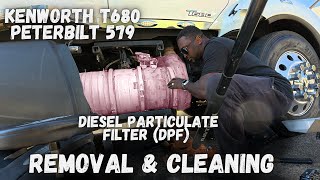

The information in this article is provided for general reference and educational purposes only. Vehicle specifications, procedures, and part compatibility can vary by production date, trim level, and region. Always consult your vehicle's factory service manual and verify part numbers before purchasing or performing repairs. Safety-critical components such as airbags, seat belts, and braking systems should be installed by a qualified professional.
- 🎬 Helpful Videos
- What Does P3807 Mean?
- Can I Drive With P3807?
- Common Causes
- Symptoms
- Diagnostic Flowchart
- Common Fixes & Costs
- DIY vs Professional
- Used vs. New Parts: Buying Guide
- What Happens If You Wait — Timeline
- Cost of Not Fixing It
- Diagnosis Steps
- When This Code Triggers (Freeze-Frame Conditions)
- Related Codes
- Climate & Environmental Factors
- How to Talk to a Mechanic About This Code
- Where to Take It: Dealer vs Independent vs Chain
- When to Walk Away From the Repair
- What Scan Tool You Need for This Code
- How to Clear the Code After You Fix It
- Will This Fail Emissions / State Inspection?
- Most Commonly Affected Vehicles
- Manufacturer-Specific Notes
- Real Owner Stories
- 2018 Peterbilt 389 with MX-13 at 650k miles constantly requesting regens.
- Misdiagnosis: Replacing DPF multiple times when injectors were the root cause.
- 2017 PACCAR MX-13 with rattling noise and multiple aftertreatment codes, including P3807.
- How to Prevent This Code From Triggering
- Frequently Asked Questions
- What is the most common misdiagnosis for P3807?
- Can I just 'delete' the DPF system to fix this?
- What is the difference between a parked regen and a forced regen?
- Could a bad fuel cap cause a P3807 code?
- Why does my truck keep asking for a parked regen?
- How can I tell if it's the DPF sensor or the DPF itself?
- What is 'injector knock' on a PACCAR engine?
- How often should a DPF be professionally cleaned?
- Key Takeaways
- 🎟️ Get 5% Off