

OBD-II Code P3796: Diesel Particulate Filter (DPF) Soot Level - Most Severe
What P3796 means on PACCAR engines, why it triggers, and how to fix it
- P3796 is a PACCAR-specific lockout code indicating the DPF soot load has exceeded 100%, triggering an immediate and severe engine derate.
- Driving with an active P3796 code destroys turbocharger seals and cracks the $3,000+ DPF substrate due to extreme exhaust backpressure.
- The engine control unit permanently disables the dashboard regeneration switch to prevent a vehicle fire, requiring a professional diagnostic tool to override.
- Resolving P3796 requires fixing the root cause (like a failed 7th injector), professionally baking the DPF, and performing an ECU soot level reset.
What Does P3796 Mean?

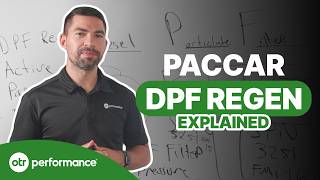
P3796 is a manufacturer-specific code for PACCAR MX-11 and MX-13 diesel engines. It means the engine control unit (ECU) detects the Diesel Particulate Filter (DPF) is clogged with soot to its most severe level (corresponding to SPN 3251, FMI 0). The ECU immediately disables all automatic and driver-initiated regeneration procedures to prevent a fire or catastrophic damage to the filter substrate. This is the final lockout stage, following earlier P3798 and P3797 warnings.
Technical definition: Diesel Particulate Filter (DPF) – Soot level, most severe. The ECU calculates the soot mass inside the DPF exceeds the maximum allowable threshold (SPN 3251, FMI 0) and can no longer be safely burned off through regeneration. Note: Generic code lists sometimes incorrectly associate P3796 with an exhaust temperature sensor circuit fault; on modern PACCAR engines, it definitively indicates a critical soot load.
Can I Drive With P3796?

No — Do Not Drive. The exhaust filter is critically clogged and engine power is severely derated. Continuing to drive causes expensive, permanent damage to the DPF, turbocharger, and related aftertreatment components. Attempting a regeneration at this level risks a vehicle fire.
Common Causes

- Poor Operational Habits (Excessive Idling & Interrupted Regens) (Very Common) — Long idle periods and repeatedly canceling active regenerations prevent the exhaust from reaching the 1,100°F required to burn off soot, causing rapid accumulation.
- Faulty 7th Injector (Fuel Doser) (Very Common) — This injector sprays diesel into the exhaust to ignite a regeneration. If clogged with carbon or electrically failed, the DPF cannot heat up, leading directly to P3796.
- Failed DPF Differential Pressure Sensor or Hoses 🎬 See this walkthrough on replacing the DPF pressure sensor. (Common) — This sensor measures DPF blockage. If the sensor fails or its rubber hoses crack/plug with soot, the ECU receives false readings and fails to command timely regenerations.
- Upstream Engine Faults (EGR, Turbo, Injectors) (Less Common) — Leaking fuel injectors, a stuck EGR valve, or a failing turbocharger force the engine to produce excessive black smoke, overwhelming the DPF faster than it can clean itself.
- Exhaust System Leaks (Less Common) — Leaks at the flex pipe or V-band clamps allow heat to escape, preventing the aftertreatment system from reaching regeneration temperatures.
- Damaged Sensor Wiring (Rare) — Corroded connectors or chafed wiring to the DPF pressure sensor or exhaust temperature sensors cause signal loss, disrupting the ECU's regeneration logic.
- Broken Internal DOC Baffle (Rare) — A known PACCAR issue (TSB E254) where a broken baffle inside the Diesel Oxidation Catalyst disrupts exhaust flow, preventing regeneration and triggering P3796.
Symptoms

- Severe engine power derate (limp mode) — The ECU slashes engine power to protect the aftertreatment system, making the truck dangerously slow to accelerate.
- Flashing DPF and Check Engine lights — Multiple dashboard warnings illuminate, indicating a critical emissions failure requiring immediate service.
- Dashboard regeneration switch disabled — Pressing the manual regen button yields no response. The ECU locks out the function for safety.
- Stop Engine warning message — The dashboard displays a critical message instructing the driver to shut down the engine to prevent catastrophic damage.
Diagnostic Flowchart

Tap your situation to follow the diagnostic path that matches what you're seeing on this code.
Common Fixes & Costs
- Remove and professionally clean the DPF — Parts: $350 - $500 (Bake and clean service fee), Labor: $450 - $800 (R&R labor), ~4 hr book time (Professional)
- Replace the 7th injector (fuel vaporizer) — Parts: $250 - $400, Labor: $225 - $400, ~2 hr book time (Intermediate)
- Replace the DPF differential pressure sensor and hoses — Parts: $100 - $150, Labor: $150 - $200, ~1 hr book time (DIY)
- Repair leaking exhaust flex pipe or V-band clamps — Parts: $150 - $300, Labor: $300 - $450, ~2.5 hr book time (Intermediate)
- Replace the DPF assembly — Parts: $3,000 - $5,000, Labor: $450 - $800, ~3.5 hr book time (Professional)
DIY vs Professional
- Replace the DPF differential pressure sensor and hoses — Beginner: Yes
Tools: Socket set, pliers, safety glasses. - Replace the 7th injector (fuel vaporizer) — Beginner: No
Tools: Wrenches, penetrating oil, torque wrench, flare nut wrench. - Repair leaking exhaust flex pipe — Beginner: No
Tools: Heavy-duty sockets, pry bars, safety stands. - Remove and professionally clean the DPF — Beginner: No
Tools: Transmission jack, 3/4" impact tools, diagnostic software.
Used vs. New Parts: Buying Guide
When a used part is worth it: Purchase a professionally 'remanufactured' DPF (baked, cleaned, and flow-tested) if your original unit is cracked or melted. Never buy an untested 'used' DPF from a salvage yard.
Donor-vehicle mileage cap: roughly under 400000 miles for the part to have meaningful remaining life.
Donor quality checklist:
- Supplier provides a pre- and post-cleaning flow test report.
- Supplier confirms the unit was thermally baked, not just blown out with air.
- Includes a minimum 1-year warranty.
Decision logic:
- If The original DPF is clogged but physically intact (no cracks/melting) → Professionally clean the original DPF. This is the cheapest and most reliable option.
- If The original DPF is cracked, melted, or oil-soaked → Purchase a warrantied, remanufactured DPF from a reputable supplier.
- If Operating in California (CARB jurisdiction) → Purchase a new OEM or CARB-certified aftermarket DPF to ensure legal compliance.
Warranty tradeoff: Remanufactured DPFs offer 1-year warranties; new OEM units offer 1-2 years. No warranty covers a replacement DPF that clogs due to an unfixed engine issue (like a bad injector).
Worst-case if a used part fails: $1,500 (Repeat labor and towing if a cheap remanufactured unit fails prematurely)
What Happens If You Wait — Timeline
- 0-1 week: Code P3798 ('Least Severe') appears. The DPF light turns solid. The truck attempts frequent active regens. No derate occurs. (MPG impact: 0-3%% · Added cost: $0)
- 1-4 weeks: Code escalates to P3797 ('Moderately Severe'). The DPF light flashes. A 5-10% engine derate begins. A parked regen is urgently required. (MPG impact: 3-8%% · Added cost: $50-150 (wasted fuel from failed regens))
- 1-2 months: Code P3796 ('Most Severe') triggers. Check Engine and Stop Engine lights illuminate. Severe engine derate (limp mode) activates. The ECU locks out all regenerations. (MPG impact: 10-20%+% · Added cost: $250 - $1,000+ (towing and mandatory DPF removal))
- 2+ months (if driven in derate): Catastrophic failure. Extreme backpressure destroys turbocharger seals and cracks the DPF's internal ceramic substrate. (MPG impact: N/A% · Added cost: $5,000 - $15,000+ (turbocharger and DPF replacement))
Cost of Not Fixing It
- Immediate: Severe engine derate (limp mode) renders the truck unusable for commercial operation. (Added cost: $250 - $1,000 (Towing fees))
- Weeks (if bypassing derate): Extreme exhaust backpressure destroys turbocharger bearings and seals. (Added cost: $2,500 - $6,000 (Turbocharger replacement))
- Months: Trapped heat and pressure crack or melt the DPF's internal ceramic substrate, requiring full replacement. (Added cost: $3,000 - $6,000 (New DPF assembly))
Diagnosis Steps
- Confirm Fault Codes and Check for Root Causes
Use a heavy-duty scan tool to verify P3796 is active. Look for companion codes like P3799 (heating issue), P1496 (EGR disabled), or 7th injector faults, which pinpoint why the DPF clogged.
Tools: Heavy-Duty Diagnostic Scan Tool (Beginner) - Monitor Live DPF Differential Pressure
Observe the 'DPF Differential Pressure' PID. At key-on/engine-off, it must read 0 kPa. At idle, expect 1-3 kPa. Readings >5 kPa at idle confirm a physical clog. Unchanging readings indicate a sensor/hose failure.
Tools: Heavy-Duty Diagnostic Scan Tool (Intermediate) - Inspect DPF Pressure Sensor Hoses
Visually inspect the rubber hoses connecting the exhaust pipe to the DPF pressure sensor. Replace them immediately if you find cracks, melting, or hard carbon blockages.
Tools: Flashlight, Pliers (Beginner) - Inspect the 7th Injector (Fuel Doser)
Locate the doser injector on the exhaust pipe. Check for external fuel leaks. Remove the injector to inspect the nozzle; if caked in wet carbon, it must be cleaned or replaced.
Tools: Wrenches, Penetrating Oil (Intermediate) - Test the DPF Sensor Circuit
Disconnect the DPF pressure sensor. Use a multimeter to verify a 5-volt reference, a solid ground (<5 ohms), and continuity on the signal wire back to the ECU.
Tools: Multimeter, Wiring Diagram (Advanced) - Test Upstream Fuel Pressure
Tee a pressure gauge into the low-pressure fuel circuit supplying the 7th injector. Verify steady pressure (typically 60-90 PSI) while running. Low pressure prevents proper doser operation.
Tools: Fuel Pressure Gauge, Fittings (Advanced) - Inspect for Exhaust Leaks
Check the exhaust flex pipe and V-band clamps between the turbo and DPF. Look for black soot trails indicating leaks that allow regeneration heat to escape.
Tools: Flashlight, Soapy Water (Intermediate) - Remove DPF for Professional Cleaning
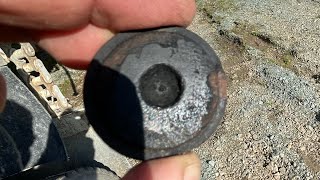
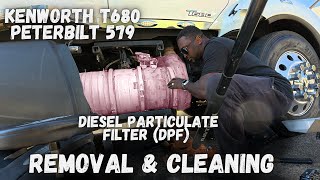
Remove the DPF assembly. Inspect the ceramic face for cracks or melting. If intact, send it to a specialized facility for a pneumatic and thermal 'bake-and-clean' service.
Tools: Heavy-Duty Socket Set, Transmission Jack (Professional) - Reset ECU and Validate Repair
After reinstalling the clean DPF, use the scan tool to perform a 'DPF Soot Level Reset'. Clear all codes and initiate a forced stationary regeneration to verify the system reaches 1,100°F+.
Tools: Heavy-Duty Diagnostic Scan Tool (with PACCAR bidirectional controls) (Professional)
When This Code Triggers (Freeze-Frame Conditions)
- DPF Soot Load: >100% (Calculated soot mass exceeds the maximum safe threshold for regeneration.)
- DPF Differential Pressure: >5-7 kPa at idle (Exhaust backpressure is extremely high at low RPM, confirming a severe physical blockage.)
- DPF Regen Status: Inhibited/Disabled (The ECU actively blocks new regeneration attempts to prevent thermal damage to the filter.)
Related Codes
- P3797 — Indicates a 'Moderately Severe' soot level. It is the final warning before P3796. Unlike P3796, P3797 still allows a scan tool to force a regeneration.
- P3798 — The 'Least Severe' soot warning. It prompts the driver to perform a parked regen. Ignoring it leads directly to P3797 and P3796.
- P1496 — Means 'EGR Disabled Due to System Fault'. The ECU disables the EGR to protect the engine from the severe P3796 DPF clog. It clears automatically when P3796 is resolved.
- P3799 — Means 'DOC Temperature Insufficient for Regeneration'. This points directly to the root cause of P3796: a failed 7th injector or exhaust leak preventing the system from heating up.
Climate & Environmental Factors
- High Altitude: Reduced oxygen lowers combustion efficiency, creating more soot. Thinner air makes it harder to achieve the 1,100°F required for regeneration.
- Cold Weather: Sub-freezing temperatures prevent the exhaust system from retaining heat during short trips or idling, leading to incomplete regenerations.
How to Talk to a Mechanic About This Code
Say this: "My truck has a P3796 code and is in derate. I need a diagnostic to find the root cause of the DPF clog. Please test the 7th injector, DPF pressure sensor, and check for exhaust leaks before recommending a DPF replacement."
This proves you understand P3796 is a symptom, not the root problem. It forces the mechanic to perform proper diagnostics rather than jumping to a $4,000 DPF replacement that will just clog again.
Avoid saying:
- 'My truck won't regen, just force one.' (Impossible with P3796)
- 'Just replace the DPF.' (Ignores the root cause)
Questions to ask before authorizing the repair:
- What was the root cause of the DPF clog?
- What were the DPF differential pressure readings at idle before you recommended replacement?
- Did you test the 7th injector for proper spray pattern?
- Will you perform a 'DPF Soot Level Reset' with the diagnostic tool after the repair?
Where to Take It: Dealer vs Independent vs Chain
- Dealer:
A safe choice. Dealers have mandatory access to the PACCAR Davie software required for the DPF reset.
Best for: Trucks under powertrain or emissions warranty., Complex software issues requiring PACCAR Davie updates.
Downsides: Highest labor rates ($200+/hour)., Tendency to replace entire assemblies rather than individual components. (Typical cost: +40% vs. baseline) - Independent Shop:
The best value, provided you call ahead and ask: 'Do you have the software to perform a PACCAR DPF soot level reset?'
Best for: Out-of-warranty trucks., Cost-effective DPF bake-and-clean services.
Downsides: Not all shops own the $5,000+ diagnostic tools required for PACCAR resets. (Typical cost: +0% vs. baseline) - Chain Shop:
Avoid. National truck stops cannot perform the in-depth diagnostics and software resets required for P3796.
Best for: Tires and oil changes.
Downsides: Lack specialized training and OEM-level software for aftertreatment resets. (Typical cost: -10% vs. baseline)
When to Walk Away From the Repair
If the estimated repair cost exceeds 25% of the commercial truck's current market value, evaluate alternatives. Downtime is a massive hidden cost.
- Car worth $80000, fix is $6000: Fix it. The repair is 7.5% of the truck's value and is a standard operational cost.
- Car worth $30000, fix is $9000: Borderline. The repair is 30% of the value. Get a second opinion and evaluate engine hours before proceeding.
What Scan Tool You Need for This Code
Minimum: A heavy-duty diagnostic tool with PACCAR bidirectional controls. It MUST command a 'DPF Soot Level Reset' and a 'Forced Stationary Regeneration'.
Basic code readers only display P3796. They cannot perform the mandatory ECU reset required to clear the lockout and exit limp mode after installing a clean DPF.
Budget: None (~$0) — No tool under $100 possesses PACCAR-specific bidirectional reset capabilities.
Mid-range: Zurich HD Truck Code Reader (~$400) — Claims to initiate regens, but often lacks the critical 'soot level reset' command for PACCAR. It is a gamble.
Professional: Autel MaxiSys MS909CV / Jaltest (~$3,000-6,000) — Professional tools that read live data, command the DPF soot level reset, and initiate verification regens. Required for a complete repair.
Rent vs buy: You cannot rent these professional tools. Owner-operators should rely on a well-equipped independent shop for this specific repair unless managing a fleet.
How to Clear the Code After You Fix It
- Repair the root cause of the failure (e.g., replace the 7th injector).
- Reinstall the professionally cleaned or new DPF with fresh gaskets.
- Connect a diagnostic tool (like PACCAR Davie or Autel MaxiSys) and execute the 'DPF Soot Level Reset' or 'DPF Replacement' command.
- Clear all active and inactive fault codes from the ECU.
- Command a forced stationary regeneration to verify the system successfully completes a cycle.
Drive cycle (~60 minutes): Driving will not clear this code. You must perform a tool-based ECU reset and a forced stationary regeneration (30-60 minutes). Afterward, test-drive at highway speeds for 45 minutes to ensure monitors run and codes do not return.
Readiness monitors affected: PM Filter Monitor, Exhaust Gas Sensor Monitor
Before emissions retest: drive at least 50 miles to fully set monitors.
Watch out for:
- Clearing the code without executing the specific 'DPF Soot Level Reset' command leaves the truck in limp mode.
- Failing to reset the ash accumulator value after installing a clean DPF.
- Skipping the verification regeneration, which masks underlying heating issues until the truck breaks down again.
Will This Fail Emissions / State Inspection?
Yes — this code typically fails an OBD-II emissions inspection.
- California: An active P3796 causes an automatic failure of the Heavy-Duty I/M Program (Clean Truck Check). CARB blocks vehicle registration until repaired. Installing uncertified used DPFs is illegal.
- Texas: Commercial vehicles over 26,001 lbs GVWR fail the annual safety inspection if the Check Engine Light is illuminated or the vehicle is in an active derate.
- New York: Fails the annual heavy-duty diesel emissions inspection immediately due to the active Malfunction Indicator Lamp (MIL).
Most Commonly Affected Vehicles
- Kenworth T680 / T880 / W990 (2013-2024) — Equipped with PACCAR MX-11 or MX-13 engines. 2017+ models use a compact single-canister aftertreatment system.
- Peterbilt 579 / 567 / 389 (2013-2024) — Shares the MX powertrain and emissions logic with Kenworth.
- DAF XF / CF (2013-2024) — European PACCAR models utilizing identical MX engine architecture and fault logic.
Manufacturer-Specific Notes
- PACCAR: P3796 is the final stage of a strict three-tier warning system (P3798 → P3797 → P3796). Its sole purpose is to force a service visit to prevent thermal damage.
- PACCAR: PACCAR Davie diagnostic software often creates a 'catch-22'. Active faults block forced regenerations, but a successful regeneration is required to clear the fault. Technicians must use specific software overrides.
- PACCAR: TSB E254 notes that on EPA 2017 MX engines, a broken internal baffle in the Diesel Oxidation Catalyst (DOC) disrupts flow and triggers P3796.
Real Owner Stories
2019 Peterbilt MX-13 stuck in regen cycles, leading to P3796 lockout.
The driver noticed frequent, failed regen attempts. The regen light flashed, followed by the P3796 code and an immediate engine derate.
What they tried:
- Ignored the frequent regens initially.
- Attempted a parked regen, but the dashboard switch was locked out.
- Received a quote from a mobile mechanic for a full DPF replacement.
Outcome: A second shop diagnosed a failed 7th injector (doser). Replacing the injector and performing a forced regen with a diagnostic tool cleared the lockout. The DPF only required cleaning, saving thousands over a replacement.
Lesson: Frequent, failed regens are the primary warning sign. P3796 is the result of an upstream failure. Always diagnose the root cause (like the 7th injector) before replacing the DPF.
2021 Kenworth T680 triggered P3796 after extended low-idle time.
After idling overnight, the DPF warning light illuminated, followed by the check engine light and P3796. The truck refused to perform a parked regen.
What they tried:
- Pressed the dash regen switch, which failed to initiate.
- Bumped the idle RPM using cruise control to 'clear it out', which failed due to the active lockout.
Outcome: A dealer used PACCAR Davie software to override the lockout and force a regeneration. The DPF survived, but the event caused significant downtime and a $400 service fee.
Lesson: Extended low-idling rapidly fills the DPF. Once P3796 activates, driver interventions fail; overriding the lockout requires OEM-level diagnostic software.
Fleet truck repeatedly threw P3797 and P3796 codes despite forced regens.
Mechanics repeatedly cleared codes and forced regens, but the truck returned to the shop with P3796 every few weeks.
What they tried:
- Multiple forced regens.
- Replaced the DPF differential pressure sensor.
- Visually inspected the 7th injector.
Outcome: Deep diagnostics revealed a faulty fuel shutoff valve on the engine's fuel module. It delivered incorrect fuel pressure to the 7th injector, preventing adequate DPF heating. Replacing the valve permanently resolved the clogging.
Lesson: If DPF codes return after cleaning, an upstream component is failing. Issues with fuel dosing, EGR, or turbochargers create excess soot that overwhelms a clean filter.
How to Prevent This Code From Triggering
- Eliminate Excessive Idling (Daily) — Idling produces heavy soot at low exhaust temperatures, preventing passive regeneration. Use an Engine Idle Shutdown Timer (EIST) or bump the idle to 850 RPM in cold weather to maintain exhaust heat.
- Execute Parked Regenerations Immediately (When prompted) — The DPF warning light is a mandatory request. Ignoring it escalates the soot load to P3797 and eventually the P3796 lockout. Perform a parked regen as soon as safely possible.
- Use CK-4 Low-Ash Engine Oil (Every oil change) — Standard oils contain metallic additives that burn into unremovable ash, permanently clogging the DPF. CK-4 Low SAPS oil minimizes ash accumulation and extends filter life.
- Schedule Professional DPF Baking (Every 200,000-250,000 miles) — Unburnable ash accumulates regardless of driving habits. A professional 'bake-and-clean' service removes this ash, restoring capacity and preventing the high backpressure that triggers P3796.
Frequently Asked Questions
Can I just delete the DPF system to get rid of code P3796?
No. Removing the DPF system violates the federal Clean Air Act and causes automatic emissions inspection failures. It also results in massive fines for both the owner and the shop performing the work.
Why won't my regen button work with code P3796?
The ECU intentionally disables regeneration because the soot level is too high for a safe burn-off. This safety feature prevents DPF fires or cracking the ceramic core. A service reset with a diagnostic tool is required after repair.
What is the most common mistake when fixing a P3796 code?
The most common mistake is replacing the DPF without diagnosing why it clogged. If you ignore a bad 7th injector, exhaust leak, or excessive idling, the new DPF will quickly clog again. Always fix the root cause first.
What is the difference between P3796 and P1496?
P3796 indicates a critically full DPF. P1496 is a secondary code indicating the engine disabled the EGR system to protect itself from the severe DPF clog. Fixing the cause of P3796 allows you to clear P1496.
What does SPN 3251 / FMI 0 mean?
SPN 3251 identifies the DPF soot load. FMI 0 indicates the data is valid but above the normal operational range at the most severe level. It is the SAE standard technical designation for a critically clogged DPF.
Could the problem be the wiring instead of the sensor itself?
Yes, a damaged wiring harness or corroded connector sends incorrect signals mimicking a failed sensor. Technicians must test the circuit's 5-volt reference, ground, and signal voltage before replacing the DPF pressure sensor.
Is P3796 covered under warranty?
Emissions components typically carry a 5-year/100,000-mile federal warranty, and PACCAR offers extended aftertreatment warranties. However, dealers deny claims if the failure stems from poor maintenance, excessive idling, or ignoring prior warnings like P3798.
Can I clean the DPF myself to fix this?
No. The filter requires a specialized multi-stage 'bake and clean' machine to remove soot and unburnable ash. Pressure washing or using chemical solvents destroys the sensitive internal ceramic substrate.
How does excessive idling cause a P3796 code?
Diesel engines run inefficiently at idle, producing heavy soot while failing to generate enough exhaust heat for regeneration. This rapid soot accumulation overwhelms the DPF, eventually triggering the P3796 lockout.
My truck is derated. Will fixing the P3796 code restore full power?
Yes. Once you repair the root cause, clean or replace the DPF, and perform an ECU reset with a diagnostic tool, the system clears the fault. The engine exits derate and restores full power.
Key Takeaways
- P3796 is a PACCAR-specific lockout code indicating the DPF soot load has exceeded 100%, triggering an immediate and severe engine derate.
- Driving with an active P3796 code destroys turbocharger seals and cracks the $3,000+ DPF substrate due to extreme exhaust backpressure.
- The engine control unit permanently disables the dashboard regeneration switch to prevent a vehicle fire, requiring a professional diagnostic tool to override.
- Resolving P3796 requires fixing the root cause (like a failed 7th injector), professionally baking the DPF, and performing an ECU soot level reset.
Helpful Videos

The information in this article is provided for general reference and educational purposes only. Vehicle specifications, procedures, and part compatibility can vary by production date, trim level, and region. Always consult your vehicle's factory service manual and verify part numbers before purchasing or performing repairs. Safety-critical components such as airbags, seat belts, and braking systems should be installed by a qualified professional.
- 🎬 Helpful Videos
- What Does P3796 Mean?
- Can I Drive With P3796?
- Common Causes
- Symptoms
- Diagnostic Flowchart
- Common Fixes & Costs
- DIY vs Professional
- Used vs. New Parts: Buying Guide
- What Happens If You Wait — Timeline
- Cost of Not Fixing It
- Diagnosis Steps
- When This Code Triggers (Freeze-Frame Conditions)
- Related Codes
- Climate & Environmental Factors
- How to Talk to a Mechanic About This Code
- Where to Take It: Dealer vs Independent vs Chain
- When to Walk Away From the Repair
- What Scan Tool You Need for This Code
- How to Clear the Code After You Fix It
- Will This Fail Emissions / State Inspection?
- Most Commonly Affected Vehicles
- Manufacturer-Specific Notes
- Real Owner Stories
- 2019 Peterbilt MX-13 stuck in regen cycles, leading to P3796 lockout.
- 2021 Kenworth T680 triggered P3796 after extended low-idle time.
- Fleet truck repeatedly threw P3797 and P3796 codes despite forced regens.
- How to Prevent This Code From Triggering
- Frequently Asked Questions
- Can I just delete the DPF system to get rid of code P3796?
- Why won't my regen button work with code P3796?
- What is the most common mistake when fixing a P3796 code?
- What is the difference between P3796 and P1496?
- What does SPN 3251 / FMI 0 mean?
- Could the problem be the wiring instead of the sensor itself?
- Is P3796 covered under warranty?
- Can I clean the DPF myself to fix this?
- How does excessive idling cause a P3796 code?
- My truck is derated. Will fixing the P3796 code restore full power?
- Key Takeaways
- 🎟️ Get 5% Off