

OBD-II Code P3778: PTO Enable Switch Circuit High
What P3778 means, why it triggers, and how to fix it
- Code P3778 triggers when the Transmission Control Module detects a voltage above 4.5V on the Power Take-Off (PTO) switch circuit, disabling auxiliary equipment.
- Replacing a faulty in-cab PTO switch resolves this code in over 50% of standard work truck cases, costing between $80 and $300 for parts and labor.
- You can safely drive a truck with a standard P3778 PTO fault, but attached hydraulic equipment like dump beds or winches will remain locked out until repaired.
- On Kenworth and Peterbilt trucks with PACCAR engines, P3778 indicates a missing or broken Diesel Oxidation Catalyst (DOC), requiring immediate replacement to prevent a $5,000+ DPF failure.
What Does P3778 Mean?

P3778 means the Transmission Control Module (TCM) or Engine Control Module (ECM) detects a voltage in the Power Take-Off (PTO) 'on/off' switch circuit that exceeds the manufacturer's specified range. This prevents the PTO from engaging. On PACCAR engines, this code has a completely different meaning: it indicates a critical failure in the exhaust aftertreatment system.
Technical definition: The SAE/ISO definition is "PTO Enable Switch Circuit High". The TCM registers a voltage from the PTO enable switch signal circuit exceeding the normal 5V or 12V reference range, indicating a short to power. In PACCAR applications, the definition is 'Diesel Oxidation Catalyst (DOC) – Not Detected' or 'Dosing module, fuel – Doser degraded', pointing to an aftertreatment failure.
Can I Drive With P3778?
Yes, But With Caution. For a standard PTO fault, you can drive the vehicle normally. The core engine and transmission remain unaffected. However, the Power Take-Off (PTO) unit and any equipment it powers will be completely inoperable until the code is fixed. For the PACCAR-specific DOC fault, driving is NOT recommended. The engine enters a power derate or 'limp mode'. Continuing to drive causes a clogged DPF and damages other expensive aftertreatment components, adding thousands to the repair bill.
Common Causes

- Faulty PTO Enable Switch (Very Common) — The in-cab switch used to turn the PTO on and off fails internally, sending a constant high-voltage signal to the control module.
- Wiring Harness Short to Power (Common) — The signal wire from the PTO switch chafes against another wire carrying battery voltage, causing the computer to see a constant 'high' signal. This happens frequently on work trucks exposed to harsh conditions and vibration.
- Liquid Intrusion or Corrosion in Connectors (Common) — Spills in the cab, leaking windshields, or road salt exposure causes liquid to enter the dash switch connector or main harness connectors, bridging pins and creating a short to voltage.
- Faulty PTO Solenoid or Actuator (Less Common) — If the switch controls a relay or solenoid that actuates the PTO, an internal short within the solenoid causes voltage irregularities in the circuit.
- Incorrect Control Module Parameters (Less Common) — If the PTO system's operating parameters are programmed incorrectly into the TCM or ECM (often after a module replacement or aftermarket installation), the module interprets a normal signal as a high voltage fault.
- Faulty Transmission Control Module (TCM) (Rare) — The control module itself fails internally and misinterprets a correct signal from the switch. This is the last component to suspect after ruling out wiring and switches.
Symptoms

- PTO Will Not Engage — The primary function of the PTO fails. When the driver presses the switch, auxiliary equipment like a dump bed, crane, or pump does not activate.
- Check Engine or Transmission Warning Light On — The dashboard warning light illuminates immediately upon the module detecting the circuit high condition.
- PTO Switch Light Flashing — The indicator light on the PTO activation switch flashes instead of staying solid, indicating a fault or an unmet engagement interlock condition.
- Engine RPM Does Not Increase — Systems programmed to raise the engine idle to a preset RPM when the PTO engages fail to do so.
Diagnostic Flowchart
Tap your situation to follow the diagnostic path that matches what you're seeing on this code.
Common Fixes & Costs
- Replace the PTO Enable Switch — Parts: $30-$150, Labor: $50-$150, ~0.8 hr book time (DIY)
- Repair Damaged Wiring or Connectors — Parts: $10-$50, Labor: $150-$500, ~2.5 hr book time (Intermediate)
- Replace Diesel Oxidation Catalyst (PACCAR specific) — Parts: $1500-$3500, Labor: $300-$600, ~3.5 hr book time (Professional)
- Replace PTO Solenoid/Actuator — Parts: $75-$250, Labor: $100-$300, ~1.5 hr book time (Intermediate)
- Reprogram or Replace the Transmission/Engine Control Module — Parts: $600-$2000, Labor: $150-$350, ~2.0 hr book time (Professional)
Used vs. New Parts: Buying Guide
When a used part is worth it: Buying a used DOC is risky but viable for older, high-mileage trucks where a new OEM part is cost-prohibitive. Source only from low-mileage vehicles retired for non-engine-related reasons.
Donor-vehicle mileage cap: roughly under 150000 miles for the part to have meaningful remaining life.
Donor quality checklist:
- Verify the part number exactly; interchanges are rare and risky.
- Inspect the catalyst face for 'face plugging,' melting, or physical damage.
- Avoid parts with significant external rust or damaged sensor bungs.
Decision logic:
- If The vehicle is under warranty or less than 5 years old → Always use a new OEM part to ensure compatibility and maintain warranty.
- If The root cause of the original DOC failure was oil/coolant contamination → Buy a new part. A used part subjected to similar contamination fails prematurely.
- If Budget is the primary concern on an out-of-warranty, high-mileage truck → A used or remanufactured DOC is a viable option, but accept the risk of a shorter lifespan.
Warranty tradeoff: Used parts typically come with a 30-90 day warranty. New aftermarket parts carry a 1-2 year warranty, while new OEM parts offer the best guarantee of longevity.
Worst-case if a used part fails: $1000-$2000 for repeat labor and a second replacement part if the used unit fails.
What Happens If You Wait — Timeline
- Immediate (Standard PTO Fault): Code P3778 sets, Check Engine Light illuminates. The PTO and attached equipment will not activate. The truck remains fully drivable. (MPG impact: 0%% · Added cost: $0 (Damage is primarily lost revenue/productivity))
- 0-1 Month (PACCAR DOC Fault): Code P3778 ('DOC Not Detected') sets. The ECM disables active regeneration. The DPF accumulates soot at an accelerated rate, and the DPF warning light flashes. (MPG impact: 3-5%% · Added cost: $100-$300 in wasted fuel.)
- 1-2 Months (PACCAR DOC Fault): The DPF becomes heavily loaded with soot. The truck repeatedly prompts for a parked regen, which fails. The engine derates to 25 MPH, then to a 5 MPH limp mode. (MPG impact: 10-15%% · Added cost: $2,500-$5,000 for DPF replacement.)
- 2+ Months (PACCAR DOC Fault): Catastrophic failure. Extreme exhaust backpressure damages turbocharger seals. The broken DOC baffle travels downstream, physically destroying the DPF and SCR catalyst bricks. (MPG impact: 20%+% · Added cost: $7,000-$15,000+ for full aftertreatment and turbo replacement.)
Cost of Not Fixing It
- Immediate: For a standard PTO fault, the truck remains drivable but cannot perform its intended work (e.g., dump bed won't lift, winch won't operate). (Added cost: Negligible repair cost, but represents significant lost revenue and productivity.)
- 0-1 Month (PACCAR DOC Fault): The aftertreatment system cannot perform regenerations. The DPF clogs with soot, leading to reduced fuel economy and engine derates. (Added cost: $200-$500 in lost fuel economy and forced regeneration costs.)
- 1-6 Months (PACCAR DOC Fault): Continued driving with a non-functional DOC severely clogs the DPF, requiring replacement. Excessive backpressure damages turbocharger seals. (Added cost: $2,500-$10,000 for DPF replacement and potential turbo repairs.)
Diagnosis Steps
- Read the Fault Codes and Verify the Definition
Use a professional OBD-II scanner to confirm P3778 is present. Check the code's definition provided by the scanner for your specific vehicle. If it mentions the DOC or aftertreatment system on a PACCAR engine, stop PTO diagnosis immediately and inspect the exhaust.
Tools: Professional OBD-II Scanner (Beginner) - Check for Technical Service Bulletins (TSBs)
Search online for TSBs related to code P3778 for your specific vehicle make and model. Manufacturers release bulletins for known issues, such as PACCAR's TSB E254 for a broken DOC baffle.
Tools: Internet Access, Service Manual (Beginner) - Visually Inspect the PTO Switch and Wiring
Look at the PTO enable switch in the cab and follow its wiring harness. Check for obvious signs of damage, loose connectors, corrosion, aftermarket wire taps, or areas where the harness rubs against metal.
Tools: Flashlight (Beginner) - Check for Reference Voltage and Ground at the Switch
Disconnect the switch connector. Use a multimeter to test the terminals in the harness-side connector. You should find a 5V or 12V reference signal on one pin and a solid ground on another. If the reference voltage is missing, the problem is upstream towards the control module.
Tools: Multimeter, Back-probe Pins (Intermediate) - Test the PTO Enable Switch Continuity
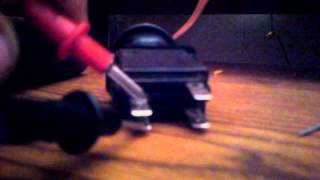
Test the switch itself for proper operation. Check for continuity across the switch's terminals when pressed and released. The resistance must change from infinite (open) to near zero (closed).
Tools: Multimeter (Intermediate) - Check for a Short to Voltage
Disconnect the PTO switch and the TCM/ECM. Use a multimeter set to DC volts to check the signal wire in the harness. There must be no voltage present. Reading 12V indicates a short to a power source in the harness.
Tools: Multimeter (Intermediate) - Perform a 'Wiggle Test'
With the multimeter connected to the signal wire, gently wiggle the wiring harness at various points between the switch and the control module. If the voltage reading jumps, it indicates an intermittent short at that location.
Tools: Multimeter (Intermediate) - Test the PTO Solenoid (if equipped)
Locate the PTO solenoid on the transmission. Check for a minimum of 10.2 VDC at the solenoid when the PTO is commanded on. With the solenoid disconnected, check its internal resistance (typically 20-30 Ω for Allison transmissions).
Tools: Multimeter, Service Manual (Professional) - Check Fuel Pressure (PACCAR DOC Fault)
If P3778 is defined as 'Doser degraded' on a PACCAR engine, check the fuel pressure at the dosing module (typically 125-145 PSI). Low fuel pressure prevents proper fuel injection into the exhaust stream for regeneration.
Tools: Fuel Pressure Gauge, Service Manual (Advanced) - Monitor Live Data for Voltage Thresholds
Using a professional scan tool, monitor the PID for the 'PTO Enable Switch'. The voltage threshold for a 'High' fault is typically above 4.5V on a 5V circuit, or above 13.5V on a 12V circuit. With the switch disconnected, the signal voltage must be 0V.
Tools: Professional OBD-II Scanner (Advanced)
When This Code Triggers (Freeze-Frame Conditions)
- Fault Trigger: Key-On or Switch Activation (The code sets immediately when the ignition turns on as the TCM performs a self-check, or the moment the driver attempts to activate the PTO switch.)
- PTO Switch Status: Off (Freeze frame data shows the switch in the 'Off' position, yet the module reads a high voltage, indicating a short to power.)
- Battery Voltage: 12.5-14.5V (The signal circuit voltage inappropriately matches battery voltage when it should be low (0V) or at a 5V reference.)
- Engine State (PACCAR DOC Fault): Running, during regeneration attempt (The ECM expects a specific temperature increase across the DOC during regeneration and sets the fault when this fails to happen.)
Related Codes
- P3777 — This code is for 'PTO Enable Switch Circuit Low,' indicating a short to ground or an open circuit.
- P251A — A generic code for 'PTO Enable Switch Circuit/Open', pointing to a broken wire or bad connection.
- P251C — Another generic code for 'PTO Enable Switch Circuit High', functionally identical to P3778.
- U0101 — Means 'Lost Communication with TCM'. A failing module or bad ground causes multiple erroneous codes, including P3778.
Climate & Environmental Factors
- Cold Weather: Moisture in pneumatic PTO systems freezes, preventing engagement. Thick hydraulic fluid slows equipment operation. For PACCAR engines, cold weather prevents the exhaust from reaching regeneration temperatures.
- High Humidity / Moisture: Prolonged exposure to rain and road spray accelerates corrosion on wiring harness connectors and grounds, a primary cause of electrical faults like P3778.
- Road Salt / Corrosive Environments: Road salt significantly increases corrosion on under-vehicle wiring and ground points, leading to premature failure of the PTO circuit wiring.
How to Talk to a Mechanic About This Code
Say this: "I have a [Insert Year/Make/Model] with fault code P3778. If it's a PACCAR engine, I need you to check for TSB E254 regarding the DOC before checking any PTO wiring. For a Ford/GM/Ram, I need you to test the PTO enable switch signal circuit for a short to voltage."
This immediately tells the service writer you understand the code's dual nature, preventing a costly misdiagnosis. It directs the technician to the most likely failure path based on the vehicle type.
Avoid saying:
- My check engine light is on, can you just fix it?
- The PTO isn't working, I think I need a new one.
- Just do whatever you think is necessary.
Questions to ask before authorizing the repair:
- Can you confirm the exact definition of P3778 your scanner is showing for my VIN?
- For a PACCAR: Did you inspect the DOC inlet for a broken baffle as per TSB E254?
- For a standard PTO fault: What voltage did you measure on the signal wire with the switch disconnected?
- Will you provide a written estimate that separates parts and labor before starting the work?
- What is the warranty on this specific repair and the parts used?
Where to Take It: Dealer vs Independent vs Chain
- Dealer:
Best for: PACCAR-powered Kenworth or Peterbilt trucks requiring proprietary DAVIE software and TSB access., Vehicles still under powertrain or emissions warranty., Complex transmission or module programming issues.
Downsides: Highest labor rates, often 25-50% more than independent shops., May favor replacing large assemblies over repairing individual components. (Typical cost: +50% vs. baseline) - Independent Shop:
Best choice for most non-PACCAR trucks. For PACCAR engines, use a dealer or an independent shop advertising specific PACCAR expertise.
Best for: Out-of-warranty standard PTO faults on Ford, GM, Ram, and Freightliner., Diagnosing and repairing common wiring and switch failures on work trucks., Shops specializing in heavy-duty trucks or Allison transmissions.
Downsides: Quality varies widely; look for ASE certification and specific truck experience., May lack proprietary diagnostic software for the latest PACCAR faults. (Typical cost: +0% vs. baseline) - Chain Shop:
AVOID. A standard automotive chain shop is not equipped to handle this code and will misdiagnose the issue.
Best for: Not applicable for this type of repair.
Downsides: Technicians lack specialized training for heavy-duty PTO systems or diesel aftertreatment diagnostics., Do not have the necessary diagnostic software for commercial trucks. (Typical cost: +0% vs. baseline)
When to Walk Away From the Repair
If the estimated repair cost exceeds 3-4 months of the net revenue generated by that commercial truck, seriously evaluate replacement vs. repair.
- Car worth $45000, fix is $800: Fix it. A standard PTO wiring or switch repair is a minor cost of doing business and necessary for the truck to perform its job.
- Car worth $60000, fix is $5000: Fix it. A PACCAR DOC replacement is expensive but a known failure item. At less than 10% of the truck's value, the repair is economically sound.
- Car worth $30000, fix is $15000: Walk away or get a second opinion. When the PACCAR fault cascades and requires a full aftertreatment system replacement, the cost is 50% of the truck's value.
What Scan Tool You Need for This Code

Minimum: A heavy-duty scanner supporting J1939 and J1708 protocols that reads manufacturer-specific fault code definitions. Basic OBD-II car readers will not work.
A cheap car scanner cannot connect to a heavy truck's diagnostic port and cannot differentiate the critical PACCAR 'DOC failure' definition from the standard 'PTO switch' definition.
Budget: N/A (~$0) — Consumer-grade scanners under $100 are for light-duty vehicles and lack the protocols for heavy-duty systems.
Mid-range: FOXWELL HD500 or ANCEL HD3200 (~$250) — These handheld heavy-duty scanners correctly read engine, transmission, and aftertreatment codes from PACCAR, Cummins, and Detroit engines, showing the specific definition of P3778.
Professional: Autel MaxiSys MS906CV or LAUNCH X431 PRO3S+HDIII (~$1300-2500) — Provides full bidirectional control to test PTO solenoids, monitor live data streams, and perform dealer-level aftertreatment commands like forced DPF regenerations.
Rent vs buy: Renting heavy-duty scanners is not common. For a one-time issue, paying for a professional diagnosis is more cost-effective than buying a pro-level tool.
How to Clear the Code After You Fix It
- Fix the root cause of the fault (e.g., replace the switch or repair the wiring).
- Use a professional OBD-II scan tool to clear the diagnostic trouble code from the TCM or ECM.
- Perform a key cycle (turn ignition off, wait 30 seconds, turn back on).
- Test the PTO function to ensure it operates correctly.
Drive cycle (~45 minutes): To reset aftertreatment monitors (relevant for the PACCAR fault), perform a cold start (engine off for 8+ hours), 5-10 minutes of idling, 20 minutes of steady highway driving (55-60 mph), followed by 15 minutes of stop-and-go city driving.
Readiness monitors affected: Comprehensive Component Monitor, Catalyst (CAT) Monitor, Exhaust Gas Recirculation (EGR) System Monitor
Before emissions retest: drive at least 200 miles to fully set monitors.
Watch out for:
- Clearing the code without fixing the short causes the code to return instantly.
- Disconnecting the battery resets all OBD readiness monitors, preventing you from passing an emissions inspection until a lengthy drive cycle is completed.
- Failing to address the broken internal baffle on a PACCAR DOC means the code returns during the next regeneration attempt.
Will This Fail Emissions / State Inspection?
Yes — this code typically fails an OBD-II emissions inspection.
- California: An active P3778 fault code causes an automatic failure of the Clean Truck Check (HD I/M) inspection. All required readiness monitors must be set to 'Ready' before a re-test.
- New York: An illuminated Malfunction Indicator Lamp (MIL) with code P3778 results in an annual emissions test failure for applicable heavy-duty vehicles.
- Texas: In counties requiring emissions testing, an active OBD-II trouble code is grounds for inspection failure.
Most Commonly Affected Vehicles
- Chevrolet / GMC Silverado / Sierra 2500/3500/4500 HD (2007-Present) — Commonly use Allison transmissions with PTO provisions. 2015+ models have an exhaust redesign complicating PTO installation.
- Ford F-450 / F-550 / F-650 / F-750 Super Duty (2005-Present) — Equipped with TorqShift transmissions. The Stationary Elevated Idle Control (SEIC) system must be correctly wired for proper PTO operation.
- Ram 3500 / 4500 / 5500 Chassis Cab (2008-Present) — Use a Vehicle System Interface Module (VSIM) for PTO control. 2013+ models with Aisin transmissions require specific EVIC programming.
- Peterbilt / Kenworth Various models with PACCAR MX engines (2017-2023) — CRITICAL: TSB E254 defines this code as 'DOC - Not Detected', caused by internal exhaust component failure, not the PTO switch.
- Isuzu N-Series (2010-Present) — Medium-duty trucks almost exclusively used in commercial applications where PTOs are standard.
- Freightliner M2, Cascadia (2010-Present) — Newer models with Allison transmissions require a light brake application to properly engage the PTO and avoid a flashing indicator light.
- Hino 268, 338 (2010-Present) — Medium-duty trucks featuring PTO options for tow trucks, flatbeds, and delivery vehicles.
- Mack Granite, Pinnacle (2012-Present) — Heavy-duty trucks with mDRIVE or Allison transmissions frequently using PTOs for construction and refuse applications.
Manufacturer-Specific Notes
- PACCAR: On MX-11 and MX-13 engines, P3778 means 'Diesel Oxidation Catalyst (DOC) – Not Detected'. This is caused by a broken internal baffle in the DOC, covered under TSB E254 for EPA2017 engines.
- General Motors (Allison): Specific interlock conditions must be met for the PTO to engage, such as applying the service brake while in Neutral or Park. Failure to do so results in a flashing PTO light.
- Ram (Aisin): PTO functions are controlled via the VSIM and programmed through the in-dash EVIC. Incorrectly setting parameters like mobile vs. stationary mode mimics a hardware fault.
- Ford (TorqShift): Super Duty trucks use a Stationary Elevated Idle Control (SEIC) circuit. The PTO switch wiring must integrate correctly with the SEIC wiring; improper connections cause engagement failures.
Real Owner Stories
2018 Kenworth T680 with PACCAR MX-13
The truck threw code P3778 and demanded frequent parked regens. Fuel economy dropped significantly, but the actual PTO switch worked fine.
Outcome: A PACCAR dealer diagnosed the issue correctly using TSB E254. The Diesel Oxidation Catalyst (DOC) had a broken internal baffle. The DOC was replaced, the aftertreatment system was reset, and the code cleared.
Lesson: On PACCAR engines, P3778 almost never refers to the PTO. It is a critical aftertreatment code requiring dealer-level diagnostic software.
2017 Ram 5500 with Aisin Transmission
The PTO for a picker crane engaged but shut off after exactly 30 seconds. The dash displayed 'PTO Engaged', then 'PTO Disengaged'.
Outcome: The issue traced back to the PTO pressure switch signal wire. The Vehicle System Interface Module (VSIM) needs a ground signal from this switch to confirm PTO engagement. Reconnecting the broken wire provided the ground signal, stopping the 30-second timeout.
Lesson: A PTO that disengages after a set time (e.g., 30 seconds) is a classic symptom of a missing feedback or interlock signal, not a faulty switch.
2012 Chevrolet Silverado 3500HD
The truck showed a 'Service Transmission' message and code P3778. The salt spreader PTO would not engage.
Outcome: The damaged section of the harness was cut out, and new wires were spliced in using heat-shrink butt connectors. The harness was re-routed and secured with zip ties.
Lesson: On work trucks in corrosive environments, wiring is a major failure point. A simple visual inspection of harnesses often pinpoints the cause of electrical circuit codes.
How to Prevent This Code From Triggering
- Perform regular visual inspections of wiring harnesses. (Weekly or during pre-trip inspections.) — Catches chafing, rubbing, or corrosion on PTO-related wiring before it causes a short or open circuit.
- Apply dielectric grease to electrical connectors. (Anytime a connector is disconnected for service.) — Prevents moisture and road salt from causing corrosion inside critical connectors for the PTO switch, solenoid, and control modules.
- Clean and test aftertreatment fuel doser nozzle (PACCAR). (Annually, before winter.) — Prevents the 'Doser degraded' variant of P3778. A clean nozzle ensures proper fuel spray pattern for efficient regeneration.
- Avoid excessive idling (PACCAR). (Daily habit.) — Prolonged idling keeps exhaust temperatures low, leading to soot buildup on the DOC and triggering catalyst efficiency faults.
Frequently Asked Questions
What is a Power Take-Off (PTO)?
A PTO is a device on a heavy-duty transmission that lets the vehicle's engine power auxiliary equipment. It acts as an accessory port to run hydraulic lifts, winches, or water pumps.
What is the most common misdiagnosis for P3778?
The most costly misdiagnosis is confusing the standard PTO definition with the PACCAR exhaust definition. On Kenworth or Peterbilt trucks, technicians waste hours diagnosing PTO wiring when the actual problem is a failed Diesel Oxidation Catalyst (DOC). Always verify the code definition with a vehicle-specific scanner.
Is it safe to drive with a P3778 code?
If the fault is in the PTO switch circuit, the truck is safe to drive, though auxiliary equipment will not function. If the code is for the PACCAR DOC issue, driving is not advised. Continued driving leads to engine derates and expensive aftertreatment damage.
Can I fix a P3778 code myself?
Replacing a faulty in-cab switch is an easy DIY repair. However, diagnosing wiring harness shorts, replacing control modules, or fixing the PACCAR exhaust fault requires professional tools and experience. Stop DIY and go to a shop if the switch tests fine.
How much does it cost to fix P3778?
Replacing the PTO switch costs between $80 and $300 for parts and labor. Wiring repairs range from $200 to $600. If the fault is the PACCAR DOC failure, the repair costs between $1,800 and $4,100.
What does a flashing PTO light mean?
A flashing PTO light means there is an active electrical fault or a required safety interlock condition has not been met. For example, you may need to set the parking brake and apply the service brake. Always check the operator's manual for the correct sequence.
Can a PTO be engaged while moving?
Most trucks support a 'Stationary Mode' (vehicle stopped) and a 'Mobile Mode' (allows operation while driving). The mode is programmed in the vehicle's control module based on the equipment type.
What are PTO interlock conditions?
Interlocks are safety conditions that must be met before the PTO engages, preventing accidental activation of dangerous equipment. Common interlocks include setting the parking brake, shifting to Neutral, and applying the service brake. Failure to meet these conditions prevents engagement.
Will clearing the code make it go away?
You can clear the code with a scanner, but it returns immediately if the underlying electrical short or broken DOC is not repaired. You must fix the root cause first.
Key Takeaways
- Code P3778 triggers when the Transmission Control Module detects a voltage above 4.5V on the Power Take-Off (PTO) switch circuit, disabling auxiliary equipment.
- Replacing a faulty in-cab PTO switch resolves this code in over 50% of standard work truck cases, costing between $80 and $300 for parts and labor.
- You can safely drive a truck with a standard P3778 PTO fault, but attached hydraulic equipment like dump beds or winches will remain locked out until repaired.
- On Kenworth and Peterbilt trucks with PACCAR engines, P3778 indicates a missing or broken Diesel Oxidation Catalyst (DOC), requiring immediate replacement to prevent a $5,000+ DPF failure.
Helpful Videos


The information in this article is provided for general reference and educational purposes only. Vehicle specifications, procedures, and part compatibility can vary by production date, trim level, and region. Always consult your vehicle's factory service manual and verify part numbers before purchasing or performing repairs. Safety-critical components such as airbags, seat belts, and braking systems should be installed by a qualified professional.
- 🎬 Helpful Videos
- What Does P3778 Mean?
- Can I Drive With P3778?
- Common Causes
- Symptoms
- Diagnostic Flowchart
- Common Fixes & Costs
- Used vs. New Parts: Buying Guide
- What Happens If You Wait — Timeline
- Cost of Not Fixing It
- Diagnosis Steps
- When This Code Triggers (Freeze-Frame Conditions)
- Related Codes
- Climate & Environmental Factors
- How to Talk to a Mechanic About This Code
- Where to Take It: Dealer vs Independent vs Chain
- When to Walk Away From the Repair
- What Scan Tool You Need for This Code
- How to Clear the Code After You Fix It
- Will This Fail Emissions / State Inspection?
- Most Commonly Affected Vehicles
- Manufacturer-Specific Notes
- Real Owner Stories
- 2018 Kenworth T680 with PACCAR MX-13
- 2017 Ram 5500 with Aisin Transmission
- 2012 Chevrolet Silverado 3500HD
- How to Prevent This Code From Triggering
- Frequently Asked Questions
- What is a Power Take-Off (PTO)?
- What is the most common misdiagnosis for P3778?
- Is it safe to drive with a P3778 code?
- Can I fix a P3778 code myself?
- How much does it cost to fix P3778?
- What does a flashing PTO light mean?
- Can a PTO be engaged while moving?
- What are PTO interlock conditions?
- Will clearing the code make it go away?
- Key Takeaways
- 🎟️ Get 5% Off