

OBD-II Code P3546: Ignition Coil Circuit Malfunction
What P3546 means, why it triggers, and how to fix it
- A failed ignition coil causes over 80% of P3546 codes and costs $100 to $300 to replace at a shop, or under $80 DIY.
- Scan for companion codes like P0306 (Cylinder 6 Misfire) to pinpoint exactly which engine cylinder has the electrical fault.
- Swap the suspect ignition coil with an adjacent cylinder and rescan the vehicle to definitively prove if the coil is dead before buying parts.
- Limit driving to under 50 miles with an active P3546 code to prevent unburnt fuel from destroying your catalytic converter, a $1,500+ repair.
What Does P3546 Mean?
P3546 is a manufacturer-specific code indicating the Powertrain Control Module (PCM) detected an electrical circuit fault in an ignition coil. Ignition coils transform 12-volt battery power into the 20,000+ volts needed to fire the spark plugs. The PCM monitors the voltage feedback from each coil; if it doesn't receive the expected signal when commanding a coil to fire, it triggers this code and disables the cylinder.
Technical definition: The SAE/ISO definition for the generic equivalent (P0356) is "Ignition Coil 'F' Primary/Secondary Circuit Malfunction". 🎬 Watch: A detailed breakdown of the P0356 circuit malfunction code. This means the PCM detected an open, short, or high resistance in the primary (control) or secondary (high-voltage) circuit of the ignition coil for cylinder #6. To protect the catalytic converter, the PCM often shuts down the corresponding fuel injector upon detecting this fault.
Can I Drive With P3546?
Yes, But With Caution. Yes, but limit driving to under 50 miles. The engine is misfiring and dumping unburnt fuel into the exhaust. This superheats and destroys the catalytic converter, turning a $100 coil replacement into a $1,500+ exhaust repair.
Common Causes
- Faulty Ignition Coil (Very Common) — The ignition coil failed internally due to heat, vibration, or age. This causes over 80% of P3546 codes.
- Damaged Wiring or Connector (Including Rodent Damage) (Common) — The electrical harness leading to the coil is frayed, shorted, or chewed by rodents. The plastic connector locking tab frequently breaks, causing a loose connection.
- Worn Spark Plug (Common) — A worn spark plug with an excessive gap forces the ignition coil to work harder to jump the spark. This increased electrical resistance overheats and destroys the coil.
- Leaking Valve Cover Gasket (Less Common) — Oil leaking from the valve cover floods the spark plug tubes. Submerging the ignition coil in oil ruins its rubber boot and shorts the electrical connection.
- Compromised Ground Connection (Less Common) — Ignition coils require a solid ground to the engine block. A loose or corroded ground strap creates high resistance, triggering circuit faults.
- Failing PCM or Ignition Control Module (Very Rare) — The internal driver circuit inside the engine computer that controls the ignition coil burned out. This requires replacing and reprogramming the PCM.
Symptoms
- Engine Misfire and Power Loss — The engine runs rough, vibrates heavily at idle, and hesitates during acceleration because one cylinder is dead.
- Worse Fuel Economy — Gas mileage drops by 10% to 25% because the engine is pumping unburnt fuel straight into the exhaust.
- Hard Starting or Stalling — The engine struggles to turn over or stalls at stoplights due to the unbalanced combustion.
- Check Engine Light is On (also visible on scanner) — The PCM illuminates the check engine light immediately. A flashing light indicates a severe, catalyst-damaging misfire.
Diagnostic Flowchart
Tap your situation to follow the diagnostic path that matches what you're seeing on this code.
Common Fixes & Costs
- Replace the faulty ignition coil
— Parts: $40-$150, Labor: $80-$150, ~0.8 hr book time
(DIY)
Dodge Charger/Jeep Grand Cherokee (5.7L HEMI): OEM Mopar 68238603AA (Alt: NGK 48755, Bosch 0221504048)
Ford F-150 (5.4L 3V Triton): OEM Motorcraft DG511 (Alt: Denso 673-6003)
Toyota Camry (2GR-FE V6): OEM Toyota 90919-A2007 (Alt: Denso 673-1306) - Replace the spark plugs — Parts: $30-$100, Labor: $100-$350, ~2.5 hr book time (Intermediate)
- Repair the wiring connector (pigtail)
— Parts: $15-$40, Labor: $100-$200, ~1.2 hr book time
(Intermediate)
Universal/Common: OEM Varies by manufacturer (Alt: Dorman 645-205) - Replace the valve cover gasket — Parts: $20-$80, Labor: $200-$600, ~3.0 hr book time (Intermediate)
- Replace the Powertrain Control Module (PCM) — Parts: $500-$1200, Labor: $150-$300, ~1.8 hr book time (Professional)
Used vs. New Parts: Buying Guide
When a used part is worth it: Never buy a used ignition coil. The labor to replace it often exceeds the part cost, and used coils have already endured years of heat degradation.
Donor-vehicle mileage cap: roughly under 40000 miles for the part to have meaningful remaining life.
Donor quality checklist:
- Verify the exact part number; some vehicles cannot mix coil brands or styles on the same engine.
- Purchase from a reputable seller that offers a short-term functional warranty (e.g., 30 days).
- Avoid parts with any visible cracks, corrosion, or signs of heat damage.
Decision logic:
- If The part is an ignition coil. → Buy a new OEM or reputable aftermarket brand (e.g., NGK, Denso, Bosch). The cost savings of a used part are minimal compared to the risk of premature failure.
- If The part is a wiring pigtail connector. → A used OEM connector from a junkyard is acceptable if the plastic locking tab is fully intact and the wires are not brittle.
Warranty tradeoff: Used parts typically have a 30-day warranty at best, covering only the part itself, not labor. New aftermarket coils often come with a 1-year to limited lifetime warranty.
Worst-case if a used part fails: $150-200 if a used coil fails after installation, representing the cost of repeat labor plus the cost of another replacement part.
What Happens If You Wait — Timeline
- 0-2 weeks: Check Engine Light is on with code P3546. The engine has a slight rough idle, especially on a cold start. (MPG impact: 0-5%% · Added cost: $0)
- 2-4 weeks: The engine misfire becomes consistent. A noticeable shake is felt at idle, and acceleration is hesitant. The Check Engine Light flashes during heavy acceleration. (MPG impact: 5-15%% · Added cost: $50-150 in wasted fuel)
- 1-3 months: Unburnt fuel regularly enters the exhaust, causing the catalytic converter to operate at extremely high temperatures. Its internal ceramic honeycomb begins to crack and melt. (MPG impact: 15-25%% · Added cost: $1500-$2500 (catalytic converter replacement is now required))
- 3+ months: The catalytic converter substrate melts into a complete blockage. The engine suffers severe power loss, stalls frequently, and sustains internal damage from excessive backpressure. (MPG impact: 25-40%% · Added cost: $2500-$4000+ (includes catalytic converter, O2 sensors, and potential engine damage))
Cost of Not Fixing It
- 0-1 month: 10-25% drop in fuel economy, rough idle, and sluggish acceleration. (Added cost: $50-$150 in wasted fuel)
- 1-3 months: Unburnt fuel superheats and melts the catalytic converter's internal ceramic honeycomb. (Added cost: $1500-$2500 for catalytic converter replacement)
- 3+ months: Complete exhaust blockage causes severe power loss, stalls, and potential internal engine damage from extreme backpressure. (Added cost: $2500-$4000+ for catalytic converter, O2 sensors, and engine repairs)
Diagnosis Steps
- Read the Codes
Scan the vehicle to confirm P3546 and check for companion codes. A specific cylinder misfire code (like P0306 for cylinder 6) pinpoints the exact location of the fault.
Tools: OBD-II Scanner (Beginner) - Swap the Ignition Coil
Swap the suspected bad coil with one from an adjacent cylinder. Clear the codes, start the engine, and rescan. If the code moves to the new cylinder (e.g., becomes P3545), the coil is definitively dead.
Tools: Socket/ratchet set (Beginner) - Visually Inspect the Area and Wiring
Examine the wiring harness and connector for the affected cylinder. Look for broken locking tabs, melted wires, rodent damage, or oil pooled in the spark plug well.
Tools: Flashlight (Beginner) - Inspect the Spark Plug
Remove the spark plug from the misfiring cylinder. Replace it if the electrode is worn, cracked, or fouled with carbon, as a bad plug will quickly destroy a new coil.
Tools: Spark plug socket, ratchet, extension (Intermediate) - Test Connector Power and Ground
Disconnect the coil. With the key ON and engine OFF, probe the connector. You must see 12V on the power pin and near 0 ohms of resistance on the ground pin. Missing voltage indicates a wiring or fuse issue.
Tools: Multimeter (Advanced) - Test Coil Resistance
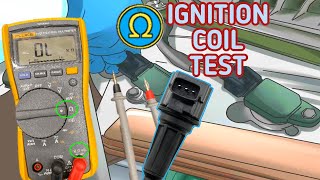
Measure the coil's primary resistance (terminals) and secondary resistance (positive terminal to spark plug boot). Compare readings to the service manual; an 'OL' (infinite) reading means the coil is internally broken.
Tools: Multimeter, service manual (Advanced) - Test PCM Trigger Signal
Back-probe the trigger wire with the engine running. A pulsing square wave confirms the PCM is commanding the spark. A flat line indicates a broken wire or a dead PCM driver.
Tools: Oscilloscope or graphing multimeter (Professional)
When This Code Triggers (Freeze-Frame Conditions)
- Engine Coolant Temp: 180-200°F (The fault is monitored continuously, but often diagnosed once the engine is fully warmed up.)
- RPM: 1500-2500 (The fault is often most noticeable to the driver during steady throttle or light acceleration.)
- Engine Load: 30-60% (A misfire caused by the coil fault becomes more apparent under moderate engine load.)
- Vehicle Speed: 35-55 mph (Symptoms are often present during city or highway cruise conditions.)
Related Codes
- P030X (e.g., P0306) — Cylinder 6 Misfire. Always accompanies P3546 because the dead coil prevents combustion in that specific cylinder.
- P020X (e.g., P0206) — Injector Circuit Malfunction. The PCM intentionally disables the fuel injector on the misfiring cylinder to prevent raw fuel from melting the catalytic converter.
- P035X (e.g., P0351, P0352) — Multiple coil circuit codes point to a shared electrical failure, such as a broken main ground strap or a blown ignition fuse, rather than multiple simultaneous coil failures.
- P0300 — Random/Multiple Cylinder Misfire. Seeing this with P3546 points to a widespread problem affecting all cylinders, such as a failing main ground or a failing computer.
Climate & Environmental Factors
- High Heat: Engine bay heat degrades the epoxy insulation inside the coil, causing internal shorts. Failures spike during summer months.
- Moisture & Humidity: Water intrusion from heavy rain or engine washing corrodes connector pins and gives high-voltage spark a path to ground.
- Extreme Cold: Sub-zero temperatures cause brittle, aged plastic coil housings to crack, allowing moisture in and voltage out.
How to Talk to a Mechanic About This Code
Say this: "I have a P3546 code and a related misfire on cylinder 6. I'd like to book a diagnostic appointment. Please start by swapping the ignition coil with an adjacent cylinder to confirm if the coil is the fault before replacing any parts."
This signals you've done your research and directs them to the most efficient, no-cost diagnostic step first. It prevents a shop from blindly throwing parts at the car without proving the failure.
Avoid saying:
- 'Just fix whatever's wrong'
- 'My check engine light is on, can you look at it?' (too vague — invites upsell)
- 'Whatever you recommend'
Questions to ask before authorizing the repair:
- Did the fault code move to the other cylinder after you swapped the coils?
- If the code didn't move, did you test for 12V power, ground, and the PCM trigger signal at the coil connector?
- What brand of ignition coil are you recommending and what is the warranty on the part and your labor?
Where to Take It: Dealer vs Independent vs Chain
- Dealer:
Recommended only if the vehicle is under warranty or if initial diagnostics by an independent shop point to a PCM failure.
Best for: Vehicles still under powertrain or emissions warranty, Complex electrical issues where a PCM replacement is suspected, Vehicles with known manufacturer-specific quirks (e.g., some BMW, Subaru models)
Downsides: Highest labor rates (1.5-2x independent shops), Routinely recommends replacing all coils as a set, drastically increasing cost (Typical cost: +50% vs. baseline) - Independent Shop:
Best fit for most P3546 repairs. This is a routine job that any competent independent mechanic diagnoses and fixes efficiently.
Best for: Out-of-warranty vehicles where cost is a factor, Standard diagnosis and replacement of a single coil, plug, or connector
Downsides: Quality varies — vet shops via online reviews and ask if they have ASE-certified technicians. (Typical cost: +0% vs. baseline) - Chain Shop:
Use with caution. Acceptable for a straightforward coil replacement if you have already confirmed the diagnosis yourself, but avoid them for initial diagnosis.
Best for: Simple, clear-cut parts replacement when you are certain what is wrong (e.g., 'Please replace the ignition coil on cylinder 6 only').
Downsides: High pressure to upsell (e.g., recommending a full set of coils and plugs, fuel system cleaning)., Technician skill and diagnostic capability are highly inconsistent. (Typical cost: -10% vs. baseline)
When to Walk Away From the Repair
If the estimated repair cost exceeds 40% of the car's Kelley Blue Book (KBB) private-party value, pause and consider alternatives to repair.
- Car worth $12000, fix is $200: Fix it. A standard coil replacement is a minor repair and well below the threshold.
- Car worth $3000, fix is $1500: Walk away. If the diagnosis points to a failed PCM, the repair cost is too high relative to the vehicle's value.
- Car worth $2500, fix is $500: Borderline. If the repair requires accessing difficult-to-reach coils on a V6/V8 engine, the labor cost is hard to justify. Get a second opinion before proceeding.
What Scan Tool You Need for This Code
Minimum: A basic OBD-II code reader that reads and clears engine trouble codes. Viewing live data (like engine RPM and misfire counts) is helpful but not strictly necessary for the most common fix.
A $20 reader gives you the P3546 code, but it cannot show you live data to see if the misfire is constant or intermittent. A more capable scanner helps you confirm the fix and check for other issues.
Budget: BlueDriver Pro or Ancel BD310 (~$90) — Reads and clears the code, provides freeze-frame data (what the engine conditions were when the code was set), and shows live data streams on your smartphone. This is more than enough for a confident DIY diagnosis.
Mid-range: Foxwell NT510 Elite (~$199) — Includes all budget features plus bidirectional controls (active tests). While not essential for a simple coil fault, it helps test wiring and PCM signals in more complex cases and provides manufacturer-specific code details.
Professional: Autel MaxiCOM MK808S/MK808BT Pro (~$450-600) — Offers full bidirectional control to command actuators, which is key for advanced wiring and PCM diagnostics. Its graphing capabilities are essential for analyzing the PCM trigger signal with an oscilloscope probe.
Rent vs buy: For a one-time diagnosis, most major auto parts stores (like AutoZone or O'Reilly Auto Parts) read your codes for free. If you plan to do the repair yourself, buying a budget-friendly scanner is a wise investment.
How to Clear the Code After You Fix It
- Use an OBD-II scan tool to clear diagnostic trouble codes.
- Perform a complete OBD-II drive cycle to run the onboard readiness monitors.
- Check for any returning pending or permanent codes.
Drive cycle (~30 minutes): A generic drive cycle includes a cold start (engine off for 8+ hours), a few minutes of idling, 10-15 minutes of mixed city/suburban driving with stops, and 5-10 minutes of steady highway speed (55-60 mph).
Readiness monitors affected: Catalyst monitor, Oxygen (O2) sensor monitor, Misfire monitor
Before emissions retest: drive at least 100 miles to fully set monitors.
Watch out for:
- Disconnecting the battery clears the code but also resets all readiness monitors to 'not ready', which causes an automatic emissions test failure.
- The code returns immediately if the underlying electrical fault (bad coil, wiring, etc.) was not correctly repaired.
- Not completing a full drive cycle before an emissions test results in a 'not ready' rejection.
Will This Fail Emissions / State Inspection?
Yes — this code typically fails an OBD-II emissions inspection.
- California: An illuminated Check Engine Light results in an automatic smog check failure. After repairs, most readiness monitors must be in a 'ready' state to pass, which requires driving 100+ miles.
- New York: A vehicle with an illuminated Check Engine Light fails the mandatory OBD-II emissions inspection.
- Texas: In counties that require emissions testing, an active P3546 code and illuminated Check Engine Light is an automatic failure. After repair, you can only have one or two 'not ready' monitors depending on vehicle year.
Most Commonly Affected Vehicles
- Dodge Charger, Magnum, Durango (2005-2010) — The 5.7L HEMI V8 engines from this era frequently experience ignition coil failures.
- Jeep Grand Cherokee (2011-2021) — The 3.6L Pentastar V6 and 5.7L Hemi V8 are both highly susceptible to coil circuit faults.
- Ford F-150, Expedition (2004-2010) — Coil-on-plug systems on 3-valve Triton V8 engines are a common failure point. Original spark plugs often break during removal.
- Toyota Camry, Sienna, RAV4 (2007-2017) — The plastic locking tabs on the 2GR-FE V6 coil connectors become brittle and break, causing a loose connection that mimics a failed coil.
- BMW 3-Series, 5-Series, X3, X5 (2007-2013) — Coil failures are a frequent maintenance item on the N52 inline-6 and V8 engines.
- Honda Accord, Odyssey, Pilot (2008-2017) — The J35 V6 engines suffer from ignition coil failures with age. The rear bank of cylinders is difficult to access.
Manufacturer-Specific Notes
- Chrysler/Dodge/Jeep: The PCM aggressively shuts down the fuel injector (triggering a P020x code) the moment it detects a P3546 coil fault to protect the exhaust system.
- Ford: Rear ignition coils on 5.4L Triton V8s are buried under the cowl, doubling labor times. The original spark plugs are also notorious for snapping off inside the cylinder head.
- Toyota: The plastic locking tabs on 2GR-FE V6 coil connectors become brittle and snap off during routine maintenance, causing a loose connection that mimics a dead coil.
- General Motors: Many GM engines use a coil pack or a rail that houses ignition coils for multiple cylinders. The entire pack must be replaced as a single unit even if only one cylinder fails.
Real Owner Stories
2008 Dodge Charger 5.7L HEMI at 115K miles
Check engine light came on with codes P3546, P0306, and P0206. The engine had a noticeable shake at idle and felt sluggish when accelerating.
What they tried:
- Initially cleared the codes, but they returned within a day.
- Swapped the ignition coil from cylinder 6 with cylinder 4.
- Cleared codes and drove the car. The codes changed to P3544 and P0304, indicating the fault moved with the coil.
Outcome: Replaced the single faulty ignition coil with a new OEM part. The total cost was around $60 for the coil and 15 minutes of labor. The codes were cleared and did not return.
Lesson: The coil swap test is a definitive, no-cost way to confirm a bad ignition coil. Seeing the companion fuel injector code (P0206) is normal for many Chrysler products, as the PCM shuts off the injector to protect the catalytic converter.
2011 Ford F-150 5.0L at 98K miles
Intermittent rough idle and hesitation, especially in damp weather. Finally, the check engine light came on for P0356 (generic equivalent).
What they tried:
- Replaced the ignition coil on cylinder 6. The problem persisted.
- Replaced the spark plug on cylinder 6. No change.
- Inspected the wiring and found the connector to the coil was full of dielectric grease from a previous repair, but the locking tab was broken.
Outcome: Cleaned the old grease out of the connector and secured it firmly to the coil with a zip tie as a temporary measure. The misfire and code disappeared. The owner later replaced the connector pigtail for a permanent fix.
Lesson: Don't assume the most expensive part (the coil) is the cause. A poor connection is a common point of failure. Thoroughly inspect and clean the connector and check for broken locking tabs before spending money on parts.
2013 Jeep Grand Cherokee 3.6L Pentastar at 85K miles
Vehicle suddenly started running very rough and the check engine light was flashing. Scanned codes and found P3546 and P0306.
What they tried:
- Swapped coil #6 with #4, but the misfire stayed on cylinder 6.
- Replaced the spark plug on cylinder 6, with no improvement.
- Took it to a shop where they checked for power, ground, and signal at the coil connector. Power and ground were good.
Outcome: The shop used an oscilloscope and found no trigger signal from the PCM to coil #6. Further diagnosis revealed a failed ignition coil driver circuit inside the Powertrain Control Module (PCM). The PCM was replaced and programmed, which resolved the issue. The repair was costly, over $1200.
Lesson: If swapping the coil and plug doesn't work, the problem is in the wiring or the PCM. While rare, a PCM failure is a possible cause and must be diagnosed by a professional with the right tools to avoid unnecessarily replacing an expensive computer.
How to Prevent This Code From Triggering
- Replace spark plugs at recommended intervals (Every 60,000 to 100,000 miles for iridium/platinum plugs.) — Worn spark plugs have a wider gap, forcing the ignition coil to produce a higher voltage to create a spark. This extra strain leads to overheating and premature coil failure.
- Fix oil and coolant leaks promptly (As soon as they are detected.) — Leaking valve cover gaskets flood spark plug wells with oil, while coolant leaks drip onto connectors. These fluids damage the coil's housing and electrical connections, causing shorts and corrosion.
- Keep the engine bay clean (Annually or as needed.) — A clean engine runs cooler, reducing the ambient heat that is a primary cause of coil failure. It also prevents dirt and debris from contaminating electrical connectors.
- Use high-quality OEM or reputable aftermarket ignition coils (Whenever a replacement is needed.) — Cheaper, low-quality coils use inferior materials for windings and insulation that cannot withstand engine heat and vibration, leading to failure in as little as 20,000 miles.
- Inspect and clean engine ground points (Every 30,000-50,000 miles.) — The ignition system relies on solid ground connections to complete its circuit. A corroded or loose ground strap increases electrical resistance, causing intermittent coil issues.
Frequently Asked Questions
What is the difference between P3546 and P0356?
P0356 is the generic OBD-II code for an ignition coil 'F' (cylinder 6) circuit fault. P3546 is a manufacturer-specific code that points to the exact same issue. Diagnosis and repair are identical for both.
Can I just replace the one bad ignition coil?
You can replace just the single failed coil to save money. However, if the vehicle has over 100,000 miles, replacing the full set prevents return trips to the shop as the other aging coils fail. Always replace the spark plug under the failed coil.
Is an ignition coil the same as a spark plug?
No. The ignition coil is a transformer that converts 12-volt battery power into 20,000+ volts. It sits directly on top of the spark plug. The spark plug uses that high voltage to ignite the fuel inside the engine.
What does 'Primary/Secondary Circuit' mean?
The primary circuit is the low-voltage side controlled by the engine computer. The secondary circuit is the high-voltage side that delivers the spark. A fault in either side triggers this code.
What is the most common misdiagnosis for P3546?
Replacing the ignition coil when the actual problem is a broken plastic connector tab. A loose connector interrupts the circuit and triggers the exact same code as a dead coil. Always secure the connector and test before buying parts.
Can a vacuum leak cause a P3546 code?
No. A vacuum leak causes lean misfires (P0300 or P0306) but cannot trigger a circuit code like P3546. This code strictly indicates an electrical failure in the coil, wiring, or computer.
How do I find which cylinder is causing the code?
P3546 generally correlates to cylinder #6, matching the generic P0356 ('F' is the 6th letter) code. You must consult a cylinder numbering diagram for your specific engine to locate cylinder 6.
How much does it cost to diagnose a P3546 code?
Shops charge one hour of labor ($100 to $150) to diagnose this code. This fee is usually applied to the final repair bill if you authorize them to do the work.
Key Takeaways
- A failed ignition coil causes over 80% of P3546 codes and costs $100 to $300 to replace at a shop, or under $80 DIY.
- Scan for companion codes like P0306 (Cylinder 6 Misfire) to pinpoint exactly which engine cylinder has the electrical fault.
- Swap the suspect ignition coil with an adjacent cylinder and rescan the vehicle to definitively prove if the coil is dead before buying parts.
- Limit driving to under 50 miles with an active P3546 code to prevent unburnt fuel from destroying your catalytic converter, a $1,500+ repair.
Helpful Videos
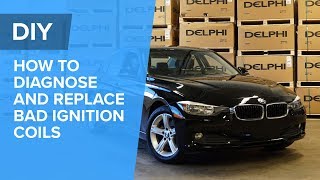
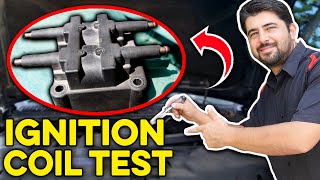
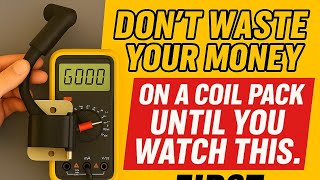
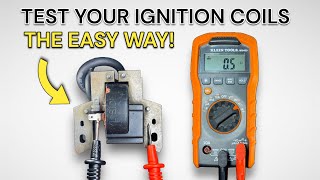
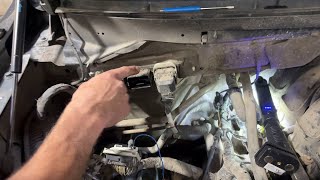

The information in this article is provided for general reference and educational purposes only. Vehicle specifications, procedures, and part compatibility can vary by production date, trim level, and region. Always consult your vehicle's factory service manual and verify part numbers before purchasing or performing repairs. Safety-critical components such as airbags, seat belts, and braking systems should be installed by a qualified professional.
- 🎬 Helpful Videos
- What Does P3546 Mean?
- Can I Drive With P3546?
- Common Causes
- Symptoms
- Diagnostic Flowchart
- Common Fixes & Costs
- Used vs. New Parts: Buying Guide
- What Happens If You Wait — Timeline
- Cost of Not Fixing It
- Diagnosis Steps
- When This Code Triggers (Freeze-Frame Conditions)
- Related Codes
- Climate & Environmental Factors
- How to Talk to a Mechanic About This Code
- Where to Take It: Dealer vs Independent vs Chain
- When to Walk Away From the Repair
- What Scan Tool You Need for This Code
- How to Clear the Code After You Fix It
- Will This Fail Emissions / State Inspection?
- Most Commonly Affected Vehicles
- Manufacturer-Specific Notes
- Real Owner Stories
- 2008 Dodge Charger 5.7L HEMI at 115K miles
- 2011 Ford F-150 5.0L at 98K miles
- 2013 Jeep Grand Cherokee 3.6L Pentastar at 85K miles
- How to Prevent This Code From Triggering
- Frequently Asked Questions
- What is the difference between P3546 and P0356?
- Can I just replace the one bad ignition coil?
- Is an ignition coil the same as a spark plug?
- What does 'Primary/Secondary Circuit' mean?
- What is the most common misdiagnosis for P3546?
- Can a vacuum leak cause a P3546 code?
- How do I find which cylinder is causing the code?
- How much does it cost to diagnose a P3546 code?
- Key Takeaways
- 🎟️ Get 5% Off