

OBD-II Code P3506: Ignition Coil 'F' Circuit Malfunction
The Ultimate 2026 Guide to Diagnosing and Fixing P3506
- P3506 indicates an electrical circuit failure in the cylinder 6 ignition coil, requiring immediate diagnosis to prevent further damage.
- A flashing Check Engine Light means raw fuel is entering the exhaust; stop driving immediately to avoid a $2,000+ catalytic converter replacement.
- Swap the cylinder 6 ignition coil with cylinder 5; if the code changes to P3505, the coil is definitively bad and must be replaced.
- On 2006-2008 Ford 3.5L V6 engines, a P3506 often indicates a fried PCM, requiring simultaneous replacement of the computer, all 6 coils, and all 6 spark plugs.
What Does P3506 Mean?
The Powertrain Control Module (PCM) detected an electrical circuit failure in the ignition coil for cylinder 6. The computer commanded the coil to fire but did not receive the expected voltage feedback signal.
Technical definition: The official SAE/OBD-II definition is 'Ignition Coil F Primary/Secondary Circuit Malfunction.' The PCM monitors the coil's circuit for a specific voltage spike when the primary magnetic field collapses. If the PCM triggers cylinder 6 (Coil F) but does not detect this feedback pulse, it sets P3506.
Can I Drive With P3506?
Yes, But With Caution. You can drive for short, low-speed trips, but doing so risks severe damage. Continuous driving with a flashing Check Engine Light sends unburned fuel into the exhaust, rapidly destroying the catalytic converter. Ignoring a flashing light for even a few miles turns a $150 coil repair into a $1,000-$2,500+ catalytic converter replacement. If the light flashes, pull over and tow the vehicle.
Common Causes
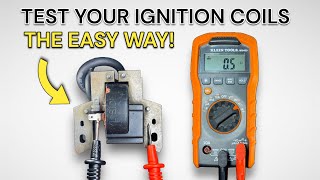
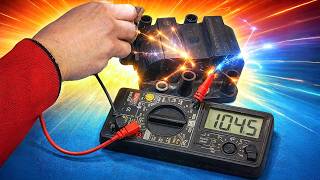
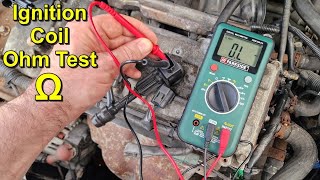
- Faulty Ignition Coil (Very Common) — The cylinder 6 ignition coil failed internally from age, heat cycles, and vibration. This is the primary cause of P3506. 🎬 Watch: How to test an ignition coil pack using a multimeter.
- Damaged Wiring or Electrical Connector (Common) — The wiring harness or connector leading to the coil is corroded, loose, broken, or has spread pins due to engine vibrations, heat, or rodents.
- Worn or Defective Spark Plug (Common) — The cylinder 6 spark plug is old, oil-fouled, or has an excessive gap. High resistance overloads the ignition coil, forcing it to work harder until it fails.
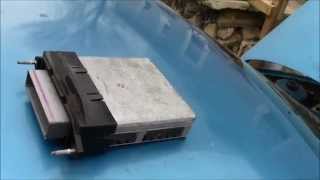
- Faulty Powertrain Control Module (PCM) (Less Common) — The internal driver circuit for the cylinder 6 coil inside the PCM failed. This is a known issue on 2006-2008 Ford V6 models where a bad coil shorts and destroys the PCM driver. 🎬 Watch: How to replace a damaged Powertrain Control Module (PCM).
- Failing Camshaft or Crankshaft Position Sensor (Uncommon) — A failing position sensor sends erratic timing signals to the PCM. The PCM misinterprets these control errors as an ignition coil circuit fault, particularly on certain Hyundai and Nissan models.
- Unstable System Voltage (Uncommon) — A weak battery or failing alternator causes fluctuating system voltage, leading the PCM's sensitive monitoring circuits to incorrectly flag an ignition system fault.
Symptoms
- Check Engine Light is On or Flashing — A steady light indicates an active fault. A flashing light signals a severe misfire dumping raw fuel into the exhaust, requiring you to stop driving immediately.
- Engine Shakes or Stumbles — Noticeable vibration or shuddering at idle or during acceleration because cylinder 6 is dead, throwing the engine out of balance. 🎬 See this guide on common causes and fixes for cylinder 6 misfires.
- Loss of Power — The vehicle feels sluggish and weak during acceleration, especially when climbing hills or merging onto highways.
- Poor Fuel Economy — Gas mileage decreases significantly because unburned fuel is wasted and the engine runs inefficiently to compensate.
- Increased Emissions / Fuel Smell — A raw gasoline smell from the exhaust indicates unburned fuel from cylinder 6 is entering the exhaust system, damaging the catalytic converter.
Diagnostic Flowchart
Tap your situation to follow the diagnostic path that matches what you're seeing on this code.
Common Fixes & Costs
- Replace Ignition Coil 'F' — Parts: $50-$200, Labor: $75-$110, ~0.8 hr book time (DIY)
- Replace Spark Plugs — Parts: $10-$40 (per plug), Labor: $120-$300 (for a set), ~2.5 hr book time (Intermediate)
- Repair Wiring or Replace Connector Pigtail — Parts: $20-$50, Labor: $100-$200, ~1.2 hr book time (Intermediate)
- Replace Powertrain Control Module (PCM) — Parts: $800-$1,500+, Labor: $150-$300 (includes programming), ~1.8 hr book time (Professional)
- Replace Camshaft/Crankshaft Position Sensor — Parts: $80-$250, Labor: $100-$200, ~1.5 hr book time (Intermediate)
DIY vs Professional
- Replace Ignition Coil / Spark Plug — Beginner:
- Repair Wiring / Connector — Beginner:
- Replace Cam/Crank Sensor — Beginner:
- Replace PCM — Beginner:
Used vs. New Parts: Buying Guide
When a used part is worth it: Never buy a used ignition coil. The $20-$40 savings do not justify the risk of premature failure. Buy new OEM or high-quality aftermarket coils.
Donor-vehicle mileage cap: roughly under 50000 miles for the part to have meaningful remaining life.
Donor quality checklist:
- Only consider used OEM parts from a low-mileage, accident-totaled vehicle.
- Avoid parts from vehicles scrapped for engine or emissions failures.
- Ensure the part number is an exact match.
Decision logic:
- If The part is an ignition coil. → Buy a new OEM or quality aftermarket part.
- If The failed part is an expensive PCM or catalytic converter and budget is the primary concern. → A used part from a reputable recycler with a warranty is viable, but new/remanufactured is preferred.
Warranty tradeoff: Used parts typically carry a 30-90 day parts-only warranty. New aftermarket parts offer 1-year to limited lifetime warranties. OEM parts carry a 1-2 year warranty.
Worst-case if a used part fails: $150-$300 if a used coil fails after installation, requiring repeat labor and another part.
What Happens If You Wait — Timeline
- 0-4 weeks: Code P3506 sets with a steady Check Engine Light. A slight, intermittent stumble is felt at idle or under light load. (MPG impact: 0-5%% · Added cost: $0-$50 in wasted fuel)
- 1-3 months: The misfire becomes consistent, causing noticeable engine shake and sluggish acceleration. The smell of raw fuel is present at the exhaust. (MPG impact: 10-25%% · Added cost: $50-$200 in wasted fuel, plus potential fouling of the cylinder 6 spark plug.)
- 3-6 months: Unburned fuel damages the catalytic converter. The internal substrate overheats, reducing efficiency and triggering P0420/P0430 codes. Oxygen sensors become fouled. (MPG impact: 15-30%% · Added cost: $400-$1,200 (risk of catalytic converter and O2 sensor damage is high))
- 6+ months: Guaranteed catalytic converter failure. The substrate melts, creating an exhaust blockage. On specific models, the electrical fault back-feeds and destroys the PCM. (MPG impact: 25-50%+% · Added cost: $1,500-$4,000+ (includes catalytic converter, O2 sensors, and potentially the PCM))
Cost of Not Fixing It
- Immediate (flashing light): Catastrophic damage to the catalytic converter by overheating it with raw fuel. This happens in just a few miles. (Added cost: $1,200-$2,800)
- 1-3 months (steady light): Significant drop in fuel economy (10-25%), failed emissions test, and damage to oxygen sensors and spark plugs from fuel fouling. (Added cost: $200-$500)
- 6+ months: Guaranteed catalytic converter failure, engine damage due to cylinder wash, and possible PCM damage on certain Ford models. (Added cost: $1,500-$4,000+)
Diagnosis Steps
- Read and Document All Trouble Codes
Use an OBD-II scanner to confirm P3506. Look for P0306 (Cylinder 6 Misfire), which strongly supports an issue with that specific cylinder. Document freeze frame data before clearing.
Tools: OBD-II Scanner (Beginner) - Perform the 'Coil Swap' Test
Unplug and unbolt the cylinder 6 ignition coil. Swap it with the coil from a working cylinder (e.g., cylinder 5). Clear codes, start the engine, and re-scan. If the code moves to P3505, the coil is definitively bad. If P3506 returns, the coil is good; proceed to wiring tests.
Tools: OBD-II Scanner, Socket/Wrench Set (Beginner) - Visually Inspect the Cylinder 6 Coil and Harness
Locate cylinder 6. Inspect the ignition coil, electrical connector, and surrounding wiring for cracks, burn marks, oil contamination, pin corrosion, or chewed wires.
Tools: Flashlight (Beginner) - Inspect and Swap the Spark Plug
If the code did not move with the coil, remove the cylinder 6 spark plug. Check for heavy carbon buildup, oil fouling, or cracked ceramic. Swap the spark plug with another cylinder to see if the misfire follows the plug.
Tools: Spark Plug Socket, Ratchet with Extension (Intermediate) - Check for Related TSBs and Known Issues
Search online for '[Your Car Make Model Year] P3506 TSB'. Manufacturers release Technical Service Bulletins for known issues, such as Ford's requirement to replace the PCM alongside coils, saving you from expensive misdiagnosis.
Tools: Internet Access (Beginner) - Test the Coil Connector for Power and Ground
Unplug the coil connector. With the key on, engine off, use a multimeter to verify one pin has battery voltage (12V+). Test continuity between the ground pin and the battery negative terminal (should be < 0.5 ohms). Missing power or ground indicates a wiring fault.
Tools: Multimeter, Vehicle-Specific Wiring Diagram (Intermediate) - Test the PCM Trigger Signal
The third wire is the PCM trigger signal. Using a multimeter set to Hz while cranking, look for a fluctuating reading. A flat 0V or steady 12V indicates a broken wire or dead PCM driver. An oscilloscope provides definitive proof by showing a 0V to 5V square wave.
Tools: Multimeter (with Hz/Duty Cycle), Oscilloscope, Wiring Diagram (Advanced) - [ADVANCED] Test Ignition Coil Resistance
Test primary resistance between the coil's positive and negative input terminals (typically 0.4-2 ohms). Test secondary resistance between the high-voltage output and a ground pin (typically 5,000-15,000 ohms). A reading of infinity (OL) indicates an open circuit and failed coil.
Tools: Multimeter, Vehicle-Specific Repair Manual (Advanced) - [ADVANCED] Analyze Live Scan Tool Data
Monitor live data PIDs. Watch the misfire counter for cylinder 6. Observe Fuel Trims and O2 sensor readings. An ignition misfire dumps raw oxygen into the exhaust, causing fuel trims to go negative as the PCM compensates.
Tools: Professional OBD-II Scan Tool (with live data) (Advanced) - Final PCM Diagnosis
If wiring, power, ground, and trigger signals test good at the PCM connector but the code persists, the PCM is faulty. PCM replacement and programming require professional dealership or specialized shop tools.
Tools: Advanced Diagnostic Tools, Professional Expertise (Advanced)
When This Code Triggers (Freeze-Frame Conditions)
- Engine Coolant Temp: 180-200°F (Appears after the engine reaches operating temperature and enters closed-loop fuel control.)
- RPM: 1500-2500 (Sets during steady-state cruising or light acceleration.)
- Engine Load: 30-60% (Occurs under moderate engine load, consistent with highway cruising or maintaining speed on an incline.)
- Vehicle Speed: 35-55 mph (Triggered during active city or highway driving rather than at a standstill.)
Related Codes
- P0306 — P3506 is the electrical cause; P0306 (Cylinder 6 Misfire Detected) is the combustion effect. Seeing both together confirms a complete failure of ignition in cylinder 6.
- P0300 — Indicates 'Random/Multiple Cylinder Misfire.' If seen with P3506, the underlying cause (failing PCM, unstable voltage) is affecting other cylinders. P3506 alone isolates the issue to cylinder 6.
- P0351, P0352, P0353, P0354, P0355 — Identical faults for cylinders 1-5. A single P035x code suggests a failed coil. Multiple P035x codes point to a systemic issue, such as a failed wiring harness ground or a PCM with multiple failed drivers.
- U-Codes (e.g., U0100, U3506) — Network communication codes indicate a broader electrical problem. If seen alongside P3506, the issue is the PCM's power supply, ground, or CAN bus network. Address the U-code first.
Climate & Environmental Factors
- High Ambient Heat: High under-hood temperatures increase internal resistance and degrade coil insulation. Failures spike in hot climates and during summer months.
- Cold Weather: Extreme cold increases battery internal resistance, lowering system voltage. This forces an already weak coil to work harder, leading to cold-start misfires.
- High Humidity / Moisture: Moisture penetrates micro-cracks in the coil housing or connector, causing pin corrosion and short circuits. This leads to intermittent misfires in damp weather.
How to Talk to a Mechanic About This Code
Say this: "I have a P3506 code indicating a cylinder 6 ignition circuit fault. Please start with a coil swap test to confirm if the ignition coil is the root cause."
This signals you've done your research and directs the mechanic to the most efficient first diagnostic step, preventing them from starting with expensive or less likely causes.
Avoid saying:
- 'Just fix whatever's wrong'
- 'My check engine light is on, can you look at it?'
- 'Whatever you recommend'
Questions to ask before authorizing the repair:
- Did the 'coil swap' test move the misfire code to the other cylinder?
- If the coil is good, did you test the connector for 12V power, ground, and the trigger signal from the PCM?
- If you are recommending a PCM replacement, can you confirm that the wiring and signals are all good right at the computer connector?
- What is the warranty on the new parts and your labor?
Where to Take It: Dealer vs Independent vs Chain
- Dealer:
Recommended for the specific Ford TSB 14-0059 issue or if the vehicle is under warranty. Otherwise, an independent shop is more cost-effective.
Best for: Vehicles still under powertrain warranty, Known manufacturer-specific issues like the Ford PCM TSB, Complex electrical issues where an independent shop has been unable to find the cause
Downsides: Significantly higher labor rates (1.5-2x) than independent shops., May default to expensive, wholesale repairs (e.g., replacing a whole harness instead of repairing one wire). (Typical cost: +50% vs. baseline) - Independent Shop:
Best fit for most P3506 scenarios. This is a routine ignition system repair that any competent independent shop handles efficiently.
Best for: Out-of-warranty vehicles where cost is a factor., Standard diagnosis and replacement of coils, plugs, or wiring., Building a long-term relationship with a mechanic.
Downsides: Quality and diagnostic skill vary greatly; vet shops based on reviews and ASE certifications., May not have immediate access to brand-specific diagnostic software. (Typical cost: +0% vs. baseline) - Chain Shop:
Use with caution. Acceptable for a simple coil replacement if you are certain that's the problem. AVOID for deeper diagnosis involving wiring or the PCM.
Best for: Simple, straightforward parts replacement when you have already confirmed the coil is bad.
Downsides: Technician skill varies dramatically; may struggle with diagnosis beyond a simple code read., High pressure to upsell unrelated services like fuel system cleanings. (Typical cost: -10% vs. baseline)
When to Walk Away From the Repair
If the total estimated repair cost exceeds 50% of your car's private-party value, seriously consider selling or trading it in rather than repairing it.
- Car worth $6000, fix is $450: Fix it. This is a standard repair cost well below the threshold.
- Car worth $4000, fix is $2200: Walk away. The repair cost is over half the car's value. This is a bad investment.
- Car worth $3000, fix is $1500: Borderline. Right at the 50% mark. If the car is otherwise reliable, fixing it might be worthwhile. If other major repairs are looming, walk away.
What Scan Tool You Need for This Code
Minimum: A basic OBD-II code reader that reads and clears engine trouble codes.
To properly diagnose using the 'coil swap' method, you must clear the code. For complex issues, a scanner with live data is necessary to confirm engine parameters during tests.
Budget: BlueDriver Pro (~$100) — Reads and clears codes, provides freeze-frame data, and graphs live data on your smartphone. Offers repair reports based on verified fixes.
Mid-range: Foxwell NT510 Elite (~$180) — Offers manufacturer-specific diagnostics and bidirectional controls to perform active tests on ignition system components.
Professional: Autel MaxiCOM MK808S (~$450) — Provides full bidirectional control, extensive live data including misfire counts per cylinder, and advanced service functions needed for PCM replacement.
Rent vs buy: For a one-time diagnosis, auto parts stores offer a 'Loan-A-Tool' program where you pay a fully refundable deposit. Buy a scanner only if you plan to perform diagnostics regularly.
How to Clear the Code After You Fix It
- Clear P3506 and related codes using an OBD-II scan tool.
- Reconnect the battery if disconnected during repair.
- Perform a complete drive cycle to run onboard diagnostic self-tests.
Drive cycle (~20 minutes): Start cold (engine below 122°F), idle for 3 minutes with A/C on, accelerate to 55 mph and hold for 5 minutes, then perform 20 minutes of mixed city/highway driving.
Readiness monitors affected: Catalyst monitor, Misfire monitor, Oxygen (O2) sensor monitor, Evaporative (EVAP) System monitor
Before emissions retest: drive at least 50 miles to fully set monitors.
Watch out for:
- Disconnecting the battery clears the light but resets all emissions monitors to 'incomplete', causing an automatic smog check failure.
- The code returns immediately if the underlying electrical fault (bad coil, wiring, or PCM) remains unrepaired.
Will This Fail Emissions / State Inspection?
Yes — this code typically fails an OBD-II emissions inspection.
- California: An active P3506 code is an automatic failure. After repair, a full drive cycle must be completed to set all readiness monitors before re-testing.
- New York: Any active Check Engine Light results in an automatic failure of the NYS emissions inspection.
- Texas: In the 17 counties requiring emissions testing, an illuminated Check Engine Light causes an automatic OBD-II inspection failure.
Most Commonly Affected Vehicles
- Ford Escape, Fusion, Edge, Taurus, Taurus X (2006-2008) — Models with the 3.0L or 3.5L V6 have a known issue (TSB 14-0059). A failed ignition coil shorts and destroys the PCM driver circuit. Repair requires replacing the PCM, all 6 coils, and all 6 spark plugs simultaneously.
- Ford F-150 (2004-2008) — The 5.4L 3V Triton engine is notorious for ignition issues. Original-design spark plugs frequently break off in the cylinder head during removal, turning a simple job into a major repair.
- Dodge / Chrysler Charger, Magnum, 300 (2006-2020) — Ignition coil failures are common across the 3.5L V6 (2006-2010) and later HEMI V8s (2015-2020). Code P0356 directly indicates a failed cylinder 6 coil.
- Toyota / Lexus Camry, Avalon, Highlander, Sienna, ES350, RX350 (2005-2015) — Vehicles with the 2GR-FE 3.5L V6 commonly experience P035x codes. Toyota released redesigned ignition coils (e.g., 90919-A2007) to address durability issues.
- Hyundai / Kia Santa Fe, Sonata, Elantra, Optima (2008-2015) — On 2.4L and 3.3L models, a recurring P0356 after coil replacement is often caused by a failing Vehicle Speed Sensor (VSS) or Crankshaft Position Sensor confusing the PCM.
- Chevrolet / GM Camaro, Equinox, Traverse (2010-2018) — Models with the 3.6L LLT and LFX V6 engines experience coil failures when leaking valve cover gaskets allow oil to seep into spark plug tubes, destroying the coil boot.
- Honda / Acura Odyssey, Pilot, MDX (2016-2021) — P0356 on these J-series engines is sometimes a symptom of a serious mechanical issue, such as low compression from a burnt valve, which the PCM flags as an ignition fault.
- Subaru Forester, WRX (Turbo models) (2014-2021) — Misfire symptoms may present with code P0606 (PCM Processor Fault). Per TSB 07-75-13R, this is frequently a software glitch triggered by a dead battery, requiring a reset or software update, not PCM replacement.
Manufacturer-Specific Notes
- Ford: TSB 14-0059 for 2006-2008 V6 models states a failed ignition coil sends a high-voltage spike back to the PCM, destroying the driver circuit. The only correct repair is replacing the PCM, all six coils, and all six spark plugs simultaneously.
- Subaru: On 2014+ turbo models, misfires accompanied by P0606 (PCM Processor Fault) are often software glitches after a battery dies. Clear the code, turn the ignition off, and wait 60 seconds before restarting to reset the ECM.
- Toyota / Lexus: For the 2GR-FE 3.5L V6, use the latest OEM Denso part (e.g., 90919-A2007) rather than older versions or generic aftermarket parts to ensure longevity, especially for hard-to-reach rear bank cylinders.
- Hyundai / Kia: If P0356 returns immediately after replacing the coil and plug, the root cause is often a failing Vehicle Speed Sensor (VSS) or Crankshaft Position Sensor sending erratic data that the PCM misinterprets as an ignition fault.
Real Owner Stories
2007 Ford Flex 3.5L V6 with P0306 & P3506
Check Engine Light illuminated with noticeable engine shaking. Codes read were P0306 (Cylinder 6 Misfire) and P3506.
What they tried:
- Tried stretching the spring inside the coil boot, which did not solve the issue.
- Performed a 'coil swap' test by moving the cylinder 6 coil to another cylinder. The misfire code followed the coil.
Outcome: Replaced the single ignition coil on cylinder 6 (Motorcraft DG520) and the spark plug. The misfire resolved and codes cleared.
Lesson: The 'coil swap' is a definitive diagnostic test. If the misfire code moves to the new cylinder, the coil is bad. If it stays, the problem is the plug or wiring.
2007 Toyota Camry 3.5L V6 (2GR-FE) with intermittent P0354
At 99k miles, the car misfired briefly and threw P0354 (Ignition Coil 'D' Circuit) after filling up at a discount gas station.
What they tried:
- A mechanic found a non-OEM coil on cylinder 4 and swapped it with the OEM coil from cylinder 2.
- The mechanic advised driving to see if the code returned as P0352 (bad coil) or stayed P0354 (wiring issue).
Outcome: The misfire was intermittent and did not immediately return. The owner switched to top-tier fuel as a precaution.
Lesson: For intermittent faults, a coil swap is still correct. Note the new location of the suspect part. If the code returns for the new cylinder, you have your answer.
2006 Toyota Camry with persistent misfire after new plugs and coils
Vehicle had code P0351. The owner replaced all six coils and spark plugs, but the engine still misfired and would not accelerate past 1,000 RPM.
What they tried:
- Replaced the #1 coil again with a new part, but P0351 returned immediately.
- Swapped the new #1 coil with the #2 coil to rule out a bad batch of new parts.
Outcome: The problem was not the coil. P0351 indicates the PCM is not receiving the confirmation signal (IGF) from the igniter, pointing to a wiring issue or faulty PCM driver.
Lesson: If replacing the coil and plug doesn't fix a P035x code, the problem is in the wiring or PCM. Stop replacing parts and test the circuit for power, ground, and trigger signals.
How to Prevent This Code From Triggering
- Replace Spark Plugs at Recommended Intervals (Per manufacturer schedule (typically 60k-100k miles)) — Worn spark plugs have larger gaps, increasing the voltage required to create a spark. This strains the ignition coil, leading to premature failure.
- Use Dielectric Grease on Coil Boots (Whenever replacing a coil or spark plug) — Applying dielectric grease inside the coil boot prevents moisture intrusion, corrosion, and arcing while sealing out oil.
- Address Engine Oil Leaks Promptly (As needed) — Leaking valve cover gaskets allow oil to seep into spark plug tubes, saturating and destroying the ignition coil boot.
- Periodically Inspect Wiring Harnesses (During routine maintenance) — Engine vibration and heat cause wiring to become brittle. Visual inspections for cracks or loose connections prevent unexpected circuit faults.
- Avoid Using Low-Quality Fuel (Every fill-up) — Low-quality fuels cause combustion chamber deposits, affecting the air-fuel mixture and indirectly stressing the ignition system.
Frequently Asked Questions
What does the 'F' in Ignition Coil 'F' mean?
The letter 'F' corresponds to the 6th cylinder in the engine's firing sequence. In OBD-II standard language, 'A' is cylinder 1, 'B' is cylinder 2, and so on. Therefore, 'F' points directly to cylinder 6.
My scanner shows P3506 and P0306. What's the difference?
P3506 is the 'cause' code, meaning the computer detected an electrical problem in the cylinder 6 ignition coil circuit. P0306 is the 'effect' code, meaning cylinder 6 is misfiring as a direct result. Seeing them together confirms the problem is isolated to cylinder 6's ignition system.
I replaced the coil and spark plug, but P3506 came back. What's next?
If new parts don't fix it, check for damaged wiring or a corroded connector at the coil. On certain Hyundais, check for a failing crankshaft position sensor. On 2006-2008 Ford V6s, this strongly suggests the PCM was damaged by the original coil failure and requires replacement.
Why is my Check Engine Light flashing?
A flashing light indicates a severe, active misfire dumping raw fuel into the hot exhaust. This overheats and melts the catalytic converter in minutes, leading to a $1,000-$2,500+ repair.
Should I replace all my ignition coils at once?
If the car has over 100,000 miles, replacing all coils as a set is recommended. They have endured the same conditions, so if one fails, others will likely follow soon. This is especially true for engines where rear coils are difficult to access.
Will a P3506 code cause me to fail an emissions test?
Yes. Any active Check Engine Light is an automatic failure, and a misfiring cylinder emits large amounts of unburned hydrocarbons.
How do I find cylinder 6 on my engine?
Cylinder numbering is not standardized across manufacturers. Search online for '[Your Vehicle Year, Make, Model] cylinder location diagram' to find a definitive layout showing which cylinder is #6.
What does the 'P' and the '3' in P3506 mean?
The 'P' indicates a Powertrain code. The first digit '3' signifies it is a manufacturer-specific code related to the ignition system or misfires.
Key Takeaways
- P3506 indicates an electrical circuit failure in the cylinder 6 ignition coil, requiring immediate diagnosis to prevent further damage.
- A flashing Check Engine Light means raw fuel is entering the exhaust; stop driving immediately to avoid a $2,000+ catalytic converter replacement.
- Swap the cylinder 6 ignition coil with cylinder 5; if the code changes to P3505, the coil is definitively bad and must be replaced.
- On 2006-2008 Ford 3.5L V6 engines, a P3506 often indicates a fried PCM, requiring simultaneous replacement of the computer, all 6 coils, and all 6 spark plugs.
Helpful Videos



The information in this article is provided for general reference and educational purposes only. Vehicle specifications, procedures, and part compatibility can vary by production date, trim level, and region. Always consult your vehicle's factory service manual and verify part numbers before purchasing or performing repairs. Safety-critical components such as airbags, seat belts, and braking systems should be installed by a qualified professional.
- 🎬 Helpful Videos
- What Does P3506 Mean?
- Can I Drive With P3506?
- Common Causes
- Symptoms
- Diagnostic Flowchart
- Common Fixes & Costs
- DIY vs Professional
- Used vs. New Parts: Buying Guide
- What Happens If You Wait — Timeline
- Cost of Not Fixing It
- Diagnosis Steps
- When This Code Triggers (Freeze-Frame Conditions)
- Related Codes
- Climate & Environmental Factors
- How to Talk to a Mechanic About This Code
- Where to Take It: Dealer vs Independent vs Chain
- When to Walk Away From the Repair
- What Scan Tool You Need for This Code
- How to Clear the Code After You Fix It
- Will This Fail Emissions / State Inspection?
- Most Commonly Affected Vehicles
- Manufacturer-Specific Notes
- Real Owner Stories
- 2007 Ford Flex 3.5L V6 with P0306 & P3506
- 2007 Toyota Camry 3.5L V6 (2GR-FE) with intermittent P0354
- 2006 Toyota Camry with persistent misfire after new plugs and coils
- How to Prevent This Code From Triggering
- Frequently Asked Questions
- What does the 'F' in Ignition Coil 'F' mean?
- My scanner shows P3506 and P0306. What's the difference?
- I replaced the coil and spark plug, but P3506 came back. What's next?
- Why is my Check Engine Light flashing?
- Should I replace all my ignition coils at once?
- Will a P3506 code cause me to fail an emissions test?
- How do I find cylinder 6 on my engine?
- What does the 'P' and the '3' in P3506 mean?
- Key Takeaways
- 🎟️ Get 5% Off