

P3450 on 2015-2018 Ram 3500 6.4L Hemi: Cylinder 7 Deactivation Fault Causes and Fixes
Code P3450 on a 2015-2018 Ram 3500 with the 6.4L Hemi engine indicates a problem with the Cylinder 7 deactivation system (MDS). The most common causes are a faulty MDS solenoid, low or dirty engine oil, or a wiring issue. In many cases, a simple PCM software update as outlined in manufacturer TSBs can resolve the issue without any parts replacement.
- P3450 on a 2015-2018 Ram 3500 6.4L is very often a PCM software issue that a dealer must fix with an update, as specified in multiple TSBs.
- Always check your engine oil level and condition first; low or dirty oil is a simple but common cause for MDS faults.
- If software and oil are good, the next most likely cause is a failed MDS solenoid for cylinder 7, which requires removing the intake manifold to replace.
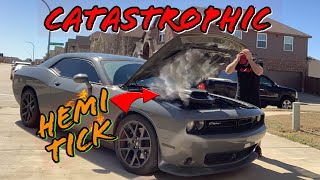
- A persistent ticking noise ('Hemi tick') accompanying this code could signal a much more serious internal engine problem with the lifters and camshaft, a known issue with these engines.
What's Unique About the 2015-2018 Ram 3500
The 6.4L Hemi in the Ram Heavy Duty trucks, also known as the 'Big Gas Engine' (BGE), is built with a cast-iron block and stronger heads for durability under heavy loads, differentiating it from the 6.4L in Charger/Challenger models. While the MDS system is common across Hemi engines, the 2015-2018 model years are specifically mentioned in several Technical Service Bulletins (TSBs) that point to software glitches in the PCM as a primary cause for P3450 and related MDS codes. This means that unlike other vehicles where the default assumption might be a mechanical part failure, a PCM reflash is a very common and documented first-step fix for these trucks. TSB #18-036-20 is a key bulletin for the 2018 model year addressing this exact code.
Diagnostic Flowchart
Tap your situation to follow the diagnostic path that matches what you're seeing on this vehicle.
Symptoms You May Notice
- Check Engine Light is on
- Rough or uneven idle.
- Noticeable engine misfire, sometimes feeling like a constant shake.
- Reduced engine power, especially during acceleration.
- Significantly decreased fuel economy.
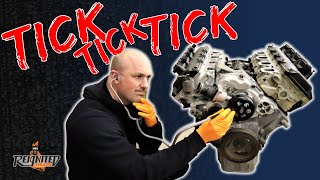
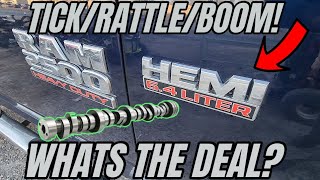
- Engine may make a ticking or knocking noise (the 'Hemi tick'), which can be a precursor to or symptom of lifter failure. 🎬 Watch: A professional mechanic explains the Hemi tick in detail.
- In some cases, a clunking noise may be heard during light throttle application as the MDS attempts to transition.
- Replacing only the MDS solenoid without checking for PCM updates first, which is a common and less expensive fix.
- Replacing ignition coils or spark plugs for the misfire without diagnosing the P3450 code's root cause. The misfire (P0307) is a symptom, not the cause.
- Replacing MDS solenoids to fix a deep engine knock. A knocking noise often indicates a more severe mechanical failure like a collapsed lifter, and new solenoids will not fix it.
Most Likely Causes
- Powertrain Control Module (PCM) Software Glitch 🔴 High Probability Multiple TSBs (#18-036-20, #18-082-16, #18-002-15 REV B, #18-080-15 REV A) were issued for this specific year range and engine, indicating that the original PCM software was overly sensitive or had logic errors related to the MDS system. These bulletins explicitly list P3450 as a code that can be resolved with a software update.
How to confirm: A Ram dealership or a qualified shop with access to OEM software (like wiTECH) can check if your vehicle's PCM has the latest calibration by referencing the TSBs. If other MDS codes (P3402, P3426, P3442) or codes like P0128 or P2610 are present, a software issue is highly likely as these are also covered in the same bulletins.
Typical fix: Reprogramming (flashing) the PCM with the updated software version specified in the TSBs. This is a non-mechanical repair that takes approximately 0.3 labor hours.
Est. part cost: $0 - Faulty Cylinder 7 MDS Solenoid 🟡 Medium Probability The MDS solenoids operate using oil pressure and can fail electrically or become clogged/stuck from oil sludge or debris. They are located under the intake manifold and are subject to heat cycles, which can make their plastic components brittle over time.
How to confirm: After ruling out a software issue, a technician can command the solenoid on and off with a scan tool. If it doesn't respond, the next step is to test the wiring and the solenoid itself for resistance (a good solenoid will have a specific resistance value, an open or shorted one is bad). This requires removing the intake manifold to access the solenoids.
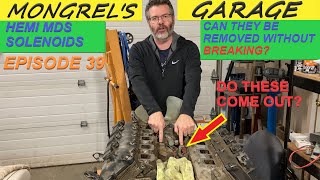
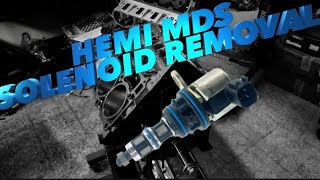
Typical fix: Replace the faulty MDS solenoid. It is often recommended to replace all four MDS solenoids at the same time since the intake manifold must be removed for access, and the labor is the most significant part of the job. The solenoids can be difficult to remove if they break during extraction. 🎬 See how to remove MDS solenoids without breaking them.
Est. part cost: $40-$80 per solenoid - Low Engine Oil Level or Pressure / Dirty Oil 🟡 Medium Probability The MDS system is entirely dependent on clean oil at the correct pressure to actuate the solenoids and lifters. The 6.4L Hemi specifies a 0W-40 full synthetic oil. Using the wrong viscosity or extending oil change intervals can lead to sludge buildup, clogging the small oil passages and solenoids.
How to confirm: Check the engine oil level and condition on the dipstick. If the oil is low, dark/sludgy, or overdue for a change, this should be the very first step. An oil pressure test using a mechanical gauge can confirm if the oil pump is functioning correctly, especially at idle.
Typical fix: Perform an engine oil and filter change using the manufacturer-specified oil type (0W-40 full synthetic). If oil pressure is low, further diagnosis of the oil pump or for internal engine wear is needed.
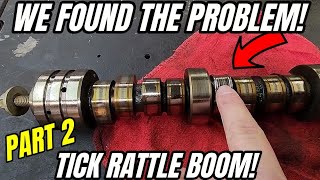
Est. part cost: $60-$120 - Failed MDS Lifter ⚪ Low Probability Hemi engines, including the 6.4L, are known for potential lifter failures, where the roller bearing on the lifter seizes, stops rolling, and grinds against the camshaft lobe. This is often preceded by a distinct ticking noise. While some attribute this to oiling issues at idle, others believe it's due to defective needle bearings in the lifter itself. This is a major mechanical failure.
How to confirm: This is a major mechanical diagnosis. It typically involves listening for a distinct valvetrain tick that increases with RPM. A mechanic might drop the oil pan to check for metal shavings. Ultimately, it requires removing the cylinder head(s) to inspect the lifters and camshaft for visible wear and damage, such as a flattened cam lobe.
Typical fix: Replacement of all lifters (both MDS and standard) and the camshaft, as a failed lifter almost always destroys the cam lobe. This is a significant and costly repair, often running into thousands of dollars.
Est. part cost: $800-$2000+
Rare But Worth Checking
- Wiring Harness Damage: The wiring harness to the MDS solenoids runs under the intake manifold. It can be damaged by heat, vibration, or even rodents, causing a short or open circuit. A visual inspection is necessary once the intake is removed. In some rare cases, a short in a related sensor or circuit can damage the PCM itself, causing it to repeatedly fail.
Diagnosis Steps
- Check and verify the engine oil level and condition. Ensure the correct oil (0W-40 synthetic) is being used. If low or dirty, perform an oil change and clear the code to see if it returns.
- Use a scan tool to check for any accompanying trouble codes. Note if codes like P3402, P3426, P3442, P0128, or P2610 are present, as this strongly suggests a PCM software issue per TSBs.
- Contact a Ram dealer or qualified shop to check if your vehicle's VIN has had the PCM software updates from TSBs #18-036-20, #18-082-16, or #18-002-15 REV B applied. If not, flashing the PCM is the most likely and cost-effective fix.
- If software is up to date, listen carefully for any engine ticking or knocking noises. A persistent tick that follows engine RPM could indicate a failing lifter, which is a much more serious repair.
- If no lifter noise is present, the next step is to test the MDS solenoid for cylinder 7. This requires removing the intake manifold.
- Once the intake manifold is removed, inspect the wiring harness for the MDS solenoids for any signs of heat damage, brittleness, or breaks.
- Test the cylinder 7 solenoid for proper resistance with a multimeter. If faulty, replace it. It is highly recommended to replace all four solenoids (Mopar P/N 53022298AB or equivalent) and the intake manifold gaskets while access is available.
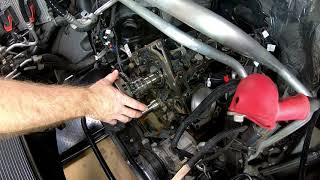
- If solenoids and wiring are good, the issue may be a more serious mechanical problem like a failed lifter or worn camshaft, requiring further engine teardown and inspection. 🎬 Watch: Walkthrough of Hemi lifter and camshaft removal.
Parts You'll Likely Need
- MDS Solenoid
(OEM #53022298AB)— This solenoid is the actuator that fails electrically or gets clogged, directly causing the P3450 code. It's recommended to replace all four at once.
Related Codes That Often Appear With This One
- P3402, P3426, P3442 — These are the corresponding deactivation performance codes for cylinders 1, 4, and 6. Seeing them together strongly points to a systemic issue like a PCM software glitch or low oil pressure, as noted in TSB #18-036-20.
- P0128 — Thermostat Rationality. TSB #18-036-20 links this code with P3450. If the engine doesn't reach the proper operating temperature, the MDS system may not function correctly, leading to performance codes.
- P2610 — PCM Internal Engine Off Timer Performance. TSB #18-082-16 links this code with P3450, strongly suggesting a PCM software or internal fault that requires a reflash.
- P0307 — Cylinder 7 Misfire. This code is a direct result of the P3450 fault, as the failure in the deactivation system causes the cylinder to misfire.
Technical Service Bulletins (TSBs) & Recalls
- 18-036-20
- 18-082-16
- 18-002-15 REV B
- 18-080-15 REV A
Platform-Specific Known Issues
- PCM Software Updates are a Primary Fix: For the 2015-2018 model years, it is critical to check for PCM software updates as specified in multiple TSBs before pursuing mechanical repairs. The factory software was prone to falsely setting MDS performance codes like P3450.
- The 'Hemi Tick': While a ticking noise is common on many engines, on the 6.4L Hemi it is often a direct warning sign of a failing lifter roller bearing. If P3450 is accompanied by a distinct ticking noise, the probability of a serious mechanical failure (lifter/cam) increases dramatically.
Mechanic-Grade Diagnostic Values
- MDS Solenoid Resistance — expected: 11.8–14.2 Ω. Failure: A reading outside this range, or an open/short circuit, indicates a faulty solenoid.
- MDS Solenoid Activation Oil Pressure — expected: 16 psi or greater. Failure: Insufficient oil pressure will prevent the lifter pins from moving, even with a functional solenoid.
Scan Tool Commands That Help
- wiTECH or equivalent professional scan tool: MDS Solenoid Actuator Test Mode (ATM) — This bidirectional command is used to manually activate a specific MDS solenoid (e.g., for cylinder 7) with the engine running or key on. Listening for an audible 'click' from under the intake manifold confirms the solenoid is mechanically responding to the PCM's command. This helps differentiate between a failed solenoid and a wiring or PCM driver issue without first removing the intake manifold.
Wiring & Ground Locations
- MDS Solenoid Harness — Located in the engine valley, underneath the intake manifold. It connects all four MDS solenoids to a single 6-pin main connector.. This harness is exposed to significant heat and vibration, making it prone to damage. Wires can become brittle and break, or rodents can chew them, causing an open or short in the circuit for the cylinder 7 solenoid. A visual inspection of this harness is critical whenever the intake manifold is removed.
- MDS 6-Pin Connector — This is the main connector that links the four MDS solenoids to the main engine harness. It is typically located at the back of the engine near the firewall, clipped to the intake manifold.. This is the primary point to test the entire MDS solenoid circuit from outside the engine. A poor connection or corrosion here can cause intermittent issues for any of the MDS cylinders.
- Primary Engine Ground — A key ground strap is often located on the driver's side, connecting the engine block or transmission case to the chassis, sometimes near the battery tray or bell housing.. While not specific to P3450, a poor primary engine ground can cause a host of bizarre electrical issues and incorrect sensor readings for the PCM. An unstable ground can affect the PCM's ability to accurately control and monitor the MDS solenoids, potentially leading to performance codes.
Real Owner Repair Stories
- HD Rams (Ram Heavy Duty Forum) (2016 Ram 2500 6.4L Hemi, 120,000 miles) — Engine ticking noise, Check Engine Light with misfire on cylinder #1.
❌ Tried (didn't work) Initial diagnosis focused on common misfire causes before identifying the root mechanical failure.
✅ What actually fixed it The root cause was a collapsed lifter on cylinder #1, which had turned in its bore and destroyed the camshaft lobe. The final repair involved replacing the camshaft, all lifters, and addressing broken exhaust manifold bolts for a total cost of around $6,000. This story highlights that while the code may point to the control system, the underlying cause can be a major mechanical failure that the system is detecting. - Ram Heavy Duty Forum (2019 Ram 2500 6.4L Hemi, 122,000 miles) — Audible ticking from the cab, misfire code P0303 on cylinder 3, and 'glitter' (metal shavings) found in the oil filter.
❌ Tried (didn't work) An oil change did not resolve the issue.
✅ What actually fixed it The owner diagnosed a failed lifter and camshaft. The owner performed the repair themselves, replacing the camshaft and all lifters. While in there, they also installed a Melling high-flow oil pump (P/N 10452HV) as a preventative measure to improve oiling. The lifter that failed had shattered, and the pieces were found in the oil pan.
OEM Part Supersession History
53022298AA→53022298AB— The newer part (53022298AB) features an improved internal O-ring for easier assembly and reduced insertion force, suggesting the original may have been difficult to install or had sealing issues.
Helpful Videos
We Have This Part in Stock


The information in this article is provided for general reference and educational purposes only. Vehicle specifications, procedures, and part compatibility can vary by production date, trim level, and region. Always consult your vehicle's factory service manual and verify part numbers before purchasing or performing repairs. Safety-critical components such as airbags, seat belts, and braking systems should be installed by a qualified professional.
- Ram 3500:
- 🎬 Helpful Videos
- 🛍️ Shop This Part
- What's Unique About the 2015-2018 Ram 3500
- Diagnostic Flowchart
- Symptoms You May Notice
- Most Likely Causes
- Rare But Worth Checking
- Diagnosis Steps
- Parts You'll Likely Need
- Related Codes That Often Appear With This One
- Technical Service Bulletins (TSBs) & Recalls
- Platform-Specific Known Issues
- Mechanic-Grade Diagnostic Values
- Scan Tool Commands That Help
- Wiring & Ground Locations
- Real Owner Repair Stories
- OEM Part Supersession History
- 🎟️ Get 5% Off