

P3450 on 2015-2018 Ram 2500: Cylinder 7 Deactivation Circuit Causes and Fixes
P3450 on a Ram 2500 with a HEMI engine indicates a fault with the cylinder 7 deactivation solenoid, part of the fuel-saving MDS system. The most common fix is replacing the faulty solenoid, which is located under the intake manifold. Expect to replace all four solenoids as a preventative measure, as they are a common failure item.
- P3450 on your HEMI-powered Ram 2500 points to a problem with the cylinder 7 deactivation solenoid in the MDS system.
- Before attempting a major repair, always check your engine oil level and condition, as low or dirty oil is a common cause.
- The most frequent fix is replacing the MDS solenoid, which requires removing the intake manifold.
- It is standard practice to replace all four MDS solenoids and the intake manifold gaskets at the same time to prevent future failures.
- In some cases, particularly on 2018 models, a simple PCM software update at the dealership may resolve the issue, as noted in TSB 18-036-20.
What's Unique About the 2015-2018 Ram 2500
The HEMI engines in this generation of Ram trucks rely on the Multi-Displacement System (MDS) for fuel efficiency. While effective, the system's components, particularly the four solenoids located in the engine valley beneath the intake manifold, are known failure points. They operate in a high-heat environment and are sensitive to oil pressure and quality. A failure in one solenoid, like the one for cylinder 7 indicated by P3450, is a common issue that many Ram owners encounter as their trucks age. Cylinder 7 is located on the driver's side, the rearmost cylinder closest to the firewall.
Diagnostic Flowchart
Tap your situation to follow the diagnostic path that matches what you're seeing on this vehicle.
Symptoms You May Notice
- Check Engine Light (MIL) illuminated
- Engine running rough or a noticeable misfire.
- Reduced fuel economy as the MDS system will be inactive.
- Loss of power or engine feeling sluggish.
- The 'ECO' light on the dash may not illuminate, as MDS is disabled.
- In some cases, a ticking or tapping noise from the engine, which can be a precursor to lifter failure.
- Replacing only the spark plugs or ignition coils. While a misfire might be a symptom, P3450 points specifically to the deactivation circuit, not the primary ignition system.
- Replacing the PCM prematurely. PCM failure is rare and should be the last resort after verifying all components and wiring in the circuit.
- Ignoring a ticking noise. A persistent engine tick on a HEMI should be investigated immediately, as it is a common symptom of a failing lifter which can lead to catastrophic camshaft failure if ignored. 🎬 See this guide to understanding the infamous Hemi lifter tick.
Most Likely Causes
- Failed Cylinder 7 MDS Solenoid 🔴 High Probability The solenoids are located in the hot engine valley, and their original plastic housings can become brittle and crack over time. Internal electronic failure is also common. Debris can also clog the small oil screen on the solenoid, impeding its function.
How to confirm: Using a capable scan tool, command the solenoid on and off to listen for a click. Test the solenoid's resistance with a multimeter; a common specification is between 5-30 ohms, but refer to a service manual for the exact value. If the solenoid is unresponsive, its resistance is out of spec (open or shorted), or it is physically broken, it has failed.
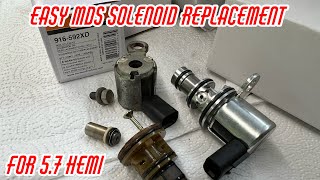
Typical fix: Replace the failed MDS solenoid. It is highly recommended to replace all four MDS solenoids at the same time, as the intake manifold must be removed for access and the others are likely of the same age and condition. Aftermarket solenoids with full metal bodies are available and may offer increased durability.
Est. part cost: $50-$100 per solenoid - Low or Dirty Engine Oil 🟡 Medium Probability The MDS system is hydraulic and relies on clean oil at the correct pressure to function. The manufacturer specifies 5W-20 viscosity oil. Using incorrect oil weights or extending oil change intervals can lead to sludge that clogs the small passages in the solenoids and lifters, causing this code.
How to confirm: Check the engine oil level on the dipstick and inspect its condition. If the oil is low, dark, sludgy, or the incorrect viscosity, this could be the cause.
Typical fix: Perform an engine oil and filter change using the manufacturer-specified oil viscosity (typically 5W-20 for the 5.7L HEMI). Clear the code and perform a drive cycle to see if it returns.
Est. part cost: $50-$100 - Wiring Harness or Connector Issue 🟡 Medium Probability The wiring harness to the MDS solenoids sits under the intake manifold and is exposed to significant heat and vibration. Rodents are also known to build nests in this area, chewing through the wires. This can cause wires to become brittle, frayed, or connectors to loosen.
How to confirm: With the intake manifold removed, visually inspect the wiring and connector for the cylinder 7 solenoid. Check for signs of rodent damage (chewed wires, nests), corrosion, or loose pins. Perform a continuity test on the wiring between the PCM and the solenoid connector. Check for continuity to ground on the control wire and for battery voltage on the power wire.
Typical fix: Repair the damaged section of wiring or replace the connector pigtail. In cases of rodent damage, a significant portion of the harness may need repair.
Est. part cost: $15-$50 for a pigtail, potentially more for extensive harness repair. - Failed MDS Lifter ⚪ Low Probability A known, though less common, issue on HEMI engines is the failure of the specialized lifters associated with the MDS system. A lifter can become stuck, or the roller bearing can fail, which will prevent the cylinder from deactivating or reactivating properly. This is often preceded by a distinct 'Hemi tick'.
How to confirm: This is an advanced diagnosis. If the solenoid and wiring are confirmed to be good, the issue is likely mechanical. This often requires cylinder head removal for inspection of the lifters and camshaft. A collapsed lifter can cause the rocker arm to be loose, and a failed roller can score the camshaft lobe.
Typical fix: Replace all lifters on the affected bank of cylinders. If a lifter has failed, the camshaft must be inspected for damage and replaced if any scoring or pitting is found. This is a significant and costly repair.
Est. part cost: $200-$400 for lifters, potentially $500+ for a camshaft
Rare But Worth Checking
- Powertrain Control Module (PCM) Software Update Needed: TSB #18-036-20 indicates that for 2018 models with the 6.4L HEMI, reprogramming the PCM with the latest software may resolve this code, especially if it appears with P0128 (Thermostat Rationality). [Bulletin #18-036-20]
- Faulty Powertrain Control Module (PCM): This is the least likely cause. The PCM should only be considered after all other possibilities, including wiring, solenoids, and mechanical components, have been thoroughly ruled out.
Diagnosis Steps
- Verify engine oil level and condition. Ensure the correct viscosity (5W-20 for 5.7L) is being used. Top off or change the oil if it is low or dirty.
- Use a professional scan tool to check for any other accompanying trouble codes and to view live data.
- Visually inspect the top of the engine for any obvious signs of damage, oil leaks, or rodent activity in the wiring.
- To access the solenoids, the intake manifold must be removed. This is a multi-hour job requiring care. Be prepared to disconnect fuel lines, various electrical connectors, and vacuum hoses.
- Once the intake manifold is off, locate the MDS solenoid for cylinder 7. On a HEMI V8, cylinder 7 is on the driver's side, closest to the firewall. Inspect its connector and wiring for damage.
- Test the solenoid. Disconnect it and check its resistance with a multimeter. A typical reading for a good solenoid is between 5-30 Ohms. A reading of infinity (open) or zero (short) indicates a failed solenoid.
- If removing the old solenoids, be aware they can be brittle and break off in the engine block. Techniques include prying carefully or, if broken, threading a screw into the plastic body and using a slide hammer or claw hammer to extract it. 🎬 Watch: How to remove MDS solenoids without breaking them.
- Test the circuit. Check for proper voltage (typically battery voltage) and ground at the solenoid's electrical connector with the key on. The ground connection should show near zero ohms of resistance.
- If the solenoid and wiring test good, the problem may be mechanical (lifter) or a PCM issue, which requires more advanced diagnostics like cylinder head removal.
Parts You'll Likely Need
- MDS Solenoid
(OEM #53032152AE)— This is the most common component to fail. The OEM part number has been superseded multiple times (from 53032152AC, 53032152AD, 68060345AA). It's recommended to replace all four while the intake is off.
Trusted brands: Mopar, Dorman (offers a version with a full steel body, part #916-592XD)
OEM price range: $80-$120
Aftermarket price range: $50-$95 - Intake Manifold Gasket Set
(OEM #MS97089 (Fel-Pro example))— These are single-use gaskets that must be replaced anytime the intake manifold is removed for service.
Related Codes That Often Appear With This One
- P3402, P3426, P3442 — These are codes for the other MDS-controlled cylinders (1, 4, and 6). They often appear together if there is a systemic issue like low oil pressure or a widespread wiring problem. [Bulletin #18-036-20, #18-082-16, #18-002-15 REV B, #18-080-15 REV A]
- P0128 — Thermostat Rationality. TSB #18-036-20 specifically links this code with P3450 on 2018 6.4L models, suggesting a PCM software update may address both issues simultaneously. [Bulletin #18-036-20]
- P2610 — PCM Internal Engine Off Timer Performance. TSBs #18-082-16 and #18-080-15 REV A list this code alongside P3450, indicating a potential PCM-related fault or the need for a software update. [Bulletin #18-082-16, #18-080-15 REV A]
- P0307 — Cylinder 7 Misfire Detected. If the deactivation system malfunctions (either a stuck lifter or faulty solenoid), it can cause the cylinder to misfire, which the PCM will log as a separate code.
Technical Service Bulletins (TSBs) & Recalls
- 18-036-20: Addresses P3450 and other MDS codes on 2018 models, recommending a PCM software update.
- 18-082-16: Notes P3450 in conjunction with other deactivation codes and a PCM timer performance code.
- 18-002-15 REV B: Lists P3450 with other deactivation codes and a BCM communication code.
- 18-080-15 REV A: Similar to 18-082-16, linking P3450 to other MDS and PCM timer codes.
Platform-Specific Known Issues
- Rodent Damage to MDS Wiring: A recurring theme among owners is discovering rodent nests in the engine valley, directly on top of the MDS solenoids. The soy-based wiring insulation used in many modern vehicles can attract rodents, who then chew through the control wires for the solenoids, causing open circuits and triggering codes like P3450. A visual inspection under the intake manifold is crucial if rodent activity is suspected.
- Progressive Lifter Failure ('Hemi Tick'): Many owners report a faint ticking noise that gradually becomes louder over time. This is a classic symptom of a failing MDS lifter roller bearing. If left unaddressed, the lifter can seize or collapse, causing the roller to stop spinning and grind against the camshaft lobe, destroying both components. Any ticking noise should be diagnosed immediately to prevent a much more expensive repair.
- Brittle Solenoid Extraction: When replacing the MDS solenoids, owners and technicians frequently find that the old plastic solenoid bodies have become extremely brittle from heat cycles and break apart during removal. The lower portion can get stuck in the engine block. Common extraction methods involve carefully threading a coarse drywall screw into the broken plastic piece and using a claw hammer or slide hammer to pull it out.
Mechanic-Grade Diagnostic Values
- MDS Solenoid Coil Resistance — expected: 5 - 30 Ω. Failure: A reading of infinity (open circuit) or near-zero (short circuit) indicates a failed solenoid.
- MDS Solenoid Connector Voltage (Key On, Engine Off) — expected: ≥ 12.0 V. Failure: Low or no voltage on the power supply pin points to a wiring issue, fuse, or PCM problem.
- Ground Circuit Resistance — expected: 0 Ω. Failure: Any resistance reading above zero indicates a poor ground connection, which can cause erratic solenoid operation.
Scan Tool Commands That Help
- wiTECH (Dealer Tool) or equivalent professional scanner: MDS Solenoid Actuation Test / Bidirectional Control — This function is used to command the specific MDS solenoid (Cylinder 7 in this case) on and off while the engine is running. It helps a technician audibly or physically confirm if the solenoid is mechanically responding to the PCM's command, which helps isolate a faulty solenoid from a wiring or PCM driver issue.
Wiring & Ground Locations
- PCM Connector Pinout — The Powertrain Control Module (PCM) is typically located in the engine bay, often on the firewall.. To perform continuity tests on the solenoid circuit, a technician needs the specific pin number for the Cylinder 7 MDS Solenoid control wire at the PCM connector. Service manuals for the specific model year are the best source for this.
- Engine/Chassis Grounds — Key ground points are typically found from the battery negative terminal to the chassis/frame, from the engine block to the firewall, and on the frame rail near the driver's side.. A poor ground connection can cause a voltage drop or intermittent electrical issues in any circuit, including the MDS solenoid control circuit, leading to performance codes like P3450.
Real Owner Repair Stories
- RamForum.com user (2009 Ram 1500 5.7L HEMI, 238,000 miles) — Ticking noise, Check Engine Light with P0304 (Cylinder 4 Misfire - another MDS cylinder).
❌ Tried (didn't work) Replaced spark plugs, Swapped coil packs, Swapped fuel injectors
✅ What actually fixed it The user self-diagnosed a seized lifter by observing no valve movement. The dealer initially misdiagnosed it as a 'bad rod in the bottom end' but ultimately the lifetime powertrain warranty covered a complete replacement engine due to the lifter and camshaft damage. - RamForum.com user (Vehicle year/model not specified, but a HEMI with lifter failure.) — Ticking/tapping noise.
✅ What actually fixed it The lifter failure had also 'wiped out' the camshaft. The repair was covered by an aftermarket warranty which replaced the entire engine.
"I Checked Everything" — The Actual Cause
- In one documented case for a 2015 5.7L Ram, the symptoms strongly suggested a common MDS lifter/camshaft failure. However, before committing to the major repair, the owner removed the valve cover for inspection and discovered the actual cause was a simple broken valve spring. The repair cost was only $80 for the spring, saving thousands on an unnecessary cam and lifter replacement.
OEM Part Supersession History
53032152AC, 53032152AD, 68060345AA→53032152AE— Standard part revision and consolidation by the manufacturer.53022298AA→53022298AB— This is another valid MDS solenoid for HEMI engines. The description for this part notes an 'improved internal O-ring for easier assembly and reduced insertion force,' suggesting a design update for better serviceability and sealing.
Heads up: While both 53032152AE and 53022298AB service HEMI engines, it is critical to verify the correct part number for the specific vehicle's VIN, as there may be subtle differences between applications or model years.
Model Year Variations Within This Range
- 2018 (6.4L HEMI): TSB #18-036-20 specifically calls out that if P3450 is present along with P0128 (Thermostat Rationality) on 2018 6.4L models, the primary fix may be a PCM software update rather than component replacement. [Bulletin #18-036-20]
Helpful Videos
Used OEM Parts in Stock

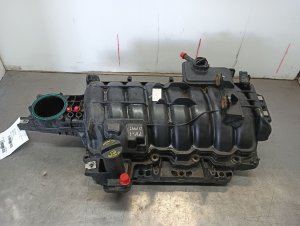

New Aftermarket Parts Available


The information in this article is provided for general reference and educational purposes only. Vehicle specifications, procedures, and part compatibility can vary by production date, trim level, and region. Always consult your vehicle's factory service manual and verify part numbers before purchasing or performing repairs. Safety-critical components such as airbags, seat belts, and braking systems should be installed by a qualified professional.
- Ram 2500:
- 🎬 Helpful Videos
- 🛍️ Shop This Part
- What's Unique About the 2015-2018 Ram 2500
- Diagnostic Flowchart
- Symptoms You May Notice
- Most Likely Causes
- Rare But Worth Checking
- Diagnosis Steps
- Parts You'll Likely Need
- Related Codes That Often Appear With This One
- Technical Service Bulletins (TSBs) & Recalls
- Platform-Specific Known Issues
- Mechanic-Grade Diagnostic Values
- Scan Tool Commands That Help
- Wiring & Ground Locations
- Real Owner Repair Stories
- "I Checked Everything" — The Actual Cause
- OEM Part Supersession History
- Model Year Variations Within This Range
- 🎟️ Get 5% Off