

P3426 on 2015-2018 Ram 3500: Cylinder 4 Deactivation Performance Guide
This code indicates a problem with the Multi-Displacement System (MDS) for cylinder 4, usually caused by a faulty MDS solenoid. The fix requires removing the intake manifold to replace the solenoid. An OEM Mopar solenoid (part #53022298AB) costs around $75-$110, and it's highly recommended to replace all four solenoids at once.
- P3426 points to a problem with the cylinder deactivation (MDS) system on cylinder 4, not a standard ignition or fuel misfire.
- The most likely cause is a failed MDS solenoid, which is located under the intake manifold.
- Before performing mechanical repairs, check for required PCM software updates with a dealer, as this is a common fix recommended by Ram.
- Always use the correct engine oil viscosity, as the MDS system is sensitive to oil pressure.
- If you are replacing one MDS solenoid, it is best practice to replace all four at the same time to avoid future repeat repairs.
What's Unique About the 2015-2018 Ram 3500
On the 5.7L and 6.4L Hemi engines used in this generation of Ram trucks, the MDS system is controlled by oil pressure directed through four electronic solenoids located in the engine valley, beneath the intake manifold. These solenoids are a notorious failure point. The original factory solenoids often have plastic bodies that become brittle from engine heat cycles and can crack or break during removal. Their internal passages and screens can also get clogged with oil sludge, leading to the performance issues that trigger codes like P3426. Numerous Technical Service Bulletins (TSBs) also indicate that PCM software updates are sometimes required to correct overly sensitive monitoring logic or to address related drivability complaints like a shudder or drone when MDS is active.
Diagnostic Flowchart
Tap your situation to follow the diagnostic path that matches what you're seeing on this vehicle.
Symptoms You May Notice
- Check Engine Light is on
- Reduced fuel economy as MDS will be disabled
- Engine running rough or idling unevenly, sometimes described as a misfire
- Hesitation or reduced power, especially during light acceleration
- A shudder, pulsation, or drone noise at highway speeds (a condition specifically addressed by related TSBs)
- Replacing only the spark plugs or ignition coil for cylinder 4. While these can cause a P0304 misfire code, they will not set a P3426 performance code for the deactivation system itself.
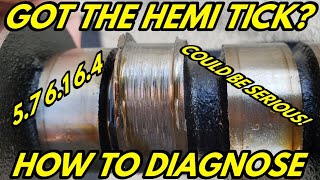
- Assuming any ticking noise is just a manifold leak. A rhythmic ticking that changes with RPM can be an early sign of a failing lifter, which is a much more serious issue.
Most Likely Causes
- Faulty Cylinder 4 MDS Solenoid 🔴 High Probability The original equipment (OE) solenoids use plastic housings that are known to become brittle and crack from exposure to high engine temperatures in the valley under the intake manifold. The internal oil screens can also become clogged with debris or sludge, impeding oil flow.
How to confirm: After removing the intake manifold, inspect the solenoid for visible damage. A technician can use a high-end scan tool to command the solenoid on and off to test its function before removal. Resistance can also be checked with a multimeter and compared to specifications (typically in the 6-30 ohm range).
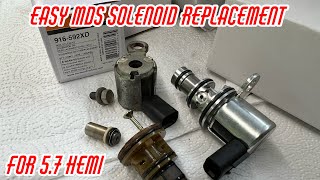
Typical fix: Replace the cylinder 4 MDS solenoid. It is highly recommended to replace all four MDS solenoids at the same time 🎬 Watch: A step-by-step guide to replacing your Hemi MDS solenoids., as they are all the same age and the job is labor-intensive. Many owners also replace the nearby VVT solenoid as a preventative measure.
Est. part cost: $75-$110 for one OEM Mopar solenoid. Aftermarket versions, like the Dorman OE FIX with an aluminum body, are available. - Low Engine Oil Level or Incorrect Oil Type/Viscosity 🟡 Medium Probability The MDS system is entirely dependent on hydraulic pressure. Low oil levels or using oil that does not meet the specific manufacturer requirements (e.g., 5W-20 for 5.7L, 0W-40 Full Synthetic meeting MS-12633 for 6.4L) can cause the solenoids and lifters to operate incorrectly.
How to confirm: Check the engine oil level using the dipstick and verify its condition. Confirm the oil used meets the exact Chrysler material standard (e.g., MS-12633) and viscosity grade specified in the owner's manual.
Typical fix: Top off the engine oil to the correct level or perform a complete oil and filter change using the correct specification oil. Some owners have reported that an oil change alone resolved MDS-related ticking noises.
Est. part cost: $60-$120 for a DIY or professional oil change with the required full synthetic oil. - Outdated Powertrain Control Module (PCM) Software 🟡 Medium Probability Multiple TSBs were issued by Ram for this exact code, often to correct software logic that was too sensitive or to address customer complaints of a shudder or drone at highway speeds when MDS engages.
How to confirm: A Ram dealership or a qualified shop with a wiTECH scan tool can check the current software calibration of your PCM against the latest available versions from the manufacturer.
Typical fix: Flash the PCM with the latest software version. This is often the first step recommended by the manufacturer and may resolve the code without any parts replacement.
Est. part cost: $150-$250 for a dealer to perform the software update. - Wiring Harness or Connector Issue ⚪ Low Probability The wiring for the MDS solenoids is routed in the hot engine valley under the intake manifold. This environment can make wires brittle and insulation crack over time. Oil leaks can also contaminate the connectors.
How to confirm: During solenoid replacement, visually inspect the wiring harness for any signs of cracking, melting, rodent damage, or corrosion at the connector pins.
Typical fix: Repair the damaged section of the harness or replace the connector pigtail.
Est. part cost: $20-$50 for a connector pigtail.
Rare But Worth Checking
- Failed MDS Lifter / Worn Camshaft: If the solenoid, wiring, and oil pressure are all good, the issue may be a mechanically failed lifter for cylinder 4. This is the infamous 'Hemi tick' that can lead to the lifter's roller failing and damaging the camshaft lobe. This is a major, expensive repair requiring removal of the cylinder heads. Often, owners with a lifter failure will opt to replace the cam and all lifters, sometimes with an MDS-delete kit. 🎬 Watch: How to replace a failed camshaft and lifters.
- Clogged Oil Passages: Severe engine sludge from poor maintenance can block the small oil passages leading to the MDS solenoid and lifter. This restricts the oil flow needed for the system to function. An engine flush might help in mild cases, but disassembly and manual cleaning may be required for severe blockages.
Diagnosis Steps
- Check for TSBs: First, check with a dealer if your vehicle's VIN has any open recalls or applicable TSBs (like 18-036-20 or 18-002-15 REV B). A PCM software update may be the required fix and should be done first.
- Verify Oil Level and Specification: Check the engine oil dipstick. Ensure the oil is full, clean, and of the correct viscosity and specification (5W-20 for 5.7L, 0W-40 Synthetic MS-12633 for 6.4L). If in doubt, change the oil and filter.
- Advanced Scan Tool Diagnosis: Use a professional OBD-II scanner to view live data and freeze frame information. Command the Cylinder 4 MDS solenoid ON and OFF and monitor its response. Check for related codes for other cylinders or oil pressure.
- Prepare for Intake Manifold Removal: Before removing the intake, use compressed air and a vacuum to thoroughly clean the engine valley to prevent debris from falling into the engine.
- Inspect Wiring and Replace Solenoids: Remove the intake manifold. Inspect the solenoid wiring harness for damage. It is highly recommended to replace all four MDS solenoids (and the intake manifold gaskets) while access is available. Be careful on removal, as old plastic solenoids can break apart. 🎬 See this trick for removing broken solenoids without damaging the engine.
- Inspect for Sludge: While the solenoids are out, inspect the solenoid bores and oil passages for any signs of heavy sludge or blockage.
- Mechanical Check (Advanced): If all of the above steps do not resolve the issue, the problem is likely a mechanical failure of the MDS lifter or camshaft for cylinder 4. This requires more extensive engine disassembly (cylinder head removal) to inspect and confirm.
Parts You'll Likely Need
- Engine Multiple Displacement System (MDS) Solenoid
(OEM #53022298AB (supersedes 53022298AA))— This is the most common component to fail for this code. The original plastic design is prone to heat damage and clogging. It is recommended to replace all four at once.
Trusted brands: Mopar (OEM), Dorman OE FIX (916-592XD - features an upgraded aluminum body)
OEM price range: $75-$110
Aftermarket price range: $60-$100 - Intake Manifold Gasket Set
(OEM #Mopar 5045495AE)— These are single-use gaskets that must be replaced anytime the intake manifold is removed to access the MDS solenoids.
Trusted brands: Fel-Pro, Mopar
OEM price range: $40-$60
Aftermarket price range: $2
Related Codes That Often Appear With This One
- P3402, P3442, P3450 — These are the corresponding deactivation performance codes for cylinders 1, 6, and 7. Seeing multiple codes together often points to a systemic issue like low/improper oil, outdated software, or multiple failing solenoids.
- P0304 — Cylinder 4 Misfire Detected. A failing MDS component on cylinder 4 can prevent the cylinder from firing correctly, either when it's supposed to be active or when it fails to reactivate properly.
- P0521 — Engine Oil Pressure Sensor Performance. Since the MDS system is oil-pressure dependent, faults in the oil pressure reading can cause MDS codes to set.
Technical Service Bulletins (TSBs) & Recalls
- 18-036-20: Mentions P3426 as a potential DTC fixed by a PCM software update for 2018 models.
- 18-082-16: Lists P3426 as one of several codes addressed by a PCM software update.
- 18-002-15 REV B: Details a PCM flash for 2015 models to fix P3426 and address shudder/pulsation at highway speeds.
- 18-002-15 REV A: Precursor to Rev B, also addressing P3426 with a software update.
- 18-080-15 REV A: Another TSB listing P3426 as a code that can be resolved with a PCM update.
Platform-Specific Known Issues
- TSB 18-036-20: For 2018 models with the 6.4L Hemi, this bulletin involves a PCM software update to address P3426 and other MDS codes. It also includes an optional software path to reduce drone/shudder complaints during MDS operation.
- TSB 18-002-15 REV B: For 2015 models, this TSB provides a PCM software update to address P3426 and other MDS codes, specifically noting customer complaints of a surge or pulsation at highway speeds (40-80 mph).
Mechanic-Grade Diagnostic Values
- MDS Solenoid Coil Resistance — expected: 6-30 ohms. Failure: A reading of 0 ohms (short) or infinite/OL (open).
- Voltage at MDS Solenoid Connector (Power Pin) — expected: ~12V (Battery Voltage) with ignition on. Failure: Significantly lower or no voltage indicates a problem with the power supply circuit from the PCM or fuse.
- Ground Resistance at MDS Solenoid Connector — expected: Less than 1 ohm. Failure: High resistance indicates a poor ground connection, which can cause intermittent solenoid operation.
Scan Tool Commands That Help
- wiTECH or equivalent professional scan tool: MDS Solenoid Actuator Test (e.g., MDS Solenoid #4) — This is a key diagnostic step. With the engine off (or running, depending on the test), this command attempts to cycle the specific solenoid. A technician can listen for an audible click from the solenoid under the intake manifold, confirming the electrical circuit and the solenoid's mechanical plunger are at least attempting to function. Failure to hear a click points towards a bad solenoid or a wiring issue.
Wiring & Ground Locations
- MDS Solenoid Jumper Harness — Under the intake manifold, connecting the four MDS solenoids and the VVT solenoid to the main engine harness.. This harness lives in the hot, oil-filled valley of the engine. Over time, the insulation can become brittle and crack, leading to shorts or open circuits that can trigger P3426 and other related codes. It is a known failure point on high-mileage vehicles and should be inspected carefully whenever the intake manifold is removed.
- Main Engine Ground — Typically a large ground strap from the battery negative terminal to the chassis and/or engine block. On Ram trucks, a key ground is often found on the core support near the battery.. A poor main engine ground can cause a host of electrical issues, including intermittent or weak operation of computer-controlled solenoids like the MDS system. While not a direct cause of a single cylinder code, it can contribute to erratic system performance.
- C101 Harness Connector — Located behind the left (driver's side) cylinder head.. This is an inline connector that contains the control circuit for the MDS solenoid. Service procedures may reference testing at this connector to isolate a wiring fault between the PCM and the solenoid itself.
Real Owner Repair Stories
- BobIsTheOilGuy forum user (2013 Dodge Durango Citadel with 167,xxx miles (similar Hemi MDS system)) — MDS and VVT solenoid circuit DTCs.
❌ Tried (didn't work) The owner was repeatedly clearing the codes with a code reader.
✅ What actually fixed it The root cause was a rotted wiring insulation on the MDS jumper harness located under the intake manifold. Although one MDS solenoid did have an open winding (likely from the repeated electrical faults), the primary failure was the harness itself. The fix required replacing both the faulty solenoid and the entire MDS jumper harness.
When the Usual Fixes Don't Work
- While replacing the MDS solenoid for the specific cylinder code is the most common fix, there are numerous owner accounts where the issue was not the solenoid itself. In cases of the 'Hemi tick' accompanied by P3426, the actual failure is often a collapsed MDS lifter and a subsequently damaged camshaft lobe. In these scenarios, replacing only the solenoid will not fix the problem. The ultimate repair involves replacing the camshaft, all lifters (often with a non-MDS or 'MDS delete' kit), and the MDS plugs in the engine block to ensure proper oiling for the new components.
OEM Part Supersession History
53022298AA→53022298AB— The updated part features an improved internal O-ring for easier assembly and reduced insertion force, suggesting a design enhancement for better sealing and fitment.
Helpful Videos
Used OEM Parts in Stock


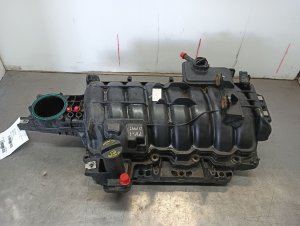

New Aftermarket Parts Available


The information in this article is provided for general reference and educational purposes only. Vehicle specifications, procedures, and part compatibility can vary by production date, trim level, and region. Always consult your vehicle's factory service manual and verify part numbers before purchasing or performing repairs. Safety-critical components such as airbags, seat belts, and braking systems should be installed by a qualified professional.
- Ram 3500:
- 🎬 Helpful Videos
- 🛍️ Shop This Part
- What's Unique About the 2015-2018 Ram 3500
- Diagnostic Flowchart
- Symptoms You May Notice
- Most Likely Causes
- Rare But Worth Checking
- Diagnosis Steps
- Parts You'll Likely Need
- Related Codes That Often Appear With This One
- Technical Service Bulletins (TSBs) & Recalls
- Platform-Specific Known Issues
- Mechanic-Grade Diagnostic Values
- Scan Tool Commands That Help
- Wiring & Ground Locations
- Real Owner Repair Stories
- When the Usual Fixes Don't Work
- OEM Part Supersession History
- 🎟️ Get 5% Off