

P3402 on 2015-2018 Ram 2500: Cylinder 1 Deactivation Fault Causes and Fixes
This code indicates a fault in the Cylinder 1 Deactivation circuit of the Multi-Displacement System (MDS). The most common cause is a failed MDS solenoid for cylinder 1. Other likely causes include low oil level, incorrect oil viscosity, a wiring issue, or a collapsed lifter. A software update may also be required as per manufacturer TSBs.
- P3402 specifically points to a problem with the cylinder 1 deactivation system (MDS) on your HEMI engine.
- Before suspecting major issues, check your engine oil level and ensure you are using the correct viscosity oil.
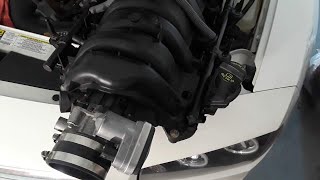
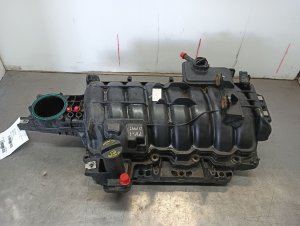
- The most common failed part is the MDS solenoid for cylinder 1, which requires removing the intake manifold to replace.
- Check with a dealer for any available PCM software updates, as several TSBs indicate this can resolve the fault.
- If you hear a persistent engine ticking noise along with this code, it could be a sign of a more serious lifter/camshaft failure that needs immediate attention.
What's Unique About the 2015-2018 Ram 2500
This code is specific to the HEMI V8 engines (5.7L and 6.4L) equipped with MDS. While the system is designed to improve fuel economy, it's also a known source of issues. The four MDS solenoids that control the system are located in the lifter valley, under the intake manifold, where they are exposed to significant heat and can fail or become clogged with oil sludge. Furthermore, these engines are notoriously sensitive to oil quality and level, which is critical for the hydraulic operation of the MDS lifters. Several Technical Service Bulletins (TSBs) have been issued by the manufacturer for this and related codes, sometimes pointing to a required software update rather than a part failure. [Bulletin #18-036-20, Bulletin #18-082-16] Lifter failure is also a well-documented problem on HEMI engines, which can start as a ticking noise and lead to a destroyed camshaft if not addressed.
🎬 Watch: A professional mechanic explains the causes of the HEMI tick.Diagnostic Flowchart
Tap your situation to follow the diagnostic path that matches what you're seeing on this vehicle.
Symptoms You May Notice
- Check Engine Light is on
- Reduced fuel economy
- Rough or unstable idle
- Engine hesitation or loss of power during acceleration
- Audible ticking or tapping noise from the engine (the 'HEMI tick'), which can indicate a failing lifter.
- MDS system fails to engage or disengages with a rough transition.
- Replacing spark plugs or ignition coils, as these typically cause misfire codes (e.g., P0301) rather than a deactivation circuit code. However, a failed lifter can eventually lead to a misfire code.
Most Likely Causes
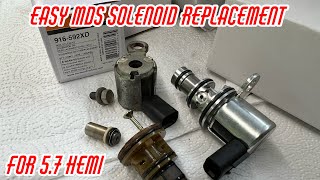
- Faulty Cylinder 1 MDS Solenoid 🔴 High Probability The solenoids are located in a high-heat area under the intake manifold and can fail electrically or become clogged with oil sludge over time. The original Mopar solenoids have plastic bodies that can become brittle and break during removal. 🎬 See this guide on how to remove broken MDS solenoids safely.
How to confirm: A technician can use a bidirectional scan tool to command the solenoid on and off to check its response. The solenoid's electrical resistance can also be tested. A faulty solenoid may not produce an audible click when activated.
Typical fix: Replace the faulty MDS solenoid. Since the intake manifold must be removed, many owners and shops choose to replace all four MDS solenoids at the same time as a preventative measure. Some owners report success with upgraded aftermarket solenoids from brands like Dorman, which feature a more durable all-metal housing.
Est. part cost: $50-$110 for one solenoid - Low Engine Oil Level or Incorrect Viscosity 🟡 Medium Probability The MDS system is hydraulic and relies on correct oil pressure and volume to function. HEMI engines can be sensitive to oil, and using a viscosity other than the manufacturer-specified grade (e.g., 5W-20 for 5.7L, 0W-40 for 6.4L) or extending oil change intervals can lead to sludge and operational issues.
How to confirm: Check the engine oil level using the dipstick and verify that the correct oil type (as specified on the oil cap or in the owner's manual) is being used.
Typical fix: Perform an oil and filter change with the manufacturer-recommended oil viscosity and fill to the proper level. Some owners on forums report that simply performing a proper oil change resolved their MDS-related codes.
Est. part cost: $50-$100 - Wiring Harness or Connector Issue 🟡 Medium Probability The wiring to the MDS solenoids runs under the intake manifold and can be susceptible to damage from heat, oil, or vibrations. Rodents are also known to build nests in this area and chew through the wires, causing a short or open circuit.
How to confirm: Visually inspect the wiring harness and connector for the cylinder 1 MDS solenoid for any signs of damage, corrosion, or loose connections. A user on RamForum.com found that a squirrel's nest under the intake led to chewed wires on the solenoid connector. A diagnostic test involves checking for continuity and voltage at the PCM and solenoid connectors.
Typical fix: Repair the damaged section of the wiring harness or clean/replace the connector. In cases of rodent damage, this can sometimes be done without removing the intake manifold, but access is very tight.
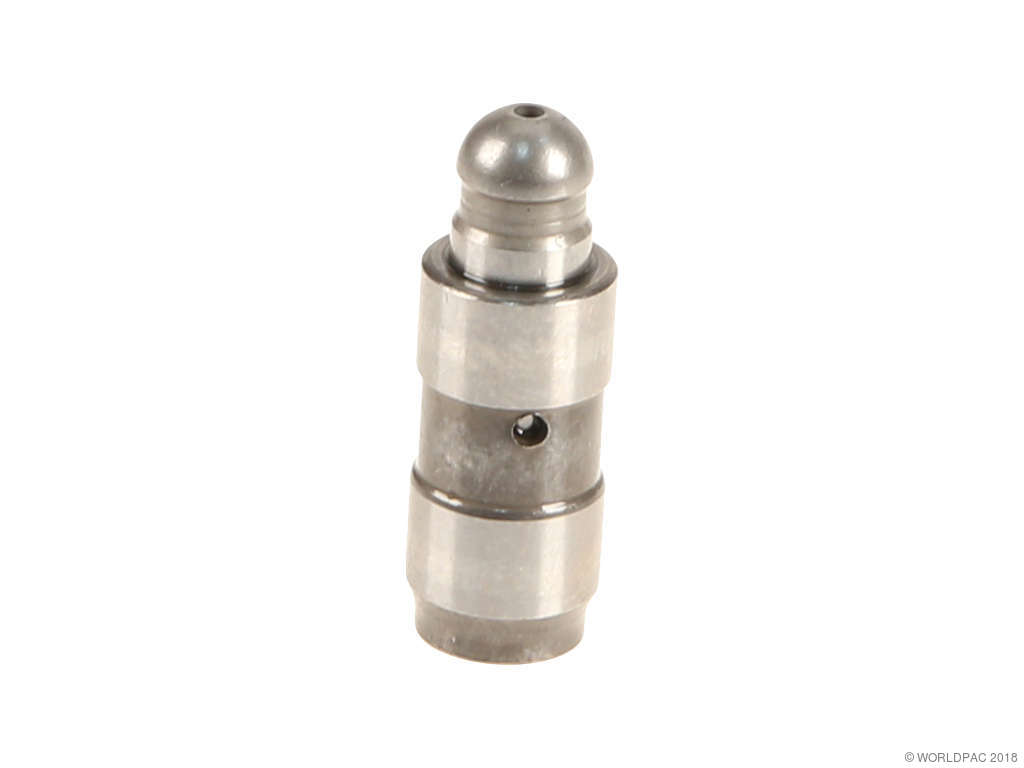
Est. part cost: $10-$50 for repair materials - Failed MDS Lifter Low_to_medium Probability HEMI engines, particularly those with MDS, are known for potential lifter and camshaft failures, often referred to as the 'HEMI tick'. A lifter's roller bearing can fail, causing it to seize or collapse. This prevents the valve from opening correctly and can quickly destroy the corresponding camshaft lobe.
How to confirm: This is a more involved diagnosis. A persistent ticking noise that gets louder with RPM is a primary symptom. If solenoids and wiring are good, a technician may perform a compression or leak-down test. Definitive diagnosis requires removing the valve covers and potentially the cylinder heads to inspect the lifters and camshaft for wear and proper movement.
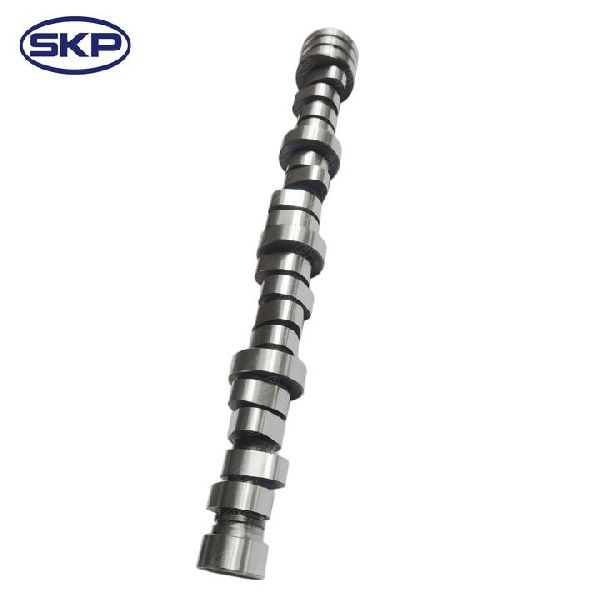
Typical fix: This is a major and expensive repair. It requires replacing all lifters (both MDS and standard lifters) and the camshaft. Due to the risk of metal shavings circulating in the engine, a thorough cleaning of oil passages and an oil pump replacement are also highly recommended. 🎬 Watch: A step-by-step walkthrough of the lifter and camshaft replacement.
Est. part cost: $800-$2000+ - PCM Software Update Needed ⚪ Low Probability Manufacturer TSB #18-036-20 explicitly lists P3402 as a code that may be resolved by a PCM software update for 2018 models with the 6.4L engine. The update addresses multiple conditions, including false DTCs. Other TSBs also mention P3402 in conjunction with other codes that may be resolved by a PCM flash. [Bulletin #18-082-16, #18-002-15 REV B, #18-080-15 REV A]
How to confirm: A Ram dealership or qualified shop with a wiTECH scan tool can check the current PCM software version against available updates referenced in the TSBs.
Typical fix: Flash the PCM with the latest manufacturer software. TSB #18-036-20 notes this is a 0.3-hour labor operation.
Est. part cost: $0 under warranty, or $100-$250 at a dealership
Rare But Worth Checking
- Restricted Oil Passages: Engine sludge from poor maintenance can block the small oil passages leading to the MDS solenoids and lifters, preventing proper hydraulic pressure. Some forum users have suspected this after replacing solenoids without success.
- Faulty Powertrain Control Module (PCM): While rare, the PCM itself can fail, causing it to incorrectly report a circuit fault or fail to command the solenoid properly. This should only be considered after all other possibilities, including wiring, have been exhaustively tested.
Diagnosis Steps
- Verify the engine oil level and condition. Ensure it is full and of the manufacturer-specified viscosity (e.g., 5W-20 for 5.7L, 0W-40 for 6.4L). An oil change is a good first step if maintenance history is unknown.
- Use an OBD-II scanner to check for other related trouble codes, especially other MDS codes (P3426, P3442, P3450) or codes mentioned in TSBs like P0128.
- Using a bidirectional scan tool, command the cylinder 1 MDS solenoid on and off. Listen for an audible click from the engine bay, which indicates the solenoid is trying to actuate.
- If the solenoid does not respond, the next step is to access it. This requires removing the intake manifold.
- Once accessed, inspect the wiring harness and connector for the cylinder 1 MDS solenoid for any signs of damage, corrosion, or loose connections.
- Test the solenoid's resistance using a multimeter. Compare the reading to the manufacturer's specification.
- Test the wiring harness for continuity from the PCM connector to the solenoid connector to rule out an open or short in the control circuit.
- If the solenoid and wiring test good, the issue may be mechanical (clogged oil passage, failed lifter) or a faulty PCM. Further diagnosis of these components is required.
Parts You'll Likely Need
- Engine Cylinder Deactivation Solenoid (MDS Solenoid)
(OEM #53022298AB)— This is the most common component to fail, either electrically or by becoming clogged, directly causing the P3402 code. The OEM part number 53022298AB supersedes the previous number 53022298AA.
Trusted brands: Mopar, Dorman (OE FIX)
OEM price range: $75-$110
Aftermarket price range: $50-$90 - Intake Manifold Gasket Set
(OEM #Fel-Pro MS 97089 (example))— These gaskets are single-use and must be replaced anytime the intake manifold is removed to access the MDS solenoids.
Trusted brands: Fel-Pro, Mahle, Mopar
OEM price range: $40-$70
Aftermarket price range: $25-$50 - MDS Lifters & Camshaft Kit — In cases where the code is caused by a failed lifter, the camshaft is almost always damaged as well. Both must be replaced together. This is a significant repair often discussed in owner forums.
Trusted brands: Mopar, AMS Racing, Comp Cams
OEM price range: $800-$1500
Aftermarket price range: $600-$1200
Related Codes That Often Appear With This One
- P3426 — Cylinder 4 Deactivation Control Performance. This and other MDS codes often appear together as they are part of the same system and may indicate a systemic issue like low oil pressure or a pending software update. [Bulletin #18-036-20]
- P3442 — Cylinder 6 Deactivation Control Performance. Often logged with other MDS codes. [Bulletin #18-036-20]
- P3450 — Cylinder 7 Deactivation Control Performance. Another code in the MDS family that can be triggered by a systemic issue. [Bulletin #18-002-15 REV B]
- P0456 — EVAP System Small Leak. This code is mentioned alongside P3402 in multiple TSBs, suggesting a potential software issue that flags unrelated codes, which can be fixed with a PCM flash. [Bulletin #18-082-16, #18-080-15 REV A]
- P0128 — Thermostat Rationality. TSB #18-036-20 specifically lists P0128 along with the P34xx MDS codes as being resolved by a PCM software update, indicating a known software glitch can trigger both.
Technical Service Bulletins (TSBs) & Recalls
- 18-036-20: Mentions P3402 for MIL illumination, suggesting a potential software fix.
- 18-082-16: Lists P3402 among other DTCs that may be addressed by a PCM software update.
- 18-002-15 REV B: Cites P3402 as a potential DTC that may be present.
- 18-080-15 REV A: Notes P3402 as a possible code related to MIL illumination.
Platform-Specific Known Issues
- Multiple Technical Service Bulletins (TSBs) exist for MIL illumination with P3402, often suggesting a PCM reflash may solve the issue without parts replacement. [Bulletin #18-036-20, Bulletin #18-082-16, Bulletin #18-002-15 REV B, Bulletin #18-080-15 REV A]
- These HEMI engines are known for potential lifter/camshaft failure, which can present with MDS-related codes like P3402. This is a much more severe and costly repair than a faulty solenoid.
Mechanic-Grade Diagnostic Values
- MDS Solenoid Internal Resistance — expected: There are temperature-dependent resistance values, but a common workshop reference is around 12.3 Ohms. A service manual states to check if the resistance is below 100 ohms to rule out an open circuit.. Failure: A reading of infinite resistance (OL) indicates an open coil. A reading significantly lower than spec could indicate a short. A reading of 0 ohms indicates a direct short.
- MDS Solenoid Control Circuit Resistance (PCM to Solenoid) — expected: Below 5.0 ohms.. Failure: A resistance reading above 5.0 ohms indicates excessive resistance or an open in the wiring harness between the PCM and the solenoid.
- MDS Solenoid Control Circuit Voltage to Ground — expected: 0 Volts with key on, engine off.. Failure: Any voltage present indicates a short to voltage in the control circuit.
Scan Tool Commands That Help
- wiTECH or equivalent high-level scan tool: MDS Solenoid Actuation Test / Cylinder Deactivation Test — This is a primary diagnostic step to determine if the solenoid is responding to commands from the PCM. The technician can command the solenoid for cylinder 1 on and off and listen for an audible click, confirming the electrical part of the solenoid is functional.
- wiTECH 2.0: Loss of Comm Test — If multiple communication codes are present with P3402, this test can be used to wiggle-test the harness and connectors to see if the PCM or other modules intermittently lose communication, which can help pinpoint a wiring issue.
Wiring & Ground Locations
- Cylinder 1 MDS Solenoid Control Circuit — This wire runs from a pin on the Powertrain Control Module (PCM) connector to the connector for the cylinder 1 MDS solenoid, which is located under the intake manifold.. This circuit, identified in service manuals as K451, carries the signal from the PCM to activate the solenoid. An open, short to ground, or short to voltage in this wire will cause code P3402.
- Engine Ground Straps — A primary ground strap typically runs from the firewall to the back of a cylinder head. Other grounds connect the battery negative terminal to the frame and engine block.. While a bad ground is not a common cause for a single solenoid code, poor grounding can cause a host of electrical issues and unpredictable behavior from modules and sensors. Ensuring all engine and body grounds are clean and secure is a foundational step in any electrical diagnosis.
- PCM Connector C3 — The Powertrain Control Module is located in the engine bay. C3 is one of the main harness connectors plugging into it.. The control circuit for the cylinder 1 MDS solenoid (K451) terminates at this connector. Diagnosis may require back-probing or using a breakout box (like Miller Special Tool #8815) at this connector to test the circuit's integrity back to the PCM.
Real Owner Repair Stories
- RamForum.com user (Not specified, but 5.7L HEMI with MDS) — Code P1414 (a manufacturer-specific code for Cylinder 4 Reactivation Failure), which is functionally similar to P3402 for a different cylinder.
❌ Tried (didn't work) Replaced PCM, Replaced MDS solenoid, Replaced wiring harness
✅ What actually fixed it The issue was not resolved. The user suspects a mechanical issue like metal debris blocking an oil passage to the lifter, as the previous owner had replaced the camshaft 30,000 miles prior. This highlights that when all electrical components are replaced without success, the root cause is likely mechanical (lifter/oil passage).
OEM Part Supersession History
68060345AA, 53032152AC, 53032152AD→53032152AE— Standard part evolution for reliability or manufacturing improvements.
Heads up: The listed part numbers are generally interchangeable for the 5.7L HEMI within this generation. Always verify with VIN.
Model Year Variations Within This Range
- 2018: TSB #18-036-20 specifically calls out a PCM software update to resolve P3402 (and other MDS codes) on 2018 Ram 2500s with the 6.4L engine, suggesting a higher likelihood of a software glitch being the root cause for this model year compared to others.
Helpful Videos
Used OEM Parts in Stock


New Aftermarket Parts Available



The information in this article is provided for general reference and educational purposes only. Vehicle specifications, procedures, and part compatibility can vary by production date, trim level, and region. Always consult your vehicle's factory service manual and verify part numbers before purchasing or performing repairs. Safety-critical components such as airbags, seat belts, and braking systems should be installed by a qualified professional.
- Ram 2500:
- 🎬 Helpful Videos
- 🛍️ Shop This Part
- What's Unique About the 2015-2018 Ram 2500
- Diagnostic Flowchart
- Symptoms You May Notice
- Most Likely Causes
- Rare But Worth Checking
- Diagnosis Steps
- Parts You'll Likely Need
- Related Codes That Often Appear With This One
- Technical Service Bulletins (TSBs) & Recalls
- Platform-Specific Known Issues
- Mechanic-Grade Diagnostic Values
- Scan Tool Commands That Help
- Wiring & Ground Locations
- Real Owner Repair Stories
- OEM Part Supersession History
- Model Year Variations Within This Range
- 🎟️ Get 5% Off