

OBD-II Code P3402: Cylinder 1 Deactivation Circuit Performance
What P3402 means, why it triggers, and how to fix it
- Check your engine oil first; low fluid or the wrong viscosity causes over 40% of P3402 codes.
- Code P3402 indicates the Powertrain Control Module (PCM) commanded cylinder 1 to deactivate for fuel savings, but the hydraulic system failed to respond.
- Stop driving immediately if you hear a ticking noise alongside this code, as this signals a collapsed lifter that will destroy your camshaft and cost upwards of $4,000 to fix.
- Replacing a faulty deactivation solenoid costs between $300 and $750, primarily because technicians must remove the intake manifold to access the part.
What Does P3402 Mean?

Your car's Powertrain Control Module (PCM) detected a failure in the cylinder deactivation system for cylinder 1. This system saves fuel by shutting down specific cylinders during steady highway cruising. Code P3402 triggers when the PCM commands cylinder 1 to deactivate, but the hydraulic mechanisms fail to execute the shutdown.
Technical definition: The SAE/OBD-II definition is "Cylinder 1 Deactivation/Intake Valve Control Circuit Performance." The PCM detected the voltage or resistance in cylinder 1's deactivation solenoid control circuit is out of range, or the cylinder mechanically failed to deactivate when commanded.
Can I Drive With P3402?
Yes, But With Caution. You can drive, but avoid long distances. The PCM disables the cylinder deactivation system, reducing fuel economy by 2-4 MPG and causing a rough engine feel. Ignoring P3402 risks catastrophic engine damage if the root cause is a failing lifter, which destroys the camshaft. Continued misfires also destroy the catalytic converter, a $1,000 to $4,000 repair.
Common Causes

- Low, dirty, or incorrect engine oil (Very Common) — The hydraulic deactivation system requires precise oil pressure and viscosity. Low, sludgy, or incorrect weight oil prevents solenoids and lifters from actuating.
- Failed deactivation solenoid (MDS/AFM/VCM solenoid) (Very Common) — This solenoid directs oil flow to deactivate the cylinder. It fails electrically (open or shorted coil), clogs with sludge, or sticks mechanically.
- Failed deactivation lifter or valvetrain (Common) — A mechanical failure inside the deactivating lifter prevents operation. This serious issue is often preceded by a ticking noise, known as the 'Hemi Tick' in Dodge/Ram vehicles or indicative of AFM lifter failure in GM vehicles. 🎬 See how to diagnose failed AFM lifters on GM engines.
- Wiring or connector damage (Common) — The solenoid wiring harness, located in the hot engine valley, degrades, corrodes, or suffers rodent damage.
- PCM software or hardware failure (Rare) — The PCM software contains calibration errors requiring a dealership re-flash, or the internal driver circuit controlling the solenoid fails entirely.
Symptoms
- Reduced fuel economy — Because the fuel-saving cylinder deactivation system is disabled, average fuel economy drops by 2-4 MPG.
- Poor or rough engine performance — The engine feels rough at idle or during light acceleration, accompanied by hesitation or a fluctuating idle.
- Check Engine Light is on (also visible on scanner) — An illuminated Malfunction Indicator Lamp (MIL) on your dashboard is the first and most consistent symptom.
- Audible engine ticking (also visible on scanner) — A ticking, chirping, or squealing sound from the engine bay signals a failing deactivation lifter, requiring immediate professional repair.
- Engine misfire (also visible on scanner) — The PCM disables the fuel injector to the affected cylinder to prevent damage, causing a noticeable misfire and logging a P0301 code.
Diagnostic Flowchart

Tap your situation to follow the diagnostic path that matches what you're seeing on this code.
Common Fixes & Costs
- Engine oil and filter change — Parts: $40-$80, Labor: $50-$100, ~0.5 hr book time (DIY)
- Replace cylinder deactivation solenoid
— Parts: $50-$150, Labor: $250-$600, ~3.5 hr book time
(Professional)
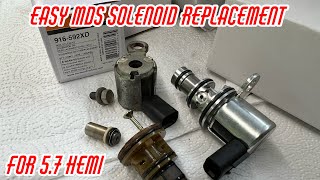
: OEM Mopar: 53022298AA, 53022298AB (Alt: Dorman (upgraded metal body): 916-592XD)
: OEM ACDelco / GM: 12571609, 12580901 (Alt: Various brands available)
: OEM Ford / Motorcraft: H6BZ-6H082-A (Alt: N/A) - Repair wiring or connector — Parts: $10-$50, Labor: $100-$300, ~1.5 hr book time (Intermediate)
- Update Powertrain Control Module (PCM) software — Parts: $0, Labor: $150-$250, ~1 hr book time (Professional)
- Replace failed lifters and camshaft
— Parts: $800-$1,500, Labor: $2,000-$5,500, ~20 hr book time
(Professional)
: OEM ACDelco / GM: 12698946, 12639516 (Alt: Sealed Power: HT2303)
DIY vs Professional
- Engine oil and filter change — Beginner:
Tools: Basic wrench set, oil filter wrench, drain pan, funnel. - Repair wiring or connector — Beginner:
Tools: Multimeter, wire strippers, crimpers, heat shrink, soldering iron (optional), flashlight. - Replace cylinder deactivation solenoid — Beginner:
Tools: Advanced socket/wrench set, torque wrench, fuel line disconnect tools, intake manifold gaskets, shop vacuum. - Replace failed lifters and camshaft — Beginner:
Tools: Complete engine toolset, engine hoist, torque-angle gauge, valve spring compressor, harmonic balancer puller, timing chain tools.
Used vs. New Parts: Buying Guide
When a used part is worth it: Buying a used cylinder deactivation solenoid is never recommended. The part is inexpensive new, but the labor to replace it is high because it requires removing the intake manifold. The risk of a used part failing outweighs the savings.
Donor-vehicle mileage cap: roughly under 20000 miles for the part to have meaningful remaining life.
Donor quality checklist:
- Only select from a very low-mileage vehicle that was wrecked.
- Avoid parts from engines with known sludge or poor maintenance history.
- Match the part number exactly.
Decision logic:
- If The part is a cylinder deactivation solenoid → Always buy new. The labor cost to replace it is too high to risk using a part with an unknown history.
- If An upgraded aftermarket version is available (e.g., metal body vs. plastic OEM) → Favor the new, upgraded aftermarket part for improved durability.
- If Budget is the absolute top priority and you are doing the labor yourself → A used part is a high-risk option, acceptable only if you are willing to repeat the labor when it fails.
Warranty tradeoff: Used parts from a salvage yard offer a 30-90 day warranty on the part only. New aftermarket parts come with a one-year to limited lifetime warranty. New OEM parts carry a 12-month/12,000-mile warranty.
Worst-case if a used part fails: $300-$750 if a used solenoid fails after installation, representing repeat labor plus the price of another part.
What Happens If You Wait — Timeline
- 0-1 month: Code P3402 is set, the Check Engine Light is on. The cylinder deactivation system is disabled by the PCM. There are no other noticeable symptoms. (MPG impact: 5-15%% · Added cost: $20-$60 in wasted fuel)
- 1-3 months: Engine develops a slightly rough idle or hesitation. If the root cause is a sticking lifter, a faint 'ticking' noise begins on cold starts. (MPG impact: 5-15%% · Added cost: $60-$180 in wasted fuel)
- 3-6 months: A persistent misfire damages the catalytic converter. The ticking from a failing lifter becomes loud and consistent. (MPG impact: 10-20%% · Added cost: $1,200-$2,800 for catalytic converter replacement.)
- 6+ months: The lifter's roller seizes and grinds away the camshaft lobe. This sends metal debris throughout the engine, requiring a major teardown or full engine replacement. (MPG impact: N/A (vehicle may become undrivable)% · Added cost: $4,000-$7,500+ for camshaft, lifter replacement, and labor.)
Cost of Not Fixing It
- 0-1 month: Reduced fuel economy by 2-4 MPG and a persistent Check Engine Light. (Added cost: $20-$60 per month in extra fuel.)
- 1-6 months: A persistent misfire condition causes unburnt fuel to overheat and destroy the catalytic converter. (Added cost: $1,200-$2,800 for catalytic converter replacement.)
- 6+ months: In GM and Ram vehicles, a collapsed lifter grinds down the camshaft lobe, requiring a major engine teardown. (Added cost: $4,000-$7,500+ for camshaft and lifter replacement.)
Diagnosis Steps
- Check Engine Oil Level and Condition
Pull the dipstick, wipe it, reinsert it, and verify the oil level is between the 'add' and 'full' marks. Confirm the oil is clean and the exact viscosity specified by the manufacturer.
Tools: Rag or paper towel (Beginner) - Scan for Additional Codes
Use an OBD-II scanner to confirm P3402 and check for related codes. P3400 (general fault), P3401 (electrical fault), P0301 (misfire), or P0521 (oil pressure) dictate the diagnostic path.
Tools: OBD-II scanner (Beginner) - Perform an Oil and Filter Change
If the oil is low, old, or the wrong weight, perform a complete oil and filter change using the OEM recommended fluid. Clear the codes and perform a drive cycle to see if P3402 returns.
Tools: Wrench set, oil filter wrench, oil drain pan, new oil and filter (Beginner) - Inspect the Wiring Harness and Connector
Visually inspect the wiring for the cylinder 1 deactivation solenoid, typically located under the intake manifold. Look for rodent damage, melting, corrosion, or loose pins.
Tools: Flashlight, inspection mirror (Intermediate) - PRO TIP: Command the Solenoid with a Scan Tool
Using a bi-directional scan tool, command the cylinder 1 solenoid on and off while the engine runs. An audible click and a change in engine RPM confirm the solenoid is mechanically responsive.
Tools: Bi-directional OBD-II scanner (Advanced) - PRO TIP: Test Solenoid Internal Resistance
With the ignition off, measure the resistance across the solenoid's terminals using a multimeter. Compare this to OEM specs (e.g., 11.8-14.2 Ohms for HEMI 5.7L). Infinity (OL) means an open circuit; near zero means a short. Replace the solenoid if it fails this test.
Tools: Multimeter, vehicle-specific service manual (Advanced) - PRO TIP: Test the Solenoid Circuit Voltage
Disconnect the solenoid and connect a multimeter to the control circuit wire and ground. Command the solenoid on with a scan tool. You must see the voltage pulse. No pulse confirms a wiring or PCM failure.
Tools: Multimeter, bi-directional OBD-II scanner (Advanced) - ADVANCED: Check Engine Oil Pressure
Connect a mechanical gauge to the engine block. Compare hot idle and 3,000 RPM readings to OEM specs (e.g., >20 PSI at hot idle for GM 5.3L). Low pressure proves a systemic oiling issue is disabling the deactivation system.
Tools: Mechanical oil pressure gauge, vehicle-specific adapter, service manual (Advanced)
When This Code Triggers (Freeze-Frame Conditions)
- Engine Coolant Temp: 180-210°F (Engine is fully warmed up to normal operating temperature.)
- RPM: 1200-2800 RPM (Engine is operating at a steady, low-to-mid RPM range during cruise.)
- Engine Load: 20-50% (Light throttle application, such as steady cruising on a flat highway or slight downhill coasting.)
- Vehicle Speed: 30-75 mph (The vehicle is maintaining a constant speed, typically on the highway.)
Related Codes
- P3400 — This is a general code for Cylinder Deactivation System Bank 1. If both P3400 and P3402 are present, the fault is confirmed to be isolated to cylinder 1's performance.
- P3401 — P3401 indicates an electrical circuit fault (open/short) for the cylinder 1 solenoid. P3402 indicates a 'performance' issue, meaning the solenoid tests electrically fine but is mechanically stuck or blocked.
- P0301 — This is the code for a Cylinder 1 Misfire. A P3402 fault causes a P0301 if the PCM shuts off the fuel injector to the malfunctioning cylinder to prevent damage.
- P0521 — Indicates an Engine Oil Pressure Sensor/Switch problem. Because the deactivation system is hydraulic, low oil pressure disables it. Fix P0521 before diagnosing P3402.
Climate & Environmental Factors
- Cold Weather: Low ambient temperatures thicken engine oil. If the oil is old or the wrong winter weight, it fails to flow through the deactivation system's narrow passages on cold starts, triggering P3402.
How to Talk to a Mechanic About This Code
Say this: "I have an OBD-II code P3402 for Cylinder 1 Deactivation Circuit Performance. I've already checked the oil level and condition, which seem fine. I'd like to book a diagnostic appointment to determine if the cause is the solenoid, wiring, or a mechanical issue like a lifter."
This signals that you've done basic homework and guides the technician toward a specific diagnostic path. It prevents them from starting with an unnecessary oil change charge.
Avoid saying:
- 'My check engine light is on.' (This is too vague and invites a broad, expensive diagnostic process.)
- 'Just fix it.' (This gives the shop a blank check to replace parts without thorough diagnosis.)
- 'I think it's the solenoid.' (While it might be, letting them diagnose it professionally ensures you're not paying for a part you don't need.)
Questions to ask before authorizing the repair:
- What were the specific results of the diagnostic tests? Did you test the solenoid's resistance and command it with a scan tool?
- If you're recommending solenoid replacement, what is the labor time and will you be replacing the intake manifold gaskets as well?
- If you suspect a lifter issue, how did you confirm it? Are there metal shavings in the oil? What is the engine oil pressure reading?
- What is the warranty on the parts and labor for this specific repair?
Where to Take It: Dealer vs Independent vs Chain
- Dealer:
Recommended if the vehicle is under warranty or if a specific TSB points to a software re-flash. Also the best, albeit most expensive, choice for a worst-case lifter/camshaft replacement.
Best for: Vehicles still under powertrain warranty., Cases where a known Technical Service Bulletin (TSB) or PCM software update is the recommended fix., Complex internal engine work like camshaft and lifter replacement where manufacturer-specific procedures are critical.
Downsides: Significantly higher labor rates (1.5-2x independent shops)., May recommend replacing all solenoids or other components as a preventative measure, increasing cost. (Typical cost: +50% vs. baseline) - Independent Shop:
Best fit for most out-of-warranty P3402 repairs, especially for straightforward solenoid replacement. Choose a well-reviewed shop with ASE-certified technicians comfortable with removing an intake manifold.
Best for: Out-of-warranty vehicles where the cause is likely a common failure like a bad solenoid or wiring issue., Owners seeking a more cost-effective diagnosis and repair., Getting a second opinion on a high-cost dealership quote.
Downsides: Quality and diagnostic capabilities vary widely; ensure the shop has experience with modern engine systems like VVT and cylinder deactivation., May not have access to the latest manufacturer software updates. (Typical cost: +0% vs. baseline) - Chain Shop:
AVOID for diagnosing P3402. The risk of misdiagnosis is high. This code requires testing circuits and components that are beyond the scope of a typical chain shop.
Best for: An initial, often free, code scan to confirm P3402 is present., A simple oil and filter change if you suspect that is the root cause.
Downsides: Technician experience with complex internal engine diagnostics is limited., High pressure to upsell services; may misdiagnose the issue and recommend unnecessary repairs. (Typical cost: -10% vs. baseline)
When to Walk Away From the Repair
If the estimated repair cost for P3402 exceeds 50% of your vehicle's current private-party value (from a source like Kelley Blue Book), it's time to seriously consider alternatives to a full repair.
- Car worth $15000, fix is $750: Fix it. This is a standard repair cost and is a small fraction of the car's value.
- Car worth $8000, fix is $4500: Borderline. The repair cost is over 50% of the car's value. Get a second opinion to confirm the diagnosis (lifter/cam failure) before proceeding. Explore trade-in options.
- Car worth $5000, fix is $4500: Walk away. The repair cost is nearly the entire value of the car. It is not economical to repair.
What Scan Tool You Need for This Code
Minimum: A scanner with bi-directional control is highly recommended to properly diagnose P3402.
A basic $20 code reader only confirms the P3402 code. It cannot command the deactivation solenoid to turn on and off, which is a critical diagnostic step to determine if the solenoid is mechanically stuck or if the fault is in the wiring or PCM.
Budget: TOPDON TopScan Pro (~$89) — This smartphone-based dongle provides bi-directional control to activate the deactivation solenoid. It allows you to perform the key active test needed for this code without a major investment.
Mid-range: XTOOL D7 (~$350) — Offers full bi-directional control to command the solenoid, views live data streams to monitor circuit voltage, and provides access to all vehicle systems. It's a robust tablet-based tool suitable for serious DIYers.
Professional: Autel MaxiCOM MK808BT PRO / MK900BT (~$500-700) — Provides full OEM-level diagnostics, including powerful bi-directional controls, access to manufacturer-specific codes, and guided component tests. This tool allows a technician to quickly pinpoint the failure between the solenoid, wiring, or PCM.
Rent vs buy: Auto parts stores offer tool loaner programs, but these are typically basic code readers without bi-directional control. If you plan to do your own serious diagnostics, buying a budget-friendly bi-directional scanner is a worthwhile investment.
How to Clear the Code After You Fix It
- Use an OBD-II scan tool to clear the P3402 code.
- Ensure the fuel tank is between 25% and 75% full.
- Perform a complete drive cycle to allow readiness monitors to run.
Drive cycle (~30 minutes): Start the engine cold (parked over 8 hours). Idle for 2-3 minutes. Drive for 15-20 minutes with mixed city/highway conditions, including steady cruising between 45-65 mph. Idle for 2-3 minutes before shutting down.
Readiness monitors affected: Catalyst monitor, Evaporative System monitor, O2 sensor monitor
Before emissions retest: drive at least 100 miles to fully set monitors.
Watch out for:
- Disconnecting the battery clears the code but resets all readiness monitors to 'Not Ready', guaranteeing an emissions failure.
- The code returns quickly if the underlying mechanical or electrical fault is not repaired.
- Failing to drive under the correct conditions prevents readiness monitors from setting.
Will This Fail Emissions / State Inspection?
Yes — this code typically fails an OBD-II emissions inspection.
- California: An active Check Engine Light for P3402 is an automatic smog check failure. After repair, a full drive cycle must be completed to set all readiness monitors before a retest.
- New York: The NYS DMV emissions inspection includes an OBD-II scan. An illuminated MIL for code P3402 results in an automatic inspection failure.
- Texas: An illuminated Check Engine Light results in an automatic failure. Texas allows for one 'Not Ready' monitor on vehicles model year 2001 and newer to pass.
Most Commonly Affected Vehicles

- Ram 1500/2500/3500 (2010-2021) — Extremely common on 5.7L and 6.4L HEMI engines with Multi-Displacement System (MDS). Caused by a failed MDS solenoid (Part No. 53022298AA). TSB #18-036-20 suggests a PCM reflash. Aftermarket metal-body solenoids are a popular upgrade.
- Dodge / Jeep Durango, Grand Cherokee, Charger, Challenger (2009-2021) — Models with the 5.7L or 6.4L HEMI engine are highly susceptible due to MDS solenoid or lifter issues. The solenoids (Part No. 53032152AD for 2005-2009 models) fail frequently.
- Chevrolet / GMC Silverado, Sierra, Tahoe, Yukon, Suburban (2014-Present) — Vehicles with Active Fuel Management (AFM) or Dynamic Fuel Management (DFM) are prone to this code. It serves as an early warning for lifter failure, which destroys the camshaft.
- Ford Bronco Sport / Escape (2020-2023) — Ford TSB SSM 50382 identifies a faulty cylinder 1 deactivation solenoid on the 1.5L EcoBoost engine. The updated part number is H6BZ-6H082-A.
- Ford Focus / Fiesta ST (2018-Present) — The 1.0L and 1.5L EcoBoost engines experience this code due to faulty cylinder 1 deactivation solenoids or oil quality issues.
- Honda Odyssey, Pilot, Accord (2008-2017) — On J-series V6 engines with Variable Cylinder Management (VCM), this code triggers due to a faulty VCM oil pressure switch or clogged solenoid spool valve, linked to oil consumption issues.
Manufacturer-Specific Notes
- Dodge / Ram / Chrysler / Jeep: On HEMI engines, the Multi-Displacement System (MDS) solenoids are located under the intake manifold and fail constantly. TSB #18-036-20 recommends a PCM reflash. Widespread lifter and camshaft failures (the 'Hemi Tick') are acknowledged but lack a formal recall.
- General Motors (Chevrolet / GMC / Cadillac): GM's Active Fuel Management (AFM) triggers P3402 as an early warning sign of a failing AFM lifter. This notorious issue causes a distinct ticking noise and destroys the camshaft. GM issued internal service bulletins (e.g., #15-06-01-002M) but no universal recall.
- Ford: Ford TSB SSM 50382 for the 2020-2022 Escape and 2021-2023 Bronco Sport (1.5L engine) instructs dealers to replace the cylinder 1 deactivation solenoid (Part No. H6BZ-6H082-A). This is covered under the powertrain warranty.
- Honda: Honda announced a warranty extension (TSB 25-060/25-061) for Variable Cylinder Management (VCM) issues on 2013-2017 V6 models. The extension covers misfire and VCM fault codes caused by oil consumption and piston ring failure, extending coverage to 10 years/150,000 miles.
Real Owner Stories
2021 Ram 1500 Big Horn at 112K miles
Check Engine Light came on with code P3400 and P3402. The MDS system stopped engaging, impacting fuel economy.
What they tried:
- Posted on a forum for advice.
Outcome: Owner replaced all four MDS solenoids. The repair took several hours due to a difficult-to-reach electrical connector, but resolved the codes.
Lesson: On HEMI engines, if you remove the intake manifold to replace one failed MDS solenoid, replace all four simultaneously to avoid future repeat labor costs.
2021 Ford Escape 1.5L EcoBoost
Check Engine Light appeared with code P3402. The owner wanted to attempt a DIY repair.
What they tried:
- Searched online and found Ford TSB SSM 50382.
Outcome: The fix was replacing the solenoid with the updated part number H6BZ-6H082-A, as specified in the TSB.
Lesson: Always search for Technical Service Bulletins (TSBs) for your specific vehicle. Manufacturers release updated parts to fix known design flaws, saving diagnostic time.
2012 Chevy Silverado 5.3L AFM at 170K miles
Vehicle developed a misfire on cylinder 4, a slight engine tick, and a P3402 code.
What they tried:
- Suspected a failing AFM lifter based on common issues.
Outcome: The owner performed a full AFM delete (replacing the camshaft, lifters, and disabling the system in the ECU) to permanently fix the issue.
Lesson: On GM vehicles with AFM, a ticking noise accompanying P3402 is a strong indicator of a failing lifter. Stop driving immediately to prevent camshaft destruction.
2010 Honda Odyssey with VCM
Persistent P3400/P3402 codes even after replacing the VCM oil pressure switch and cleaning the solenoids.
What they tried:
- Replaced the oil pressure switch with an aftermarket part.
- Cleaned VCM solenoid gaskets and screens.
Outcome: The issue was resolved by installing a 'VCM Muzzler,' an aftermarket device that modifies the coolant temperature signal to prevent the VCM system from activating.
Lesson: For Honda VCM systems, oil consumption fouls spark plugs and triggers P3402. If standard repairs fail, an aftermarket VCM disabler is a proven preventative solution.
How to Prevent This Code From Triggering
- Use high-quality full synthetic oil meeting manufacturer specs (Every oil change) — Full synthetic oil resists heat breakdown and prevents sludge from clogging the narrow oil passages and sensitive solenoids used by the deactivation system.
- Shorten oil change intervals to 3,000-5,000 miles (Ongoing) — Do not rely on the vehicle's oil life monitor. Frequent changes ensure oil maintains viscosity, which is critical for hydraulic lifters. This is the single most effective step to prevent lifter failure.
- Allow the engine to warm up for 30-60 seconds before driving (Every cold start) — Cold, thick oil does not flow well. A brief warm-up allows oil pressure to build and lubricate the deactivation lifters before they are put under load.
- Install an electronic deactivation device (AFM/MDS Disabler) (One-time installation) — For GM and Ram owners, a plug-in OBD-II device permanently keeps the engine in V8 mode. This prevents failure-prone lifters from cycling, significantly reducing the risk of mechanical failure.
- Avoid excessive and prolonged idling (Daily habit) — Extended idling lowers oil pressure and causes frequent cycling between V8 and V4 modes, accelerating wear on deactivation components.
Frequently Asked Questions
Can I fix P3402 myself?
Basic checks like inspecting oil levels and performing an oil change are DIY-friendly. Replacing the solenoid requires removing the intake manifold, which is best left to an experienced mechanic. Lifter replacement requires a professional engine teardown.
What happens if I ignore code P3402?
Ignoring this code causes poor fuel economy and risks destroying your catalytic converter. If the root cause is a stuck lifter, it will grind down the camshaft. This turns a minor repair into a $4,000+ engine rebuild.
How much does it cost to fix P3402?
An oil change costs under $100 and fixes many cases. Replacing a faulty deactivation solenoid costs between $300 and $750. A worst-case lifter and camshaft replacement exceeds $4,000 at a dealership.
Will using the wrong oil cause this code?
Yes. The cylinder deactivation system relies on precise oil viscosity and pressure to operate the hydraulic lifters. Using oil that is too thick or thin prevents the system from engaging, triggering P3402.
What are common mistakes when diagnosing P3402?
The biggest mistake is replacing the solenoid without checking engine oil level, condition, and pressure first. Mechanics also frequently overlook simple wiring or connector damage in the engine valley. Always verify oil pressure before replacing hard parts.
Why did P3402 appear right after an oil change?
The shop likely used the incorrect oil viscosity for your engine, or underfilled the crankcase. It is also possible a technician accidentally bumped and disconnected the solenoid wiring harness while working under the hood.
Is it normal to have P3402 without a noticeable misfire?
Yes. The code means the cylinder failed to deactivate when commanded, but it often runs perfectly fine in standard active mode. You typically only notice reduced fuel economy and the Check Engine Light.
Key Takeaways
- Check your engine oil first; low fluid or the wrong viscosity causes over 40% of P3402 codes.
- Code P3402 indicates the Powertrain Control Module (PCM) commanded cylinder 1 to deactivate for fuel savings, but the hydraulic system failed to respond.
- Stop driving immediately if you hear a ticking noise alongside this code, as this signals a collapsed lifter that will destroy your camshaft and cost upwards of $4,000 to fix.
- Replacing a faulty deactivation solenoid costs between $300 and $750, primarily because technicians must remove the intake manifold to access the part.
Helpful Videos


The information in this article is provided for general reference and educational purposes only. Vehicle specifications, procedures, and part compatibility can vary by production date, trim level, and region. Always consult your vehicle's factory service manual and verify part numbers before purchasing or performing repairs. Safety-critical components such as airbags, seat belts, and braking systems should be installed by a qualified professional.
- 🎬 Helpful Videos
- What Does P3402 Mean?
- Can I Drive With P3402?
- Common Causes
- Symptoms
- Diagnostic Flowchart
- Common Fixes & Costs
- DIY vs Professional
- Used vs. New Parts: Buying Guide
- What Happens If You Wait — Timeline
- Cost of Not Fixing It
- Diagnosis Steps
- When This Code Triggers (Freeze-Frame Conditions)
- Related Codes
- Climate & Environmental Factors
- How to Talk to a Mechanic About This Code
- Where to Take It: Dealer vs Independent vs Chain
- When to Walk Away From the Repair
- What Scan Tool You Need for This Code
- How to Clear the Code After You Fix It
- Will This Fail Emissions / State Inspection?
- Most Commonly Affected Vehicles
- Manufacturer-Specific Notes
- Real Owner Stories
- 2021 Ram 1500 Big Horn at 112K miles
- 2021 Ford Escape 1.5L EcoBoost
- 2012 Chevy Silverado 5.3L AFM at 170K miles
- 2010 Honda Odyssey with VCM
- How to Prevent This Code From Triggering
- Frequently Asked Questions
- Can I fix P3402 myself?
- What happens if I ignore code P3402?
- How much does it cost to fix P3402?
- Will using the wrong oil cause this code?
- What are common mistakes when diagnosing P3402?
- Why did P3402 appear right after an oil change?
- Is it normal to have P3402 without a noticeable misfire?
- Key Takeaways
- 🎟️ Get 5% Off