

P3400 on 2018-2021 Mazda CX-5: Cylinder Deactivation System Causes and Fixes
On a 2018-2021 Mazda CX-5, code P3400 almost always means the cylinder deactivation oil control valve is clogged with debris from an aftermarket oil filter. The fix is to inspect and clean or replace the valve and, most importantly, use a genuine Mazda oil filter for all future oil changes to prevent recurrence.
- P3400 on a 2018-2021 CX-5 is a very specific code, most often pointing to a clogged cylinder deactivation oil control valve.
- The number one cause of the clog is debris from using non-genuine (aftermarket) oil filters.
- The fix is often simple: inspect and clean the valve, then perform an oil change with a genuine Mazda oil filter.
- Do not ignore this code, as it disables a fuel-saving feature and can, in some cases, be a symptom of a more serious mechanical issue like a damaged rocker arm.
What's Unique About the 2018-2021 Mazda CX-5

The 2.5L Skyactiv-G engine in this generation of CX-5 is known for this specific issue, which is well-documented by Mazda in multiple Technical Service Bulletins (TSBs). The problem is rarely a complex electronic failure. Instead, it's most often a mechanical issue where plastic debris from non-genuine oil filters breaks off, travels through the engine, and clogs the small filter screen on the cylinder deactivation oil control valve. TSB SA-061-20a specifies that debris can be created when poking a hole in the filter's plastic wrapper during removal. This debris then blocks the valve, preventing it from operating correctly.
Diagnostic Flowchart

Tap your situation to follow the diagnostic path that matches what you're seeing on this vehicle.
Symptoms You May Notice
- Check Engine Light is on
- Noticeable decrease in fuel economy
- Rough idle
- Lack of power or poor engine performance
- Engine noise or rattling
- Replacing spark plugs or ignition coils to fix a rough idle without first investigating the P3400 code, which points directly to the cylinder deactivation system.
Most Likely Causes

- Clogged Cylinder Deactivation Oil Control Valve 🔴 High Probability Mazda TSBs SA-047-21, SA-061-20a, and SA-015-19a specifically state that debris from non-OEM oil filters can plug the valve. This is the most common, well-documented cause.
How to confirm: Remove the front and rear oil control valves from the cylinder head and visually inspect the mesh screen at the tip for plastic debris.
Typical fix: Clean the debris from the valve's screen. TSB SA-061-20a suggests a vacuum device like a brake bleeder may be helpful. Also inspect the port in the cylinder head for more debris. If the screen is damaged or the valve is faulty, it must be replaced. Perform an oil change using a genuine Mazda oil filter to prevent recurrence.
Est. part cost: $150-$250 for the valve - Use of Aftermarket Oil Filter 🔴 High Probability This is the root cause of the clogged valve issue. TSB SA-061-20a explains that plastic from the filter's wrapper can be sheared off during removal and enter the oil passages. A Mazda technician on Reddit also warned that the anti-drainback valve on some aftermarket filters (specifically mentioning Fram XG6607 and PH6607) can dislodge and cause oil starvation.
How to confirm: Check the brand and part number of the currently installed oil filter. Cross-reference with the OEM part number.
Typical fix: Replace the filter with a genuine Mazda oil filter (Part No. 1WPE-14-302 for the non-turbo engine).
Est. part cost: $10-$15 - Faulty Cylinder Deactivation Oil Control Valve Solenoid 🟡 Medium Probability
How to confirm: If the valve is clean, test the solenoid's electrical resistance with a multimeter or use a high-end scan tool to command the solenoid on and off to check its function.
Typical fix: Replace the oil control valve assembly.
Est. part cost: $150-$250 - Low or Dirty Engine Oil ⚪ Low Probability The cylinder deactivation system is hydraulic and relies on proper oil pressure and cleanliness to function. Low oil level is a common cause for this code on other vehicles with similar systems.
How to confirm: Check the engine oil level on the dipstick and assess its condition. If it's low or very dirty, this could be the cause.
Typical fix: Top off the oil or perform a complete oil and filter change.
Est. part cost: $40-$80
Rare But Worth Checking
- Damaged Rocker Arm: TSB SA-015-19a explicitly lists as its first step to remove the valve cover and inspect for broken or fallen rocker arms on cylinders 1 and 4. A user on the mazdas247.com forum provided pictures and a detailed story of this exact failure on their vehicle, which was associated with cylinder deactivation codes. This is a significant mechanical failure.
- Wiring Harness or Connector Issue: Damage to the wiring leading to the oil control valve solenoid, possibly from rodents or chafing, can cause an open or short circuit, triggering a fault code. A Reddit user reported a related code (P3403, 'Cylinder 1 Deactivation/Intake Valve Control Circuit Low') was caused by a rodent nest found in the engine bay.
Diagnosis Steps
- Read the trouble codes with an OBD-II scanner to confirm P3400 and any other related codes.
- Check the engine oil level and condition. Ensure it is full and clean.
- Identify the oil filter currently on the vehicle. If it is not a genuine Mazda filter, it is highly suspect.
- Locate and remove the two cylinder deactivation oil control valves. They are located on the cylinder head.
- Carefully inspect the mesh screen on the tip of each valve for any plastic debris. TSB SA-061-20a specifically mentions debris from the oil filter wrapper.
- If debris is found, clean the valve screen thoroughly. Also inspect the port in the cylinder head for more debris. A vacuum device may be useful for cleaning the port. If a screen is damaged, the valve must be replaced.
- If no debris is found, the TSBs direct technicians to proceed with normal diagnostics, which includes testing the valve's solenoid for correct electrical resistance using a multimeter.
- As a potential final step before major disassembly, TSB SA-015-19a instructs technicians to remove the valve cover and inspect for broken or fallen rocker arms on cylinders 1 and 4.
- If the issue was debris, perform an oil and filter change using a genuine Mazda oil filter (part #1WPE-14-302).
- Clear the trouble codes and perform a test drive, ensuring conditions are met for cylinder deactivation to engage (light throttle, steady speed over 5 mph), to see if the code returns.
Parts You'll Likely Need

- Engine Oil Filter (Non-Turbo)
(OEM #1WPE-14-302)— Using a non-genuine filter is the leading cause of this issue. Switching to an OEM filter is critical to prevent recurrence.
Trusted brands: Mazda
OEM price range: $10-$15
Aftermarket price range: $5-$12 - Cylinder Deactivation Oil Control Valve / Solenoid
(OEM #PY8W-14-420 (may be superseded by PY8W-14-420A-MV))— This is the part that gets clogged by debris. It may need to be replaced if it cannot be cleaned or has failed electrically.
Trusted brands: Mazda
OEM price range: $150-$250
Aftermarket price range: $80-$150
Related Codes That Often Appear With This One
- P349B — This is another code related to the cylinder deactivation system, indicating a position sensor performance issue.
- P0301 / P0304 — Misfire codes for cylinders 1 or 4. These are the two cylinders that are deactivated, and a fault in the system, such as a fallen rocker arm, can lead to misfires on these cylinders.
- P0340 — Camshaft Position Sensor Circuit Malfunction. TSB SA-022-19 lists this code appearing alongside P3400 in cases of rough idle and lack of power.
Technical Service Bulletins (TSBs) & Recalls
- SA-047-21: Mentions CHECK ENGINE light with DTC P3400 due to the cylinder deactivation oil control valve being plugged with plastic debris from the oil filter.
- SA-061-20a: Supersedes older TSBs and clarifies the mechanism: 'The debris may enter the center of the oil filter when poking a hole in the filter wrapper during removal, and then travel through the engine and plug the cylinder deactivation oil control valve.'
- SA-015-19a: Instructs technicians to first inspect for broken/fallen rocker arms, then to remove and inspect the oil control valves for debris when P3400 is stored.
- SA-022-19: Associates P3400 with other codes (P0340, P0304, P349B, P3498) in customer complaints of lack of power, rough idle, and engine noise.
Platform-Specific Known Issues
- Mazda has issued multiple Technical Service Bulletins (TSBs) regarding P3400. The primary cause identified is the cylinder deactivation oil control valve becoming plugged with plastic debris from the wrapper of an oil filter, which can happen when the wrapper is punctured during removal.
- A more severe, but related, failure documented in TSB SA-015-19a is a broken or fallen rocker arm on one of the deactivating cylinders (1 or 4), which requires removing the valve cover to inspect.
Mechanic-Grade Diagnostic Values
- Cylinder Deactivation Oil Control Valve (OCV) Solenoid Resistance — expected: 6.9 - 7.9 Ohms at 20°C (68°F). Failure: A reading outside of this range indicates a faulty solenoid coil.
- Cylinder Deactivation Oil Control Valve (OCV) Functional Test — expected: When battery voltage is applied directly to the two terminals of the removed OCV, the internal spool valve should audibly click and physically move.. Failure: If the spool valve does not move when voltage is applied, or does not return when voltage is removed, the valve is mechanically stuck or electrically failed.
Scan Tool Commands That Help
- Mazda IDS (Integrated Diagnostic System) or equivalent professional scanner (e.g., Autel): Active Test: Cylinder Deactivation Test / Power Balance Test — This function allows a technician to command individual cylinders on or off to isolate a misfire or confirm the deactivation system is responding to commands from the PCM. It's useful for verifying if a lack of deactivation is a command issue or a mechanical failure.
- Mazda IDS (Integrated Diagnostic System): PCM Reprogramming / Software Update — A recall related to the rocker arm issue involved a PCM software update to improve hydraulic valve adjustment control. If a vehicle falls under this recall (NHTSA #19V495000), ensuring the latest software is installed is a critical step, as the original software could contribute to conditions that cause rocker arm failure.
Wiring & Ground Locations
- Engine Ground Points — Key ground points for the engine harness are typically found bolted to the chassis on the driver-side fender, on the passenger-side motor mount, and on top of the transmission housing.. A poor ground connection can cause incorrect sensor readings and erratic solenoid behavior. While not a primary cause for P3400, verifying that main engine grounds are clean and tight is a fundamental step in any electrical diagnosis after checking the component itself.
- Oil Control Valve Connector — The OCVs are located on the cylinder head. Each has a 2-pin electrical connector.. This is the direct connection to the solenoid that triggers the P3400 code. The connector and its wiring should be inspected for physical damage, corrosion, or rodent damage, which could cause an open or short circuit.
Real Owner Repair Stories
- mazdas247.com forum user 'HX_Guy' (2018 Mazda6 (same PY-VPS engine and system)) — Initial P0304 (Cylinder 4 misfire), followed by severe engine noise and failure (limp mode).
❌ Tried (didn't work) Initial diagnosis at one dealership did not open the valve cover despite the misfire code on a deactivating cylinder.
✅ What actually fixed it A second dealership, following Mazda's TSB SA-015/19, removed the valve cover and found a fallen rocker arm on cylinder 4. The repair involved replacing the affected rocker arm and related components. The user provided clear photos confirming the failure.
OEM Part Supersession History
PE01-14-302 / PE01-14-302A / PE01-14-302B→1WPE-14-302— This is the standard supersession for the non-turbo 2.5L Skyactiv engine oil filter. The older 'PE01' series were often made in Japan (Tokyo Roki), while the newer '1WPE' is typically made in Thailand (Denso).
Heads up: While physically interchangeable, there are documented differences in internal construction, such as bypass valve spring pressure, between different OEM part numbers. There is also a 'Value Line' filter (e.g., PE01-14-302B-MV) made in Mexico, which is a budget OEM option. Given the sensitivity of this engine to oil filter debris, using the highest quality OEM filter available is recommended.
Model Year Variations Within This Range
- 2020-2021: The infotainment system on 2020 and newer models includes a 'Fuel Economy Monitor' screen under 'Applications' that visually displays when cylinder deactivation is active. This feature is not present on 2018-2019 models, making it harder for owners of those years to verify system operation without a scan tool.
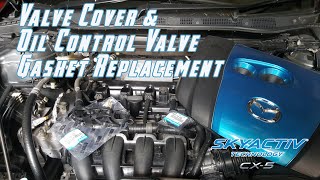
Helpful Videos
Used OEM Parts in Stock


New Aftermarket Parts Available


The information in this article is provided for general reference and educational purposes only. Vehicle specifications, procedures, and part compatibility can vary by production date, trim level, and region. Always consult your vehicle's factory service manual and verify part numbers before purchasing or performing repairs. Safety-critical components such as airbags, seat belts, and braking systems should be installed by a qualified professional.
- Mazda CX-5:
- 🎬 Helpful Videos
- 🛍️ Shop This Part
- What's Unique About the 2018-2021 Mazda CX-5
- Diagnostic Flowchart
- Symptoms You May Notice
- Most Likely Causes
- Rare But Worth Checking
- Diagnosis Steps
- Parts You'll Likely Need
- Related Codes That Often Appear With This One
- Technical Service Bulletins (TSBs) & Recalls
- Platform-Specific Known Issues
- Mechanic-Grade Diagnostic Values
- Scan Tool Commands That Help
- Wiring & Ground Locations
- Real Owner Repair Stories
- OEM Part Supersession History
- Model Year Variations Within This Range
- 🎟️ Get 5% Off