

P3400 on 2013-2017 Honda Pilot: VCM Oil Pressure Switch Causes and Fixes
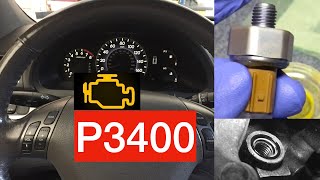
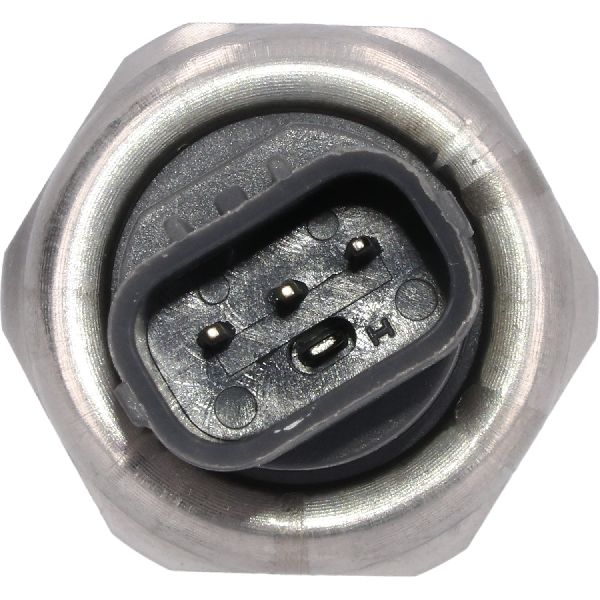
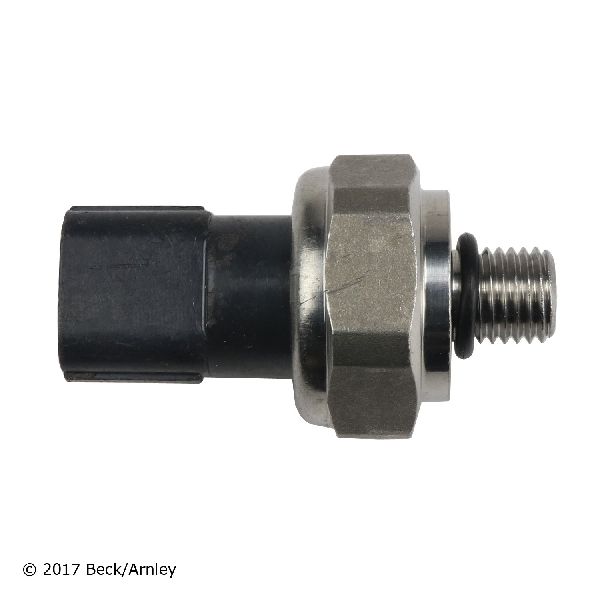
Code P3400 on a 2013-2017 Honda Pilot almost always points to a faulty Bank 1 VCM oil pressure switch, also known as the rocker arm oil pressure switch. This sensor is located on the rear cylinder head near the firewall. Replacing this sensor is a common, affordable DIY fix, with the genuine Honda part costing around $40-$80. Low or dirty oil is the second most common cause and should be checked first.
- P3400 on a Honda Pilot specifically points to a problem with the Bank 1 (rear) cylinder deactivation oil pressure switch.
- Before buying any parts, always check your engine oil level and condition, as low or dirty oil can trigger this code.
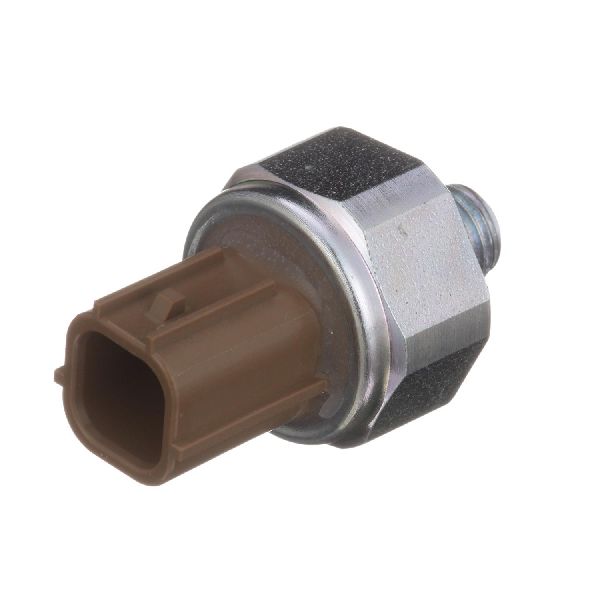
- The most common fix is replacing the oil pressure switch (part # 37240-R70-A04) and its O-ring, which is an accessible DIY job for most home mechanics.
- Since the front (Bank 2, code P3497) and rear (Bank 1, code P3400) switches are identical and prone to failure, consider replacing both at the same time to prevent future issues.
What's Unique About the 2013-2017 Honda PILOT

Honda's J-series 3.5L V6 engines in this era rely heavily on the Variable Cylinder Management (VCM) system for fuel efficiency. This system is hydraulically operated and notoriously sensitive to oil pressure and quality. The oil pressure switches that monitor VCM operation are a well-documented, high-failure part across many Honda and Acura models with this engine, including the Pilot, Odyssey, Accord, and MDX. Their failure is a common cause for the P3400 and related P3497 codes, sometimes triggered by sediment freed up during a recent oil change.
Diagnostic Flowchart

Tap your situation to follow the diagnostic path that matches what you're seeing on this vehicle.
Generation note: This range covers two Pilot generations: the end of the second generation (2013-2015) with the J35Z4 3.5L V6 engine, and the start of the third generation (2016-2017) with the J35Y6 3.5L V6. Both engines use a VCM system and are susceptible to this code from the same root causes, primarily the failure of the rocker arm oil pressure switch.
Symptoms You May Notice

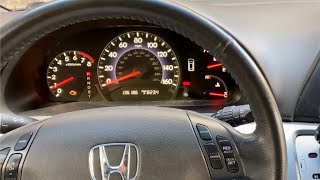
- Check Engine Light (MIL) is on
- VTM-4 light may illuminate
- ECO mode light will not turn on
- Rough running engine, chugging, or shuddering, especially at cruising speeds or under acceleration
- Noticeable loss of engine power or entering 'limp mode'
- Decreased fuel economy
- In some cases, the vehicle may stall when stopped
- Replacing spark plugs or ignition coils to fix misfire symptoms without addressing the underlying P3400 code. The misfires are often a result of the VCM malfunction, not the cause.
- Immediately replacing the VCM solenoid (spool valve) assembly when only the inexpensive pressure switch has failed.
Most Likely Causes

- Faulty Bank 1 VCM Oil Pressure Switch 🔴 High Probability This specific switch is a known high-failure part on Honda's J-series V6 engines. It is often referred to as the 'rocker arm oil pressure switch'. Its failure can be intermittent at first.
How to confirm: After confirming oil level is correct, the most practical step is to replace the switch. It's an inexpensive part and the most likely culprit. The switch for Bank 1 (P3400) is located on the rear cylinder head, near the firewall. A diagnostic technique is to swap the identical front (Bank 2) and rear (Bank 1) switches; if the code changes to P3497, the switch is confirmed bad.
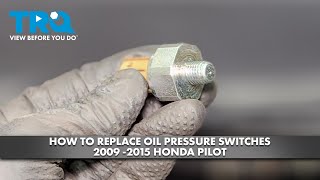
Typical fix: Replace the Bank 1 oil pressure switch and its O-ring. A 24mm deep socket is required. 🎬 Watch: Step-by-step oil pressure switch replacement for 2009-2015 Pilots.
Est. part cost: $40-$80 - Low or Dirty Engine Oil 🟡 Medium Probability The VCM system is hydraulic and requires clean oil at the proper level and pressure to function. These engines can consume oil, and a low level is a frequent trigger for P3400. Sometimes old, sludgy oil or sediment freed up by an oil change can clog the switch or passages.
How to confirm: Check the engine oil level on the dipstick and inspect its condition. This should always be the first step in diagnosis. If the dipstick is dry, the oil level is critically low.
Typical fix: Perform an oil and filter change with the manufacturer-recommended 5W-20 oil. Clear the codes and see if P3400 returns.
Est. part cost: $40-$70 - Wiring or Connector Issue ⚪ Low Probability The connector for the rear switch is near the firewall and can be exposed to heat, potentially making the plastic brittle over time. Rodents have also been known to chew on engine bay wiring.
How to confirm: Visually inspect the wiring harness and electrical connector for the Bank 1 switch. Check for broken wires, corrosion, or a loose connection.
Typical fix: Repair the damaged wire or clean/replace the connector pigtail.
Est. part cost: $15-$50
Rare But Worth Checking
- Failed VCM Solenoid (Spool Valve): The entire spool valve assembly, which houses the switch, can become clogged with sludge or fail internally. This is a more involved and expensive repair.
- Clogged Oil Passages: In engines with a history of infrequent oil changes, sludge can block the small oil passages leading to the VCM components, preventing proper operation.
- Incorrect Oil Pump Relief Valve Spring (2013 Models): Honda TSB 13-055 applies to some 2013 Pilots where high oil pressure on a cold start can trigger P3400 and misfires. The fix is to replace the oil pump relief valve spring, which is a labor-intensive job.
Diagnosis Steps
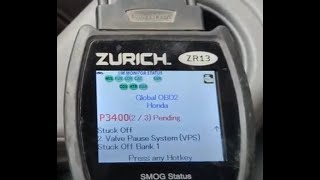
- Read all diagnostic trouble codes (DTCs) with an OBD-II scanner.
- Crucially, check the engine oil level and condition. If the oil is low, dirty, or overdue for a change, correct this first. Clear the codes and perform a drive cycle to see if the code returns. Many instances of P3400 are solved simply by topping off the oil. 🎬 Watch this first: Simple checks before you start replacing parts.
- If the oil is fine, locate the Bank 1 VCM oil pressure switch on the rear cylinder head, near the firewall. It is situated on the VCM spool valve assembly.
- Inspect the electrical connector and wiring for any visible damage, corrosion, or loose connections.
- Given the high failure rate and low cost of the part, the most common and efficient next step is to replace the oil pressure switch and its O-ring.
- Use a 24mm deep socket and a ratchet to remove the old switch. It may be tight, so a small breaker bar can help.
- Lightly oil the new O-ring with fresh engine oil before installing the new switch. Thread the new switch in by hand to avoid cross-threading, then torque it to 18 ft-lbs (24 Nm). Do not overtighten.
- Reconnect the electrical connector securely. Clear the DTCs with the scanner. The code may remain as 'permanent' until the computer completes a full drive cycle and verifies the fix. Start the engine and take a test drive to confirm the ECO light operates and the check engine light stays off.
Parts You'll Likely Need
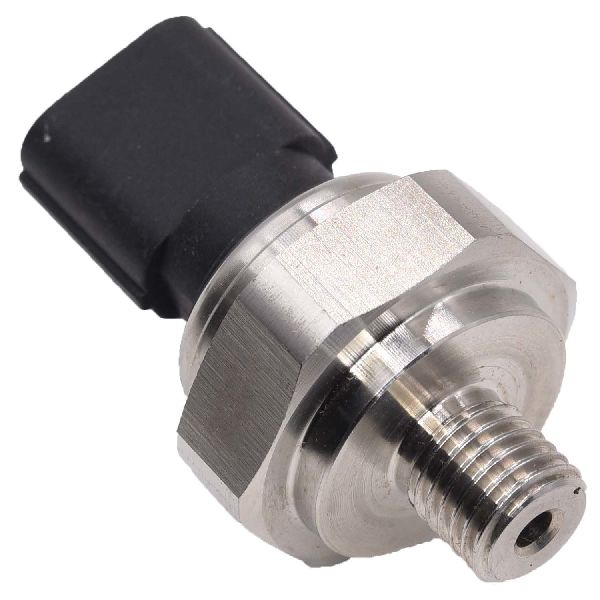
- VCM Oil Pressure Switch / Rocker Arm Oil Pressure Switch
(OEM #37240-R70-A04)— This is the direct cause of the P3400 code in the vast majority of cases. It's a sensor that fails electronically over time. The same part number is used for both Bank 1 (rear) and Bank 2 (front). This part number supersedes previous versions 37240-R70-A01, 37240-R70-A02, and 37240-R70-A03.
Trusted brands: Honda (Genuine), Standard Motor Products, Dorman, NTK
OEM price range: $60-$90
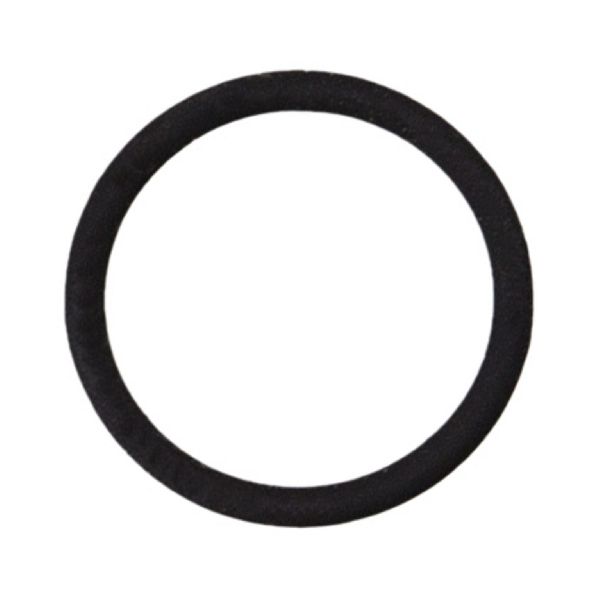
Aftermarket price range: $30-$60 - Oil Pressure Switch O-Ring
(OEM #91319-PAA-A01)— This seal should always be replaced with the switch to prevent oil leaks. It is often sold separately from the switch.
Trusted brands: Honda (Genuine), Fel-Pro
OEM price range: $3-$5
Aftermarket price range: $1-$3
Related Codes That Often Appear With This One
- P3497 — This is the identical code for Bank 2 (front bank). The switches are the same part number and often fail around the same time. It's common practice to replace both switches at once.
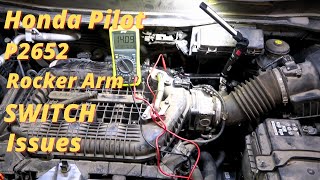
- P2652 — A Honda TSB explicitly links P2652 (Rocker Arm Oil Pressure Switch B [Bank 1] Stuck On) with P3400, indicating a fault in the same component. [TSB #ATI&01192022901]
- P0301-P0306 — Misfire codes for specific cylinders can be triggered when the VCM system malfunctions, causing rough running. TSB 13-055 specifically links P3400 with misfires in cylinders 1-4 on some 2013 models.
Technical Service Bulletins (TSBs) & Recalls

- ATI&01192022901: Connects P3400 (Valve Pause System [VPS] Stuck Off Bank 1) with P2652 and rough running conditions.
- 13-055 (Supersedes 13-031): For some 2013 models, links P3400/P3497 and misfire DTCs (P0301-P0304) to high oil pressure on cold starts, requiring an oil pump relief spring replacement.
- Service Bulletin (2014-08-05): Notes that P3400 may be stored along with cylinder misfire DTCs and/or P3497 for the opposite bank.
Platform-Specific Known Issues
- A Technical Service Bulletin (TSB #ATI&01192022901) confirms that P3400 can be accompanied by code P2652 and cause a customer complaint of rough engine running. 🎬 See how to diagnose P2652 and rough idling on 2016+ models. [TSB #ATI&01192022901]
- TSB 13-055 (superseding 13-031) addresses an issue on some 2013 Pilots where high oil pressure during a cold start causes P3400/P3497 and misfires (P0301-P0304). The fix is a new oil pump relief valve spring.
- An owner of a 2013 Pilot reported the P3400 code illuminated the check engine light without any prior low oil pressure warning, highlighting the sudden nature of the sensor failure. [ODI #11091698]
Helpful Videos

We Have This Part in Stock


The information in this article is provided for general reference and educational purposes only. Vehicle specifications, procedures, and part compatibility can vary by production date, trim level, and region. Always consult your vehicle's factory service manual and verify part numbers before purchasing or performing repairs. Safety-critical components such as airbags, seat belts, and braking systems should be installed by a qualified professional.
- Honda PILOT:
- 🎬 Helpful Videos
- 🛍️ Shop This Part
- What's Unique About the 2013-2017 Honda PILOT
- Diagnostic Flowchart
- Symptoms You May Notice
- Most Likely Causes
- Rare But Worth Checking
- Diagnosis Steps
- Parts You'll Likely Need
- Related Codes That Often Appear With This One
- Technical Service Bulletins (TSBs) & Recalls
- Platform-Specific Known Issues
- 🎟️ Get 5% Off