

P3400 on 2017 Acura TLX: Valve Pause System (Bank 1) Causes and Fixes
On a 2017 Acura TLX with the 3.5L V6, code P3400 almost always points to a faulty rocker arm oil pressure switch for Bank 1. This switch is crucial for the cylinder deactivation system (VCM), also known as the Valve Pause System (VPS). Replacing the switch is a common, affordable fix, but checking the engine oil level and condition should always be the first step, as low or dirty oil is a frequent trigger.
- P3400 on a 2017 TLX V6 means the cylinder deactivation system for the rear bank of cylinders (Bank 1) has failed to engage.
- Before buying any parts, check your engine oil. Low or dirty oil is a common cause.
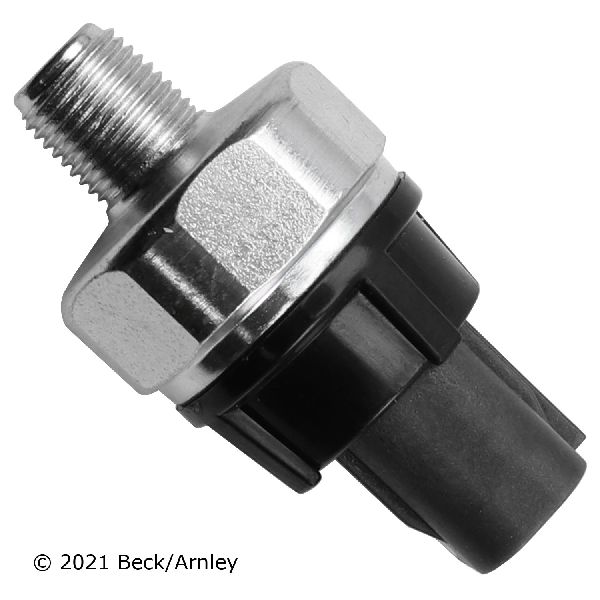
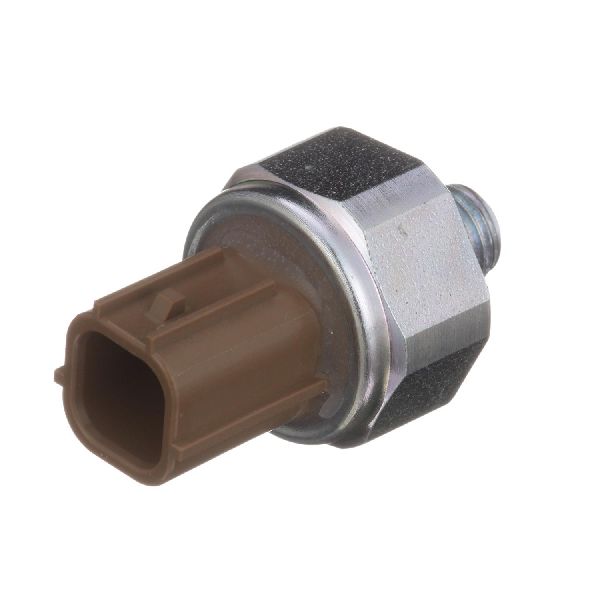
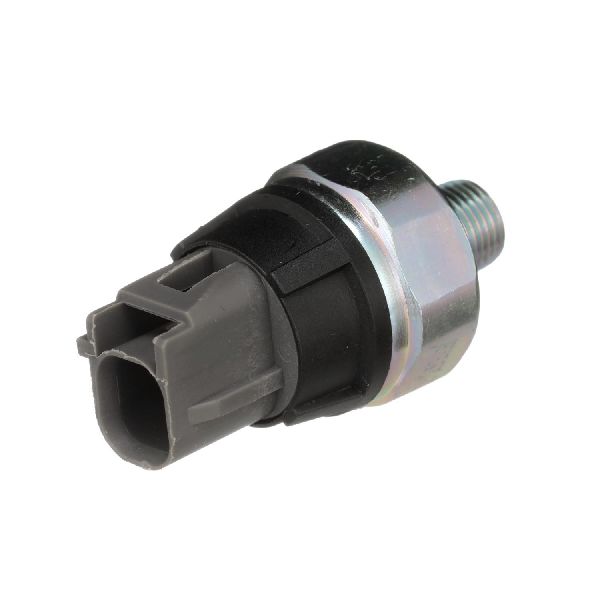
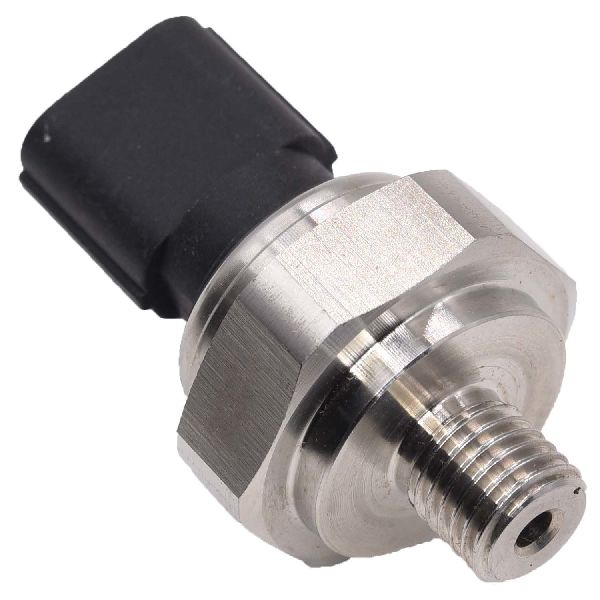
- The most likely failed part is the Bank 1 Rocker Arm Oil Pressure Switch (OEM Part # 37240-R70-A04).
- This code is often seen with P2652, which further points to the oil pressure switch as the culprit.
- Replacing the switch is a DIY-friendly job for many, with the part located on the rear cylinder head.
What's Unique About the 2017-2017 Acura TLX
The Acura TLX's 3.5L J35Y6 V6 engine uses the Variable Cylinder Management (VCM) system to improve fuel efficiency by running on fewer cylinders during cruising. This system is highly dependent on precise oil pressure, which is monitored by several switches. Code P3400 specifically points to a failure in this system on Bank 1. A Technical Service Bulletin (TSB) confirms that this code, often paired with P2652, is a known issue on this platform, directly linking it to the rocker arm oil pressure switch. The failure of these switches is a very common issue across many Honda and Acura models that use the J-series V6 engine.
Diagnostic Flowchart
Tap your situation to follow the diagnostic path that matches what you're seeing on this vehicle.
Symptoms You May Notice
- Check Engine Light is on
- Rough engine running or rough idle
- Decreased fuel economy
- Poor engine performance or feeling sluggish
- In rare, severe cases of low oil pressure, the engine may crank but not start.
- Replacing oxygen sensors. Some generic code readers may provide a vague definition, but P3400 on this Acura is specific to the cylinder deactivation system, not the O2 sensors.
Most Likely Causes
- Faulty Rocker Arm Oil Pressure Switch (Bank 1) 🔴 High Probability This is a known issue documented in Acura's Technical Service Bulletin #BTI&01192022901 for the 2017 TLX. These switches are a common failure point on Honda's J-series V6 engines. They can fail electronically or become clogged with sludge, sending incorrect data to the computer.
How to confirm: The switch for Bank 1 is located on the rear cylinder head, near the firewall, making it somewhat difficult to access. A mechanic can test the switch, but given the low cost of the part and high probability, many owners and shops choose to replace it as the first step after checking the oil. A diagnostic tactic is to swap the front and rear switches (they are identical) and see if the code changes to P3497 (Bank 2), which would confirm the switch is faulty.
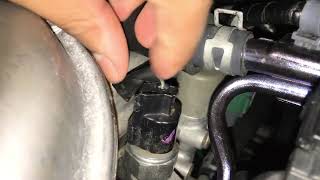
Typical fix: Replace the Bank 1 rocker arm oil pressure switch and its O-ring. A 24mm deep-well socket is required for the job. 🎬 Watch: Step-by-step guide to replacing the rear oil pressure switch.
Est. part cost: $30-$60 - Low or Dirty Engine Oil 🟡 Medium Probability The VCM/VPS system is entirely dependent on clean oil at the correct pressure to function. If the oil level is low or the oil is old and sludgy, it can't operate the hydraulic components correctly, triggering this code. Many owner forums and mechanic videos cite this as the first and most important check. 🎬 See how to diagnose and repair the P3400 trouble code.
How to confirm: Check the engine oil dipstick for proper level and inspect the oil's condition. If it's low, top it off. If it's dark, gritty, or past its service interval, an oil change is the first and cheapest diagnostic step. After changing the oil, clear the codes and drive to see if the light returns.
Typical fix: Perform an engine oil and filter change using the manufacturer-specified oil viscosity (typically 0W-20 or 5W-20).
Est. part cost: $40-$80 - Clogged VCM Oil Passages or Solenoid Screen ⚪ Low Probability Over time, oil sludge or debris from infrequent oil changes can restrict small oil passages leading to the VCM components, including the pressure switches and the spool valve assembly.
How to confirm: This is usually suspected after a new pressure switch fails to resolve the code. It involves inspecting the VCM spool valve assembly, which may require removal to check for clogged screens or passages.
Typical fix: Clean or replace the VCM oil control solenoid (spool valve) assembly for Bank 1.
Est. part cost: $100-$250
Rare But Worth Checking
- Wiring Harness Issue: The wiring or connector to the oil pressure switch could be damaged, loose, or corroded, causing an intermittent signal. A visual inspection is always a good idea during diagnosis.
- Faulty Powertrain Control Module (PCM): This is extremely rare. The PCM should only be considered a potential cause after all other possibilities, including switches, wiring, and mechanical issues, have been exhaustively ruled out.
- Defective Oil Pump Relief Valve: A Honda service bulletin (13-055) for some V6 models indicates that a faulty relief valve spring in the oil pump can cause excessive oil pressure, triggering P3400 and P3497. This is a more complex repair involving the removal of the oil pan.
Diagnosis Steps
- Verify the engine oil level and condition. Top off or change the oil and filter if necessary. This is the most critical first step.
- Scan the PCM for all stored trouble codes. Note if P2652 is also present, as this strongly points to the pressure switch.
- Clear the codes and test drive the vehicle to see if the code returns. Sometimes, an oil change is all that's needed.
- If the code returns, inspect the wiring and electrical connector for the Bank 1 (rear) rocker arm oil pressure switch for any signs of damage or corrosion.
- A practical diagnostic step is to swap the Bank 1 (rear) and Bank 2 (front) oil pressure switches. They are identical parts. Clear the codes and drive again. If the code changes to P3497, the switch is confirmed to be faulty.
- If the switch tests faulty or is confirmed via swapping, replace the Bank 1 rocker arm oil pressure switch and its O-ring. The job requires a 24mm deep-well socket.
- If the problem persists after replacing the switch, investigate the VCM oil control solenoid (spool valve) and its passages for blockages or leaks.
Parts You'll Likely Need
- Rocker Arm Oil Pressure Switch (Bank 1)
(OEM #37240-R70-A04)— This is the most common failure point for code P3400 on the 3.5L V6 engine, as confirmed by a manufacturer TSB and extensive owner reports. This part number supersedes previous versions 37240-R70-A03 and 37240-R70-A02.
Trusted brands: Acura/Honda (Genuine OEM), Standard Motor Products (Intermotor), NTK
OEM price range: $45-$60
Aftermarket price range: $25-$45 - Oil Pressure Switch O-Ring
(OEM #91319-PAA-A01)— This seal should always be replaced with the switch to prevent oil leaks. It is often sold separately from the switch.
Trusted brands: Acura/Honda (Genuine OEM)
OEM price range: $2-$5
Aftermarket price range: $1-$3
Related Codes That Often Appear With This One
- P2652 — This code, 'Rocker Arm Oil Pressure Switch B (Bank 1) Stuck On,' is frequently stored alongside P3400. An Acura TSB explicitly links these two codes, indicating the pressure switch is the root cause of the VCM failure.
- P3497 — This is the equivalent code for Bank 2 (the front bank). If both P3400 and P3497 are present, it suggests a more systemic issue like low engine oil level or pressure affecting both banks, rather than a single faulty switch.
- P0301-P0304 — In some cases, issues within the VCM system can lead to misfire codes on the affected cylinders as the PCM expects a power contribution that doesn't occur.
Technical Service Bulletins (TSBs) & Recalls
- BTI&01192022901: Addresses a Malfunction Indicator Light (MIL) on with DTC P2652 (Rocker Arm Oil Pressure Switch B [Bank 1] Stuck On) & P3400 (Valve Pause System [VPS] Stuck Off Bank 1) stored, sometimes accompanied by a rough running engine.
- Honda Service Bulletin 13-055: While for other models, this TSB is relevant as it addresses P3400/P3497 codes caused by a defective oil pump relief valve spring, which is a potential, though less common, cause on related J-series engines.
Platform-Specific Known Issues
- Acura issued Technical Service Bulletin #BTI&01192022901 which specifically investigates 2017 TLX models (among others) that store both P3400 and P2652, indicating a known issue with the rocker arm oil pressure switch on Bank 1.
- While not specific to P3400, the J35Y6 engine in 2018-2020 TLX models was part of a wider investigation and recall (NHTSA #23V-751) for potential crankshaft manufacturing defects leading to bearing failure. While the 2017 model year is not explicitly included, it highlights the sensitivity of the J-series engine family.
Mechanic-Grade Diagnostic Values
- Rocker Arm Oil Pressure Switch Continuity Test (Engine Off) — expected: Continuity (a short circuit, near 0 ohms) between the switch terminal and the switch body (ground).. Failure: No continuity (an open circuit) indicates a failed switch.
- Rocker Arm Oil Pressure Switch Continuity Test (Engine Running) — expected: No continuity (an open circuit) once the engine is running and oil pressure builds.. Failure: Continuity is maintained after the engine starts, indicating the switch is stuck closed.
- Rocker Arm Oil Pressure Switch Installation Torque — expected: 13 ft-lbs (18 Nm). Failure: Over-tightening can damage the switch or threads; under-tightening can cause leaks.
Scan Tool Commands That Help
- Honda HDS (Honda Diagnostic System): VCM System Test — After basic checks (oil level, switch replacement), a dealer-level tool like the HDS can command the VCM system on and off to actively test the response of solenoids and pressure switches, helping to isolate a fault within the hydraulic circuit or wiring that isn't a simple switch failure.
Wiring & Ground Locations
- Bank 1 Rocker Arm Oil Pressure Switch Connector — On the rear cylinder head (closer to the firewall), on the VCM spool valve assembly.. This is the direct electrical connection for the component most likely to cause P3400. Damage to the connector or its single wire can mimic a failed switch.
- Engine Ground — A primary engine-to-chassis ground is typically located on the passenger side of the engine bay, where a cable connects the engine block to the body.. The oil pressure switch grounds through the engine block. A poor engine ground can introduce electrical noise and cause intermittent or false readings from various sensors, including the oil pressure switches.
Real Owner Repair Stories
- YouTube user 'Fix it Angel' (2010 Honda Odyssey with 3.5L V6 (J-series engine, similar VCM system)) — Solid Check Engine Light, code P3400.
❌ Tried (didn't work) The initial diagnosis pointed to the Bank 1 oil pressure switch. However, before replacing it, the owner checked the oil level and found it was extremely low, which was the root cause of the low pressure reading.
✅ What actually fixed it The owner identified that the severe oil consumption was due to a clogged PCV valve and a leaking VTEC solenoid gasket. After replacing the PCV valve and the solenoid seal, and performing an oil change, the oil consumption stopped, the P3400 code did not return, and the vehicle ran for another 10,000+ miles without issue.
OEM Part Supersession History
37240-R70-A02, 37240-R70-A03→37240-R70-A04— Standard part revision and improvement by the manufacturer to increase reliability.
Heads up: The newest part number, 37240-R70-A04, is a direct replacement for the older versions and should be used for all repairs. The front (Bank 2) and rear (Bank 1) switches are identical.
Helpful Videos
We Have This Part in Stock


The information in this article is provided for general reference and educational purposes only. Vehicle specifications, procedures, and part compatibility can vary by production date, trim level, and region. Always consult your vehicle's factory service manual and verify part numbers before purchasing or performing repairs. Safety-critical components such as airbags, seat belts, and braking systems should be installed by a qualified professional.
- Acura TLX:
- 🎬 Helpful Videos
- 🛍️ Shop This Part
- What's Unique About the 2017-2017 Acura TLX
- Diagnostic Flowchart
- Symptoms You May Notice
- Most Likely Causes
- Rare But Worth Checking
- Diagnosis Steps
- Parts You'll Likely Need
- Related Codes That Often Appear With This One
- Technical Service Bulletins (TSBs) & Recalls
- Platform-Specific Known Issues
- Mechanic-Grade Diagnostic Values
- Scan Tool Commands That Help
- Wiring & Ground Locations
- Real Owner Repair Stories
- OEM Part Supersession History
- 🎟️ Get 5% Off