

P3400 on 2017 Acura RLX: Valve Pause System (VCM) Causes and Fixes
On a 2017 Acura RLX, code P3400 is most often caused by a faulty rocker arm oil pressure switch for Bank 1. Always check your engine oil level and condition first, as low or dirty oil is a primary trigger. Replacing the switch, located on the rear cylinder head near the firewall, is a common, inexpensive DIY fix requiring a 24mm deep socket.
- P3400 on a 2017 RLX means the Variable Cylinder Management (VCM) system failed to activate on Bank 1 (rear bank).
- Before buying any parts, check your engine oil. Low or dirty oil is the most common trigger for this code.
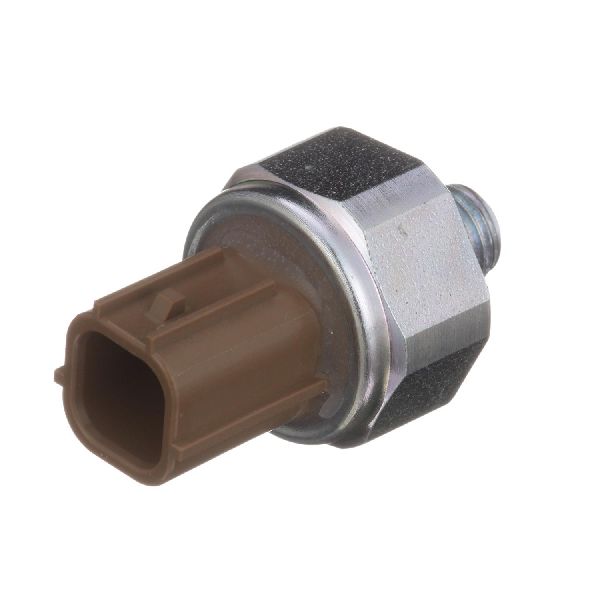
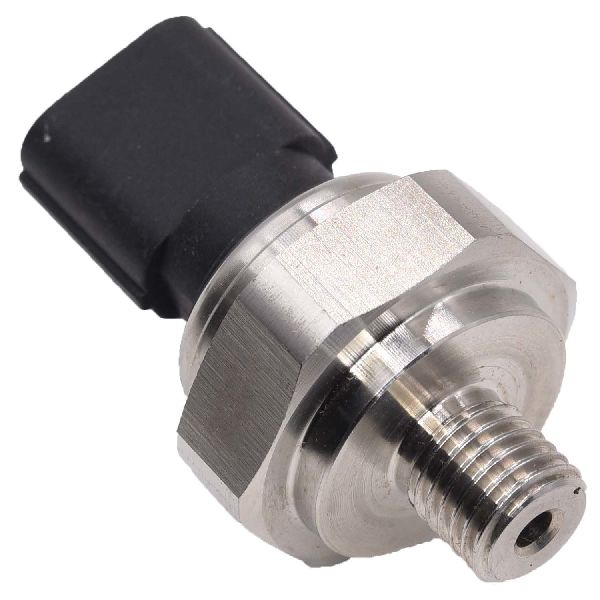
- The most likely failed part is the Bank 1 rocker arm oil pressure switch (Part No. 37240-R70-A04), an inexpensive and accessible part for DIY replacement.
- This code is often accompanied by P2652, which points to the same faulty switch.
- Replacing the switch requires a 24mm deep socket and is located on the rear cylinder head, accessible from the top of the engine bay.
What's Unique About the 2017-2017 Acura RLX
The Acura/Honda J-series 3.5L V6 engine has a well-documented history with its VCM system. The system relies heavily on clean oil at the correct pressure to function. The oil pressure switches that monitor this system are a known high-failure part across many Honda and Acura models using this engine, including the RLX, MDX, and TLX. In fact, Acura issued a Technical Service Bulletin (TSB) specifically investigating P3400 alongside code P2652 on 2017 RLX models, confirming it's a recognized issue for this platform. Forum discussions on Acurazine for related models frequently cite these switches as the primary culprit.
Diagnostic Flowchart
Tap your situation to follow the diagnostic path that matches what you're seeing on this vehicle.
Symptoms You May Notice
- Check Engine Light (Malfunction Indicator Light) is on.
- ECO light will not turn on, as the VCM system is disabled.
- Reduced fuel economy because the VCM system is not engaging.
- Rough engine operation, rough idle, or engine shuttering, particularly under acceleration.
- Vehicle may enter 'limp mode' with reduced power.
- In some cases, the oil pressure light may flicker or illuminate, especially when braking or decelerating quickly if the root cause is low oil level.
- Replacing spark plugs or ignition coils. While VCM issues can sometimes feel like a misfire, P3400 points specifically to the VCM hydraulic control system, not the ignition system.
- Replacing the wrong oil pressure switch. There are two VCM oil pressure switches on the J35 engine. P3400 refers to Bank 1 (rear, by firewall), while P3497 refers to Bank 2 (front).
Most Likely Causes
- Low or Dirty Engine Oil 🔴 High Probability The VCM system is hydraulically operated and highly sensitive to oil level, viscosity, and cleanliness. Many owners and technicians on forums for Honda and Acura vehicles report that simply being low on oil or overdue for an oil change can trigger this code.
How to confirm: Check the engine oil dipstick. The oil should be between the 'min' and 'max' marks and should not appear overly dark or sludgy. Using the wrong oil viscosity can also cause this issue.
Typical fix: Top off or change the engine oil and filter using the manufacturer-recommended grade (typically 0W-20). Reset the code by disconnecting the battery or using a scan tool.
Est. part cost: $30-$70 - Faulty Rocker Arm Oil Pressure Switch (Bank 1) 🔴 High Probability This specific switch is a known high-failure-rate component on Honda and Acura J-series V6 engines. It gets stuck or fails electrically, sending an incorrect signal to the PCM. The TSB for the 2017 RLX specifically investigates this switch in relation to code P3400. Numerous owner forums confirm this is the most common repair.
How to confirm: The switch can be tested with a multimeter or by monitoring its status with an advanced scan tool. However, given its low cost and high failure rate, it's often replaced as a primary diagnostic step after checking the oil. The switch for Bank 1 is located on the rear cylinder head, near the firewall.
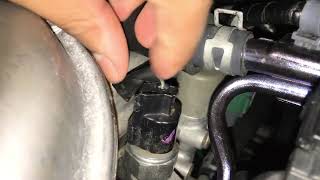
Typical fix: Replace the Bank 1 (rear bank, near firewall) rocker arm oil pressure switch and its O-ring. This requires a 24mm deep well socket. 🎬 Watch this DIY walkthrough for replacing the rear VCM switch.
Est. part cost: $35-$65 - Faulty VCM Solenoid (Bank 1) 🟡 Medium Probability The solenoid (also called a spool valve) controls the flow of oil to the rocker arms. Its internal passages or filter screen can become clogged with sludge, especially if oil changes are neglected. The gasket for this solenoid is also a common oil leak point on J-series engines, which can lead to low oil levels that trigger P3400.
How to confirm: Inspect the solenoid's filter screen for debris or tears. The solenoid can be tested by applying 12V power to see if it actuates. The solenoid assembly is located on the cylinder head.
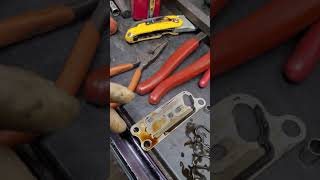
Typical fix: Clean the solenoid's filter screen or replace the entire VCM solenoid assembly for Bank 1. The gasket/screen assembly is often sold as a separate part. 🎬 Learn how to fix common VCM solenoid oil leaks.
Est. part cost: $100-$250
Rare But Worth Checking
- Wiring Harness Issue: The wiring or connector to the oil pressure switch or solenoid can become damaged, corroded, or contaminated with oil, causing an open or short circuit. This is worth checking before replacing more expensive parts.
- Internal Oil Pressure Problem: In rare cases, an issue with the oil pump, relief valve, or clogged internal oil passages can cause incorrect oil pressure, triggering VCM codes. This is a much more involved repair and may require engine disassembly to clean sludge.
- Faulty Powertrain Control Module (PCM): A PCM failure is extremely rare but possible. This should only be considered after all other possibilities have been exhaustively ruled out. In some cases, a permanent code may be stored that cannot be cleared without dealer intervention or PCM replacement.
Diagnosis Steps
- Check the engine oil level and condition. Top off or change the oil if it is low, old, or dirty. Ensure the correct viscosity oil (0W-20) is used. Clear the code and see if it returns.
- Scan for other codes. Note if P2652 or P3497 are also present, as this provides important diagnostic clues.
- Inspect the wiring and electrical connector for the Bank 1 (rear) rocker arm oil pressure switch. Look for any signs of damage, corrosion, or oil contamination.
- Replace the Bank 1 rocker arm oil pressure switch. This is the most common fix, and the part is inexpensive. It is located on the rear cylinder head, near the firewall, and requires a 24mm deep socket for removal.
- After replacing the switch, clear the codes with a scan tool or by disconnecting the battery for 30 minutes. Drive the vehicle to see if the code returns.
- If the code persists, inspect the VCM solenoid (spool valve) for Bank 1. Check its filter screen for sludge and test the solenoid's operation.
- If all components test good, consider a more advanced diagnosis, such as a manual oil pressure test, to rule out internal engine issues like clogged passages.
Parts You'll Likely Need
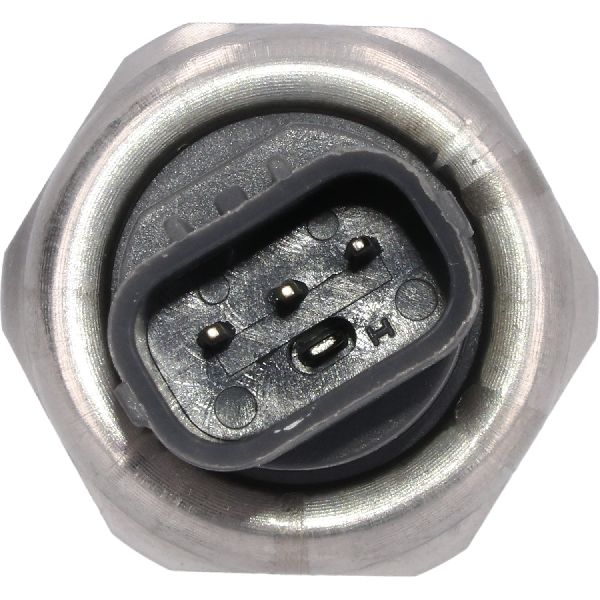
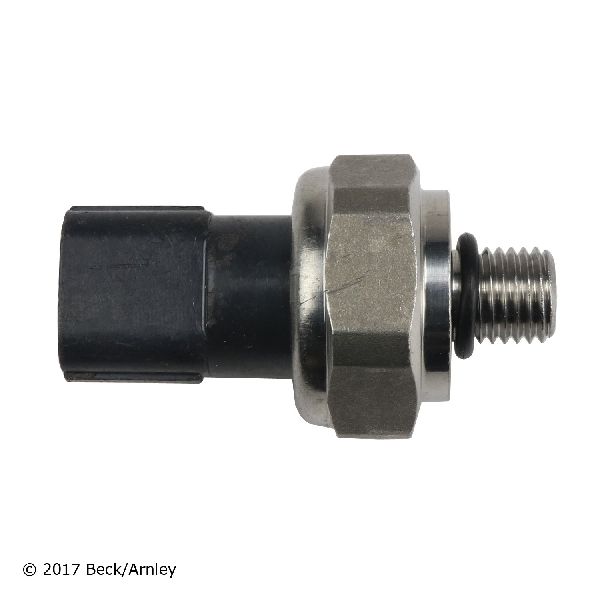
- Rocker Arm Oil Pressure Switch (Bank 1)
(OEM #37240-R70-A04)— This is the most frequent point of failure for code P3400 on this engine. It is responsible for reporting the oil pressure status for the VCM system on Bank 1. This part number supersedes older versions 37240-R70-A03 and 37240-R70-A02.
Trusted brands: Acura/Honda (OEM), Standard Motor Products, Beck/Arnley, Dorman
OEM price range: $45-$60
Aftermarket price range: $25-$45 - Oil Pressure Switch O-Ring
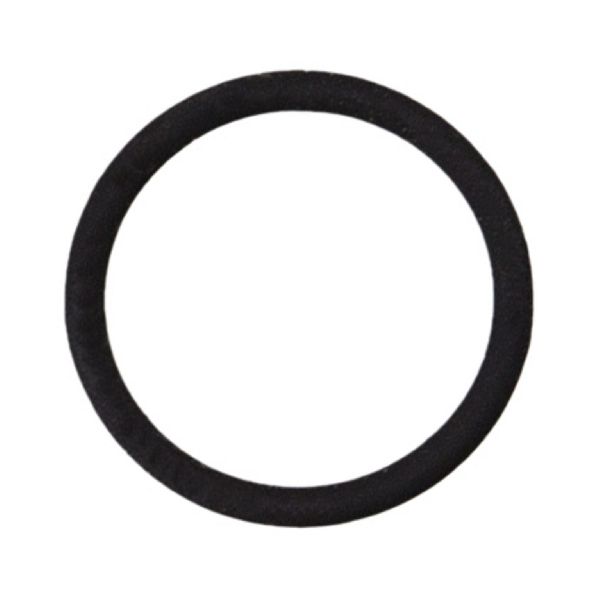
(OEM #91319-PAA-A01)— This seal should always be replaced with the pressure switch to prevent oil leaks. It is often sold separately.
Trusted brands: Acura/Honda (OEM)
OEM price range: $2-$5
Aftermarket price range: $1-$3 - VCM Solenoid Gasket/Screen Assembly
(OEM #15825-P8A-A01)— If the VCM solenoid is suspected, its gasket, which contains a filter screen, can become clogged with sludge or tear, causing oil pressure issues or leaks. This is a common maintenance item on J-series engines.
Trusted brands: Acura/Honda (OEM), Dorman (917-171)
OEM price range: $15-$25
Aftermarket price range: $10-$20
Related Codes That Often Appear With This One
- P2652 — This code for 'Rocker Arm Oil Pressure Switch B (Bank 1) Stuck On' is frequently stored with P3400. The official Acura TSB for the 2017 RLX lists these two codes together as part of the same core issue, often pointing to a faulty switch.
- P3497 — This is the equivalent code for Bank 2 (the front cylinder bank). If both P3400 and P3497 are present, it strongly suggests a systemic issue like a very low engine oil level, incorrect oil viscosity, or a problem with the main oil pump pressure.
Technical Service Bulletins (TSBs) & Recalls
- BTI&01192022901: AHM request to investigate 2017 RLX, MDX, RDX, & TLX models with MIL on and DTC P2652 and/or P3400 stored, often with a rough running complaint.
- Honda TSB 13-031: Addresses P3400/P3497 on other models, pointing to intermittent failure of the rocker arm oil pressure switches as a likely cause if the oil level is correct.
- Honda TSB 11-033: Addresses P3400 on some 2011 Accords, suggesting a PGM-FI software update may be needed if the code is triggered by low oil levels.
Platform-Specific Known Issues
- Acura issued Technical Service Bulletin #BTI&01192022901 which specifically requests dealership investigation into 2017 RLX models (within a certain VIN range) that store DTC P3400 and P2652, indicating a known pattern of this fault.
- Owner Experience: 2010 Honda Accord V6 with P3400 & P3497: An owner on Honda-Tech forums reported getting both P3400 and P3497 codes simultaneously. An initial oil change resolved a flickering oil light but the check engine light returned. Replacing both oil pressure switches also provided a temporary fix before the light came back, indicating a more complex issue, potentially related to sludge in the VCM system.
- Owner Experience: 2013 Acura RDX with permanent P3400: An owner on Acurazine reported
Mechanic-Grade Diagnostic Values
- VCM/VTEC Solenoid Resistance — expected: 14 to 30 Ohms. Failure: A reading outside of this range indicates a faulty solenoid coil.
- Rocker Arm Oil Pressure Switch Continuity (Engine Off) — expected: Should show continuity (a short circuit, near 0 Ohms).. Failure: An open circuit (infinite resistance) with the engine off indicates a failed switch.
- Rocker Arm Oil Pressure Switch Continuity (Engine Running) — expected: Should show an open circuit (no continuity).. Failure: Continuity (a short circuit) when the engine is running and has oil pressure indicates the switch is stuck closed.
Scan Tool Commands That Help
- Honda Diagnostic System (HDS): DTC Check & Clear — Used to read the specific Honda-enhanced DTCs (beyond generic OBD-II) and to clear them after a repair.
- Honda Diagnostic System (HDS): OBD STATUS Check — After a repair, this function is used to verify if the on-board diagnosis for the specific DTC has run and passed, confirming the fix was successful.
- Advanced Bidirectional Scan Tool (e.g., ANCEL V6 Pro): Solenoid Actuation Test — To command the VCM solenoid on and off directly. This helps determine if the solenoid itself is mechanically stuck or if the problem lies in the wiring or PCM command.
Wiring & Ground Locations
- Main Engine Harness Ground (G101) — On many Honda J-series engines, a main ground for the engine harness is located on the intake manifold.. A poor engine ground can cause erratic sensor readings and incorrect ECU behavior, potentially triggering false codes. Ensuring this ground is clean and tight is a crucial step in diagnosing electrical faults.
- Chassis to Engine Ground Strap — There is typically a ground strap from the battery negative terminal to the chassis, and another from the chassis to the engine block or transmission area.. The PCM and its sensors rely on a stable ground reference. A corroded or loose main ground strap can cause a variety of unpredictable electrical issues, including VCM system faults.
- Bank 1 Rocker Arm Oil Pressure Switch Connector — On the rear cylinder head (Bank 1), near the firewall. The connector plugs directly onto the top of the oil pressure switch.. This is the direct electrical connection for the component that triggers P3400. The connector and its wiring are common points of failure due to heat and oil contamination.
Real Owner Repair Stories
- YouTube user 'Try This DIY' (Honda Odyssey with J35 V6 engine) — Check Engine Light with code P3400, 'cylinder deactivation system bank one'.
❌ Tried (didn't work) The owner first checked the engine oil level, which was full and in good condition, ruling it out as the cause.
✅ What actually fixed it The owner replaced the Bank 1 rocker arm oil pressure switch, located on the rear cylinder bank near the firewall. This required a 24mm deep socket. After replacing the switch and clearing the code, the Check Engine Light did not return. - Reddit user in r/HondaOdyssey (Honda Accord with J35 V6 engine) — P3400 code appeared unexpectedly.
❌ Tried (didn't work) The code appeared once and was cleared.
✅ What actually fixed it For this owner, the code was intermittent. After clearing the code, it did not return for over a year, suggesting a temporary glitch rather than a hard failure. The user suggests that if the code *does* return, the next step is to swap the front and rear oil pressure switches to see if the code follows the switch (changing to P3497).
OEM Part Supersession History
37240-R70-A02, 37240-R70-A03→37240-R70-A04— Part revision and improvement by the manufacturer to increase reliability.
Heads up: The newest part number, 37240-R70-A04, is the correct replacement for the earlier versions and should be used for all repairs.
Helpful Videos
We Have This Part in Stock


The information in this article is provided for general reference and educational purposes only. Vehicle specifications, procedures, and part compatibility can vary by production date, trim level, and region. Always consult your vehicle's factory service manual and verify part numbers before purchasing or performing repairs. Safety-critical components such as airbags, seat belts, and braking systems should be installed by a qualified professional.
- Acura RLX:
- 🎬 Helpful Videos
- 🛍️ Shop This Part
- What's Unique About the 2017-2017 Acura RLX
- Diagnostic Flowchart
- Symptoms You May Notice
- Most Likely Causes
- Rare But Worth Checking
- Diagnosis Steps
- Parts You'll Likely Need
- Related Codes That Often Appear With This One
- Technical Service Bulletins (TSBs) & Recalls
- Platform-Specific Known Issues
- Mechanic-Grade Diagnostic Values
- Scan Tool Commands That Help
- Wiring & Ground Locations
- Real Owner Repair Stories
- OEM Part Supersession History
- 🎟️ Get 5% Off