

P3400 on 2017 Acura RDX: Valve Pause System Causes and Fixes
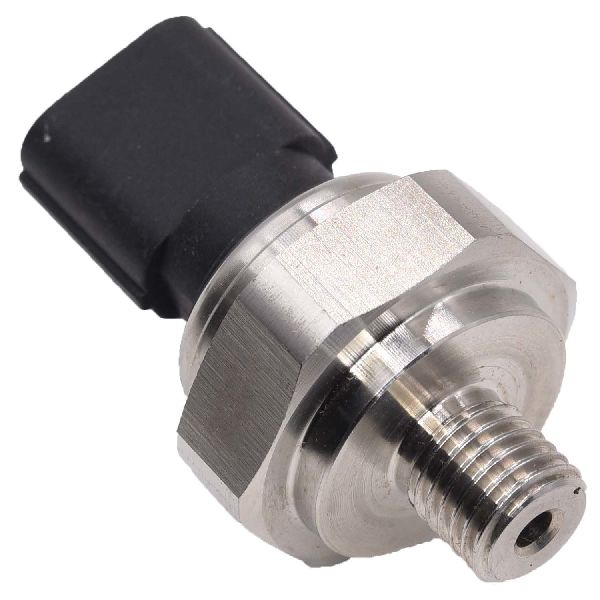
On a 2017 Acura RDX, code P3400 indicates the 'Valve Pause System' (part of VCM) is stuck off for Bank 1. This is most often caused by a faulty rocker arm oil pressure switch located on the rear cylinder bank. Replacing this switch (Part No. 37240-R70-A04) is a common, affordable DIY fix requiring a 24mm deep-well socket.
- P3400 on a 2017 RDX means the cylinder deactivation system (VCM) on Bank 1 (rear bank) isn't working.
- Before buying any parts, check your engine oil level and condition. Low or dirty oil is a very common cause.
- The most likely part to have failed is the Bank 1 (rear) rocker arm oil pressure switch (part # 37240-R70-A04).
- This is a manageable DIY repair for many home mechanics with a 24mm deep-well socket and a torque wrench (16-18 ft-lbs).
- Look for code P2652, as it specifically confirms the oil pressure switch is the problem.
What's Unique About the 2017-2017 Acura RDX
The 2017 RDX uses the J35-series V6 engine, which has a well-documented history with its Variable Cylinder Management (VCM) system across various Honda and Acura models. The system relies heavily on clean oil and correct oil pressure to function. The rocker arm oil pressure switches that monitor this system are a known high-failure part, making them the primary suspect for P3400. Technicians report replacing these switches frequently on RDX and MDX models. The issue is so prevalent that some owners opt to install an aftermarket VCM-disabling device to prevent future problems with the system.
Diagnostic Flowchart
Tap your situation to follow the diagnostic path that matches what you're seeing on this vehicle.
Symptoms You May Notice
- Check Engine Light (MIL) is on
- Message on dash like 'Check Emission System'.
- Rough running engine or rough idle, sometimes described as a shutter.
- Reduced engine power or hesitation, sometimes putting the car in 'limp mode'.
- Decreased fuel economy, as the cylinder deactivation feature will not engage.
- ECO light does not turn on
- Replacing the VCM/spool valve assembly when only the inexpensive pressure switch has failed.
- Replacing spark plugs or ignition coils, as a rough idle might be mistaken for a misfire when it's actually related to the VCM system engagement.
Most Likely Causes
- Faulty Rocker Arm Oil Pressure Switch (Bank 1) 🔴 High Probability This specific switch is a very common failure point on Honda/Acura J-series V6 engines with VCM. The internal diaphragm can fail, causing it to get stuck and send an incorrect pressure reading to the computer.
How to confirm: The switch for Bank 1 (P3400) is located on the rear cylinder head, near the firewall. It can be tested for continuity; with the engine off, a good switch should show continuity (closed circuit). When the engine runs and builds oil pressure, the switch should show an open circuit. However, due to its high failure rate and low cost, it is often replaced preemptively. The code P2652 ('Rocker Arm Oil Pressure Switch B (Bank 1) Stuck On') almost always confirms this switch is the culprit.
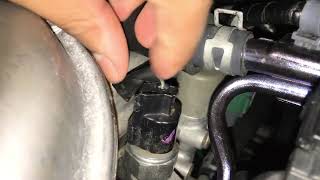
Typical fix: Replace the Bank 1 rocker arm oil pressure switch and its O-ring. A 24mm deep-well socket is required 🎬 Watch this DIY walkthrough for replacing the rear oil pressure switch. for removal and installation. Torque the new switch to approximately 13-18 ft-lbs.
Est. part cost: $25-$60 - Low or Dirty Engine Oil 🟡 Medium Probability The entire VCM / Valve Pause System is operated by oil pressure. If the oil level is low or the oil is old, dirty, or the wrong viscosity, it can't build the pressure needed to operate the system correctly.
How to confirm: Check the engine oil dipstick for proper level and inspect the oil's condition. If it's low or very dark/sludgy, this is a likely contributor. This should always be the first step.
Typical fix: Top off the oil to the correct level or perform a full oil and filter change using the manufacturer-recommended oil weight (e.g., 0W-20). Clear the codes and drive to see if the issue returns.
Est. part cost: $40-$80 - Faulty VCM Solenoid / Spool Valve Assembly (Bank 1) ⚪ Low Probability While less common than the switch, the solenoid assembly that directs oil flow can fail. Debris in dirty oil can clog its small internal passages and filter screens, preventing proper operation.
How to confirm: The solenoid can be removed and inspected for clogged screens or tested by applying 12v to see if it actuates with a clicking sound. The coil resistance can also be measured with a multimeter and should typically be between 8 to 12 ohms.
Typical fix: Remove, clean the filter screens, and reinstall the spool valve. If cleaning doesn't work or the solenoid is electrically faulty, replace the Bank 1 (rear) VCM spool valve assembly (Part No. 15820-R70-A04).
Est. part cost: $150-$300
Rare But Worth Checking
- Persistent/Permanent Code due to PCM Logic:
Diagnosis Steps
- Check Engine Oil: Before any other step, verify the engine oil is full, clean, and of the correct viscosity. If in doubt, perform an oil and filter change, clear the codes, and test drive.
- Scan for Other Codes: Check for codes like P2652, which will specifically confirm the Bank 1 oil pressure switch is faulty.
- Inspect the Bank 1 Rocker Arm Oil Pressure Switch: Locate the switch on the rear cylinder head (Bank 1), closer to the intake manifold. Check its wiring and connector for damage, corrosion, or oil saturation.
- Replace the Oil Pressure Switch: Given the high failure rate and low cost, it's often most efficient to replace the Bank 1 rocker arm oil pressure switch (Part No. 37240-R70-A04) and its O-ring (Part No. 91319-PAA-A01). Use a 24mm deep-well socket and torque the new switch to 13-18 ft-lbs.
- Test the VCM Solenoid: If the code returns after replacing the switch, remove and inspect the Bank 1 VCM solenoid (spool valve). Clean its filter screens thoroughly. Test the solenoid's function by applying 12V power to see if it clicks. Check the coil resistance, expecting a value between 8-12 ohms.
- Inspect Wiring: If all components test good, inspect the wiring harness between the switch, solenoid, and PCM for any shorts or open circuits, though this is an uncommon cause.
Parts You'll Likely Need
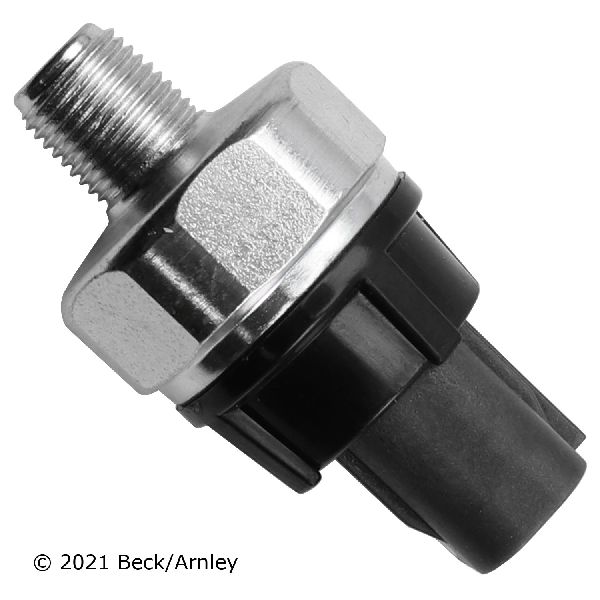
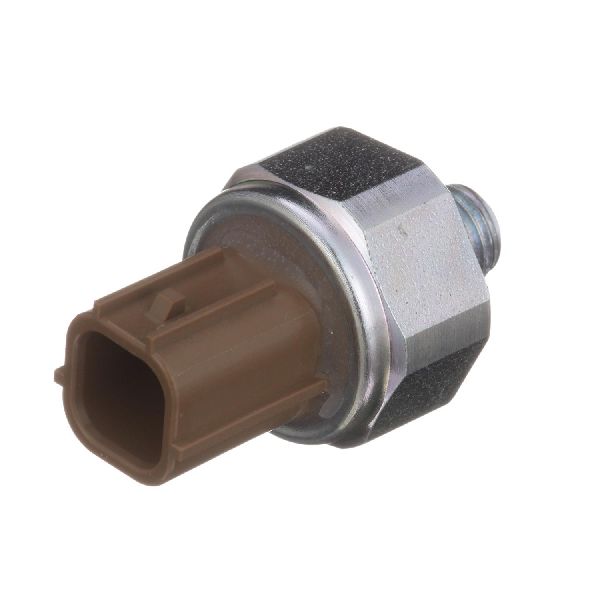
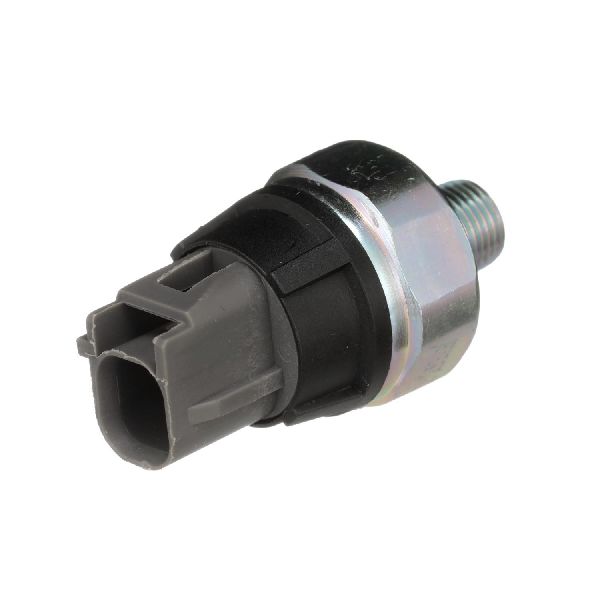
- Rocker Arm Oil Pressure Switch (Bank 1)
(OEM #37240-R70-A04)— This is the most frequent failure point for code P3400 on the Acura J35 engine. It gets stuck and sends an incorrect signal about the VCM system's status. It supersedes older part numbers 37240-R70-A02 and 37240-R70-A03.
Trusted brands: Genuine Acura/Honda, NTK, Standard Motor Products (SMP)
OEM price range: $40-$65
Aftermarket price range: $25-$45 - Rocker Arm Oil Pressure Switch O-Ring
(OEM #91319-PAA-A01)— This seal should always be replaced with the switch to prevent oil leaks. It is often sold separately.
Trusted brands: Genuine Acura/Honda
OEM price range: $2-$5
Aftermarket price range: $1-$3 - VCM Spool Valve Assembly (Bank 1)
(OEM #15820-R70-A04)— Replaced if cleaning the original valve's screens does not resolve the issue, or if the integrated solenoid is faulty. This is a much less common fix than the pressure switch.
Trusted brands: Genuine Acura/Honda
OEM price range: $200-$300
Aftermarket price range: $100-$180
Related Codes That Often Appear With This One
- P2652 — This code means 'Rocker Arm Oil Pressure Switch B (Bank 1) Stuck On'. It directly points to the most common cause of P3400 on this engine, which is the failure of that specific switch. 'Switch B' specifically monitors the VCM function.
- P3497 — This is the same 'Valve Pause System Stuck Off' code but for Bank 2 (the front bank, near the radiator). If both P3400 and P3497 appear, it points more strongly to a systemic issue like low/dirty oil rather than a single component failure.
Technical Service Bulletins (TSBs) & Recalls
- BTI&01192022901: Mentions MIL on with DTC P2652 and P3400, possibly accompanied by a rough running engine.
- Honda TSB 13-015: Notes that the rocker arm oil pressure switch may fail intermittently, causing P3400 or P3497.
- Honda TSB 11-033: Links P3400 and P3497 to low engine oil level causing insufficient VCM operating pressure.
Platform-Specific Known Issues
- Acura issued Technical Service Bulletin (TSB) #BTI&01192022901 which directly links P3400 with P2652 and a potential rough running condition, confirming the connection between the Valve Pause System fault and the rocker arm oil pressure switch.
- An older Honda TSB (13-015) also addresses this issue, noting that the front and/or rear rocker arm oil pressure switches may fail intermittently.
- Another TSB (11-033) notes that these codes can appear simply due to low engine oil level, which prevents the VCM system from maintaining the required line pressure.
Mechanic-Grade Diagnostic Values
- VCM Solenoid Coil Resistance — expected: 8 to 12 Ohms. Failure: A reading outside this range indicates a faulty solenoid coil.
- Rocker Arm Oil Pressure Switch Continuity (Engine Off) — expected: Continuity (closed circuit, near 0 Ohms). Failure: No continuity (open circuit) when no oil pressure is present indicates a failed switch.
- Rocker Arm Oil Pressure Switch Continuity (Engine Running) — expected: No continuity (open circuit). Failure: Continuity (a closed circuit) when the engine is running and has oil pressure indicates a failed switch.
Scan Tool Commands That Help
- Honda HDS (Honda Diagnostic System): Management of executive devices / Actuation Test — To command the VCM/VTEC solenoid to actuate. A technician can listen for a clicking noise to confirm the solenoid is mechanically responding to the PCM's command, helping to isolate a failed solenoid from a wiring issue.
- Launch Creader Elite (or similar advanced bidirectional scanner): Active Test / Actuation Test — Similar to the Honda HDS, these tools can command the VCM solenoid on and off to verify its mechanical operation, which is a critical step if a new oil pressure switch doesn't resolve the P3400 code.
Wiring & Ground Locations
- G101 — Top right front of the engine.. This is a primary engine ground point. A loose or corroded G101 can cause erratic behavior in various engine sensors and actuators, including the VCM system components. While not a common cause for P3400 specifically, verifying major grounds is a key step in diagnosing any electrical fault.
Real Owner Repair Stories
- Acurazine user post (2017 Acura RDX Tech) — Car went into limp mode, check engine light flashing, 'Check Emission System' message, shuddering/juddering.
❌ Tried (didn't work) The user initially suspected a transmission failure due to the shuddering.
✅ What actually fixed it The dealership diagnosed code P2652 (Rocker Arm oil pressure switch B [Bank 1] stuck ON) and replaced the faulty oil pressure switch. This resolved the limp mode and the code. The dealer also performed a transmission fluid flush and firmware update for a separate shuddering issue. - Acurazine user post (2013 Acura RDX AWD, 113,000 miles) — Initial flashing P3400 code, which was fixed. Later, a 'permanent' P3400 code remained that would not clear, causing a failed emissions test, even though the check engine light was off.
❌ Tried (didn't work) Mechanic replaced the Variable Timing Control Unit for bank 1., Owner replaced both pressure sending switches., Shop re-checked the entire system and found no active faults.
✅ What actually fixed it The forum thread was ongoing, but a contributor suggested that if a permanent DTC cannot be cleared through normal means (scanner, battery disconnect, drive cycles), the final step would be to replace the PCM (ECU).
OEM Part Supersession History
37240-R70-A02, 37240-R70-A03→37240-R70-A04— Standard part revision and improvement by the manufacturer.
Heads up: The newest part number, 37240-R70-A04, is the correct replacement for all prior versions and should be used for the repair. One source also lists 37240-R70-A01 as a superseded number.
Helpful Videos
We Have This Part in Stock


The information in this article is provided for general reference and educational purposes only. Vehicle specifications, procedures, and part compatibility can vary by production date, trim level, and region. Always consult your vehicle's factory service manual and verify part numbers before purchasing or performing repairs. Safety-critical components such as airbags, seat belts, and braking systems should be installed by a qualified professional.
- Acura RDX:
- 🎬 Helpful Videos
- 🛍️ Shop This Part
- What's Unique About the 2017-2017 Acura RDX
- Diagnostic Flowchart
- Symptoms You May Notice
- Most Likely Causes
- Rare But Worth Checking
- Diagnosis Steps
- Parts You'll Likely Need
- Related Codes That Often Appear With This One
- Technical Service Bulletins (TSBs) & Recalls
- Platform-Specific Known Issues
- Mechanic-Grade Diagnostic Values
- Scan Tool Commands That Help
- Wiring & Ground Locations
- Real Owner Repair Stories
- OEM Part Supersession History
- 🎟️ Get 5% Off