

OBD-II Code P3300: Understanding Its Dual Meanings of Random Misfire and Hybrid Faults
The ultimate guide to what P3300 means, why it triggers, and how to fix it for good.
- P3300 carries two distinct meanings: a 'Random Misfire' in standard gas engines (identical to P0300) or a 'High-Voltage Battery Fault' in hybrids like the Toyota Prius.
- A flashing check engine light demands immediate shutdown; driving even 5 miles dumps enough raw fuel to destroy a catalytic converter, costing $1,500 to $3,500.
- Diagnose companion codes first: lean codes (P0171/P0174) guarantee a vacuum leak or fuel starvation, while correlation codes (P0016) confirm mechanical timing failure.
- Search for Technical Service Bulletins (TSBs) before replacing parts; GM's AFM lifter failure (2007-2021 V8s) and Chrysler's Pentastar rocker arm wear (2011-2016) require specific mechanical overhauls.
- If spark plugs and coils test fine, perform a smoke test to locate vacuum leaks or measure fuel pressure at the rail (typically 35-65 PSI) to rule out fuel starvation.
What Does P3300 Mean?

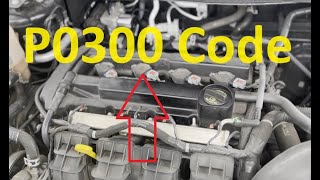
P3300 is a complex code with two distinct meanings depending on the vehicle. For most gasoline-powered cars, it functions identically to P0300, indicating the engine's computer detects misfires across multiple cylinders but cannot isolate the fault. 🎬 Watch: A simple explanation of random cylinder misfires. A misfire occurs when the fuel-air mixture fails to ignite, causing power loss and vibration. However, for hybrid vehicles (like the Toyota Prius or Honda Civic Hybrid), P3300 specifically flags a critical fault within the high-voltage hybrid battery pack or its control module.
Technical definition: The official SAE/OBD-II definition for P3300 is 'Manufacturer Controlled DTC'. This generic classification allows automakers to assign it to specific faults not covered by standard 'P0' codes. While its most prevalent real-world use in non-hybrid cars is 'Random/Multiple Cylinder Misfire Detected', it signifies 'Hybrid Battery Pack Malfunction' in many hybrid applications.
Can I Drive With P3300?

no_if_flashing. Driving is strongly discouraged. If the check engine light is flashing, pull over and shut off the engine immediately. Continuing to drive for even a few miles dumps enough raw fuel into the exhaust to destroy the catalytic converter, a repair costing $1,000 to $4,000. If the light is solid, limit driving to an immediate trip to a qualified repair shop.
Common Causes

- Worn or Fouled Spark Plugs (Very Common) — The leading cause of misfires. Old, carbon-fouled, oil-soaked, or incorrectly gapped spark plugs fail to produce a consistent spark, causing incomplete combustion across multiple cylinders.
- Failing Ignition Coils or Coil Packs (Very Common) — Ignition coils convert battery voltage into high-voltage spark. Aging coils produce weak or intermittent sparks under load. When one fails, others of similar age usually follow.
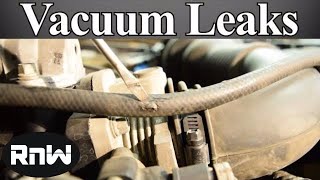
- Vacuum Leaks (Common) — Cracked vacuum hoses, leaking intake gaskets, or faulty PCV valves introduce unmetered air. 🎬 See how to find and fix vacuum leaks fast. This lean condition triggers random misfires, surging idle, and P0171/P0174 codes.
- Hybrid Powertrain Fault (Hybrid Vehicles Only) (Common) — In Toyota, Lexus, and Honda hybrids, P3300 specifically flags a high-voltage battery pack failure (e.g., a dead cell) or a hybrid control module fault, not an engine misfire. 🎬 Watch: Troubleshooting hybrid battery packs and cell diagnostics.
- Fuel Delivery Issues (Common) — Weak fuel pumps, clogged filters, or dirty injectors starve the engine. This lean condition causes misfires that peak during acceleration or high-load driving.
- Faulty Mass Airflow (MAF) Sensor (Less Common) — A dirty MAF sensor misreports incoming air volume. The ECU calculates an incorrect fuel mixture, creating an imbalance that triggers misfires.
- Faulty Crankshaft or Camshaft Position Sensor (Less Common) — These sensors dictate ignition timing. Erratic signals force the ECU to mistime spark and fuel injection, resulting in widespread misfires.
- Faulty Engine Ground Connection (Less Common) — Corroded or loose engine ground straps create unstable voltage for the ignition system, causing erratic, hard-to-trace misfires.
- Internal Engine Mechanical Failure (Rare) — Jumped timing chains, blown head gaskets, worn piston rings, or collapsed lifters (common in GM V8s) eliminate cylinder compression, making misfires inevitable.
Symptoms
- Flashing or Solid Check Engine Light — A solid light indicates an active fault. A flashing light signals a severe, catalyst-damaging misfire requiring immediate engine shutdown.
- Rough Idle, Vibration, and Hesitation — The engine shakes violently at idle and jerks or sputters during acceleration, confirming one or more cylinders are dead.
- Reduced Fuel Economy — Dead cylinders dump unburned fuel into the exhaust, slashing fuel economy by 10% to 25%.
- Strong Fuel Smell from Exhaust — A raw gasoline odor from the tailpipe confirms unburned fuel is bypassing the combustion chamber and entering the exhaust.
- Difficulty Starting the Engine — Severe misfires force the engine to crank for extended periods before starting, or prevent starting entirely.
- Unusual Noises (Ticking, Popping) — Rhythmic ticking indicates a valvetrain failure (like GM lifters), while exhaust popping confirms fuel igniting inside the exhaust manifold.
Diagnostic Flowchart
Tap your situation to follow the diagnostic path that matches what you're seeing on this code.
Common Fixes & Costs
- Replace Spark Plugs
— Parts: $20-$150, Labor: $80-$250, ~1.5 hr book time
(DIY)
: OEM ACDelco 41-162 (Iridium) (Alt: {"brand": "NGK", "part": "93231 (Laser Iridium)"}, {"brand": "Bosch", "part": "9689 (Double Iridium)"}) - Replace Ignition Coil(s)
— Parts: $40-$100 per coil, Labor: $75-$150, ~1 hr book time
(DIY)
: OEM Motorcraft HL3Z-12029-D (Alt: {"brand": "MSD", "part": "82706"}, {"brand": "Bosch", "part": "0221604808"})
: OEM Mopar 5149168AI (Alt: {"brand": "NGK", "part": "48916"}, {"brand": "Denso", "part": "673-4304"}) - Repair Vacuum Leak (Hose or Gasket) — Parts: $5-$100, Labor: $100-$450, ~3.5 hr book time (Intermediate)
- Clean or Replace Mass Airflow (MAF) Sensor — Parts: $15-$300, Labor: $50-$150, ~0.5 hr book time (DIY)
- Replace Fuel Pump — Parts: $200-$700, Labor: $300-$800, ~4 hr book time (Professional)
- Repair Engine Ground Connection — Parts: $10-$50, Labor: $50-$150, ~0.8 hr book time (DIY)
- Replace Catalytic Converter — Parts: $600-$2,500, Labor: $150-$400, ~1.5 hr book time (Professional)
DIY vs Professional
- Replace Spark Plugs — Beginner: True
- Replace Ignition Coil(s) — Beginner: True
- Repair Vacuum Leak (Hose) — Beginner: True
- Clean Mass Airflow (MAF) Sensor — Beginner: True
- Replace Fuel Pump — Beginner: False
- Replace Catalytic Converter — Beginner: False
Used vs. New Parts: Buying Guide
When a used part is worth it: For high-cost items like catalytic converters, a used OEM part from a low-mileage wrecked vehicle is superior to cheap aftermarket parts. Never buy used wear items like spark plugs or ignition coils.
Donor-vehicle mileage cap: roughly under 80000 miles for the part to have meaningful remaining life.
Donor quality checklist:
- Verify the donor vehicle was not scrapped for engine or emissions failures.
- Check for excessive rust or physical damage on exhaust components.
- Match the part number exactly; superseded parts often trigger ECU compatibility issues.
Decision logic:
- If The part is a wear item like a spark plug, ignition coil, or sensor → Always buy new. The savings are minimal and the risk of premature failure is absolute.
- If The part is a catalytic converter and the vehicle is over 100,000 miles → A used OEM converter from a donor under 80,000 miles offers the best value and longevity.
- If The part is a catalytic converter in a CARB-regulated state (e.g., California) → Purchase a new CARB-compliant converter. Used converters are illegal to install in these jurisdictions.
Warranty tradeoff: Used parts carry 30-90 day warranties covering only the part. New aftermarket parts offer 1-year warranties, while new OEM parts carry 12-month/12,000-mile guarantees.
Worst-case if a used part fails: $500-$1500 if a used catalytic converter fails, requiring duplicate labor and a second replacement part.
What Happens If You Wait — Timeline
- 0-2 weeks: Check Engine Light illuminates solidly. Slight rough idle or inconsistent hesitation occurs. (MPG impact: 0-5%% · Added cost: $0-$40 in wasted fuel)
- 2 weeks - 3 months: Rough idle becomes violent. Unburned fuel intermittently overheats the catalytic converter. (MPG impact: 5-15%% · Added cost: $50-$200 in wasted fuel)
- 3-6 months: Check Engine Light flashes during acceleration. The catalytic converter substrate melts and clogs, building exhaust backpressure. (MPG impact: 15-25%% · Added cost: $1,200-$3,500 (catalytic converter replacement required))
- 6+ months: Catastrophic failure. The melted catalytic converter chokes the engine, causing stalling and no-start conditions. Extreme backpressure destroys piston rings. (MPG impact: 25-50%+% · Added cost: $2,000-$5,000+)
Cost of Not Fixing It
- 0-1 month: Noticeable drop in fuel economy (10-25%), rough idle, and poor acceleration. Automatic emissions test failure. (Added cost: $50-$150 in wasted fuel)
- 1-6 months: Severe damage to the catalytic converter due to overheating from unburned fuel. This is the primary financial risk. (Added cost: $1,200-$3,500)
- 6+ months: Accelerated wear on internal engine components (piston rings, cylinder walls) from fuel washing, and melted exhaust manifolds. (Added cost: $2,000-$5,000+)
Diagnosis Steps

- Scan for All Trouble Codes
Read all stored and pending codes. P3300 is a general code; specific codes like P0301 (Cylinder 1), P0171 (Lean), or P0016 (Timing) provide the exact root cause.
Tools: OBD-II Scanner (Beginner) - Diagnose Hybrid Battery Fault (Hybrid Vehicles Only)
If driving a Toyota/Lexus hybrid, stop misfire diagnosis. Use a hybrid-capable scanner to view live battery data. A voltage deviation greater than 0.3-0.5 volts between battery blocks under load confirms a failing battery pack.
Tools: Hybrid-capable OBD-II Scanner (e.g., Toyota Techstream) (Advanced) - Analyze Fuel Trims with a Scan Tool
Observe Short-Term (STFT) and Long-Term (LTFT) fuel trims. Healthy engines fluctuate between -10% and +10%. Consistently positive values (> +10%) on both banks guarantee a vacuum leak or fuel starvation. Consistently negative values (< -10%) confirm a rich condition.
Tools: Advanced OBD-II Scanner with Live Data (Advanced) - Perform a Thorough Visual Inspection
Inspect for cracked vacuum lines, loose ignition coil connectors, oil leaks near spark plug tubes, and damaged sensor wiring.
Tools: Flashlight (Beginner) - Inspect the Ignition System
Remove spark plugs to check for wear, carbon tracking, or oil fouling. If a specific cylinder code (e.g., P0302) exists, swap that cylinder's coil with a known good one. If the misfire moves, the coil is dead.
Tools: Socket set, spark plug socket, ignition coil puller (Intermediate) - Check for Vacuum Leaks
With the engine idling, spray short bursts of brake cleaner around the intake manifold and vacuum hoses. An idle surge pinpoints the leak. For definitive results, pressurize the intake with a smoke machine.
Tools: Brake cleaner or smoke machine (Intermediate) - Test Fuel Pressure and Delivery
Connect a fuel pressure gauge to the rail. Pressure must match manufacturer specs (typically 35-65 PSI). Low pressure confirms a weak pump or clogged filter. Listen to injectors with a stethoscope for consistent clicking.
Tools: Fuel pressure gauge kit, mechanic's stethoscope (Intermediate) - Test Mass Airflow (MAF) Sensor Voltage
Check MAF output voltage via live data. At idle, expect 0.5V to 1.5V. Smoothly increasing RPM must cause voltage to rise steadily above 3.0V. Erratic or flatline voltage confirms a dead sensor.
Tools: Multimeter with back-probe pins or Advanced OBD-II Scanner (Advanced) - Test Crankshaft/Camshaft Position Sensors
For 3-wire sensors, back-probe the connector with the engine running. The signal wire must produce a fluctuating 0V-5V square wave. A flatline signal confirms sensor failure.
Tools: Multimeter, back-probe pins, wiring diagram (Advanced) - Perform a Voltage Drop Test on Engine Grounds
Place the red multimeter lead on the negative battery terminal and the black lead on the engine block. With the engine running, readings above 0.1 volts confirm a poor ground causing electrical interference.
Tools: Multimeter (Advanced) - Check for Exhaust Backpressure
Temporarily remove the upstream O2 sensor. If engine power and idle improve immediately, the catalytic converter is clogged. Professional backpressure gauges reading above 1.5 PSI at 2500 RPM confirm restriction.
Tools: O2 sensor socket or backpressure gauge (Advanced) - Perform an Engine Compression Test
Healthy gas engines produce 125-175 PSI per cylinder, with under 15% variance. Readings below 100 PSI confirm severe mechanical failure like blown head gaskets or collapsed lifters.
Tools: Compression tester kit, basic hand tools (Advanced)
When This Code Triggers (Freeze-Frame Conditions)
- Engine Coolant Temp: 180-210°F (Fully warmed up)
- RPM: 1500-3000 (Light acceleration or steady cruise)
- Engine Load: 25-60% (Under moderate load, not at idle or full throttle)
- Vehicle Speed: 45-65 mph (Highway or steady suburban driving)
Related Codes
- P0301-P0312 — Cylinder-specific misfire codes. Swap the coil and plug from the indicated cylinder to a healthy one; if the code follows the part, replace it.
- P0171 / P0174 — System Too Lean codes guarantee unmetered air or fuel starvation. Diagnose vacuum leaks and fuel pressure before touching ignition parts.
- P0420 / P0430 — Catalyst Efficiency codes confirm the misfire destroyed the catalytic converter. Fix the misfire completely before installing a new converter.
- P0016 / P0017 — Crank/Cam Correlation codes confirm mechanical timing failure (jumped chain). This is the root cause of the misfire.
Climate & Environmental Factors
- Cold Weather: Low temperatures contract gaskets and hoses, exposing minor vacuum leaks. Thickened oil and reduced battery voltage further strain the ignition system, triggering cold-start misfires.
- High Humidity: Moisture condenses on cracked ignition coils and plug wires, causing high-voltage sparks to short to the engine block instead of firing the cylinder.
- High Altitude: Less dense air exposes underlying weaknesses in fuel delivery systems, forcing lean conditions that trigger misfires under heavy load.
How to Clear the Code After You Fix It
- Use an OBD-II scan tool to clear the trouble codes.
- Ensure the fuel tank is between 30% and 70% full.
- Perform a complete drive cycle to allow readiness monitors to run.
Drive cycle (~30 minutes): Start the engine cold (sitting 8+ hours). Idle for 3 minutes with A/C and defroster on. Accelerate to 55 mph and hold steady for 10 minutes. Perform 20 minutes of stop-and-go city driving. Allow the vehicle to cool completely.
Readiness monitors affected: Catalyst Monitor, Misfire Monitor, Oxygen (O2) Sensor Monitor, Evaporative (EVAP) System Monitor
Before emissions retest: drive at least 100 miles to fully set monitors.
Watch out for:
- Disconnecting the battery clears the code but resets all readiness monitors, guaranteeing an automatic emissions test failure.
- The code returns immediately if the root cause of the misfire remains unfixed.
- Failing to drive at steady highway speeds prevents the Catalyst Monitor from completing its self-test.
Will This Fail Emissions / State Inspection?
Yes — this code typically fails an OBD-II emissions inspection.
- California: An active P3300 code guarantees a smog check failure. All readiness monitors must read 'Ready'. Expect to drive 50-100 mixed miles after repair before retesting.
- New York: Vehicles automatically fail if the check engine light is illuminated. NY allows post-2001 vehicles to pass with one incomplete monitor, but misfires often block multiple monitors.
- Texas: In the 17 emissions-testing counties, an illuminated check engine light for P3300 results in an automatic safety inspection failure.
Most Commonly Affected Vehicles
- Chevrolet / GMC Silverado, Tahoe, Suburban, Sierra, Yukon (2007-2021) — 5.3L and 6.2L V8s suffer catastrophic Active Fuel Management (AFM) lifter failure. Collapsed lifters cause persistent misfires on cylinders 1, 4, 6, or 7. See GM TSB #15-06-01-002.
- Ford F-150, Explorer, Edge (2011-2020) — EcoBoost engines destroy spark plugs rapidly. 2011-2012 models ingest intercooler condensation (TSB 13-3-3), while 2019 H.O. models suffer restrictive muffler misfires (TSB 19-2286).
- Chrysler / Dodge / Jeep Wrangler, Grand Cherokee, 300, Charger (2011-2016) — The 3.6L Pentastar V6 destroys rocker arms and lifters prematurely. This manifests as a ticking cylinder head followed by a persistent P0300/P3300 code.
- Honda / Acura Odyssey, Accord, Pilot, MDX (2008-2017) — V6 engines with Variable Cylinder Management (VCM) foul spark plugs with oil on deactivated cylinders (1-4), requiring piston ring replacement under extended warranties.
- Volkswagen / Audi GTI, Jetta, A4, Q5 (2008-2016) — The 2.0T engine triggers this code due to ignition coil failure, severe intake valve carbon buildup, or a ruptured PCV valve creating a massive vacuum leak.
- Hyundai / Kia Elantra, Sonata, Optima, Forte (2011-2018) — These models suffer sudden, catastrophic ignition coil failures. A P3300 code warrants immediate replacement of all coils.
- Subaru Impreza, Forester, Outback, Legacy (2005-2015) — Boxer engines trigger this code due to brittle spark plug wires, cracked vacuum hoses, and leaking intake manifold gaskets.
- Toyota / Lexus Prius, Camry Hybrid, Highlander Hybrid, RX400h (2004-2015) — P3300 does NOT indicate a misfire on these vehicles. It confirms a high-voltage hybrid battery pack failure requiring specialized replacement.
Manufacturer-Specific Notes

- General Motors (Chevrolet/GMC): V8s with Active Fuel Management (AFM) collapse lifters on cylinders 1, 4, 6, and 7. This requires a complete cylinder head rebuild, not spark plugs.
- Ford: 2019 F-150 3.5L H.O. EcoBoosts misfire under load due to restrictive factory mufflers (TSB 19-2286). 2011-2012 models ingest intercooler condensation (TSB 13-3-3).
- Chrysler/Dodge/Jeep: The 3.6L Pentastar V6 destroys rocker arms, causing a ticking noise and P3300 code before cylinder-specific codes appear.
- Honda/Acura: V6 Variable Cylinder Management (VCM) engines foul spark plugs with oil on deactivated cylinders, triggering misfires.
Real Owner Stories
2014 Ford F-150 EcoBoost with 128K miles
While accelerating hard to pass, the check engine light flashed and the truck surged violently.
What they tried:
- Restarted the engine, temporarily smoothing the idle.
- Scanned the ECU, revealing a P0300/P3300 code.
- Suspected original spark plugs were failing under high boost.
Outcome: Replaced all six Motorcraft iridium spark plugs. The misfire vanished and power returned. The original plugs were too worn to spark under high cylinder pressure.
Lesson: Turbocharged engines destroy spark plugs faster than naturally aspirated engines. Misfires under heavy load confirm worn plugs failing under peak cylinder pressure.
2014 Mazda 6 with recent P0300 issues
Check engine light triggered with a P0300 code. The engine shook violently on startup.
What they tried:
- A mechanic replaced all four spark plugs, but the code returned in three days.
- Used premium fuel to clean carbon buildup, which failed.
- Discovered ignition coils are a known failure point on this model.
Outcome: Replaced all four ignition coils, permanently resolving the misfire. The initial misdiagnosis wasted money on unnecessary fuel treatments.
Lesson: If new spark plugs fail to cure a misfire, immediately test the ignition coils. Swapping a coil to a healthy cylinder is a free diagnostic test.
2007 Chevy Silverado with P0300, P0171, and P0174 codes
The truck ran poorly, displaying a random misfire code alongside lean codes for both engine banks.
What they tried:
- Ignored ignition parts, recognizing lean codes indicate unmetered air affecting all cylinders.
- Performed a smoke test on the intake manifold.
Outcome: Smoke poured from the upper intake manifold gasket. Replacing the $30 gasket resolved all three codes and restored smooth idle.
Lesson: When P3300 pairs with P0171/P0174, a vacuum leak is guaranteed. Never replace ignition parts; use a smoke machine to find the unmetered air source.
How to Prevent This Code From Triggering
- Replace spark plugs at the manufacturer's recommended interval (Every 60,000-100,000 miles) — Worn spark plugs widen the gap, forcing ignition coils to work harder. This strain destroys coils prematurely and causes incomplete combustion.
- Use high-quality, Top Tier gasoline (Every fill-up) — Top Tier fuels contain detergents that prevent carbon deposits on fuel injectors and intake valves, ensuring proper fuel atomization.
- Perform periodic fuel injector cleaning (Every 30,000-60,000 miles) — Critical for Direct Injection (GDI) engines. Cleaning removes deposits that disrupt fuel spray patterns, preventing lean misfires.
- Address valve cover oil leaks promptly (As needed) — Oil leaking into spark plug tubes saturates the ignition coil boot, causing high-voltage sparks to short to the engine block.
- Allow periodic 'spirited' driving on the highway (Monthly) — Sustained high RPMs and temperatures burn off light carbon deposits on intake valves, preventing airflow disruption.
Frequently Asked Questions
Can I drive with a P3300 code?
If the check engine light is flashing, pull over immediately to prevent catastrophic catalytic converter damage. If the light is solid, drive cautiously directly to a repair shop.
What's the most common mistake when fixing a P3300 code?
Replacing parts without diagnosing the root cause. Drivers often waste money on spark plugs and coils when the actual culprit is a $10 vacuum hose or a failing hybrid battery. A professional diagnosis prevents expensive parts cannons.
Is P3300 the same as P0300?
In standard gas vehicles, P3300 functions identically to P0300, indicating a random multiple cylinder misfire. However, in hybrid vehicles like the Toyota Prius, P3300 specifically designates a high-voltage battery malfunction.
My car has a P0420 catalyst code with the P3300. Should I replace the catalytic converter?
No. The P0420 code is a symptom of the P3300 misfire dumping raw fuel into the exhaust and damaging the converter. You must fix the misfire first, or the new converter will be destroyed immediately.
Can a bad ground cause a P3300 code?
Yes. A poor engine ground causes erratic voltage drops to the ignition coils and sensors, triggering random misfires. A voltage drop test showing over 0.1 volts between the negative battery terminal and engine block confirms this issue.
Can a bad computer (ECM/PCM) cause a P3300 code?
Yes, but it is extremely rare. A failing ECM incorrectly interprets sensor data or drops ignition coil ground signals. Only consider the ECM after exhaustively ruling out ignition, fuel, air, and mechanical failures.
How much will it cost to fix a P3300 code?
Costs range from $150 for spark plugs or vacuum hoses to $1,500 for a fuel pump replacement. Major mechanical repairs like GM AFM lifters or a hybrid battery replacement cost $2,000 to $4,500.
Key Takeaways
- P3300 carries two distinct meanings: a 'Random Misfire' in standard gas engines (identical to P0300) or a 'High-Voltage Battery Fault' in hybrids like the Toyota Prius.
- A flashing check engine light demands immediate shutdown; driving even 5 miles dumps enough raw fuel to destroy a catalytic converter, costing $1,500 to $3,500.
- Diagnose companion codes first: lean codes (P0171/P0174) guarantee a vacuum leak or fuel starvation, while correlation codes (P0016) confirm mechanical timing failure.
- Search for Technical Service Bulletins (TSBs) before replacing parts; GM's AFM lifter failure (2007-2021 V8s) and Chrysler's Pentastar rocker arm wear (2011-2016) require specific mechanical overhauls.
- If spark plugs and coils test fine, perform a smoke test to locate vacuum leaks or measure fuel pressure at the rail (typically 35-65 PSI) to rule out fuel starvation.
Helpful Videos


The information in this article is provided for general reference and educational purposes only. Vehicle specifications, procedures, and part compatibility can vary by production date, trim level, and region. Always consult your vehicle's factory service manual and verify part numbers before purchasing or performing repairs. Safety-critical components such as airbags, seat belts, and braking systems should be installed by a qualified professional.
- 🎬 Helpful Videos
- What Does P3300 Mean?
- Can I Drive With P3300?
- Common Causes
- Symptoms
- Diagnostic Flowchart
- Common Fixes & Costs
- DIY vs Professional
- Used vs. New Parts: Buying Guide
- What Happens If You Wait — Timeline
- Cost of Not Fixing It
- Diagnosis Steps
- When This Code Triggers (Freeze-Frame Conditions)
- Related Codes
- Climate & Environmental Factors
- How to Clear the Code After You Fix It
- Will This Fail Emissions / State Inspection?
- Most Commonly Affected Vehicles
- Manufacturer-Specific Notes
- Real Owner Stories
- 2014 Ford F-150 EcoBoost with 128K miles
- 2014 Mazda 6 with recent P0300 issues
- 2007 Chevy Silverado with P0300, P0171, and P0174 codes
- How to Prevent This Code From Triggering
- Frequently Asked Questions
- Can I drive with a P3300 code?
- What's the most common mistake when fixing a P3300 code?
- Is P3300 the same as P0300?
- My car has a P0420 catalyst code with the P3300. Should I replace the catalytic converter?
- Can a bad ground cause a P3300 code?
- Can a bad computer (ECM/PCM) cause a P3300 code?
- How much will it cost to fix a P3300 code?
- Key Takeaways
- 🎟️ Get 5% Off