

OBD-II Code P3237: Hybrid/EV Battery Control Module Communication Error
The Ultimate Guide to P3237: What it means, why it triggers, and how to fix it for good
- P3237 indicates a critical communication loss with the Battery Energy Control Module (BECM), primarily affecting Volkswagen, Audi, and Porsche hybrids.
- Water intrusion causing BECM connector corrosion is the number one cause; check for damp carpets or standing water in the trunk before replacing any parts.
- Always test the 12V auxiliary battery first, as a resting voltage below 12.4V frequently triggers false P3237 codes during cold starts.
- Never attempt high-voltage repairs without 1000V Class 0 insulated gloves and hybrid certification, as the battery pack contains lethal voltage levels.
What Does P3237 Mean?

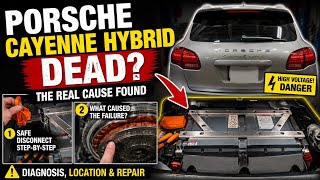
P3237 is a manufacturer-specific diagnostic trouble code (DTC) indicating a critical fault within the high-voltage battery system. It is predominantly used by Volkswagen Auto Group (VAG) brands like Volkswagen, Audi, and Porsche. 🎬 Watch: Locate and inspect the high-voltage battery in a Porsche. The code signifies the vehicle's primary computer lost communication with, or detected a severe internal malfunction in, the Battery Energy Control Module (BECM). This module is the brain of the high-voltage battery, and a fault instantly disables the entire hybrid system.
Technical definition: For Volkswagen Auto Group (VAG) vehicles, P3237 translates to 'Hybrid Battery System, Main Contactor Circuit Malfunction' or a general communication error with the Battery Energy Control Module (A92). On PACCAR MX-13 diesel engines, it means 'Injector solenoid valve cylinder 1 – Used up all compensation'. On some BMWs, it indicates a 'Fuel Balance Control' error. This guide focuses exclusively on the VAG hybrid system definition.
Can I Drive With P3237?
no_recommended. Driving with P3237 is not recommended. While the vehicle remains drivable in a reduced-power 'limp mode' using the gasoline engine, continued operation causes cascading failure of other battery modules. This turns a $1,500 module replacement into an $8,000+ full battery pack replacement. Unpredictable shutdowns pose a significant safety risk in traffic.
Common Causes

- Corrosion in the Battery Energy Control Module (BECM) or its wiring harness. (Very Common) — Moisture intrusion into the trunk or battery compartment is the leading cause. Water causes 🎬 See how to fix common VW water leaks into the cabin. severe corrosion on the BECM pins and battery sensor wiring harness, disrupting communication. This well-documented issue led to a recall on specific VW models.
- Failing 12V Auxiliary Battery. (Common) — A weak 12V battery causes low voltage conditions that create erratic behavior in sensitive electronic modules. This generates 'ghost' codes like P3237 even if the high-voltage system is perfectly healthy.
- Faulty Battery Energy Control Module (BECM). (Common) — The control module itself fails due to internal electronic issues, such as a fried circuit board or processor. This hardware failure requires replacing and reprogramming the module.
- Failure of individual hybrid battery cells/modules. (Common) — When one or more of the smaller modules comprising the high-voltage battery fail, become unbalanced, or short out, the BECM reports a system-wide fault, triggering P3237.
- Failure of main high-voltage battery contactors (relays). (Less Common) — Contactors are heavy-duty relays connecting the high-voltage battery to the vehicle. If a contactor sticks open or closed due to mechanical failure, the system sets a fault code.
- Malfunctioning Battery Pack Cooling System. (Less Common) — If the dedicated battery cooling fans or liquid cooling systems fail, overheating causes rapid cell deterioration, leading to voltage imbalances reported by the BECM.
- Software Glitches. (Rare) — Firmware bugs within the BECM cause communication dropouts or false error reporting. A manufacturer software update resolves this.
Symptoms

- Vehicle fails to start or enter 'Ready' mode. — In severe cases, hybrid system safety protocols prevent powertrain engagement, leaving the vehicle completely inoperable.
- Inability to drive in electric-only (EV) mode. — The gasoline engine runs constantly, even at a standstill. The vehicle refuses to switch to the electric motor for propulsion.
- Vehicle enters 'limp mode' with reduced power. — The vehicle severely limits engine power and speed to protect powertrain components from further damage.
- Decreased fuel economy. — Without the hybrid system functioning, the gasoline engine does all the work, causing a 30-50% drop in MPG.
- Loud fan noise from the rear. — The battery cooling fan runs constantly at high speed as the system unsuccessfully attempts to cool failing battery modules.
- Inability to charge (PHEV models). — Plug-in Hybrid Electric Vehicles refuse to accept a charge from an external EVSE charger.
- Hybrid System Warning Light and Dashboard Messages. (also visible on scanner) — The dashboard illuminates with 'Hybrid System Fault' or a Check Engine Light, explicitly warning the driver of a hybrid system issue.
Diagnostic Flowchart
Tap your situation to follow the diagnostic path that matches what you're seeing on this code.
Common Fixes & Costs
- Replace the 12V Auxiliary Battery — Parts: $200-$350, Labor: $50-$150, ~0.8 hr book time (Beginner)
- Clean or Replace Battery Energy Control Module (BECM) and Wiring Harness Connector — Parts: $20-$800, Labor: $200-$500, ~2.5 hr book time (Intermediate)
- Replace Failed Hybrid Battery Module(s) — Parts: $400-$1,500, Labor: $600-$1,200, ~6 hr book time (Professional)
- Replace Entire High-Voltage Battery Pack — Parts: $5,000-$12,000, Labor: $800-$2,000, ~5.5 hr book time (Professional)
- Repair or Replace High-Voltage A/C Compressor Cable (Porsche) — Parts: $400-$750, Labor: $300-$600, ~3.5 hr book time (Professional)
- Apply Manufacturer Software/Firmware Updates — Parts: $0, Labor: $150-$300, ~1.5 hr book time (Professional)
Used vs. New Parts: Buying Guide
When a used part is worth it: For a Battery Energy Control Module (BECM), a used unit from a low-mileage vehicle scrapped due to an accident is a cost-effective option. For the entire battery pack, a professionally remanufactured unit with a warranty is a better balance of cost and reliability than a used scrapyard unit.
Donor-vehicle mileage cap: roughly under 60000 miles for the part to have meaningful remaining life.
Donor quality checklist:
- Verify the donor vehicle's VIN to confirm it wasn't scrapped for a hybrid fault.
- For a BECM, inspect the connectors on the used unit for any signs of past corrosion or water damage.
- Match the part number exactly. Superseded part numbers require software updates or lack compatibility.
- For remanufactured batteries, verify the warranty terms and the provider's reputation.
Decision logic:
- If Vehicle is still under the 8-year/100,000-mile federal hybrid warranty. → Use new OEM parts installed by a dealer; the repair is covered.
- If The part is a complex electronic module like the BECM and budget is a primary concern. → A used part from a reputable, low-mileage donor is a viable risk. Ensure there is at least a 90-day warranty.
- If The part is the entire high-voltage battery pack. → Favor a professionally remanufactured pack with a 1-year or longer warranty over a used, as-is unit.
Warranty tradeoff: Used parts typically offer a 30-90 day warranty, covering only the part itself. Remanufactured batteries come with warranties from 1 to 3 years. New OEM parts installed by a dealer carry the strongest warranty, often 1-2 years covering parts and labor.
Worst-case if a used part fails: $800 - $2,000. If a used BECM or battery pack fails after installation, you pay for the diagnostic time, repeat labor, and the cost of another replacement part.
What Happens If You Wait — Timeline
- 0-1 month: Code P3237 appears. 'Hybrid System Fault' warning on dash. Vehicle loses EV mode and runs only on the gasoline engine. Vehicle enters 'limp mode' with reduced power. (MPG impact: 30-50%% · Added cost: $50-$200 in wasted fuel and towing/diagnostic fees.)
- 1-4 months: Continued driving with the BECM offline means the high-voltage battery cells are no longer being balanced or properly temperature-managed. The weakest cells begin to degrade faster than the others, creating a voltage imbalance. (MPG impact: 30-50% (sustained)% · Added cost: $1,500 - $3,000. The problem progresses from a simple BECM/wiring issue to include damage to one or more battery modules. A BECM-only fix is no longer sufficient.)
- 4-8 months: The voltage imbalance becomes critical. The degraded cells overheat, swell, or short out internally. This triggers additional, more severe fault codes like P0A80 (Replace Pack) or P0AA6 (Insulation Fault). The damage cascades to adjacent cells. (MPG impact: 30-50% (sustained)% · Added cost: $4,000 - $6,000. Multiple modules are destroyed. Replacing individual modules becomes impractical, and a remanufactured battery pack is the only viable option.)
- 8+ months: Catastrophic failure of the entire battery pack. A significant portion of the cells are irreversibly damaged. The vehicle fails to start entirely, even with the gasoline engine. The cost of repair is at its maximum. (MPG impact: 100% (vehicle may be undrivable)% · Added cost: $8,000 - $15,000+. The only solution is a complete new or remanufactured high-voltage battery pack assembly. The initial, cheaper repair options are long gone.)
Cost of Not Fixing It
- Immediate (0-1 month): Vehicle is stuck in limp mode or fails to start. Significant drop in fuel economy as the hybrid system is disabled. High risk of being stranded. (Added cost: Towing fees ($100-$300) and diagnostic charges ($150-$400).)
- Short-Term (1-6 months): Continued driving on a failing BECM causes irreversible damage to individual battery modules. The BECM's failure to balance cells and manage temperatures leads to premature degradation. (Added cost: $1,500 - $3,000. This is the cost of turning a BECM-only repair into one that requires replacing several damaged battery modules.)
- Long-Term (6+ months): Catastrophic failure of the entire high-voltage battery pack. Without a functioning BECM, cell imbalances and overheating destroy the majority of the cells, necessitating a full pack replacement. (Added cost: $8,000 - $15,000+. The initial, cheaper repair is no longer an option, forcing a complete replacement of the vehicle's most expensive component.)
Diagnosis Steps
- Read the Fault Codes
Use a high-quality OBD-II scanner capable of reading manufacturer-specific and hybrid system codes (e.g., VCDS for VAG). Confirm P3237 is present and document all other codes, as they provide critical context.
Tools: Advanced OBD-II Scanner (VAG-COM/VCDS recommended) (Beginner) - Test the 12V Auxiliary Battery
Before any high-voltage diagnosis, rigorously test the 12V battery. Use a digital battery tester to check its state of health, state of charge, and ability to hold a load. A healthy resting voltage should be above 12.4V, and cranking voltage should not drop below 9.6V. A weak 12V battery is the most common cause of misdiagnosis.
Tools: Digital Battery Tester, Multimeter (Beginner) - Visually Inspect the High-Voltage Battery Area
Access the high-voltage battery, typically located in the trunk under the floor. Look for any signs of water intrusion, such as dampness, water stains, or corrosion on the battery case and surrounding wiring. For Touareg and Cayenne models, check if the battery tray drain has been updated per the recall.
Tools: Basic hand tools, flashlight (Beginner) - Inspect the BECM and Connectors
IMPORTANT: Disconnect the 12V battery first. Locate and disconnect the main connectors to the BECM. Perform a meticulous examination of the pins on both the module and the wiring harness for any green or white crusty corrosion. Check the wiring harness for continuity using a multimeter to rule out broken wires.
Tools: Basic hand tools, flashlight, magnifying glass, Multimeter (Intermediate) - Test High-Voltage Battery Cell Voltages
Using a hybrid-certified multimeter and an advanced scanner, view the live data for each individual battery module or cell block. Look for any cells that have a significantly lower voltage than the others. A difference of more than 0.3V between the highest and lowest cell indicates a failing module.
Tools: Hybrid-certified multimeter, advanced OBD-II scanner (Professional) - CAN Bus Network Diagnosis
With the 12V battery disconnected, use a multimeter to check the integrity of the CAN bus at the BECM connector. Measure the resistance between the CAN High and CAN Low pins. A healthy network reads approximately 60 Ohms. If it reads 120 Ohms, there is a break in the network. If it's near 0 Ohms, the wires are shorted together.
Tools: Multimeter, vehicle wiring diagram (Advanced) - Live CAN Bus Voltage Check
With the system powered on (ignition on, engine off), use a multimeter to check the CAN bus voltages at the OBD-II port (Pin 6 for CAN High, Pin 14 for CAN Low). CAN High fluctuates around 2.5V to 3.5V, and CAN Low fluctuates around 2.5V to 1.5V. If the voltages are stuck or reversed, there is a network fault.
Tools: Multimeter, vehicle wiring diagram (Advanced) - BECM Connector Voltage Drop Test
This test finds high resistance that a visual inspection misses. With the BECM connected and the ignition on, use a multimeter to measure voltage drop on the power and ground wires. A reading above 0.2V on the power feed or 0.1V on the ground indicates a wiring problem.
Tools: Multimeter with back-probe pins, wiring diagram (Advanced) - Test Main Battery Contactors
This step requires a specialized scan tool to command the high-voltage contactors on and off while monitoring their status feedback. This verifies if they are functioning correctly or are stuck. This must only be performed by a qualified technician due to the high voltages involved.
Tools: Bi-directional diagnostic scan tool (Professional)
When This Code Triggers (Freeze-Frame Conditions)
- System State: Key-On or Startup (The fault logs during the initial power-on self-test (POST) when the main computer attempts to establish communication with the BECM.)
- Hybrid System Status: Transitioning (The code triggers when the vehicle attempts to switch from pure electric (EV) mode to gasoline engine power, exposing the communication loss when the BECM is commanded to engage contactors.)
- 12V System Voltage: <12.0V (During a cold start with a weak 12V battery, system voltage drops significantly, causing modules to fail communication checks and generating spurious P3237 codes.)
- Fault Time: Intermittent (In cases of corrosion or loose connections, the fault appears when the vehicle hits a bump or during specific humidity conditions that cause a momentary loss of connection.)
Related Codes
- P0A80 — 'Replace Hybrid Battery Pack'. This code triggers when the voltage difference between battery blocks exceeds a specific threshold (e.g., >0.3V). If you have P3237 and P0A80 together, it confirms one or more battery modules have failed.
- P0A7F — 'Hybrid Battery Pack Deterioration'. Indicates the battery's overall capacity has degraded due to age and use. P3237 points to a sudden hardware or communication failure, whereas P0A7F indicates gradual wear.
- P0AA6 — 'Hybrid/EV Battery System Insulation Fault'. A critical safety code indicating a loss of electrical isolation between the high-voltage system and the vehicle chassis. It triggers alongside P3237 when water intrusion causes a short circuit.
- P0B22 — 'Battery Contactor Assembly Failure'. The BECM monitors the main relays (contactors). A failure here causes the BECM to report a fault, logging P3237 as the general system error.
Climate & Environmental Factors
- High Humidity / Heavy Rain: This is the single most significant environmental factor. On affected models like the VW Touareg and Audi Q5, water from clogged sunroof drains collects in the battery compartment, directly causing corrosion on the BECM and its connectors.
- High Ambient Temperatures: Hot weather places additional stress on the battery's cooling system. If the cooling system is marginal, high temperatures accelerate the degradation of battery cells, leading to imbalances and faults.
- Extreme Cold: Cold temperatures reduce the efficiency and available power of the 12V auxiliary battery. A weak 12V battery is more likely to cause voltage-related electronic glitches, like a false P3237 code, during cold starts.
- Altitude: No direct link exists between high altitude and the P3237 communication fault itself. However, internal combustion engines produce less power at altitude, making hybrid system performance issues more noticeable.
How to Talk to a Mechanic About This Code
Say this: "I'm calling to schedule a diagnostic for a P3237 code on my [Make, Model, Year]. I understand this is a hybrid communication fault, and I'd like the technician to start by inspecting the Battery Energy Control Module and its wiring for signs of water intrusion or corrosion before considering more expensive part replacements."
This signals that you are an informed consumer. It directs the shop to check the most common and least expensive failure point first, preventing a premature and costly recommendation to replace the entire battery pack.
Avoid saying:
- 'My hybrid system isn't working.'
- 'My check engine light is on, can you look at it?'
- 'Just fix whatever's wrong, I'm sure it's the big battery.'
Questions to ask before authorizing the repair:
- Did you find any signs of water damage or corrosion in the trunk or on the BECM connectors?
- What was the result of the 12V auxiliary battery health test? Can you provide the voltage and state of health reading?
- If you are recommending a battery module or full pack replacement, can you show me the live data from the scanner that shows the voltage deviation between the cell blocks?
- What is the warranty on the proposed repair, covering both the parts and the labor?
Where to Take It: Dealer vs Independent vs Chain
- Dealer:
Best for: Vehicles still under the 8-year/100,000-mile federal hybrid warranty or a specific manufacturer warranty extension., Complex software updates or initialization procedures., Owners who prioritize a guaranteed OEM parts and labor warranty.
Downsides: Highest labor rates, often 50-100% more than an independent shop., May be quicker to recommend a full battery pack replacement over a more nuanced, cheaper repair like cleaning a connector or replacing a single module. (Typical cost: +75% vs. baseline) - Independent Shop:
Highly Recommended, but ONLY if the shop is a certified hybrid/EV specialist. A general mechanic is not equipped for this high-voltage repair. Ask about their ASE L3 certification.
Best for: Out-of-warranty vehicles where cost is a major factor., Diagnosing common, well-documented issues like the water intrusion problem., Owners willing to consider remanufactured or used parts.
Downsides: Expertise is highly variable; you MUST find a shop that is certified and specializes in hybrid/EV repair., May lack the very latest manufacturer-specific diagnostic software or tools. (Typical cost: +0% vs. baseline) - Chain Shop:
AVOID. These shops are not equipped to safely or accurately diagnose or repair a P3237 fault. Only use them for a 12V battery test as a preliminary step.
Best for: Testing and replacing the 12V auxiliary battery.
Downsides: Lack of training, certification, and proper safety equipment for high-voltage systems., Extremely high risk of misdiagnosis, leading to unnecessary and expensive recommendations. Technicians may not be familiar with this specific, complex code. (Typical cost: -10% vs. baseline)
When to Walk Away From the Repair
If the estimated repair cost for the P3237 fault exceeds 50% of the car's current private-party value, it's time to seriously consider selling the vehicle as-is or for salvage.
- Car worth $10000, fix is $800: Fix it. This is likely a minor corrosion or wiring issue, and the repair cost is a small fraction of the car's value.
- Car worth $10000, fix is $2700: Borderline. This cost suggests individual battery module replacement. The repair is likely worth it, but get a second opinion from a hybrid specialist to confirm the diagnosis before proceeding.
- Car worth $10000, fix is $9000: Walk away. The repair cost, likely for a full battery pack replacement, is nearly the entire value of the car. It is not economically sensible to proceed.
What Scan Tool You Need for This Code

Minimum: A VAG-specific scanner that can read manufacturer-specific codes from the hybrid electronics and battery control modules, and display live data for individual battery cell block voltages.
A generic $20-$50 code reader can only see the engine control unit. It cannot communicate with the dozen-plus other modules in a VAG vehicle, especially the hybrid system. You will not be able to see the critical data (like cell voltages) needed to distinguish a $500 corrosion fix from a $9,000 battery replacement.
Budget: OBDeleven Starter/Basic (~$60) — Connects to all control modules on a VAG vehicle to read and clear manufacturer-specific fault codes. It allows you to confirm P3237 is in the hybrid module, but live data capabilities for diagnosis are limited without a subscription.
Mid-range: Foxwell NT510 Elite with VAG Software (~$200) — Provides full, OE-level access to all VAG modules. It reads/clears codes, views live data streams for battery cell voltages, and performs adaptations and basic settings. This is an excellent tool for a serious DIYer to accurately diagnose the root cause of P3237.
Professional: Ross-Tech VCDS (VAG-COM) (~$200-700) — The gold standard for VAG diagnostics. Provides dealership-level functionality, including full access to all modules, live data graphing, coding, security access, and running diagnostic scripts. It is the most powerful tool for diagnosing complex communication issues and performing module replacements.
Rent vs buy: Rental scanners from chain auto parts stores are typically generic readers and are NOT sufficient for this code. For P3237, you must either pay for a professional diagnosis or buy a capable VAG-specific scanner like the ones listed above.
How to Clear the Code After You Fix It
- Ensure all high-voltage and 12V connections are secure.
- Reconnect the 12V battery if it was disconnected for the repair.
- Use a compatible OBD-II scan tool to erase the P3237 fault code and any related codes from all vehicle modules.
- Perform a complete OBD-II drive cycle to allow the vehicle's readiness monitors to run and complete.
Drive cycle (~30 minutes): A generic VAG drive cycle includes a cold start (sitting for 8+ hours), 2-3 minutes of idling, followed by 15-20 minutes of mixed city and highway driving. This includes steady-state cruising (e.g., 55 mph for 5 minutes) and several acceleration/deceleration events without harsh braking to allow all system monitors to run.
Readiness monitors affected: Hybrid/EV System Monitor, Catalyst (CAT) Monitor, Oxygen (O2) Sensor Monitor, Evaporative (EVAP) System Monitor
Before emissions retest: drive at least 100 miles to fully set monitors.
Watch out for:
- Simply disconnecting the 12V battery clears the code from the engine ECU, but not from other modules, and resets all readiness monitors to 'incomplete'.
- The code returns immediately if the root cause (e.g., corrosion, faulty module) is not fully repaired.
- Failing to perform a complete drive cycle leaves readiness monitors incomplete, resulting in an automatic emissions test failure.
Will This Fail Emissions / State Inspection?
Yes — this code typically fails an OBD-II emissions inspection.
- California: An illuminated Check Engine Light from code P3237 is an automatic smog check failure. All hybrid vehicles are subject to the OBD-II test. After repair, a full drive cycle must be completed to set the readiness monitors before a retest is possible.
- New York: NYS DMV inspections include an OBD-II scan for 1996 and newer vehicles. P3237 causes an automatic failure. Since a hybrid repair resets multiple monitors, a proper drive cycle is mandatory before re-inspection.
- Texas: In the 17 counties requiring emissions testing, an OBD-II check is performed. A code like P3237 that turns on the MIL (Malfunction Indicator Lamp) results in a failure. The vehicle will not pass until the repair is made and the code is cleared.
Most Commonly Affected Vehicles

- Volkswagen Touareg Hybrid (2011-2015) — Highly prone to P3237 due to water collecting in the battery tray. A recall (NHTSA #16V068000, VW #53B8) was issued to install a drain valve to fix this. Always check if this recall has been performed.
- Porsche Cayenne S Hybrid (2011-2014) — Built on the same platform as the Touareg, it is susceptible to the identical water intrusion issue. Also known for a faulty high-voltage A/C compressor cable (P/N 95861200811) that causes hybrid system faults.
- Audi Q5 Hybrid (2013-2016) — Shares a similar hybrid platform to the Touareg and experiences faults in the battery control module related to corrosion. TSBs exist for water ingress from clogged sunroof drains.
- Audi A6 Hybrid (2012-2018) — Utilizes VAG hybrid technology that triggers this fault code due to control module or battery cell issues. Check for signs of water ingress in the trunk.
- Audi A8 Hybrid (2012-2017) — The complex hybrid system in this flagship model suffers from BECM communication errors, though it is less common than in the SUV platforms.
- BMW Various Models (2007-2013) — On some BMW models, P3237 has a completely different definition related to a 'Fuel Balance Control Error', not the hybrid system. Diagnosis is entirely different.
- PACCAR MX-13 Engines (2010-2021) — On PACCAR diesel engines, P3237 is unrelated to hybrid systems. It means 'Injector solenoid valve cylinder 1 – Used up all compensation'.
- Toyota/Lexus Prius, various hybrids (2001-2024) — These brands do NOT use code P3237. They use different codes for similar problems, most notably P0A80 (Replace Hybrid Battery Pack) for cell failure.
Manufacturer-Specific Notes
- Volkswagen/Audi: For VAG vehicles, P3237 is overwhelmingly linked to corrosion on the BECM connectors due to water leaks. A recall for the Touareg (Campaign 53B8) was issued to add a drain valve. For the Audi Q5, check for TSBs related to water ingress from clogged sunroof drains (e.g., TSB 60 24 75 2075969/2).
- Porsche: On the Cayenne S Hybrid (2011-2014), a faulty high-voltage cable for the A/C compressor is a known cause of general hybrid system faults. The VW equivalent part (7p0998671) is identical and cheaper. Porsche issued a warranty extension (Campaign ID 2794) for the 'HV battery control unit' on 2014-2018 E-Hybrid models to 10 years.
- PACCAR: On PACCAR MX-13 diesel engines, P3237 has a completely unrelated definition: 'Injector solenoid valve cylinder 1 – Used up all compensation'. This is for a diesel fuel injector, not a hybrid system.
- General: The federal high-voltage battery warranty mandates coverage for 8 years or 100,000 miles. If the vehicle is within this window, a P3237 fault caused by the battery pack or control module is a warranty repair at the dealership.
Real Owner Stories
2012 VW Touareg Hybrid at 128K miles with intermittent 'Hybrid System Fault'
Owner experienced an intermittent 'Hybrid System Fault' warning, primarily after heavy rain. The vehicle lost EV mode but the fault cleared after restarting the car. Eventually, the fault became permanent.
What they tried:
- Initial diagnostics pointed towards a general communication error.
- Owner found soaked carpets in the driver's side footwell.
- Upon inspection, found standing water in the high-voltage battery compartment in the trunk, with visible corrosion on the BECM connectors.
Outcome: The owner dried the compartment, cleaned the BECM connectors with electrical contact cleaner, and cleared the clogged sunroof drains that caused the leak. This resolved the P3237 code without replacing any parts.
Lesson: For VAG SUVs, any sign of water in the cabin combined with P3237 points directly to clogged drains as the root cause. Check for water before authorizing any expensive module replacements.
2018 Audi Q5 Hybrid at 47K miles fails to start
Vehicle would not start, with only some electronics working erratically. After trying to jump the car and replacing the 12V battery with no success, the owner discovered about 4 inches of water in the trunk near the spare tire and battery modules.
What they tried:
- Replaced the 12V battery, which did not solve the problem.
- Towed to the Audi dealer. The dealer quoted $6,600 to replace a gateway module damaged by water and inspect the headliner for the source of the leak.
Outcome: The repair became extremely expensive due to water destroying a critical electronic module. The owner noted that a known safety recall and TSBs exist for water ingress on this model, but the repair was not covered under warranty.
Lesson: This is a worst-case scenario. The initial P3237 fault was caused by water, but the resulting damage was catastrophic to other electronics, leading to a multi-thousand dollar repair bill far exceeding the cost of just a BECM.
2015 Porsche Cayenne E-Hybrid with red 'Hybrid System Failure'
Owner received a persistent red 'Hybrid System Failure' warning, disabling the hybrid system. The shop noted that these failures are more common in hotter months due to the extra load on cooling systems.
What they tried:
- Diagnostics revealed a consistent fault code for a circuit short within the high-voltage A/C compressor.
- The shop explained that any component in the HV loop, including the A/C compressor, triggers a system-wide shutdown as a failsafe.
Outcome: The shop replaced the high-voltage A/C compressor. This resolved the general hybrid system failure code. The owner noted that this is a known, though less common, issue on Cayenne Hybrids.
Lesson: On Porsche Cayenne Hybrids, a general P3237-type fault is sometimes caused by the A/C compressor. If there are also codes related to the A/C system, the A/C compressor becomes a primary suspect.
2011 VW Touareg Hybrid with multiple misdiagnoses
A new owner was chasing an intermittent hybrid fault that appeared during cold weather but disappeared if the car warmed up first. The previous owner had already replaced a brake line to no effect.
What they tried:
- A bad relay for an electric vacuum pump was found and replaced, which solved a yellow warning light but not the main red fault.
- The owner planned to flush the electric clutch fluid based on research.
- A forum expert suggested checking the 12V circuit that controls the main high-voltage contactors.
Outcome: The case highlights the complexity and potential for misdiagnosis. Multiple unrelated-sounding components were investigated. The intermittent nature, especially related to temperature, points to either a weak 12V battery or a component on the verge of failure.
Lesson: Don't get tunnel vision. A general hybrid fault is triggered by seemingly unrelated components. Always start with the basics: rigorously test the 12V battery and check for water intrusion before moving to obscure possibilities.
How to Prevent This Code From Triggering
- Clean sunroof and plenum drains annually. (Once per year, or twice if parked under trees.) — This is the single most effective preventative measure. Clogged drains on VAG SUVs are the #1 cause of water ingress that floods the battery compartment and corrodes the BECM, directly causing P3237.
- Proactively replace the 12V AGM battery. (Every 4-6 years, regardless of symptoms.) — The 12V battery powers all the vehicle's computers. As it weakens, it provides unstable voltage during startup, causing spurious communication fault codes like P3237. Replacing it proactively is cheap insurance against a major misdiagnosis.
- Inspect trunk and hatch seals. (Every 2 years or after any rear-end body work.) — Degraded or improperly installed seals around the trunk and taillights provide an alternative path for water to enter the battery area, leading to the same corrosion issue as clogged drains.
- Check if VW Touareg recall '53B8' has been performed. (Once, immediately upon purchasing a used 2011-2015 model.) — This specific recall was issued by VW to install a drain valve in the battery tray to prevent water from accumulating. Ensuring this has been done is critical to preventing P3237 on an affected Touareg.
Frequently Asked Questions
Can I fix code P3237 myself?
Fixing this code involves working with lethal high-voltage systems. While a skilled DIYer can safely test the 12V battery and inspect for water leaks, any repair involving orange high-voltage cables requires a certified professional. Never attempt high-voltage repairs without 1000V Class 0 insulated gloves.
What are common mistakes when diagnosing P3237?
The most costly mistake is immediately replacing the high-voltage battery pack without proper diagnosis. Always rule out a failing 12V auxiliary battery first. The second mistake is ignoring the BECM and wiring for corrosion, which is a frequent and much cheaper fix.
Does P3237 mean I need a new hybrid battery?
Not necessarily. The problem is frequently isolated to the control module or its wiring due to corrosion, especially on VAG vehicles. A thorough diagnosis determines if the issue is with the battery cells themselves or a supporting component.
How much does it cost to fix P3237?
Costs vary dramatically based on the root cause. Cleaning a corroded connector costs $200-$500, while replacing the BECM runs $800-$1,500. If the entire high-voltage battery pack requires replacement, costs range from $5,000 to over $12,000.
Why does water get into the battery compartment?
On affected SUVs like the Touareg and Cayenne, the battery tray lacks sufficient drainage. Water from clogged sunroof drains or leaking rear hatch seals accumulates in the tray. This submerges the BECM and its connectors, causing corrosion and short circuits.
What is a Battery Energy Control Module (BECM)?
The BECM is a dedicated computer acting as the 'brain' for the high-voltage battery pack. It monitors the temperature, voltage, and state of charge of every cell. It also controls the main contactors and communicates battery status to the rest of the vehicle.
Can a software update fix P3237?
It is possible, but rare. If a known firmware bug causes the code, a manufacturer-issued software update resolves it. However, P3237 is almost always triggered by a physical hardware or wiring failure.
Do other brands like Toyota or Honda use code P3237?
Generally, no. P3237 as a hybrid fault is specific to Volkswagen Auto Group vehicles. Other brands use different codes for similar problems, such as P0A80 ('Replace Hybrid Battery Pack') for a major battery failure in a Toyota Prius.
Is it safe to drive with a P3237 code?
It is strongly advised not to drive the vehicle. You will experience reduced power, poor fuel economy, and the vehicle shuts down unexpectedly. Continued driving causes irreversible damage to other high-voltage battery components, significantly increasing repair costs.
Will clearing the code make it go away?
No. Clearing the code only turns the light off temporarily. Because P3237 indicates a persistent hardware or communication fault, the vehicle's computer detects the problem again on its next self-check, and the warning light returns.
Key Takeaways
- P3237 indicates a critical communication loss with the Battery Energy Control Module (BECM), primarily affecting Volkswagen, Audi, and Porsche hybrids.
- Water intrusion causing BECM connector corrosion is the number one cause; check for damp carpets or standing water in the trunk before replacing any parts.
- Always test the 12V auxiliary battery first, as a resting voltage below 12.4V frequently triggers false P3237 codes during cold starts.
- Never attempt high-voltage repairs without 1000V Class 0 insulated gloves and hybrid certification, as the battery pack contains lethal voltage levels.
Helpful Videos




The information in this article is provided for general reference and educational purposes only. Vehicle specifications, procedures, and part compatibility can vary by production date, trim level, and region. Always consult your vehicle's factory service manual and verify part numbers before purchasing or performing repairs. Safety-critical components such as airbags, seat belts, and braking systems should be installed by a qualified professional.
- 🎬 Helpful Videos
- What Does P3237 Mean?
- Can I Drive With P3237?
- Common Causes
- Symptoms
- Diagnostic Flowchart
- Common Fixes & Costs
- Used vs. New Parts: Buying Guide
- What Happens If You Wait — Timeline
- Cost of Not Fixing It
- Diagnosis Steps
- When This Code Triggers (Freeze-Frame Conditions)
- Related Codes
- Climate & Environmental Factors
- How to Talk to a Mechanic About This Code
- Where to Take It: Dealer vs Independent vs Chain
- When to Walk Away From the Repair
- What Scan Tool You Need for This Code
- How to Clear the Code After You Fix It
- Will This Fail Emissions / State Inspection?
- Most Commonly Affected Vehicles
- Manufacturer-Specific Notes
- Real Owner Stories
- 2012 VW Touareg Hybrid at 128K miles with intermittent 'Hybrid System Fault'
- 2018 Audi Q5 Hybrid at 47K miles fails to start
- 2015 Porsche Cayenne E-Hybrid with red 'Hybrid System Failure'
- 2011 VW Touareg Hybrid with multiple misdiagnoses
- How to Prevent This Code From Triggering
- Frequently Asked Questions
- Can I fix code P3237 myself?
- What are common mistakes when diagnosing P3237?
- Does P3237 mean I need a new hybrid battery?
- How much does it cost to fix P3237?
- Why does water get into the battery compartment?
- What is a Battery Energy Control Module (BECM)?
- Can a software update fix P3237?
- Do other brands like Toyota or Honda use code P3237?
- Is it safe to drive with a P3237 code?
- Will clearing the code make it go away?
- Key Takeaways
- 🎟️ Get 5% Off