

OBD-II Code P3212: System Too Lean at Idle, Bank 1 (Volkswagen/Audi)
The Ultimate Expert Guide to Diagnosing and Fixing P3212
- P3212 is a VW/Audi-specific code indicating the engine runs >25% too lean (excess air, insufficient fuel) exclusively at idle speeds.
- A ruptured PCV valve diaphragm causes over 80% of P3212 codes and is instantly diagnosed by a loud whistling noise or extreme suction on the oil cap.
- Direct-injection engines over 60,000 miles frequently trigger this code due to severe carbon buildup on intake valves, requiring a $600 to $1,200 walnut blasting service.
- Driving with a persistent P3212 code raises combustion temperatures, risking a $2,500+ catalytic converter meltdown within 3 to 6 months.
What Does P3212 Mean?

Code P3212 indicates the Powertrain Control Module (PCM) detects excessive unmetered air and insufficient fuel at idle on Bank 1. This lean air-fuel mixture forces the computer to maximize fuel trims to compensate, triggering the check engine light. This code is specific to Volkswagen and Audi group vehicles; other manufacturers use the generic code P0171 for the same fault.
Technical definition: For Volkswagen/Audi, P3212 is defined as 'Bank 1, System Too Lean at Idle.' The PCM sets this code when the long-term fuel trim adaptation for engine bank 1 exceeds a pre-programmed threshold (typically >25%) while the engine operates at idle speed. This indicates the computer is making maximum, long-term corrections for an excessively lean condition prominent at low RPMs.
Can I Drive With P3212?
Yes, But With Caution. Driving is possible for short, essential trips (under 50 miles), but strongly discouraged. A persistent lean condition causes high combustion temperatures that burn exhaust valves and destroy the catalytic converter. Ignoring the code turns a $150 PCV fix into a catastrophic failure, with catalytic converter replacement costs exceeding $2,500.
Common Causes

- Failed PCV Valve / Oil Separator (Very Common) — The Positive Crankcase Ventilation (PCV) valve is the number one cause on VW and Audi engines. A torn internal diaphragm creates a massive vacuum leak, pulling unmetered air directly into the intake manifold. This causes a lean idle and a distinct whistling sound. Inspect this component first.
- Vacuum Leaks (Hoses, Intake Manifold, Oil Cap) (Common) — Cracked vacuum hoses, degraded intake manifold gaskets, or a loose oil filler cap allow unmetered air to bypass the MAF sensor. Because engine vacuum is highest at idle, these leaks disproportionately affect low-RPM fueling. A smoke test definitively pinpoints these leaks.
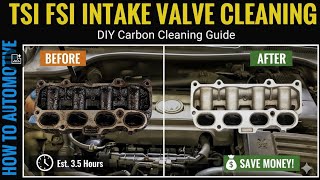
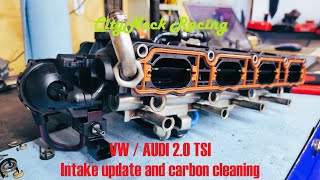
- Excessive Carbon Buildup on Intake Valves (Common) — Direct-injection engines (TSI/FSI) accumulate heavy carbon deposits on intake valves. This buildup absorbs fuel spray at low speeds and disrupts cylinder airflow, preventing a proper air/fuel mixture at idle and causing lean misfires. 🎬 Watch: Step-by-step guide to cleaning intake valves on TSI engines.
- Faulty Mass Airflow (MAF) Sensor (Less Common) — A contaminated or failing MAF sensor under-reports incoming air. The computer responds by commanding less fuel, creating a lean mixture. Cleaning the sensor occasionally works, but inaccurate readings across the RPM range require replacement.
- Leaking Brake Booster (Less Common) — The brake booster uses engine vacuum for power assistance. A ruptured internal diaphragm or a failed check valve creates a substantial vacuum leak, causing a lean idle. This is accompanied by a stiff brake pedal or a hissing sound near the firewall.
- Low Fuel Pressure (Less Common) — A weak fuel pump, clogged filter, or failing pressure regulator starves the injectors. This triggers a lean code across all RPMs, requiring a physical fuel pressure test to diagnose.
- Faulty Front Oxygen (O2) Sensor (Rare) — A degraded O2 sensor incorrectly reports a lean condition. However, mechanics frequently misdiagnose this. The sensor usually accurately reports a lean condition caused by a vacuum leak. Always rule out vacuum and fuel delivery issues before replacing the sensor.
Symptoms

- Check Engine Light is On — The PCM illuminates the Malfunction Indicator Lamp (MIL) on the dashboard to alert the driver of the fault.
- Rough or Unstable Idle — The engine shakes, stumbles, hunts for idle, or has fluctuating RPMs when stopped. Severe cases cause stalling.
- Whistling or Sucking Noise from Engine Bay — A large vacuum leak, often from a failed PCV valve, creates an audible high-pitched whistling or hissing sound most obvious at idle.
- Engine Hesitation or Lack of Power — Acceleration delays or a general feeling of underpower occur, especially when pulling away from a stop before the computer adjusts fuel trims.
- Reduced Fuel Economy — The engine runs inefficiently as the PCM injects maximum fuel to compensate for the unmetered air, destroying gas mileage.
- Engine Misfires (especially at idle) (also visible on scanner) — The lean air-fuel mixture fails to ignite properly, causing engine misfires. This feels like a distinct stumble and triggers a flashing check engine light or P0300-series codes.
Diagnostic Flowchart
Tap your situation to follow the diagnostic path that matches what you're seeing on this code.
Common Fixes & Costs
- Replace PCV Valve / Oil Separator — Parts: $50-$200, Labor: $150-$250, ~1.2 hr book time (Intermediate)
- Replace Leaking Vacuum Hose(s) — Parts: $10-$50, Labor: $100-$200, ~0.8 hr book time (DIY)
- Intake Valve Carbon Cleaning (Walnut Blasting) — Parts: $30-$60 (for gaskets), Labor: $600-$1200, ~5.5 hr book time (Professional)
- Replace Mass Airflow (MAF) Sensor — Parts: $100-$250, Labor: $50-$100, ~0.3 hr book time (DIY)
- Replace Intake Manifold Gasket — Parts: $25-$70, Labor: $200-$400, ~2.5 hr book time (Intermediate)
Used vs. New Parts: Buying Guide
When a used part is worth it: Buying a used PCV valve is never recommended. The internal rubber diaphragm is a known failure point, and a used part guarantees rapid failure. The cost savings are minimal compared to the labor of replacing it twice.
Donor-vehicle mileage cap: roughly under 10000 miles for the part to have meaningful remaining life.
Donor quality checklist:
- Not applicable for this part. Always buy a new PCV valve from an OEM supplier.
- Ensure the part number is the latest revision available from VW/Audi.
Decision logic:
- If The part is a PCV valve/oil separator for a VW/Audi 2.0T engine → Always buy new. OEM is highly recommended.
- If Budget is extremely tight → Purchase a diaphragm-only repair kit from a reputable brand like RKX to replace the failed component for a fraction of the cost.
Warranty tradeoff: Used PCV valves carry no warranty and a 100% risk of failure. New aftermarket parts offer a 1-year warranty. New OEM parts offer the best reliability and a 1-2 year warranty.
Worst-case if a used part fails: $200 - $350. If a cheap aftermarket PCV fails, you pay for the part again plus 1-2 hours of labor.
What Happens If You Wait — Timeline
- 0-1 month: Check Engine Light illuminates. Rough idle is noticeable on cold starts. Engine stumbles when pulling away from a stop. (MPG impact: 5-10%% · Added cost: $20-50 in wasted fuel.)
- 1-3 months: Idle becomes consistently unstable, causing stalling at stops. The lean mixture creates sustained high combustion temperatures, overheating the catalytic converter and stressing ignition coils. (MPG impact: 10-15%% · Added cost: $200-400 (Requires new spark plugs and ignition coils).)
- 3-6 months: The catalytic converter's internal substrate melts from constant excessive heat. The risk of burning an exhaust valve increases significantly, causing a permanent loss of compression. (MPG impact: 15-20%% · Added cost: $800 - $2,500 (Catalytic converter damage becomes permanent).)
- 6+ months: Catastrophic failure of the catalytic converter occurs. Pieces break off and clog the exhaust, causing severe power loss. A burnt exhaust valve requires a complete cylinder head rebuild. (MPG impact: 20-25%% · Added cost: $2,500 - $5,000+ (Full catalytic converter replacement and cylinder head repair required).)
Cost of Not Fixing It
- 0-1 month: Reduced fuel economy (5-15% drop), rough idle, potential stalling, and increased emissions. (Added cost: Negligible, other than increased fuel cost.)
- 1-6 months: Sustained high combustion temperatures damage spark plugs and ignition coils. The catalytic converter degrades from excessive heat. (Added cost: $200 - $500 (for spark plug and coil replacement).)
- 6+ months: Catastrophic failure of the catalytic converter requires complete replacement. Burning an exhaust valve leads to a loss of compression, requiring a cylinder head rebuild. (Added cost: $2,500 - $5,000+ (for catalytic converter and cylinder head repair).)
Diagnosis Steps

- Check for Obvious Leaks and PCV Failure
With the engine running, listen for a clear whistling noise. Perform a quick PCV test: try to remove the oil filler cap. If extreme suction makes it hard to remove, or if the engine stumbles badly when removed, the PCV diaphragm has failed.
Tools: Flashlight (Beginner) - Scan for Codes and Analyze Live Fuel Trims
Use an OBD-II scanner to confirm P3212 and check for P0171, P0507, or P2279. Observe Long-Term Fuel Trim (LTFT) at idle. A high positive LTFT value (>+20%) confirms the computer is adding maximum fuel to correct a lean condition.
Tools: OBD-II Scanner (Beginner) - Perform a Smoke Test
A smoke test forces low-pressure smoke into the intake system. Smoke escapes from cracks in hoses, bad intake manifold gaskets, or faulty seals, definitively pinpointing the source of unmetered air.
Tools: Smoke Machine (Intermediate) - Test Mass Airflow (MAF) Sensor Performance
Monitor the MAF sensor reading in grams per second (g/s) at idle. A typical 2.0L engine reads 2-7 g/s. Log MAF (g/s) and RPM during a full-throttle run in 2nd gear. The peak g/s reading should equal 80% of the engine's horsepower. Lower readings indicate a failing sensor.
Tools: Advanced OBD-II Scanner (Professional) - Inspect Intake Valves for Carbon Buildup
On direct-injection engines, insert a borescope through an intake runner port or spark plug hole to visually inspect the intake valves. A thick, black, gummy coating confirms carbon buildup is obstructing airflow.
Tools: Borescope (Advanced) - Check Fuel Pressure (Low-Pressure System)
Connect a fuel pressure gauge to the low-pressure fuel system. At Key On, Engine Off (KOEO), pressure should be 4.0-6.0 bar (58-87 PSI). At idle, pressure is typically 4.0 bar (58 PSI). Lower readings indicate a failing in-tank fuel pump or filter.
Tools: Fuel Pressure Gauge, OBD-II Scanner (Advanced) - Inspect Brake Booster for Leaks
With the engine off, pump the brake pedal to deplete residual vacuum. Hold the pedal down with firm pressure and start the engine. If the pedal doesn't drop slightly or feels hard to press, listen for a hissing sound near the firewall indicating a leak.
Tools: None (Physical Test) (Intermediate) - Test Front O2 Sensor Voltage
Monitor the voltage of the upstream O2 sensor with the engine warm. A healthy narrowband sensor fluctuates rapidly between 0.1V (lean) and 0.9V (rich). If stuck low (0.1V), it is accurately reporting a lean condition from a vacuum leak, not failing.
Tools: Multimeter, Back-probe Kit, or Graphing Scanner (Professional) - Advanced: Check High-Pressure Fuel Pump (HPFP) Performance
Monitor specified vs. actual fuel rail pressure. At idle, actual pressure matches specified (40-50 bar). During wide-open throttle, pressure rises over 110 bar. If actual pressure lags specified pressure, it indicates a failing HPFP or worn camshaft follower.
Tools: Advanced OBD-II Scanner (VCDS recommended) (Advanced)
When This Code Triggers (Freeze-Frame Conditions)
- Engine RPM: 600-850 RPM (Engine at idle speed)
- Long Term Fuel Trim (Bank 1): > +25% (Maximum compensation for lean condition reached)
- Engine Coolant Temp: 185-210°F (85-99°C) (Engine at normal operating temperature)
- Vehicle Speed: 0 mph (Vehicle is stationary)
- Fuel System Status: Closed Loop (O2 sensor feedback is actively controlling fueling.)
Related Codes
- P0171 — The generic SAE equivalent of P3212, meaning 'System Too Lean (Bank 1).' P3212 specifically points to the lean condition happening at idle. Seeing both guarantees a vacuum leak.
- P2279 — Means 'Intake Air System Leak.' This directly confirms the PCM detects a physical leak in the intake tract. P2279 appearing with P3212 requires an immediate smoke test.
- P0507 — Means 'Idle Air Control System RPM Higher Than Expected.' A vacuum leak allows unmetered air into the engine, forcing the idle RPM above target speed. These two codes together confirm a vacuum leak.
- P0300, P0301, etc. — Indicates cylinder misfires. The severe lean condition (P3212) starves the cylinders of fuel, causing misfires. Fix the lean code first to resolve the misfires.
Climate & Environmental Factors
- Cold Weather: Low temperatures make plastic and rubber components (PCV diaphragms, vacuum hoses) brittle and prone to cracking, directly causing the vacuum leaks that trigger P3212.
- High Altitude: At higher altitudes, air is less dense. A pre-existing minor vacuum leak is exacerbated in thin air, pushing fuel trims beyond the 25% threshold and triggering the code.
How to Talk to a Mechanic About This Code
Say this: "I have a P3212 lean code at idle on my VW/Audi and I suspect a vacuum leak, possibly from the PCV valve. I'd like to schedule one hour of diagnostic time, specifically for a smoke test to find the source of the leak."
This signals you have done your research and directs the mechanic toward the correct diagnostic procedure (a smoke test). It prevents them from starting with expensive, incorrect fixes like replacing O2 sensors and sets a clear budget.
Avoid saying:
- 'Just fix whatever's wrong'
- 'My check engine light is on, can you look at it?' (too vague — invites upsell)
- 'Whatever you recommend'
Questions to ask before authorizing the repair:
- Did the smoke test confirm a leak? Can you show me exactly where it's coming from?
- What were the long-term fuel trim readings at idle and at 2,500 RPM?
- If the PCV valve needs replacement, are you using the latest OEM-revised part?
- Can you provide me with the old part after the repair is complete?
Where to Take It: Dealer vs Independent vs Chain
- Dealer:
Capable but expensive. A good choice if the vehicle is covered by an extended warranty for PCV failure, but otherwise, you pay a massive premium for a common repair.
Best for: Vehicles still under powertrain or emissions warranty, Complex electrical issues or manufacturer-specific quirks.
Downsides: Highest labor rate, often 1.5-2x an independent shop., Often recommends expensive, bundled repairs instead of targeting the single failed component. (Typical cost: +50% vs. baseline) - Independent Shop:
Best fit. An independent VW/Audi specialist diagnoses this efficiently and offers OEM parts at a lower total cost than a dealer.
Best for: Out-of-warranty vehicles where cost is a factor., Shops specializing in German brands (VW/Audi) with extensive experience with this exact code.
Downsides: Quality varies widely. Vet shops based on reviews, ASE certifications, and their focus on European cars. (Typical cost: +0% vs. baseline) - Chain Shop:
AVOID for diagnosis. They lack the specific expertise for VW/Audi vacuum leaks or carbon buildup issues. The risk of a costly misdiagnosis is extremely high.
Best for: Simple, routine services like oil changes, tires, and brake pads.
Downsides: Technician skill and diagnostic equipment are inconsistent., Frequently misdiagnoses a P3212 as a bad O2 sensor and sells you a part you don't need. (Typical cost: -10% vs. baseline)
When to Walk Away From the Repair
If the estimated repair cost exceeds 50% of the car's current private-party value, seriously consider selling or trading it in instead of repairing it.
- Car worth $10000, fix is $450: Fix it. A PCV valve replacement is a common repair and well below the threshold.
- Car worth $6000, fix is $1200: Borderline — consider the car's overall condition. If it needs carbon cleaning, it's a major but necessary maintenance item. If the rest of the car is solid, fix it.
- Car worth $4000, fix is $2800: Walk away. If the code was ignored and the catalytic converter is destroyed, the repair cost is 70% of the car's value. It is not a sound financial decision.
What Scan Tool You Need for This Code

Minimum: A scanner that reads and graphs live data, specifically Long-Term Fuel Trims (LTFT) and Short-Term Fuel Trims (STFT).
A basic $20 code reader only tells you the P3212 code exists. It cannot show live fuel trim data, which is essential to confirm a vacuum leak versus a fuel delivery issue. Without this data, you are guessing.
Budget: OBDeleven (NextGen or 3rd Gen device) (~$99) — Connects to your smartphone and offers full system diagnostics for VW/Audi. The free plan allows you to read codes and graph live data like fuel trims, which is enough to diagnose P3212.
Mid-range: Ross-Tech VCDS (VAG-COM) with HEX-V2 (~$200) — The gold standard for VW/Audi diagnostics. It provides dealer-level access to view detailed measuring blocks for fuel trims, MAF readings, and perform advanced logging to definitively diagnose the cause.
Professional: Autel MaxiCOM MK808BT (~$550) — A professional-grade tablet scanner offering full system, bi-directional control. It provides robust live data graphing and performs active tests to pinpoint the fault.
Rent vs buy: AutoZone offers a free loaner tool program. Ask for a model that explicitly supports viewing live data to diagnose P3212. If you own a VW/Audi, buying an OBDeleven or VCDS is a mandatory long-term investment.
How to Clear the Code After You Fix It
- Use an OBD-II scan tool to clear all Diagnostic Trouble Codes (DTCs).
- Do not disconnect the battery, as this clears all readiness monitors and learned adaptations, making diagnosis harder if the fix fails.
- Perform a VW/Audi specific drive cycle to allow the readiness monitors to run and set.
Drive cycle (~20 minutes): Start with a cold engine. Idle for 3 minutes. Accelerate to and drive at 45-55 mph for 7 minutes. Decelerate and idle for 3 minutes. Accelerate to 60-65 mph and hold for 5 minutes. Decelerate to a complete stop. This sets the O2, Catalyst, and EVAP monitors.
Readiness monitors affected: Fuel System Monitor, Oxygen (O2) Sensor Monitor, Catalyst (CAT) Monitor
Before emissions retest: drive at least 50 miles to fully set monitors.
Watch out for:
- Clearing the code without performing a drive cycle results in a 'Not Ready' status, causing an automatic smog test failure.
- The code returns within two drive cycles if the underlying vacuum leak was not properly repaired.
- Basic code readers clear the light but do not reset fuel trim adaptations; the ECU requires a full drive cycle to relearn.
Will This Fail Emissions / State Inspection?
Yes — this code typically fails an OBD-II emissions inspection.
- California: An illuminated Check Engine Light is an automatic failure. After clearing the code, all readiness monitors must be set to 'Ready,' requiring up to 100 miles of driving.
- New York: An active P3212 code causes an automatic failure. For 2001 and newer vehicles, only one readiness monitor is allowed to be 'Not Ready' to pass.
- Texas: In emissions-testing counties, an illuminated Check Engine Light is an automatic failure. You must complete a drive cycle to set readiness monitors before re-inspection.
Most Commonly Affected Vehicles
- Volkswagen GTI, Jetta GLI (Mk6) (2010-2014) — The 2.0T TSI (EA888 Gen1/2) engine is highly susceptible to PCV valve failure and carbon buildup.
- Audi A4 / A5 / Q5 (2009-2016) — Equipped with the 2.0T TSI engine (B8/B8.5 chassis), these models frequently experience PCV system failure and require carbon cleaning.
- Volkswagen Tiguan / Passat / CC (2009-2017) — These models share the 2.0T TSI powertrains and are equally prone to PCV failure, vacuum leaks, and carbon buildup.
- Audi A3 / S3 (2009-2020) — The 2.0T engine commonly faces premature PCV valve failures. Later MQB chassis models use an updated PCV design but still fail.
- Volkswagen Jetta / Golf (Mk6) (2011-2018) — Models equipped with the 1.8T and 2.0T TSI engines are heavily affected by PCV and carbon buildup issues.
- BMW 3-Series, 5-Series (E90, E60) (2006-2013) — Note: These vehicles show the generic code P0171. Common causes include a failed Crankcase Ventilation System (CCV) or leaking DISA valve.
- Ford Focus, Fusion, Escape (2012-2018) — Note: These vehicles show the generic code P0171. Often caused by a faulty canister purge valve stuck open.
- Subaru Impreza, Forester, Outback (2005-2014) — Note: These vehicles show the generic code P0171. Common culprits are a failing front A/F sensor or cracked air intake duct.
Manufacturer-Specific Notes
- Volkswagen/Audi: The PCV valve is the Achilles' heel of the EA888 engine. The internal diaphragm tears, creating a massive unmetered air leak. Always source the latest updated part revision.
- Volkswagen/Audi: On 2.0T TSI/FSI engines, carbon buildup on intake valves is a required maintenance item, not a rare failure. This service is required every 60,000 miles to resolve lean/misfire codes.
- Volkswagen/Audi: Per TSB 2062323/3, damaged wiring for the charge pressure sender (G31) causes hesitation and fault codes. Vibrations chafe the wires, leading to implausible signals affecting fuel mixture.
- Volkswagen/Audi: The plastic intake manifold runner flap control motor fails frequently, causing a P2015 code. A faulty manifold introduces associated air leaks.
Real Owner Stories
2010 VW GTI Mk6 with recurring P3212 and misfires.
Check engine light illuminated with lean codes and misfires. Owner diagnosed and replaced the PCV valve, solving the problem for one month before codes returned.
What they tried:
- Replaced PCV valve with a genuine VW part, initially clearing the codes.
- Planned to warranty the part, suspecting a faulty new unit.
Outcome: Technicians found a microscopic exhaust leak near the downpipe throwing off O2 sensor readings. Repairing the exhaust leak permanently solved the codes.
Lesson: A recurring lean code after a common repair indicates an unusual root cause. An exhaust leak before the O2 sensor introduces 'false air' into the exhaust stream, tricking the sensor into reporting a lean condition.
2017 VW GTI with an oil leak and a dealer recommendation for a $5,000 repair.
Vehicle was at the dealer for a warranty water pump replacement. The dealer diagnosed an oil leak caused by a bad PCV valve over-pressurizing the engine and recommended replacing all major engine seals.
What they tried:
- The owner sought a second opinion from an independent VW specialist before approving the repair.
Outcome: The specialist found the PCV valve functioning perfectly. The leak originated from the oil level sender on the plastic oil pan, a common and cheap issue. The owner avoided a $5,000 unnecessary repair.
Lesson: For high-cost diagnoses at a dealership, get a second opinion from an independent specialist. A bad PCV on these engines causes a vacuum leak, not over-pressurization.
2014 Audi Allroad at 107k miles with rough idle and multiple misfire codes.
Vehicle had a progressively worsening rough idle and stumbling on startup. Misfires occurred on multiple cylinders.
What they tried:
- Replaced all spark plugs and ignition coils.
- Replaced the High-Pressure Fuel Pump (HPFP).
- Replaced the PCV valve.
Outcome: Using a VCDS scanner, a fault code for 'Leak in Air Intake' was identified. A smoke test revealed a massive leak at the rear main seal. The owner pursued the correct repair instead of firing the parts cannon.
Lesson: Stop replacing parts when a problem persists. Invest in a proper diagnosis with a smoke test to find the vacuum leak before condemning expensive components like fuel pumps or injectors.
How to Prevent This Code From Triggering
- Install an aftermarket oil catch can. (Once) — A catch can intercepts oil vapors from the PCV system before they enter the intake manifold. This drastically reduces oil baking onto the intake valves, slowing carbon buildup on direct-injection engines.
- Proactively replace the PCV valve. (Every 60,000 miles) — The PCV diaphragm is a known weak point on EA888 engines and guarantees failure. Replacing it as a $150 maintenance item prevents the massive vacuum leaks that cause P3212.
- Use high-quality engine oil meeting VW 502 00 / 504 00 specifications. (Every 5,000-7,500 miles) — Using the correct specification oil and maintaining shorter change intervals reduces oil vapor and contaminants in the crankcase ventilation system, protecting the PCV diaphragm.
- Use Top Tier certified gasoline and a periodic fuel system cleaner. (Every fill-up (fuel) / Every 10,000 miles (cleaner)) — While this cannot clean intake valves on a direct-injection engine, it keeps fuel injectors and the fuel pump clean, ensuring proper fuel delivery and preventing lean conditions.
Frequently Asked Questions
What is 'Bank 1'?
Bank 1 is the side of the engine containing cylinder #1. On an inline 4-cylinder engine, like most affected VWs and Audis, there is only one bank. On a V6 or V8, it identifies the specific cylinder bank with the fault.
What are the most common misdiagnosis mistakes for P3212?
The most common mistake is immediately replacing the front oxygen (O2) sensor. The O2 sensor is doing its job correctly by reporting the lean condition. A proper diagnosis requires a smoke test to find vacuum leaks.
My car also has a P0507 (high idle) code. Are they related?
Yes, they are directly related. A vacuum leak allows unmetered air into the engine, creating a lean mixture (P3212) while simultaneously forcing the idle RPM above the target speed (P0507). If you see both codes, a vacuum leak is the guaranteed culprit.
Can I just replace the PCV diaphragm instead of the whole assembly?
Yes, you can buy an upgraded, durable diaphragm separately for a fraction of the cost of the entire PCV assembly. Ensure you purchase the correct part for your specific engine code.
Could a bad brake booster cause a P3212 code?
Yes, a failed internal diaphragm in the brake booster creates a massive, constant vacuum leak. This introduces unmetered air and causes a lean idle, triggering P3212. A hissing noise near the driver's footwell or a stiff brake pedal confirms this failure.
Will a fuel additive or 'Italian tune-up' fix the carbon buildup?
No. Because these are direct-injection engines, fuel sprays directly into the cylinder, completely bypassing the intake valves. Fuel additives cannot clean the valves, and physical removal via walnut blasting is the only effective solution.
How do I test my MAF sensor if I suspect it's causing P3212?
Use an OBD-II scanner to view live data. At idle, the MAF sensor should read between 2 and 7 grams per second (g/s) for a 2.0L engine. If the reading is near zero or doesn't increase when you rev the engine, it requires replacement.
Key Takeaways
- P3212 is a VW/Audi-specific code indicating the engine runs >25% too lean (excess air, insufficient fuel) exclusively at idle speeds.
- A ruptured PCV valve diaphragm causes over 80% of P3212 codes and is instantly diagnosed by a loud whistling noise or extreme suction on the oil cap.
- Direct-injection engines over 60,000 miles frequently trigger this code due to severe carbon buildup on intake valves, requiring a $600 to $1,200 walnut blasting service.
- Driving with a persistent P3212 code raises combustion temperatures, risking a $2,500+ catalytic converter meltdown within 3 to 6 months.
Helpful Videos

The information in this article is provided for general reference and educational purposes only. Vehicle specifications, procedures, and part compatibility can vary by production date, trim level, and region. Always consult your vehicle's factory service manual and verify part numbers before purchasing or performing repairs. Safety-critical components such as airbags, seat belts, and braking systems should be installed by a qualified professional.
- 🎬 Helpful Videos
- What Does P3212 Mean?
- Can I Drive With P3212?
- Common Causes
- Symptoms
- Diagnostic Flowchart
- Common Fixes & Costs
- Used vs. New Parts: Buying Guide
- What Happens If You Wait — Timeline
- Cost of Not Fixing It
- Diagnosis Steps
- When This Code Triggers (Freeze-Frame Conditions)
- Related Codes
- Climate & Environmental Factors
- How to Talk to a Mechanic About This Code
- Where to Take It: Dealer vs Independent vs Chain
- When to Walk Away From the Repair
- What Scan Tool You Need for This Code
- How to Clear the Code After You Fix It
- Will This Fail Emissions / State Inspection?
- Most Commonly Affected Vehicles
- Manufacturer-Specific Notes
- Real Owner Stories
- 2010 VW GTI Mk6 with recurring P3212 and misfires.
- 2017 VW GTI with an oil leak and a dealer recommendation for a $5,000 repair.
- 2014 Audi Allroad at 107k miles with rough idle and multiple misfire codes.
- How to Prevent This Code From Triggering
- Frequently Asked Questions
- What is 'Bank 1'?
- What are the most common misdiagnosis mistakes for P3212?
- My car also has a P0507 (high idle) code. Are they related?
- Can I just replace the PCV diaphragm instead of the whole assembly?
- Could a bad brake booster cause a P3212 code?
- Will a fuel additive or 'Italian tune-up' fix the carbon buildup?
- How do I test my MAF sensor if I suspect it's causing P3212?
- Key Takeaways
- 🎟️ Get 5% Off