

OBD-II Code P3208: Understanding its Multiple Meanings (Hybrid Battery vs. Emissions)
The ultimate guide to what P3208 means, why it triggers, and how to fix it on any vehicle
- P3208 indicates a failing high-voltage battery module on Hyundai/Kia hybrids or a faulty downstream NOx sensor on Nissan diesel trucks.
- Stop driving immediately; ignoring a severe hybrid battery imbalance causes sudden stalling and turns a $400 single-module repair into a $2,500 full pack replacement.
- Diagnose the root cause using an advanced scan tool to find a voltage drop greater than 0.3V between hybrid modules or a stuck 0 ppm reading on a diesel NOx sensor.
- Replacing a single failed hybrid module costs $370 to $750 total, but installing a fully reconditioned battery pack for $1,900 to $3,600 provides a reliable long-term fix.
What Does P3208 Mean?
P3208 is a manufacturer-specific code with two primary, distinct meanings. For Hyundai and Kia hybrid vehicles, the Battery Management System (BMS) detects a voltage imbalance between individual modules of the high-voltage battery pack, indicating one or more modules are failing. Conversely, on diesel vehicles like the Nissan Navara, this code points to a fault in the emissions control system, specifically the downstream Nitrogen Oxide (NOx) sensor.
Technical definition: P3208 is a manufacturer-specific (P3) powertrain code. Its most common application is by Hyundai and Kia, indicating 'Hybrid Battery Module Voltage Imbalance'. For the Nissan Navara NP300 (2016-2020), it signifies a fault with the downstream NOx sensor. For some Volkswagen models (2004-2010) with V6/V8 engines, it indicates 'Lambda (O2) sensor 1, bank 3 - no activity'. Generic code readers sometimes incorrectly associate it with fuel injection or cylinder deactivation systems.
Can I Drive With P3208?
No — Do Not Drive. Driving is strongly discouraged. If the code relates to a hybrid battery, a severe imbalance causes the vehicle to stall without warning, lose all power while driving, or fail to restart, creating a significant safety risk in traffic. Continuing to drive also stresses the remaining healthy battery cells, which turns a single-module repair (under $800) into a full pack replacement, costing over $5,000.
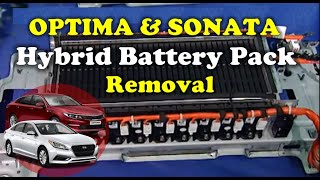
🎬 Watch: Step-by-step guide to removing and disassembling the battery pack.Common Causes
- One or more hybrid battery modules (cells) have failed. (Very Common) — This is the most frequent cause on Hyundai and Kia hybrids. The high-voltage battery is composed of many smaller modules. Over time, individual modules degrade and lose their ability to hold a charge, creating a voltage difference that the BMS flags as an imbalance.
- Faulty Downstream Nitrogen Oxide (NOx) Sensor. (Very Common) — On specific diesel models, particularly the Nissan Navara NP300, code P3208 indicates a fault with the rear NOx sensor located in the exhaust system after the SCR catalyst. This is an emissions system issue, not a battery problem.
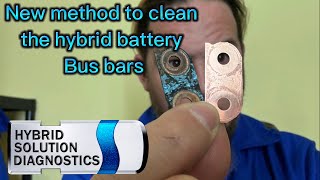
- Corroded or loose battery module connecting busbars. (Common) — The metal plates connecting the individual battery modules develop corrosion, appearing as a white or greenish powder in humid climates. This corrosion creates high resistance, causing a localized voltage drop that the BMS misinterprets as a failing module.
- Faulty Battery Management System (BMS) computer. (Less Common) — The battery monitoring computer fails and inaccurately reports a module imbalance due to faulty internal sensors or logic errors, even when the battery pack itself is healthy.
- Damaged wiring harness for the battery monitoring system. (Less Common) — The delicate sense wires running from each battery module to the BMS fray, break, or corrode. This prevents the BMS from getting an accurate voltage reading from the affected module.
- Failure of the hybrid battery cooling system. (Rare) — Hybrid batteries rely on a cooling fan that draws cabin air over the pack. If the fan fails or its intake vent gets blocked, the battery overheats, leading to premature module failure.
- BMS software anomaly requiring an update. (Rare) — On models like the Chevrolet Bolt (using the similar P0BBD code), specific driving behaviors or using certain DC fast chargers falsely triggers a voltage variation fault. This requires a software update to fix, not a hardware replacement.
- Blown main high-voltage fuse or faulty Power Relay Assembly (PRA). (Rare) — A major short circuit blows the main fuse in the high-voltage safety plug or PRA. This is triggered by an underlying battery imbalance and presents with related codes like P1B77.
Symptoms
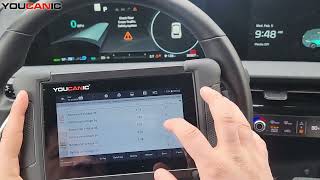
- Hybrid System Warning Light is on — The dashboard displays a message like 'Check Hybrid System 🎬 Watch: How to check your hybrid system and battery health.' or shows an icon of a battery with an exclamation point.
- Check Engine Light is on — The Malfunction Indicator Lamp (MIL) illuminates, storing the P3208 code. On some Nissan models, this is the only light that appears for a NOx sensor fault.
- Vehicle stalls, will not start, or enters 'limp mode' — A severe battery imbalance forces the hybrid system to shut down to protect itself, causing a stall or no-start condition. The vehicle also enters a reduced power 'limp mode'.
- Reduced power and poor acceleration — The vehicle feels sluggish as the computer limits power output to prevent further damage to the hybrid system or due to incorrect engine parameters from a faulty NOx sensor.
- Noticeably worse fuel economy — A failing hybrid battery forces the gasoline engine to run continuously, decreasing MPG. A faulty NOx sensor causes the engine to run inefficiently, hurting fuel economy.
Diagnostic Flowchart
Tap your situation to follow the diagnostic path that matches what you're seeing on this code.
Common Fixes & Costs
- Replace Individual Failed Battery Module(s) — Parts: $70-$150, Labor: $300-$600, ~3.5 hr book time (Professional)
- Replace with a Reconditioned or Remanufactured Hybrid Battery Pack — Parts: $1,500-$2,800, Labor: $400-$800, ~3 hr book time (Professional)
- Replace NOx Sensor — Parts: $85-$450, Labor: $150-$400, ~1.5 hr book time (Intermediate)
- Clean or Replace Corroded Battery Busbars and Wiring — Parts: $50-$200, Labor: $250-$500, ~3 hr book time (Professional)
- Replace with a New OEM Hybrid Battery Pack — Parts: $2,500-$5,000+, Labor: $400-$1,000, ~3 hr book time (Professional)
Used vs. New Parts: Buying Guide
When a used part is worth it: For a hybrid battery, a complete reconditioned pack from a reputable rebuilder with a warranty offers a good balance of value and reliability. For a NOx sensor, a used OEM part from a low-mileage vehicle is safer than a new, unproven aftermarket brand.
Donor-vehicle mileage cap: roughly under 80000 miles for the part to have meaningful remaining life.
Donor quality checklist:
- Verify the part number exactly; CAN bus messages for sensors and BMS programming for batteries must match.
- For batteries, ask for a recent test report showing module balance and capacity.
- For sensors, avoid parts from rust-belt vehicles as corrosion is a primary failure mode.
- Check the seller's warranty policy and return process before purchasing.
Decision logic:
- If The vehicle is under a federal or manufacturer emissions/hybrid warranty → Always use new OEM parts installed by a dealer to ensure coverage.
- If The part is a single hybrid battery module → Used/refurbished is the only practical option, but understand it is a short-term fix as other modules fail later.
- If The part is a complete hybrid battery pack and budget is a concern → A remanufactured pack with a 1-3 year warranty is the best value.
- If The part is a NOx sensor and reliability is the top priority → Buy a new OEM sensor. Aftermarket NOx sensors have a high rate of out-of-box and premature failure.
Warranty tradeoff: Used parts typically have a 30-90 day warranty. Aftermarket new parts often carry a 1-3 year warranty. New OEM parts installed by a dealer carry the manufacturer's standard parts and labor warranty, typically 12 months/12,000 miles.
Worst-case if a used part fails: 500-1000. If a used or cheap aftermarket part fails shortly after installation, the cost of repeat labor exceeds the initial savings on the part itself.
What Happens If You Wait — Timeline
- 0-1 month: For Hybrids: Check Engine/Hybrid System light appears. A slight, barely noticeable drop in fuel economy occurs. Performance is mostly normal. For Diesels: Check Engine Light appears. No drivability symptoms are present. (MPG impact: 0-5%% · Added cost: $0-$50 in wasted fuel)
- 1-4 months: For Hybrids: The gasoline engine runs more often and acceleration becomes noticeably sluggish. The weak battery module(s) put significant strain on the other healthy modules. Fuel economy drop is obvious. For Diesels: The ECU defaults to a rich fuel map, causing a clear drop in MPG and the start of soot buildup in the DPF. (MPG impact: 5-15%% · Added cost: $50-$200 in wasted fuel)
- 4-8 months: For Hybrids: Risk of stalling at low speeds or failing to start becomes high. Other modules in the pack begin to fail due to the sustained imbalance and over-cycling. For Diesels: The DPF becomes significantly clogged with soot, triggering a DPF warning light and entering 'limp mode'. The risk of irreversible DPF damage begins. (MPG impact: 15-25%% · Added cost: $1,000 - $3,500 if the DPF requires professional cleaning or full replacement.)
- 8+ months: For Hybrids: Catastrophic failure of the entire battery pack is imminent. The vehicle shuts down while driving, creating a major safety hazard. A simple module swap is no longer possible; a full pack replacement is required. For Diesels: A completely clogged DPF creates extreme backpressure, risking damage to the turbocharger or engine internals. The faulty NOx readings damage the expensive SCR catalyst. (MPG impact: 25-50%% · Added cost: $2,000 - $8,000+ for a full hybrid battery pack replacement or $3,000-$5,000+ for a DPF and/or SCR catalyst replacement.)
Cost of Not Fixing It
- 0-1 Month: For hybrids, a noticeable drop in fuel economy (5-15%) and sluggish performance. For diesels, a similar drop in MPG as the engine runs in a default, inefficient mode. (Added cost: Negligible, other than increased fuel costs.)
- 1-6 Months: For hybrids, continued driving places severe stress on healthy battery modules, accelerating their failure. For diesels, a faulty NOx sensor providing incorrect data leads to soot buildup and clogs the Diesel Particulate Filter (DPF). (Added cost: $1,000 - $3,500 if the DPF becomes irreversibly clogged and requires replacement.)
- 6+ Months: For hybrids, catastrophic failure of the entire battery pack occurs, turning a single-module repair into a full pack replacement. For diesels, a chronically malfunctioning NOx sensor leads to contamination and failure of the Selective Catalytic Reduction (SCR) system. (Added cost: $2,000 - $8,000+ for a full hybrid battery pack replacement or $1,500 - $3,000+ for an SCR catalyst replacement.)
Diagnosis Steps
- Verify Code and Vehicle Application
Use an OBD-II scanner to confirm P3208 is present. CRITICAL: Immediately identify your vehicle's make, model, and engine. A P3208 on a Hyundai hybrid is a battery issue; on a Nissan Navara diesel, it is an emissions issue. On some Nissans, the code only appears in the generic EOBD/OBD-II module.
Tools: OBD-II Scan Tool (Beginner) - Analyze Hybrid Battery Live Data (Hyundai/Kia)
Using a scan tool with live data capability, access the BMS data stream. View the voltage of each individual battery block/module (e.g., PIDs 'Cell Voltage 1-96'). A difference greater than 0.5V under load or 0.3V at rest confirms an imbalanced module. The weakest module shows the lowest voltage.
Tools: Advanced Scan Tool (Intermediate) - Analyze NOx Sensor Live Data (Nissan Diesel)
Using a scan tool with live data, monitor the PPM (parts per million) reading from NOx Sensor 1 (pre-SCR) and NOx Sensor 2 (post-SCR). A healthy sensor's PPM reading changes as you rev the engine. If one sensor is stuck at a default value (e.g., -1 ppm, 0 ppm, or 65535 ppm), that sensor has failed.
Tools: Advanced Scan Tool (Intermediate) - Check the 12V Auxiliary Battery
A weak 12V battery causes a cascade of unpredictable electronic faults, including false codes from the BMS. Ensure the 12V battery has a static voltage of at least 12.4V and passes a load test before proceeding.
Tools: Digital Multimeter, 12V Battery Tester (Beginner) - Inspect the Battery Cooling Fan and Vents (Hyundai/Kia)
Locate the hybrid battery cooling intake vent, often found in the cabin near or under the rear seats. Ensure it is not blocked by floor mats or debris. Listen for the cooling fan running after a drive or command it on with a bidirectional scan tool to verify operation.
Tools: Flashlight, Advanced Scan Tool (Intermediate) - PRO TIP: Perform Busbar Voltage Drop Test (Hyundai/Kia)
WARNING: High voltage is lethal. For professionals only. With the system active (in 'Ready' mode), use a multimeter on a millivolt (mV) scale. Carefully measure the voltage drop across each busbar connecting the battery modules. A healthy connection reads nearly 0 mV. A reading above 5-10 mV indicates high resistance from corrosion or a loose connection.
Tools: High-Voltage Safety Gear, Insulated Tools, Digital Multimeter (with mV scale) (Advanced) - ADVANCED: NOx Sensor Electrical Test (Nissan Diesel)
Disconnect the NOx sensor connector. With the ignition on (engine off), use a multimeter to check for a 5V reference voltage and a good ground at the harness connector pins. Check the sensor's internal heater resistance by measuring ohms across the two heater pins. An open circuit or a dead short confirms a failed heater element.
Tools: Digital Multimeter, Vehicle-specific wiring diagram (Advanced) - Perform a Battery Capacity and Balance Test
This definitive test requires specialized equipment to perform a deep charge and discharge cycle on the entire pack or individual modules to measure true capacity (Amp-hours). This confirms exactly which modules are degraded and need replacement.
Tools: Hybrid Battery Analyzer/Charger (Advanced) - PRO TIP: Check for AC Ripple Voltage (Hyundai/Kia)
Set your multimeter to AC Volts. With the vehicle in 'Ready' mode, measure the AC voltage across the terminals of the 12V auxiliary battery. A reading above 100-200mV AC indicates a failing diode in the DC-DC converter, introducing electrical noise that disrupts the BMS.
Tools: Digital Multimeter (with AC Volts) (Advanced)
When This Code Triggers (Freeze-Frame Conditions)
- Engine Coolant Temp: 175-210°F (80-99°C) (The engine is fully warmed up, ensuring all systems are in closed-loop operation.)
- RPM: 1200-2800 RPM (The code sets during steady-state driving, not during hard acceleration or deceleration.)
- Engine Load: 25-70% (A moderate and stable engine load gives the ECU time to run its diagnostic self-tests.)
- Vehicle Speed: 45-65 mph (72-105 kph) (Constant highway speed is a common condition for the BMS or NOx sensor monitors to run and detect a persistent fault.)
Related Codes
- P0A7F — Stands for 'Hybrid Battery Pack Deterioration'. This appears alongside P3208. P0A7F indicates the pack's overall capacity has faded, while P3208 points to a specific voltage imbalance between modules.
- P0BBD — Means 'Battery Module Voltage Variation'. Functionally identical to P3208 and used by manufacturers like General Motors. Diagnosis is the same: find the module with the deviant voltage.
- P1B77 — A Hyundai/Kia specific code for 'Hybrid Battery Voltage Sensor Circuit' or 'HV Pre-Charge Fault'. Points to a problem in the control circuit, often the Power Relay Assembly (PRA) or its main fuse, rather than the battery modules themselves.
- P0A82 — Stands for 'Hybrid Battery Cooling Fan Performance'. If present with P3208, it strongly suggests the battery imbalance was caused by overheating due to a failed or blocked cooling fan.
Climate & Environmental Factors
- High Heat (Above 95°F / 35°C): This is the most damaging factor for hybrid batteries, causing accelerated and irreversible chemical degradation, leading to permanent capacity loss and a shorter lifespan. It forces the battery cooling system to work harder, reducing overall vehicle efficiency.
- Extreme Cold (Below 20°F / -7°C): Cold temperatures significantly reduce a hybrid battery's available capacity and efficiency, leading to decreased fuel economy as the gasoline engine runs more often. For NOx sensors, extreme cold causes internal condensation to freeze, cracking the ceramic element.
- High Humidity: Moisture in the air promotes corrosion on high-voltage battery terminals and connecting busbars, causing high resistance and triggering a P3208 voltage imbalance code. If battery pack seals are compromised, humidity leads to internal short circuits.
- Rapid Temperature Changes: Specifically affects NOx sensors. Driving through deep, icy puddles or heavy snow causes thermal shock to the hot sensor, cracking its fragile ceramic element and causing immediate failure.
How to Talk to a Mechanic About This Code
Say this: "For a Hyundai/Kia Hybrid: "I have a P3208 code and I'd like to schedule a diagnostic. I need you to check the live data for individual battery module voltages to pinpoint the imbalance. Before quoting a full battery replacement, please also perform a millivolt drop test on the busbars to rule out corrosion." For a Nissan Navara Diesel: "I have a P3208 code on my Navara, which I understand points to the downstream NOx sensor. Can you please perform a diagnostic that checks the live PPM data from that sensor to confirm it has failed before we replace any parts?""
This signals you are informed about the code's specific meaning for your vehicle. It directs the technician to perform the exact diagnostic tests required, preventing them from guessing or immediately upselling you to the most expensive repair.
Avoid saying:
- 'My check engine light is on, can you just fix it?' (This is too vague and invites a costly, exploratory diagnosis).
- 'I think it's the battery, just replace it.' (Never diagnose the car for the mechanic; you might be wrong and pay for an unnecessary part).
- 'Do whatever you think is best.' (This gives up all control and leads to overselling).
Questions to ask before authorizing the repair:
- For a Hybrid: Can you show me the printout of the battery module voltages? Which specific module is reading low?
- For a Hybrid: Did you find any corrosion on the busbars or sense harness?
- For a Diesel: What was the live data reading from the NOx sensor? Was it stuck at a specific value?
- Can I get a written estimate that breaks down the cost of parts and labor?
- What is the warranty on the replacement part and your labor?
- Will you be using an OEM part or an aftermarket part?
Where to Take It: Dealer vs Independent vs Chain
- Dealer:
Best for: Vehicles still under the manufacturer's hybrid or emissions warranty (e.g., Hyundai's 10-year/100,000-mile hybrid battery warranty)., Complex issues that involve software updates, like on the Chevrolet Bolt or post-recall Nissan Navaras.
Downsides: Significantly higher labor rates (often 1.5-2x an independent shop)., More likely to recommend a full component replacement (e.g., entire battery pack) rather than a more targeted repair (e.g., individual modules). (Typical cost: +50% vs. baseline) - Independent Shop:
Excellent choice, but only if it is a specialized shop. For a Hyundai/Kia, seek out an independent shop that focuses on hybrid and EV repair. For a Nissan diesel, a reputable diesel truck specialist is ideal.
Best for: Out-of-warranty vehicles where cost is a major factor., Finding a specialist (e.g., a dedicated hybrid/EV shop or a trusted diesel mechanic) who has more experience with common failures than a general dealer tech.
Downsides: Quality and expertise vary widely; you must vet the shop's reputation and confirm they have experience with high-voltage systems or diesel emissions., A general mechanic lacks the specific scan tools or training for this code. (Typical cost: +0% vs. baseline) - Chain Shop:
AVOID. The risk of misdiagnosis is extremely high. They are not equipped to safely or correctly handle high-voltage battery repairs, and are unlikely to properly diagnose the specific NOx sensor fault.
Best for: Simple, routine maintenance like oil changes, tires, and brakes.
Downsides: Technicians are inexperienced with complex diagnostics, especially high-voltage systems., Business model pressures technicians to upsell unnecessary services., Lack the specialized tools and training for either the hybrid battery or diesel NOx sensor aspects of this code. (Typical cost: -10% vs. baseline)
When to Walk Away From the Repair
If the total estimated repair cost exceeds 50% of your car's current private-party market value, sell or trade in the vehicle instead of repairing it.
- Car worth $4000, fix is $3200: Walk away. A $3,200 repair (e.g., a reconditioned hybrid battery plus labor) on a $4,000 car is a poor investment.
- Car worth $15000, fix is $800: Fix it. An $800 repair (e.g., a NOx sensor replacement) is well below the threshold and restores the vehicle's primary function and value.
- Car worth $6000, fix is $4500: Walk away. A $4,500 quote for a new OEM battery pack from the dealer is not economical for a vehicle of this value.
What Scan Tool You Need for This Code
Minimum: A tool that reads manufacturer-specific live data. For Hyundai/Kia, you MUST be able to see individual battery module/cell voltages. For a Nissan diesel, you MUST be able to see the NOx sensor concentration in Parts Per Million (PPM).
A basic $20 code reader only shows the 'P3208' code itself, but won't give you the critical live data needed to determine *why* the code is set. You remain completely blind as to whether it is a bad cell, corrosion, or a faulty sensor, leading to wasted money on incorrect parts.
Budget: Veepeak OBDCheck BLE+ with CarScanner App (~$40) — This combination accesses the detailed hybrid battery PIDs for Hyundai/Kia, showing individual cell voltages and temperatures. It also displays live NOx sensor data for diesel vehicles, making it a highly capable and affordable diagnostic solution for this specific code.
Mid-range: Foxwell NT510 Elite (with Hyundai/Kia software) (~$180) — Provides OE-level diagnostics for specific brands. It reliably reads and graphs individual cell voltages, accesses all modules in the hybrid system, and performs bidirectional controls (like commanding the battery fan on). It is a robust, all-in-one handheld solution.
Professional: Autel MaxiCOM MK808S / MK808Z (~$500) — Offers full system, professional-level diagnostics for a vast range of vehicles. It easily graphs and records live data for all battery cells and NOx sensors, performs bidirectional controls, and executes necessary relearn or initialization procedures after a part is replaced.
Rent vs buy: For a one-time fix, paying a $100-$150 diagnostic fee to a reputable specialty shop is the best value. If you plan to maintain a hybrid or modern diesel vehicle long-term, buying a capable scanner like the Veepeak or Foxwell is a wise investment that pays for itself quickly.
How to Clear the Code After You Fix It
- Reconnect the 12V battery if it was disconnected for the repair.
- Use a compatible OBD-II scan tool to erase the P3208 fault code from the ECU's memory.
- Perform a complete drive cycle to allow the vehicle's readiness monitors to run and confirm the fix.
Drive cycle (~30 minutes): From a cold start, idle for 2-3 minutes with electrical loads on. Drive in stop-and-go city traffic for 10-15 minutes. Accelerate smoothly to a highway speed of 55-60 mph and maintain for at least 15-20 minutes. Come to a stop and idle for 1-2 minutes before shutting off.
Readiness monitors affected: Catalyst Monitor, O2 Sensor / NOx Sensor Monitor, EVAP System Monitor
Before emissions retest: drive at least 100 miles to fully set monitors.
Watch out for:
- Simply clearing the code with a scanner does not fix the underlying hardware problem; the light returns immediately.
- Disconnecting the 12V battery clears the code but resets all readiness monitors, causing an immediate emissions test failure.
- Permanent Diagnostic Trouble Codes (PDTCs) do not clear with a scanner and require the vehicle's computer to verify the repair over several drive cycles.
Will This Fail Emissions / State Inspection?
Yes — this code typically fails an OBD-II emissions inspection.
- California: An illuminated Check Engine Light is an automatic failure. After repair, the vehicle must complete a drive cycle to set all required readiness monitors to 'Ready' before it passes the OBD-II test.
- New York: An illuminated Malfunction Indicator Lamp (MIL) causes the vehicle to fail the OBD-II emissions inspection. For model year 2001 and newer vehicles, only one non-continuous readiness monitor is permitted to be in the 'Not Ready' state.
- Texas: In counties requiring emissions testing, an active Check Engine Light is an automatic fail. For 2001 and newer vehicles, one readiness monitor is allowed to be 'Not Ready'; two or more results in failure.
Most Commonly Affected Vehicles
- Hyundai Sonata Hybrid (2011-2019) — These models are widely known to experience battery module failures as they age, making P3208 a very common code. The 2011-2015 models were particularly susceptible.
- Kia Optima Hybrid (2011-2020) — Mechanically identical to the Sonata Hybrid, it suffers from the exact same battery degradation and module failure issues.
- Nissan Navara (NP300) (2016-2020) — CRITICAL: On this diesel truck, P3208 indicates a fault with the rear NOx sensor, not the battery. Diagnosis must focus on the emissions system. The fault only appears with a generic EOBD scan.
- Hyundai Ioniq Hybrid (2017-2022) — Uses a lithium-ion polymer battery technology prone to individual module failures, triggering a P3208 code as the vehicle ages.
- Kia Niro Hybrid (2017-2022) — As the platform-mate to the Ioniq, it is susceptible to this fault code as the battery pack ages.
- Chevrolet Bolt EV (2017-2022) — Sets the nearly identical code P0BBD ('Battery Module Voltage Variation'). TSB 22-NA-151 states this is falsely triggered by specific driving habits or certain DC fast chargers. If the scan tool shows cells 20, 40, 67, or 87 as the cause, a software update is the fix.
- Hyundai Elantra Hybrid (2021-2024) — These models use a 1.6L GDI engine with a 32 kW motor and a lithium-ion polymer battery. While newer, they use the same fundamental BMS technology and trigger P3208 if a cell fails prematurely.
- Volkswagen Touareg / Phaeton V8 (2004-2010) — On some VW vehicles, P3208 indicates 'Lambda (O2) sensor 1, bank 3 - no activity', pointing to a faulty oxygen sensor on larger engines.
Manufacturer-Specific Notes
- Hyundai / Kia: For these brands, P3208 almost always means a high-voltage battery module or connection issue. Always check for corroded busbars before condemning an entire battery pack. Hyundai's Hybrid Battery Warranty is typically 10 years/100,000 miles, covering failure and degradation below 70% of original capacity.
- Nissan (Diesel): On models like the Navara NP300, P3208 is an emissions code for the NOx sensor. A common diagnostic mistake is assuming it is a battery issue. The code only shows up in a generic EOBD scan, not the manufacturer-specific tool.
- Chevrolet: On the Bolt EV, the equivalent code P0BBD has a specific Technical Service Bulletin (22-NA-151) addressing a software issue where certain driving habits or DC fast chargers falsely trigger the code. The fix is a reprogram, not battery replacement.
- Vauxhall / Renault / Peugeot: On some European diesel vehicles, the same P3208 code refers to completely unrelated systems, such as a 'Downstream nitrogen oxide sensor heater' or a problem in the fuel injection system.
Real Owner Stories
2012 Hyundai Sonata Hybrid at 86k miles stalls on highway
Owner bought a used 2012 Sonata Hybrid. After a few thousand miles, the car lost all acceleration, displaying a 'Hybrid System Warning' and forcing the driver to pull over, shut down, and restart the car to continue driving.
What they tried:
- A basic OBD-II scanner showed no specific hybrid codes, only an old EVAP code.
- The 12V auxiliary battery was charged overnight to rule it out.
- The dealer diagnosed a failing transmission oil pump and quoted a major repair.
Outcome: The owner faced a repair cost potentially exceeding the value of the car. The issue was compounded by the fear that the original, high-mileage battery pack would be the next component to fail.
Lesson: On early Sonata Hybrids, a sudden loss of power is caused by issues other than the battery, like a faulty brake switch or transmission component. A basic code reader cannot pull manufacturer-specific hybrid codes; an advanced scan tool is necessary.
2016 Nissan Navara 2.3 DCI with P3208 after dealer update
The Check Engine Light came on with code P3208 just 400km after a Nissan dealer performed a mandatory AdBlue software update recall. The vehicle had 85,000km.
What they tried:
- The dealer denied the software update was related to the failure.
- The owner paid ~€580 for diagnostics and replacement of the rear NOx sensor.
- Another owner with the same issue had both NOx sensors replaced for ~€1,500, but the fault returned every 350km, suggesting a deeper software or compatibility issue.
Outcome: The owner was forced to pay for the NOx sensor replacement, but remained suspicious of the link to the recent ECU software update.
Lesson: On a diesel Navara, P3208 is a NOx sensor fault. Be aware that aftermarket NOx sensors cause persistent issues if they are not fully compatible with the vehicle's ECU. Sometimes a fault appears shortly after a software update, creating a difficult-to-prove link between the two events.
Kia Optima Hybrid with P3208 and no obvious failed module
'Check Hybrid System' light appeared. Live data on a scan tool showed all battery module voltages were very close, with no single module standing out as significantly lower than the others.
What they tried:
- Initial thought was a failing BMS computer since no module was obviously bad.
- A professional hybrid shop performed a voltage drop test on the module busbars.
- The test revealed high resistance (over 10mV) across several of the copper connecting plates due to hidden corrosion.
Outcome: The technician removed the busbars, cleaned all corrosion from the contact points, and reassembled the pack with a corrosion inhibitor. The total cost was under $400, and the P3208 code was resolved without replacing any modules.
Lesson: Don't assume a battery module is bad just because of the code. Corrosion on the connecting busbars creates resistance that fools the BMS into thinking a module is failing. A voltage drop test is essential to confirm this before spending thousands on a new battery.
How to Prevent This Code From Triggering
- Clean the hybrid battery cooling fan and vents (Every 30,000 miles or 2 years) — Dust, pet hair, and debris block the battery cooling fan's intake vent, causing the battery pack to overheat. Heat is the number one killer of hybrid batteries, accelerating degradation.
- Drive the vehicle regularly and smoothly (Weekly habit) — Consistent driving helps the Battery Management System keep all modules in a balanced state of charge. Avoiding aggressive acceleration and braking reduces stress and heat buildup in the battery pack.
- For diesels, use high-quality fuel and AdBlue (Every fill-up) — Low-quality diesel creates more soot, while contaminated or diluted AdBlue (urea) poisons the SCR catalyst and the NOx sensor itself. Using an AdBlue crystal preventer prolongs sensor life.
- Avoid frequent short trips in diesel vehicles (Daily habit) — Short drives prevent the exhaust system from reaching the high temperatures needed for DPF regeneration and allow moisture to collect in the exhaust, damaging NOx sensors.
- Address engine oil consumption issues promptly (As needed) — If an engine is burning oil, phosphorus compounds from the oil coat the NOx sensor's element, causing a permanent loss of sensitivity and triggering a fault code.
Frequently Asked Questions
What is the most common misdiagnosis for P3208?
The most critical mistake is assuming P3208 always means a hybrid battery fault. On a diesel Nissan Navara, it points to a faulty NOx sensor, while on some Volkswagens, it indicates a failed O2 sensor. Always verify the code's meaning for your specific make, model, and engine before starting repairs.
Is a P3208 hybrid battery repair covered under warranty?
Federal law mandates an 8-year/80,000-mile warranty on key hybrid components, which Hyundai and Kia extend to 10 years/100,000 miles for original owners. This warranty typically covers degradation below 70% of the battery's original capacity. Verify your specific warranty status with a dealer, as coverage varies for subsequent owners.
Can I just replace the one bad battery module instead of the whole pack?
Yes, replacing only the failed module is possible and significantly cheaper. However, it serves as a short-term fix. The other original modules share the same age and wear, meaning another fails soon after, returning the P3208 code.
How do I know if P3208 is a battery or a NOx sensor?
The vehicle's powertrain dictates the meaning. If you have a Hyundai or Kia hybrid, it is a battery issue. If you have a Nissan Navara diesel, it is a NOx sensor issue.
Can my driving habits cause a P3208 code?
In rare cases, yes. General Motors issued a TSB for the related code P0BBD on the Chevrolet Bolt, noting that applying the brake and accelerator simultaneously at low speeds confuses the BMS and sets a false code. The fix requires a software update.
Can I reset the check engine light to fix the problem?
No, clearing the code only provides a temporary fix. P3208 indicates a persistent hardware or software fault. The computer detects the voltage imbalance or sensor failure on its next self-test, and the warning light returns immediately.
Is it safe to work on my own hybrid battery?
Absolutely not, unless you are a trained professional equipped with Class 0 high-voltage safety gloves and insulated tools. The DC voltage in a hybrid battery pack is lethal. Stop DIY attempts and tow the vehicle to a specialized hybrid shop if you lack this equipment.
Key Takeaways
- P3208 indicates a failing high-voltage battery module on Hyundai/Kia hybrids or a faulty downstream NOx sensor on Nissan diesel trucks.
- Stop driving immediately; ignoring a severe hybrid battery imbalance causes sudden stalling and turns a $400 single-module repair into a $2,500 full pack replacement.
- Diagnose the root cause using an advanced scan tool to find a voltage drop greater than 0.3V between hybrid modules or a stuck 0 ppm reading on a diesel NOx sensor.
- Replacing a single failed hybrid module costs $370 to $750 total, but installing a fully reconditioned battery pack for $1,900 to $3,600 provides a reliable long-term fix.
Helpful Videos

The information in this article is provided for general reference and educational purposes only. Vehicle specifications, procedures, and part compatibility can vary by production date, trim level, and region. Always consult your vehicle's factory service manual and verify part numbers before purchasing or performing repairs. Safety-critical components such as airbags, seat belts, and braking systems should be installed by a qualified professional.
- 🎬 Helpful Videos
- What Does P3208 Mean?
- Can I Drive With P3208?
- Common Causes
- Symptoms
- Diagnostic Flowchart
- Common Fixes & Costs
- Used vs. New Parts: Buying Guide
- What Happens If You Wait — Timeline
- Cost of Not Fixing It
- Diagnosis Steps
- When This Code Triggers (Freeze-Frame Conditions)
- Related Codes
- Climate & Environmental Factors
- How to Talk to a Mechanic About This Code
- Where to Take It: Dealer vs Independent vs Chain
- When to Walk Away From the Repair
- What Scan Tool You Need for This Code
- How to Clear the Code After You Fix It
- Will This Fail Emissions / State Inspection?
- Most Commonly Affected Vehicles
- Manufacturer-Specific Notes
- Real Owner Stories
- 2012 Hyundai Sonata Hybrid at 86k miles stalls on highway
- 2016 Nissan Navara 2.3 DCI with P3208 after dealer update
- Kia Optima Hybrid with P3208 and no obvious failed module
- How to Prevent This Code From Triggering
- Frequently Asked Questions
- What is the most common misdiagnosis for P3208?
- Is a P3208 hybrid battery repair covered under warranty?
- Can I just replace the one bad battery module instead of the whole pack?
- How do I know if P3208 is a battery or a NOx sensor?
- Can my driving habits cause a P3208 code?
- Can I reset the check engine light to fix the problem?
- Is it safe to work on my own hybrid battery?
- Key Takeaways
- 🎟️ Get 5% Off