

P3191 on 2012-2013 Toyota Prius V: Engine Does Not Start Causes and Fixes
On a 2012-2013 Toyota Prius V, code P3191 means the gasoline engine failed to start. The most common causes are a disconnected vacuum hose near the throttle body (per a Toyota TSB), running out of fuel, or a dirty Mass Air Flow (MAF) sensor. Check for a loose hose first, then confirm there is adequate fuel before proceeding to other diagnostics.
- P3191 means the gasoline engine failed to start, not that the hybrid battery is bad.
- Before any other diagnosis, check for a disconnected vacuum hose on the throttle body, as this is a known issue covered by a Toyota TSB for this specific vehicle.
- The next most likely cause is simply running out of fuel; add at least two gallons before assuming a mechanical fault.
- Cleaning the Mass Air Flow (MAF) sensor and the throttle body are inexpensive, easy first steps that solve the problem in many cases.
- Do not repeatedly try to start the car, as this will drain the high-voltage hybrid battery, which cannot be easily recharged without a running engine.
What's Unique About the 2012-2013 Toyota PRIUS V

Unlike a conventional car, a Prius V with a P3191 code might still move briefly under electric power. The code is set specifically because the hybrid control unit 🎬 Watch: A breakdown of the P3191 and P0A0F codes commanded the gas engine to start, and it failed. For this specific 2012-2013 model year, Toyota issued a Technical Service Bulletin (T-SB-0041-15) identifying a common cause: a vacuum hose for the Purge VSV separating from the throttle body, creating a massive vacuum leak that prevents the engine from starting. This issue is so prevalent that it should be the first mechanical check performed after ensuring the vehicle has fuel.
Diagnostic Flowchart
Tap your situation to follow the diagnostic path that matches what you're seeing on this vehicle.
Symptoms You May Notice
- Engine cranks but does not start
- Check Engine Light and Master Warning Light are on
- "Check Hybrid System" message on the dash
- Vehicle may only move for a short distance on electric power before stopping
- Engine may start, run very roughly for a few seconds, then shut off.
- Replacing the high-voltage hybrid battery. This code is related to the gasoline engine's failure to start, not a primary fault of the hybrid battery. A failing engine can drain the hybrid battery, but the battery itself is not the root cause of P3191.
Most Likely Causes


- Disconnected Purge VSV / PCV Vacuum Hose 🔴 High Probability Toyota TSB #T-SB-0041-15 directly addresses this issue for 2012-2013 Prius V models. The hose can separate from the throttle body housing, causing a large, unmetered vacuum leak that makes the air-fuel mixture too lean to ignite.
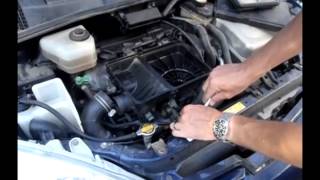
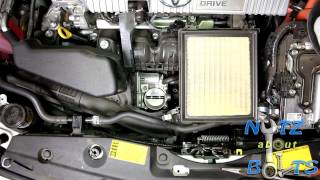
How to confirm: Visually inspect the vacuum hoses connected to the air intake tube and throttle body. A disconnected black rubber hose right at the throttle body housing is the tell-tale sign. This is often accompanied by code P0171 (System Too Lean).
Typical fix: Reconnect the hose securely. Per the TSB, the official, long-term repair involves replacing the Purge VSV (Vacuum Switching Valve) with an updated part and reprogramming the Engine Contr…
Est. part cost: $50-$90 for the Purge VSV - Out of Fuel 🔴 High Probability The fuel gauge on this generation of Prius can be notoriously inaccurate due to a bladder-style fuel tank that was used on earlier Prius models and can cause confusion. While the Prius V has a rigid tank, owners may still be misled by the gauge. Running out of fuel is a very common trigger for P3191.
How to confirm: Add at least two to three gallons of gasoline to the tank. Do not trust the fuel gauge if the car won't start. It may take several start attempts to re-prime the system.
Typical fix: Add fuel.
Est. part cost: $0 - Dirty Mass Air Flow (MAF) Sensor 🟡 Medium Probability The MAF sensor is sensitive to any debris or oil contamination. Sometimes, during an air filter change, a small piece of debris can fall into the intake and contaminate the sensor, leading to incorrect air metering and a no-start condition.
How to confirm: Remove the MAF sensor from the air intake tube (held by two Phillips screws) and inspect the sensitive wire elements for dust, debris, or an oily film.
Typical fix: Clean the sensor carefully using only a dedicated MAF sensor spray cleaner. Do not use brake cleaner or carburetor cleaner. Allow it to dry completely before reinstalling. If cleaning doesn't work, the sensor must be replaced.
Est. part cost: $10 for cleaner, $60-$150 for a new sensor - Dirty or Faulty Throttle Body 🟡 Medium Probability Carbon and varnish can build up inside the throttle body, causing the throttle plate to stick or not close properly. The engine control module may lose its learned position for the throttle plate, especially after the 12V battery has been disconnected, leading to insufficient airflow for startup.
How to confirm: Remove the air intake hose and inspect the throttle plate and bore for black, sticky buildup. Check if the plate moves smoothly by hand (with the vehicle off).
Typical fix: Clean the throttle body and plate thoroughly with throttle body cleaner and a soft cloth or brush. Manually open the plate to clean the edges. After cleaning, it may be necessary to disconnect the 12V battery for a few minutes to reset the ECU's learned values.
Est. part cost: $10 for cleaner - Weak or Failed 12V Auxiliary Battery ⚪ Low Probability
How to confirm: Test the 12V battery (located in the rear of the vehicle) with a multimeter. A healthy battery should read above 12.4V. A load test is the most definitive way to confirm its health. A weak 12V battery can cause a wide range of electronic issues on a Prius, including this code.
Typical fix: Recharge or replace the 12V auxiliary battery.
Est. part cost: $180-$250
Rare But Worth Checking
- Failed Fuel Pump: While less common than running out of fuel, a weak or failed fuel pump will prevent the engine from getting the fuel it needs to start. Diagnosis requires a fuel pressure test; pressure should be between 44-50 psi. One owner on PriusChat reported a fuel pump that would fail when hot.
- Clogged Fuel Injectors: If injectors are clogged, fuel cannot enter the cylinders. This is more likely with high mileage or poor fuel quality. A user on PriusChat with a 2012 Prius V considered this after cleaning the EGR, intake, and MAF sensor did not resolve the P3191 code.
- Failed Crankshaft Position Sensor: The ECU needs this sensor's signal to time spark and fuel injection. If it fails, the engine will crank but not start. This is a general engine no-start cause and less specific to the P3191 code on this platform.
- Blown Head Gasket: In some high-mileage cases, a leaking head gasket can allow coolant into the cylinders, preventing the engine from starting and triggering P3191 and P0A0F. This was seen on a Lexus CT200h with the same engine, where coolant was found in the oil. This is a severe failure requiring major engine repair.
Diagnosis Steps
- Confirm there are at least two to three gallons of fuel in the tank. Do not trust the gauge if a no-start condition exists.
- Scan for all Diagnostic Trouble Codes (DTCs). Note if P3190, P0171, or P0A0F are present.
- Read the freeze frame data for the P3191 code. This snapshot of sensor data (engine temp, RPM, etc.) at the moment the fault occurred can provide critical clues. For example, a fault at cold temperature might point toward a throttle body or coolant temp sensor issue.
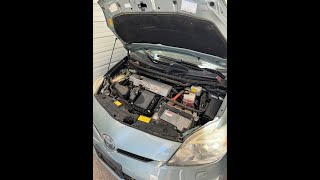
- Perform a thorough visual inspection of the engine bay, focusing on the air intake system. Specifically check for a disconnected vacuum hose at the throttle body, as detailed in TSB T-SB-0041-15.
- Inspect and clean the Mass Air Flow (MAF) sensor located in the air intake tube using dedicated MAF sensor cleaner.
- Inspect and clean the electronic throttle body, ensuring the butterfly valve is not stuck and is free of carbon buildup.
- Test the 12V auxiliary battery to ensure it is providing adequate voltage (above 12.4V) and can hold a load.
- If the above steps do not resolve the issue, proceed to more advanced diagnostics like checking fuel pressure (should be 44-50 psi) and testing crank/cam sensors.
Parts You'll Likely Need

- Purge VSV (Vacuum Switching Valve)
(OEM #25860-37020)— The official fix for the common disconnected vacuum hose issue, per Toyota TSB T-SB-0041-15, involves replacing this valve and reprogramming the ECM. This part regulates vacuum flow for the EVAP system.
Trusted brands: Toyota (OEM), Denso
OEM price range: $70-$90
Aftermarket price range: $35-$60 - Mass Air Flow (MAF) Sensor
(OEM #22204-37010)— A dirty or failed MAF sensor is a common cause of an incorrect air/fuel mixture that leads to a no-start condition. Cleaning is often successful, but replacement is sometimes necessary.
Trusted brands: Denso (OEM supplier), Bosch, Hitachi
OEM price range: $120-$160
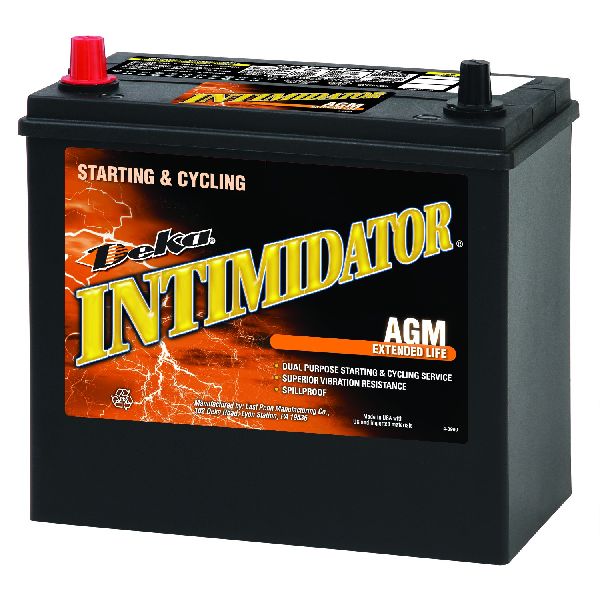
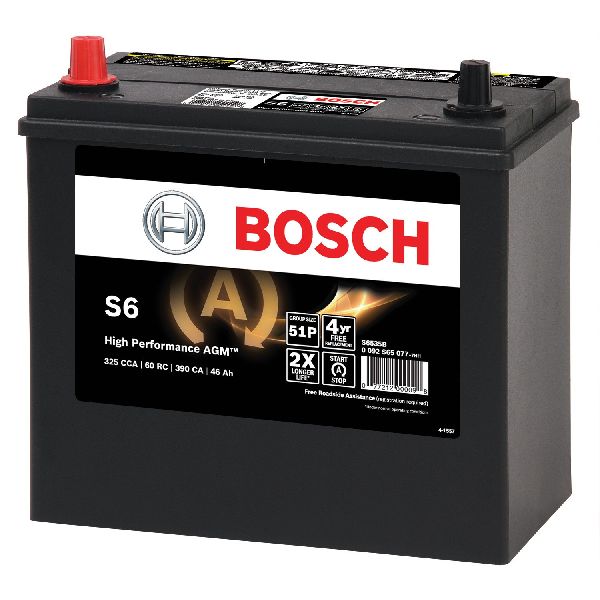
Aftermarket price range: $50-$90 - 12V Auxiliary Battery — A weak 12V battery can cause numerous electronic issues on a Prius, including this code, by failing to properly power up the vehicle's computer systems before the hybrid system engages.
Related Codes That Often Appear With This One
- P3190 — This code for 'Poor Engine Power' often accompanies P3191 as it relates to the engine's inability to produce the expected torque.
- P0171 — 'System Too Lean' is frequently triggered alongside P3191, especially when the cause is a major vacuum leak like the disconnected Purge VSV hose mentioned in the TSB.
- P0A0F — A more general code for 'Engine Failed to Start', it is often logged with the more specific P3191, confirming the same fault.
Technical Service Bulletins (TSBs) & Recalls
- T-SB-0041-15: MIL 'ON' DTC P0A0F, P3190, P3191, P0171 Due to Purge VSV Vacuum Line Separation
Platform-Specific Known Issues
- TSB T-SB-0041-15 (supersedes T-SB-0205-11): Specifically for 2012-2013 Prius and Prius V models, this bulletin points to a MIL 'ON' condition with codes P3191, P3190, P0A0F, and/or P0171 caused by the Purge VSV/PCV vacuum line separating from the throttle body. The recommended fix is to replace the Purge VSV and reprogram the ECM.
Mechanic-Grade Diagnostic Values
- Fuel Pressure (Active) — expected: 304 to 343 kPa (44 to 50 psi). Failure: Pressure below this range indicates a weak fuel pump or clogged filter.
- Fuel Pressure (Residual) — expected: 147 kPa (21 psi) or more. Failure: Pressure dropping below this value 5 minutes after the engine is shut off indicates a leak in the system, possibly from a faulty fuel pressure regulator or a leaking injector.
Hidden / Shadow Codes Worth Checking
- Information Code (e.g., 204): Toyota's Techstream software can display a more detailed 'information code' or 'detail code' in addition to the primary DTC. For example, the related code P0A0F is often accompanied by info code 204. While no specific info codes for P3191 were found, their existence is confirmed, providing deeper context for a technician using dealer-level software. (see via Toyota Techstream software.)
Scan Tool Commands That Help
- Toyota Techstream: Active Test: Control the Fuel Pump / Speed — This command is used to manually turn on the fuel pump without cranking the engine. It allows a technician to safely check for fuel pump noise and measure fuel pressure to quickly confirm if the fuel delivery system is working. The menu path is Powertrain / Engine and ECT / Active Test.
- Toyota Techstream: ECU Flash Reprogramming — For some 2010-2011 models with the same engine family, Toyota issued a TSB (T-SB-0205-11) to update the ECM logic to prevent erroneous P3190/P3191 codes. This requires maintaining a steady 13.5V supply during the flash. While the TSB is not for the Prius V specifically, it shows that ECU logic is a potential cause that requires a dealer-level tool to fix.
Wiring & Ground Locations
- Engine Harness Ground Cluster — On the 2ZR-FXE engine, there are important clusters of ground wires that bolt directly to the engine harness near the coolant reservoir.. A loose or corroded ground connection at this point can interrupt signals for critical engine components like injectors, sensors, or the ECU itself, leading to a no-start condition that can trigger P3191.
- ECM (Engine Control Module) — Located in the engine compartment on the left side.. This is the primary computer responsible for engine management. All sensor inputs (MAF, Crank, Temp) and outputs (Injectors, Coils, Throttle) related to P3191 are processed here. Knowing its location is key for checking connector integrity and performing pin-out testing.
- Crankshaft Position Sensor — Lower left front of the engine.. A failure of this sensor or its wiring is a fundamental cause for a crank-no-start condition. Its location is necessary for inspection and replacement.
Real Owner Repair Stories
- PriusChat Forum Member 'Mendel Leisk' (2012 Prius with 165k miles) — After cleaning the EGR system, the car had a very rough idle, died after 20 seconds, and threw codes P3191 and P3190.
❌ Tried (didn't work) Initial visual inspection showed all connections seemed to be secure.
✅ What actually fixed it The owner had likely forgotten to reconnect a key vacuum hose. Forum veterans pointed to two common culprits that create a massive vacuum leak if left disconnected after intake work: the PCV hose and the gas tank vapor hose, which connects to the intake manifold just below the throttle body.
Model Year Variations Within This Range
- 2012-2013: There are no significant mechanical or electrical differences in the 2ZR-FXE engine or its control systems between the 2012 and 2013 Prius V models that would alter the diagnosis for code P3191. Any cosmetic changes, such as dashboard colors, are irrelevant to this fault.
Helpful Videos



We Have This Part in Stock


The information in this article is provided for general reference and educational purposes only. Vehicle specifications, procedures, and part compatibility can vary by production date, trim level, and region. Always consult your vehicle's factory service manual and verify part numbers before purchasing or performing repairs. Safety-critical components such as airbags, seat belts, and braking systems should be installed by a qualified professional.
- Toyota PRIUS V:
- 🎬 Helpful Videos
- 🛍️ Shop This Part
- What's Unique About the 2012-2013 Toyota PRIUS V
- Diagnostic Flowchart
- Symptoms You May Notice
- Most Likely Causes
- Rare But Worth Checking
- Diagnosis Steps
- Parts You'll Likely Need
- Related Codes That Often Appear With This One
- Technical Service Bulletins (TSBs) & Recalls
- Platform-Specific Known Issues
- Mechanic-Grade Diagnostic Values
- Hidden / Shadow Codes Worth Checking
- Scan Tool Commands That Help
- Wiring & Ground Locations
- Real Owner Repair Stories
- Model Year Variations Within This Range
- 🎟️ Get 5% Off