

P3190 on 2004-2011 Toyota Prius: Poor Engine Power Causes and Fixes
P3190 on a Prius means the gas engine is failing to start or produce power. The most common causes are simple: running out of fuel, a dirty Mass Air Flow (MAF) sensor, or a vacuum hose leak near the throttle body. Before suspecting major components, check your fuel level, inspect intake hoses, and clean the MAF sensor.
- P3190 means the gas engine isn't working, not that the hybrid battery has failed.
- Before any complex repairs, add 2-3 gallons of gas, even if the gauge says it has fuel.
- The second step should be to inspect and clean the Mass Air Flow (MAF) sensor.
- On 2010-2011 models, check for a disconnected vacuum hose at the throttle body.
- Avoid repeatedly trying to start the car to prevent draining and potentially damaging the expensive high-voltage battery.
What's Unique About the 2004-2011 Toyota PRIUS

The Prius's hybrid system is what makes this code unique. The gas engine doesn't run constantly, so owners may not realize they are out of fuel until the car refuses to start, triggering a P3190. Also, repeated failed start attempts don't drain a typical 12V battery; they drain the large, expensive high-voltage (HV) hybrid battery. This can lead to a misdiagnosis of a bad hybrid battery when the original problem was something simple like an empty gas tank or a dirty sensor. Once the HV battery is depleted from failed start attempts, the car will not be able to crank the engine at all, complicating diagnosis.
Diagnostic Flowchart

Tap your situation to follow the diagnostic path that matches what you're seeing on this vehicle.
Generation note: This range covers the Gen 2 (2004-2009) and the beginning of the Gen 3 (2010-2011) Prius. While many causes are the same, Toyota issued Technical Service Bulletins (TSBs) specifically for 2010-2011 models related to a Purge VSV/PCV hose separating from the throttle body, which is a very common cause for this code on those years. Gen 2 models are noted to be prone to oil buildup in the intake manifold and throttle body, which can also lead to this code.
Symptoms You May Notice

- Check Engine Light and Master Warning Light (red triangle) are on
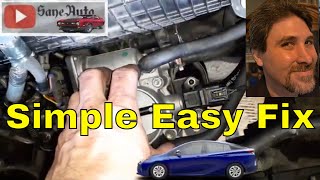
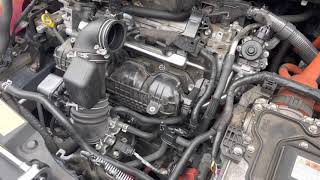
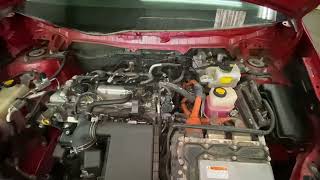
- Vehicle fails to start or starts and immediately stalls 🎬 Watch: Troubleshooting a Prius that won't stay running
- Engine shakes or runs very roughly
- Complete loss of power while driving
- Car will only run on battery power for a very short distance before shutting down
- Smell of rich fuel on failed start attempts
- High-Voltage (HV) Hybrid Battery Failure. This is the most common misdiagnosis. A P3190 is an engine problem, not a battery problem. However, the engine problem WILL drain the HV battery with repeated start attempts, which then leads to battery-related codes and the incorrect conclusion that the battery was the original fault.
Most Likely Causes

- Out of Fuel 🔴 High Probability The Prius engine doesn't run continuously, and the bladder-style fuel tank gauge can be inaccurate, leading owners to run out of gas unexpectedly even when the gauge shows one or two bars remaining.
How to confirm: Despite what the fuel gauge says, add at least 2-3 gallons of fresh gasoline to the tank. This is the number one recommended first step by many owners and mechanics.
Typical fix: Add fuel to the tank.
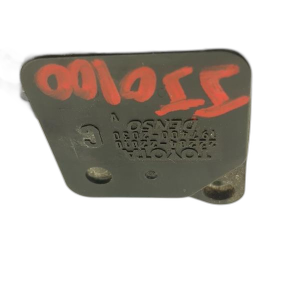
Est. part cost: $10-$15 - Dirty or Faulty Mass Air Flow (MAF) Sensor 🔴 High Probability Debris (leaves, fuzz, insects, oil vapor) can enter the air intake, especially during air filter changes, contaminating the sensitive MAF sensor wire and causing incorrect air-fuel mixture readings. This is a very common story on forums.
How to confirm: Remove the MAF sensor from the air intake tube. Visually inspect the small wires inside for any debris. For a more definitive test, use a scan tool to monitor the 'Calculated Load' value at full throttle; a healthy sensor should read 80-90%. A reading below 80% indicates a faulty sensor.
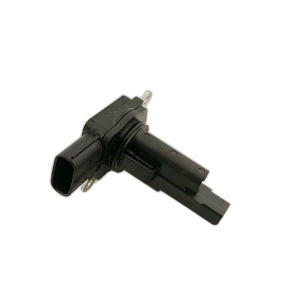
Typical fix: Clean the sensor with a dedicated MAF sensor cleaner spray. Do not touch the wires. 🎬 See how to safely remove and clean your MAF sensor If cleaning doesn't work, the sensor must be replaced. Using an OEM Denso sensor is highly recommended.
Est. part cost: $10-$15 for cleaner, $70-$150 for a new OEM sensor (Part #22204-22010). - Vacuum Line Separation (Especially 2010-2011) 🔴 High Probability Toyota issued TSBs T-SB-0041-15 and T-SB-0205-11 Rev for 2010-2011 models where the Purge VSV or PCV hose can be blown off its connection at the throttle body, causing a massive vacuum leak. This can happen due to an intake backfire.
How to confirm: Visually inspect the vacuum hoses connected to the throttle body and air intake assembly. A common failure is a hose popping off a nipple on the black plastic intake manifold. 🎬 Watch: How to fix common vacuum leaks on newer models
Typical fix: Reconnect the separated hose. Per TSB T-SB-0041-15, the Purge VSV assembly should be replaced with an updated part and the ECM should be reprogrammed by a dealer to prevent recurrence.
Est. part cost: $0 if reconnected, $60-$120 for a new Purge VSV (OEM Part #25860-37010). - Dirty or Sticking Throttle Body 🟡 Medium Probability Carbon and oil vapor buildup from the PCV system can cause the throttle plate to stick, especially after the 12V battery has been disconnected, which resets its learned position.
How to confirm: Remove the air intake hose from the throttle body and inspect the bore and throttle plate for black gunk and buildup.
Typical fix: Clean the throttle body with a dedicated throttle body cleaner and a soft cloth. Do not force the plate open on an electronic throttle body; have a helper turn the car to the 'ON' position (not 'READY') and press the accelerator to open the plate.
Est. part cost: $10-$15 for cleaner. - Failing Fuel Pump 🟡 Medium Probability The fuel pump can weaken over time, failing to provide adequate pressure to start or run the engine. This is a well-documented failure mode that can be intermittent at first.
How to confirm: Requires a fuel pressure test to confirm if pressure is below specification. This is often a step taken after the easier checks have failed. A user on PriusChat confirmed this was their issue after a dealer diagnosis.
Typical fix: Replace the fuel pump assembly, which is located inside the fuel tank and accessed from under the rear seat.
Est. part cost: $150-$400 for the part, with one owner reporting a dealer quote of ~$1000 for parts and labor.
Rare But Worth Checking
- Failing High-Voltage (HV) Hybrid Battery: While often misdiagnosed as the cause, a genuinely failed HV battery can trigger this code. As noted in NHTSA complaint ODI #11525645, a P3190 code was ultimately diagnosed as a severe hybrid battery failure.
- Clogged Fuel Injectors or Fuel Filter: If the fuel pump is working, clogged injectors or a blocked filter (which is part of the fuel pump assembly) can still prevent fuel from reaching the engine. A user on Reddit reported changing injectors as part of their troubleshooting.
- Failed Crankshaft or Camshaft Position Sensor: If the ECM cannot determine the engine's position, it cannot properly time fuel and spark, leading to a no-start condition. A user on PriusChat replaced the cam sensor during their diagnosis.
- Engine Mechanical Failure: In rare cases, this could be due to low compression, incorrect timing, or other severe internal engine problems like an overfill of engine oil after a service.
- Weak 12V Auxiliary Battery: A weak 12V battery can cause a wide range of electronic issues in a Prius, including problems with the ECUs that control the engine, potentially leading to a P3190 code.
Diagnosis Steps
- Check for other stored DTCs. Codes like P0A0F, P3191, and P0171 are important clues. Use a capable scanner like Toyota Techstream to view freeze frame data, which shows engine conditions when the fault occurred.
- DO NOT repeatedly try to start the car. This will drain the HV battery (by about 1% per attempt) and complicate diagnosis.
- Add at least 2-3 gallons of fresh fuel to the tank, even if the gauge shows fuel.
- Inspect the entire air intake system for loose clamps, disconnected hoses, or cracks. For 2010-2011 models, pay close attention to the PCV and Purge VSV hoses connected to the throttle body and intake manifold.
- Remove and inspect the Mass Air Flow (MAF) sensor for debris. If dirty, clean it with dedicated MAF sensor cleaner and let it dry completely before reinstalling.
- Inspect the throttle body for carbon buildup. Clean if necessary.
- Check the health of the 12V auxiliary battery. A weak 12V battery can cause a wide range of electronic issues in a Prius.
- If the above steps do not resolve the issue, more advanced diagnostics are needed, such as a fuel pressure test, checking for spark, and testing engine compression.
Parts You'll Likely Need
- Mass Air Flow (MAF) Sensor Cleaner — Often, the MAF sensor is just dirty, not broken. Cleaning is the cheapest and easiest first step for an air/fuel issue.
Trusted brands: CRC, WD-40 Specialist
Related Codes That Often Appear With This One
- P0A0F — This code means 'Engine Failed to Start.' It is almost always seen with P3190, as they describe the same event from slightly different perspectives within the hybrid control system.
- P3191 — This code means 'Engine Does NOT Start.' It is a more severe version of P3190 and indicates a complete failure to get the engine running.
- P0171 — This code means 'System Too Lean (Bank 1).' It often appears when there is a vacuum leak, such as the hose separation issue described in TSB T-SB-0041-15, as unmetered air is entering the engine.
- P3193 — This code means 'Fuel Run Out'. It can be triggered alongside P3190 if the car stalls due to an empty fuel tank.
Technical Service Bulletins (TSBs) & Recalls
- Supersedes T-SB-0205-11. Addresses MIL ON with codes P0A0F, P3190, P3191, P0171 on 2010-2013 Prius and Prius V. Caused by Purge VSV/PCV line separating from the throttle body. The fix involves replacing the Purge VSV with an updated part and reprogramming the ECM.
- Original TSB for 2010-2011 Prius models with P3190, P3191, P0A0F due to purge VSV/PCV line separation. This TSB is now obsolete and has been replaced by T-SB-0041-15.
Platform-Specific Known Issues
- PCV/Purge VSV Hose Separation: These model years are highly prone to a vacuum hose blowing off the intake manifold or throttle body, causing an immediate P3190 and engine stall. Toyota addressed this with TSB T-SB-0041-15, which involves replacing the purge valve and updating the engine computer's software to prevent intake backfires that cause the hose to pop off.
- Oil Contamination of Intake: The Gen 2 engine is known for allowing oil vapor from the PCV system to collect in the air intake system. This oil can contaminate the MAF sensor and coat the throttle body, leading to P3190. Regular cleaning of the MAF and throttle body is a common preventative maintenance item for Gen 2 owners.
Mechanic-Grade Diagnostic Values
- Mass Air Flow (MAF) Sensor Reading at Idle — expected: 2 to 7 grams/second (g/s) depending on engine size and conditions. For the 1.5L/1.8L Prius engine, a value of approximately 1.5 to 2.5 g/s is typical.. Failure: A reading significantly outside the expected range, or a reading of 0.0 g/s. A reading that does not increase smoothly with RPM.
- Mass Air Flow (MAF) Sensor Reading at 2500 RPM — expected: 15 to 25 grams/second (g/s).. Failure: A reading that is significantly lower than expected or does not rise in a linear fashion from idle, indicating the sensor is not measuring airflow correctly under load.
- Fuel Pump Motor Resistance — expected: 0.3 to 3.0 Ohms.. Failure: A reading outside of this range indicates a definite electrical failure of the pump motor.
- Fuel Pressure — expected: 44 to 50 psi.. Failure: Pressure below 44 psi indicates a weak fuel pump or clogged filter, which can cause a no-start or low power condition without necessarily being a complete failure.
Hidden / Shadow Codes Worth Checking
- P0A0F-204: This is an informational or detail code that sometimes accompanies P0A0F and P3190. The '-204' specifies the 'Engine Failed to Start' condition. It is often misinterpreted as a hybrid battery issue, but it is triggered by the engine's failure to run, which in turn drains the battery. (see via Advanced scan tools like Toyota Techstream or some higher-end OBD-II scanners capable of reading manufacturer-specific detail codes.)
Scan Tool Commands That Help
- Toyota Techstream: Active Test: Control the Fuel Pump Speed — This allows a technician to command the fuel pump to run without starting the engine. It's used to verify the pump is operational and to make it easier to perform a fuel pressure test.
- Toyota Techstream: ECM Reprogramming / Calibration Update — As per TSB T-SB-0041-15, after replacing the Purge VSV for a vacuum line separation issue on 2010-2011 models, the ECM must be updated with new firmware to prevent intake backfires that could cause the hose to blow off again.
- Any OBD-II Scanner with Live Data: View Freeze Frame Data — Crucial for P3190. It provides a snapshot of all sensor values (engine temp, RPM, load, fuel trims, etc.) at the exact moment the fault was triggered, helping to narrow down if the problem occurs when cold, under load, etc.
Wiring & Ground Locations
- Engine Control Module (ECM) — Behind the right side of the dashboard, typically behind the glove box.. The ECM is the brain that receives inputs from all engine sensors (MAF, Crank, Cam, Temp) and controls fuel and spark. Poor connections or grounds here can cause a P3190.
- Main Engine Ground Points — Key grounds are located on the left side of the engine compartment, connecting the engine block and transmission to the chassis. For a 2005 Prius, ground points are designated with labels like 'EA', 'EB' on wiring diagrams.. A corroded or loose main engine ground can cause intermittent electrical issues for all sensors, including the crankshaft position sensor and MAF, leading to a no-start or stall condition.
- Fuel Pump Connector — Under the rear seat, on top of the fuel tank assembly.. This is the power connection for the fuel pump. Corrosion or damage to these terminals can lead to low fuel pressure or intermittent pump operation, directly causing a P3190.
Real Owner Repair Stories
- PriusChat user 'nicefighter80' (2012 Lexus CT200h (same powertrain as Gen 3 Prius) with 155k miles) — After cleaning the EGR system and intake manifold, the engine would start, shudder badly with a loud hissing noise, run for ~15 seconds, and then shut off, setting code P3190.
❌ Tried (didn't work) The user suspected a vacuum leak and planned to replace the intake manifold gasket.
✅ What actually fixed it The PCV vent hose was not reconnected to the intake manifold during reassembly. Reconnecting the hose resolved the issue completely. - PriusChat user 'gromy' (2010 Toyota Prius) — Car stalled, then would only start and idle very slowly before stalling again. Threw P3190 and multiple warning lights. After replacing the 12V battery, the problem returned the next day.
❌ Tried (didn't work) Replacing the 12V auxiliary battery.
✅ What actually fixed it A Toyota dealer diagnosed a bad fuel pump. The owner had the car towed home and replaced the fuel pump assembly with a used unit from a 2014 Prius for under $100, which fixed the problem. Notably, a resistance test on the old pump motor showed it was within electrical spec, indicating a mechanical failure (low pressure) rather than an electrical one. - YouTube video by 'David Jad' (Toyota Prius (year not specified)) — Engine would run for about 10 seconds and die, or have no power on the road. Codes P3190 and P0A0F-204 were present.
❌ Tried (didn't work) Cleaning the MAF sensor, checking for air leaks, and replacing the fuel in the tank did not solve the issue.
✅ What actually fixed it The issue was a weak fuel pump and a very dirty fuel filter sock inside the tank. Replacing the fuel pump assembly with a used one resolved the no-start and low power condition. The video emphasizes checking fuel pressure after air-side checks fail. - PriusChat user 'makbg1' (2010 Toyota Prius) — After a major service including cleaning a junkyard-sourced EGR cooler/valve and intake manifold, the engine made a terrible rattling noise on startup and set code P3190 before shutting down.
❌ Tried (didn't work) Re-checking all hose and electrical connections multiple times.
✅ What actually fixed it The user suspected the replacement EGR valve from the junkyard was faulty (likely stuck open). After reinstalling the original EGR valve, the car started roughly but then cleared up and ran normally.
"I Checked Everything" — The Actual Cause
- A common diagnostic path for P3190 is to perform a smoke test to find vacuum leaks. However, multiple owner-confirmed repairs show that even with no vacuum leaks, the code can be caused by a weak fuel pump. In one case, a dealer diagnosed a bad fuel pump after the owner had already checked for simple issues. The pump's electrical resistance was within spec, but its mechanical ability to generate pressure was gone. This is a classic example where the common air-related diagnostics (like a smoke test) would come back clean, leading a technician to overlook the fuel delivery system.
When the Usual Fixes Don't Work
- While the most common advice is to check for simple, inexpensive issues like vacuum leaks or a dirty MAF sensor first, there are numerous documented cases where the root cause was a weak fuel pump. In one instance, after a dealer quoted nearly $1,000 for a fuel pump replacement, the owner confirmed the diagnosis by installing a used pump himself for under $100. This resolved the P3190 code. This serves as a counterpoint to exclusively focusing on air and vacuum issues; if those checks come up empty, a fuel pressure test is a critical next step that should not be skipped, even though it is more involved.
OEM Part Supersession History
25860-37010→25860-37020— This is the Purge VSV (Vacuum Switching Valve) assembly cited in TSB T-SB-0041-15 for the 2010-2011 Prius. The updated part is designed to be more robust to prevent failure when an intake backfire occurs.
Model Year Variations Within This Range
- 2010-2011 (Gen 3): These models feature a 1.8L 2ZR-FXE engine and are specifically prone to the PCV/Purge VSV hose blowing off the intake manifold due to intake backfires, as documented in Toyota TSBs T-SB-0041-15 and T-SB-0205-11. This is a primary cause of P3190 on these years.
- 2004-2009 (Gen 2): These models use the 1.5L 1NZ-FXE engine. While they can suffer from vacuum leaks, they are not subject to the specific TSB for the hose blow-off issue. Gen 2 models are more noted for issues like heavy oil buildup in the throttle body and intake, and a higher incidence of age-related fuel pump failures.
Helpful Videos

We Have This Part in Stock

The information in this article is provided for general reference and educational purposes only. Vehicle specifications, procedures, and part compatibility can vary by production date, trim level, and region. Always consult your vehicle's factory service manual and verify part numbers before purchasing or performing repairs. Safety-critical components such as airbags, seat belts, and braking systems should be installed by a qualified professional.
- Toyota PRIUS:
- 🎬 Helpful Videos
- 🛍️ Shop This Part
- What's Unique About the 2004-2011 Toyota PRIUS
- Diagnostic Flowchart
- Symptoms You May Notice
- Most Likely Causes
- Rare But Worth Checking
- Diagnosis Steps
- Parts You'll Likely Need
- Related Codes That Often Appear With This One
- Technical Service Bulletins (TSBs) & Recalls
- Platform-Specific Known Issues
- Mechanic-Grade Diagnostic Values
- Hidden / Shadow Codes Worth Checking
- Scan Tool Commands That Help
- Wiring & Ground Locations
- Real Owner Repair Stories
- "I Checked Everything" — The Actual Cause
- When the Usual Fixes Don't Work
- OEM Part Supersession History
- Model Year Variations Within This Range
- 🎟️ Get 5% Off