

OBD-II Code P3175: Active Exhaust Valve Performance Issue
What P3175 means, why it triggers, and how to fix it
- P3175 is a manufacturer-specific code indicating a malfunction in the active exhaust valve system, but it does not pose a mechanical threat to your engine.
- Before buying parts, check for Technical Service Bulletins (TSBs); GM bulletin 25-NA-009 fixes this code on Corvettes and Cadillacs with a simple $150-$250 ECM software update.
- On 2018 and newer Ford Mustangs, inspect fuse #34 or #37 first, as a blown fuse points directly to a chafed actuator wiring harness rubbing against the chassis.
- Do not replace the $1,800+ muffler assembly unless you unbolt the actuator and physically confirm the internal exhaust valve is completely seized by rust or carbon.
What Does P3175 Mean?

P3175 is a manufacturer-specific trouble code signaling a performance failure in the active exhaust system. The Engine Control Unit (ECU) detects that the exhaust valve—which opens and closes to adjust exhaust volume—is not in its commanded position.
Technical definition: General Motors defines DTC P3175 as "Variable Exhaust Flow Control Valve Position Performance". Because it is not a standard SAE/ISO code, its meaning depends on the manufacturer. For Audi and Volkswagen, the similar code 03175 indicates an 'Invalid Data Set' in a control module and is completely unrelated to the exhaust.
Can I Drive With P3175?
Yes. Driving with code P3175 does not harm your engine or cause a breakdown. A General Motors service bulletin confirms there are no drivability concerns associated with this specific code. However, ignoring the code for months allows a sticking valve to seize completely from carbon buildup, turning a $200 actuator replacement into a $2,000 muffler assembly replacement.
Common Causes

- Engine Control Module (ECM) Software Glitch (Very Common) — The most frequent cause is a sensitivity in the diagnostic software rather than a broken part. GM service bulletin 25-NA-009 states the primary fix is reprogramming the ECM with updated software.
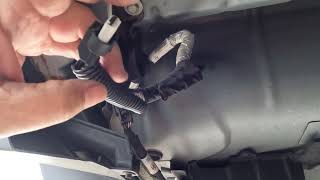
- Chafing or Damaged Wiring Harness (Common) — On Ford Mustangs and similar vehicles, the actuator wiring harness routes too close to the chassis. Vibrations cause the harness to rub against metal edges, wearing through the insulation and creating a short circuit. 🎬 Watch: How to find and repair Mustang harness rubbing issues.
- Faulty Exhaust Valve Actuator Motor (Common) — The small electric motor that physically moves the exhaust valve fails from exposure to extreme heat, moisture, and vibration at the rear of the vehicle.
- Aftermarket Exhaust Modifications (Common) — Installing an aftermarket exhaust system that removes or alters the active exhaust valves triggers this code. The ECU sets a fault when it cannot communicate with the actuator motors or verify their position.
- Blown Fuse (Less Common) — A short circuit in the actuator or its wiring blows the dedicated fuse for the active exhaust system. On 2018+ Ford Mustangs, this is typically fuse #34 or #37 in the engine compartment.
- Seized or Sticking Exhaust Valve (Rare) — Carbon buildup or rust causes the internal exhaust valve to stick. When the actuator motor cannot move the seized valve, it triggers the performance code. This occurs most frequently in regions using heavy winter road salt.
- Low Battery Voltage (Rare) — A weak battery prevents sensitive valve actuators from receiving stable voltage during startup, leading to a position error. This usually accompanies a P0562 (System Voltage Low) code.
Symptoms
- Check Engine Light is On — The dashboard malfunction indicator lamp illuminates immediately when the ECU detects the valve position error.
- Exhaust Sound is Always Loud or Always Quiet — The active exhaust system sticks in either the open or closed position and ignores drive mode changes.
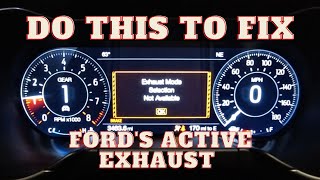
- 'Exhaust Mode Selection Not Available' Message — Vehicles like the Ford Mustang display a specific error message in the instrument cluster when the system fails.
- Remote Start is Disabled — Modern GM vehicles disable the remote start feature if the Check Engine Light is on for any reason, including P3175.
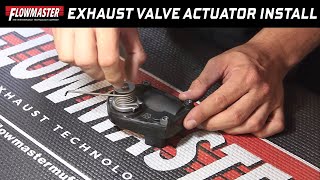
- Rattling or Buzzing Noise from Exhaust — A failing actuator produces a metallic rattling from a loose linkage or an electrical buzzing as the motor struggles against a stuck valve. 🎬 See this DIY fix for common exhaust actuator rattling noises.
Diagnostic Flowchart

Tap your situation to follow the diagnostic path that matches what you're seeing on this code.
Common Fixes & Costs
- Reprogram Engine Control Module (ECM) — Parts: $0, Labor: $150-$250, ~1.5 hr book time (Professional)
- Repair and Protect Wiring Harness — Parts: $10-$50, Labor: $150-$350, ~2.0 hr book time (Intermediate)
- Replace Blown Fuse — Parts: $1-$5, Labor: $0-$100, ~0.5 hr book time (Beginner)
- Replace Exhaust Valve Actuator Motor — Parts: $70-$300, Labor: $150-$300, ~1.5 hr book time (Intermediate)
- Replace Muffler/Exhaust Assembly — Parts: $1,500-$3,000, Labor: $300-$600, ~2.5 hr book time (Professional)
Used vs. New Parts: Buying Guide
When a used part is worth it: A used part makes sense when replacing the entire muffler assembly due to a seized valve. For the actuator motor, the minimal cost savings do not justify the risk of buying a used electronic component.
Donor-vehicle mileage cap: roughly under 60000 miles for the part to have meaningful remaining life.
Donor quality checklist:
- Verify the part number matches exactly.
- Source from a reputable salvage yard offering a 30-90 day warranty.
- Avoid parts from regions with heavy road salt use.
- Ensure no visible corrosion exists on the electrical connectors.
Decision logic:
- If Fix is replacing the actuator motor only → Buy new OEM. The part is inexpensive and aftermarket versions lack correct LIN-bus communication.
- If Fix requires replacing the entire muffler assembly → Buy a used OEM assembly from a low-mileage donor to save over $1,000.
- If Part is electronic and exposed to the elements → Buy new. Used internal electronics have an unknown wear history.
Warranty tradeoff: Used parts include a 30-90 day functional warranty. New OEM parts installed by a dealer carry a 12-month warranty.
Worst-case if a used part fails: $200-$400 if a used actuator fails, requiring repeat labor and a new part.
What Happens If You Wait — Timeline

- 0-1 month: Code P3175 sets, the Check Engine Light turns on, and remote start is disabled. The exhaust sound sticks in one mode. (MPG impact: 0%% · Added cost: $0)
- 1-6 months: A sticking valve becomes more frequent. If stuck closed, a slight reduction in peak horsepower and a minor MPG drop occur. (MPG impact: 1-3%% · Added cost: $25-$75 in wasted fuel)
- 6-18 months: The valve completely seizes. The actuator motor burns out trying to move it. The opportunity for a simple lubrication fix is lost. (MPG impact: 3-5%% · Added cost: $1,800-$3,600 for a new muffler assembly)
- 18+ months: The vehicle automatically fails state emissions inspections. The constant CEL masks notifications of new, potentially serious engine problems. (MPG impact: 3-5%% · Added cost: Inability to pass inspections and the full cost of muffler replacement.)
Cost of Not Fixing It
- Short-Term (0-3 months): The Check Engine Light remains illuminated, the exhaust sound sticks in one mode, and remote start is disabled. (Added cost: $0)
- Medium-Term (3-12 months): A sticking valve seizes completely from carbon buildup, turning a simple actuator replacement into a mandatory muffler assembly replacement. (Added cost: $1,800-$3,600)
- Long-Term (1+ years): A valve stuck closed increases exhaust backpressure, slightly reducing engine performance and fuel efficiency. The constant CEL masks new engine problems. (Added cost: $50-$100 in wasted fuel)
Diagnosis Steps
- Check for Service Bulletins (TSBs)
Check for TSBs for your specific vehicle. For GM, bulletin 25-NA-009 recommends an ECM reprogram. For Ford, TSBs 22-2282 and 23-2132 address wiring harness chafing.
Tools: Internet access or vehicle information subscription (Beginner) - Check the Active Exhaust Fuse
Inspect the fuse for the active exhaust system. A blown fuse indicates an electrical short. On 2018+ Ford Mustangs, check fuse #34 or #37.
Tools: Owner's manual, fuse puller (Beginner) - Visually Inspect Actuators and Wiring
Raise the rear of the vehicle and inspect the exhaust valve actuators. Look for corroded connectors or chafed wires, paying close attention to where the harness passes near the metal chassis.
Tools: Jack, jack stands, flashlight (Beginner) - Listen for Actuator Operation
With the ignition on (engine off), have a helper cycle through the exhaust drive modes. Listen for a distinct whirring sound at the tailpipes. Silence points to a failed actuator or dead circuit.
Tools: A helper (Beginner) - Manually Check Valve Movement
With the exhaust cool, unbolt the actuator from the muffler. Move the valve linkage by hand. It must rotate smoothly. If it is seized, the muffler assembly requires replacement.
Tools: Basic hand tools (sockets, wrenches) (Intermediate) - Test with a Bi-Directional Scan Tool
Use a bi-directional scan tool to command the exhaust valves open and closed. Monitor the live data Parameter IDs (PIDs) for commanded vs. actual position to confirm the performance failure.
Tools: Bi-directional OBD-II scan tool (Advanced) - Pro Tip: Test Actuator Circuit with a Multimeter
Disconnect the 4-pin actuator connector. Check for 12V power and ground with the ignition on. Measure resistance across the two motor pins on the actuator; an open circuit or direct short indicates a failed motor.
Tools: Multimeter, vehicle-specific wiring diagram (Advanced) - Pro Tip: Check Position Sensor Feedback Voltage
Back-probe the signal wire on the connected actuator. You should see a voltage that changes smoothly (e.g., <1V to >4V) as the valve moves. A static voltage indicates a faulty internal position sensor.
Tools: Multimeter, back-probe kit, wiring diagram (Advanced) - Scan Tool: Perform Actuator Relearn Procedure
After replacing an actuator, use a scan tool to perform the relearn procedure (e.g., 'Exhaust Flow Control Valve Learn'). This commands the actuator to learn its open and closed stop points. Skipping this step causes the code to return immediately.
Tools: Bi-directional OBD-II scan tool (Professional)
When This Code Triggers (Freeze-Frame Conditions)
- Engine Coolant Temp: 180-210°F (Engine at full operating temperature.)
- RPM: 1200-3000 (During light acceleration or steady-state cruise.)
- Vehicle Speed: 30-60 mph (Steady highway or city driving.)
- Commanded Valve Position Change: Open to Close or vice-versa (Triggered when changing drive modes (e.g., Tour to Sport).)
Related Codes
- P3182 — This code is functionally identical to P3175, likely indicating the opposite side actuator. If both appear together, it strongly suggests a systemic issue like an ECM software glitch.
- P3173 — This code points specifically to an electrical problem (open, short, high resistance) in the actuator circuit. Diagnosis must focus on wiring, connectors, and fuses.
- P316F — This code explicitly states the ECU detects the valve is stuck open. This points directly to a seized mechanical valve or a failed actuator motor.
- P0562 — Low system voltage causes the sensitive exhaust valve actuators to malfunction and set a false P3175 code. Always test the battery first if this code is present.
Climate & Environmental Factors
- Cold Climates / Road Salt: Regions using winter road salt see a high incidence of exhaust valves seizing. Salt and moisture corrode the valve's pivot point, preventing the actuator from moving it.
- High Humidity / Moisture: Frequent exposure to water accelerates corrosion on the actuator's external housing and electrical connector pins, leading to electrical faults.
How to Talk to a Mechanic About This Code
Say this: "I have a check engine light and my scanner shows code P3175. I know this is often a software issue needing a dealer reprogram, a wiring problem, or a failed actuator. I'd like to schedule a diagnostic to confirm the cause before replacing any parts."
This directs the technician to follow a logical diagnostic path (check TSBs, inspect wiring) rather than immediately defaulting to replacing the most expensive part.
Avoid saying:
- 'My check engine light is on, can you just fix it?'
- 'My car is making a weird noise, I think it's the muffler.'
- 'Just do whatever you think is best.'
Questions to ask before authorizing the repair:
- Did you check for any Technical Service Bulletins related to this code, like GM TSB 25-NA-009?
- If you recommend an actuator replacement, did you confirm the valve itself isn't seized by moving it by hand?
- Did you test the actuator's function using a bi-directional scan tool?
- If you recommend replacing the muffler, can you show me how the valve is seized?
- Does this repair require a software update or a relearn procedure afterward?
- What is the warranty on the parts and labor for this specific repair?
Where to Take It: Dealer vs Independent vs Chain
- Dealer:
Best first choice for GM vehicles due to the high probability of a software-related fix covered by a TSB.
Best for: Vehicles under warranty., GM vehicles requiring an ECM reprogram with manufacturer-specific tools., Complex electronic issues or when TSBs are the primary fix.
Downsides: Highest labor rates., May replace an entire assembly rather than repair a simpler component like a wire. (Typical cost: +40% vs. baseline) - Independent Shop:
A strong choice if you confirmed the issue is a part failure and not a software glitch. Ensure they have a bi-directional scanner for the relearn procedure.
Best for: Out-of-warranty vehicles with a known mechanical issue (bad actuator, chafed wire)., Owners looking for a better value on labor and parts.
Downsides: May lack the expensive, manufacturer-specific tools to perform an ECM reprogram., Diagnostic skill varies. (Typical cost: +0% vs. baseline) - Chain Shop:
AVOID for this code. The diagnostic process requires specific knowledge and tools not standard at chain repair shops.
Best for: Simple, non-diagnostic work like tire changes or oil services.
Downsides: Technicians lack the training or tools for this specific code., High risk of misdiagnosis leading to unnecessary part replacement., Not equipped for ECM programming or advanced diagnostics. (Typical cost: -10% vs. baseline)
When to Walk Away From the Repair
If the estimated repair cost exceeds 40-50% of the car's current private-party value, consider selling or trading in the vehicle instead of repairing it.
- Car worth $35000, fix is $550: Fix it. A common repair like an actuator replacement is well below the threshold.
- Car worth $25000, fix is $2800: Borderline. A full muffler replacement is a significant percentage of the car's value. Get a second opinion to confirm the valve is truly seized.
- Car worth $15000, fix is $3200: Walk away. The repair cost approaches the threshold on an older performance car.
What Scan Tool You Need for This Code
Minimum: A bi-directional scan tool capable of commanding the active exhaust actuators and performing a relearn procedure.
A basic $20 code reader only tells you the code exists. It cannot command the valve to move or perform the required relearn procedure after a part is replaced.
Budget: Veepeak OBDCheck BLE + FORScan (for Ford) (~$50) — For Ford owners, this adapter combined with FORScan software provides dealer-level diagnostics, including actuator commands and relearn procedures.
Mid-range: Foxwell NT510 Elite / ThinkCar ThinkScan 689BT (~$150) — Offers bi-directional control for specific brands, allowing you to actively command the exhaust valves. This is the minimum required tool for a non-Ford DIYer.
Professional: Autel MaxiCOM MK808BT / Foxwell NT1009 (~$450-700) — Provides full bi-directional control across all vehicle systems. Commands actuators, performs relearn procedures, and views live data streams.
Rent vs buy: Standard parts store loaner tools lack bi-directional capability. If this is a one-time fix, pay for one hour of professional diagnostic time. If you work on modern cars regularly, buying a mid-range bi-directional scanner is a worthwhile investment.
How to Clear the Code After You Fix It
- Reconnect the battery if it was disconnected for the repair.
- Use an OBD-II scan tool to clear the Diagnostic Trouble Codes (DTCs).
- Perform a complete GM drive cycle to allow the readiness monitors to run.
Drive cycle (~20 minutes): Start from a cold soak (engine temp below 122°F). Idle for 2-3 minutes with electrical loads on. Accelerate to 55 mph and hold for 3-5 minutes. Coast down to 20 mph without using the brakes. Accelerate again to 55-60 mph and hold for 5 minutes. Decelerate and come to a stop.
Readiness monitors affected: Catalyst Monitor, Oxygen (O2) Sensor Monitor, EGR System Monitor
Before emissions retest: drive at least 50 miles to fully set monitors.
Watch out for:
- Clearing the code resets all readiness monitors to 'Not Ready', causing an immediate emissions test failure.
- The code returns quickly if the underlying mechanical or electrical fault remains unrepaired.
Will This Fail Emissions / State Inspection?
Yes — this code typically fails an OBD-II emissions inspection.
- California: An illuminated Check Engine Light is an automatic failure. A full drive cycle must be completed to set readiness monitors before a retest.
- New York: A vehicle automatically fails the emissions inspection if the Check Engine Light is on. Clearing the code right before the test results in a failure due to 'Not Ready' monitors.
- Texas: An active Check Engine Light results in an automatic failure for vehicles model year 1996 and newer.
Most Commonly Affected Vehicles

- Cadillac CT4-V / CT5-V Blackwing (2020-2024) — Frequently reported by owners after aggressive driving. Commonly appears alongside codes P3173 and P316F.
- Chevrolet Corvette (C7/C8 Z06) (2014-2024) — GM service bulletin 25-NA-009 specifically addresses this code for the Z06, indicating a software sensitivity requiring an ECM reprogram.
- Chevrolet Camaro (SS, ZL1) (2016-2024) — Equipped with a dual-mode performance exhaust system (NPP) that triggers this fault.
- GMC / Chevrolet Sierra 1500 / Silverado 1500 (2019-2024) — Models equipped with the optional performance exhaust system feature active valves that trigger this code.
- Ford Mustang (GT, Mach 1, Shelby) (2018-2024) — Ford uses different codes (e.g., P26C6) for the identical issue. TSBs 22-2282 and 23-2132 point to a chafing wiring harness as the primary cause.
- BMW M-Series (M2, M3, M4, M5) (2015-2024) — BMW's exhaust flap control system experiences identical actuator failures, triggering a drivetrain malfunction warning.
- Audi A4 / A5 / Q5 (B8) (2008-2016) — Code 03175 means 'Invalid Data Set' after a software update and is completely unrelated to the exhaust.
Manufacturer-Specific Notes
- General Motors (Cadillac, Chevrolet): GM issued TSB 25-NA-009 because the code triggers from 'diagnostic sensitivity.' The bulletin advises reprogramming the ECM before replacing any parts.
- Ford: Ford TSB 23-2132 identifies a wiring harness chafing against the chassis as the primary cause. The official fix involves repairing the wire and rerouting the harness, not replacing the actuator.
- Audi/Volkswagen: Code 03175 translates to 'Invalid Data Set' within the infotainment module. It appears after a software update and clears using the MMI's 'hidden green menu'.
- Mercedes-Benz (AMG): A faulty exhaust flap actuator sets a 'soft code' stored in the ECU without illuminating the Check Engine Light. It requires an OBD-II scanner to detect.
Real Owner Stories
2022 Cadillac CT4-V Blackwing with 265 miles
Check Engine Light illuminated with codes P3173 and P3175 on a brand new car.
Outcome: The dealer performed an ECM reprogram per the service bulletin, resolving the issue under warranty.
Lesson: A software glitch is a very common cause for this code on modern GM performance vehicles. Always check for TSBs before assuming a part failed.
2020 Ford Mustang Mach 1 with 3,000 miles
The 'Exhaust Mode Selection Not Available' message appeared and the exhaust sound stuck.
Outcome: He found the wiring harness rubbed through on the chassis. He repaired the wire, replaced the fuse, and the system worked perfectly.
Lesson: For Ford Mustangs, a chafed wire is the most common cause. A blown fuse is the primary symptom of this failure.
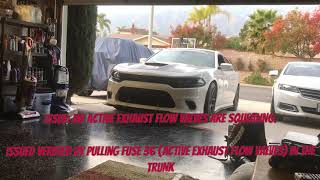
2018 Dodge Charger with squeaking exhaust
A loud squeaking noise came from the rear exhaust valves at low speeds.
Outcome: He sprayed high-performance white lithium grease onto the valve stem's pivot point, completely eliminating the squeak.
Lesson: Lubricating a squeaking valve prevents it from seizing, avoiding a costly muffler replacement.
2018 Mustang GT after DIY Corsa exhaust install
After installing an active exhaust, the system threw a 'range of motion failure' DTC.
Outcome: He realized the actuator spring was not fully seated on both engagement tabs of the valve linkage, causing it to bind. Seating it properly fixed the issue.
Lesson: Incorrect installation is a common failure point during DIY exhaust work. The mechanical linkage between the motor and valve must align perfectly.
2024 Corvette Z06 after aftermarket exhaust install
Installing a valved Corsa cat-back system triggered a Check Engine Light with codes P3175 and P3182.
Outcome: Plugging the original factory actuators back into the wiring allowed the computer to complete the relearn, proving the aftermarket valves were electronically incompatible.
Lesson: Not all aftermarket active exhaust systems are compatible with the factory ECU. A failed relearn procedure points to electronic incompatibility.
How to Prevent This Code From Triggering
- Periodically Lubricate Valve Pivots (Every 15,000 miles or annually) — Applying high-temperature white lithium grease to the external pivot spring and stem prevents squeaking and seizure from road salt and moisture.
- Inspect and Protect Wiring Harness (During any under-car service) — Wrapping the actuator harness in protective wire loom prevents chafing against sharp chassis edges, avoiding short circuits.
- Regularly Cycle Exhaust Modes (Weekly) — Changing between quiet and loud modes exercises the valve, breaking up small carbon deposits before they accumulate and cause sticking.
- Use Top-Tier Detergent Fuel (Every fill-up) — High-quality fuels contain detergents that reduce soot and carbon deposits on the internal surface of the exhaust valve.
Frequently Asked Questions
Can I fix code P3175 myself?
Yes, if the cause is a blown fuse, chafed wire, or faulty actuator motor. However, if the fix requires an ECM reprogram or an actuator relearn procedure, you must visit a dealership or a qualified shop with a bi-directional scan tool.
Will clearing the code make it go away?
You can clear the code with a basic OBD-II scanner to temporarily turn off the check engine light. However, the code returns within a few drive cycles the next time the ECU detects the performance error.
What is the most common misdiagnosis for P3175?
The most common misdiagnosis is immediately replacing the exhaust valve actuator without checking for Technical Service Bulletins (TSBs). Owners often spend money on a new actuator only to have the code return because the root cause was a software glitch requiring an ECM reprogram.
My mechanic wants to replace the whole muffler assembly. Is this necessary?
This expensive repair is only necessary if the internal exhaust valve has seized from rust or carbon and cannot be moved by hand. If the valve moves freely after unbolting the actuator, the muffler does not need replacement.
Can a bad exhaust actuator cause a loss of power?
A valve stuck in the closed position increases exhaust backpressure at high RPM, causing a slight reduction in peak engine performance. However, this power loss is rarely noticeable during daily driving.
How much does a shop charge to diagnose a check engine light?
Most repair shops charge a diagnostic fee equal to one hour of labor, typically ranging from $120 to $250. Many shops credit this fee towards the final repair cost if you authorize the work.
Why did the code appear after I switched to Track mode?
Switching to a performance mode commands the exhaust valves to open fully. If a valve is stuck, slow, or shorted, the ECU immediately detects the position mismatch and triggers the check engine light.
What does a failing exhaust valve actuator sound like?
A failing actuator is either completely silent or produces a metallic rattling or buzzing sound from the rear of the car. The rattle comes from a loose linkage, while buzzing indicates the electric motor is straining against a stuck valve.
Key Takeaways
- P3175 is a manufacturer-specific code indicating a malfunction in the active exhaust valve system, but it does not pose a mechanical threat to your engine.
- Before buying parts, check for Technical Service Bulletins (TSBs); GM bulletin 25-NA-009 fixes this code on Corvettes and Cadillacs with a simple $150-$250 ECM software update.
- On 2018 and newer Ford Mustangs, inspect fuse #34 or #37 first, as a blown fuse points directly to a chafed actuator wiring harness rubbing against the chassis.
- Do not replace the $1,800+ muffler assembly unless you unbolt the actuator and physically confirm the internal exhaust valve is completely seized by rust or carbon.
Helpful Videos



The information in this article is provided for general reference and educational purposes only. Vehicle specifications, procedures, and part compatibility can vary by production date, trim level, and region. Always consult your vehicle's factory service manual and verify part numbers before purchasing or performing repairs. Safety-critical components such as airbags, seat belts, and braking systems should be installed by a qualified professional.
- 🎬 Helpful Videos
- What Does P3175 Mean?
- Can I Drive With P3175?
- Common Causes
- Symptoms
- Diagnostic Flowchart
- Common Fixes & Costs
- Used vs. New Parts: Buying Guide
- What Happens If You Wait — Timeline
- Cost of Not Fixing It
- Diagnosis Steps
- When This Code Triggers (Freeze-Frame Conditions)
- Related Codes
- Climate & Environmental Factors
- How to Talk to a Mechanic About This Code
- Where to Take It: Dealer vs Independent vs Chain
- When to Walk Away From the Repair
- What Scan Tool You Need for This Code
- How to Clear the Code After You Fix It
- Will This Fail Emissions / State Inspection?
- Most Commonly Affected Vehicles
- Manufacturer-Specific Notes
- Real Owner Stories
- 2022 Cadillac CT4-V Blackwing with 265 miles
- 2020 Ford Mustang Mach 1 with 3,000 miles
- 2018 Dodge Charger with squeaking exhaust
- 2018 Mustang GT after DIY Corsa exhaust install
- 2024 Corvette Z06 after aftermarket exhaust install
- How to Prevent This Code From Triggering
- Frequently Asked Questions
- Can I fix code P3175 myself?
- Will clearing the code make it go away?
- What is the most common misdiagnosis for P3175?
- My mechanic wants to replace the whole muffler assembly. Is this necessary?
- Can a bad exhaust actuator cause a loss of power?
- How much does a shop charge to diagnose a check engine light?
- Why did the code appear after I switched to Track mode?
- What does a failing exhaust valve actuator sound like?
- Key Takeaways
- 🎟️ Get 5% Off