

OBD-II Code P3142: Comprehensive Guide to a Manufacturer-Specific Fault
What P3142 means, why it triggers, and how to fix it like a pro
- P3142 is a manufacturer-specific code that requires looking up your exact make and model before buying any parts.
- On VW and Audi 2.0T engines, P3142 usually indicates a failed G410 low-pressure fuel sensor, a $150 DIY fix covered under TSB 2027458.
- For Toyota and Lexus hybrids, this code flags a critical cooling system failure, most often a dead electric engine water pump costing $400-$770 to replace.
- On 2002-2003 Nissan Altimas, P3142 is an internal recall code (R3012) for a frozen fuel pump inlet screen requiring a free dealership update.
- Driving with an active P3142 code risks catastrophic engine damage, including warped cylinder heads on Toyotas or destroyed catalytic converters on VWs.
What Does P3142 Mean?
P3142 is a manufacturer-specific code, meaning its definition changes depending on your car's make. For Toyota and Lexus, it points to an engine cooling system failure, such as a faulty water pump or sensor. For Volkswagen and Audi, it indicates an issue with the valve lift control (VVT) system or a fault in the low-pressure fuel system. For 2002-2003 Nissan models, it serves as an internal number for a fuel pump recall in cold-weather states.
Technical definition: The SAE/ISO definition for P3xxx codes designates them as Manufacturer-Controlled DTCs. There is no universal definition for P3142. Common interpretations include 'Engine Coolant Temperature Sensor Circuit Malfunction' (Toyota/Lexus), 'Valve Lift Control Incorrect' (VW/Audi/GM), or low-pressure fuel system faults (VW/Audi).
Can I Drive With P3142?
Yes, But With Caution. Driving is possible but not recommended for long distances. Depending on the specific cause, you risk severe engine damage. A cooling system fault causes overheating and a warped cylinder head, a repair costing $1,500-$4,000+. A VVT or fuel system fault causes persistent misfires, which destroys your catalytic converter, adding $900-$4,500 to the final bill. Diagnose and repair the issue promptly.
Common Causes
- Faulty Low-Pressure Fuel Sensor (VW/Audi G410) (Very Common) — On VW and Audi 2.0T engines, the G410 low-pressure fuel sensor fails due to internal fuel intrusion, sending incorrect data to the ECU. This is covered by TSB 2027458 and is frequently misdiagnosed as a bad fuel pump.
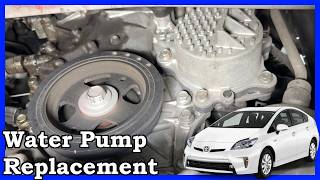
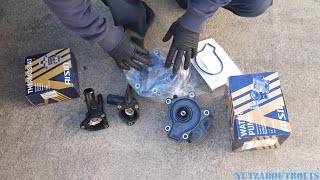
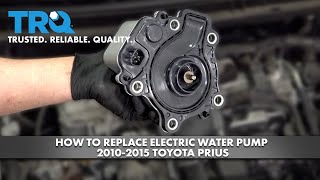
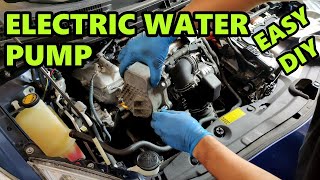
- Failing Electric Engine Water Pump (Toyota Prius) (Common) — The 2010-2015 Prius uses an electric engine water pump that is a known failure point. A failing pump stops circulating coolant, leading to immediate overheating and related codes.
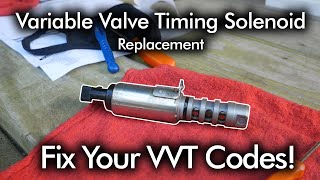
- Faulty Camshaft Adjustment Solenoid (VVT Solenoid) (Common) — On VW/Audi and GM vehicles, a dirty, sludged, or electrically failed VVT solenoid cannot properly adjust camshaft timing, leading to rough running and misfires.
- Faulty Engine Coolant Temperature (ECT) Sensor (Common) — On Toyota/Lexus models, the ECT sensor provides incorrect temperature readings to the engine computer, affecting fuel mixture, idle speed, and cooling fan operation.
- Stuck Thermostat (Common) — A thermostat stuck open or closed causes the engine to warm up too slowly or overheat, triggering P3142 by creating temperature readings outside the expected range.
- Failing Inverter Water Pump (Toyota/Lexus Hybrids) (Less Common) — On 2004-2015 Prius models, the water pump for the hybrid inverter system fails, triggering hybrid system warnings (like P0A93) alongside powertrain codes.
- Clogged/Iced Fuel Pump Inlet Screen (Nissan) (Less Common) — On 2002-2003 Nissan Altimas in cold climates, moisture in the fuel tank freezes and blocks the fuel pump's inlet screen, causing stalling (Recall R3012/P3142).
- Wiring or Connector Issues (Rare) — Damaged wires or corroded connectors at the ECT sensor, VVT solenoid, or G410 fuel pressure sensor interrupt the signal to the engine computer.
Symptoms
- Engine Overheating or Running Too Cool — The temperature gauge reads unusually high or fails to reach normal operating temperature. This is the primary symptom for Toyota/Lexus cooling faults.
- Rough Idle, Stalling, and Poor Performance — The engine runs erratically, hesitates, or stalls unexpectedly. This is the primary symptom for VW/Audi VVT and fuel system faults.
- Decreased Fuel Economy — The engine computer enriches the fuel mixture to compensate for incorrect sensor readings or poor timing, increasing fuel consumption.
- Hard Starting — The engine is difficult to start, especially when cold or hot, common with fuel-related faults.
- Reduced Power or 'Limp Mode' — On hybrid vehicles, a serious fault like a failed water pump forces the vehicle into a reduced power mode to prevent catastrophic damage.
- Check Engine Light is On (also visible on scanner) — The Malfunction Indicator Lamp (MIL) illuminates. On hybrids, a Master Warning Light also appears.
Common Fixes & Costs
- Replace Low-Pressure Fuel Sensor (VW/Audi G410) — Parts: $45-$150, Labor: $100-$150, ~1 hr book time (DIY)
- Replace Engine Water Pump (Toyota Prius) — Parts: $150-$370, Labor: $300-$500, ~2.5 hr book time (Professional)
- Replace Camshaft Adjustment (VVT) Solenoid — Parts: $50-$220, Labor: $120-$200, ~1.2 hr book time (Intermediate)
- Replace Thermostat — Parts: $15-$175, Labor: $150-$500, ~2 hr book time (Intermediate)
- Replace Engine Coolant Temperature (ECT) Sensor — Parts: $20-$80, Labor: $100-$450, ~1.5 hr book time (DIY)
DIY vs Professional
- Replace Low-Pressure Fuel Sensor (VW/Audi G410) — Beginner:
Tools: Basic hand tools (socket set, Torx bits), rags. - Replace Engine Water Pump (Toyota Prius Gen 3) — Beginner:
Tools: Socket set (10mm, 12mm), extensions, coolant drain pan, spill-free funnel, torque wrench. - Replace VVT Solenoid — Beginner:
Tools: Basic hand tools (socket set, Torx/E-Torx bits). - Replace Thermostat — Beginner:
Tools: Socket set, pliers for hose clamps, coolant drain pan, gasket scraper.
Used vs. New Parts: Buying Guide
When a used part is worth it: For electronic components like sensors (G410, ECT) or solenoids (VVT), new is strongly recommended due to the low cost and high risk of used parts failing. A used water pump is never recommended as it is a wear item.
Donor-vehicle mileage cap: roughly under 60000 miles for the part to have meaningful remaining life.
Donor quality checklist:
- Verify the donor vehicle's mileage and reason for being salvaged.
- Avoid parts from vehicles scrapped due to engine failure or overheating.
- Ensure the part number matches exactly.
Decision logic:
- If Part is electronic (sensor, solenoid) and under $200 new → Always buy new; the risk and labor cost of replacing a failed used part are not worth the small savings.
- If Part is a major mechanical component (e.g., cylinder head) → A used part from a low-mileage, verified source is a cost-effective option.
- If Part is a known wear item (e.g., water pump) → Favor new or remanufactured parts with a warranty.
Warranty tradeoff: Used parts typically come with a 30-90 day functional warranty covering the part only. New aftermarket parts have a 1-3 year warranty. OEM new parts carry the manufacturer's warranty.
Worst-case if a used part fails: $300-800 if a used part fails after installation, requiring repeat labor costs plus the cost of another part.
What Happens If You Wait — Timeline
- 0-2 weeks: Check Engine Light illuminates. For VVT/fuel faults, a slightly rough idle occurs on cold starts. For cooling faults, there are no driver-perceivable symptoms. (MPG impact: 0-5%% · Added cost: $0)
- 2 weeks - 3 months: Symptoms become consistent. VVT/fuel faults cause noticeable hesitation, rough idle, and poor performance. Cooling faults cause the temperature gauge to fluctuate or read slightly high. (MPG impact: 5-15%% · Added cost: $50-$150 in wasted fuel.)
- 3-6 months: Risk of secondary damage increases significantly. Persistent misfires from a VVT/fuel fault overheat and damage the catalytic converter. A failing water pump causes severe overheating, warping the cylinder head. (MPG impact: 10-20%% · Added cost: $1,200-$4,500 (Cost of a new catalytic converter or cylinder head repair).)
- 6+ months: Catastrophic failure occurs. A completely failed water pump leads to rapid engine seizure. A destroyed catalytic converter breaks apart, causing a complete exhaust blockage. (MPG impact: 20%+% · Added cost: $3,000-$8,000+ (Cost of major engine repair or full replacement).)
Cost of Not Fixing It
- 0-1 month: Decreased fuel economy (5-15%), rough idle, and poor performance. (Added cost: Negligible, other than increased fuel cost.)
- 1-6 months: For VW/Audi faults: Persistent misfires destroy the catalytic converter. For Toyota faults: A severe overheating event warps the cylinder head. (Added cost: $1200-$4500 (Catalytic converter replacement or cylinder head repair).)
- 6+ months: Continued driving with a bad VVT solenoid causes wear on the timing chain and camshafts. Ignoring a cooling system issue leads to complete engine failure. (Added cost: $3000-$8000+ (Major engine repair or replacement).)
Diagnosis Steps
- Identify the Vehicle-Specific Definition
Because P3142 is manufacturer-specific, use a model-specific repair manual or online resource to find the exact definition for your vehicle's make and year. This determines whether you are diagnosing a cooling system (Toyota), a valvetrain issue (VW), or a fuel system fault (VW, Nissan, GM).
Tools: OBD-II Scanner, Access to vehicle repair database or manual (Beginner) - Check for Technical Service Bulletins (TSBs)
Search for TSBs related to P3142 for your specific vehicle. Manufacturers release bulletins for known issues, such as the Nissan fuel pump recall (R3012/P3142) or the VW G410 fuel sensor issue (TSB 2027458), saving significant diagnostic time.
Tools: Smartphone or computer with internet access (Beginner) - [PRO TIP] Test VW/Audi G410 Fuel Sensor vs. Mechanical Gauge
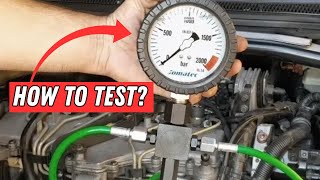
Connect a mechanical fuel pressure gauge to the low-pressure line. With the ignition on (engine off), compare the gauge reading to the live data from the ECU's Measuring Value Block (MVB) 103. Add 1 bar (14.5 psi) to the mechanical gauge reading. If the ECU value in MVB 103 deviates by more than ±1.0 bar (±14.5 psi) from the adjusted gauge value, the G410 sensor is faulty.
Tools: OBD-II Scanner with live data, Mechanical fuel pressure gauge, Repair Manual (Professional) - Inspect Relevant Fluid Levels and Condition
For cooling-related codes (Toyota), ensure the engine is cold and check the coolant level and condition. For VVT-related codes (VW/Audi), check the engine oil level and condition. Low or dirty oil is a primary cause of VVT solenoid failure.
Tools: Clean rag, flashlight (Beginner) - [PRO TIP] Test VVT Solenoid Resistance and Actuation
Disconnect the VVT solenoid's electrical connector. Measure the resistance between the two pins. Most VW/Audi solenoids read between 5-20 Ohms; infinity (OL) indicates an open circuit. Test for actuation by applying 12V power and ground to the pins; you should hear an audible click. No click means the solenoid is stuck.
Tools: Multimeter, Jumper wires, 12V power source (Intermediate) - Test the Thermostat
Start the cold engine and feel the upper radiator hose. It should remain cool for several minutes. As the engine warms up to operating temperature (195-220°F), the hose should suddenly become hot as the thermostat opens. If it stays cool or warms up slowly and evenly, the thermostat is stuck.
Tools: Infrared thermometer (optional) (Intermediate) - Test the Engine Coolant Temperature (ECT) Sensor
Measure the resistance of the ECT sensor when the engine is cold and again when it is hot. Compare these readings to the temperature-resistance chart in your vehicle's repair manual. A sensor with resistance far outside the specified range is faulty.
Tools: Multimeter, Repair Manual (Intermediate) - Inspect Sensor Wiring and Connectors
Visually inspect the wiring and connector for the relevant sensor (ECT for Toyota, VVT Solenoid or G410 for VW). Look for corrosion, damage, or loose connections.
Tools: Flashlight (Beginner) - [ADVANCED] Quantitative ECT Sensor Resistance Test
Measure the ECT sensor's resistance at known temperatures. A typical Toyota sensor reads approximately 2,200-3,000 Ω at 20°C (68°F) and 250-350 Ω at 80°C (176°F). The sensor's voltage should read high (2.5V-3.5V) when cold and low (~0.5V) when at operating temperature via a scan tool.
Tools: Multimeter, Infrared Thermometer, OBD-II Scanner with live data, Repair Manual (Advanced) - [ADVANCED] Quantitative VW/Audi Oil Pressure Test for VVT Faults
Connect a mechanical oil pressure gauge. At normal operating temperature (oil ~80°C), the pressure at idle should be at least 1.2 bar (17.4 psi). At 2000 RPM, it should be at least 2.7 bar (39 psi). Pressure below these specifications indicates a lubrication problem that must be addressed before replacing VVT components.
Tools: Mechanical oil pressure gauge, Repair Manual (Advanced)
When This Code Triggers (Freeze-Frame Conditions)
- Engine Coolant Temp: 80-110°C (176-230°F) (During normal operation after warm-up.)
- RPM: 1200-3000 (Cruise, steady throttle, or light acceleration.)
- Engine Load: 20-50% (Steady-state driving, not under heavy load.)
- Vehicle Speed: 45-65 mph (Highway or constant-speed driving.)
Related Codes
- P310B — On VW/Audi vehicles, P310B ('Low Pressure Fuel Regulation: Fuel Pressure Outside Specification') is a direct companion to P3142, set when the G410 low-pressure fuel sensor fails.
- P0128 — On Toyota models, P0128 ('Coolant Temperature Below Thermostat Regulating Temperature') indicates the engine is running too cool due to a thermostat stuck open.
- P0011 / P0016 — For VW/Audi vehicles, P0011 or P0016 are timing correlation faults caused by a failing VVT solenoid (flagged by P3142) throwing off mechanical timing.
- P0A93 — On Toyota/Lexus hybrids, P0A93 ('Inverter Cooling System Performance') is set when the inverter water pump fails, a separate but related cooling system fault.
Climate & Environmental Factors
- Extreme Cold Weather: On 2002-2003 Nissan Altimas, moisture in the fuel tank freezes, forming ice crystals that block the fuel pump inlet screen (Recall R3012/P3142).
- High Ambient Heat: For Toyota/Lexus hybrids, sustained high temperatures increase the thermal load, accelerating the wear and failure of both the electric engine water pump and the inverter water pump.
How to Talk to a Mechanic About This Code
Say this: "I have a check engine light on and my scanner shows code P3142. My vehicle is a [Year/Make/Model]. I know this code often points to a [Known Issue, e.g., low-pressure fuel sensor or cooling system problem]. I'd like to schedule a diagnostic appointment to confirm the specific cause."
This script signals that you are an informed customer. It provides the make and specific code, directing the technician's focus and reducing the chance of them starting a broad, expensive diagnostic 'fishing expedition'.
Avoid saying:
- 'My check engine light is on, can you just fix it?' (This is too vague and invites upselling).
- 'I think I need a new fuel pump.' (Don't diagnose for them; you anchor them to a costly and incorrect repair).
- 'Just do whatever you think is best.' (This gives away all your negotiating power).
Questions to ask before authorizing the repair:
- Can you explain exactly what test confirmed this part has failed? (e.g., 'Did you test the fuel pressure sensor against a mechanical gauge?').
- Is this a common failure on this model? Are there any Technical Service Bulletins (TSBs) for it?
- Could you show me the old part that you are replacing?
- What is the warranty on the parts and the labor for this specific repair?
Where to Take It: Dealer vs Independent vs Chain
- Dealer:
Best for: Vehicles still under a powertrain or emissions warranty., Performing official recall work (like on the affected Nissan models)., Complex electrical issues where access to manufacturer-specific diagnostic software is critical.
Downsides: Significantly higher labor rates, often $150-$250+ per hour., May recommend replacing an entire assembly when only a smaller component has failed., Less flexible on using aftermarket parts to save money. (Typical cost: +50% vs. baseline) - Independent Shop:
Best overall fit for most P3142 scenarios (VW, Toyota). A reputable independent shop specializing in your car's brand offers the best value. For the Nissan recall, the dealer is required.
Best for: Out-of-warranty vehicles where cost is a major factor., Common, well-documented problems like the VW G410 sensor or Prius water pump., Finding a technician who specializes in your vehicle's brand.
Downsides: Quality and expertise vary widely; vetting the shop's reputation and ASE certifications is crucial., May lack the latest manufacturer-specific diagnostic tools for brand-new models. (Typical cost: +0% vs. baseline) - Chain Shop:
AVOID for diagnosing P3142. The risk of an incorrect diagnosis (e.g., recommending a fuel pump for a sensor issue) is very high.
Best for: Simple, routine maintenance like oil changes or tire rotations.
Downsides: High pressure on technicians to upsell unnecessary services to meet sales quotas., Technician skill is inconsistent; they lack specialized knowledge for manufacturer-specific codes., High risk of misdiagnosis, potentially leading to replacing expensive parts that are not broken. (Typical cost: -10% vs. baseline)
When to Walk Away From the Repair
If the estimated repair cost exceeds 50% of your car's private-party value, strongly consider selling the vehicle.
- Car worth $4000, fix is $2200: Walk away. The repair cost is over 50% of the car's value. This money is better put towards a replacement vehicle.
- Car worth $12000, fix is $1800: Fix it. The repair cost is well below the threshold and is a reasonable investment to keep a more valuable car running.
- Car worth $2500, fix is $1500: Walk away. The repair is 60% of the car's value. It is not a sound financial decision.
What Scan Tool You Need for This Code
Minimum: A basic OBD-II code reader that can retrieve the specific P3xxx code.
A $20 reader only tells you the code (P3142) but provides no context. To properly diagnose this issue, you need to see manufacturer-specific live data, such as coolant temperature readings (Toyota) or fuel pressure sensor values (VW).
Budget: BlueDriver Pro (~$100) — Connects to your smartphone and provides access to live data, freeze-frame data, and Mode 6 diagnostics. This is enough to monitor coolant temps for a Toyota issue or view fuel pressure data for a VW.
Mid-range: Foxwell NT510 Elite (with VW/Audi software) (~$180) — Offers manufacturer-specific diagnostics for VAG vehicles. It provides bidirectional control, allowing you to command components like a VVT solenoid to activate, which is essential for testing on VW, Audi, and GM vehicles.
Professional: Autel MaxiCOM MK808S (~$450-550) — An entry-level professional tool offering comprehensive bidirectional control. It performs active tests on fuel pumps, VVT solenoids, and other actuators across a wide range of makes.
Rent vs buy: Auto parts stores like AutoZone read your basic code for free. They also offer a loaner tool program, where you place a deposit on a basic scanner and get a full refund upon return. For a one-time code, this is a good option. If you plan to do your own maintenance, buying a budget or midrange scanner is a worthwhile investment.
How to Clear the Code After You Fix It
- Use an OBD-II scan tool to clear the diagnostic trouble codes (DTCs).
- Perform a complete drive cycle to allow readiness monitors to run.
- Check for any pending or returning fault codes.
Drive cycle (~20 minutes): A general drive cycle includes a cold start, a few minutes of idling, followed by mixed city and highway driving. For VW, this includes idling for 2-3 minutes, driving at 45-55 mph for 7 minutes, and then at 60-65 mph for 5 minutes.
Readiness monitors affected: Catalyst monitor, O2 sensor monitor, EVAP system monitor, EGR system monitor
Before emissions retest: drive at least 100 miles to fully set monitors.
Watch out for:
- Disconnecting the battery clears the code but resets all readiness monitors to 'Not Ready', causing an automatic emissions test failure.
- The code returns if the underlying mechanical or electrical fault is not properly repaired.
- Not following the specific manufacturer's drive cycle results in monitors not setting.
Will This Fail Emissions / State Inspection?
Yes — this code typically fails an OBD-II emissions inspection.
- California: An illuminated check engine light is an automatic failure. All required OBD readiness monitors must be set to 'Ready'. After a repair, it takes 100-200 miles of driving for all monitors to complete.
- New York: A vehicle fails the NYVIP3 OBD-II inspection if the check engine light is on. For 2001 and newer vehicles, no more than one readiness monitor can be 'Not Ready'.
- Texas: An active P3142 code results in a failure. The vehicle also fails if more than one readiness monitor is 'Not Ready' for model year 2001 and newer.
Most Commonly Affected Vehicles
- Volkswagen / Audi A4, Jetta, Golf, GTI, Q5 (with 2.0T engine) (2009-2016) — Highly prone to failure of the G410 low-pressure fuel sensor (P/N 06E 906 051 K), causing codes P310B and P0087. Also susceptible to VVT solenoid failure.
- Toyota Prius (2010-2015) — These Gen 3 models are known for failures of the electric engine water pump (P/N 161A0-29015), causing overheating.
- Toyota Prius (2004-2009) — These Gen 2 models are prone to leaks from the belt-driven engine water pump and failures of the inverter water pump (triggering P0A93).
- Nissan Altima (2002-2003) — A recall (NHTSA #03V251000, Nissan #R3012/P3142) was issued for vehicles in cold-weather states to install a screen on the fuel pump inlet.
- Lexus CT200h (2011-2017) — Shares the same hybrid powertrain as the 2010-2015 Toyota Prius and experiences identical failures of the engine and inverter water pumps.
- Chevrolet / GM Impala, Malibu, various models (2008-2012) — P3142 is defined as 'Valve Lift Control Incorrect', pointing to a problem with GM's Active Fuel Management (AFM) or VVT systems.
- Hyundai / Genesis Sonata, G80, GV70, GV80 (2011-2022) — Subject to recalls and known issues with low-pressure fuel pumps and fuel tank pressure sensors triggering P3xxx codes.
- Audi A6, S4, S5 (with 3.0T engine) (2009-2017) — These models use the same G410 low-pressure fuel sensor that is prone to failure on the 2.0T engines.
Manufacturer-Specific Notes
- Volkswagen / Audi: This code points to the low-pressure fuel system, not the high-pressure pump. Always test the G410 sensor (P/N 06E 906 051 K) first per TSB 2027458.
- Toyota / Lexus: This code is almost always related to the engine cooling system. Diagnosis starts with the water pump, thermostat, and ECT sensor.
- Nissan: P3142 was used as an internal campaign number for a 2003 safety recall on Altimas concerning fuel pump inlet screens icing over in cold weather.
- General Motors (GM): P3142 is defined as 'Valve Lift Control Incorrect', pointing to the Active Fuel Management (AFM) or VVT systems. Diagnosis focuses on VVT solenoids and oil pressure.
Real Owner Stories
2013 Audi A4 2.0T with intermittent EPC light and stalling.
While idling in traffic, the EPC light illuminated, the engine sputtered and died, and would not restart until it cooled down. Codes P310B, P0087, and P3142 were present.
Outcome: The symptoms pointed to a classic failure of the G410 low-pressure fuel sensor. Replacing the sensor resolved the stalling and cleared the codes, avoiding a $600+ in-tank fuel pump replacement.
Lesson: On VW/Audi vehicles, intermittent stalling with codes P310B and P3142 is a textbook symptom of a failing G410 sensor. Always investigate TSBs before replacing expensive fuel pumps.
2013 Toyota Prius V at 155,000 miles with overheating warning light.
The engine temperature warning light flashed intermittently, accompanied by slow coolant loss. A shop quoted $2,000 to replace both the engine and inverter water pumps and sensors.
Outcome: A Toyota dealership correctly diagnosed that only the engine water pump was failing, a common Gen 3 Prius issue. The repair cost $900. Replacing only the necessary part resolved the overheating.
Lesson: A failed engine water pump on a Prius does not mean the inverter pump has also failed. Always get a second opinion for high-cost repairs involving multiple unrelated components.
2003 Nissan Altima stalling in sub-zero temperatures.
The vehicle stalled unexpectedly in very cold weather. The issue was linked to Nissan recall #R3012/P3142 (NHTSA #03V251000).
Outcome: The recall remedy was installing an updated screen on the fuel pump inlet to prevent ice crystals from blocking it. This low-cost fix prevented fuel starvation.
Lesson: For recall-related codes like P3142 on Nissans, the fix is often a minor component update rather than a major parts replacement.
How to Prevent This Code From Triggering
- Change engine oil with manufacturer-spec synthetic oil. (Every 5,000-10,000 miles, per manufacturer specification.) — For VW/Audi and GM VVT systems, clean oil is critical. Sludgy oil clogs the fine mesh screens on VVT solenoids, causing them to stick and fail.
- Flush and replace engine coolant with manufacturer-approved fluid. (Every 5 years or 50,000 miles after the initial long-life fill.) — For Toyota/Lexus cooling faults, using the correct coolant prevents corrosion and mineral buildup that damages water pump seals and clogs passages.
- Check oil and coolant levels. (Monthly.) — Low oil levels cause pressure drops that starve VVT systems. Low coolant levels are the first sign of a failing water pump or hose leak.
- Clean debris from radiator and condenser fins. (Annually.) — Blocked airflow forces the cooling system to work harder, accelerating wear and increasing the risk of overheating.
Frequently Asked Questions
What are common misdiagnosis mistakes for P3142?
A common mistake on VW/Audi vehicles is replacing the expensive low-pressure fuel pump when only the inexpensive G410 fuel pressure sensor is bad. Another is replacing the fuel pump on a 2002-2003 Nissan Altima when the recall only required installing a new inlet screen.
My Audi has code P310B, is that related?
Yes. P310B is the specific VW/Audi code for 'Low Pressure Fuel Regulation: Fuel Pressure Outside Specification'. It is the most common code triggered by a failing G410 sensor, and P3142 is often set alongside it.
Can I just clean a VVT solenoid?
If the issue is minor sludge on the oil screens, cleaning with brake cleaner restores function. However, if the solenoid fails a resistance test, replacement is the only fix.
Is the Prius engine water pump the same as the inverter water pump?
No. They are two separate pumps for two separate cooling systems. The engine water pump cools the gasoline engine, while the inverter water pump cools the high-voltage electronics.
Is P3142 a serious code?
Yes. Ignoring it leads to engine overheating, catalytic converter damage from misfires, or internal engine damage, resulting in much more expensive repairs.
How much does it cost to fix code P3142?
The cost depends entirely on the cause. A simple sensor replacement on a VW/Audi costs $145-$300. A Toyota Prius water pump replacement ranges from $400 to $770 depending on the year.
Will clearing the code make the problem go away?
No. Clearing the code only turns off the check engine light temporarily. The underlying mechanical or electrical fault still exists, and the light will return.
Key Takeaways
- P3142 is a manufacturer-specific code that requires looking up your exact make and model before buying any parts.
- On VW and Audi 2.0T engines, P3142 usually indicates a failed G410 low-pressure fuel sensor, a $150 DIY fix covered under TSB 2027458.
- For Toyota and Lexus hybrids, this code flags a critical cooling system failure, most often a dead electric engine water pump costing $400-$770 to replace.
- On 2002-2003 Nissan Altimas, P3142 is an internal recall code (R3012) for a frozen fuel pump inlet screen requiring a free dealership update.
- Driving with an active P3142 code risks catastrophic engine damage, including warped cylinder heads on Toyotas or destroyed catalytic converters on VWs.
Helpful Videos


The information in this article is provided for general reference and educational purposes only. Vehicle specifications, procedures, and part compatibility can vary by production date, trim level, and region. Always consult your vehicle's factory service manual and verify part numbers before purchasing or performing repairs. Safety-critical components such as airbags, seat belts, and braking systems should be installed by a qualified professional.
- 🎬 Helpful Videos
- What Does P3142 Mean?
- Can I Drive With P3142?
- Common Causes
- Symptoms
- Common Fixes & Costs
- DIY vs Professional
- Used vs. New Parts: Buying Guide
- What Happens If You Wait — Timeline
- Cost of Not Fixing It
- Diagnosis Steps
- When This Code Triggers (Freeze-Frame Conditions)
- Related Codes
- Climate & Environmental Factors
- How to Talk to a Mechanic About This Code
- Where to Take It: Dealer vs Independent vs Chain
- When to Walk Away From the Repair
- What Scan Tool You Need for This Code
- How to Clear the Code After You Fix It
- Will This Fail Emissions / State Inspection?
- Most Commonly Affected Vehicles
- Manufacturer-Specific Notes
- Real Owner Stories
- 2013 Audi A4 2.0T with intermittent EPC light and stalling.
- 2013 Toyota Prius V at 155,000 miles with overheating warning light.
- 2003 Nissan Altima stalling in sub-zero temperatures.
- How to Prevent This Code From Triggering
- Frequently Asked Questions
- What are common misdiagnosis mistakes for P3142?
- My Audi has code P310B, is that related?
- Can I just clean a VVT solenoid?
- Is the Prius engine water pump the same as the inverter water pump?
- Is P3142 a serious code?
- How much does it cost to fix code P3142?
- Will clearing the code make the problem go away?
- Key Takeaways
- 🎟️ Get 5% Off