

OBD-II Code P3140: Shut Off Valve 'A' Control Circuit/Open
What P3140 means, why it triggers, and how to fix it. Note: The meaning of this code varies significantly between manufacturers.
- P3140 indicates completely different failures based on the brand: an EVAP purge valve open circuit on VW/Audi, or a high-voltage safety interlock fault on Toyota hybrids.
- Test the VW/Audi N80 purge valve circuit for 12V power and a ground signal before spending $25-$50 on a replacement valve.
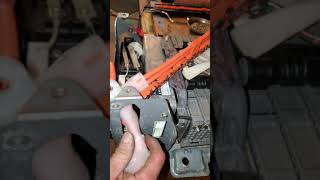
- Fix a Toyota Prius P3140 code for free by firmly pushing down and locking the orange high-voltage service plug handle in the trunk.
- Expect a rough idle and hard starting after refueling on a VW/Audi, whereas a Toyota will display a Red Triangle warning and refuse to enter the 'Ready' state.
What Does P3140 Mean?
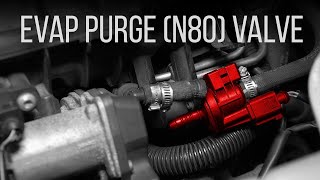
P3140's meaning depends entirely on the manufacturer. For Volkswagen and Audi, the engine control module (ECM) detects a broken electrical circuit (an 'open') in the EVAP system's purge valve (N80 valve). For Toyota hybrids, it indicates a broken circuit in the high-voltage safety interlock system. For BMWs, it points to an open fuel injector circuit.
Technical definition: On Volkswagen and Audi vehicles, P3140 is defined as "Shut Off Valve 'A' Control Circuit/Open", indicating a loss of electrical continuity to the EVAP Canister Purge Regulator Valve (N80). On Toyota hybrids, it is defined as 'HV Interlock Switch Operation', indicating a break in the safety circuit monitoring the high-voltage service plug and inverter covers.
Can I Drive With P3140?
Yes, But With Caution. For VW/Audi, you can drive, but a stuck-open purge valve creates a rich air-fuel mixture, damaging the catalytic converter over time—a repair costing $800-$2500. Address it within 200 miles. For a Toyota Prius, the vehicle refuses to enter a 'Ready' state, making it undrivable. In all cases, it causes an automatic emissions test failure.
Common Causes
- Failed EVAP Purge Valve (N80 Valve) (Very Common) — The most frequent cause on VW/Audi vehicles is the failure of the purge valve solenoid itself. The internal coil winding breaks, creating an 'open' circuit that the computer detects.
- Improperly Seated HV Service Plug or Cover (Toyota Hybrids) (Very Common) — On Toyota Prius and other hybrids, this code triggers when the orange high-voltage service plug is not fully inserted and locked, or an inverter cover is loose, opening the safety interlock circuit.
- Damaged Wiring, Connectors, or Pins (Common) — Wires leading to the purge valve (VW/Audi) or interlock switches (Toyota) become brittle, break, or suffer rodent damage. Corroded connector pins or bent pins on Toyota inverter covers also interrupt the electrical signal.
- Blown Fuse (Less Common) — The purge valve circuit on a VW/Audi is protected by a fuse. A blown fuse severs the circuit and triggers this code immediately.
- Faulty Interlock Microswitch (Toyota Hybrids) (Uncommon) — The microswitch detecting the position of the HV service plug becomes dirty, corroded, or fails internally, preventing contact even when the plug is properly seated. 🎬 See how to test and repair a faulty hybrid microswitch.
- Faulty Engine Control Module (ECM) (Rare) — The driver circuit within the ECM that controls the purge valve (VW/Audi) or monitors the interlock circuit (Toyota) fails. Consider this only after exhausting all wiring and component tests.
Symptoms
- Check Engine Light On — The most common symptom for the VW/Audi EVAP issue. The light illuminates as soon as the ECU detects the open circuit.
- Red Triangle Warning Light (Toyota Hybrids) — On a Toyota Prius, this code triggers the main high-voltage system warning (red triangle) and prevents the car from becoming 'Ready' to drive.
- Rough Idle — If the VW/Audi purge valve fails in a partially open state, it creates a vacuum leak, causing the engine to idle erratically or stumble.
- Difficulty Starting After Refueling — A stuck-open purge valve on a VW/Audi allows excess fuel vapors into the engine after shut-off, making it hard to start immediately after filling the gas tank.
- Reduced Fuel Economy — A faulty purge valve on a VW/Audi negatively affects the air-fuel mixture, decreasing overall fuel efficiency.
- Slight Fuel Odor — A malfunctioning EVAP system on a VW/Audi allows fuel vapors to escape, leading to a noticeable gasoline smell around the car.
Diagnostic Flowchart
Tap your situation to follow the diagnostic path that matches what you're seeing on this code.
Common Fixes & Costs
- Replace EVAP Purge Valve (N80 Valve) — Parts: $25-$50, Labor: $75-$150, ~0.5 hr book time (DIY)
- Secure HV Service Plug / Inverter Cover (Toyota) — Parts: $0, Labor: $50-$150, ~0.5 hr book time (DIY)
- Repair Damaged Wiring or Connector — Parts: $5-$25, Labor: $100-$250, ~1.5 hr book time (Intermediate)
- Replace Blown Fuse — Parts: $1-$5, Labor: $0-$50, ~0.3 hr book time (DIY)
Used vs. New Parts: Buying Guide
When a used part is worth it: For a low-cost electronic part like an EVAP purge valve, buying used is not recommended. The savings are minimal and the risk of getting a dead part is high.
Donor-vehicle mileage cap: roughly under 40000 miles for the part to have meaningful remaining life.
Donor quality checklist:
- Match the part number exactly; similar-looking valves have different flow rates.
- Avoid parts from high-mileage vehicles or regions with extreme heat.
- Test the used part with a multimeter (15-35 ohms) before installation.
Decision logic:
- If The part is an electronic solenoid like the N80 valve → Buy a new part from a reputable OEM or aftermarket brand like Bosch. The cost is low ($25-$50) and includes a warranty.
- If Budget is extremely tight and the vehicle is old → A used part is a gamble but serves as a temporary solution.
Warranty tradeoff: Used parts from a salvage yard typically have a 30-90 day warranty, but you pay for repeat labor if it fails. New OEM parts offer a 1-2 year warranty.
Worst-case if a used part fails: $100-$200 if a used valve fails shortly after installation, requiring repeat labor.
What Happens If You Wait — Timeline
- 0-1 month: For VW/Audi with a stuck-open valve: Check Engine Light on. A slight drop in fuel economy. Possible rough idle or slightly longer crank time after refueling. For Toyota: Red Triangle on, car is undrivable immediately. (MPG impact: 0-5%% · Added cost: $0-25 in wasted fuel)
- 1-4 months: VW/Audi: The engine's computer continuously adjusts for the rich condition, but long-term fuel trims remain significantly negative. This forces the catalytic converter to work overtime, and its internal temperature rises above the normal operating range. (MPG impact: 5-10%% · Added cost: $25-100 in wasted fuel)
- 4-8 months: VW/Audi: The sustained rich mixture causes the catalytic converter's ceramic substrate to overheat to temperatures exceeding its melting point. The substrate begins to sinter, melt, and clog. You notice a power loss and a 'rotten egg' smell. (MPG impact: 10-15%% · Added cost: $800-$2500 (catalytic converter replacement is now likely required))
- 8+ months: VW/Audi: Complete catalytic converter meltdown. The blockage creates significant exhaust backpressure, causing severe engine damage, fouled spark plugs, and damaged exhaust valves. The car stalls frequently. (MPG impact: 15-25%+% · Added cost: $1500-$3500+ (includes catalytic converter, O2 sensors, and potential engine diagnosis/repair))
Cost of Not Fixing It
- 0-1 month: Failed emissions test. On VW/Audi, if the valve is stuck open, you experience a 5-10% drop in fuel economy and rough idle. (Added cost: Negligible, other than wasted fuel.)
- 1-6 months: If the purge valve is stuck open, the engine runs consistently rich. This overwhelms the catalytic converter, causing it to overheat and degrade. (Added cost: $800-$2500 for catalytic converter replacement.)
- 6+ months: Continued rich conditions lead to fouled spark plugs and carbon buildup. On a Toyota, ignoring the HV interlock fault prevents the car from driving entirely. (Added cost: $200-$500 for spark plug replacement and intake cleaning, plus the cost of a catalytic converter.)
Diagnosis Steps
- Perform a Visual Inspection
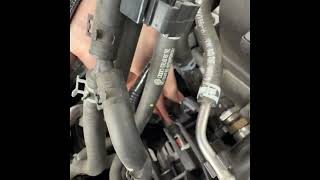
Identify your vehicle type. For VW/Audi, locate the EVAP purge valve (N80 valve) near the intake manifold and check for damaged wires or disconnected plugs. For Toyota Hybrids, inspect the orange HV service plug in the trunk and the inverter covers under the hood. Ensure they are securely locked.
Tools: Flashlight (Beginner) - Test the Valve's Resistance (VW/Audi)
Disconnect the electrical connector from the purge valve. Use a multimeter set to Ohms (Ω) to measure the resistance across the two pins on the valve. A good reading is between 15 and 35 Ohms at room temperature. A reading of 'OL' (infinite resistance) means the internal coil is broken, and the valve requires replacement.
Tools: Multimeter (Intermediate) - Check for Voltage at the Connector (VW/Audi)
With the ignition key in the 'On' position (engine off), use a multimeter to check for voltage at the electrical connector that plugs into the valve. Pin 1 must show battery voltage (approx. 12.6V) relative to a known good ground. If there is no voltage, check the EVAP circuit fuse.
Tools: Multimeter (Intermediate) - Listen for Valve Operation (VW/Audi)
Using a capable OBD-II scan tool, perform an 'output test' on the EVAP purge valve. When activated, you will hear a distinct clicking sound from the valve. No sound confirms an issue with the valve or its ground circuit.
Tools: OBD-II Scan Tool with bidirectional control (Intermediate) - Check for Ground Signal (VW/Audi)
The ECM provides a pulsed ground signal to activate the valve. With the engine running, connect a test light between the two pins of the connector. It flashes as the ECM attempts to control the valve. If you have 12V power but the light doesn't flash, the ground wire to the ECM is broken.
Tools: 12V Test Light, Vehicle Wiring Diagram (Advanced) - Test the HV Interlock Circuit (Toyota Hybrids)
If securing the service plug and covers fails to fix the code, test the interlock circuit. Disconnect the 12V battery. Using a multimeter, check for continuity through the entire interlock loop, including the service plug switch, inverter cover switches, and wiring back to the Hybrid Vehicle ECU. An 'OL' reading indicates a break requiring repair.
Tools: Multimeter, Vehicle Wiring Diagram (Advanced) - Analyze Scan Tool Live Data (VW/Audi)
Use a scan tool to monitor EVAP system PIDs. Observe the 'EVAP Purge Valve Command'. At idle, this reads 0%. If the ECM commands the valve open (e.g., 25%) but Short-Term Fuel Trim (STFT) does not change, the valve is not opening. If the command is 0% at idle but Long-Term Fuel Trim (LTFT) is heavily negative, the valve is stuck open.
Tools: Advanced OBD-II Scan Tool with Live Data (Advanced)
When This Code Triggers (Freeze-Frame Conditions)
- Engine Coolant Temp: 80-110°C (176-230°F) (Fully warmed up for circuit test. For the EVAP monitor to run, the vehicle must start cold.)
- RPM: 1200-3000 RPM (Cruise or steady throttle. The ECU tests the purge valve circuit under steady-state driving conditions, not typically at idle.)
- Engine Load: 20-50% (Light to moderate load during steady cruise. The test rarely runs under heavy acceleration.)
- Vehicle Speed: 45-65 mph (72-105 kph) (Steady highway driving. This condition is a key part of the EVAP drive cycle required to run the monitor.)
Related Codes
- P0441 — Relationship (VW/Audi): P0441 means 'Incorrect Purge Flow'. P3140 is an electrical open circuit fault, causing the 'no flow' condition that P0441 detects. Fix the open circuit (bad valve, broken wire) to restore flow and resolve P0441.
- P0443 — Relationship (VW/Audi): P0443 is the generic SAE code for 'Purge Control Valve Circuit Malfunction'. P3140 is the VAG-specific code for 'Purge Valve... Circuit/Open'. P3140 is more precise, confirming a break in continuity.
- P0455 — Relationship (VW/Audi): P0455 means 'EVAP System Gross Leak Detected'. If the N80 purge valve fails and gets stuck open, the constant vacuum pull is misinterpreted by the ECU as a massive system leak.
- P0A0D — Relationship (Toyota): P0A0D is the standardized SAE code for 'High Voltage System Interlock Circuit'. On later Gen 2 and newer Toyota hybrids, this code replaces the manufacturer-specific P3140 for the exact same issue.
Climate & Environmental Factors
- High Humidity / Salt Belt Regions: Moisture and road salt accelerate corrosion on the electrical connector pins for the N80 valve and within Toyota's HV interlock switches. This corrosion creates high resistance or a complete open circuit, directly triggering P3140.
- Extreme Cold: In temperatures below freezing, plastic components like the N80 valve housing and associated vacuum lines become brittle. This increases the likelihood of the valve casing or hose nipples cracking during service or from engine vibration.
How to Talk to a Mechanic About This Code
This language directs the technician to the most logical diagnostic steps. For VW/Audi, it prevents paying for a new valve if the problem is just a broken wire. For Toyota, it steers them toward the common, simple fix.
Avoid saying:
- 'My check engine light is on, can you look at it?'
- 'Just fix whatever is wrong.'
- 'I read online it's the N80 valve, just replace it.'
Questions to ask before authorizing the repair:
- For VW/Audi: Did the N80 valve fail the resistance test or the output test?
- For VW/Audi: If the valve is good, did you find the open in the power or ground wire?
- For Toyota: Was it the main HV plug or one of the inverter covers that was loose?
- Can you show me the failed part or the break in the wire?
- What is the warranty on this repair, including both parts and labor?
Where to Take It: Dealer vs Independent vs Chain
- Dealer:
Recommended for Toyota Hybrids if you lack a trusted hybrid specialist, or for any vehicle where the repair is covered by an emissions warranty.
Best for: Vehicles under warranty (PZEV or other extended emissions coverage)., Toyota owners uncomfortable with anyone other than a dealer touching the HV system., Complex diagnostic situations where multiple codes are present.
Downsides: Highest labor rates, often 1.5-2x an independent shop., Prefers replacing a larger assembly rather than a smaller component., Potential for upselling of other services. (Typical cost: +50% vs. baseline) - Independent Shop:
Best fit for the VW/Audi version of this code. For Toyota, choose an independent shop explicitly advertising as a 'Hybrid Specialist'.
Best for: Out-of-warranty VW/Audi vehicles with a straightforward N80 valve issue., Owners who have a trusted relationship with a local mechanic., Cost-sensitive repairs.
Downsides: Quality and expertise vary widely; vet shops by reviews and certifications., A general shop lacks specific VAG diagnostic tools or hesitates to work on Toyota HV systems. (Typical cost: +0% vs. baseline) - Chain Shop:
AVOID for this code. The risk of misdiagnosis is high for both the VW/Audi electrical fault and the Toyota HV interlock issue.
Best for: Simple, unrelated maintenance like tire rotations or oil changes.
Downsides: Technician skill varies dramatically; often lack specialized tools for VAG circuit diagnostics or HV systems., Business model creates high pressure to upsell unnecessary services. (Typical cost: -10% vs. baseline)
When to Walk Away From the Repair
If an estimated repair cost exceeds 50% of the car's private-party value, pause and consider if the investment is worthwhile.
- Car worth $5000, fix is $200: Fix it. This is a minor repair cost relative to the car's value.
- Car worth $3000, fix is $150: Fix it. Even on an older, lower-value car, this is a cost-effective repair.
- Car worth $2500, fix is $1800: Walk away. This implies the problem is NOT just P3140, but a major failure (e.g., bad ECM, damaged main harness).
What Scan Tool You Need for This Code
Minimum: For VW/Audi, a basic code reader plus a multimeter is the true minimum for proper diagnosis. For Toyota, a basic code reader is sufficient as the diagnosis is primarily physical inspection.
A $20 code reader only gives you the code, leading to guesswork. For a VW/Audi, you cannot command the N80 valve to test it, leaving you guessing between a bad valve and a bad wire.
Budget: BlueDriver Pro (~$100) — Reads and clears the code, provides freeze-frame data, and offers a database of verified fixes. It lacks bidirectional control to activate the N80 valve, requiring a multimeter to confirm the diagnosis.
Mid-range: Foxwell NT510 Elite (with VAG software) (~$180) — Offers full OE-level diagnostics for VW/Audi, including the crucial 'Active Test' to command the N80 purge valve to click on demand. This definitively separates a valve failure from a wiring failure.
Professional: Autel MaxiCOM MK808 / MK808BT (~$450-550) — Provides full bidirectional control for VW/Audi active tests, plus a huge range of service functions like ABS bleeding and injector coding. It is overkill for just this code, but a great investment for a serious DIYer.
Rent vs buy: For P3140, a multimeter is more important than a scanner. If you don't own a multimeter, buying one ($20) and borrowing a free code reader from an auto parts store is the most budget-friendly option. If you own a VW/Audi, buying a bidirectional scanner like the Foxwell NT510 Elite saves money on future repairs.
How to Clear the Code After You Fix It
- Use an OBD-II scan tool to clear the code.
- Perform a complete drive cycle to run the EVAP readiness monitor.
- Check readiness monitor status with a scan tool before going for an emissions test.
Drive cycle (~20 minutes): For VW/Audi: After a cold start, idle for 2-3 minutes. Drive at a steady 45-55 mph for 7-10 minutes. Perform a few smooth accelerations and decelerations. Ensure the fuel tank is between 1/4 and 3/4 full.
Readiness monitors affected: Evaporative (EVAP) System, Oxygen (O2) Sensor, Catalyst (CAT)
Before emissions retest: drive at least 50 miles to fully set monitors.
Watch out for:
- Disconnecting the battery clears the code but resets all readiness monitors, causing an automatic emissions test failure.
- The code returns immediately if the underlying electrical fault is not fixed.
- The EVAP monitor refuses to run if the fuel level is over 3/4 or under 1/4.
Will This Fail Emissions / State Inspection?
Yes — this code typically fails an OBD-II emissions inspection.
- California: An active P3140 is an automatic smog check failure. For model years 2001 and newer, only the EVAP monitor is allowed to be 'Not Ready' to pass.
- New York: A vehicle fails the NYVIP3 OBD-II inspection if the Check Engine Light is on for any reason. You must complete the drive cycle to set readiness monitors before re-inspection.
- Texas: In counties requiring emissions testing, an illuminated Check Engine Light is an automatic failure. For vehicles 2001 and newer, only one readiness monitor is permitted to be 'Not Ready'.
Most Commonly Affected Vehicles
- Volkswagen Jetta / GTI / GLI (2006-2015) — Very common failure part on the 2.0T and 2.5L engines. The N80 valve is easily accessible in the engine bay.
- Audi A4 / A6 (2005-2012) — Shares engine architecture with Volkswagen; the Bosch N80 purge valve is a frequent failure point.
- Volkswagen Passat (2006-2014) — Prone to N80 valve failure, leading to P3140 and related EVAP codes like P0441.
- Volkswagen Tiguan (2009-2017) — The EVAP system, including the purge valve, is a known source of check engine lights. Dealerships quote high for this repair, but it is a simple DIY job.
- Toyota Prius (Gen 1 & Gen 2) (2001-2009) — P3140 means 'HV Interlock Switch Operation', not an EVAP issue. It is usually caused by an improperly secured HV battery service plug or inverter cover.
- Toyota Estima Hybrid (2001-2006) — Similar to the Prius, this Japanese Domestic Market (JDM) hybrid uses P3140 to indicate a fault in the high-voltage interlock safety circuit.
- BMW 7 Series (e.g., 760i) (2002-2008) — On V12 engines, P3140 indicates 'High-pressure direct injection, cylinder 11 - circuit open', pointing to a fault with a specific fuel injector's electrical circuit.
- Volkswagen GTI (MK8) (2022-2024) — Newer models continue to use a similar N80 valve design which remains a potential point of failure.
Manufacturer-Specific Notes
- Toyota: For early model Toyota Prius and Estima hybrids (2001-2009), P3140 means 'HV Interlock Switch Operation'. It has nothing to do with the EVAP system. It indicates a high-voltage safety interlock is open, usually from an improperly secured HV battery service plug or a loose inverter cover.
- Volkswagen/Audi: This code is almost exclusively used by VAG brands to specify an open circuit in the N80 purge valve. While other brands have similar codes (like P0443), P3140 is a VAG-specific identifier for this exact electrical fault.
- Nissan: For the 2003 350Z, 'P3140' was not a diagnostic trouble code but the ID for a service campaign (NTB03-086a) concerning the Bose audio amplifier.
- BMW: On some models with V12 engines, P3140 indicates an open circuit for a specific fuel injector (e.g., cylinder 11), completely unrelated to EVAP systems.
Real Owner Stories
2005 Toyota Prius with Red Triangle Light
After hybrid battery cell replacement, the red triangle warning light illuminated with code P3140. The car refused to enter 'Ready' mode. The owner tried reseating the main orange HV service plug, but the code returned instantly.
What they tried:
- Disconnecting 12V battery to reset ECU.
- Removing and reinstalling the orange HV service plug multiple times.
- Swapping the service plug with one from another working Prius.
Outcome: The issue traced back to the separate interlock connector on one of the inverter's terminal covers under the hood. The pins on the connector bent during the previous repair, creating an open circuit. Straightening the pins cleared the P3140 code.
Lesson: On a Toyota hybrid, P3140 is a safety interlock code. Meticulously check ALL interlock points: the main HV service plug, the inverter covers, and the small microswitch connected to the service plug assembly.
2007 Audi A4 2.0T with multiple electrical codes
The car intermittently had a hard start, followed by an EPC light and Check Engine Light. Codes included P0444 (EVAP Purge Control Circuit Open), P0243 (Turbo Wastegate Solenoid), and P2294 (Fuel Pressure Regulator).
What they tried:
- Replaced N80 Purge Valve.
- Replaced spark plugs and coil packs.
- Replaced fuel filter and low-pressure fuel pump.
- Cleaned battery and ground connections.
Outcome: The root cause was a failing J757 relay that powers multiple components, including the N80 valve. When multiple 'circuit open' codes appear together, it points to a shared power supply or ground problem.
Lesson: Don't 'shotgun' parts when multiple circuit codes are present. Consult a wiring diagram to find the common power relay or ground point for all flagged components and test that first.
2002 Toyota Prius with 105k miles, P3140 after HV battery work
After fixing a bad hybrid battery cell, the car ran well for two months before the 'Triangle of Death' appeared with code P3140. The car ran fine but needed to pass a smog check.
What they tried:
- Replaced 12V battery.
- Disassembled the HV battery again to check all cell voltages.
- Searched online forums, which pointed towards the inverter pump.
Outcome: While inspecting the inverter pump, the owner noticed the inverter coolant level was extremely low. Topping off the inverter coolant reservoir made the P3140 code and the red triangle warning light disappear immediately.
Lesson: While P3140 on a Prius is an interlock circuit code, other system faults sometimes cause confusing symptoms. Always start with simple visual checks: fluid levels, loose connectors, and secure covers.
How to Prevent This Code From Triggering
- Apply Dielectric Grease to Connectors (Whenever a relevant connector is disconnected) — For VW/Audi, this prevents moisture and salt from corroding the N80 valve connector pins. For Toyota, it protects the interlock switch connectors from contamination.
- Use High-Quality, Top-Tier Fuel (Every fill-up) — Lower quality fuels contain contaminants that contribute to deposits inside the EVAP system, potentially affecting the mechanical operation of the N80 purge valve.
- Install Rodent Deterrents (Once, especially if parking outdoors) — Using rodent-repellent tape on the harness or installing an ultrasonic repeller prevents chewed wires, a common cause of open circuits.
- Follow Proper HV System Service Procedure (Toyota) (Every time the HV system is serviced) — Always confirm the 'Ready' light comes on and there are no warnings after reinstalling the HV service plug or inverter covers. This prevents driving away with an undetected interlock issue.
- Avoid Overfilling the Fuel Tank (Every fill-up) — Topping off the gas tank forces liquid fuel into the charcoal canister. This saturates the canister and sends contaminants down the line to the purge valve, causing it to stick or fail.
Frequently Asked Questions
Can I fix a P3140 code myself?
Yes, in many cases. Replacing a bad N80 purge valve on a VW or Audi is a simple DIY repair. On a Toyota Prius, the fix is often as simple as ensuring the orange HV service plug is fully locked.
I replaced the N80 valve on my VW, but P3140 is still on. What now?
This is a common misdiagnosis pitfall. With the key on, check for battery voltage (12V) at the valve's electrical connector. If voltage is present and the new valve is good, the problem is a break in the ground wire running back to the ECM.
What are the most common mistakes when diagnosing P3140?
For VW/Audi, the biggest mistake is buying a new N80 valve without testing the circuit for power and ground first. For a Toyota Prius, the mistake is assuming the expensive HV battery has failed. The cause is almost always a simple fix like re-seating the HV service plug.
What is an N80 valve?
N80 is the component name used by Volkswagen and Audi for the EVAP canister purge valve. It is a small solenoid that controls the flow of fuel vapors from the charcoal canister to the engine.
Why does my Toyota Prius have a P3140 code but no fuel smell?
On a Toyota Prius, P3140 is a high-voltage safety code indicating a component like the orange HV battery service plug is not properly locked. It is not an emissions code and will not cause EVAP symptoms.
How much does it cost to fix P3140 at a shop?
For the common VW/Audi N80 valve replacement, repair shop costs typically range from $100 to $200. For a Toyota, if the cause is a loose plug, the cost is usually just the diagnostic fee ($50-$150).
Will a P3140 code cause my car to fail an emissions test?
Yes. Any active Check Engine Light or main malfunction indicator results in an automatic failure of a smog or emissions inspection.
What does the 'Open' in 'Circuit/Open' mean?
In electrical terms, 'Open' means there is a physical break in the circuit preventing electricity from flowing. This is caused by a broken wire, a disconnected plug, a blown fuse, or a failed internal coil.
Key Takeaways
- P3140 indicates completely different failures based on the brand: an EVAP purge valve open circuit on VW/Audi, or a high-voltage safety interlock fault on Toyota hybrids.
- Test the VW/Audi N80 purge valve circuit for 12V power and a ground signal before spending $25-$50 on a replacement valve.
- Fix a Toyota Prius P3140 code for free by firmly pushing down and locking the orange high-voltage service plug handle in the trunk.
- Expect a rough idle and hard starting after refueling on a VW/Audi, whereas a Toyota will display a Red Triangle warning and refuse to enter the 'Ready' state.
Helpful Videos

The information in this article is provided for general reference and educational purposes only. Vehicle specifications, procedures, and part compatibility can vary by production date, trim level, and region. Always consult your vehicle's factory service manual and verify part numbers before purchasing or performing repairs. Safety-critical components such as airbags, seat belts, and braking systems should be installed by a qualified professional.
- 🎬 Helpful Videos
- What Does P3140 Mean?
- Can I Drive With P3140?
- Common Causes
- Symptoms
- Diagnostic Flowchart
- Common Fixes & Costs
- Used vs. New Parts: Buying Guide
- What Happens If You Wait — Timeline
- Cost of Not Fixing It
- Diagnosis Steps
- When This Code Triggers (Freeze-Frame Conditions)
- Related Codes
- Climate & Environmental Factors
- How to Talk to a Mechanic About This Code
- Where to Take It: Dealer vs Independent vs Chain
- When to Walk Away From the Repair
- What Scan Tool You Need for This Code
- How to Clear the Code After You Fix It
- Will This Fail Emissions / State Inspection?
- Most Commonly Affected Vehicles
- Manufacturer-Specific Notes
- Real Owner Stories
- 2005 Toyota Prius with Red Triangle Light
- 2007 Audi A4 2.0T with multiple electrical codes
- 2002 Toyota Prius with 105k miles, P3140 after HV battery work
- How to Prevent This Code From Triggering
- Frequently Asked Questions
- Can I fix a P3140 code myself?
- I replaced the N80 valve on my VW, but P3140 is still on. What now?
- What are the most common mistakes when diagnosing P3140?
- What is an N80 valve?
- Why does my Toyota Prius have a P3140 code but no fuel smell?
- How much does it cost to fix P3140 at a shop?
- Will a P3140 code cause my car to fail an emissions test?
- What does the 'Open' in 'Circuit/Open' mean?
- Key Takeaways
- 🎟️ Get 5% Off