

OBD-II Code P3094: Hybrid Inverter Cooling System Fault
What P3094 means, why it triggers, and how to fix it
- Code P3094 indicates a failed electric inverter coolant pump on most Toyota, Lexus, and Ford hybrids.
- Stop driving immediately to prevent a $3,000+ inverter replacement; the vehicle will stall unexpectedly when the system overheats.
- Replacing the inverter coolant pump costs $250-$550 at a shop, but DIYers can complete the job for under $150 using an OEM Aisin pump.
- On 2019-2022 GM Silverado and Sierra trucks, P3094 requires a wiring harness repair per TSB 21-NA-149, not a parts replacement.
What Does P3094 Mean?
P3094 is a manufacturer-specific code indicating a failure in the hybrid inverter's cooling system. The inverter converts high-voltage DC power from the battery to AC power for the electric motors, generating extreme heat. The engine control unit (ECU) triggers this code when it detects the inverter is overheating, almost always due to a dead electric coolant pump or an empty coolant reservoir.
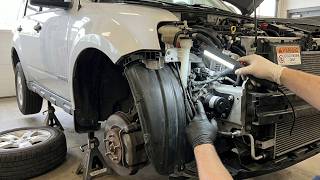
Technical definition: P3094 is a manufacturer-specific powertrain code. On Toyota, Lexus, and Ford hybrids, it signifies a malfunction within the dedicated hybrid inverter cooling system, 🎬 Watch: How to replace the coolant pump on Ford hybrids. specifically pointing to a failed electric inverter coolant pump. On 2019-2022 GM trucks, it indicates an engine wiring harness short circuit.
Can I Drive With P3094?
No — Do Not Drive. Do not drive. The vehicle enters a reduced-power 'limp mode,' and the inverter overheats rapidly, shutting down the hybrid system completely. This causes unexpected stalling in traffic. Continued operation causes irreversible thermal damage to the inverter and main hybrid battery cells, turning a $300 pump repair into a $3,000 component replacement.
Common Causes
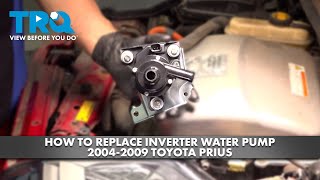
- Failed Inverter Coolant Pump (Very Common) — The small electric water pump circulating coolant through the hybrid inverter is a known wear item and the primary cause for this code on Toyota, Lexus, and Ford hybrids. 🎬 Watch: Step-by-step Toyota Prius inverter water pump replacement guide.
- Low Inverter Coolant Level (Common) — The inverter uses a separate cooling loop. A leak in a hose, the dedicated radiator, or a connection drops the coolant level, preventing heat dissipation.
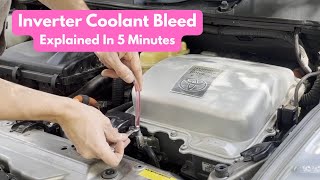
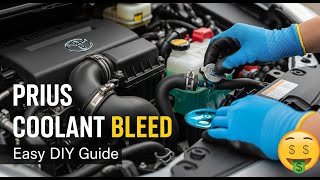
- Air in the Inverter Cooling System (Common) — If the system was recently serviced or leaked, trapped air blocks coolant circulation. 🎬 See this easy DIY guide for bleeding the coolant system. The inverter overheats even if the pump works and the reservoir is full.
- Damaged Wiring Harness (Common) — A chafed wiring harness shorts out the circuit. On 2019-2022 GM trucks, this is the exclusive cause due to harness routing near the ECM bracket.
- Blown Fuse or Failed Relay (Less Common) — A blown 'Inverter Water Pump' fuse or a failed relay prevents the pump from receiving power or the activation command.
- Clogged Passages or Incorrect Coolant (Rare) — Using universal green coolant instead of the specified pink/red hybrid coolant causes gelling and sediment buildup, clogging the inverter's internal heat sink.
- Failing 12V Auxiliary Battery (Rare) — A dying 12V battery drops system voltage during startup, disrupting module communication and triggering false pump circuit codes.
- Failed Hybrid Control Module (ECU) (Very Rare) — The computer controlling the hybrid system fails and incorrectly reports a pump malfunction or fails to send the activation signal.
Symptoms
- “Check Hybrid System” Warning Light — Accompanied by a red triangle warning light on the dashboard and a master alarm.
- Vehicle Enters “Limp Mode” — The car drastically reduces power and limits speed to protect sensitive electronics from heat damage.
- Vehicle Stalls or Shuts Down — If the inverter overheats past a critical threshold, the hybrid system shuts down completely while driving.
- Radiator/Cooling Fans Running on High Speed — The vehicle's main cooling fans run at maximum speed to compensate for the overheating inverter.
- Gasoline Engine Runs Constantly — The system keeps the gasoline engine running to compensate for the disabled hybrid drive, destroying fuel economy.
- Loud Whining or Grinding Noise from Pump — A failing pump motor or bearing produces an audible whining or grinding sound from the engine bay.
Diagnostic Flowchart
Tap your situation to follow the diagnostic path that matches what you're seeing on this code.
Common Fixes & Costs
- Replace Inverter Coolant Pump
— Parts: $50-$250, Labor: $150-$400, ~1.5 hr book time
(Intermediate)
Toyota Prius (2004-2009): OEM G9020-47031 (Alt: Aisin WPT-107)
Lexus RX400h (2006-2008): OEM G9040-48080 (Alt: Aisin WPT-803)
Ford Escape Hybrid (2005-2008): OEM 5M6Z-8C419-A (Alt: Dorman 902-001) - Refill and Bleed Inverter Cooling System — Parts: $20-$40, Labor: $75-$150, ~1.0 hr book time (DIY)
- Repair Damaged Wiring Harness (GM) — Parts: $10-$50, Labor: $300-$750, ~1.2 hr book time (Professional)
- Replace Blown Fuse or Relay — Parts: $5-$30, Labor: $0-$75, ~0.1 hr book time (DIY)
- Replace Inverter/Converter Assembly (Last Resort) — Parts: $1500-$3500, Labor: $500-$1000, ~4.0 hr book time (Professional)
DIY vs Professional
- Replace Inverter Coolant Pump — Beginner:
Tools: Basic socket set, pliers (for hose clamps), funnel, drain pan, specified coolant. - Repair Damaged Wiring Harness (GM) — Beginner:
Tools: Professional diagnostic tools, multimeter, wire strippers, soldering iron, heat shrink, anti-abrasion tape. - Replace Blown Fuse or Relay — Beginner:
Tools: Fuse puller or small pliers. - Refill and Bleed Inverter Cooling System — Beginner:
Tools: Funnel, specified coolant, clear hose for bleeder valve, basic hand tools.
Used vs. New Parts: Buying Guide
When a used part is worth it: Buy new OEM or Aisin pumps; cheap aftermarket pumps have notorious failure rates. A used OEM pump is only acceptable on a very tight budget for a vehicle nearing the end of its lifespan.
Donor-vehicle mileage cap: roughly under 60000 miles for the part to have meaningful remaining life.
Donor quality checklist:
- Favor new OEM or OEM-supplier (e.g., Aisin for Toyota) parts for reliability.
- Avoid cheap, unbranded aftermarket pumps.
- If buying used, get it from a reputable salvage yard with at least a 90-day warranty.
Decision logic:
- If OEM pump < $150 → Buy new.
- If Paying for labor → Buy new OEM to avoid repeat labor costs.
Warranty tradeoff: Used parts: Typically 30-90 day parts-only warranty. New OEM/OEM-Supplier: 1-2 year warranty, representing the highest confidence in part longevity.
Worst-case if a used part fails: $200-$600 if a used or cheap pump fails, requiring a second repair (new part + repeat labor).
What Happens If You Wait — Timeline
- 0-10 miles: Check Hybrid System light illuminates. Vehicle enters limp mode. Inverter temperature spikes. (MPG impact: 0-5%% · Added cost: $0)
- 10-50 miles: Repeated overheating thermally stresses internal electronics. The car stalls completely during a drive. (MPG impact: 10-25%% · Added cost: $150-$300 (Towing))
- 50-100 miles: Cumulative thermal stress permanently damages the inverter's Intelligent Power Modules (IPMs). The car will not restart. (MPG impact: N/A% · Added cost: $2,500-$4,000 (Inverter Replacement))
- 100+ miles: Catastrophic inverter failure. Extreme heat transfers to the hybrid battery pack, causing premature cell failure. (MPG impact: N/A% · Added cost: $4,000-$7,000+ (Inverter and Battery Replacement))
Cost of Not Fixing It
- Immediate (First 1-10 Miles): Vehicle enters limp mode or stalls unexpectedly in traffic. (Added cost: $150-$300 (Towing))
- Short-Term (10-100 Miles): Repeated overheating cycles cause cumulative thermal stress to the inverter's internal capacitors and transistors. (Added cost: $0 (if repaired promptly))
- Long-Term (100+ Miles): Catastrophic failure of the inverter assembly and thermal degradation of the main hybrid battery pack. (Added cost: $2,500-$5,000+ (Inverter/Battery Replacement))
Diagnosis Steps
- Check for Inverter Coolant Flow
With the vehicle in the 'Ready' position, remove the cap from the inverter coolant reservoir. You must see a small stream or turbulence in the fluid. If the coolant is completely still, the pump is dead.
Tools: None (Beginner) - Visually Inspect the Inverter Coolant Reservoir
Locate the small, separate coolant reservoir for the inverter system. Check if the coolant level is between the 'FULL' and 'LOW' lines. Low coolant indicates a leak.
Tools: Flashlight (Beginner) - Inspect Wiring Harness (GM Trucks Only)
For 2019-2022 GM trucks, meticulously inspect the engine wiring harness for chafing near the ECM bracket, driver's side upper control arm, and shock tower per TSB 21-NA-149.
Tools: Flashlight, inspection mirror (Intermediate) - Check Fuses and Relays
Locate the fuse and relay for the 'Inverter Water Pump'. Visually inspect the fuse and test it for continuity. Swap the relay with an identical known-good relay (e.g., horn) to test.
Tools: Owner's manual, fuse puller, multimeter (Beginner) - Test for Power at the Pump Connector
Disconnect the electrical connector at the inverter coolant pump. With the vehicle 'Ready,' use a multimeter to verify the pump receives 12V battery voltage and has a solid ground. If power exists but the pump doesn't run, the pump failed internally.
Tools: Multimeter, basic hand tools (Intermediate) - [PRO TIP] Command Pump with a Scan Tool
Using a bidirectional scan tool, access the Hybrid Control Module. Command the 'Inverter Pump' ON. If the tool sends the command but there is no flow in the reservoir, the pump or wiring failed.
Tools: Bidirectional OBD-II Scanner (Intermediate) - [PRO TIP] Test Pump Motor Resistance
With the pump unplugged, measure resistance (Ohms) between the power and ground terminals on the pump. Infinite resistance (open circuit) or near-zero resistance (short circuit) confirms a dead motor.
Tools: Multimeter (Professional) - [ADVANCED] Confirm Overheating via Live Data or Voltage Drop
Monitor 'Inverter Temperature' with a scan tool; it should not exceed 150°F (65°C). Alternatively, check the 12V battery voltage in 'Ready' mode. If the inverter overheats, it shuts off the DC-DC converter, dropping voltage from a healthy 13.8V down to 12.5V.
Tools: Hybrid-capable OBD-II Scanner or Multimeter (Advanced) - Bleed the Inverter Cooling System
After replacing the pump, attach a clear hose to the bleeder valve and run the pump until a solid, bubble-free stream of coolant flows out. Failing to bleed the system causes the code to return immediately.
Tools: Clear hose, specified coolant, basic hand tools (DIY)
When This Code Triggers (Freeze-Frame Conditions)
- Inverter Temperature: > 150°F (65°C) (The ECU logs the fault when internal sensors exceed predefined thermal thresholds.)
- Vehicle Speed: 45-70 mph (Sustained highway driving places continuous high load on the hybrid system, generating heat a failing pump cannot dissipate.)
- Ambient Temperature: > 85°F (29°C) (Hot weather reduces cooling efficiency, pushing a marginal pump to failure.)
- Engine/Hybrid System Load: 40-70% (Driving up steep grades or heavy acceleration increases electrical load and heat generation.)
Related Codes
- P0A93 — Generic SAE code for 'Inverter Cooling System Performance.' P3094 is the manufacturer-specific equivalent. The root cause is identical.
- P0A94 — DC/DC Converter Performance. The converter shares the inverter's cooling loop. An overheating inverter (P3094) triggers this code.
- P3000 — Hybrid Battery Control System. A master fault code indicating a general hybrid problem. P3094 pinpoints the exact location.
- C1259 — HV System Regenerative Malfunction. The ECU disables regenerative braking as a safety precaution when P3094 sets. Resolving P3094 clears C1259.
Climate & Environmental Factors
- High Ambient Temperature: Hot weather pushes a weak inverter coolant pump past its limit. Driving in stop-and-go traffic on 90°F+ days guarantees failure for a marginal pump.
- Extreme Cold: Extreme cold makes wire insulation brittle, worsening the GM wiring harness chafe issue. However, heat remains the primary trigger for hybrid inverter failures.
How to Talk to a Mechanic About This Code
Say this: "I have a P3094 code. Based on my research, it's likely the inverter coolant pump. Please check for coolant flow in the inverter reservoir and verify power to the pump before quoting a full inverter replacement."
This signals you are an informed customer, steering the mechanic toward the most common, low-cost failure. It establishes a clear, logical diagnostic path and sets the expectation that they should not jump to the most expensive conclusion.
Avoid saying:
- 'My hybrid is acting weird, can you fix it?'
- 'The triangle light is on.'
- 'I think I need a new inverter.'
Questions to ask before authorizing the repair:
- Did you see turbulence in the inverter coolant reservoir when the car was in 'Ready' mode?
- If the pump wasn't running, did you confirm it's receiving 12V power and a command signal from the ECU?
- If you are recommending a full inverter replacement, can you show me the data that proves the pump and its circuit are good, but the inverter is still overheating?
- Does your estimate include properly bleeding the inverter cooling system after the repair?
- What is the warranty on the replacement part and your labor?
Where to Take It: Dealer vs Independent vs Chain
- Dealer:
Recommended for GM trucks or vehicles under warranty. For out-of-warranty Toyota/Lexus, use with caution and question an immediate inverter replacement diagnosis.
Best for: Vehicles still under a hybrid system or emissions warranty., Diagnosing the specific wiring harness issue on 2019-2022 GM trucks (TSB 21-NA-149)., Complex software-related issues or recalls.
Downsides: Highest labor rates., Tendency to quote full inverter replacements rather than diagnosing the cheaper external pump. (Typical cost: +40% vs. baseline) - Independent Shop:
Best fit for most out-of-warranty hybrids (non-GM). Seek out a well-reviewed independent shop that specializes in hybrids.
Best for: Out-of-warranty Toyota, Lexus, Ford, and other common hybrids., Owners seeking a better price and a direct relationship with the technician., Shops that specifically advertise as 'hybrid specialists'.
Downsides: Quality and experience vary greatly; a general mechanic may not understand hybrid cooling systems., May lack access to the very latest manufacturer TSBs. (Typical cost: +0% vs. baseline) - Chain Shop:
AVOID for this code. The risk of misdiagnosis or being sold an unnecessary inverter is extremely high.
Best for: Simple, unrelated maintenance like tires or oil changes.
Downsides: Technicians lack specialized high-voltage training., High risk of misdiagnosis and improper bleeding procedures. (Typical cost: -10% vs. baseline)
When to Walk Away From the Repair
If the estimated repair cost exceeds 50% of the car's value, consider selling.
- Car worth $5000, fix is $650: Fix it. This is a standard and expected repair cost for an older hybrid and is well below the 50% threshold.
- Car worth $5000, fix is $3500: Walk away. The repair cost is 70% of the car's value. This assumes a worst-case scenario where the inverter itself is damaged.
- Car worth $15000, fix is $750: Fix it. The repair cost is a tiny fraction of the vehicle's value.
What Scan Tool You Need for This Code
Minimum: A tool that can read manufacturer-specific codes and display live data for the hybrid system, including inverter temperatures.
A basic $20 code reader cannot show live inverter temperatures to confirm overheating, nor can it command the pump to turn on for testing.
Budget: BlueDriver Pro (~$99) — Reads manufacturer codes and live inverter temperatures.
Mid-range: Autel MaxiCOM MK808S (~$350) — Provides bidirectional control to manually command the inverter pump ON for definitive testing.
Professional: Autel MaxiSys MS906Pro (~$1200) — OEM-level functions and guided diagnostics.
Rent vs buy: Investing in a mid-range bidirectional tool is highly recommended and pays for itself quickly.
How to Clear the Code After You Fix It
- Use an OBD-II scan tool to clear the P3094 code and any related codes (like C1259).
- Perform the specific bleeding procedure for the inverter cooling system to remove all air.
- Complete a full drive cycle to allow the vehicle's readiness monitors to reset for emissions testing.
Drive cycle (~30 minutes): Cold start, idle for 5-10 minutes, drive at 55-60 mph for 15-20 minutes, followed by mixed city driving.
Readiness monitors affected: Evaporative System (EVAP), Catalyst (CAT), Oxygen Sensor (O2S)
Before emissions retest: drive at least 50 miles to fully set monitors.
Watch out for:
- Failing to bleed the inverter cooling system causes the code to return immediately.
- Disconnecting the 12V battery clears the code but resets all readiness monitors.
Will This Fail Emissions / State Inspection?
Yes — this code typically fails an OBD-II emissions inspection.
- California: An illuminated Check Engine Light results in an automatic smog check failure. After repair, a complete drive cycle must be performed to set all OBD-II readiness monitors before the vehicle can be re-tested.
- New York: The NYS vehicle inspection includes an OBD-II scan. Any fault code that illuminates the Malfunction Indicator Lamp (MIL), such as P3094, will cause the vehicle to fail the inspection.
- Texas: In the 17 counties requiring emissions testing, an illuminated Check Engine Light is an automatic failure. The OBD-II system is scanned for fault codes, and P3094 prevents the vehicle from passing.
Most Commonly Affected Vehicles
- Toyota Prius (2004-2015) — The inverter coolant pump is a very common failure item on the 2nd and 3rd generation Prius.
- Lexus RX 400h (2006-2008) — Shares hybrid technology with Toyota. A recall was issued for 2006-2007 models for inadequately soldered transistors.
- Ford Escape Hybrid (2005-2012) — Suffers from failures of the Motor Electronics Coolant Pump (MECP), which is functionally identical to the inverter pump.
- Lexus CT 200h (2011-2017) — Utilizes a similar hybrid powertrain to the 3rd generation Prius and is highly susceptible to inverter coolant pump failure.
- Hyundai Sonata Hybrid (2011-2015) — P3094 points to a failure of the Hybrid Power Control Unit (HPCU) coolant pump.
- Kia Optima Hybrid (2011-2016) — Experiences the same failure of the HPCU coolant pump as the Sonata Hybrid.
- Nissan Altima Hybrid (2007-2011) — Uses a hybrid system licensed from Toyota and is prone to the same inverter coolant pump failures.
- Chevrolet / GMC Silverado 1500 / Sierra 1500 (2019-2022) — P3094 is NOT a hybrid code on these trucks. It indicates an engine wiring harness chafing issue per TSB 21-NA-149.
Manufacturer-Specific Notes
- Toyota / Lexus: P3094 is almost exclusively caused by a failed inverter coolant pump. Tapping the pump housing with a screwdriver handle temporarily starts a stuck pump, confirming the diagnosis.
- Chevrolet / GM: On 2019-2022 Silverado/Sierra trucks, P3094 indicates a wiring harness chafing problem (TSB 21-NA-149), not a component failure.
- Hyundai / Kia: The inverter is called the Hybrid Power Control Unit (HPCU). The diagnostic and repair process mirrors the Toyota Prius.
Real Owner Stories
2008 Toyota Prius at 111K miles - The Classic Pump Failure
While driving on the freeway, all dashboard warning lights illuminated, and the vehicle lost power. The dealer diagnosed a failed inverter and quoted $4,000.
What they tried:
- The owner checked for coolant circulation in the inverter reservoir with the car in 'Ready' mode.
- The fluid was completely still, confirming the pump was dead.
Outcome: The owner replaced the inverter coolant pump for under $150 in parts. The $4,000 inverter replacement was completely unnecessary.
Lesson: A sudden loss of power with hybrid warning lights on a high-mileage Prius is the classic symptom of a failed inverter coolant pump. Verify pump operation before accepting a $4,000 inverter replacement diagnosis.
2019 GMC Sierra - The Misleading GM Code
Check Engine Light came on with code P3094. The truck experienced intermittent rough running and reduced engine power.
What they tried:
- A mechanic unfamiliar with the GM-specific issue wanted to replace the ECM.
Outcome: The owner discovered GM TSB 21-NA-149, which states P3094 on these trucks is caused by the engine wiring harness chafing against the chassis. The fix was repairing the damaged wire section and securing the harness.
Lesson: On 2019-2022 GM trucks, P3094 is a wiring issue, not a component failure. Inspect the engine harness in the locations specified by TSB 21-NA-149 before replacing any parts.
2008 Lexus RX400h - The Misdiagnosis Chain
Car repeatedly died while driving, displaying 'Check Hybrid System'. A specialist diagnosed a faulty HV ECU and quoted $3,000.
What they tried:
- The owner took the car to a taxi repair shop specializing in Prius hybrids for a second opinion.
Outcome: The hybrid specialist diagnosed and replaced a faulty fuel pump relay for $100, permanently solving the problem.
Lesson: Complex electrical issues are easily misdiagnosed. Seek a second opinion from a hybrid specialist before authorizing a $3,000 ECU replacement.
2012 Toyota Prius - The DIY Replacement and Bleeding Trap
The owner correctly diagnosed a failed inverter pump and replaced it themselves. The 'Check Hybrid System' light came on again almost immediately.
What they tried:
- Cleared the codes with a scan tool, but the code returned.
Outcome: The code returned because the inverter cooling system was not properly bled. Air trapped in the system prevented coolant from circulating. The owner performed the specific bleeding procedure, resolving the issue.
Lesson: The repair is not finished after replacing the part. You must properly bleed the air out of the inverter cooling system, or the P3094 code returns immediately.
How to Prevent This Code From Triggering
- Change Inverter Coolant (Every 100,000 miles or 10 years.) — Old coolant becomes acidic, causing sediment buildup that destroys the pump's internal seals.
- Use ONLY Manufacturer-Specified Coolant (Every time the system is serviced.) — Universal green coolant causes chemical reactions that gel and clog the system.
- Periodically Check Inverter Coolant Level (Every oil change.) — Catching a slow leak early prevents the system from running dry and destroying the pump.
- Keep Radiator Fins Clean (Annually.) — Clogged fins force the pump to work harder, accelerating wear and increasing overheating risks.
Frequently Asked Questions
Is P3094 a serious code?
Yes. The vehicle enters limp mode and stalls unexpectedly in traffic. Ignoring the code causes permanent thermal damage to the inverter and hybrid battery, costing thousands of dollars.
Can I fix P3094 myself?
Replacing the inverter coolant pump is a popular DIY repair requiring basic tools and under $150 in parts. However, proper system bleeding is mandatory. If the problem involves GM wiring or a control module, seek professional help.
What is the most common misdiagnosis for P3094?
Replacing the entire $3,000 inverter assembly when only the $300 external coolant pump failed. Another common error is replacing the pump but failing to bleed the air out, causing the code to return immediately.
My mechanic wants to replace the whole inverter for $4,000. Is that necessary?
Almost never. The overwhelming majority of P3094 codes stem from the external electric water pump. Insist the mechanic tests the pump for power, ground, and command signals before authorizing an inverter replacement.
Can a bad inverter pump damage my hybrid battery?
Yes. An overheating inverter transfers excess heat to the main hybrid battery pack. This thermal stress accelerates cell degradation, leading to premature battery failure.
What kind of coolant does the inverter system use?
You must use the manufacturer's specified coolant, typically a pink or red non-silicate formula like Toyota Super Long Life Coolant. Generic green coolant causes corrosion and clogs the system.
Why does my car have two cooling systems?
The gasoline engine runs hot (200-220°F), while sensitive hybrid electronics must stay below 140°F. The inverter requires a dedicated low-temperature cooling system with its own pump and radiator.
How long can I drive with a P3094 code?
Do not drive. The inverter overheats in minutes, risking cumulative damage to the hybrid battery and power electronics. Tow the vehicle to a repair shop.
What is the difference between code P3094 and P0A93?
P0A93 is the generic OBD-II code for inverter cooling performance, while P3094 is the manufacturer-specific version. Both point to the exact same cooling system failure.
Key Takeaways
- Code P3094 indicates a failed electric inverter coolant pump on most Toyota, Lexus, and Ford hybrids.
- Stop driving immediately to prevent a $3,000+ inverter replacement; the vehicle will stall unexpectedly when the system overheats.
- Replacing the inverter coolant pump costs $250-$550 at a shop, but DIYers can complete the job for under $150 using an OEM Aisin pump.
- On 2019-2022 GM Silverado and Sierra trucks, P3094 requires a wiring harness repair per TSB 21-NA-149, not a parts replacement.
Helpful Videos

The information in this article is provided for general reference and educational purposes only. Vehicle specifications, procedures, and part compatibility can vary by production date, trim level, and region. Always consult your vehicle's factory service manual and verify part numbers before purchasing or performing repairs. Safety-critical components such as airbags, seat belts, and braking systems should be installed by a qualified professional.
- 🎬 Helpful Videos
- What Does P3094 Mean?
- Can I Drive With P3094?
- Common Causes
- Symptoms
- Diagnostic Flowchart
- Common Fixes & Costs
- DIY vs Professional
- Used vs. New Parts: Buying Guide
- What Happens If You Wait — Timeline
- Cost of Not Fixing It
- Diagnosis Steps
- When This Code Triggers (Freeze-Frame Conditions)
- Related Codes
- Climate & Environmental Factors
- How to Talk to a Mechanic About This Code
- Where to Take It: Dealer vs Independent vs Chain
- When to Walk Away From the Repair
- What Scan Tool You Need for This Code
- How to Clear the Code After You Fix It
- Will This Fail Emissions / State Inspection?
- Most Commonly Affected Vehicles
- Manufacturer-Specific Notes
- Real Owner Stories
- 2008 Toyota Prius at 111K miles - The Classic Pump Failure
- 2019 GMC Sierra - The Misleading GM Code
- 2008 Lexus RX400h - The Misdiagnosis Chain
- 2012 Toyota Prius - The DIY Replacement and Bleeding Trap
- How to Prevent This Code From Triggering
- Frequently Asked Questions
- Is P3094 a serious code?
- Can I fix P3094 myself?
- What is the most common misdiagnosis for P3094?
- My mechanic wants to replace the whole inverter for $4,000. Is that necessary?
- Can a bad inverter pump damage my hybrid battery?
- What kind of coolant does the inverter system use?
- Why does my car have two cooling systems?
- How long can I drive with a P3094 code?
- What is the difference between code P3094 and P0A93?
- Key Takeaways
- 🎟️ Get 5% Off