

OBD-II Code P3090: Fuel Pressure Too Low (Primarily BMW & VW)
The Ultimate Guide to P3090: What it means, why it triggers, and how to fix it, with specific diagnostic steps for BMW, VW, and MINI owners.
- On BMW N54 engines, a failed High-Pressure Fuel Pump (HPFP) causes P3090 over 80% of the time, requiring an $800 to $1,500 repair.
- For VW/Audi 2.0T FSI engines, immediately inspect the $50 HPFP cam follower; a worn follower destroys the pump and camshaft if ignored.
- Always verify the low-pressure fuel sensor reads a steady 72 PSI before replacing the HPFP to avoid a costly $1,000 misdiagnosis.
- Do not drive with an active P3090 code; the engine will stall unexpectedly, causing an immediate loss of power steering and power brakes.
What Does P3090 Mean?

P3090 is a manufacturer-specific code indicating the high-pressure fuel system pressure dropped below the minimum required threshold. On BMW, Volkswagen, and MINI models, this means the engine is starved of gasoline. This fuel starvation causes severe performance issues, limp mode, and sudden stalling.
Technical definition: For BMW, P3090 is defined as 'Fuel high-pressure system, fuel pressure: Lower rail-pressure threshold value undershot'. Volkswagen and MINI models use it similarly to point to a high-pressure fuel system failure. The generic SAE equivalent is P0087 'Fuel Rail/System Pressure - Too Low'.
Can I Drive With P3090?
No — Do Not Drive. Do not drive with this code. The engine stalls suddenly in traffic or fails to restart, leaving you stranded. When the engine stalls, you immediately lose power steering and power-assisted braking, creating a severe safety hazard.
Common Causes

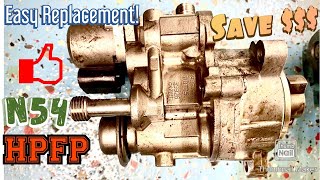
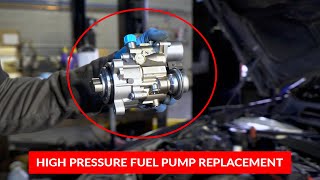
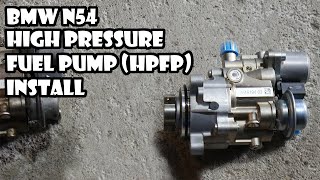
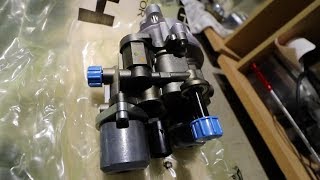
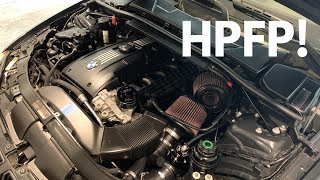
- Failing High-Pressure Fuel Pump (HPFP) (Very Common) — This is the primary cause for P3090 on BMW models with direct-injection engines (N54/N55). The pump wears 🎬 See this ultimate HPFP replacement guide for BMW N54 engines out internally and fails to generate the 700+ PSI required to supply the fuel injectors.
- Worn HPFP Cam Follower (VW/Audi FSI) (Very Common) — On VW/Audi 2.0T FSI engines, the HPFP is driven by a cam lobe via a small follower. This follower wears through, preventing the pump from actuating and destroying the camshaft if ignored.
- Faulty Low-Pressure Fuel Sensor (Common) — This sensor measures fuel pressure coming from the in-tank pump. If it sends false low readings, the engine computer (DME) triggers P3090, incorrectly assuming the high-pressure pump is starved.
- Failing Low-Pressure Fuel Pump (LPFP) (Less Common) — The main fuel pump in the gas tank weakens over time. If it fails to supply 72 PSI (5 bar) to the HPFP, the high-pressure side starves, dropping rail pressure and triggering the code.
- Failing Fuel Pump Control Module (EKPS) (Less Common) — On modern BMWs, the EKPS module controls the voltage of the low-pressure fuel pump. These modules overheat and fail, stopping the LPFP intermittently and starving the HPFP.
- Clogged or Leaking Fuel Injectors (Rare) — A fuel injector stuck open causes a massive drop in fuel rail pressure. This is always accompanied by specific cylinder misfire codes and a strong raw fuel smell.
Symptoms

- Long Engine Crank Time — The engine takes 3 to 5 seconds to start. This is the classic early warning sign of an HPFP failing to build initial pressure.
- Sudden Loss of Power / Limp Mode — The vehicle suddenly loses acceleration, and the dashboard displays a 'half-engine' malfunction warning, limiting RPMs.
- Engine Stalling — The engine shuts off unexpectedly under load and refuses to restart until it cools down.
- Audible Ticking or Knocking Noise — On VW/Audi FSI engines, a worn cam follower causes a loud metallic ticking from the engine bay as the HPFP plunger impacts the damaged camshaft.
- Rough Idle — The engine runs unevenly, shakes, or misfires when stopped at a light.
Diagnostic Flowchart

Tap your situation to follow the diagnostic path that matches what you're seeing on this code.
Common Fixes & Costs
- Replace High-Pressure Fuel Pump (HPFP) — Parts: $450-$1000, Labor: $300-$500, ~2.5 hr book time (Professional)
- Replace HPFP Cam Follower (VW/Audi) — Parts: $40-$70, Labor: $100-$200, ~1 hr book time (Intermediate)
- Replace Low-Pressure Fuel Sensor — Parts: $50-$150, Labor: $100-$200, ~0.8 hr book time (Intermediate)
- Replace In-Tank Low-Pressure Fuel Pump — Parts: $200-$400, Labor: $200-$400, ~1.5 hr book time (Intermediate)
- Replace Fuel Pump Control Module (EKPS) — Parts: $150-$250, Labor: $100-$200, ~1.2 hr book time (Intermediate)
Used vs. New Parts: Buying Guide
When a used part is worth it: A used OEM HPFP from a documented low-mileage vehicle (under 60k miles) wrecked for non-engine reasons is a cost-effective alternative. You must verify the part number is an exact match.
Donor-vehicle mileage cap: roughly under 60000 miles for the part to have meaningful remaining life.
Donor quality checklist:
- Verify the donor vehicle's mileage.
- Match the OEM part number exactly; BMW revisions are not always interchangeable.
- Avoid pumps from engines that sat dry for months, as internal seals dry out.
Decision logic:
- If The part is a VW/Audi 2.0T FSI cam follower → Always buy new. The part is $50 and a critical wear item.
- If The vehicle is high-mileage (>120k miles) → Buy a new or professionally remanufactured Bosch pump due to the high failure rate of original parts.
- If Budget is the primary concern → Buy a used pump from a reputable seller offering at least a 90-day warranty.
Warranty tradeoff: Used parts offer a 30-90 day warranty. Remanufactured Bosch pumps offer a 1-year warranty. New OEM parts installed at a dealer carry a 2-year warranty at the highest cost.
Worst-case if a used part fails: 800. If a used pump fails, you pay for the 3 hours of labor a second time, plus the cost of another pump.
What Happens If You Wait — Timeline
- 0-4 weeks: Code P3090 appears. The primary symptom is a 'long crank' taking 3-5 seconds to start when cold. (MPG impact: 0-2%% · Added cost: $0)
- 1-3 months: Long cranks become constant. The car hesitates or enters 'limp mode' during hard acceleration. (MPG impact: 5-10%% · Added cost: $100 in wasted fuel)
- 3-6 months: Engine stalling becomes a daily risk. For VW FSI engines, the cam follower wears through, and camshaft damage begins. (MPG impact: 10-15%% · Added cost: $800 (Camshaft damage on VW FSI))
- 6+ months: Catastrophic failure. The VW camshaft lobe is destroyed. On BMWs, continued lean running melts the catalytic converters. (MPG impact: 15-25%% · Added cost: $2000 (Camshaft replacement or catalytic converter replacement))
Cost of Not Fixing It
- Immediate: Sudden engine stalling creates a severe safety hazard, causing loss of power steering and brakes in traffic. (Added cost: 0)
- 1-3 months: Direct injectors rely on high fuel pressure for lubrication. Running with low pressure destroys one or more injectors. (Added cost: 1200)
- 3-6+ months: For VW/Audi FSI engines, driving with a failing cam follower destroys the high-pressure fuel pump and the intake camshaft lobe. (Added cost: 2500)
Diagnosis Steps
- Inspect HPFP Cam Follower (VW/Audi 2.0T FSI Only)
For affected VW/Audi models, stop all electronic diagnosis. Remove the HPFP and physically inspect the cam follower. Look for a hole or severe wear on the contact surface. If worn, replace the follower immediately to save the camshaft.
Tools: T30 Torx, 17mm & 13mm wrenches (Intermediate) - Verify the Code and Check for Others
Use a manufacturer-specific OBD-II scanner (ISTA for BMW, VCDS for VW) to confirm P3090. Note any accompanying codes like 29F2 (BMW HPFP) or cylinder misfires, which dictate the diagnostic path.
Tools: Manufacturer-specific OBD-II Scanner (Beginner) - Check Low-Pressure Fuel System Live Data
Monitor the low-pressure fuel sensor PID. For BMW, pressure must remain stable around 72.5 PSI (5 bar) at idle and under load. If pressure is low or erratic, the fault lies with the LPFP, EKPS module, or the sensor itself.
Tools: Advanced OBD-II Scanner (Intermediate) - Monitor High-Pressure Fuel Rail Live Data
Compare 'Rail pressure setpoint' against 'Rail pressure actual'. At idle, actual pressure should be 725-1015 PSI (50-70 bar). During a long crank or hard acceleration, if actual pressure fails to meet the target, the HPFP is failing.
Tools: Advanced OBD-II Scanner (Intermediate) - Test Low-Pressure Sensor Voltage
If low-pressure readings are erratic, back-probe the sensor's signal wire. Voltage scales from 0.5V (0 PSI) to 4.5V (100 PSI). A fixed 0V or 5V reading confirms a failed sensor, saving you from buying an unnecessary HPFP.
Tools: Multimeter, Wiring Diagrams (Advanced) - Directly Test Fuel Pump Control Module (EKPS)
If the low-pressure pump isn't running, disconnect the EKPS. Verify battery voltage reaches the main power input pin. Use a bi-directional scan tool to manually command the pump on. If it fails to prime, the module is dead.
Tools: Multimeter, Bi-directional Scan Tool (Advanced) - Confirm HPFP Failure
If the low-pressure side holds a steady 72 PSI, the cam follower is intact, and there are no external fuel leaks, the diagnosis is a failed High-Pressure Fuel Pump. Proceed with replacement.
Tools: Diagnostic expertise (Professional)
When This Code Triggers (Freeze-Frame Conditions)
- Engine Load: 30-70% (Sets under moderate to heavy load, such as during acceleration or climbing a hill, when fuel demand peaks.)
- Engine RPM: 2000-4000 RPM (Triggers in the mid-RPM range where the engine works to build power and requires maximum fuel flow from the HPFP.)
- Engine Coolant Temp: 180-220°F (Occurs when the engine reaches full operating temperature, as heat exacerbates internal wear in fuel system components.)
- Fuel System Status: Closed Loop (Sets during closed-loop operation when the ECU actively monitors fuel pressure sensors and detects a deficit.)
Related Codes
- 29F2 — The BMW-specific factory fault code corresponding to P3090. A BMW-specific tool will almost always show 29F2 alongside P3090.
- P0087 — The SAE generic code for 'Fuel Rail/System Pressure - Too Low'. Functionally identical to P3090 and more common on VW/Audi.
- P142E — BMW code for 'Cylinder Injection Cutout'. The DME sets this to shut off fuel to cylinders when it detects dangerously low pressure.
- P3190 — A Toyota-specific code for 'Poor Engine Power' often mistaken for P3090. Caused by running out of fuel or a dirty MAF sensor.
Climate & Environmental Factors
- Cold Weather: HPFP failures spike during winter months. Colder, denser fuel requires higher pressure to atomize, pushing a weakening pump past its breaking point during cold starts.
- High Altitude: Lower ambient air pressure makes it easier for fuel to vaporize in the lines (vapor lock) on the suction side, straining the low-pressure system.
How to Talk to a Mechanic About This Code
Say this: "I have a P3090 code on my vehicle. For my BMW, please log live data for the low-pressure fuel sensor and compare actual vs. requested rail pressure. For my VW, please start with a physical inspection of the HPFP cam follower."
This directs the technician to perform logical diagnostic steps rather than guessing or replacing the most expensive part first. It prevents the common misdiagnosis where a faulty low-pressure sensor is the real culprit.
Avoid saying:
- 'My check engine light is on, can you just fix it?'
- 'I think I need a new fuel pump.'
- 'Just do whatever you think is best.'
Questions to ask before authorizing the repair:
- What were the specific PSI readings from the low-pressure fuel sensor at idle and under load?
- Did the actual high-pressure rail pressure fail to meet the target pressure during a test drive?
- For a VW FSI, can you send me a picture of the cam follower you removed?
- Have you ruled out the low-pressure sensor and the fuel pump control module (EKPS)?
Where to Take It: Dealer vs Independent vs Chain
- Dealer:
Best for: Vehicles still under the original or extended warranty for the fuel system., Complex electrical issues requiring proprietary diagnostic tools like BMW's ISTA.
Downsides: Significantly higher labor rates., More likely to replace entire assemblies rather than diagnose individual components. (Typical cost: +50% vs. baseline) - Independent Shop:
Best fit. Choose an independent shop specializing in German vehicles. Their technicians diagnose this exact issue efficiently.
Best for: Out-of-warranty BMW, VW, or Audi vehicles., Cost-conscious owners wanting expert service.
Downsides: Must find a shop with specific, proven experience with German direct-injection fuel systems. (Typical cost: +0% vs. baseline) - Chain Shop:
AVOID. The risk of an expensive misdiagnosis is too high.
Best for: Simple maintenance like oil changes or tire rotations.
Downsides: Technicians lack specialized knowledge for manufacturer-specific codes like P3090., High likelihood of an expensive misdiagnosis. (Typical cost: -10% vs. baseline)
When to Walk Away From the Repair
If the total estimated repair cost exceeds 40-50% of the car's current private-party value, seriously consider selling the car as-is.
- Car worth $8000, fix is $1500: Fix it. The repair cost is 18% of the vehicle's value.
- Car worth $4000, fix is $1800: Borderline. At 45% of the car's value, get a second opinion. Consider selling the car 'as-is' to a DIY mechanic.
- Car worth $2500, fix is $1500: Walk away. The repair cost is 60% of the car's value. It is not economically sensible to proceed.
What Scan Tool You Need for This Code
Minimum: An OBD-II reader that displays manufacturer-specific live data for fuel rail pressure (actual and requested) and low-side fuel pressure.
A basic $20 code reader only shows 'P3090', giving no information to distinguish between a $100 sensor failure and a $1,000 pump failure. Live data is essential.
Budget: BlueDriver Pro (~$100) — Connects to your smartphone and graphs live data streams, including fuel pressure readings, allowing you to see which pump is failing.
Mid-range: Foxwell NT510 Elite (with BMW/VW software) (~$180) — Offers OE-level diagnostics and bi-directional controls, allowing you to perform active tests like commanding the fuel pump to turn on.
Professional: Autel MaxiCOM MK808 (~$450) — Provides full bi-directional control, comprehensive live data graphing, and special functions like coding a new EKPS module.
Rent vs buy: Buy. Renting a basic scanner only confirms the code. Diagnosing P3090 requires monitoring live data during various driving conditions.
How to Clear the Code After You Fix It
- Use an OBD-II scan tool to clear the P3090 code.
- Perform a specific drive cycle to allow the vehicle's readiness monitors to run.
Drive cycle (~20 minutes): Start the engine cold and idle for 3 minutes with the A/C on. Drive at a steady 30 mph for 5 minutes. Accelerate to 60 mph and hold a steady highway speed for 15 minutes. Coast down to 20 mph without touching the brakes. Idle for 5 minutes.
Readiness monitors affected: Catalyst (CAT), Evaporative System (EVAP), Oxygen (O2) Sensor, Fuel System
Before emissions retest: drive at least 100 miles to fully set monitors.
Watch out for:
- Clearing the code without performing a drive cycle results in a 'Not Ready' status, causing an automatic smog test failure.
- If the underlying mechanical issue is not fixed, P3090 returns within 5 miles of driving.
Will This Fail Emissions / State Inspection?
Yes — this code typically fails an OBD-II emissions inspection.
- California: An active P3090 is an automatic failure. You must drive 100 miles after repair for all monitors to complete their checks before a retest.
- New York: A vehicle with the Check Engine Light on automatically fails the emissions portion of the NYS inspection.
- Texas: In emissions counties, P3090 causes an automatic OBDII failure. The vehicle must complete a drive cycle to set readiness monitors before re-inspection.
Most Commonly Affected Vehicles

- BMW 335i (E90, E91, E92, E93) (2006-2010) — The most common vehicle for this code, equipped with the N54 engine. The latest reliable HPFP part number is 13517616170.
- BMW 135i (E82, E88) (2007-2010) — Shares the N54 engine and the same high rate of HPFP failure as the 335i.
- BMW 535i (E60, E61) (2007-2010) — The N54 engine in the 5-series chassis frequently experiences P3090 due to HPFP failure.
- BMW X5/X6 (N54/N55) (2008-2013) — The N54 and early N55-powered versions of the X5 and X6 commonly log this fault code.
- MINI Cooper S (R55-R59) (2007-2012) — Uses the N14/N18 engine prone to HPFP failure. MINI extended the warranty for this part on affected models.
- Volkswagen GTI, Jetta, Passat (2.0T FSI) (2006-2008) — P3090 is frequently caused by a worn cam follower destroying the HPFP. Addressed in the later TSI engine.
- Audi A3, A4, TT (2.0T FSI) (2006-2008) — Shares the same FSI engine architecture and cam follower vulnerability as Volkswagen.
Manufacturer-Specific Notes
- BMW: The N54 HPFP is so notoriously unreliable that BMW extended the warranty to 10 years/120,000 miles. Most vehicles are now outside this window, making it an expensive out-of-pocket repair.
- Volkswagen/Audi: On 2006-2008 2.0T FSI engines, the HPFP is almost always destroyed by a worn cam follower. Replacing the pump without replacing the follower guarantees immediate repeat failure.
- Toyota/Lexus: P3090 is not a valid code for Toyota. Drivers misread code P3190 ('Poor Engine Power'). Your issue is likely an empty fuel tank or a dirty MAF sensor.
Real Owner Stories
2008 BMW 335i (N54) - The Classic Misdiagnosis
Car went into limp mode during wide-open-throttle acceleration. Codes 29DC (Cylinder injection cutout) and 2A2D (low-pressure system) were present.
What they tried:
- A shop replaced the DME, fuel filter, and VANOS solenoids with no change.
- The owner replaced the in-tank Low-Pressure Fuel Pump (LPFP) themselves.
- Idle pressure returned to 72.5 PSI, but the stalling issue persisted.
Outcome: The initial diagnosis was incorrect. The actual problem was a failing HPFP. Replacing the LPFP first was a common, expensive mistake.
Lesson: Never throw parts at a P3090 code. Use a tool like ISTA to monitor both low and high-pressure readings simultaneously before deciding which pump to replace.
2007 VW GTI (2.0T FSI) - The Preventive Save
Owner purchased a used MKV GTI and immediately checked the HPFP cam follower based on forum advice.
What they tried:
- Removed the HPFP and inspected the cam follower.
- Found the follower's black friction coating completely worn off, with deep scoring on the metal.
Outcome: The owner replaced the $40 cam follower as a preventive measure, avoiding a $2,000 repair that would have included a new HPFP and intake camshaft.
Lesson: Treat the VW 2.0T FSI cam follower as a routine maintenance item. Inspect it every 20,000 miles. If you get a P3090 code, this is the very first part you inspect.
2008 BMW 135i (N54) - The Intermittent Electrical Gremlin
Car experienced a sudden rough idle, loud radiator fans, and a P3090 code.
What they tried:
- Owner suspected the HPFP.
- Live data showed the low-pressure pump was randomly shutting off.
- Tested the EKPS (fuel pump control) module and found it was overheating and cutting power.
Outcome: Replacing and coding a new EKPS module restored stable voltage to the low-pressure pump, permanently clearing the P3090 code.
Lesson: A failing EKPS module mimics a bad LPFP, starving the high-pressure system. Check for power at the module before replacing expensive fuel pumps.
How to Prevent This Code From Triggering
- Replace HPFP Cam Follower (VW/Audi 2.0T FSI only) (Every 20,000 miles.) — This $50 sacrificial component wears out by design. If it fails completely, it destroys the $400 HPFP and the $800 intake camshaft.
- Use High-Quality, Top-Tier Gasoline (Every fill-up.) — Gasoline with robust detergent packages prevents carbon deposits on fuel injectors, preventing pressure drops that strain the HPFP.
- Replace the in-tank fuel filter (Every 50,000 miles.) — A clogged filter forces the low-pressure fuel pump to work harder, shortening its life and starving the HPFP.
- Avoid running the fuel tank below 1/4 full (Daily habit.) — Fuel cools the in-tank low-pressure pump. Consistently running near empty overheats the pump, leading to premature failure.
Frequently Asked Questions
I have a Toyota Prius and got code P3090, what should I do?
Double-check your scanner; you almost certainly have code P3190. The most common causes are running out of gas, a dirty Mass Air Flow (MAF) sensor, or a dirty throttle body. Add 3 gallons of gas and clean the MAF sensor before attempting complex repairs.
My mechanic replaced the HPFP but the P3090 code came back. What now?
If a new HPFP doesn't solve the problem, the issue lies upstream. The most likely culprits are a failing Low-Pressure Fuel Sensor providing false readings, a weak in-tank Low-Pressure Fuel Pump (LPFP), or a faulty EKPS control module. A thorough diagnosis of the entire low-pressure fuel system is required.
What is the most common misdiagnosis for P3090?
The most common misdiagnosis is replacing the expensive High-Pressure Fuel Pump (HPFP) when the actual problem is a faulty $100 Low-Pressure Fuel Sensor. Always verify low-pressure system readings before condemning the HPFP. For VW/Audi FSI owners, replacing the HPFP without inspecting the worn cam follower guarantees a repeat failure.
Can a bad battery cause code P3090?
Yes, a severely weak battery or failing alternator causes voltage drops that reduce fuel pump performance and trigger a low-pressure code. Modern cars use electronic modules like the EKPS to control fuel pump speed, which require stable voltage. However, you will typically experience slow cranking or dim lights first.
On my VW GTI, what is a cam follower and why does it matter for P3090?
The cam follower is a small metal cap sitting between the camshaft and the High-Pressure Fuel Pump on VW/Audi 2.0T FSI engines. When it wears through, the HPFP stops working correctly, causing low fuel pressure and triggering P3090. Inspect this $50 part every 20,000 miles to prevent catastrophic engine damage.
Can I replace a BMW High-Pressure Fuel Pump myself?
Replacing a BMW HPFP is an advanced, professional-level job. It involves working with highly pressurized fuel lines and removing the intake manifold, creating significant fire hazards if mishandled. Stop DIY and tow the car to a specialized German auto shop if you lack experience with high-pressure direct injection systems.
Will clearing the code fix the problem?
No, clearing the code only turns off the check engine light temporarily. Because P3090 indicates a hard mechanical or electrical failure, the code returns as soon as the engine computer detects low fuel pressure again. You must fix the underlying fuel starvation issue.
Key Takeaways
- On BMW N54 engines, a failed High-Pressure Fuel Pump (HPFP) causes P3090 over 80% of the time, requiring an $800 to $1,500 repair.
- For VW/Audi 2.0T FSI engines, immediately inspect the $50 HPFP cam follower; a worn follower destroys the pump and camshaft if ignored.
- Always verify the low-pressure fuel sensor reads a steady 72 PSI before replacing the HPFP to avoid a costly $1,000 misdiagnosis.
- Do not drive with an active P3090 code; the engine will stall unexpectedly, causing an immediate loss of power steering and power brakes.
Helpful Videos

The information in this article is provided for general reference and educational purposes only. Vehicle specifications, procedures, and part compatibility can vary by production date, trim level, and region. Always consult your vehicle's factory service manual and verify part numbers before purchasing or performing repairs. Safety-critical components such as airbags, seat belts, and braking systems should be installed by a qualified professional.
- 🎬 Helpful Videos
- What Does P3090 Mean?
- Can I Drive With P3090?
- Common Causes
- Symptoms
- Diagnostic Flowchart
- Common Fixes & Costs
- Used vs. New Parts: Buying Guide
- What Happens If You Wait — Timeline
- Cost of Not Fixing It
- Diagnosis Steps
- When This Code Triggers (Freeze-Frame Conditions)
- Related Codes
- Climate & Environmental Factors
- How to Talk to a Mechanic About This Code
- Where to Take It: Dealer vs Independent vs Chain
- When to Walk Away From the Repair
- What Scan Tool You Need for This Code
- How to Clear the Code After You Fix It
- Will This Fail Emissions / State Inspection?
- Most Commonly Affected Vehicles
- Manufacturer-Specific Notes
- Real Owner Stories
- 2008 BMW 335i (N54) - The Classic Misdiagnosis
- 2007 VW GTI (2.0T FSI) - The Preventive Save
- 2008 BMW 135i (N54) - The Intermittent Electrical Gremlin
- How to Prevent This Code From Triggering
- Frequently Asked Questions
- I have a Toyota Prius and got code P3090, what should I do?
- My mechanic replaced the HPFP but the P3090 code came back. What now?
- What is the most common misdiagnosis for P3090?
- Can a bad battery cause code P3090?
- On my VW GTI, what is a cam follower and why does it matter for P3090?
- Can I replace a BMW High-Pressure Fuel Pump myself?
- Will clearing the code fix the problem?
- Key Takeaways
- 🎟️ Get 5% Off