

OBD-II Code P3084: Engine Control Module (ECM) Power Supply Circuit Fault
The Ultimate 2024 Guide to What P3084 Means, Why It Triggers, and How to Fix It
- On 2019-2023 GM trucks and SUVs, code P3084 is almost exclusively caused by a chafed engine wiring harness documented in GM TSB 21-NA-149.
- Do not replace the $1,500+ Engine Control Module (ECM) until you have meticulously inspected the engine wiring harness for missing clips and bare wires.
- A sectional wire repair costing $300-$800 is the most common and effective fix, saving thousands over a full dealership harness replacement.
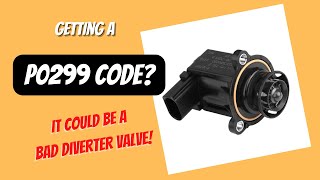
- If driving a 2008-2015 Volkswagen or Audi, ignore GM harness advice; P3084 indicates a mechanical failure of the turbocharger diverter valve requiring a $150 replacement.
- Stop driving immediately if P3084 triggers, as the underlying electrical short causes uncommanded engine stalls and complete loss of power steering at highway speeds.
What Does P3084 Mean?
P3084 is a manufacturer-specific code, predominantly used by General Motors (GM), indicating the Engine Control Module (ECM) detected a critical fault in its own power supply circuit. It signifies an electrical integrity problem—such as a short-to-ground, short-to-power, or open circuit—within the main engine wiring harness, rather than a failed sensor.
Technical definition: On General Motors vehicles, P3084 indicates the Powertrain Control Module (PCM) detected an unspecified electrical circuit failure. It is the primary diagnostic trouble code (DTC) listed in GM Technical Service Bulletin (TSB) 21-NA-149, which addresses widespread engine wiring harness chafing on 2019-2023 trucks and SUVs. The code sets when the ECM detects an abnormal voltage reading on a circuit essential for its operation.
Can I Drive With P3084?
No — Do Not Drive. Do not drive. An uncommanded engine stall can occur at any speed, causing an immediate loss of power steering and braking assist. Each drive cycle worsens the wire damage, potentially shorting and destroying the Engine Control Module (ECM), which adds $1,000-$2,500 to the final repair bill. Tow the vehicle to a qualified technician.
Common Causes
- Chafed or Damaged Engine Wiring Harness (Very Common) — On 2019-2023 GM trucks and SUVs, the primary cause is the engine wiring harness rubbing against a sharp metal edge on the engine block, frame, or bracket. This factory assembly issue (GM TSB 21-NA-149) involves an omitted retaining clip, allowing the harness to vibrate, wear through its insulation, and short out.
- Loose or Corroded Connectors (Common) — The main X1/X2 connectors at the ECM or large inline harness connectors suffer from water intrusion or vibration. This causes pin corrosion and poor electrical contact, interrupting critical power and data signals.
- Aftermarket Accessory Interference (Less Common) — Improperly installed aftermarket devices like remote starters, alarms, or GPS trackers spliced into the vehicle's wiring create shorts, introduce voltage drops, or interfere with CAN bus network communication.
- Damaged Wires from Previous Repairs (Less Common) — Improperly performed repairs, such as using wire-piercing test probes or poorly sealed crimp connectors, allow moisture to enter and corrode wires from the inside out, leading to intermittent failures.
- Weak or Failing Battery (Less Common) — A battery with a bad cell or low state of charge causes significant voltage fluctuations. While not the root cause for P3084 on affected GM models, a weak battery exacerbates existing wiring issues.
- Charge Air Cooler / Induction System Leaks (Rare) — On turbocharged vehicles, a significant air leak in the induction system causes a wide range of fault codes and 'Reduced Engine Power' messages. GM TSB PIP5684 addresses this issue, which mimics P3084 symptoms.
- Faulty Powertrain Control Module (PCM) (Very Rare) — Internal failure of the PCM/ECM is the least likely cause. The module is robust, and P3084 reports a problem with its external power supply. Replacing the PCM without ruling out wiring issues is a costly misdiagnosis.
Symptoms
- Engine Stalling or No Start — The engine stalls without warning while driving or cranks but refuses to start. This occurs when the wiring short cuts power to the fuel pump, ignition system, or the ECM.
- Reduced Engine Power ('Limp Mode') — A 'Reduced Engine Power' message appears on the driver information center as the vehicle enters limp mode to prevent engine damage.
- Erratic Gauge Behavior and Warning Lights — Instrument panel gauges sweep erratically or go dead. A cascade of warning lights for ABS, traction control, and stability control illuminate as modules lose communication with the offline ECM.
- Check Engine Light is On — The Check Engine Light illuminates permanently, storing code P3084 in the PCM's memory.
- 'Shift to Park' or 'Service Transmission' Message — Communication loss between the ECM and Transmission Control Module (TCM) triggers transmission-related warnings, even if the transmission is mechanically sound.
- Rough or Unstable Idle — An inconsistent electrical signal to fuel injectors, ignition coils, or critical sensors causes the engine to misfire and run poorly at idle.
Diagnostic Flowchart
Tap your situation to follow the diagnostic path that matches what you're seeing on this code.
Common Fixes & Costs
- Repair and Secure Chafed Wiring Harness Section
— Parts: $25-$75, Labor: $300-$600, ~3.0 hr book time
(Intermediate)
: OEM
: OEM - Engine Wiring Harness Replacement
— Parts: $1,200-$2,500, Labor: $1,000-$1,800, ~10.0 hr book time
(Professional)
: OEM
: OEM - Replace Damaged Connector or Terminals
— Parts: $30-$80, Labor: $150-$300, ~2.0 hr book time
(Intermediate)
: OEM - Proactive Harness Protection — Parts: $50-$100, Labor: $100-$200, ~1.5 hr book time (DIY)
Used vs. New Parts: Buying Guide
When a used part is worth it: A used engine wiring harness is viable if it comes from a low-mileage vehicle scrapped for non-electrical reasons. It is a high-risk purchase due to unseen damage or brittle connectors.
Donor-vehicle mileage cap: roughly under 60000 miles for the part to have meaningful remaining life.
Donor quality checklist:
- Verify the donor vehicle's VIN to ensure it was not part of the TSB 21-NA-149 problem range.
- Inspect all connectors for cracks, broken locking tabs, or signs of corrosion.
- Check the loom for any signs of abrasion, rodent damage, or improper repairs.
- Match the part number exactly; harnesses are specific to engine and option packages.
Decision logic:
- If The vehicle is under warranty → Insist on a new OEM part installed by the dealer.
- If Only a small, accessible section of the harness is damaged → Repairing the existing harness is far more cost-effective than buying used or new.
- If The harness has widespread or severe damage (fire, rodents) → Buy a new OEM harness. The reliability outweighs the cost savings of a used part.
Warranty tradeoff: Used parts typically have a 30-90 day warranty covering only the part. A new OEM harness installed by a dealer carries a 12-24 month warranty on parts and labor.
Worst-case if a used part fails: $1000-$2000 if a used harness fails after installation, requiring repeat labor costs.
What Happens If You Wait — Timeline
- 0-1 month: Code P3084 sets. Occasional 'Reduced Engine Power' messages or momentary rough idle occur, especially on bumpy roads. Symptoms are intermittent. (MPG impact: 0-2%% · Added cost: $0)
- 1-3 months: Engine stalls without warning weekly. The dashboard lights up with multiple warnings that clear on restart. Harness chafing has worn through insulation, causing intermittent shorts. (MPG impact: 2-5%% · Added cost: $50-$150 in towing costs.)
- 3-6 months: Vehicle is unreliable. Stalling is common when stopping. Intermittent shorts cause voltage spikes that actively stress the ECM's internal circuits. (MPG impact: 5-10%% · Added cost: $300-$800 (Cost of wire harness repair))
- 6+ months: A major short-circuit permanently damages the internal driver circuits of the ECM. The vehicle will not start. The harness must be fixed, PLUS the ECM replaced and programmed. (MPG impact: N/A (Vehicle is disabled)% · Added cost: $1,800 - $3,500)
Cost of Not Fixing It
- Immediate: Sudden engine stall while driving, leading to loss of power steering and braking assist. This is a significant safety hazard. (Added cost: Potential accident costs.)
- 0-1 Month: Continued intermittent shorting causes voltage spikes that stress the Engine Control Module (ECM) and other connected modules. (Added cost: $0)
- 1-6+ Months: A significant voltage spike from the shorted harness permanently damages the ECM, requiring replacement. The vehicle will not start. (Added cost: $1,500 - $2,800)
Diagnosis Steps
- Scan for All Trouble Codes
Use a professional-grade OBD-II scanner to read codes from ALL modules (ECM, TCM, BCM, EBCM). Confirm P3084 is present. Document all communication codes (U0073, U0100) and power-related codes (P0685, P0689). Do not clear codes.
Tools: OBD-II Scanner (bi-directional recommended) (Beginner) - Perform a Detailed Visual Inspection (TSB-Guided)
With the battery disconnected, meticulously inspect the engine wiring harness. Refer to GM TSB 21-NA-149 for diagrams of specific chafe points based on your engine. Key areas include: the corner of the cylinder head, drive belt idler pulley bracket, ECM/TCM bracket, driver's side upper control arm, and shock tower. Look for shiny spots on metal brackets where the harness rubs.
Tools: Flashlight, Inspection Mirror, TSB 21-NA-149 Printout (Intermediate) - Perform an Advanced 'Wiggle Test' with Live Data
If a visual fault isn't obvious, reconnect the battery and start the engine. Graph live data for 'ECM Voltage' on your scan tool. Carefully wiggle, push, and pull sections of the wiring harness near known chafe points. Sudden voltage drops on the scan tool pinpoint the exact location of an internal break or intermittent short.
Tools: OBD-II Scanner (with live data graphing), Insulated Gloves (Intermediate) - Check All Related Fuses
Locate the underhood fuse box and check all fuses labeled ECM, PCM, ENG, INJ, IGN, and FUEL. A blown fuse confirms a short circuit exists. You must repeat the visual inspection in Step 2 until the source of the short is found.
Tools: Fuse Puller, Multimeter, Owner's Manual (Beginner) - Inspect Main Harness Connectors
Disconnect the main connectors at the ECM/PCM. Look for signs of water intrusion (discoloration, white/green powder), bent pins, or damaged seals. A single loose pin causes this fault.
Tools: Socket Set, Flashlight (Intermediate) - [PRO TIP] Perform a Terminal Pin-Drag Test
Use terminal test probes to check the tension of the female pins in the ECM connector. Each pin must provide a slight 'drag' on the correctly sized male probe. If a probe feels loose, the female terminal is spread and must be replaced.
Tools: Terminal Pin Test Kit (Advanced) - [PRO TIP] Conduct Voltage Drop Tests
With the circuit energized, set a multimeter to DC Volts. Place the positive lead on the battery positive post and the negative lead on the power input pin at the ECM connector. A reading above 0.2 volts indicates high resistance in the power feed wire. Repeat for the ground side. A reading above 0.1 volts indicates a poor ground.
Tools: Multimeter, Wiring Diagram (Advanced) - Isolate the Faulty Circuit
If a damaged wire is found, test for a short-to-ground. Check for continuity between the suspect wire and a known good chassis ground. The meter should read OL (Open Line). If it beeps, you have confirmed the short.
Tools: Multimeter (Advanced) - [ADVANCED] Test 5-Volt Reference Circuit
With Key On, Engine Off (KOEO), backprobe the 5V reference wire at an accessible sensor (like the MAP sensor). Expected reading is 5.0 Volts +/- 0.5V. A reading near 0V points to a short-to-ground in the harness. Unplug sensors on that circuit one by one; if voltage returns to 5V, the unplugged sensor is internally shorted.
Tools: Multimeter, Backprobe Kit, Wiring Diagram (Advanced) - [ADVANCED] Test CAN Bus Network Integrity
With the battery disconnected, measure resistance between Pin 6 (CAN High) and Pin 14 (CAN Low) at the Data Link Connector (DLC). Expected reading is 60 Ω. A reading of 120 Ω indicates an open circuit. A reading near 0 Ω indicates a short between the CAN High and Low wires.
Tools: Multimeter, DLC Breakout Box (optional) (Advanced) - [ADVANCED] Test ECM/PCM Power Relay Circuit
Locate the ECM power relay. With the key on, the relay control circuit should have approx. 12V. A voltage drop below 9V at the ECM's power input pin while cranking indicates high resistance in the relay, fuse block, or wiring. The relay coil should have a resistance between 50-200 Ω.
Tools: Multimeter, Bi-directional Scan Tool, Wiring Diagram (Advanced)
When This Code Triggers (Freeze-Frame Conditions)
- Engine Coolant Temp: 180-200°F (Fully warmed up during normal operation.)
- RPM: 1200-2500 (Light acceleration or steady-state cruising when engine movement causes the harness to short.)
- Engine Load: 25-50% (Occurs under normal driving torque.)
- Vehicle Speed: 20-60 mph (Sets at any speed, including idle, but is most common during city or highway driving as vibrations trigger the intermittent short.)
Related Codes
- U0073 — Control Module Communication Bus 'A' Off. P3084 indicates a power supply fault, which causes the main communication bus to fail. The root cause is the harness short (P3084).
- U0100 — Lost Communication With ECM/PCM 'A'. Confirms the ECM is offline. Seeing both strongly suggests the harness fault cut power or ground to the ECM.
- P0685 — ECM/PCM Power Relay Control Circuit/Open. Points to a problem in the circuit the ECM uses to control its own power relay. A chafed wire in this circuit is a common cause.
- P0689 — ECM/PCM Power Relay Sense Circuit Low. Indicates the ECM commanded its power relay to turn on but does not see the expected voltage, pointing to a harness or relay issue.
Climate & Environmental Factors
- Road Salt / High Humidity: In regions using road salt or with high humidity, the P3084 fault accelerates. Once harness insulation breaches, salt spray penetrates the copper wires, causing rapid corrosion, increased resistance, and total circuit failure.
- Extreme Cold: Cold temperatures make wire insulation and plastic harness looms brittle. Vibrations lead to cracks in the stiffened materials, creating entry points for moisture.
- Vibration: Vibration is the direct mechanical force causing the chafing. The missing retaining clip on affected GM models allows engine vibrations to translate into a sawing motion between the harness and stationary metal brackets.
How to Talk to a Mechanic About This Code
Say this: "I have a [Your Year/Make/Model] with a P3084 code and other electrical symptoms. I am aware of GM Technical Service Bulletin 21-NA-149 regarding engine harness chafing. Please start by inspecting the harness at the known chafe points for my engine before considering any part replacements."
This signals you are an informed customer, directs the technician to the most probable cause, and prevents them from suggesting a costly and unnecessary ECM replacement.
Avoid saying:
- 'Just fix whatever's wrong'
- 'My check engine light is on, can you look at it?'
- 'The internet said to replace the ECM'
Questions to ask before authorizing the repair:
- Did you find the specific chafe point on the harness as described in TSB 21-NA-149? Can you show me a picture?
- Is the proposed fix a sectional wire repair or a full harness replacement? Please provide a quote for both.
- How will the repaired harness be protected and secured to prevent this from happening again?
- What is the warranty on the parts and labor for this specific repair?
Where to Take It: Dealer vs Independent vs Chain
- Dealer:
Recommended ONLY if the vehicle is under warranty. If paying out-of-pocket, get a second opinion from an independent shop before authorizing a full harness replacement.
Best for: Vehicles still under the 3-year/36,000-mile bumper-to-bumper warranty., Complex cases requiring a GM Field Service Engineer.
Downsides: Significantly higher labor rates., May default to quoting a full harness replacement ($2,500-$4,000) instead of a cost-effective sectional repair. (Typical cost: +75% vs. baseline) - Independent Shop:
Best fit for out-of-warranty repairs. Seek a shop specializing in electrical diagnostics. Ask directly if they are familiar with GM TSB 21-NA-149 before booking.
Best for: Out-of-warranty vehicles where the owner is cost-conscious., Getting a cost-effective sectional wire repair instead of a full harness replacement.
Downsides: Shop must have strong electrical diagnostic skills., You must vet the shop's reputation and certifications. (Typical cost: +0% vs. baseline) - Chain Shop:
AVOID. This is an advanced electrical fault beyond the scope of most chain repair shops.
Best for: Simple maintenance like oil changes, tires, and brakes.
Downsides: Technicians generally lack specialized training for complex wiring harness diagnostics., High risk of misdiagnosis, leading to unnecessary replacement of batteries or alternators. (Typical cost: -10% vs. baseline)
When to Walk Away From the Repair
If the estimated repair cost exceeds 40-50% of the vehicle's current private-party market value, consider selling the vehicle as-is.
- Car worth $35000, fix is $600: Fix it. The repair cost is less than 2% of the vehicle's value and resolves a major safety issue.
- Car worth $25000, fix is $3500: Get a second opinion. A $3,500 quote for a full harness replacement is high. Seek an independent shop for a sectional repair quote, which is likely under $800.
- Car worth $8000, fix is $3500: Walk away. With a repair cost approaching 44% of the vehicle's value, it is not economical to proceed. Sell the vehicle as a 'mechanic special'.
What Scan Tool You Need for This Code
Minimum: An OBD-II scanner that supports and graphs live data, specifically 'Control Module Voltage'.
A basic code reader cannot perform the critical 'wiggle test' diagnostic step, which requires watching a live graph of the ECM's voltage to pinpoint the intermittent short.
Budget: BlueDriver Pro or Foxwell NT301 (~$70) — Both display and graph live data streams essential for diagnosing this issue. They also read codes from other modules (ABS, SRS).
Mid-range: Innova 5610 or Foxwell NT604 Elite (~$250) — Offers robust live data, including recording and playback, and limited bidirectional tests.
Professional: Autel MaxiCOM MK808S (~$500) — Provides full bidirectional control, allowing a technician to command components like the ECM power relay on and off to test circuit integrity.
Rent vs buy: For a one-time diagnosis, use a free loaner tool program from an auto parts store. Confirm the loaner model supports live data viewing. Buy a scanner only if you perform diagnostics regularly.
How to Clear the Code After You Fix It
- Reconnect battery if disconnected for repair.
- Use an OBD-II scan tool to formally clear all Diagnostic Trouble Codes (DTCs).
- Perform a complete GM drive cycle to allow readiness monitors to run.
Drive cycle (~30 minutes): From a cold start (coolant temp below 122°F), idle for 3 minutes with A/C on. Accelerate to 55 mph and hold steady for 5 minutes. Coast down to 20 mph without braking. Accelerate to 60 mph and hold for 5 minutes. Coast down again.
Readiness monitors affected: Catalyst (CAT), Evaporative System (EVAP), Oxygen (O2) Sensor, O2 Sensor Heater
Before emissions retest: drive at least 100 miles to fully set monitors.
Watch out for:
- Disconnecting the battery clears the code but resets all readiness monitors to 'Not Ready', guaranteeing an emissions test failure.
- The code returns immediately if the underlying wiring short is not correctly repaired.
Will This Fail Emissions / State Inspection?
Yes — this code typically fails an OBD-II emissions inspection.
- California: An illuminated Check Engine Light is an automatic failure. After repair, a full drive cycle must be completed to set all readiness monitors before a re-test.
- New York: An active P3084 code causes an automatic failure. For 2001+ vehicles, only one readiness monitor is allowed to be 'Not Ready'.
- Texas: An illuminated Check Engine Light is an automatic failure. Texas allows only one monitor to be 'Not Ready' on 2001+ vehicles to pass.
Most Commonly Affected Vehicles
- Chevrolet Silverado 1500 (2019-2023) — A primary vehicle affected by the missing wiring harness clip, documented in GM TSB 21-NA-149. Chafe points vary by engine (2.7L, 4.3L, 5.3L, 6.2L, 3.0L).
- GMC Sierra 1500 (2019-2023) — Shares the same platform and manufacturing issue as the Silverado. TSB 21-NA-149 is the guiding document for diagnosis.
- Chevrolet Tahoe (2021-2023) — Included in the GM TSB for engine wiring harness chafing. Owners report wide arrays of electrical issues temporarily reset by disconnecting the battery.
- Chevrolet Suburban (2021-2023) — Shares the same T5 platform and wiring harness issues as the Tahoe.
- GMC Yukon / Yukon XL (2021-2023) — Included in the GM TSB for potential engine wiring harness chafing issues.
- Cadillac Escalade / Escalade ESV (2021-2023) — Included in the GM TSB for potential engine wiring harness chafing issues.
- Volkswagen Golf / Jetta / Passat (2008-2015) — On VAG vehicles with TFSI engines, P3084 is linked to a fault with the turbocharger bypass valve ('diverter valve'), requiring diagnosis of the turbo system.
- Skoda Superb / Octavia (2008-2015) — Shares the same turbocharger-related P3084 code meaning as Volkswagen models.
Manufacturer-Specific Notes
- General Motors: The issue is so widespread on 2019+ trucks and SUVs that any diagnosis for P3084 MUST start with a harness inspection at the chafe points documented in TSB 21-NA-149.
- Volkswagen / Audi / Skoda: On VAG models with TFSI engines, P3084 is not an electrical power code but indicates a mechanical or electrical fault with the Turbocharger Bypass Valve (Diverter Valve).
- General Motors: GM TSB PIP5684 addresses charge air cooler leaks that cause trouble codes and reduced power, mimicking the P3084 harness issue. If no harness damage is found on a turbo model, smoke test the charge air system.
Real Owner Stories
2019 GMC Sierra 1500 at 45,000 miles
Truck suddenly stalled on the highway. After restart, 'Reduced Engine Power' message appeared with a dozen warning lights. P3084 and U0073 were the primary codes.
What they tried:
- Tested the battery, which passed.
- Towed to a dealer who immediately referenced TSB 21-NA-149.
Outcome: Technician found the harness chafed through on the corner of the cylinder head. Two wires were severed. The dealer performed a wire-by-wire repair, wrapped the section in protective tape, and secured it. Total cost was $750.
Lesson: On a 2019+ GM truck or SUV, P3084 paired with communication codes (U-codes) almost guarantees the wiring harness chafe issue described in TSB 21-NA-149.
2021 Chevrolet Tahoe at 65,000 miles
Owner experienced intermittent stalling at red lights and erratic gauge behavior. The check engine light cleared after disconnecting the battery but always returned.
What they tried:
- An independent shop suggested replacing the ECM for $2,000+.
- Owner found forum posts about TSB 21-NA-149 and took it to a second mechanic.
- The second mechanic performed a 'wiggle test' on the harness and replicated the stall.
Outcome: A small section of the harness rubbed against the ECM bracket. A targeted repair cost $450, saving the owner from an unnecessary ECM replacement.
Lesson: Do not replace the ECM unless the wiring harness is exhaustively inspected. An intermittent fault that changes with engine movement is a classic sign of a chafing wire.
2015 Volkswagen GTI with 80,000 miles
Car felt sluggish with a noticeable loss of boost. Check engine light came on with code P3084.
What they tried:
- Owner searched for P3084 online and found irrelevant GM wiring harness information.
- Further searching for 'VW P3084' led to forums discussing turbocharger components.
Outcome: On VAG vehicles, P3084 points to a fault with the turbocharger bypass valve. The original plastic valve had a torn diaphragm. The owner replaced it with an upgraded metal piston-style valve for $150.
Lesson: Code definitions vary wildly between manufacturers. For VW/Audi, P3084 points to the turbo diverter valve, not a main power supply issue.
How to Prevent This Code From Triggering
- Proactively Inspect and Secure Engine Harness (Once, or at every oil change) — For affected GM models, visually inspect the harness at the chafe points listed in TSB 21-NA-149. Use zip ties to secure it, ensuring at least 1 inch of clearance from sharp metal edges.
- Add Protective Anti-Abrasion Tape or Loom (Once, during inspection) — Wrapping vulnerable sections of the harness with Tesa 51608 tape or installing a Kevlar sleeve provides a sacrificial layer that prevents wire insulation damage.
- Maintain Battery and Connections (Annually) — Clean and tighten battery terminals to ensure stable voltage. A weak battery stresses electrical components and exacerbates existing intermittent wiring faults.
- Ensure Proper Repair Techniques (During any electrical repair) — Always use weather-sealed crimp connectors or solder with heat-shrink tubing. Never use wire-piercing test probes, which leave permanent entry points for moisture.
Frequently Asked Questions
What is GM Technical Service Bulletin 21-NA-149?
It is a critical document detailing a manufacturing defect where an engine harness clip was omitted on 2019-2023 GM trucks and SUVs. It provides engine-specific diagrams of where the harness rubs through and causes electrical shorts, triggering code P3084.
Is there a recall for the P3084 wiring harness issue?
There is no formal safety recall. GM issued a 'Customer Satisfaction Program' (N192219370) for some 2019 models to proactively install protective sleeves, but it expired in 2021. Repairs may still be covered under the factory bumper-to-bumper warranty.
What is the most common misdiagnosis for P3084?
The most costly mistake is replacing the Engine Control Module (ECM) without inspecting the wiring. The second is replacing individual sensors based on other trouble codes that appear alongside P3084. The wiring harness must be proven good before any parts are replaced.
How much does it really cost to fix code P3084?
A targeted wire repair by an independent shop costs between $300 and $800. If a dealership insists on replacing the entire engine harness, the cost easily exceeds $3,000 due to the high price of the harness and 8+ hours of labor.
Can I fix a chafed wiring harness myself?
A successful DIY repair requires locating the exact damage, making durable solder repairs on small wires, and properly securing the harness. For a novice, this is a very challenging task with high risk. A professional repair is strongly recommended.
My truck is a GM but not a Silverado/Sierra. Can it have this problem?
Yes. The same issue affects 2021-2023 Chevrolet Tahoes, Suburbans, GMC Yukons, and Cadillac Escalades, as they are built on a similar platform and included in TSB 21-NA-149.
My car has a P3084 code but it's a Volkswagen. What does it mean?
On a VW, Skoda, or Audi, P3084 points to a fault in the turbocharger system, most often the electronic diverter valve. The diagnostic process must focus on testing the turbo components, not the main engine harness.
How can I prevent the P3084 harness issue from happening to my truck?
Add a layer of protective anti-abrasion loom or tape to the harness in the known chafe areas identified in TSB 21-NA-149. Use zip ties to ensure at least one inch of clearance between the harness and any metal edges.
Key Takeaways
- On 2019-2023 GM trucks and SUVs, code P3084 is almost exclusively caused by a chafed engine wiring harness documented in GM TSB 21-NA-149.
- Do not replace the $1,500+ Engine Control Module (ECM) until you have meticulously inspected the engine wiring harness for missing clips and bare wires.
- A sectional wire repair costing $300-$800 is the most common and effective fix, saving thousands over a full dealership harness replacement.
- If driving a 2008-2015 Volkswagen or Audi, ignore GM harness advice; P3084 indicates a mechanical failure of the turbocharger diverter valve requiring a $150 replacement.
- Stop driving immediately if P3084 triggers, as the underlying electrical short causes uncommanded engine stalls and complete loss of power steering at highway speeds.
Helpful Videos

The information in this article is provided for general reference and educational purposes only. Vehicle specifications, procedures, and part compatibility can vary by production date, trim level, and region. Always consult your vehicle's factory service manual and verify part numbers before purchasing or performing repairs. Safety-critical components such as airbags, seat belts, and braking systems should be installed by a qualified professional.
- 🎬 Helpful Videos
- What Does P3084 Mean?
- Can I Drive With P3084?
- Common Causes
- Symptoms
- Diagnostic Flowchart
- Common Fixes & Costs
- Used vs. New Parts: Buying Guide
- What Happens If You Wait — Timeline
- Cost of Not Fixing It
- Diagnosis Steps
- When This Code Triggers (Freeze-Frame Conditions)
- Related Codes
- Climate & Environmental Factors
- How to Talk to a Mechanic About This Code
- Where to Take It: Dealer vs Independent vs Chain
- When to Walk Away From the Repair
- What Scan Tool You Need for This Code
- How to Clear the Code After You Fix It
- Will This Fail Emissions / State Inspection?
- Most Commonly Affected Vehicles
- Manufacturer-Specific Notes
- Real Owner Stories
- 2019 GMC Sierra 1500 at 45,000 miles
- 2021 Chevrolet Tahoe at 65,000 miles
- 2015 Volkswagen GTI with 80,000 miles
- How to Prevent This Code From Triggering
- Frequently Asked Questions
- What is GM Technical Service Bulletin 21-NA-149?
- Is there a recall for the P3084 wiring harness issue?
- What is the most common misdiagnosis for P3084?
- How much does it really cost to fix code P3084?
- Can I fix a chafed wiring harness myself?
- My truck is a GM but not a Silverado/Sierra. Can it have this problem?
- My car has a P3084 code but it's a Volkswagen. What does it mean?
- How can I prevent the P3084 harness issue from happening to my truck?
- Key Takeaways
- 🎟️ Get 5% Off